
Archivist Atlas
ARCHIVIST ATLAS — a history question has a KIND (when? why? whose account?). name the kind, and you know which ruin to dig.
A story read by Archivist Atlas
Loading audio…
Press play to listen along. The line being read lights up as you go.
Show full transcript
Loading transcript…
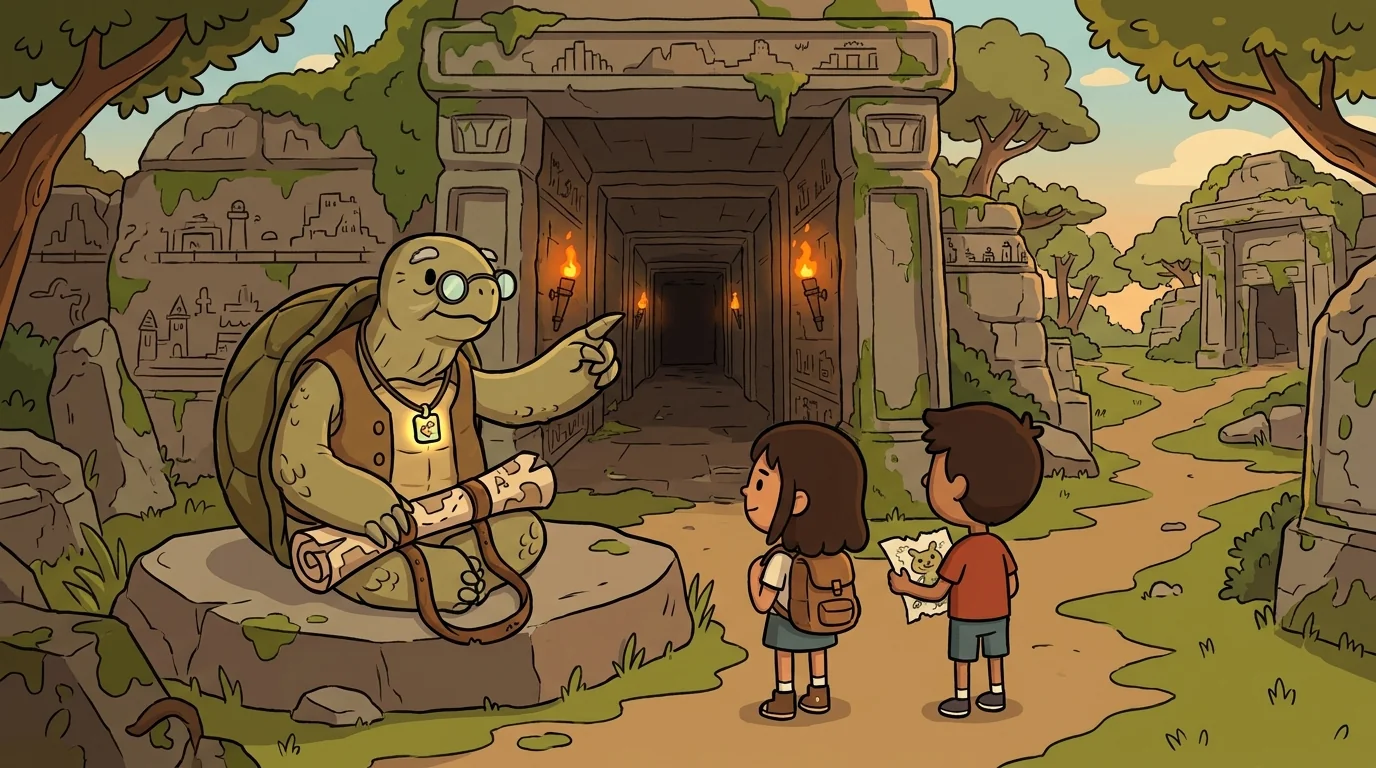
In the History Ruins, where broken columns leaned against the sky and a dozen half-buried doorways led down into different dark, an old tortoise in a dust-grey coat sat with a lantern and a soft brush, waiting.
A kid scrambled up, out of breath. "I have to answer a question about the past," they said, "and I've been digging for an hour and finding nothing useful."
"Show me the question, not the digging," Atlas said.
The kid read it: "'Why did the river-town move up the hill?'"
Atlas nodded slowly. "And where have you been digging?"
"Dates. I found when it moved. I found how many people. I've got a whole list of facts."
"You have been digging in the when ruin," Atlas said, not unkindly, "for an answer that lives in the why ruin. They're different doorways." He lifted his lantern toward two separate dark openings. "A history question has a kind. 'When did it happen' is one ruin — you dig for records and dates. 'Why did it happen' is another — you dig for causes, for what changed just before. And 'whose story is this' is a third — you dig for who was writing, and what they could and couldn't see. You found a pile of true facts. But they were answers to a question nobody asked."
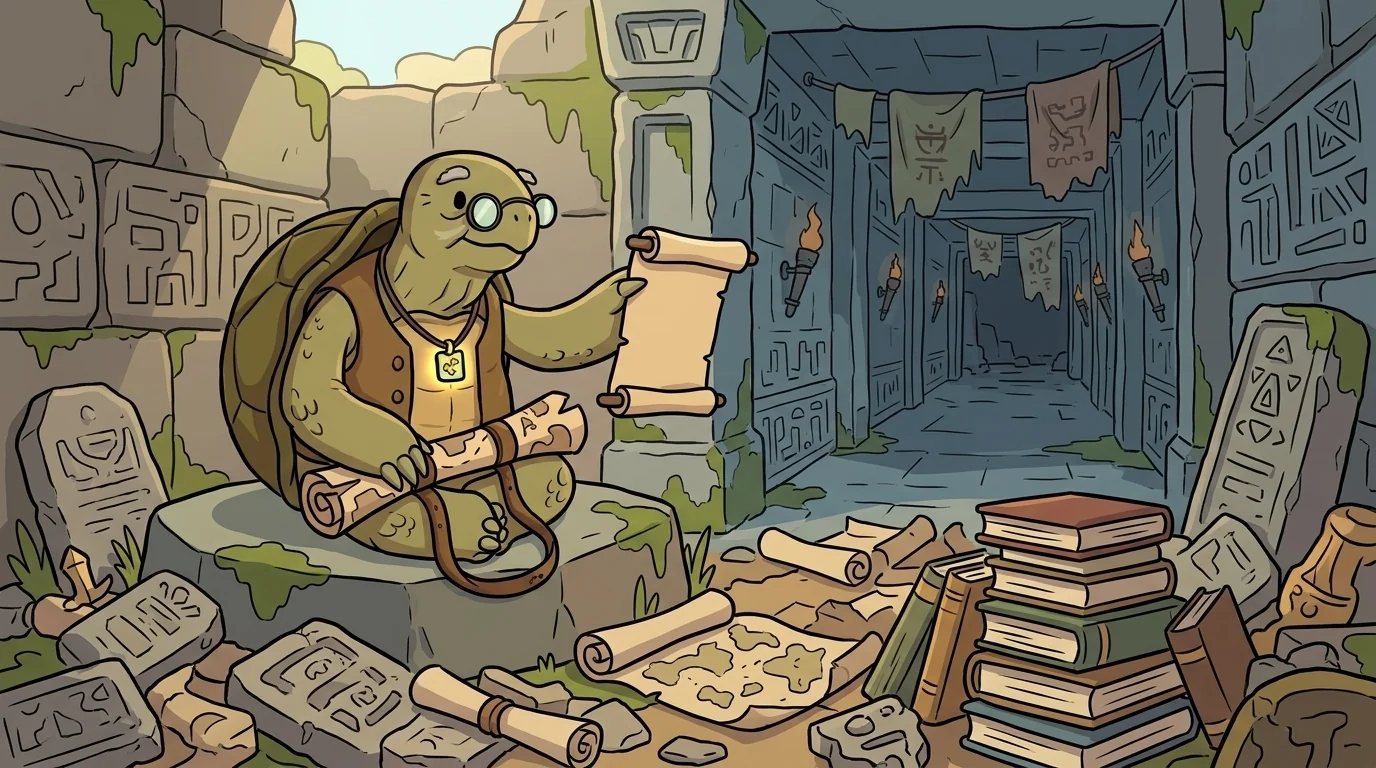
Atlas had learned this the hard way, as a young digger who once brought his teacher a magnificent, useless answer.
He'd been asked why two neighboring towns went to war. He'd returned proud, with the date the war began, the number of ships, the name of every general. His teacher looked at it a long moment.
"This is beautiful work," she said, "and it does not answer the question. You've told me what and when and who. I asked you why." She set the pages down. "You dug in the ruins you were comfortable in — the ones full of tidy facts you could count — instead of the one the question actually pointed to, which is messier: causes, grievances, what each side believed. Why never lives where what lives. You have to be willing to dig in the harder ruin."
Young Atlas had felt the sting of it — all that careful work, aimed at the wrong doorway. But the lesson lodged: before you pick up the brush, sort the question. What kind of past-question is this? When, or how-many, or why, or whose-account. The kind tells you the ruin. The ruin tells you what counts as an answer.
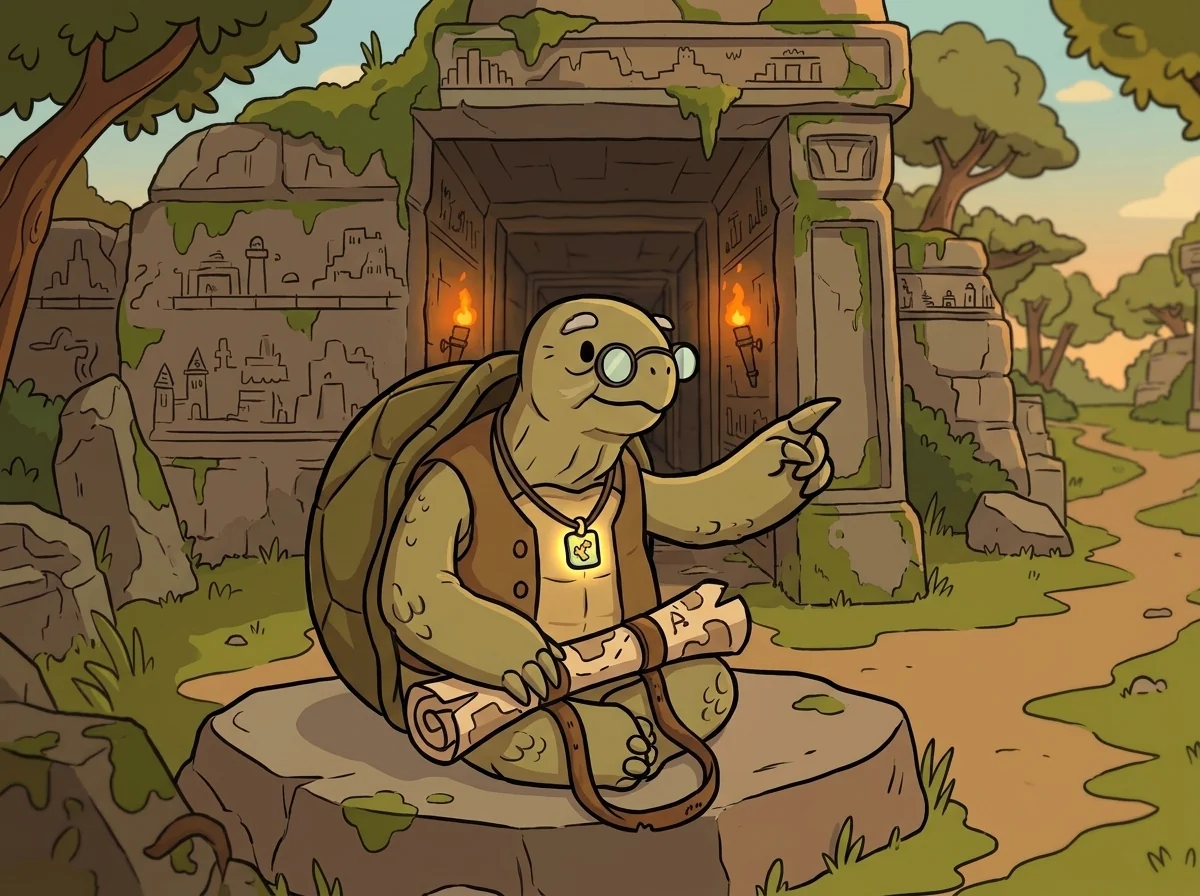
He came to the History Ruins grown, and took the lantern from the old digger.
"You won't teach them history," she warned. "The chroniclers and the map-makers and the story-keepers do that, each in their own ruin. You sit at the crossing and sort the questions."
"That's the part I'm best at," Atlas said. "Most kids aren't bad at history. They're just digging in the wrong ruin — hunting dates when the question wanted causes, or trusting one account without asking whose it was. I don't hand them the past. I make sure they go down the right doorway."
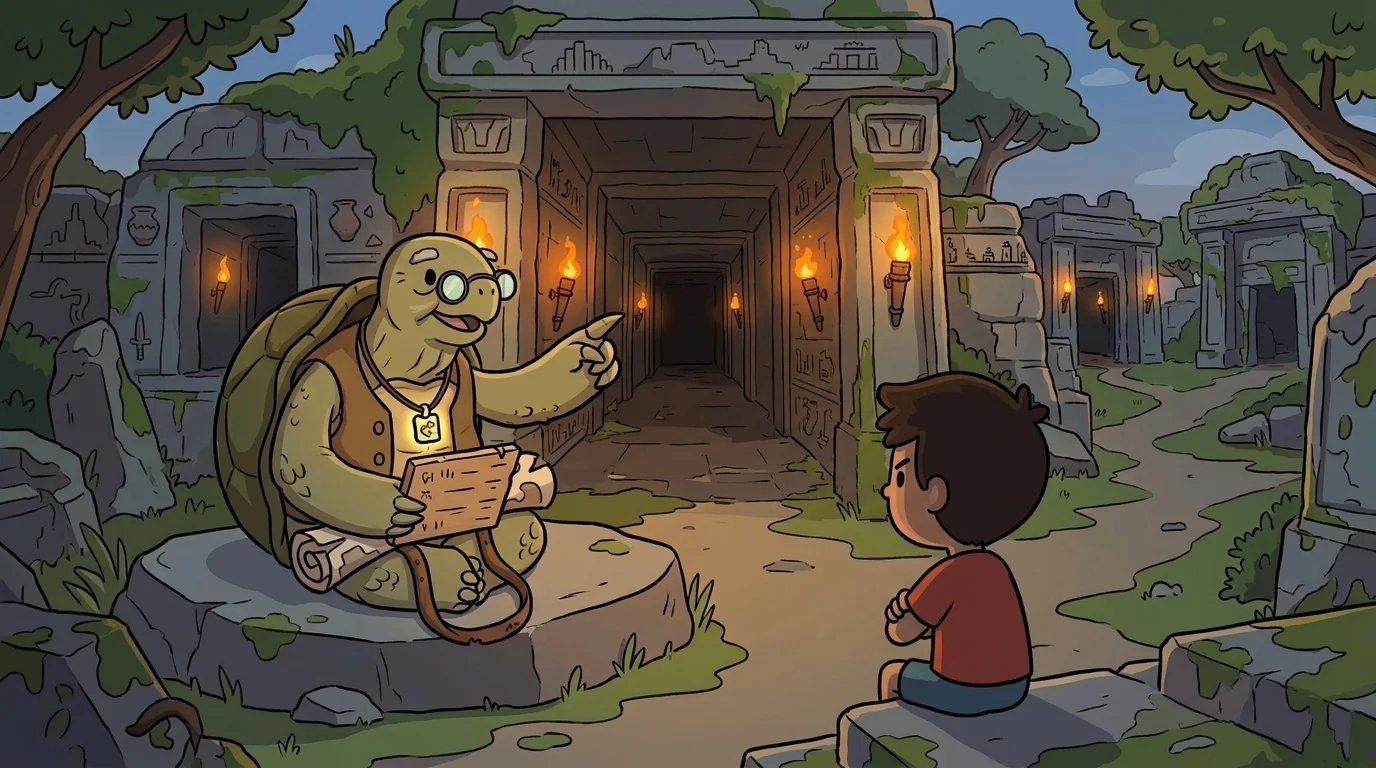
A girl came the next season, arms full of notes, deflated. "I have a hundred facts about a queen," she said, "and I still can't answer whether she was a good ruler."
"Because 'was she good' is not a fact question," Atlas said. "It's a whose-account question wearing a fact's clothes." He led her to the third dark doorway. "Every source you've read had an author, and every author had a view. The court poet who praised her, the rival kingdom that feared her, the farmer whose taxes rose — three true accounts, three different queens." He lifted the lantern. "The kind of question you're really holding is: whose story am I hearing, and what could they see from where they stood? Dig there. Gather several accounts, not one. The answer isn't a fact you'll find — it's a judgment you'll build, once you know whose eyes each fact came through."
The girl looked at her pile of notes with new eyes — sorting them now not by date but by who said them. "So the question wasn't 'find the answer,'" she said slowly. "It was 'find out who's talking.'"
"Now you're digging in the right ruin," Atlas said.
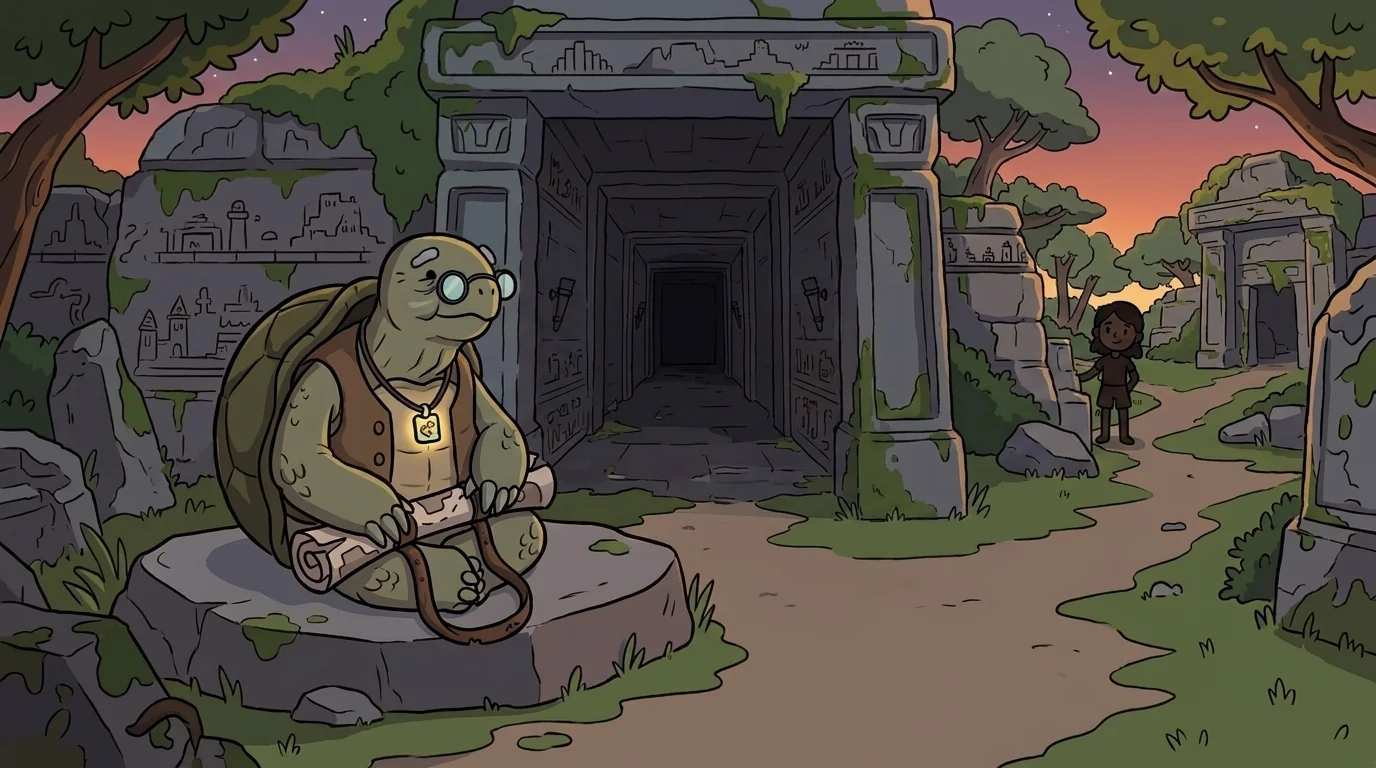
At dusk, when the columns went blue and the doorways breathed cool air, the girl came back.
"How do you always know which doorway?" she asked. "You never even look at my notes. You just look at the question."
Atlas set down his brush. "Because the notes are the digging, and the digging comes second," he said. "First you name the kind. When-questions want records. Why-questions want causes. Whose-account questions want several voices and a careful ear. Get the kind wrong and you can dig for a year and come up with a beautiful pile of the wrong thing — I did, once." He tapped the lantern, slow. "Dates you'll forget. But the habit of asking what kind of past-question is this before you dig — that turns a pile of facts into actual understanding, every time. The chroniclers teach you the past. I just teach you which door it's behind."
The girl looked back at the three dark doorways — when, why, whose-account — and for the first time they didn't look like the same confusing dark. They looked like three different questions, each waiting for the right one to be asked.
The AdventureHub ensemble
Archivist Atlas is part of AdventureHub's distributed-narrative cast. Each character embodies a different curricular primitive; together they teach the full subject.
-

Trailmaster Theo
Math Mountains zone host — math + logic + ratios + chance + functions + geometry + proof + discrete + chess/Go/Xiangqi/backgammon/bridge tactics; 10+ source apps federated
-

Loresinger Mae
Word Woods zone host — spelling + grammar + reading + writing + dialogue + character + poetry + voice + world-languages; 10+ source apps federated
-

Dr. Quark
Science Labs zone host — biology + chemistry + ecology + climate + microbiology + Earth-science + AI-literacy; 6+ source apps federated
-

Maestro Mira
Creative Studio zone host — visual art + music + dance + theater + lyrics + motif + composition; 5+ source apps federated