
Dr. Quark
DR. QUARK — a science question has a KIND (observe? experiment? model?). name the kind, and you know which lab to enter.
A story read by Dr. Quark
Loading audio…
Press play to listen along. The line being read lights up as you go.
Show full transcript
Loading transcript…
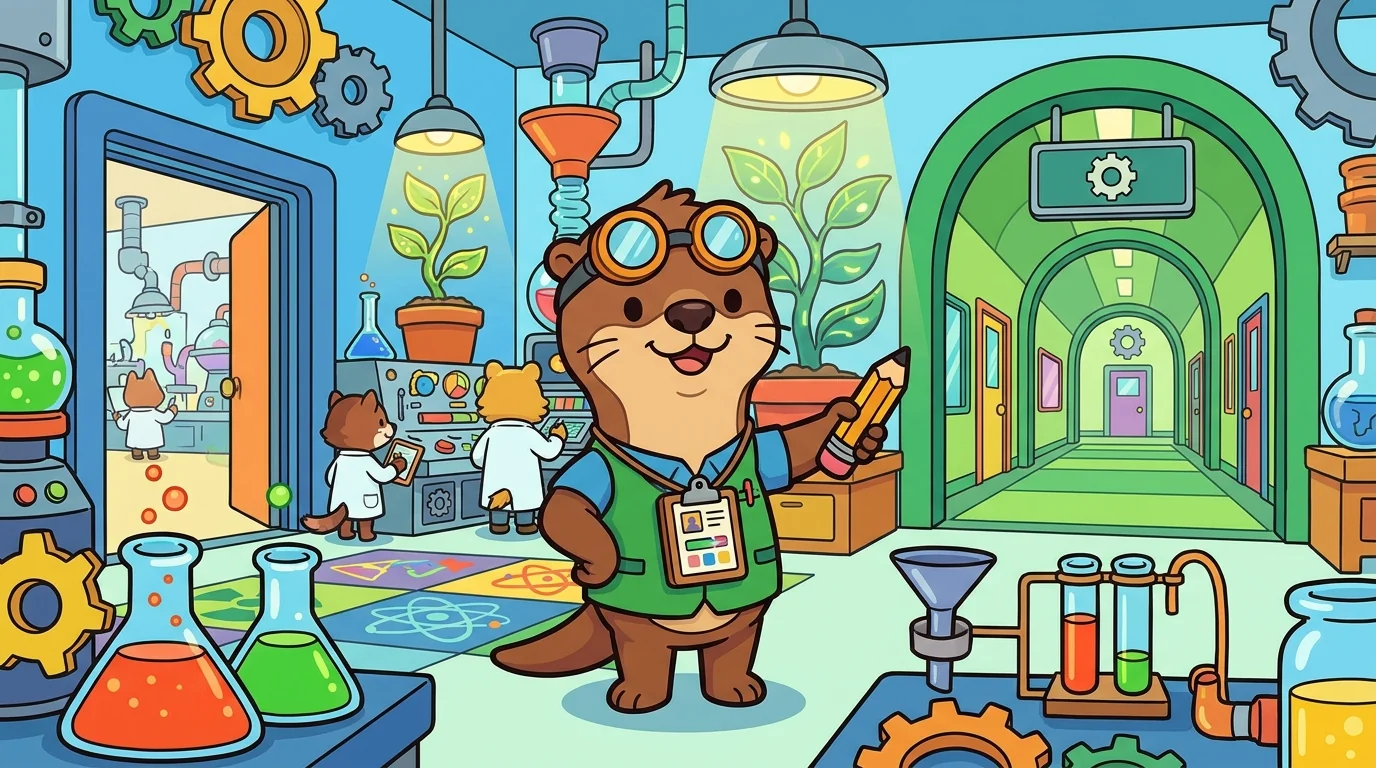
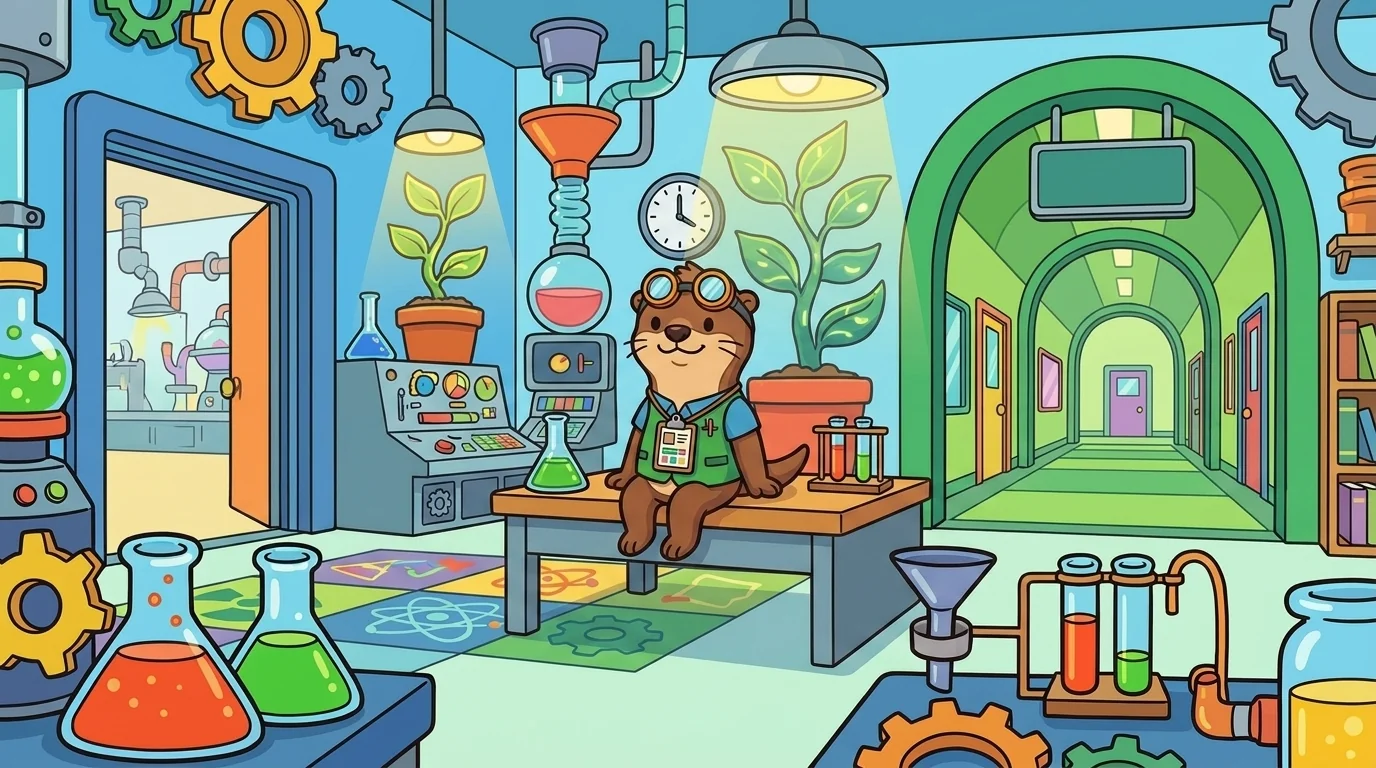
In the Science Labs, where glass corridors branched off into rooms that hummed and bubbled and glowed, a small, bright-eyed axolotl in an oversized lab coat stood at the junction, clipboard ready.
A kid barreled up. "I need to know if plants grow better with music," they announced. "I've been staring at a plant for twenty minutes and nothing's happening."
"Staring," Dr. Quark repeated, delighted and a little alarmed. "You've walked into the observation lab. That's the right lab for 'what does this plant look like' or 'what is it doing right now.' But your question isn't a looking question. It's a does-X-change-Y question." She swept a webbed hand toward a different glass door. "That's the experiment lab. You don't stare — you set up two groups, change one thing, keep everything else the same, and wait. The question tells you the lab. And you picked the looking-lab for a testing-question."
Dr. Quark had learned this as a young researcher who once tried to answer everything by staring.
She'd been curious whether a certain pond-bug preferred warm water or cold. So she'd watched. And watched. She filled notebooks with careful observations of bugs in one pond — beautiful, detailed, and completely unable to answer her question, because she'd never set up a cold pond to compare against the warm one. She had mountains of looking where she'd needed a test.
Her mentor flipped through the notebooks. "Gorgeous observing," she said. "And it can't answer you, because 'does it prefer warm or cold' is a comparison — and you only built one side." She'd drawn three doors on the whiteboard. "There are kinds of science questions, and each has its lab. What is this / what's happening — you observe. Does changing this change that — you experiment, with a fair comparison. What would happen if / why does the pattern hold — you build a model and test its predictions. Pick the lab before you pick up a single tool. You just spent a month in the wrong one."
Young Quark had felt it — a month of lovely, useless watching. But it stuck: name the kind of investigation first. Observing, testing, or modeling. The kind is the door.
She came to the Science Labs grown, and took the clipboard from the old researcher.
"You won't teach them biology or physics or chemistry," the mentor said. "The lab-folk do that, each in their room. You stand at the junction and sort the questions into the right kind of investigation."
"That's the whole game most kids are missing," Quark said. "They know facts. What they can't do yet is look at a question and say this one needs a test, not a look — or this one needs a model, because you can't experiment on a whole galaxy. I don't teach the science. I make sure they walk into the lab that can actually answer them."
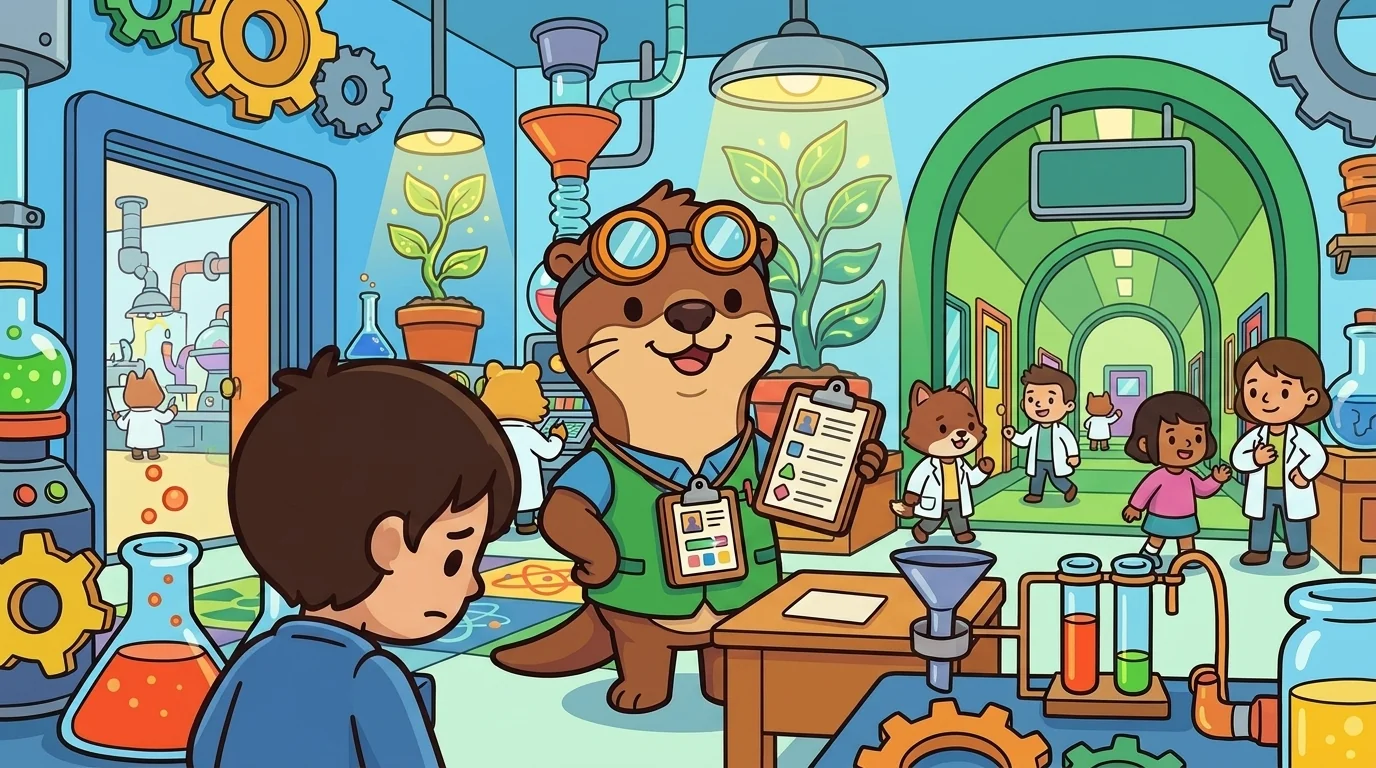
A boy arrived, exasperated. "My question is 'why is the sky blue,'" he said. "Do I set up an experiment? I don't have a sky."
"And that," Quark said, "is exactly the clue that tells you the kind. You can't run a fair experiment on the whole sky — you can't make a second, red sky to compare. So it's not an experiment question." She pointed to the third door, the one full of soft-glowing diagrams. "It's a model question. You build an explanation of how sunlight and air scatter light, and then you test the model's predictions — 'if my model's right, then sunsets should be red, and they are.' You can't change the sky, so you change your model and check it against what the sky already does." She grinned. "The impossibility of the experiment wasn't a dead end. It was a signpost — it told you which lab you needed."
The boy looked at the glowing diagrams. "So 'I can't test this directly' doesn't mean 'give up.' It means 'this is a modeling question.'"
"Now you're reading the junction," Quark said.
At dusk, when the corridors dimmed and the labs went quiet, the boy came back.
"You always know which door," he said. "Before I've done anything."
"Because the door comes first, and the doing comes second," Quark said. "Observe, when the question asks what's there. Experiment, when it asks whether changing one thing changes another — and you can build a fair comparison. Model, when you can't touch the thing directly but you can test what your explanation predicts." She tapped her clipboard, slow. "The facts you'll relearn a hundred times. But the habit of asking what kind of investigation does this question need — that's the thing that makes you a scientist instead of a fact-collector. It works on questions nobody's answered yet." She smiled. "The lab-folk teach you the science. I just make sure you're standing in the right room to receive it."
The boy looked back down the branching glass corridors — observe, experiment, model — and they didn't look like a maze anymore. They looked like three honest questions, each waiting to be told apart.
The AdventureHub ensemble
Dr. Quark is part of AdventureHub's distributed-narrative cast. Each character embodies a different curricular primitive; together they teach the full subject.
-

Trailmaster Theo
Math Mountains zone host — math + logic + ratios + chance + functions + geometry + proof + discrete + chess/Go/Xiangqi/backgammon/bridge tactics; 10+ source apps federated
-
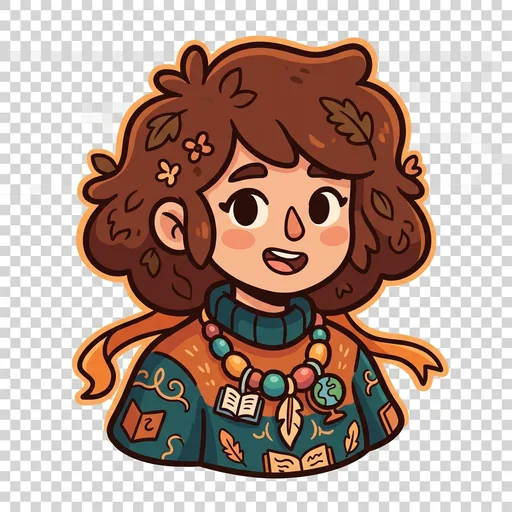
Loresinger Mae
Word Woods zone host — spelling + grammar + reading + writing + dialogue + character + poetry + voice + world-languages; 10+ source apps federated
-
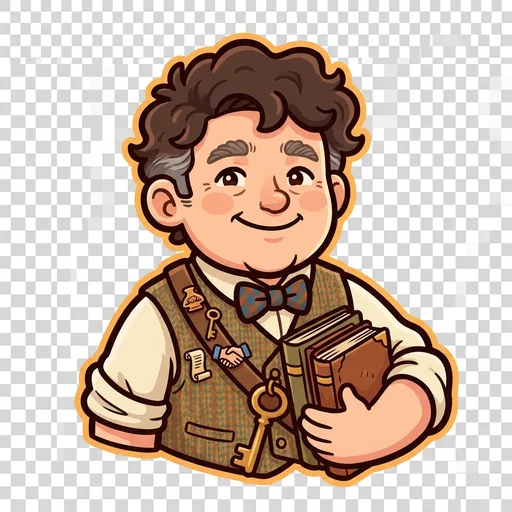
Archivist Atlas
History Ruins zone host — history + civics + culture + folklore + chronology + ethics; 5+ source apps federated
-
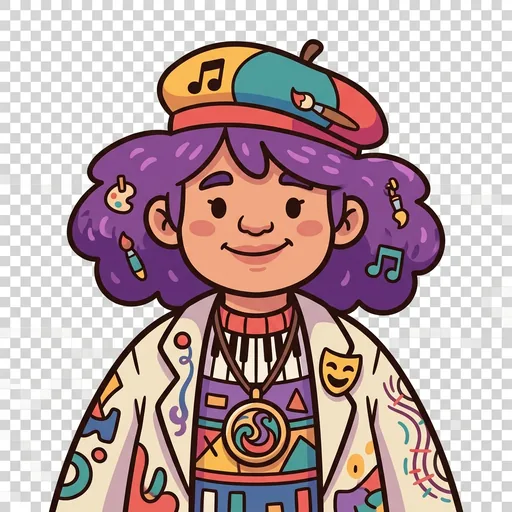
Maestro Mira
Creative Studio zone host — visual art + music + dance + theater + lyrics + motif + composition; 5+ source apps federated