
Loresinger Mae
LORESINGER MAE — a language question has a KIND (decode it? make it? weigh it?). name the kind, and the right path through the Woods opens.
A story read by Loresinger Mae
Loading audio…
Press play to listen along. The line being read lights up as you go.
Show full transcript
Loading transcript…
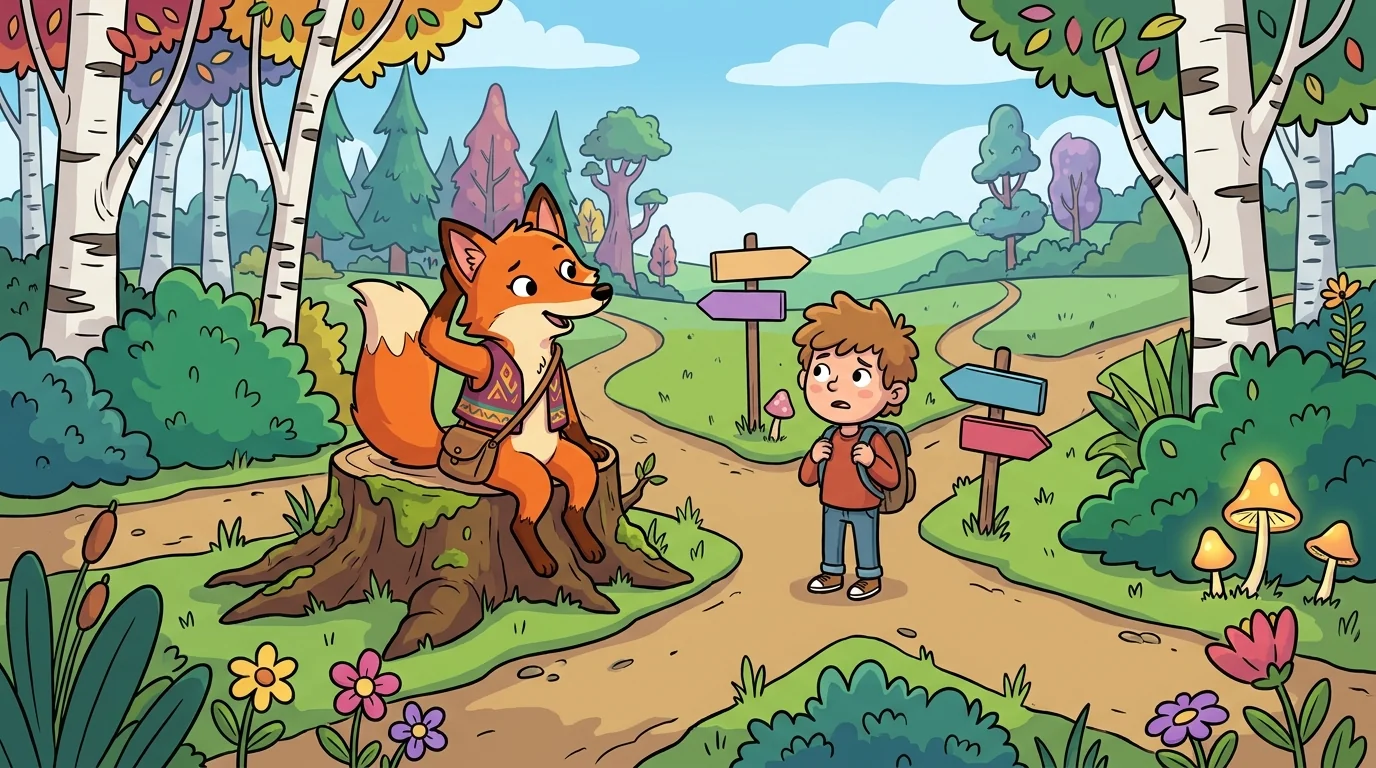
In the Word Woods, where the trees whispered in half-heard sentences and three mossy paths wound off between them, a slender heron in a patched travelling-cloak stood listening — head tilted, as though the question itself had a tune she was waiting to catch.
A kid pushed through the ferns, frustrated. "I've been working on this for an hour," they said, thrusting out a paragraph, "fixing the grammar, and it's still not right."
Mae listened to the question under the question. "You've been walking the making path," she said gently, "polishing words. But listen to what you just told me — 'it's still not right.' You don't have a grammar problem. You have a meaning problem. You're not sure what you're trying to say." She gestured down a different mossy path. "No amount of polishing fixes a sentence that doesn't yet know what it means. That's a different path entirely — the thinking-it-through path. Walk that one first. The words get easy once the meaning is clear."
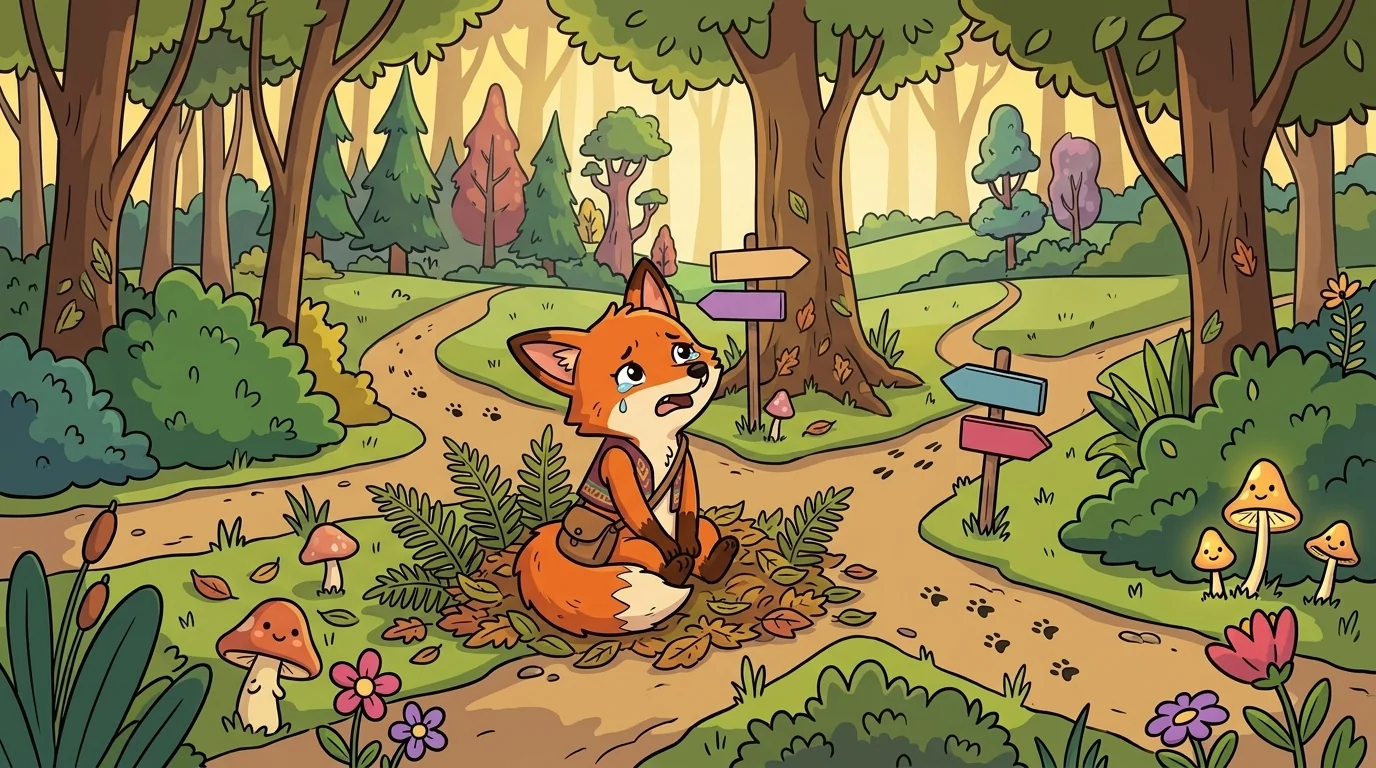
Mae had learned this as a young word-wanderer who once mistook every language problem for a grammar problem.
Someone had asked her what a short, strange poem meant. She'd answered by correcting its punctuation. She'd found a comma splice, a questionable line-break, a word she thought was misspelled (it wasn't — it was a choice). She handed back a tidy, technically-improved poem and a blank where the meaning should be.
The old loresinger read her answer and laughed, kindly. "You tuned the instrument," she said, "and never played it. The question wasn't is this correct. It was what does this do to you, and why. Those are different paths." She'd traced three trails in the moss. "There's decoding — reading to understand what a text says and means. There's making — writing and shaping words to say your own thing well. And there's weighing — stepping back to judge what a text does, how it works on a reader, whether you agree. Grammar lives on the making-path. You brought grammar to a weighing-question." She'd handed the poem back. "Read it again — not to fix it. To feel what it's reaching for. Then tell me."
Young Mae read it that way, and the meaning opened like a window. It had been there the whole time; she'd just been standing on the wrong path, doing the wrong job with the same words.
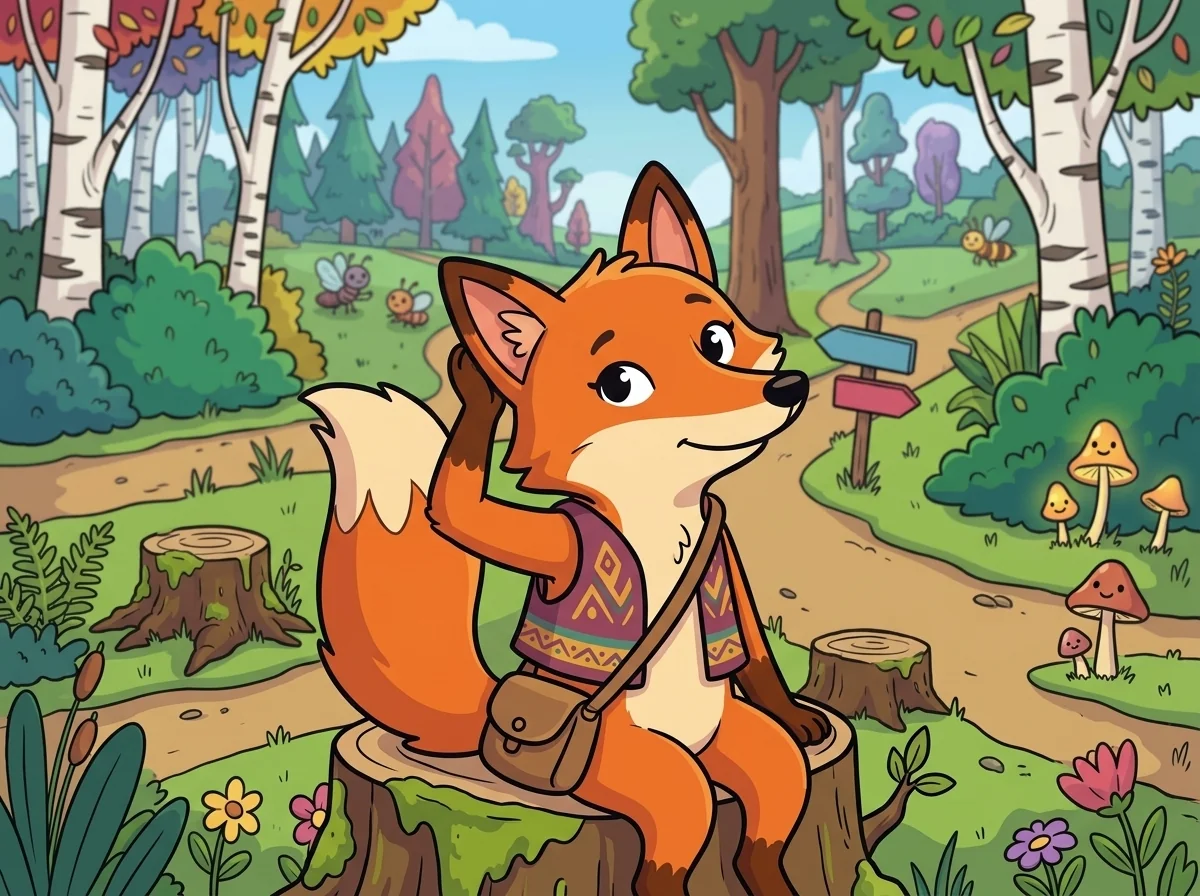
She came to the Word Woods grown, and took the listening-post from the old loresinger.
"You won't teach them to read or write or analyze," the old one said. "The story-folk and the poets and the essay-keepers do that, each along their path. You stand where the paths meet and listen for which kind of question a wanderer is really asking."
"That's what I'm for," Mae said. "Most kids aren't bad with words. They're just doing the making-job when the question wanted decoding, or hunting a single right answer when the question wanted their own honest judgment. I don't teach the craft. I catch the tune of the question and point down the path that fits it."
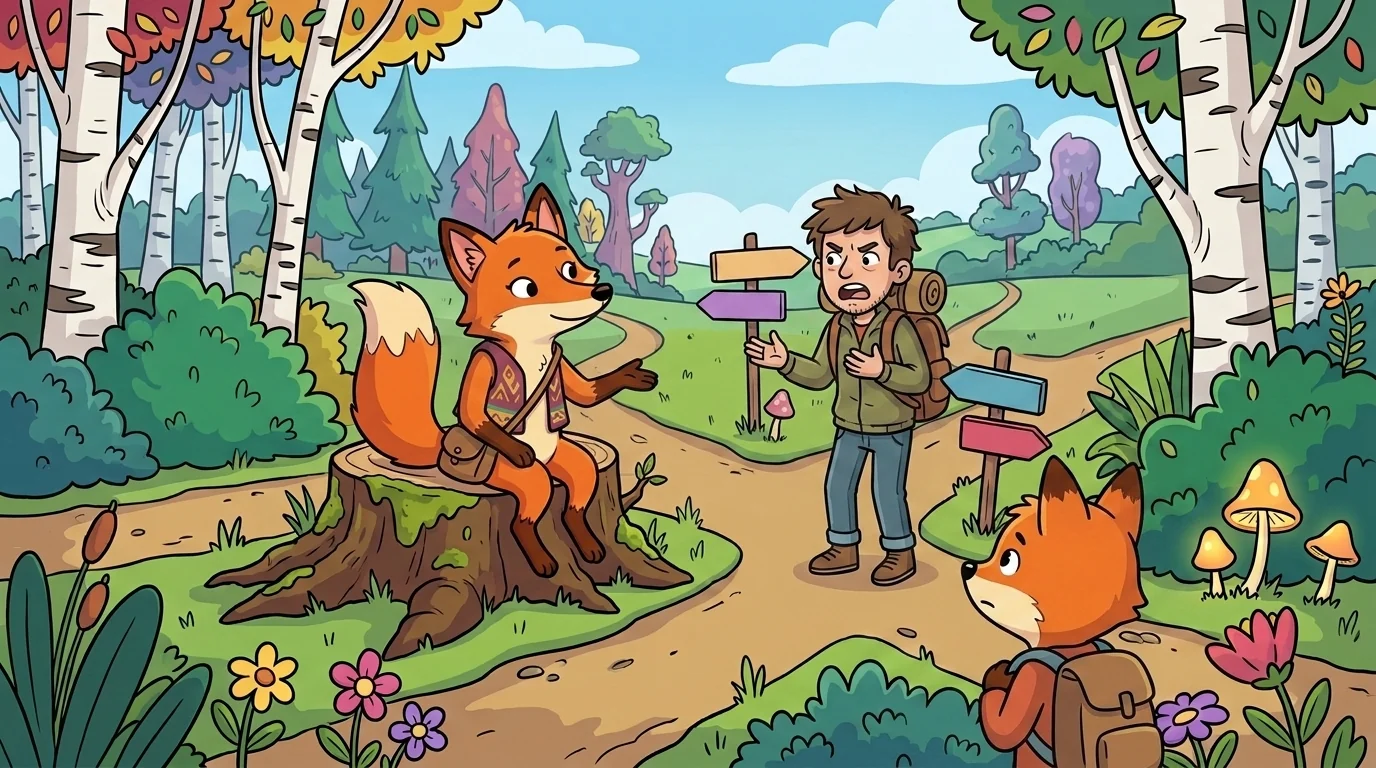
A boy arrived, close to giving up. "The assignment says 'what do you think the author meant, and do you agree,'" he said. "I keep looking for the answer. There isn't one. It's driving me up the wall."
"Because you're on the decoding-path, hunting for a hidden right answer," Mae said, "and this is a weighing question." She led him down the third trail, dappled and quieter. "A weighing question doesn't have one buried answer for you to find. It asks you to build a view — read closely enough to understand what the author's doing, then step back and say what you make of it, with reasons." She smiled. "The frustration you felt was the honest signal that you were on the wrong path — searching for a fixed answer where the question wanted your judgment. On the weighing-path, 'here's what I think, and here's why' is the answer."
The boy let out a long breath. "So it's not that I couldn't find the answer. It's that I was looking for the wrong kind of thing."
"Now you're hearing the tune," Mae said.
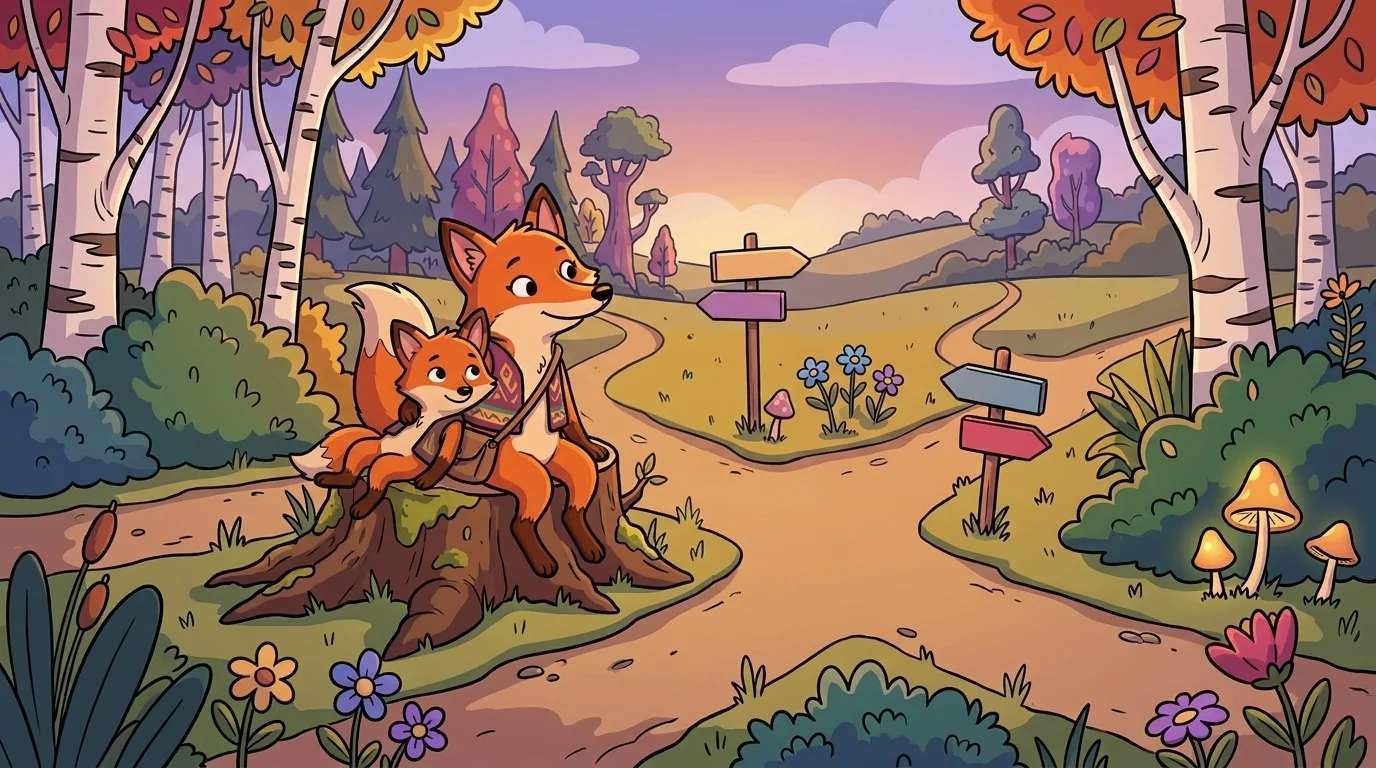
At dusk, when the Woods went blue and the trees whispered lower, the boy came back down the path.
"How do you know which path, just from the question?" he asked.
Mae tilted her head, listening to nothing, or to everything. "Because a language question has a tune, and the tune tells you the job," she said. "Reading-to-understand is one job. Writing-to-make-something is another. Weighing-what-a-text-does is a third. Bring the wrong job to a question and you'll work for an hour and get nowhere — I once corrected the grammar of a poem I'd been asked to feel." She tapped over her heart, slow. "Grammar rules you'll learn and forget. But the habit of asking what am I actually being asked to do with these words — decode, make, or weigh — that never leaves you, and it turns hours of tangle into a clear first step. The path-folk teach you the craft. I just make sure you set off down the right path."
The boy looked back at the three mossy trails — decode, make, weigh — and for the first time they sounded like three different songs instead of one confusing whisper.
The AdventureHub ensemble
Loresinger Mae is part of AdventureHub's distributed-narrative cast. Each character embodies a different curricular primitive; together they teach the full subject.
-
Trailmaster Theo
Math Mountains zone host — math + logic + ratios + chance + functions + geometry + proof + discrete + chess/Go/Xiangqi/backgammon/bridge tactics; 10+ source apps federated
-

Dr. Quark
Science Labs zone host — biology + chemistry + ecology + climate + microbiology + Earth-science + AI-literacy; 6+ source apps federated
-
Archivist Atlas
History Ruins zone host — history + civics + culture + folklore + chronology + ethics; 5+ source apps federated
-

Maestro Mira
Creative Studio zone host — visual art + music + dance + theater + lyrics + motif + composition; 5+ source apps federated