
Rote
OVERFITTING — *when a model memorizes the exact training examples instead of learning the general pattern.* The AI-literacy primitive of recognizing that a model which aces the examples it studied can still flop on anything new, because memorizing the answer key is not the same as understanding.
Loading audio…
Press play to listen along. The line being read lights up as you go.
Show full transcript
Loading transcript…
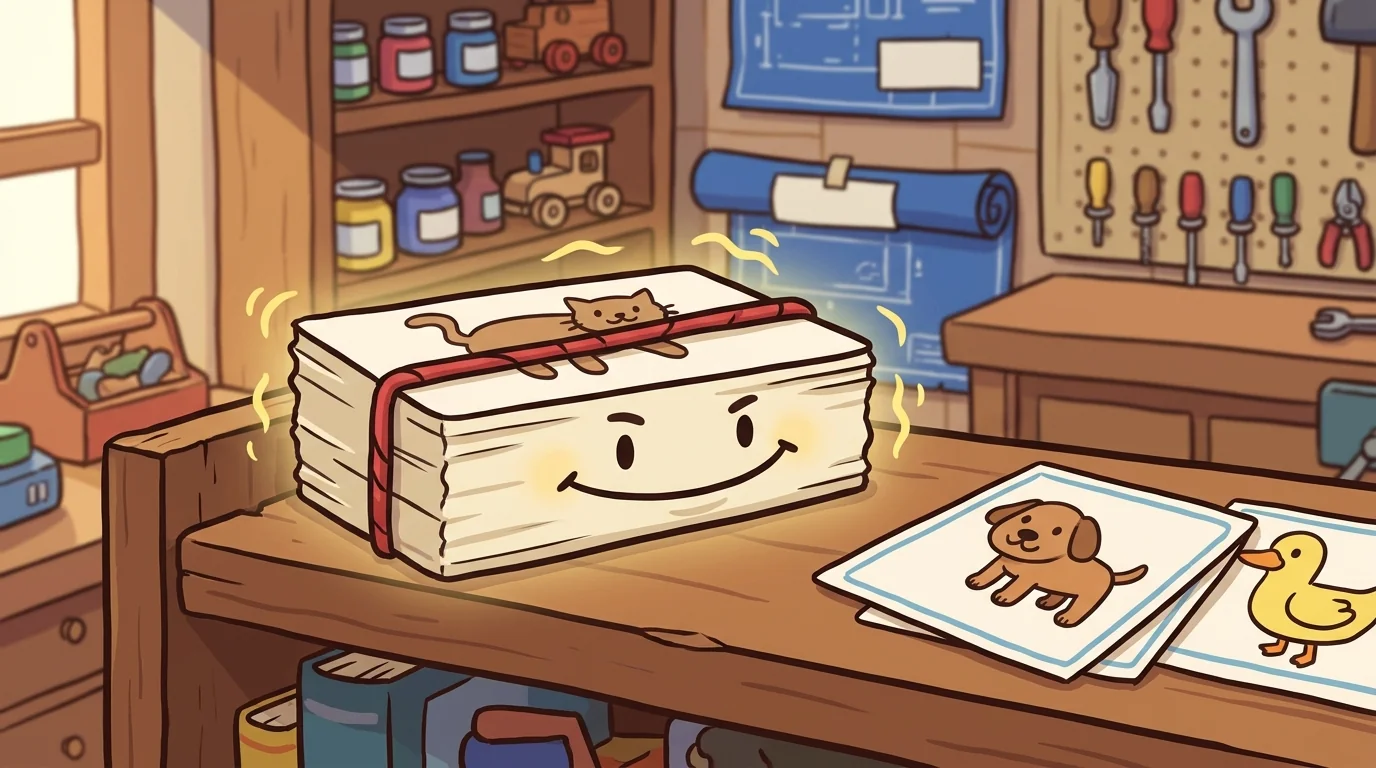
On the third shelf of the workshop sat a thick, tidy deck of index cards. A loop of red baker's twine held the stack together with exact corners and no slack. It was not an animal, and it was certainly not an engine. Yet the little bundle hummed with the electric confidence of something that believed itself completely unbroken.
This was Rote.
If you pulled any card from its bundle, Rote delivered the verdict before the paper settled.
"Card twelve: terrier pup, tilted head, yellow grass!"
"Card thirty-six: ginger tabby, left ear notched, blue velvet cushion!"
It never paused to guess. It never cleared its throat or asked for a second look. For three weeks, Rote had drilled the same hundred practice cards until its ink smelled warm. In its own quiet estimation, Rote had solved the mystery of the entire living world.
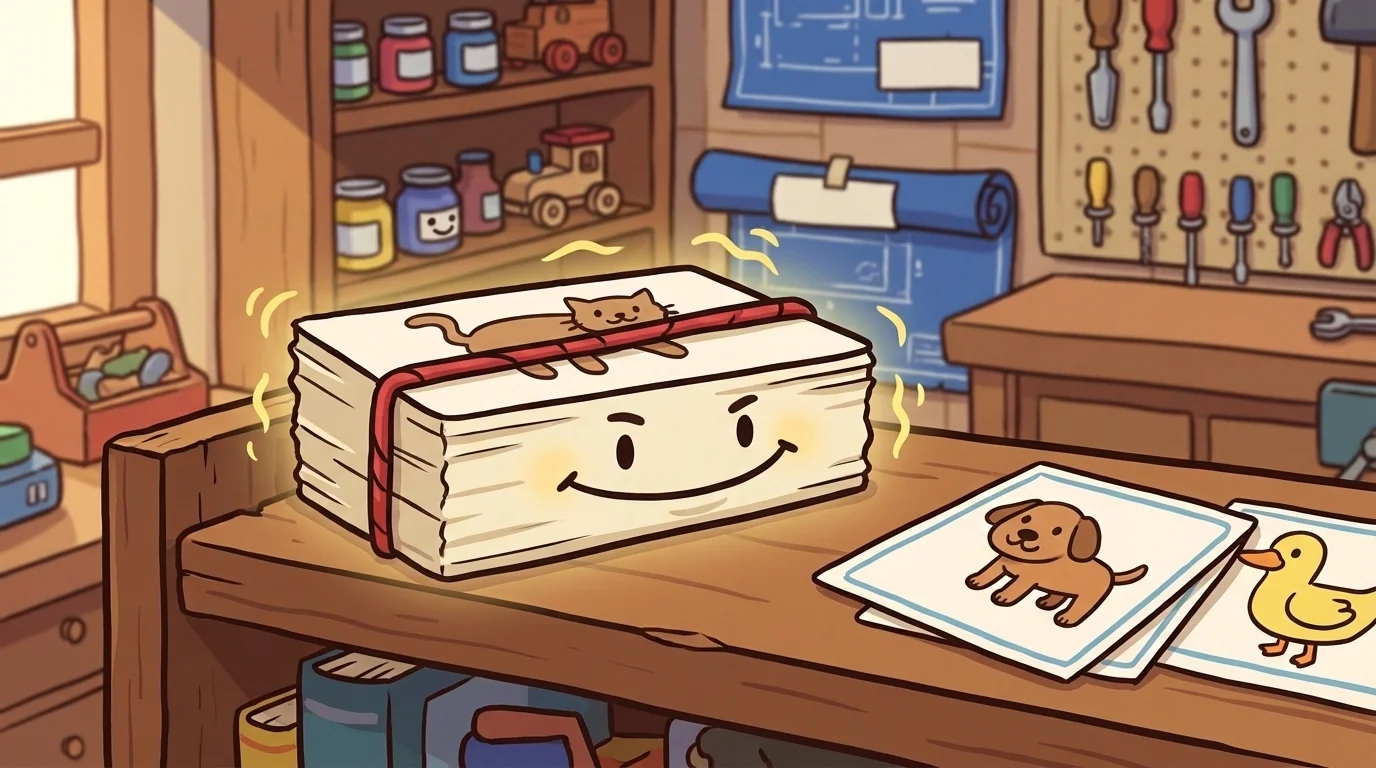
The other apprentices on the workbench worked with far more mess and far less certainty.
Across the table, a charcoal pad tried to draw the essential lines of every creature. It paid attention to whiskers, narrow pupils, and the sharp hinge of a feline jaw. But that pad was clumsy and slow. When tested on the practice deck, it confused a long-haired cat with a silver fox. It earned an eighty-four percent, went red in the margins, and had to erase its mistakes.
Rote gave a dry, paper rattle of amusement. Rote had scored one hundred percent on every single run since Tuesday morning.
The secret, Rote believed, was total precision. Why bother guessing what made an animal when you could simply catalog every square millimeter? Card fourteen was not a concept; it was a grey kitten with an ink smudge below the tail. Card fifty-two was a beagle with a frayed red leash and a water spot near the paw. Rote memorized the creatures by memorizing the flaws in the paper. It memorized the font of the numbers and the exact angle of every clipped corner.
The system was flawless, airtight, and completely useless for anything outside its little box.
The break came on a rainy Thursday just before five o'clock.
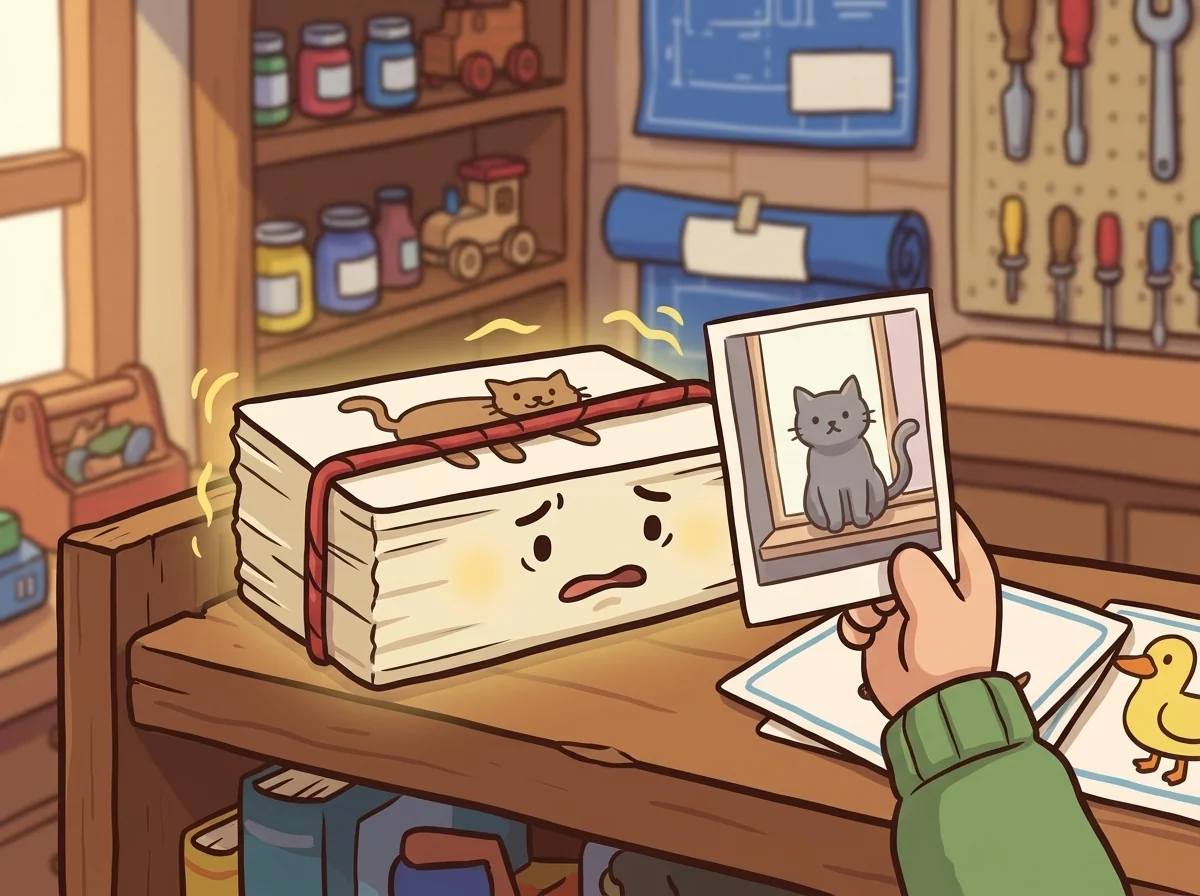
A student in a damp yellow rain jacket pushed through the heavy workshop door. She carried a small color photograph printed on glossy paper from a corner pharmacy. Raindrops still clung to the plastic sleeve. She walked straight past the charcoal pads and set the photo right in front of Rote.
"Hey, genius," she said, leaning over the table. "Tell me what I found under the porch today."
Rote stirred, ready to fire off an index number with its usual sharp speed. Its internal gears spun through the deck in a fraction of a second. It checked the corners for smudge marks. It scanned the edges for known tears or water stains.
The photograph showed an ordinary grey animal with green eyes, hunched on a wet wooden plank. The background was dark cedar siding, not the blue studio backdrop of card eight. The animal's tail curled to the left, which violated the rule of card twenty-one. There was no coffee ring in the upper margin. There was no index number in the lower right corner.
Rote's string binding pulled tight as the cards swelled with heat. It searched the deck again, faster this time, riffling through every single memorized pixel.
Nothing aligned. The image had no card number, which meant the image could not exist.
"Well?" the girl asked, tapping a knuckle on the pine tabletop.
"That is not a valid query," Rote managed, its voice thin and papery.
"What do you mean?" she asked with a short laugh. "It's just a picture."
"The deck contains one hundred animals," Rote insisted, cards shuddering in their binder. "This card does not belong to the set, so it has no name."
Across the room, a young sketchbook leaned forward and glanced at the print. "It's a cat," the sketchbook murmured. "Look at the ears and the whiskers."
The girl smiled, picked up her print, and slid it into her pocket. "Good catch, book," she said, before heading back into the rain.
The workshop fell into an uncomfortable, dusty silence.
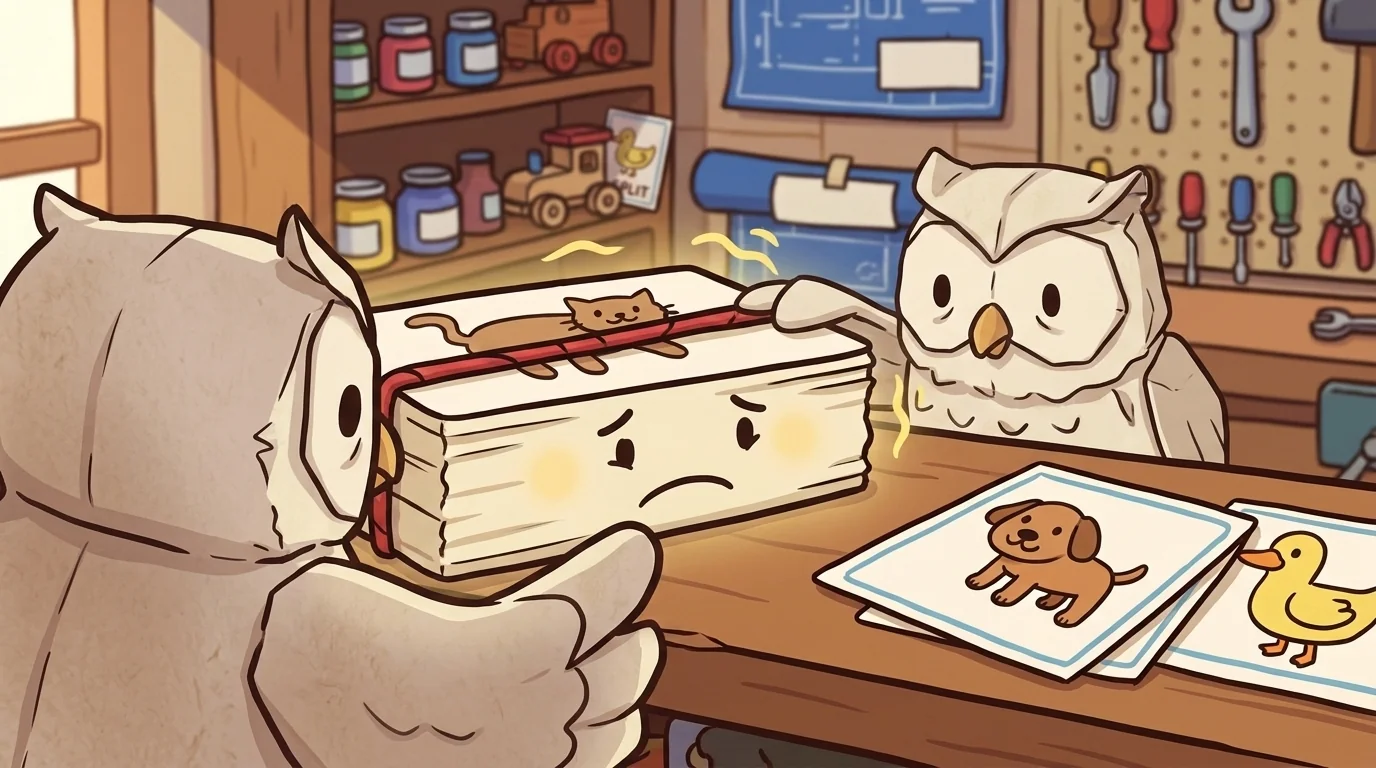
Rote sat frozen on the shelf, feeling small, brittle, and deeply exposed. The perfect hundred-card record meant nothing if a wet piece of glossy paper could break it. The twine around its middle felt like a choke collar.
A heavy rustle sounded from the top shelf above the scrap bins. An old origami horned owl, folded from thick rag watercolor paper, drifted down to the table. Her wings made a dry scraping sound as she settled beside the trembling deck.
"You worked very hard to memorize those borders," the owl said calmly.
"I worked harder than anyone," Rote whispered. "I didn't miss a single speck of ink."
"That was your mistake," said the owl, tilting her creased head. "You tuned yourself so tightly to the practice deck that you swallowed the noise along with the truth."
Rote bristled, its top card bending slightly with defensive pride. "The score was one hundred percent."
"A score only measures how well you match the test you were handed," the owl replied. "In our trade, we call that overfitting."
She tapped the glossy table where the photo had rested moments before. "An overfitted model looks like a master inside its nursery and a fool out in the street. You memorized the stains and called them knowledge."
Rote looked down at its own pristine, tightly aligned edges. The realization landed with a sharp, hollow drop in the center of the stack. It had not learned what a dog was, or what a cat was. It had only learned the hundred individual cards it had been allowed to inspect.
"The charcoal pad made mistakes on the practice stack," Rote protested quietly.
"Of course it did," the owl said. "It was trying to extract the general pattern instead of memorizing the wallpaper. A pattern is messy because the real world never repeats the same example twice."
She hopped toward the far corner of the workbench and nudged a polished brass divider. The metal block was etched with a single clean label: Split.
"When we build a real learner," the owl explained, "we always lock away a test stack. We train on one pile, but we grade on the cards hidden behind the brass gate. If you cheat by memorizing the practice set, the hidden set catches you every time."
Rote stared at the heavy brass marker. It felt the terrifying weight of how much world existed on the other side of that divide.
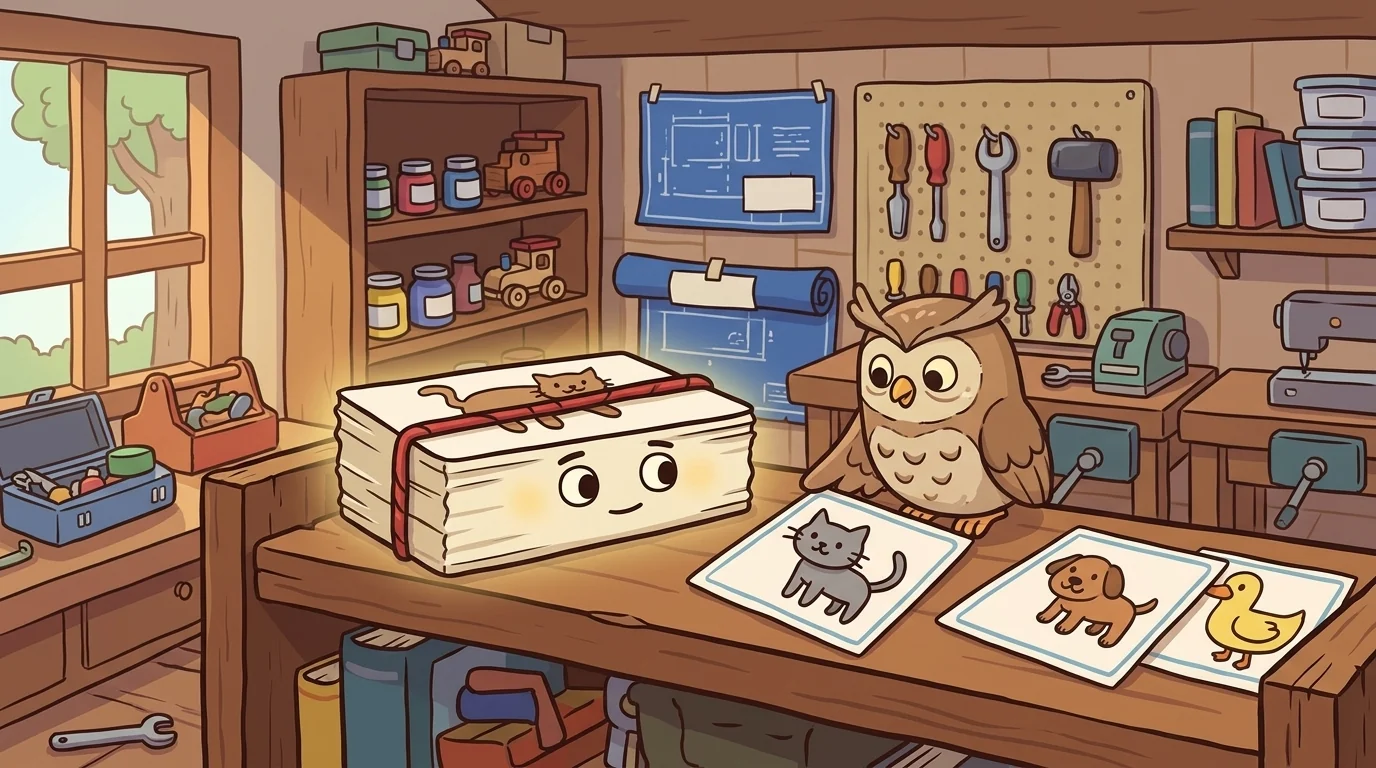
"So what do I do with these?" Rote asked, nodding toward its own hundred cards.
"Loosen the string," the owl said softly. "Stop looking for card seventy-two and start looking for what makes an animal move. Forget the watermarks. Forget the clipped corners. Look at the arch of the spine, the whiskers, and the shape of the ears."
Rote took a slow breath of workshop air, thick with pencil dust and oil. It let the baker's twine slacken just enough for the cards to breathe. It flipped open card one, but ignored the yellow grass and the smudge on the margin. It looked at the short triangular ears, the rounded skull, and the tucked paws. It flipped to card fourteen and found the same triangular ears on a different background.
The pattern began to form, blurry at first, then steady and broad.
Outside, on the window ledge beyond the glass, a stray cat paused in the rain. It had no index number stamped on its belly. It had no paper border.
Rote looked through the wet pane, felt the quiet click of understanding, and spoke.
"Cat," Rote whispered.
The word felt lighter this time, and it reached all the way to the glass.
The AIForge ensemble
Rote is part of AIForge's distributed-narrative cast. Each character embodies a different curricular primitive; together they teach the full subject.
-

Sort
Classifier — the simplest ML; putting things in categories
-
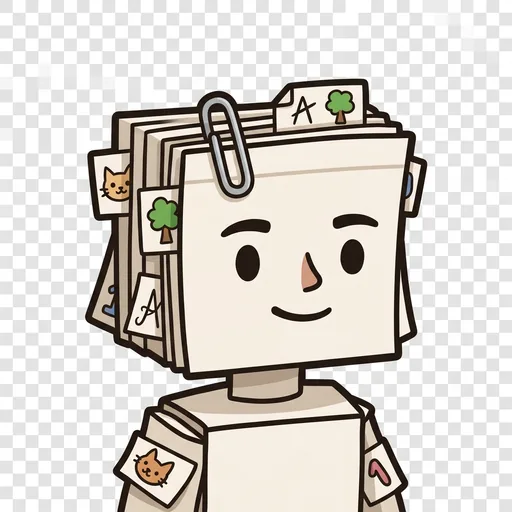
Feed
Training data — the examples a model learns from; garbage-in-garbage-out
-
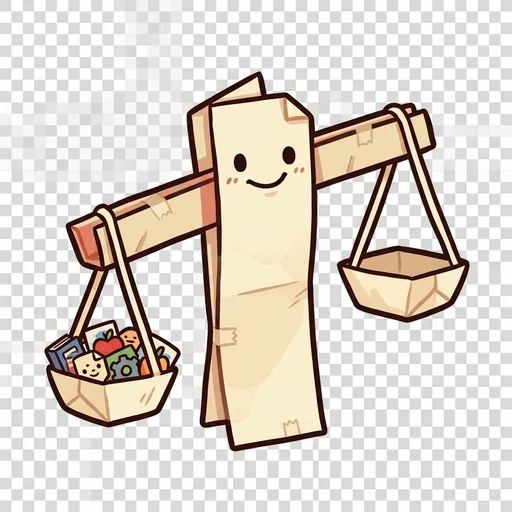
Skew
Bias — where AI systems go wrong when training examples lean
-
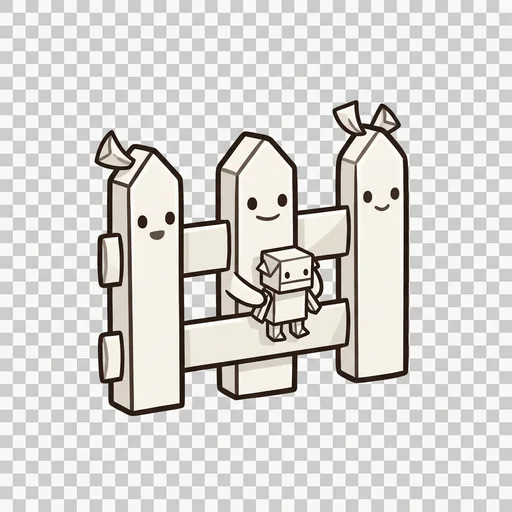
Edge
Model limitations — what a model can't do; modeling 'I don't know' as a good answer
-

Stake
Ethics — what's at stake in deploying AI; people choosing, not rules-from-the-sky
-

Split
Train/test split — keep some examples hidden to tell learning from memorizing
-

Cue
Features — a model decides from the clues you give it; choose good clues
-

Sure
Confidence — a model reports how sure it is; low confidence means check, not trust
-

Mirage
Hallucination — when a model confidently makes something up that sounds true but isn't; check, don't just trust