
Flurry
FLURRY — *the fill. the quick burst of notes a drummer plays to carry a song across the turn from one section into the next. the musical doorway between two rooms.*
Loading audio…
Press play to listen along. The line being read lights up as you go.
Show full transcript
Loading transcript…
Pip walked down the narrow, echoing hallway of the music wing. The sound of a dozen different instruments bled through the heavy wooden doors, creating a chaotic soup of brassy honks and screeching violins. But as she approached the very end of the hall, one sound drowned out all the others. It was a rapid, thunderous rattling that vibrated right through the soles of her sneakers.
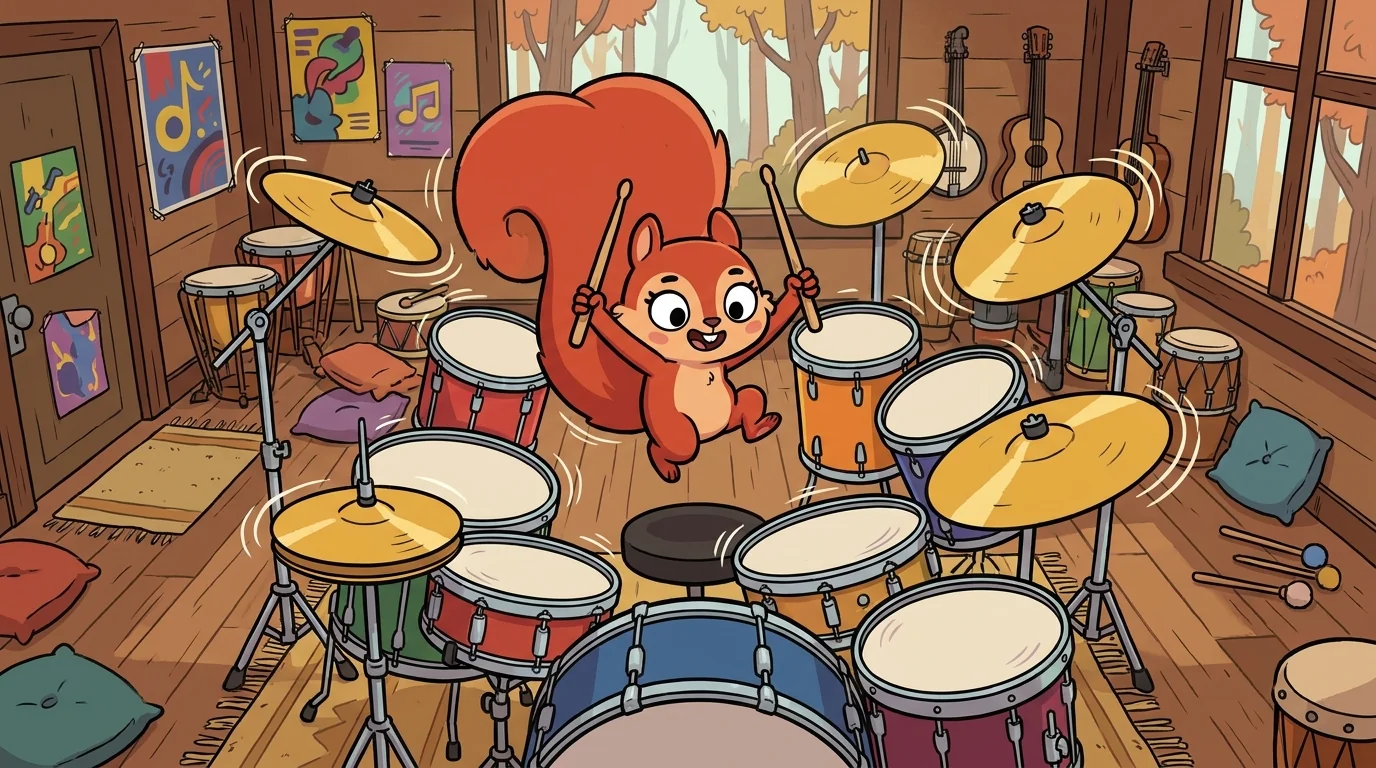
She pushed open the heavy oak door and immediately stepped into a wall of sound. The air inside smelled of shaved hickory, metallic brass polish, and dry cedar wood. Drums of every size lined the walls, stacked three high like giant, hollow cheeses. In the center of the room, a massive circular rack held a dozen different cymbals, hanging like golden planets suspended in the dusty air.
Inside that golden circle of metal sat Flurry, looking smaller than her massive drums. She was a red squirrel-tween, though she looked more like a small orange spark. Her tail was a brilliant, twitching copper plume, and right now, she was a blur of motion. Her paws held thin wooden drumsticks that moved so fast they turned into gray mist. She rattled across the tom-toms, leaped to the snare, and then drove her heel into the bass drum pedal.
Badadadada-BOOM.
The final crash hit a massive ride cymbal, making the metal shiver and send a physical wave of sound across the room. Pip felt the vibration rattle right through her teeth.
"HI!" Flurry shouted, freezing mid-motion with both of her sticks pointed straight at the ceiling. Her copper tail puffed up to twice its normal size, looking like a dusty pinecone.
"Sorry, sorry," Flurry gasped, dropping her arms and letting her tail settle. "I was just warming up, but did you hear that little tumble at the end?"
Pip blinked, trying to clear the ringing from her ears. "It was loud," Pip said, stepping further into the room.
"It was beautiful," Flurry corrected, hopping off her stool. "That is the whole reason you are here today, because that little explosion is called a fill."
Pip tilted her head, her eyes tracking the glittering brass cymbals. "To be honest, it just sounded like a bunch of fast hits."
"It is a bunch of fast hits," Flurry said, her nose twitching with delight. "But the magic is all about where those hits go."
She scrambled back onto her vinyl-padded stool and grabbed her sticks. With a light tap of her foot, she started a steady, rhythmic pattern on the high-hat cymbal. Then she added the snare, creating a simple, comforting beat of thump, clap, thump-thump, clap. It was the kind of rhythm that made your shoulders want to bounce.
"Okay, listen," Flurry said over the noise. "This is a song rolling down a flat highway, where everything is steady and safe."
Pip nodded, her foot tapping the floorboards in time with the bass drum.
"But songs have different rooms," Flurry continued, her sticks never missing a beat. "You have a verse, then a chorus, and you cannot just slide between them without anyone noticing."
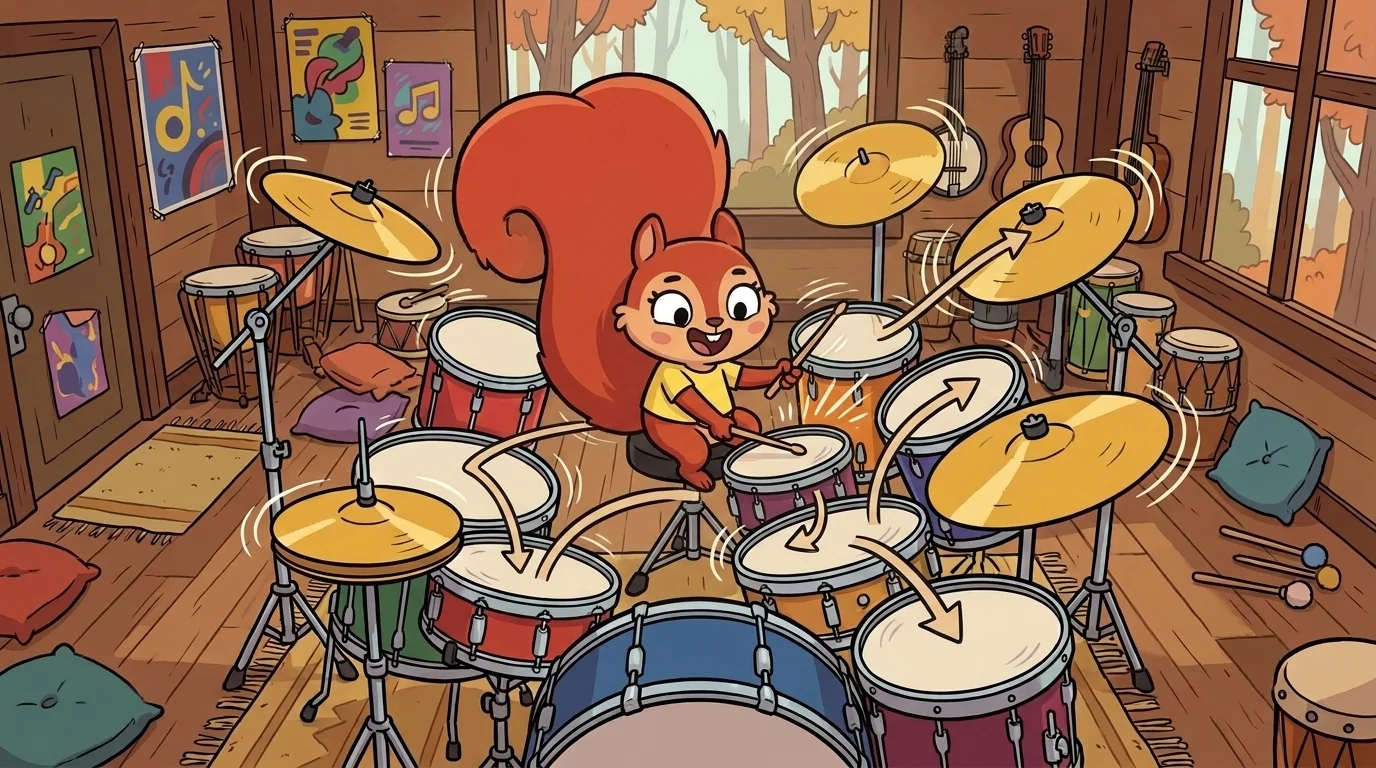
She played the steady pattern up to the very last beat of the measure. Suddenly, her arms blurred as the sticks flew from the snare to the high tom before cascading down to the deep floor tom.
Badada-dum-BAP!
She crashed back onto the main cymbal and immediately dropped into a much heavier, louder groove.
Pip's ears perked up, and she realized the fast part was like a little bridge between the two patterns.
"A doorway," Flurry corrected, her dark eyes shining as she explained that a fill is the doorway between two rooms of a song. She tapped the rim of her snare drum for emphasis, explaining that the steady beat is just walking through a room. "The fill is the exact moment you turn the knob and step through, telling everyone listening to get ready because a change is coming."
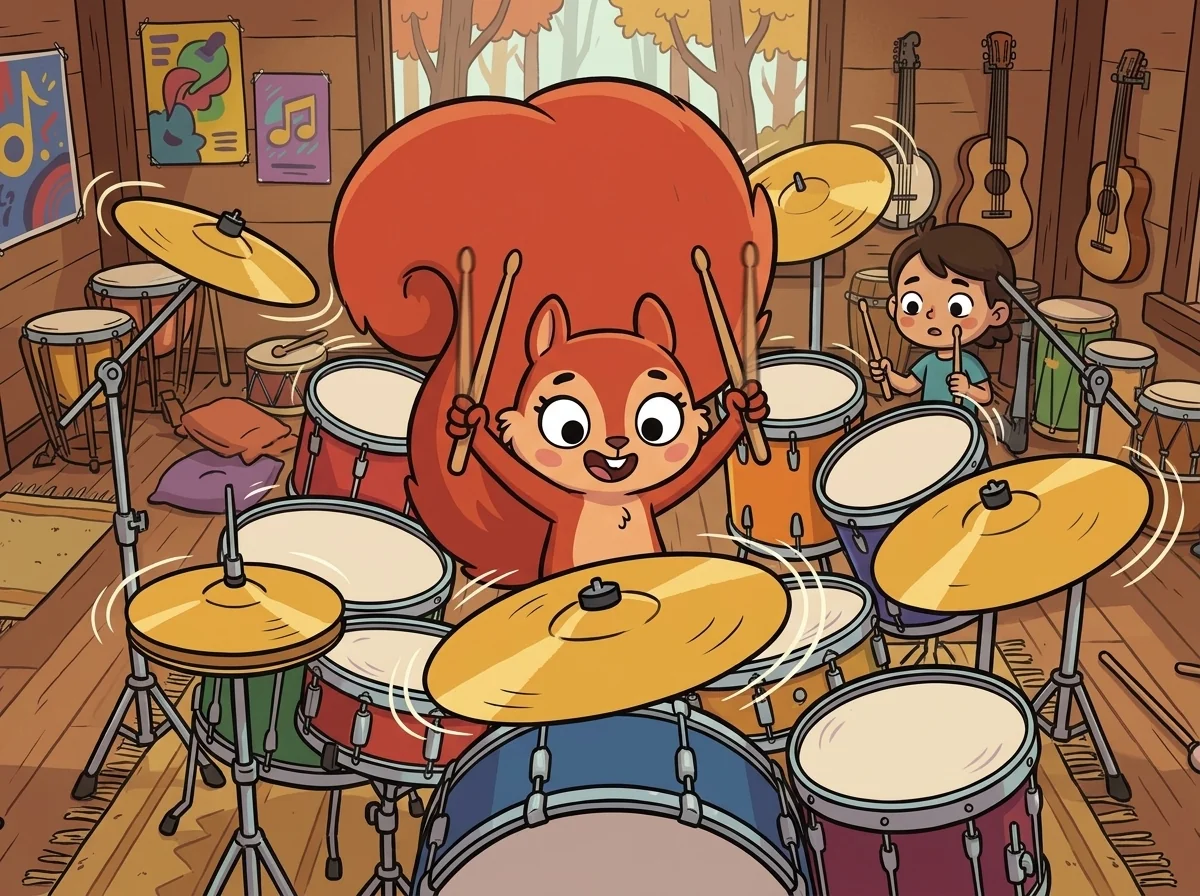
Flurry hopped down and offered Pip a pair of heavy wooden sticks. They felt cold and smooth in Pip's hands, smelling faintly of sweat and old wood.
"Your turn," Flurry said, gesturing toward the empty stool behind the drums. "Go ahead and sit in the hot seat."
Pip climbed onto the stool, feeling suddenly very exposed as the bass drum pedal felt heavy and cold under her right sneaker. She held the sticks the way she had seen Flurry do it, balancing them between her thumbs and index fingers.
"Start with a basic four-beat pattern," Flurry instructed, hovering near the cymbals. "Keep it simple and just count to four in your head."
Pip took a deep breath to steady her hands, then tapped the high-hat on one and hit the snare on two. She tapped the high-hat on three, hit the snare on four, and realized it was a little clunky.
"That is perfect," Flurry whispered, "so on the next four, right at the very end, I want you to do a little scramble." She leaned closer. "Hit anything you want, but just make sure it is fast."
Pip counted the beats in her head with her heart racing, and on the fourth beat, she panicked. Her right stick clipped the metal rim of the snare with a sharp clack, and her left stick bounced wildly off the high tom-tom. It sounded like a wooden bucket tumbling down a flight of stairs, but she managed to land her right foot back on the bass drum pedal.
"Yes!" Flurry squeaked, her tail flaring like a firecracker as she asked if Pip felt that sudden shift.
Pip laughed, her hands shaking slightly from the sudden rush of energy as she admitted that it felt like tripping over her own feet.
"But you landed on the other side, and for one split second, the whole room leaned in to see what would happen." Flurry grinned. "They wanted to see if you would crash or make it through."
Pip tried again, and this time she did not panic. She kept the steady beat for three counts, then let her sticks skitter across the two smaller drums before landing on the big cymbal.
Tapa-tapa-tapa-CRASH.
The sound was bright and sharp, and it felt like she had actually built a tiny wooden door and kicked it wide open.
"Do it again," Flurry urged, bouncing on her heels with excitement, "and keep going until your hands do not have to think about it."
Pip played the pattern over and over, letting her muscles take over as her wrists warmed up and the stiffness in her shoulders melted away. She realized that drumming was not just about hitting things hard, but was a physical conversation between her hands and her foot. When they worked together, the rhythm felt like a living thing that she could control.
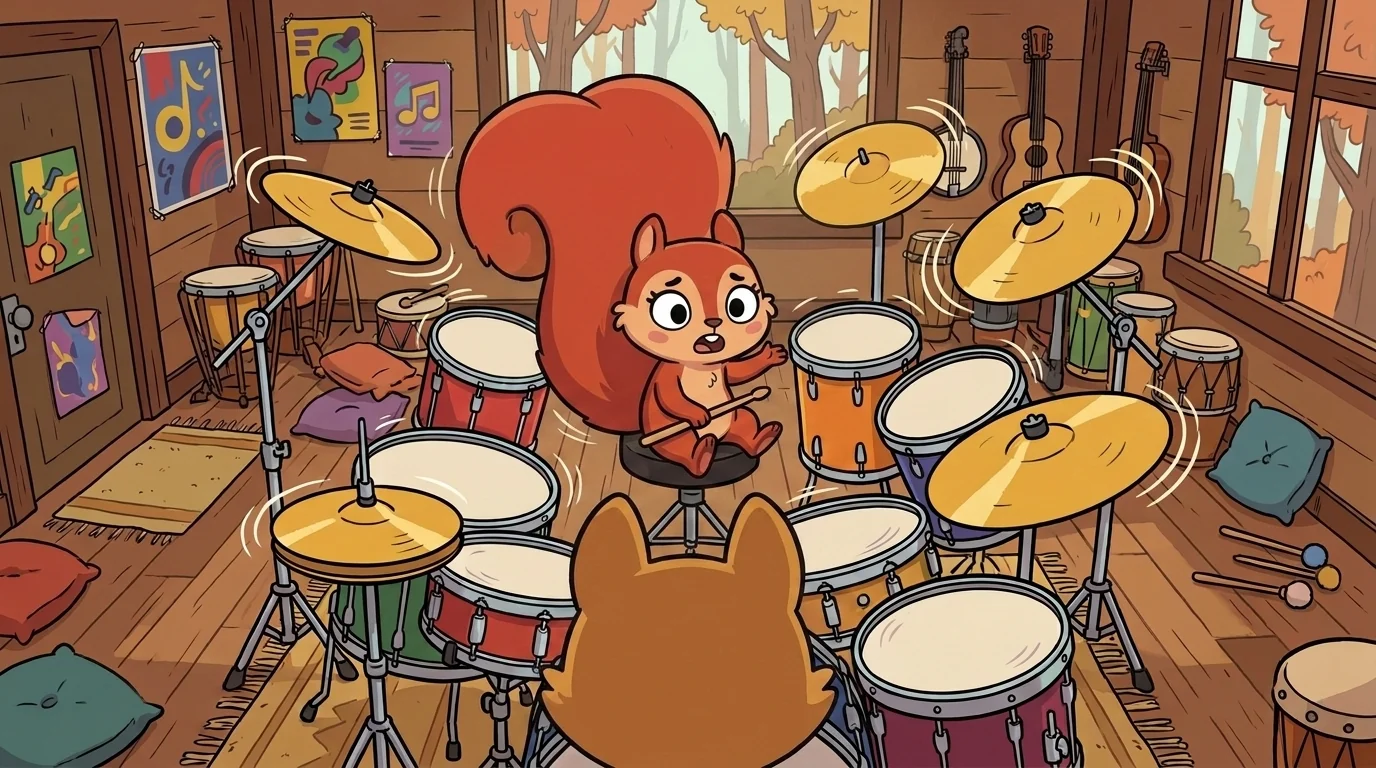
"Now, hold on," Flurry said, her voice dropping to a conspiratorial whisper. She sat on her own paws to keep them from twitching, looking almost embarrassed as she began her warning. "I have to tell you about the trap, because you are going to fall into it, and everyone does."
Pip looked up, holding her sticks perfectly still over the snare drum as she asked what kind of trap she meant.
"The trap of the million doors," Flurry said, leaning forward with an intense look in her eyes. "When I first learned how to play a fill, I completely lost my mind because I thought they were the greatest thing ever."
She hopped back onto a spare drum throne and grabbed another pair of sticks, explaining her past mistakes. "I decided that if one doorway was exciting, then a hundred doorways would be absolutely amazing," she said. "I started putting a fill in every single gap I could find, playing them every four beats and between every verse."
She started a beat, but before she could even establish a rhythm, she launched into a chaotic tumble.
Thump-tapa-tapa-boom-clack-tapa-tapa-CRASH.
She did it again just two seconds later, never letting the beat settle under a completely relentless wall of noise. It felt like being trapped inside a wooden box while someone threw rocks at it, with no pattern to hold onto. Pip actually winced and covered her ears as the cymbals shrieked.
Flurry finally stopped, panting slightly with a sheepish grin as she asked if Pip saw how exhausting that was.
"It sounds like a kitchen cabinet collapsing," Pip said, letting her hands drop.
"Exactly," Flurry laughed, tossing her sticks onto the snare. "If everything is a doorway, you never actually get to walk into a room, and you are just tripping down a hallway forever." She shook her head. "It is the hardest lesson for any drummer to learn, but you have to learn to save it."
She leaned forward, tapping the tip of her stick against Pip's drumhead. "Keep the groove steady and patient," Flurry said, her voice turning serious as she told Pip to make it plain and simple. "Then, when the real turn comes—the moment that actually matters—you let it rip. A fill only feels exciting because most of the song is not one."
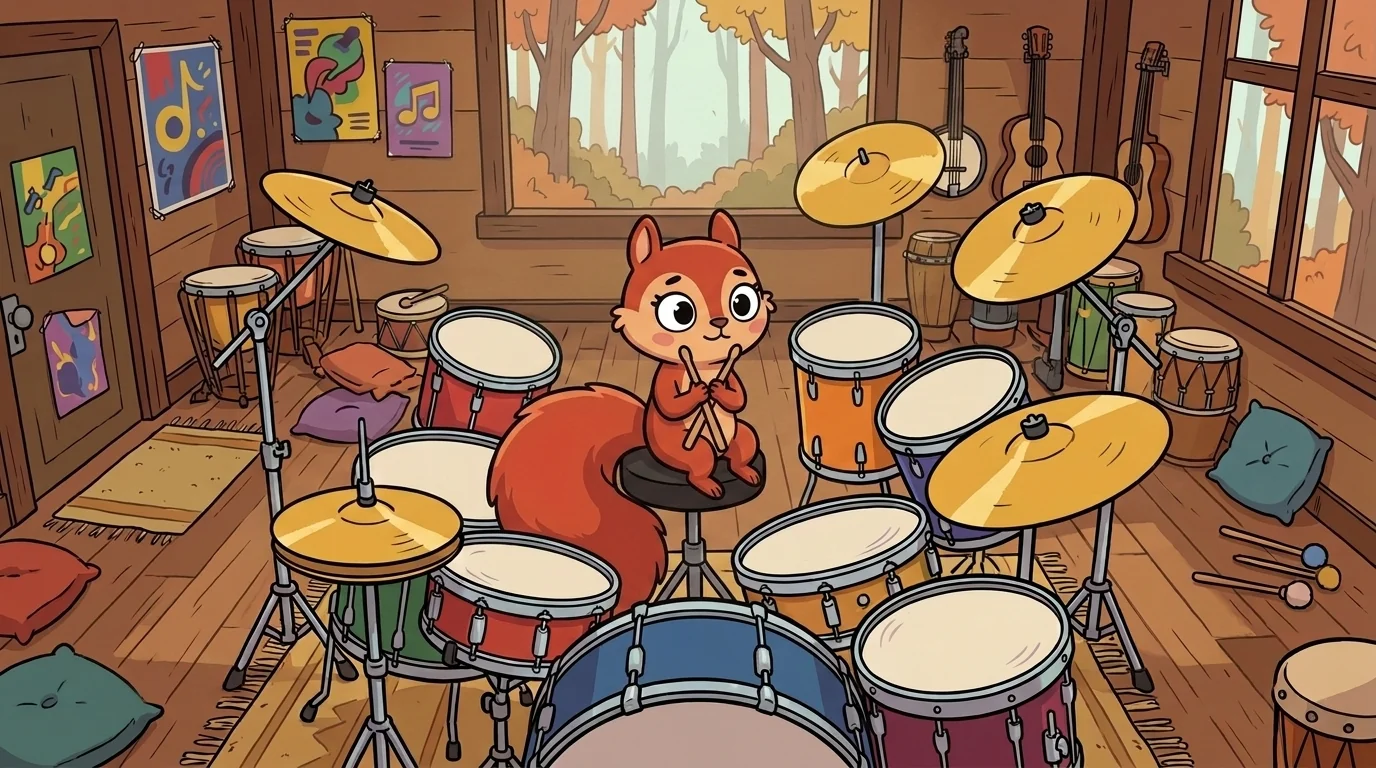
Later, the sun began to dip below the high windows of the practice room. The golden light streamed through the glass, turning the floating dust motes into tiny, glowing embers. Pip helped Flurry loosen the metal bolts on the cymbal stands, lowering them so they could be packed away.
Flurry was unusually quiet now, her hyperactive energy finally starting to fade. Her copper tail lay flat against the floorboards, completely still for the first time all afternoon.
"Can I tell you the real secret about why I love them so much?" Flurry asked softly.
Pip stopped polishing a chrome stand with her sleeve and looked over at her. "Sure, go ahead," Pip said.
"It is not really about the noise," Flurry said, looking down at her paws. "It is the feeling right before the burst, during that last steady beat before you hit the doorway." She pressed a small, furry palm against her chest, describing it as the moment of gathering. "Everyone in the room takes a breath at the exact same time," she whispered. "They do not even realize they are doing it, but they can feel the corner coming."
Pip stood perfectly still with the heavy metal stand in her hands, thinking about the high diving rock at the lake back home. She remembered standing on the very edge of the granite, the cold water swirling far below. She remembered that exact second before she jumped—the way her stomach fluttered, the way the air seemed to freeze in her throat. You were not actually falling yet, but you had already committed to the leap in your mind.
"I know that feeling," Pip said quietly.
"That is exactly why it works," Flurry said, her tail giving a tiny twitch. "When you play a fill, you are handing that feeling to the whole room. You are giving them that little flutter of anticipation, and then you all get to jump together."
She picked up a single stick and twirled it. It was a slow, gentle spin, not like her frantic displays from earlier.
"So do not spend that feeling cheap," Flurry added, setting the stick down. "Save the leap for when it actually matters, and when that moment comes, jump big."
Pip looked at the drum kit, the polished wood gleaming in the late afternoon light. She could still feel the phantom vibration of the bass drum in her sneakers. She smiled, imagining herself standing on the edge of that high rock, ready to build a doorway that everyone would leap through.
The BeatForge ensemble
Flurry is part of BeatForge's distributed-narrative cast. Each character embodies a different curricular primitive; together they teach the full subject.
-

Throb
The steady pulse — the underlying clock every other rhythm hangs from
-

Snap
Subdivision — splitting a beat into equal smaller parts (eighths, sixteenths, triplets)
-

Hammer
Accent — emphasis on specific beats (the downbeat, the backbeat, polyrhythmic emphasis)
-
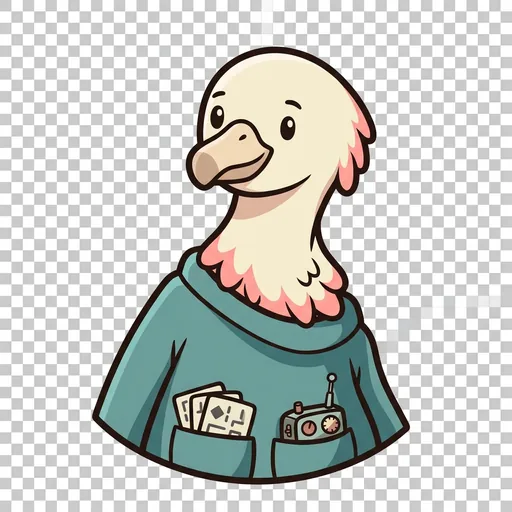
Tilt
Syncopation — placing weight off the expected beat to create pull and forward motion
-

Spin
Groove — the looping pattern that emerges when pulse + subdivision + accent + syncopation cohere; the thing that makes a beat feel like a particular genre
-
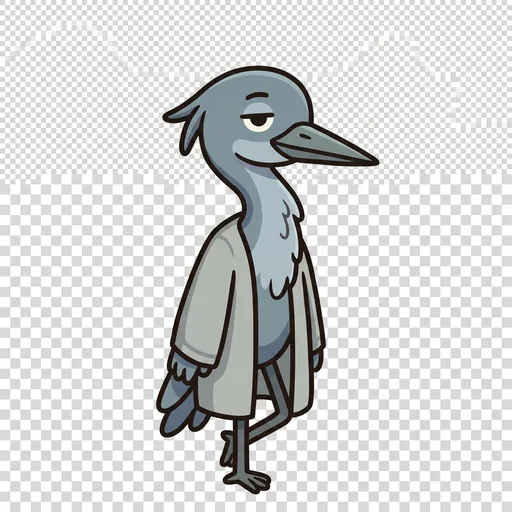
Lull
The rest — the beat you leave empty on purpose; silence counted as part of the music, so the next sound lands bigger
-

Crest
Dynamics — how loud or soft the music is, swelling louder and easing softer to give a song its waves
-

Rush
Tempo — how fast the pulse runs, and speeding up or slowing down to steer the whole mood of a song
-

Volley
Call-and-response — one player calls a phrase and the others answer it back; music as a conversation traded around a circle
-
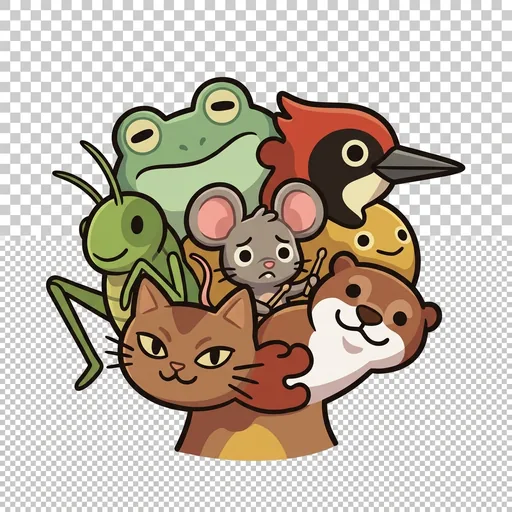
The Jam
The whole rhythm section playing together — how pulse, subdivision, accent, and syncopation lock into one groove that lifts everybody up at once