
Volley
VOLLEY — call-and-response. One player plays a phrase; the others answer it back. Music as a conversation traded around a circle.
Loading audio…
Press play to listen along. The line being read lights up as you go.
Show full transcript
Loading transcript…
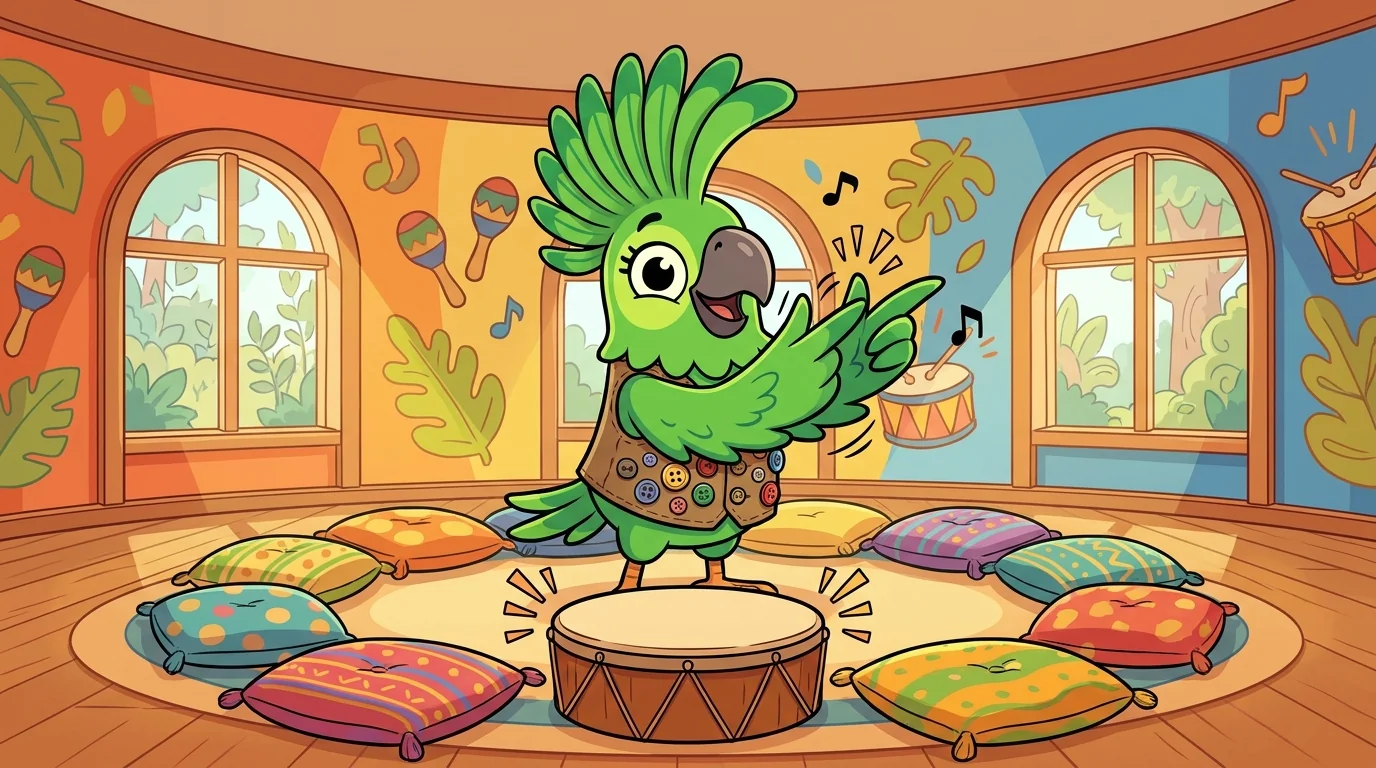
Volley's room didn't have rows of seats. It had a circle — a wide ring of cushions on the floor with a single low drum at the center — and Volley was already in the middle of it when the class arrived, a bright green parrot with a crest that popped up like a fan whenever she got excited, which was more or less constantly. She wore a vest covered in mismatched buttons, and she was clapping a little pattern and grinning at the empty cushions as if she could already hear them clapping it back.
"Sit, sit, sit in the ring!" she called. "No back row in here. In this room, everybody plays." She waited until they'd all settled cross-legged around the circle. Then she clapped four crisp claps — clap-clap-cla-clap — and pointed both wings straight out at them, eyes huge and expectant. "Now you," she said. "Give it back to me."
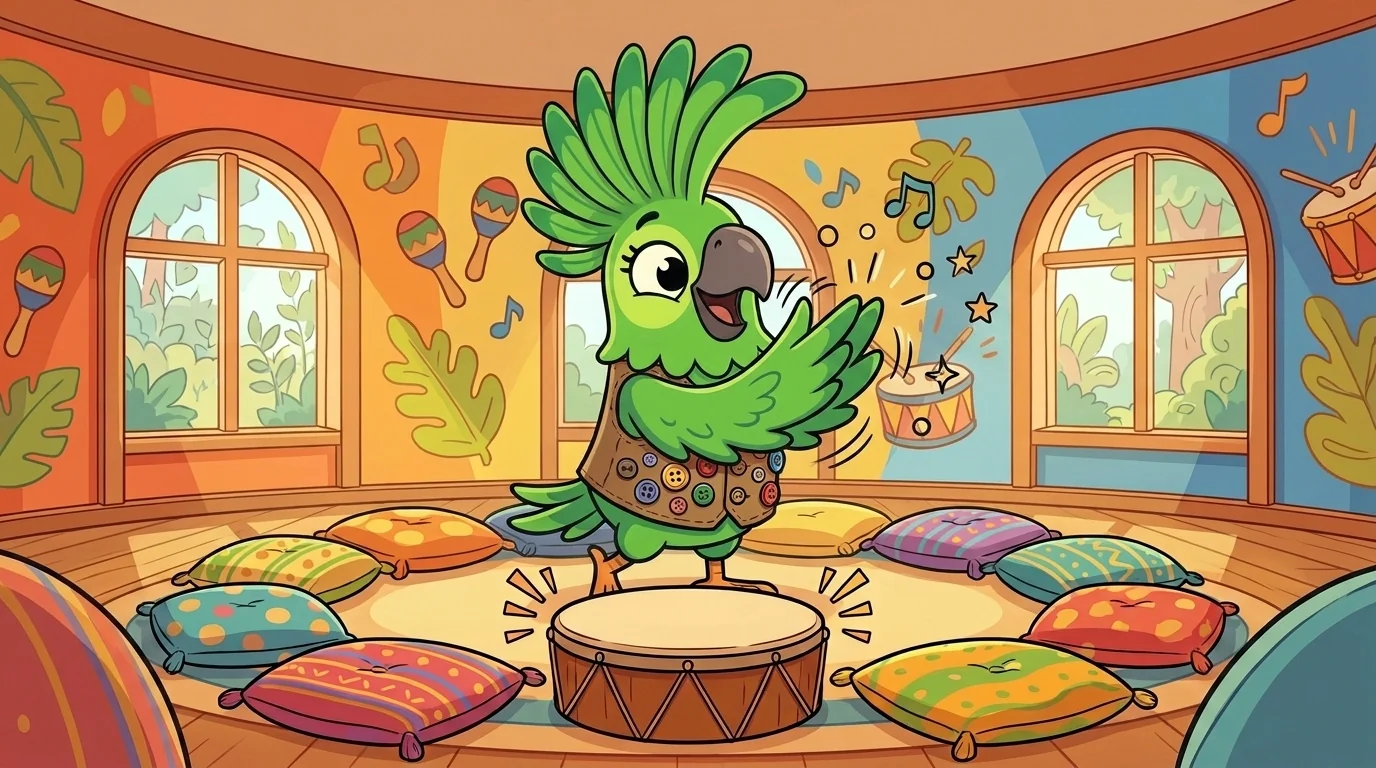
Nobody moved. Then, after a confused second, one student tried to copy it — clap-clap-cla-clap — a little wobbly. Volley's crest shot straight up like a struck match. "THAT! That right there — that's it! That's call-and-response!" She bounced on her cushion. "I play a little phrase — that's the call. And you play it back to me — that's the response. Music stops being one person performing at you and turns into a conversation. Me, then you. Me, then you. Back and forth, like a ball going over a net. That's why I'm Volley."
She clapped a new pattern, trickier this time, and pointed. The class answered — better now, together. She did another; they answered. Something was happening around the circle: the shy kid in the corner was clapping, the whisperers had gone quiet, everybody was in it, watching Volley's wings, waiting for their turn to fire the answer back.
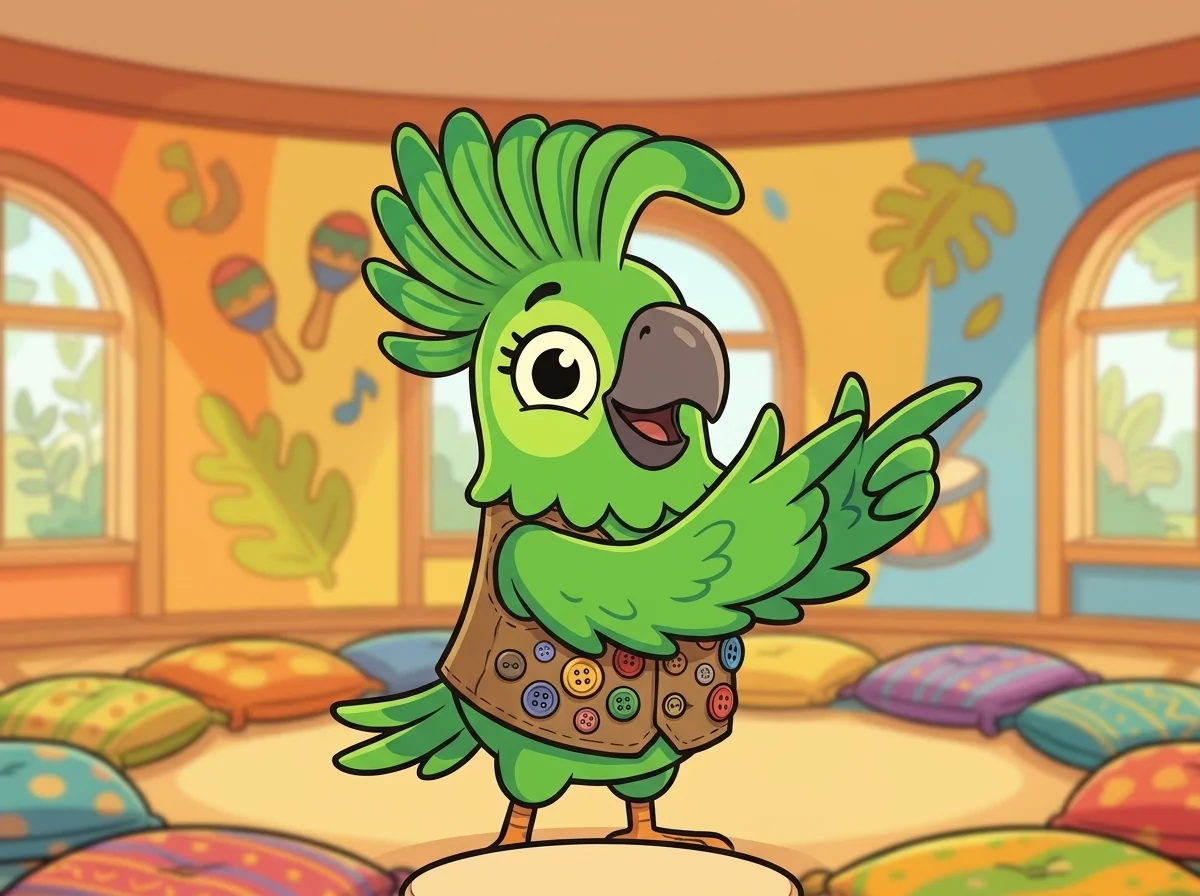
"Okay, real talk," Volley said, settling her crest for a moment. "There's a secret to doing this well, and almost everybody misses it." She leaned in close. "You have to actually listen to the call. All the way. Right to the end. Before you answer." She demonstrated the wrong way first — clapping a pattern and then jumping in too early, as a student might, answering before the call had even finished, so the call and the response crashed into each other in an ugly tangle. "See? Blugh. That's what happens when you're so busy thinking about your turn that you never really hear my part. The whole conversation falls apart."
Then she did it right. She clapped a long, curling phrase, and she held up a wing — wait, wait — until the very last beat had landed, and then dropped the wing, and the class came in clean and sharp and perfectly together. "That," she breathed, "is the good stuff. You listened all the way. You let my call finish. And then you gave it back to me even better than I sent it. That's not just copying. That's answering."
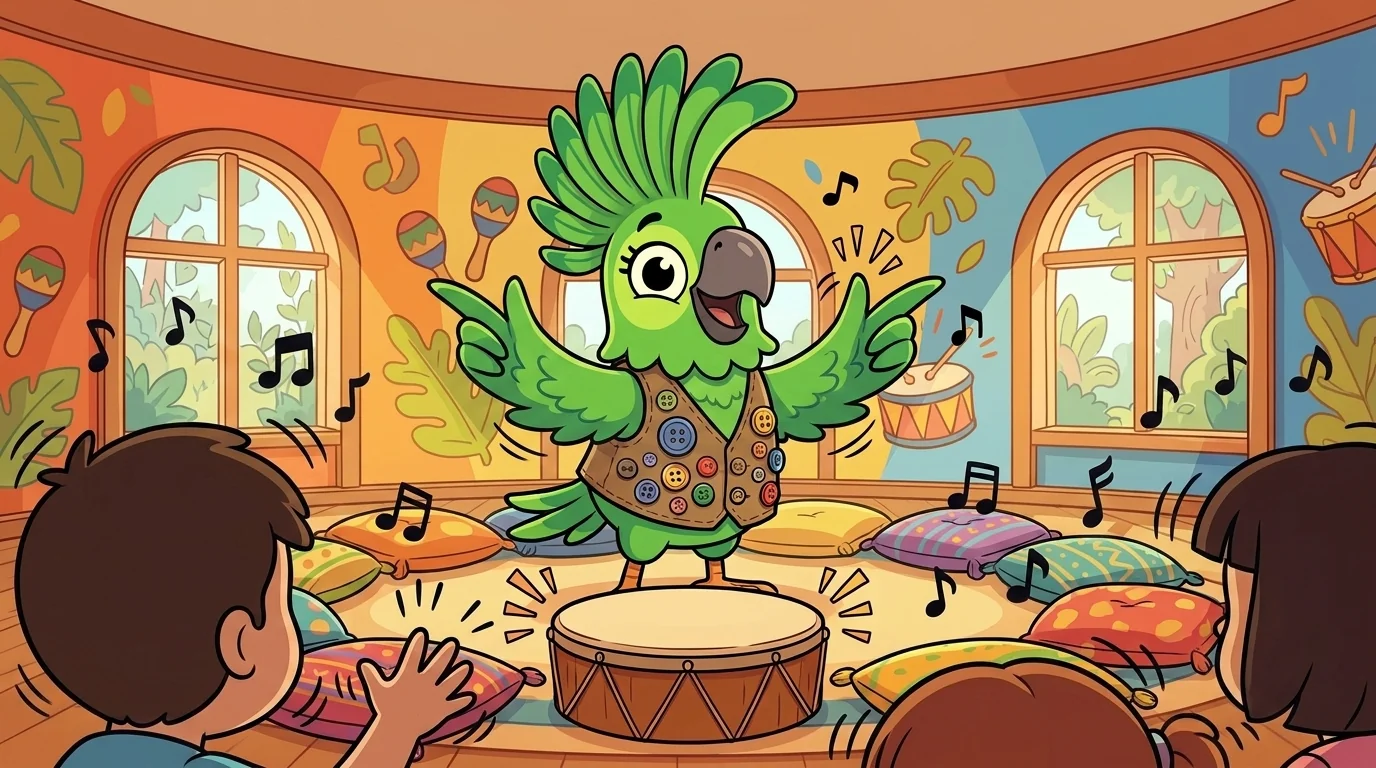
She had them trade for real then — she'd call, they'd respond — and then she started picking individual students to invent their own calls for the circle to answer. One made one up, shaky and small, and the whole ring clapped it back, and you could see the student's ears go warm with the surprise of being answered.
"You know where this comes from?" Volley asked, and her voice went gentle and serious, the way the other teachers' did when something truly mattered. "Call-and-response is one of the oldest ways people have ever made music together. It lives at the heart of the music of West Africa, and it traveled with people, through so much hard history, into gospel singing, and work songs, and the blues, and jazz — and it's right there still in hip-hop, when one voice shouts and a whole crowd shouts back."
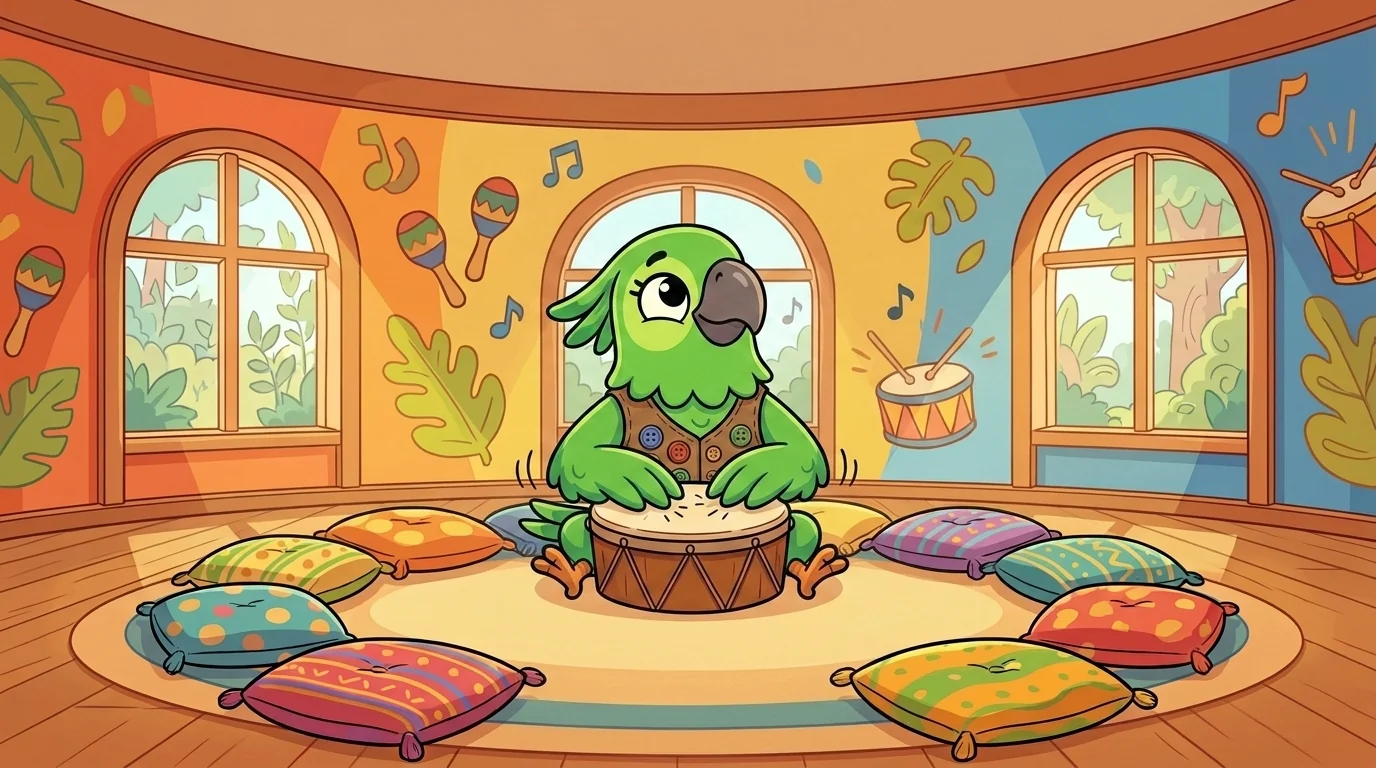
She dipped her head, crest lowered in respect. "It belongs to the people and the traditions that carried it and kept it alive. When we clap it here in this circle, we're joining something ancient — something far bigger than our one little room. So we say thank you to where it came from." Then her crest sprang back up, and she grinned around the ring. "And then — because the best way to honor a conversation is to keep it going — we play. My call. Your answer. Around and around. Nobody performing at anybody. Everybody in the ring, talking back."
The BeatForge ensemble
Volley is part of BeatForge's distributed-narrative cast. Each character embodies a different curricular primitive; together they teach the full subject.
-

Throb
The steady pulse — the underlying clock every other rhythm hangs from
-

Snap
Subdivision — splitting a beat into equal smaller parts (eighths, sixteenths, triplets)
-
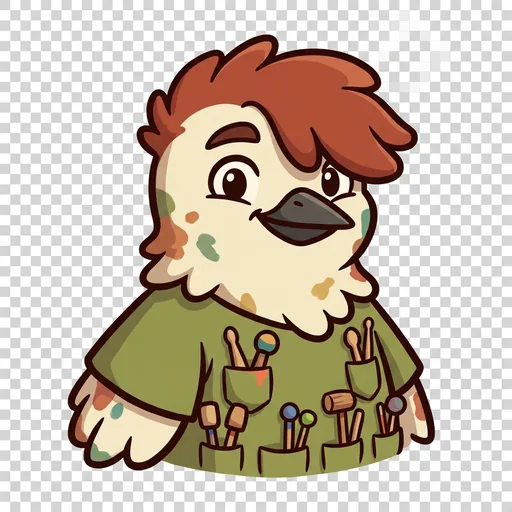
Hammer
Accent — emphasis on specific beats (the downbeat, the backbeat, polyrhythmic emphasis)
-
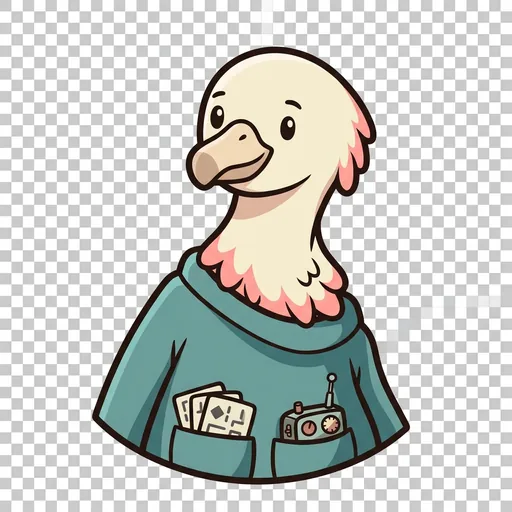
Tilt
Syncopation — placing weight off the expected beat to create pull and forward motion
-
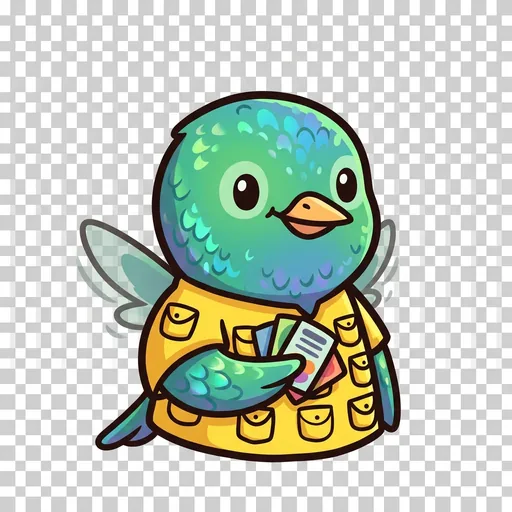
Spin
Groove — the looping pattern that emerges when pulse + subdivision + accent + syncopation cohere; the thing that makes a beat feel like a particular genre
-

Lull
The rest — the beat you leave empty on purpose; silence counted as part of the music, so the next sound lands bigger
-

Crest
Dynamics — how loud or soft the music is, swelling louder and easing softer to give a song its waves
-

Rush
Tempo — how fast the pulse runs, and speeding up or slowing down to steer the whole mood of a song
-

Flurry
The fill — the quick burst of drum notes that carries a song across the turn from one section into the next
-
The Jam
The whole rhythm section playing together — how pulse, subdivision, accent, and syncopation lock into one groove that lifts everybody up at once