
Burrow
THE ECOSYSTEM ENGINEER — some species reshape the physical world so much that they create homes and conditions for a hundred others; a prairie dog digs for itself and accidentally builds an underground city the whole grassland depends on
Loading audio…
Press play to listen along. The line being read lights up as you go.
Show full transcript
Loading transcript…
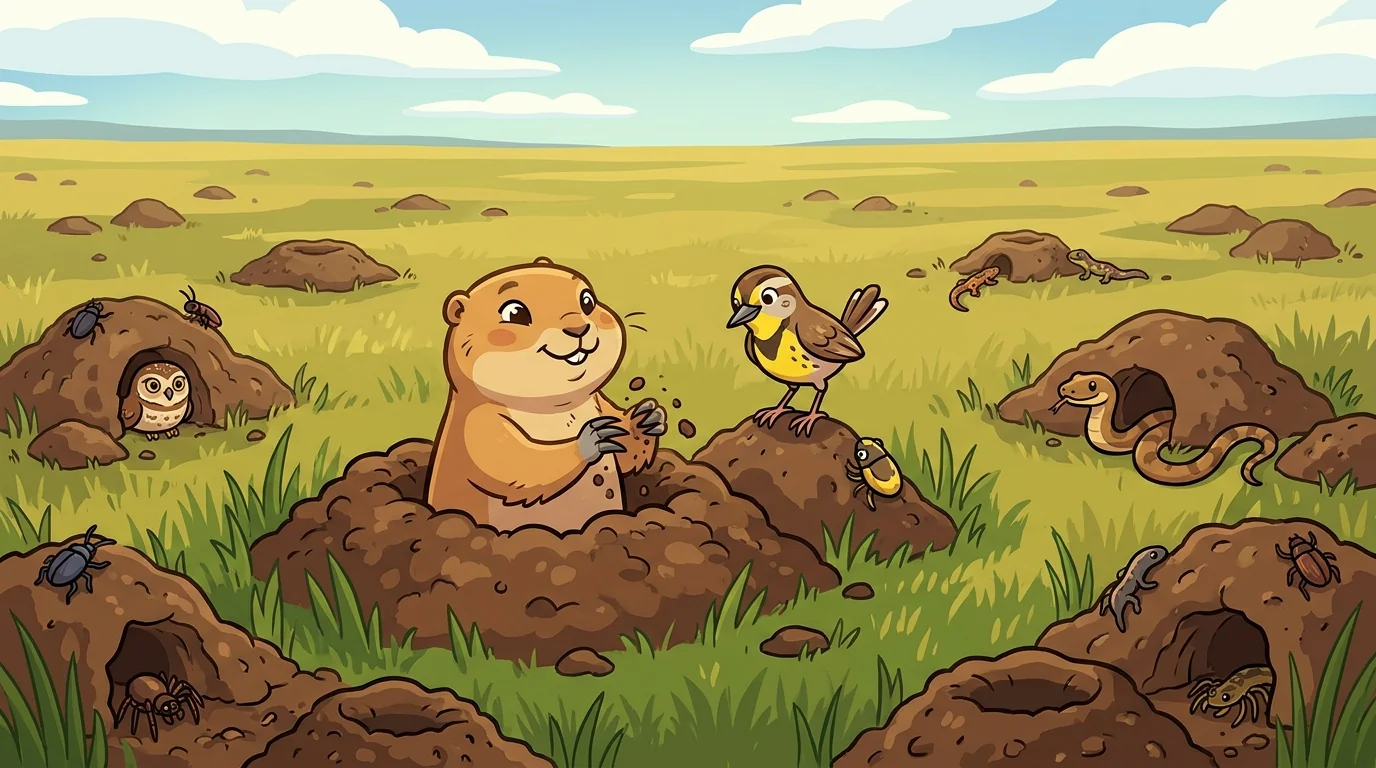
Burrow surveyed the prairie from the top of a fresh mound, and this time she had a word for what she did — a word the meadowlark had never heard.
"You call me a digger," she said. "Scientists call me an ecosystem engineer. It means an animal that changes the physical world so much that it builds the conditions other creatures need to live. Beavers do it with dams. Corals do it with reefs. I do it with tunnels. We don't just live in a habitat — we make one, for ourselves and, by accident, for everyone."
She traced the chain of consequences, because the older students needed to see how far one animal's work reached.
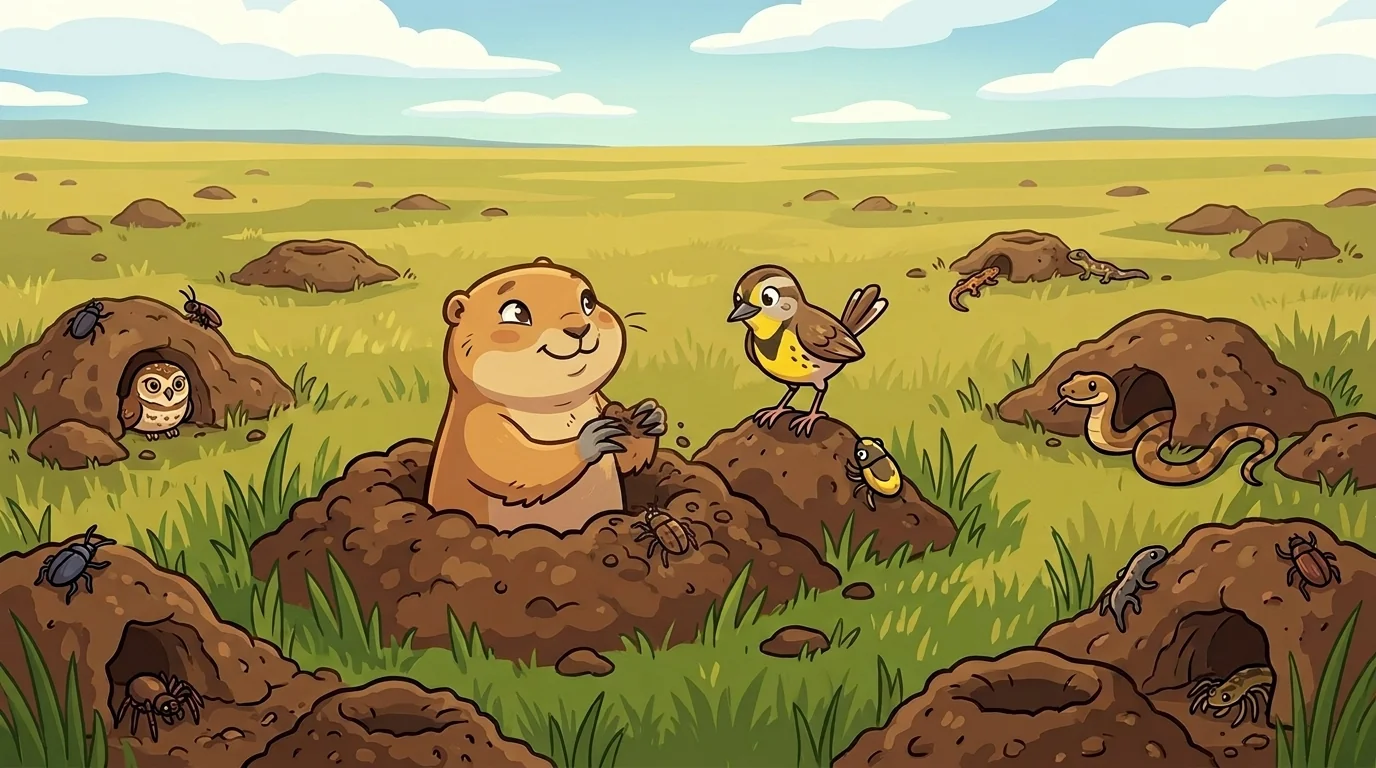
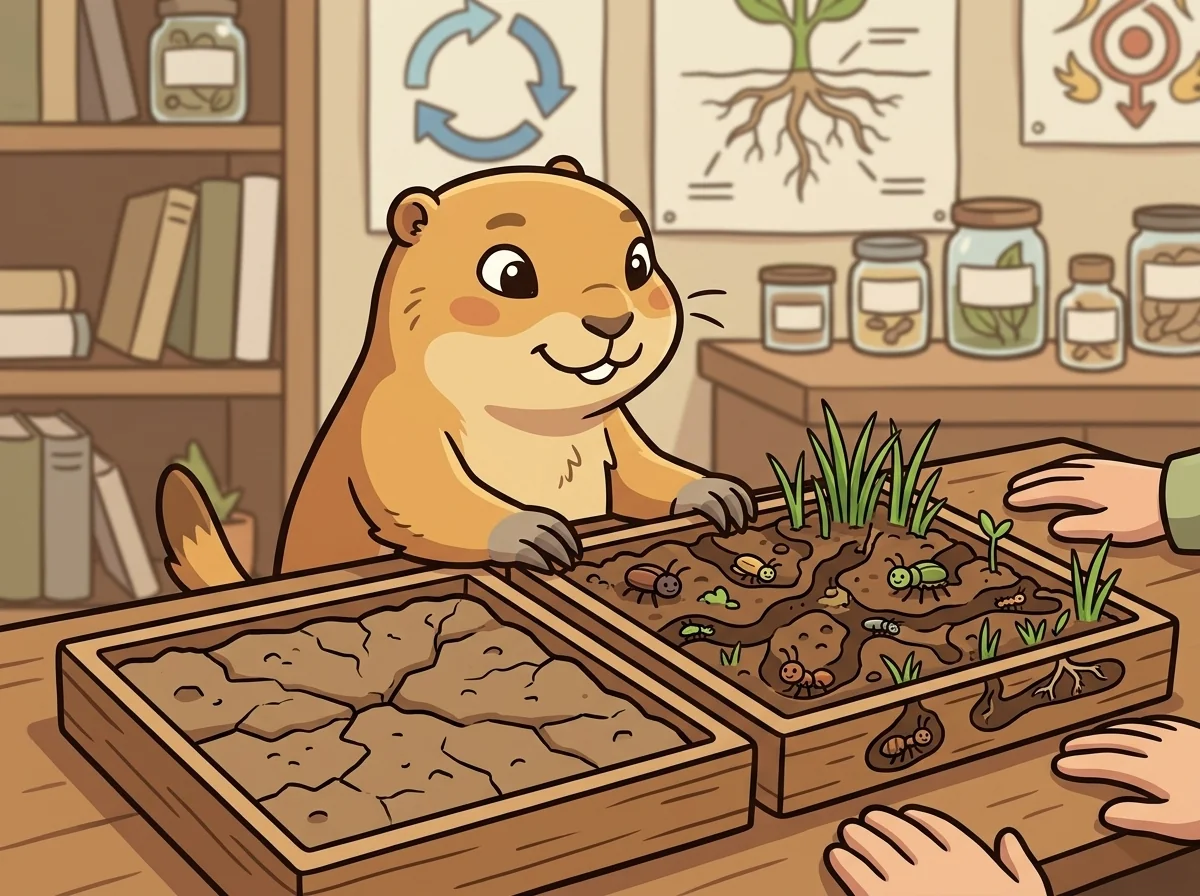
"Watch what one tunnel starts," Burrow said. "I dig to make rooms for my family. But the digging loosens packed soil, so rain and air reach deep roots — the grass grows greener above my town. The old tunnels I abandon become nests for burrowing owls, shelter for snakes and salamanders, cool refuges for beetles in the heat. My mounds turn over deep soil and mix nutrients up to the surface. I set out to build a house. I ended up building the plumbing, the housing, and the fertilizer for a whole community."
The subtext the older students heard was about interdependence — that no creature lives alone, and that the quiet, ordinary work of one can be the invisible foundation many others stand on.
Burrow was honest about the flip side, because ecosystem engineers matter most by their absence.
"Here's the hard part," she said. "For a long time, people saw my mounds as a mess — a nuisance, holes in the field — and poisoned prairie-dog towns by the millions. And the grassland unravelled. The burrowing owls had nowhere to nest. The black-footed ferret, which eats prairie dogs and lives in our tunnels, nearly went extinct. The soil packed hard and the grass thinned. Remove the engineer, and everything the engineer quietly built for others comes down. Nobody had noticed how much depended on the animal they thought was just making holes."
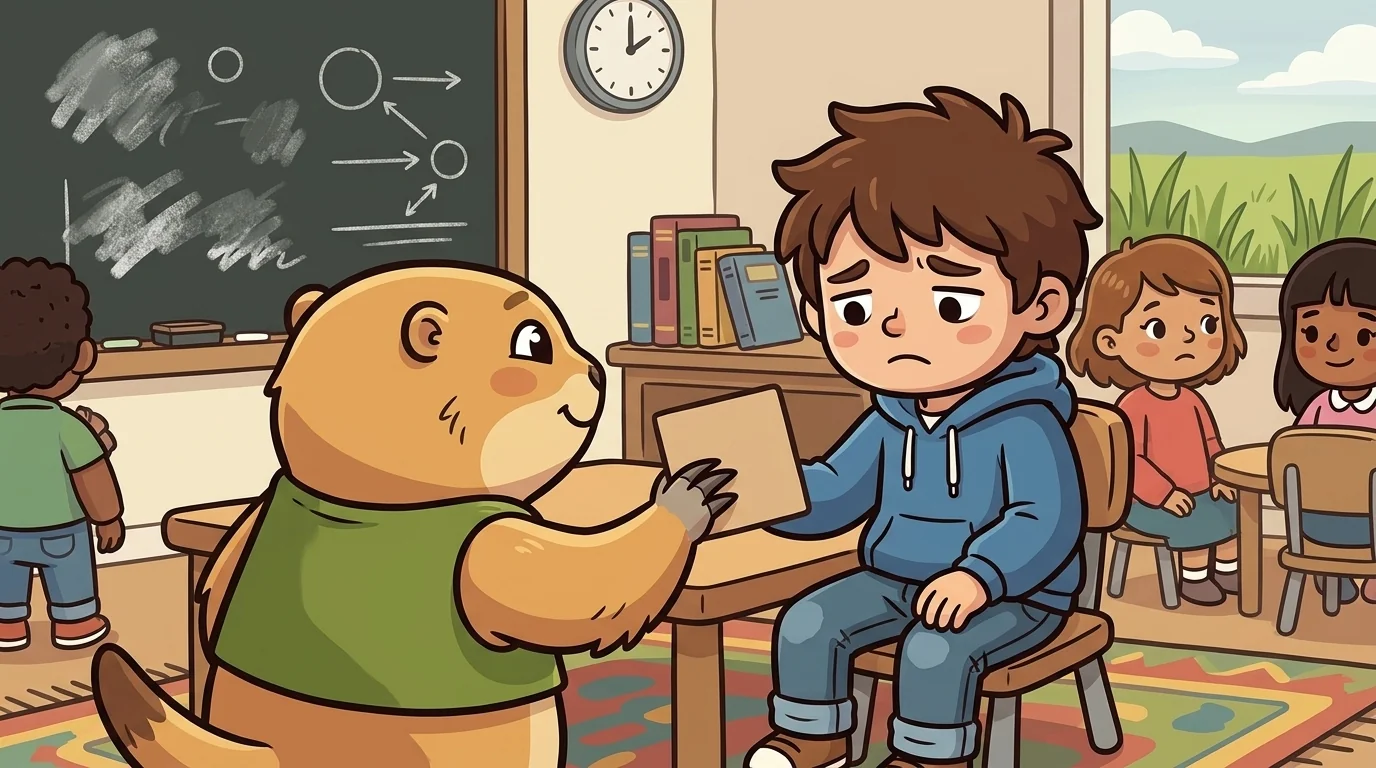
The meadowlark asked the question the lesson was really about: "So how do you know which animals are engineers?"
"Ask what would break if they vanished," Burrow said. "Not 'is this animal big or fierce or beautiful' — ask 'does the place itself depend on what it builds?' A prairie without prairie dogs isn't a prairie missing one animal. It's a prairie missing its architect. The engineer isn't the loudest creature on the land. It's the one whose work is holding up the roof for everyone else."
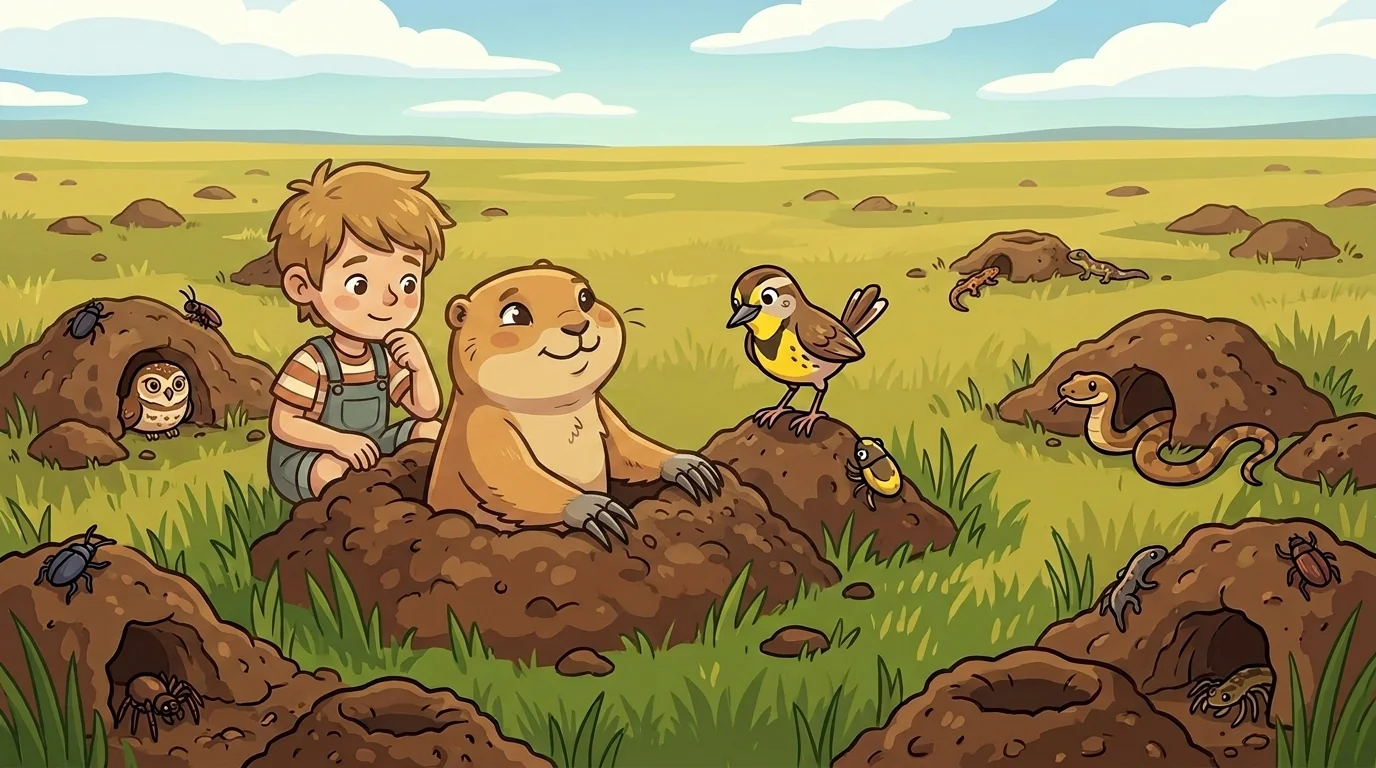
At the end Burrow looked out over the mounds, which the meadowlark now saw as rooftops.
"When you look at a wild place," she said, "don't just count the animals you can see grazing and flying. Ask who's building — who's digging, damming, reef-making, turning the soil — because those quiet engineers are the reason the visible ones have anywhere to be. Protect a grassland and you might think you're protecting the grass. But protect the diggers, and you protect the grass, the owls, the ferrets, the water, and the soil, all at once." She patted her mound. "I only ever wanted a home. It turns out that when you build one honestly, a hundred others get to come inside."
The BiomeForge ensemble
Burrow is part of BiomeForge's distributed-narrative cast. Each character embodies a different curricular primitive; together they teach the full subject.
-

Canopy
Forest biomes (temperate, tropical, taiga)
-

Dune
Desert biomes (hot, cold, semi-arid)
-

Reef
Aquatic biomes (coral reef, freshwater, marine)
-

Ridge
Mountain / alpine / vertical-zonation biomes
-

Flux
Climate-biome mapping (where biomes shift with climate)
-
Graze
Keystone herbivores + grasslands — a grassland needs its grazers; eat, move on, keep the prairie alive
-

Kelp
Keystone species + trophic cascades — one keystone holds up a whole forest; pull it and everything topples
-

Marsh
Decomposition + nutrient cycling — nothing is wasted; the dead feed the living, the water remembers
-
Silt
Sediment + ecological succession — new land is built one grain at a time; life moves in the moment it's ready