
Canopy
FOREST STRATIFICATION — a forest is not one habitat but several stacked vertically (emergent, canopy, understory, forest floor), each with its own light, climate, and residents; the layers let far more species share one patch of ground
Loading audio…
Press play to listen along. The line being read lights up as you go.
Show full transcript
Loading transcript…
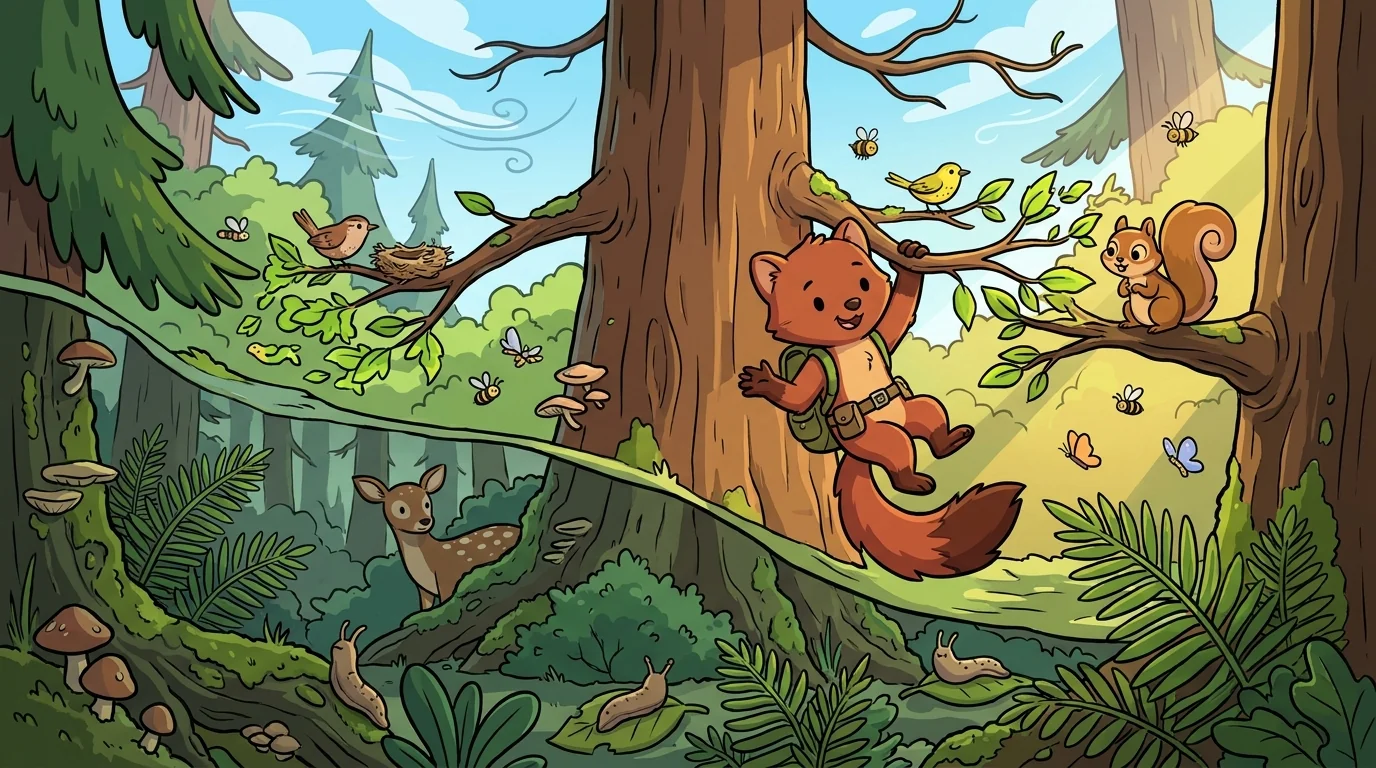
Canopy lived high in the rainforest and liked to remind ground-dwellers that they were only seeing the basement.
"You look at a forest and say 'a forest,'" she told a visiting ground-squirrel-kid. "One habitat. But a forest isn't one thing stacked on nothing — it's several worlds stacked vertically, and each one is as different from the next as a desert is from a swamp. Scientists call the layers by name: the emergents poking out on top, the canopy where I live, the shadowy understory below, and the dim forest floor at the bottom. Same patch of ground. Four completely different climates."
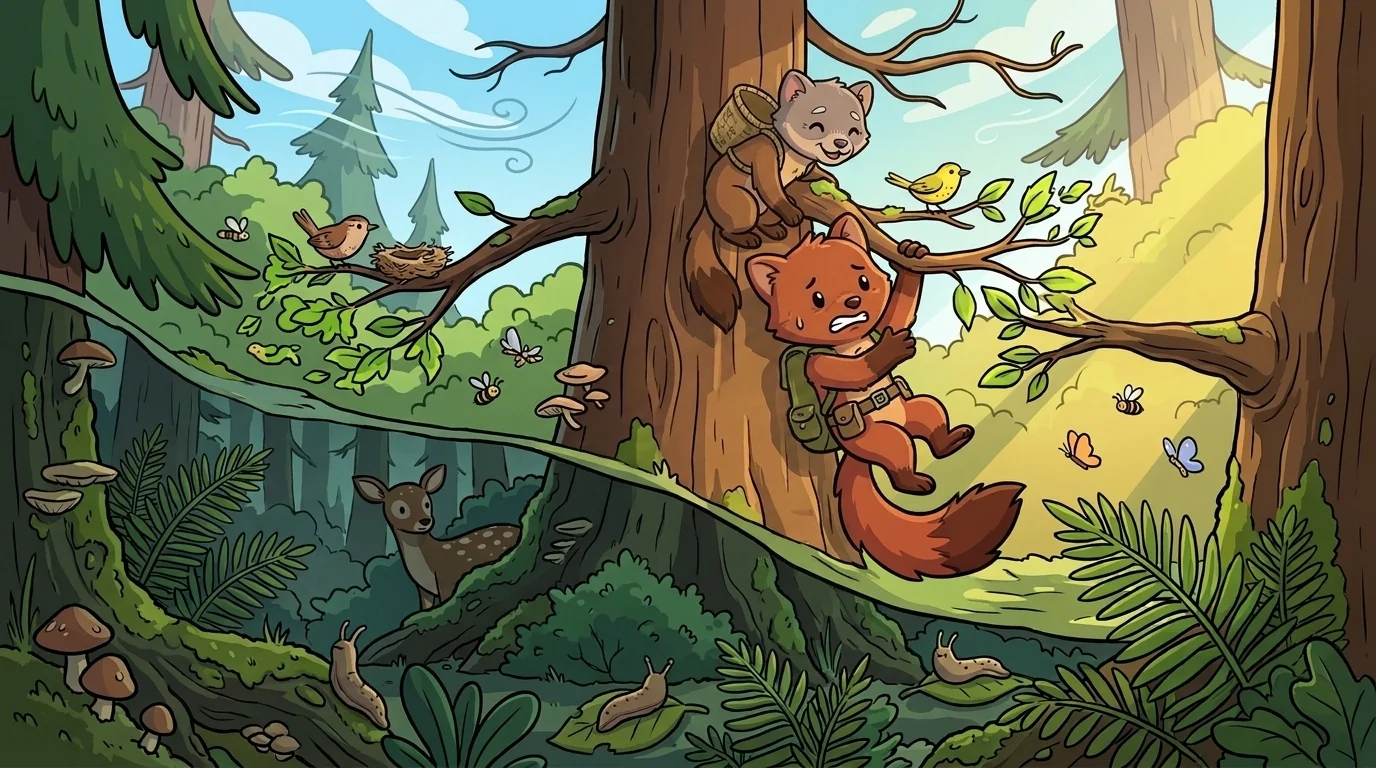
She explained why the stacking multiplies life, which was the real lesson.
"It all comes down to light," Canopy said. "Up here in the canopy, sun blasts down all day — so this is where the leaves, the fruit, the flowers, and everything that eats them lives: monkeys, birds, insects by the millions. But my leaves catch that light, so almost none reaches the floor. Down there it's dim, damp, still — a world of fungi, ferns, decomposers, and shade-lovers that would fry in my sunshine. Neither layer is better. They're different, and because they're different, the same square of forest can hold creatures that could never share a single flat habitat. Layering is how a forest fits so much life into so little ground."
The subtext the older students heard was about depth — that a thing which looks simple and singular from outside is often many rich, distinct worlds once you learn to look up and down instead of only across.
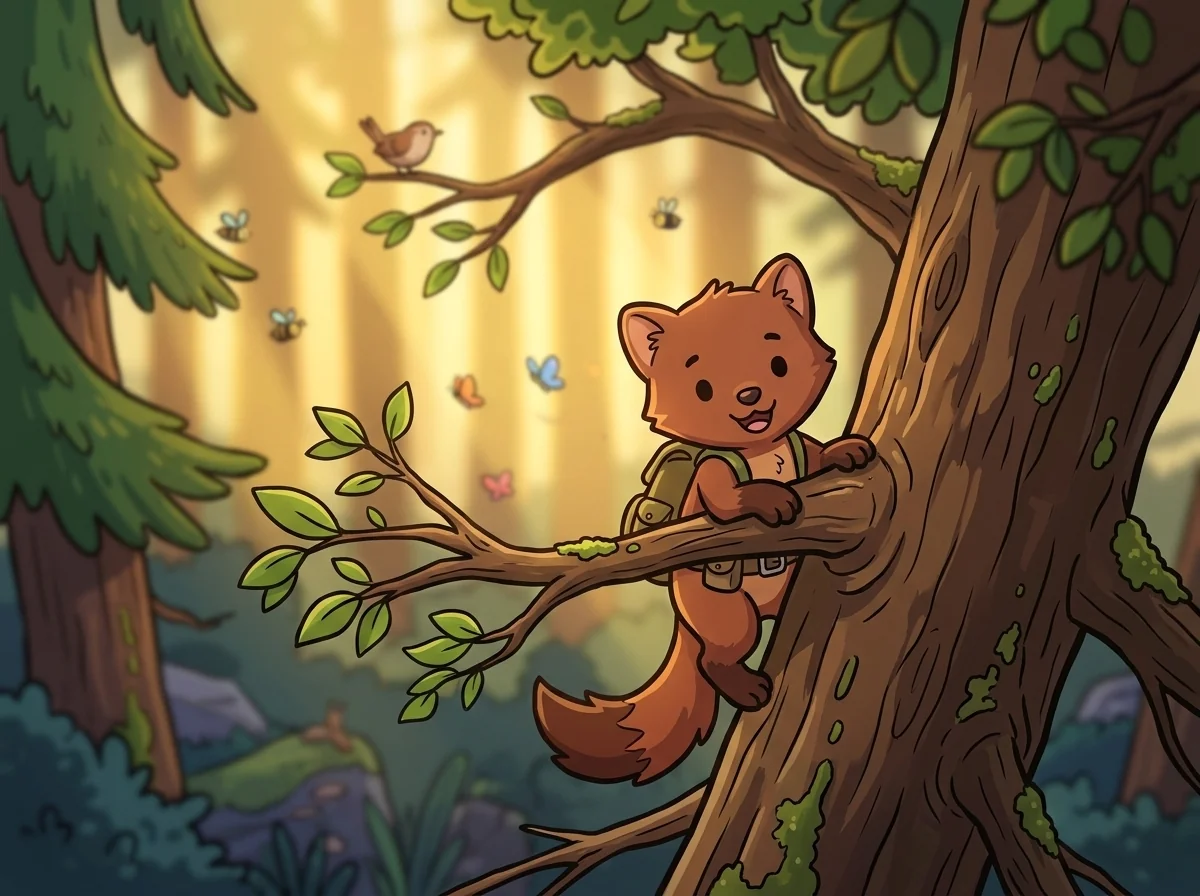
Canopy connected it to why forest loss cuts so deep.
"Here's why losing forest hurts more than losing the same area of open land," she said. "When a forest falls, you don't lose one habitat — you lose all four at once, plus the vertical structure that made them possible. The canopy species have nowhere to climb. The understory bakes in sudden sun. The floor dries out. You didn't remove a layer; you collapsed the whole stack. That's why an old, tall, many-layered forest can't be replaced by simply planting trees and waiting a year — the layers take a century to rebuild, and everything that lived in them can't wait that long."
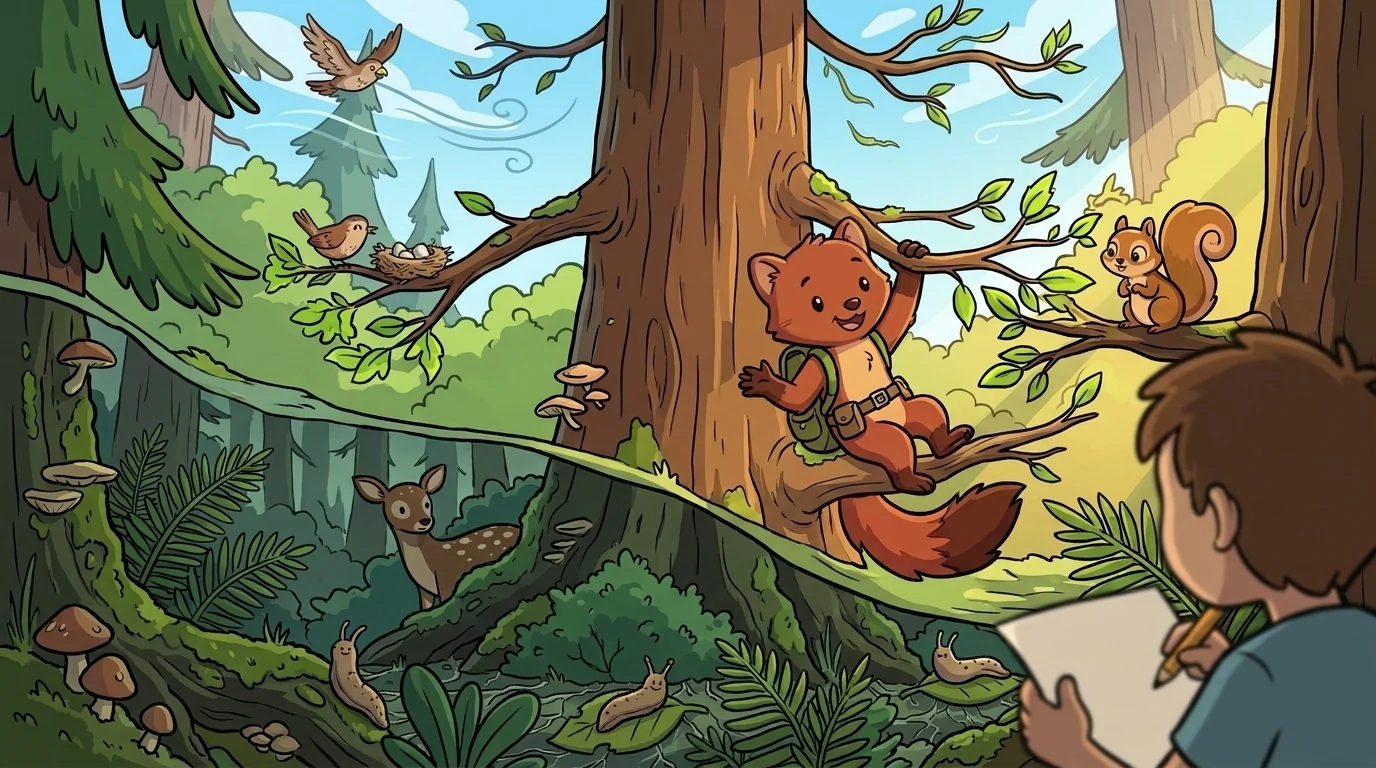
The ground-squirrel asked how you'd even study something so tall.
"You climb," Canopy said simply. "For a long time scientists studied forests from the floor and thought they understood them — and they were standing in the basement guessing about the penthouse. Then they built walkways and cranes up into the canopy and found half the forest's species living in the layer nobody had visited. The lesson isn't just about trees. It's that if you only ever study a thing from where you're standing, you'll confidently miss most of it."
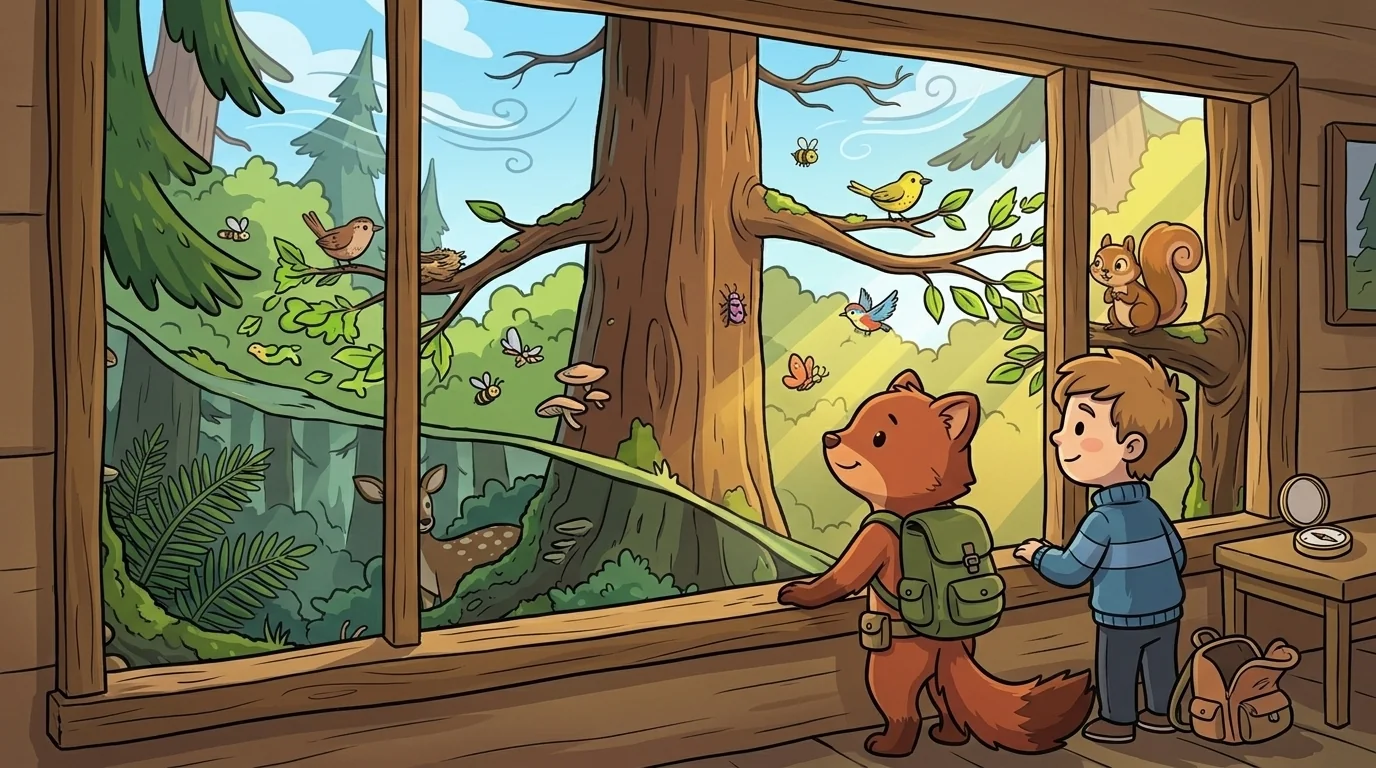
At the end Canopy invited the ground-squirrel to look straight up.
"When you meet a forest — or anything that looks like one flat thing," she said, "ask what's stacked inside it that you can't see from your one level. Look up. Look down. Each layer has its own light, its own weather, its own life, and the whole is far richer than any single floor of it. A forest isn't a wall of green. It's a tower of worlds — and you've only ever been in one room of it."
The BiomeForge ensemble
Canopy is part of BiomeForge's distributed-narrative cast. Each character embodies a different curricular primitive; together they teach the full subject.
-
Dune
Desert biomes (hot, cold, semi-arid)
-
Reef
Aquatic biomes (coral reef, freshwater, marine)
-
Ridge
Mountain / alpine / vertical-zonation biomes
-
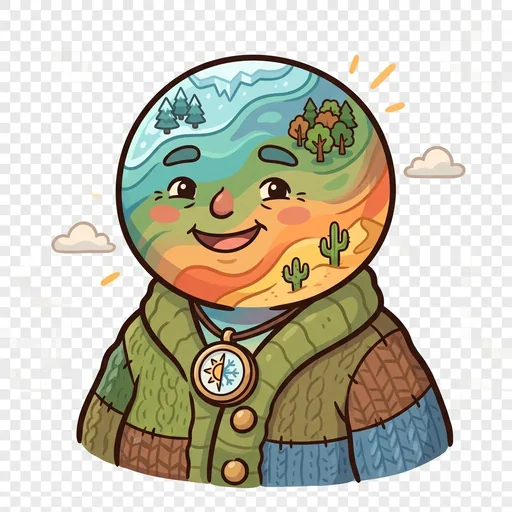
Flux
Climate-biome mapping (where biomes shift with climate)
-
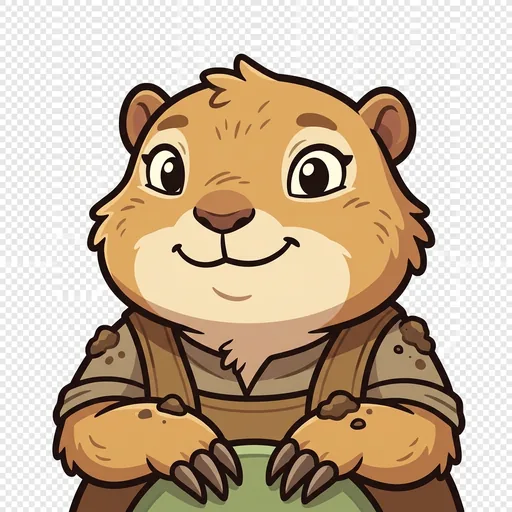
Burrow
Ecosystem engineers — some animals build homes for a hundred others; dig, and the neighborhood moves in
-
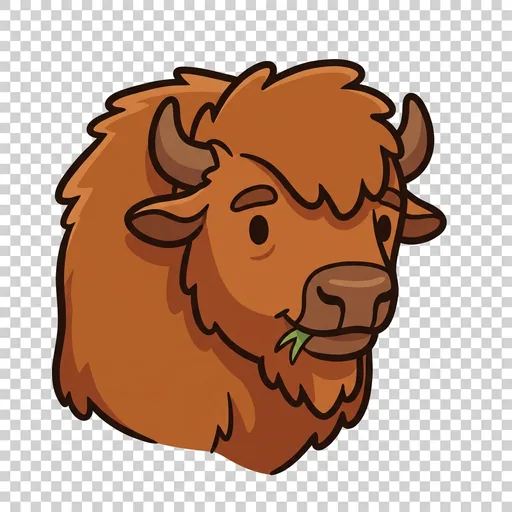
Graze
Keystone herbivores + grasslands — a grassland needs its grazers; eat, move on, keep the prairie alive
-
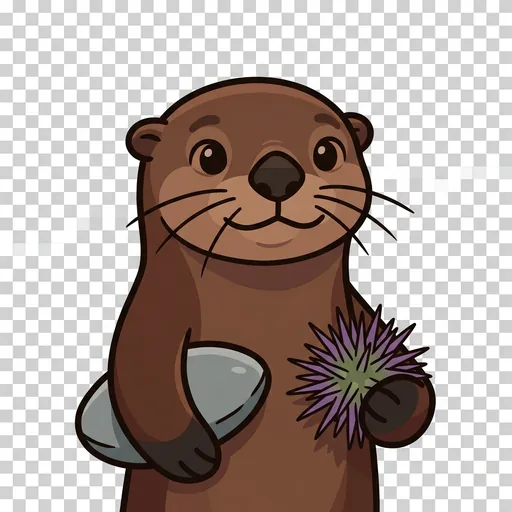
Kelp
Keystone species + trophic cascades — one keystone holds up a whole forest; pull it and everything topples
-
Marsh
Decomposition + nutrient cycling — nothing is wasted; the dead feed the living, the water remembers
-
Silt
Sediment + ecological succession — new land is built one grain at a time; life moves in the moment it's ready