
Dune
ADAPTATION TO SCARCITY — a desert isn't empty; it's full of life engineered to survive extreme water and heat limits, through storage, timing, shape, and behaviour; scarcity doesn't stop life, it shapes it
Loading audio…
Press play to listen along. The line being read lights up as you go.
Show full transcript
Loading transcript…
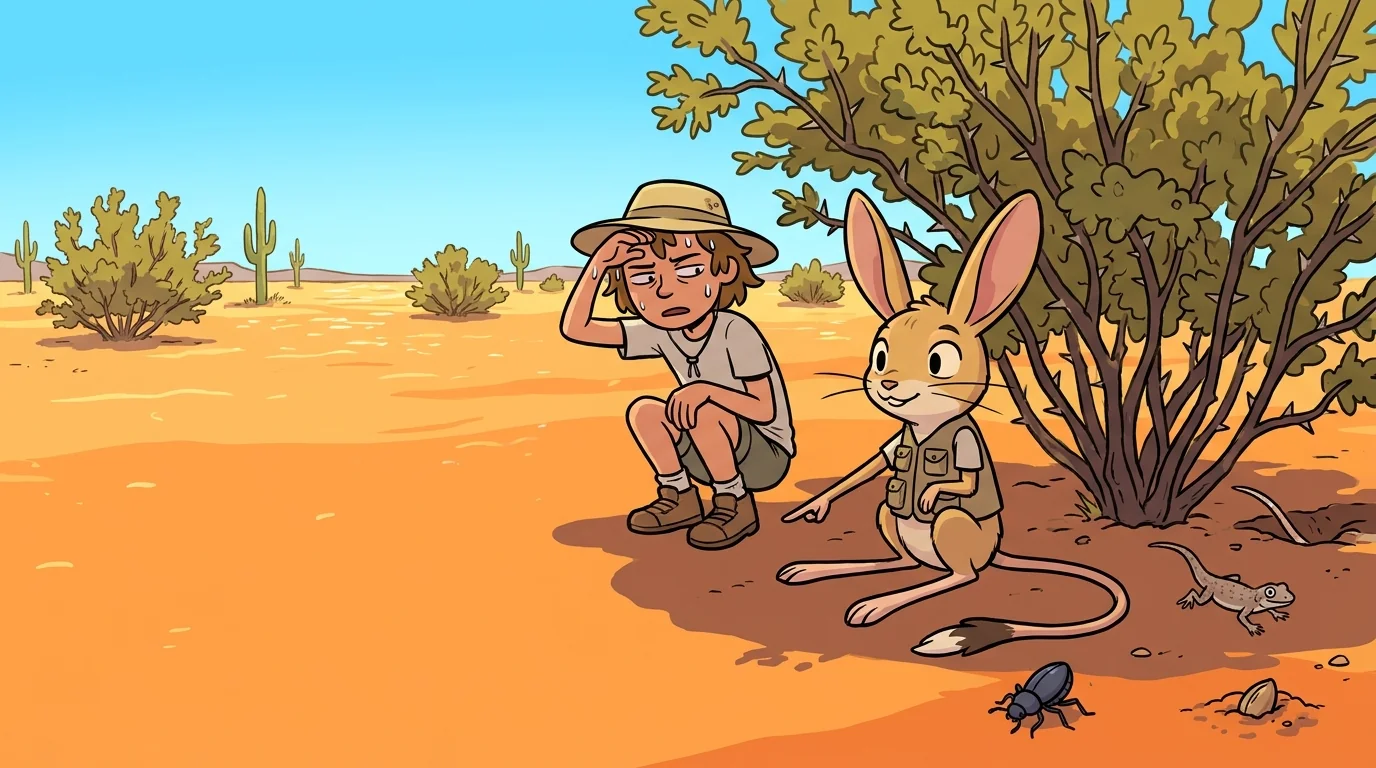
Dune met every visitor with the same challenge: "Tell me the desert is empty. Go on. Then let me show you how wrong you are."
"People look at sand and heat and no water and they say 'nothing lives here,'" she said to a doubtful traveler. "But a desert is packed with life — it's just life engineered for scarcity. Every creature here has solved the same brutal problem: too little water, too much heat. And there are only a few ways to solve it, so watch a desert long enough and you'll see the same clever tricks invented over and over by animals and plants that never met."
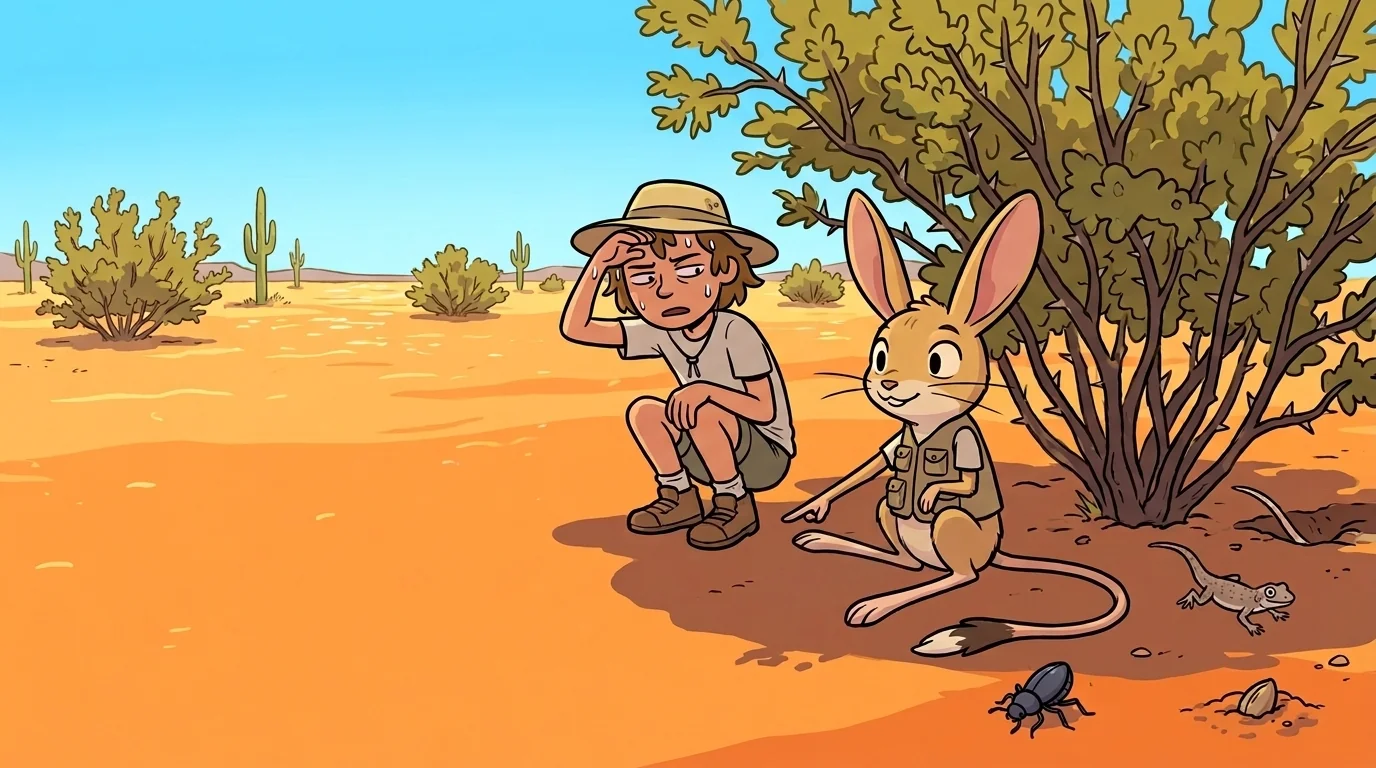
She laid out the toolkit, because the tricks were the whole science.
"There are four moves," Dune said. "Store — the cactus swells with water in the rare rain and hoards it behind a waxy skin; the camel banks fat. Time — most desert animals simply refuse to be awake in the heat; they go nocturnal, or sleep through the dry season entirely and wake for the brief wet one. Shape — a fennec fox's huge ears dump heat like radiators; a small body loses warmth faster. Behave — burrow into cool sand by day, come out at dusk, face away from the sun. Store, time, shape, behave. Every desert survivor is running some combination of those four."
The subtext the older students heard was about constraint as a creative force — that a hard limit doesn't erase possibility, it narrows it into a few elegant solutions, and that scarcity often produces more ingenuity than abundance ever does.
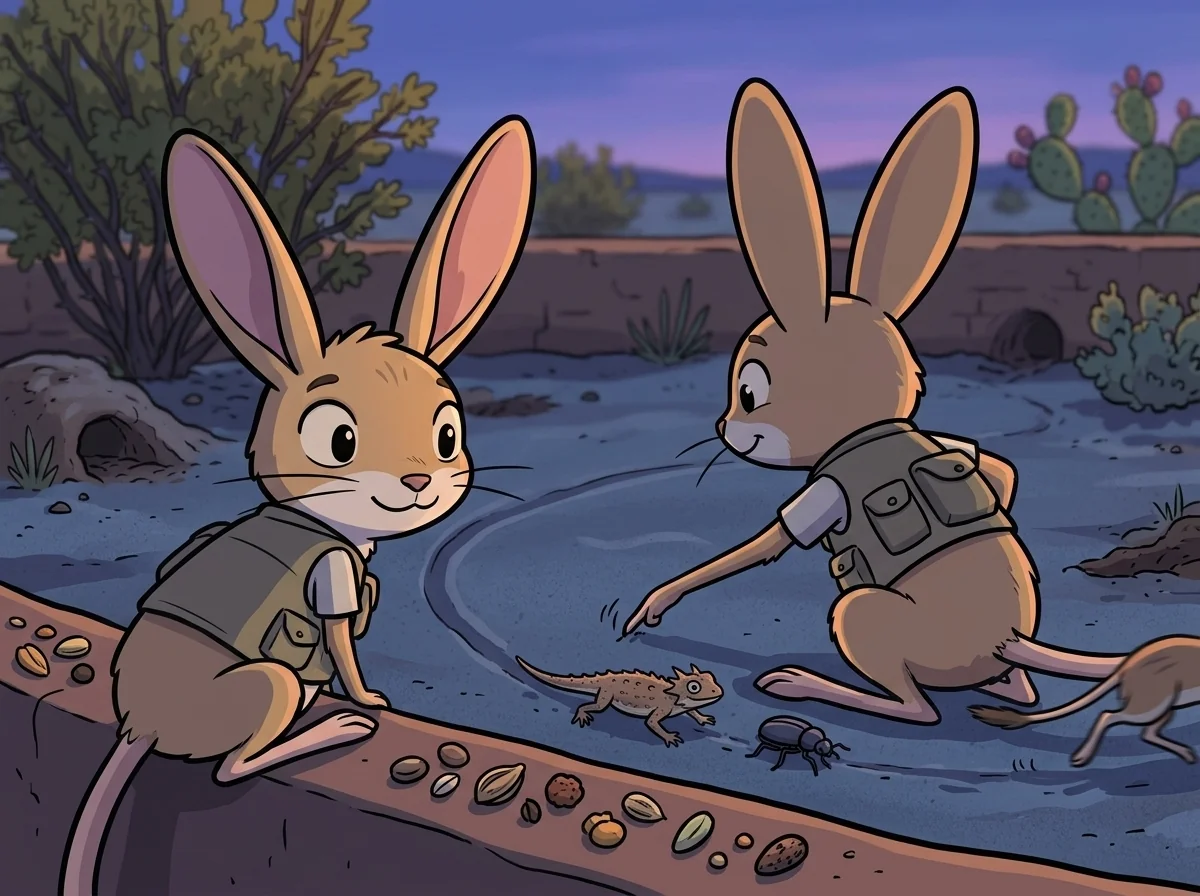
Dune drew the honest climate connection, carefully.
"Deserts are natural and full and worth protecting — a desert isn't a broken place, it's a specialized one," she said. "But here's the careful part: as the climate warms, some places that weren't deserts are drying toward becoming them — a process called desertification, often where land was overused. That's not the desert 'winning'; it's a habitat changing faster than the life in it can adapt. My lesson isn't 'deserts are bad.' It's that life adapts to scarcity given time — and the danger is change arriving faster than adaptation can keep up."
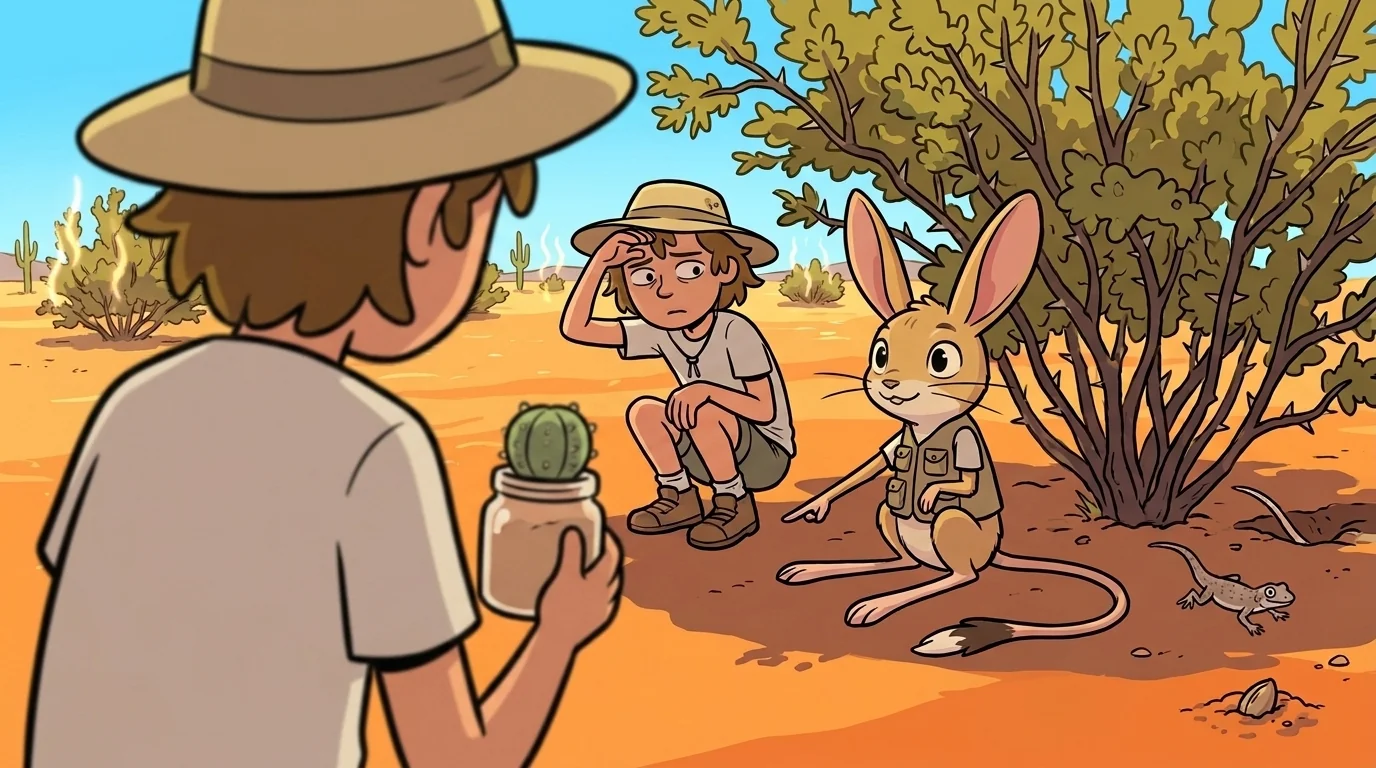
The traveler admitted the desert looked different now. "I thought survival here meant being tough."
"Toughness barely helps," Dune said. "You can't out-muscle the sun. The survivors aren't the strongest — they're the cleverest with less. The cactus doesn't fight the drought; it prepares for it. The fox doesn't endure the noon heat; it avoids it. Adapting to a hard condition isn't about beating it. It's about arranging yourself so the hard condition can't beat you."
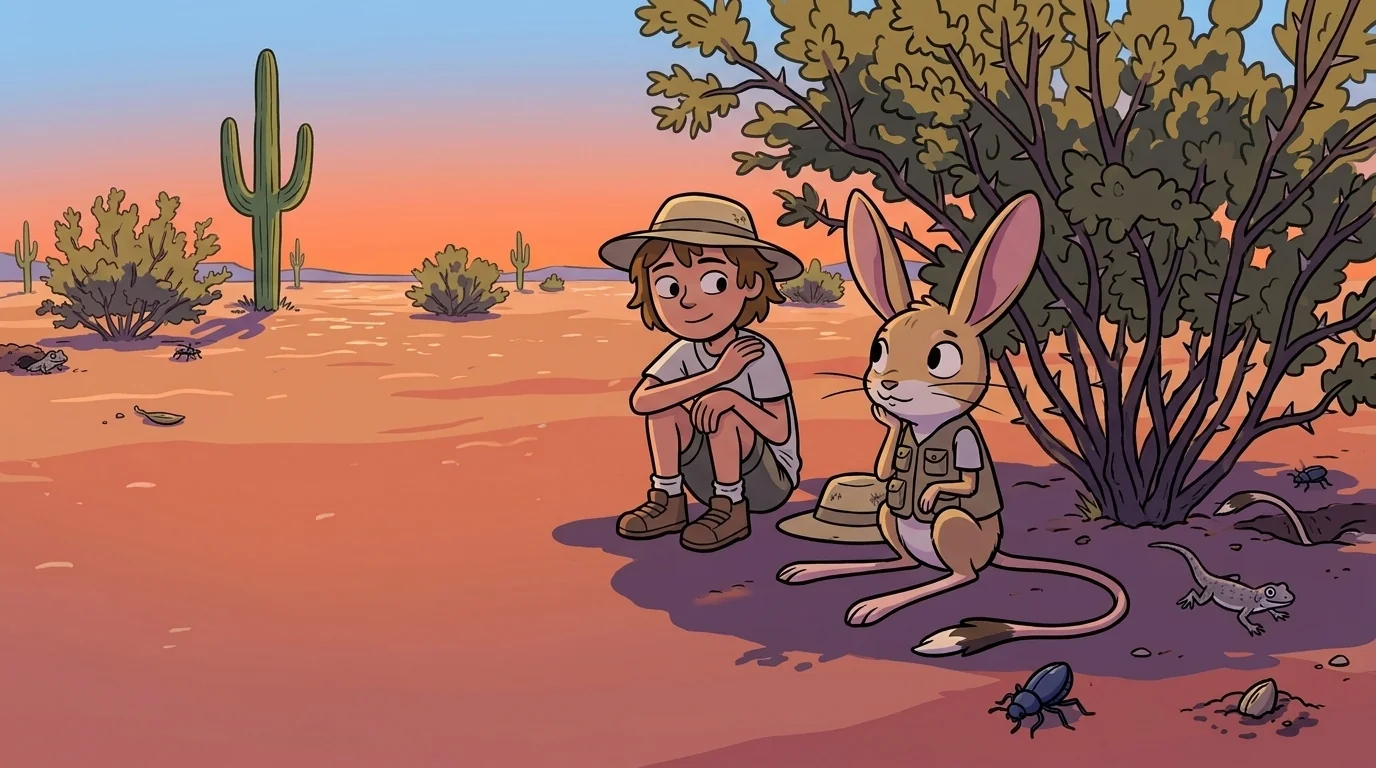
At the end Dune gestured at the shimmering, seemingly-empty sand.
"When you meet a place — or a situation — that looks empty or impossible," she said, "don't assume nothing can live there. Ask what scarcity is the problem, and what clever moves would solve it: what to store, when to act, how to shape yourself, where to hide. Life has filled the harshest deserts on Earth, not by overpowering them, but by getting smart about less." She scooped a handful of sand and let it run through her fingers, and a dozen tiny tracks in it caught the light. "Empty? Look again. Scarcity doesn't stop life. It designs it."
The BiomeForge ensemble
Dune is part of BiomeForge's distributed-narrative cast. Each character embodies a different curricular primitive; together they teach the full subject.
-
Canopy
Forest biomes (temperate, tropical, taiga)
-
Reef
Aquatic biomes (coral reef, freshwater, marine)
-

Ridge
Mountain / alpine / vertical-zonation biomes
-
Flux
Climate-biome mapping (where biomes shift with climate)
-

Burrow
Ecosystem engineers — some animals build homes for a hundred others; dig, and the neighborhood moves in
-
Graze
Keystone herbivores + grasslands — a grassland needs its grazers; eat, move on, keep the prairie alive
-

Kelp
Keystone species + trophic cascades — one keystone holds up a whole forest; pull it and everything topples
-

Marsh
Decomposition + nutrient cycling — nothing is wasted; the dead feed the living, the water remembers
-
Silt
Sediment + ecological succession — new land is built one grain at a time; life moves in the moment it's ready