
Kelp
THE KEYSTONE SPECIES — some species have an effect on their ecosystem far larger than their numbers; remove the keystone and the whole system can topple, as when losing sea otters lets urchins devour a kelp forest into a barren
Loading audio…
Press play to listen along. The line being read lights up as you go.
Show full transcript
Loading transcript…
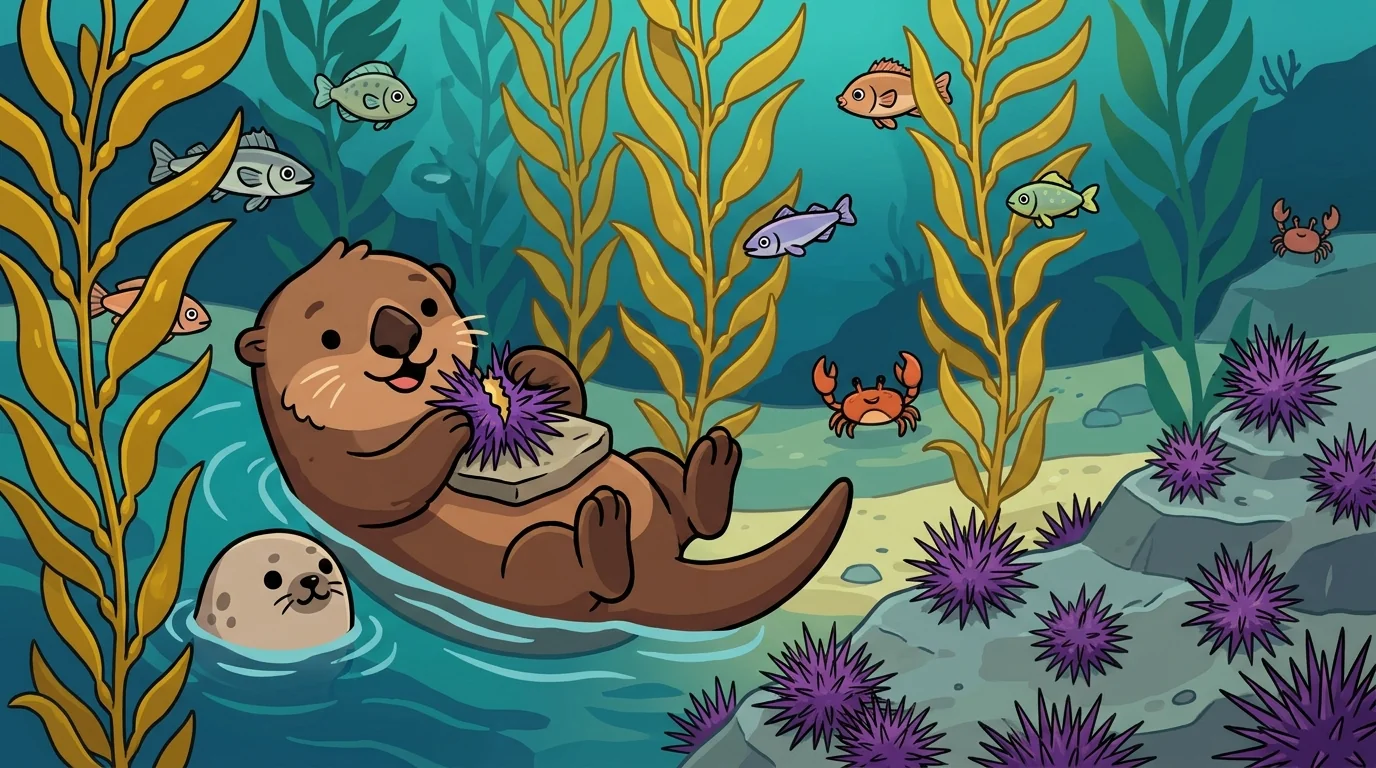
Kelp swayed in the cold current, a towering underwater forest, and told visitors the story of how she'd once nearly disappeared — over an animal that never touched her.
"There's a word from stone arches," she said. "The keystone — the single wedge at the top that holds all the other stones in place. Pull it, and the whole arch collapses, even though it's just one stone. Ecosystems have keystones too: species whose effect is far bigger than their numbers. And the keystone of my whole forest isn't me, and it isn't the biggest animal here. It's the sea otter."
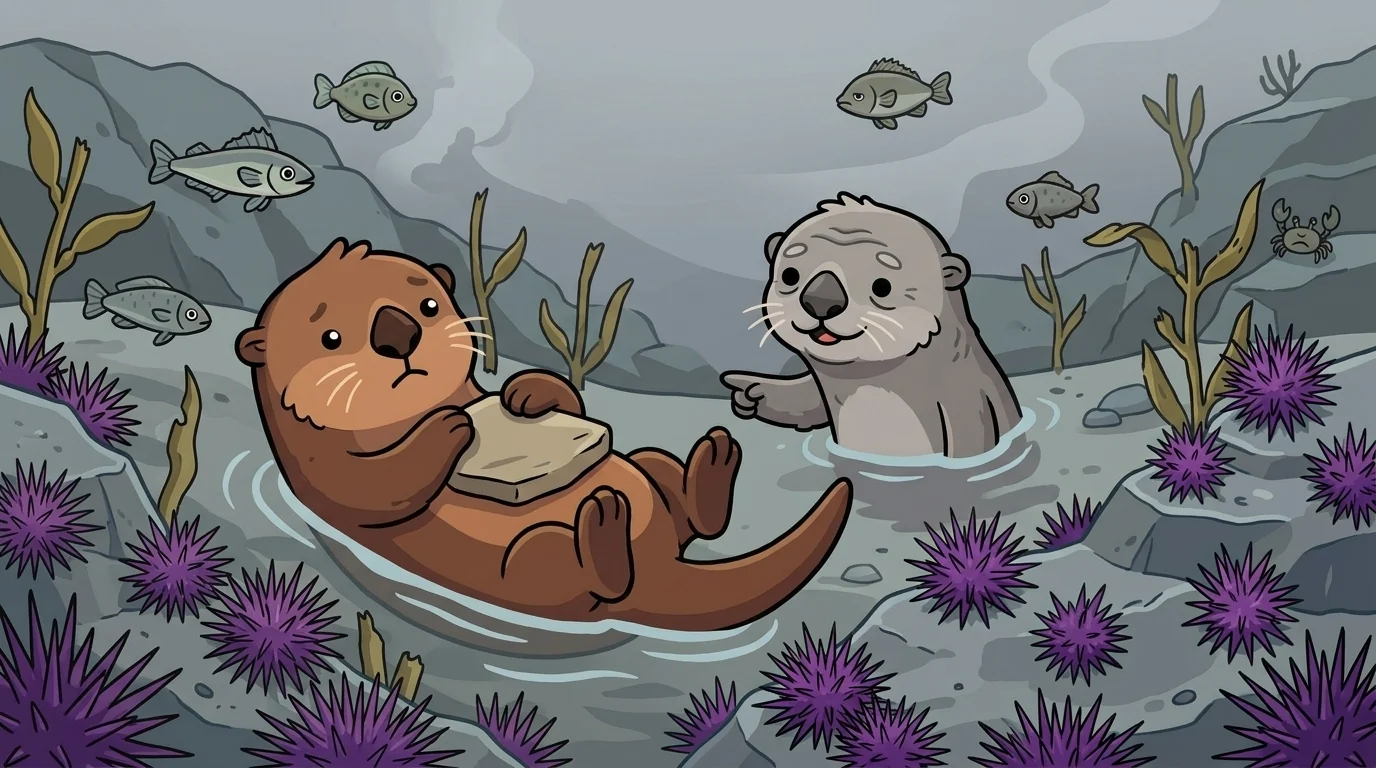
She traced the chain, because the keystone's power is always indirect.
"Follow it," Kelp said. "Sea otters eat sea urchins. Sea urchins eat me — they graze on kelp. When the otters are here, they keep the urchins in check, so the urchins nibble modestly and my forest grows tall and thick, sheltering fish, crabs, seals, a thousand species. Now take the otters away — as fur hunters once did, almost completely. With no otters, the urchins explode. Unchecked, they mow my forest to the seafloor, leaving nothing but bare rock studded with urchins — a place scientists call an urchin barren. One missing predator. A whole forest gone, and everything that lived in it."
The subtext the older students heard was about leverage and indirect consequence — that the most important part of a system is often not the biggest or most obvious, and that harming one link can unleash damage out of all proportion to that link.
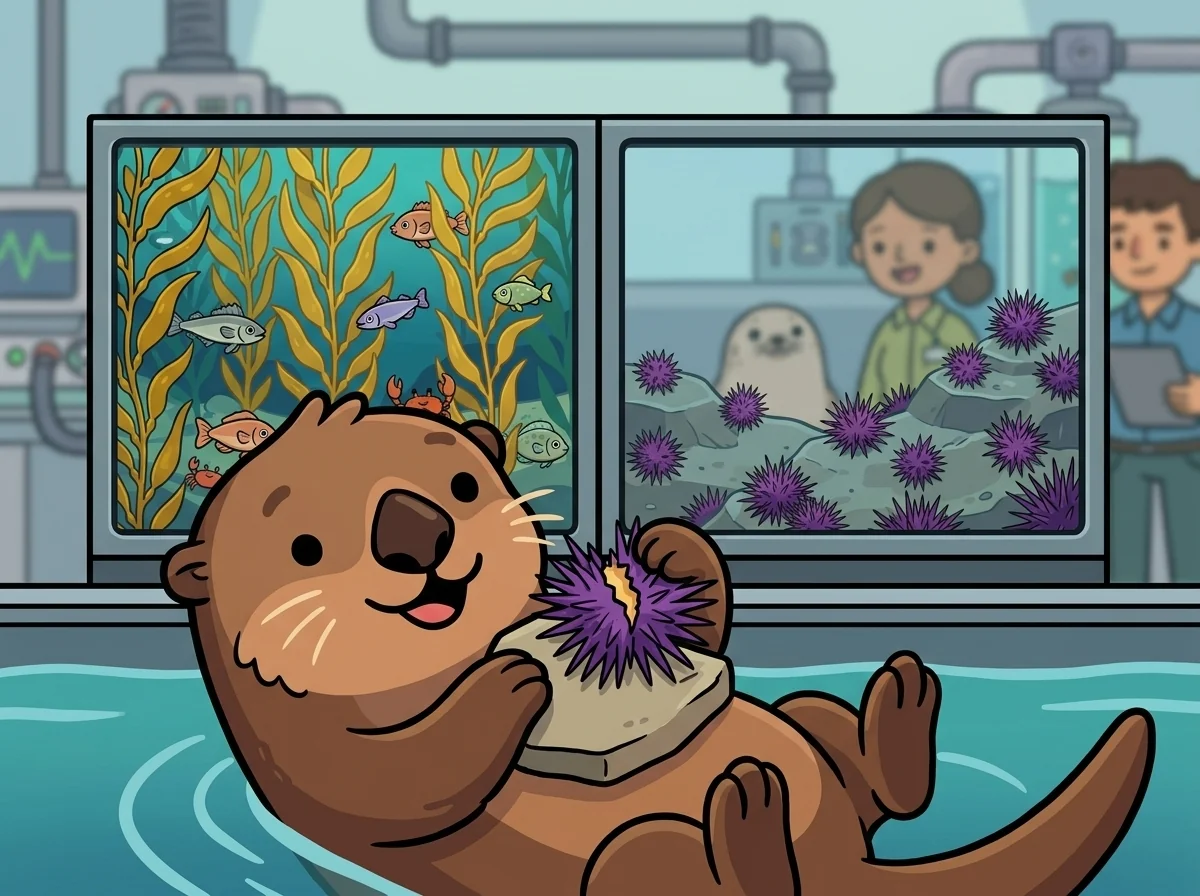
Kelp made sure they understood why it's more than a food chain.
"A keystone isn't just 'a predator eats a thing,'" she said. "It's that removing it changes the entire structure, not just one population. The otter's real job isn't eating urchins — it's keeping a whole forest standing by controlling the one grazer that could destroy it. That's why 'keystone' is the right word and 'predator' isn't enough: the arch doesn't just lose a stone when the keystone goes, it falls down. The otter is small, furry, and easy to overlook. It's also the single thread the whole forest hangs from."
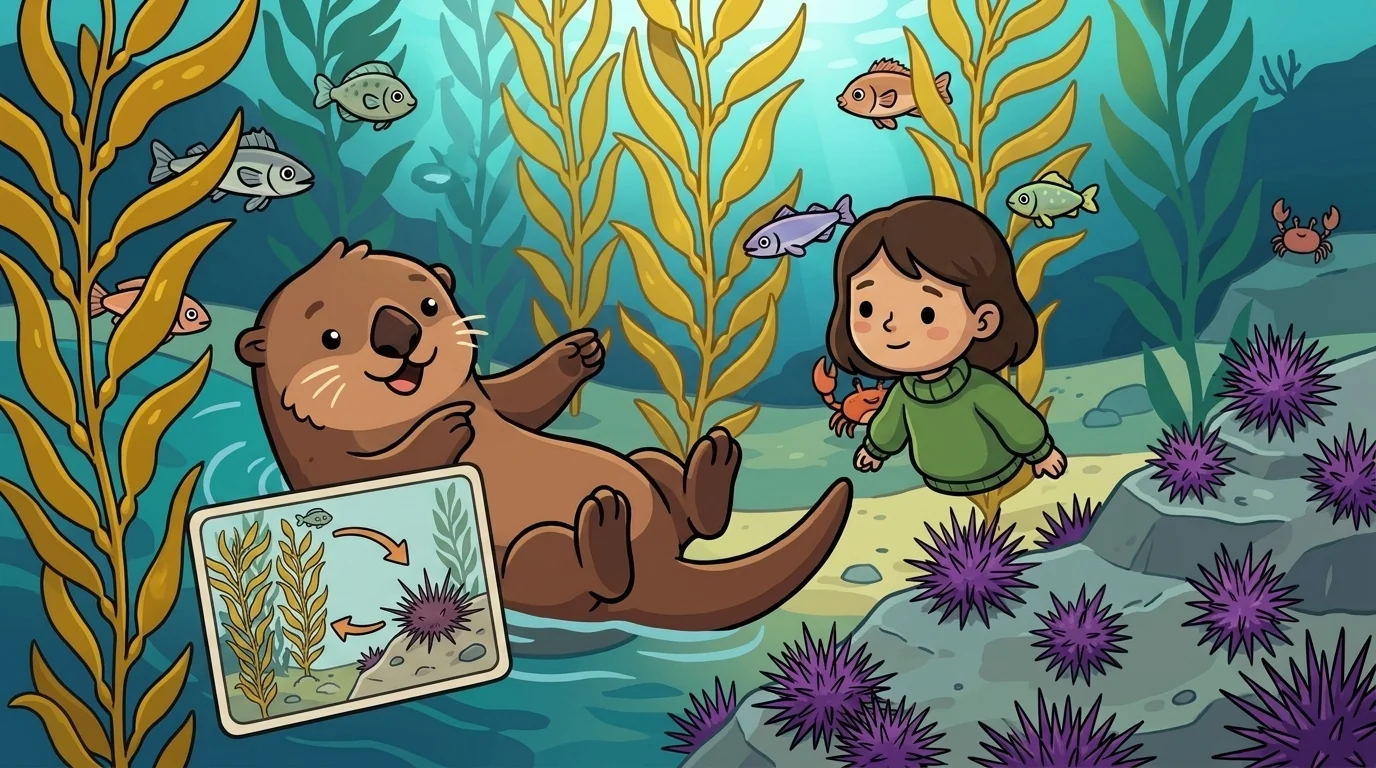
The visitor asked the hopeful question. "Can a fallen forest ever come back?"
"That's the good news," Kelp said. "When the otters were protected and returned to some coasts, they ate the urchins back down, and my forests regrew — fish returned, the barren became a forest again. Restore the keystone, and sometimes the arch rebuilds itself. But it only works if you correctly identify which species was the keystone. Protect the wrong thing and the forest keeps falling. Protect the otter — the small, indirect, easy-to-miss one — and everything else recovers with it."
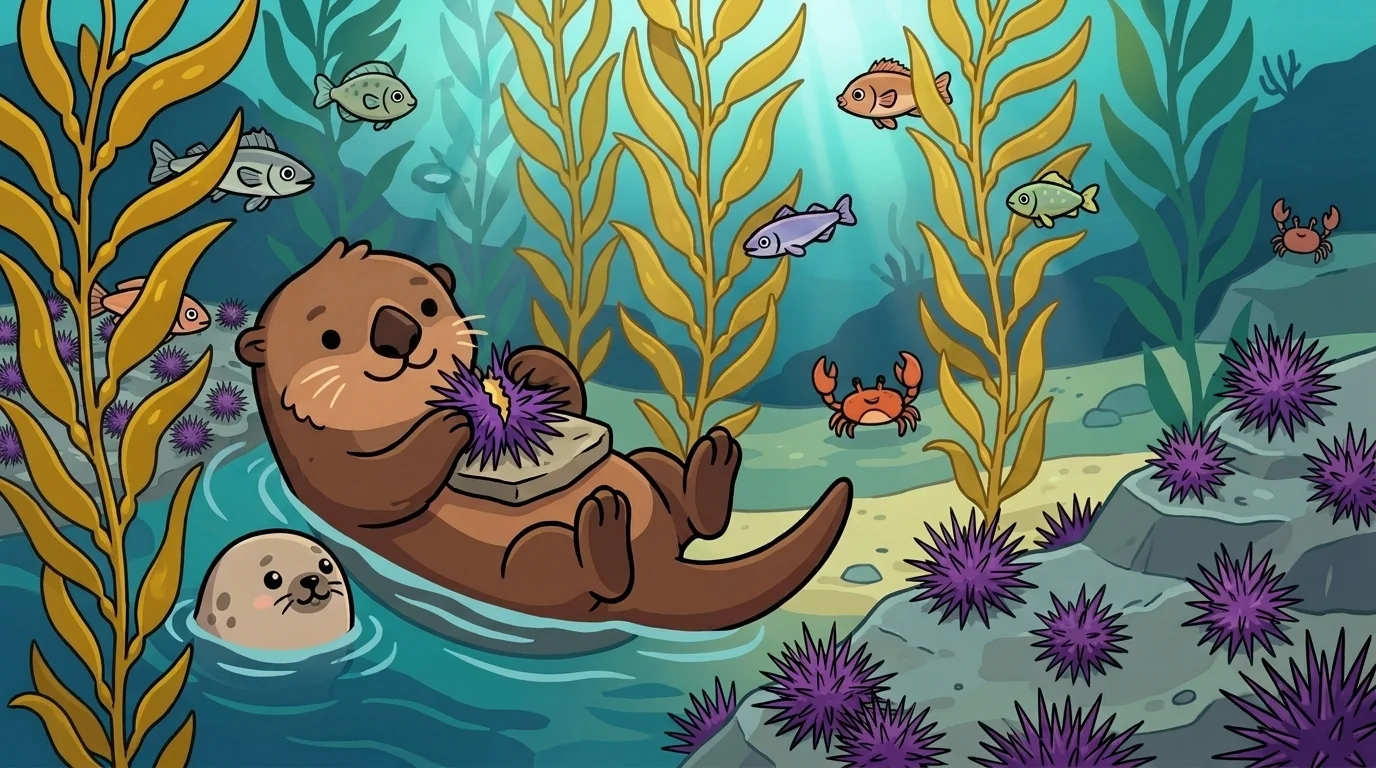
At the end Kelp swayed, whole and towering, in a current patrolled again by otters.
"When you want to protect a place," she said, "don't just protect what's biggest or most beautiful. Ask what's the keystone — the one species whose removal would collapse the structure, however small it looks. Sometimes saving an entire forest means saving one furry animal that never even touches the trees." She rippled in the cold, clear water. "I'm the forest everyone sees. But I only stand because something you'd barely notice is quietly holding up the arch."
The BiomeForge ensemble
Kelp is part of BiomeForge's distributed-narrative cast. Each character embodies a different curricular primitive; together they teach the full subject.
-
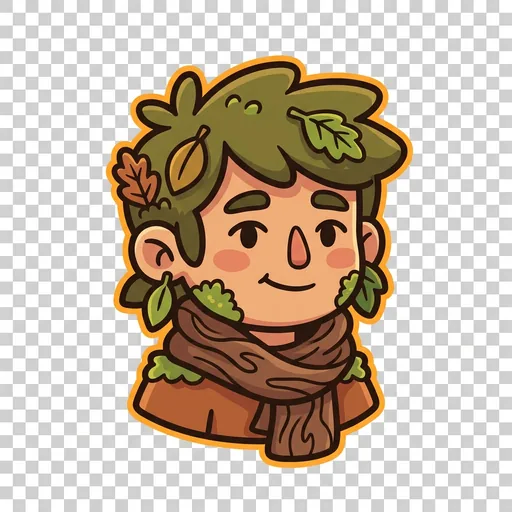
Canopy
Forest biomes (temperate, tropical, taiga)
-
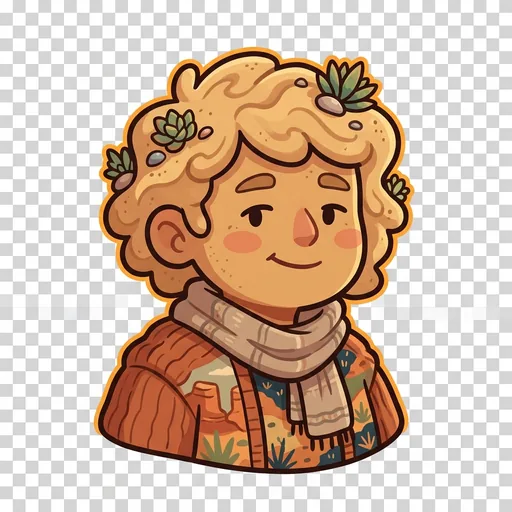
Dune
Desert biomes (hot, cold, semi-arid)
-
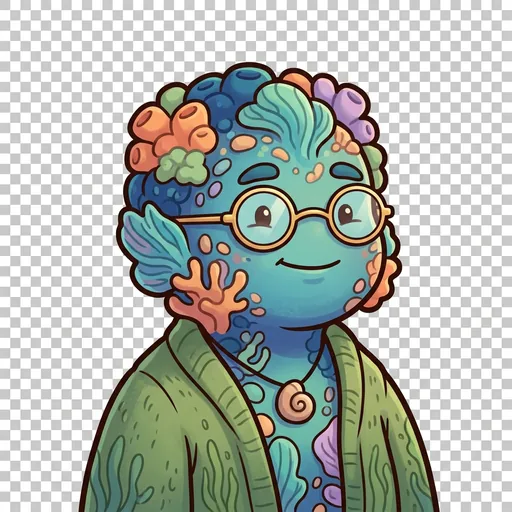
Reef
Aquatic biomes (coral reef, freshwater, marine)
-
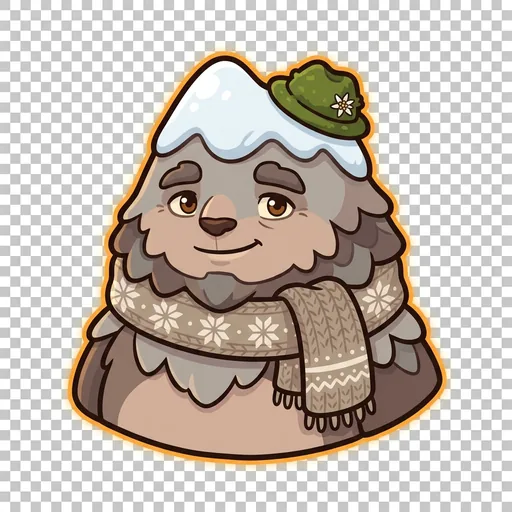
Ridge
Mountain / alpine / vertical-zonation biomes
-
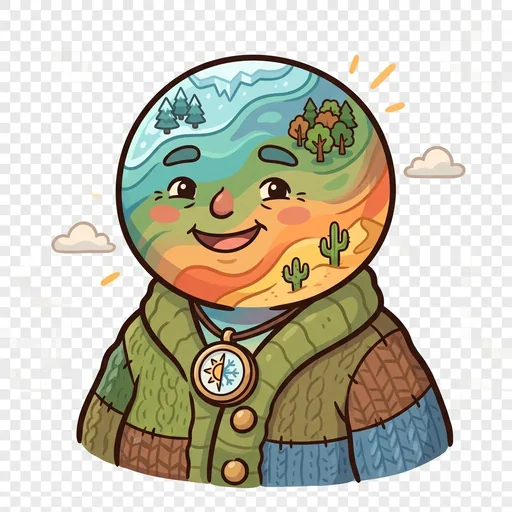
Flux
Climate-biome mapping (where biomes shift with climate)
-
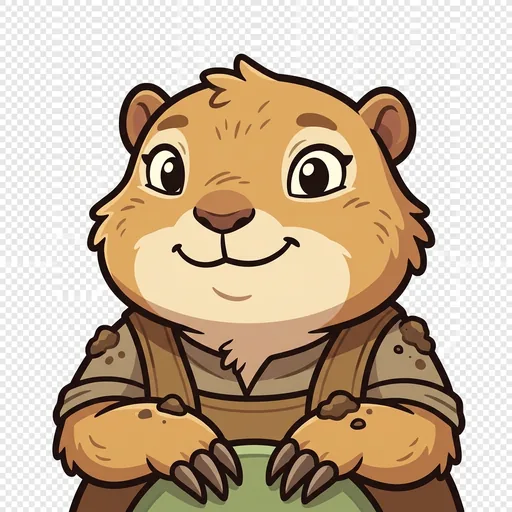
Burrow
Ecosystem engineers — some animals build homes for a hundred others; dig, and the neighborhood moves in
-
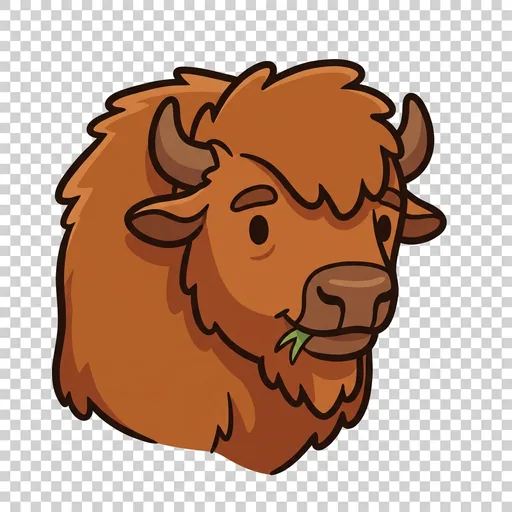
Graze
Keystone herbivores + grasslands — a grassland needs its grazers; eat, move on, keep the prairie alive
-
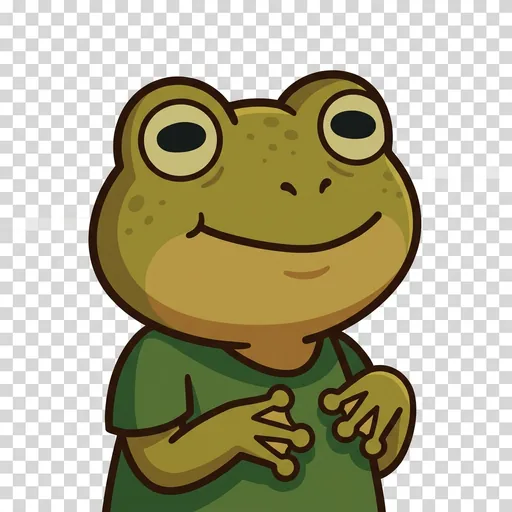
Marsh
Decomposition + nutrient cycling — nothing is wasted; the dead feed the living, the water remembers
-
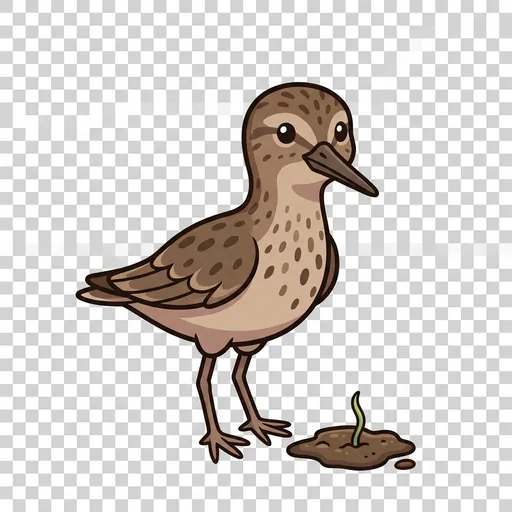
Silt
Sediment + ecological succession — new land is built one grain at a time; life moves in the moment it's ready