
Marsh
DECOMPOSITION & NUTRIENT CYCLING — in a wetland the dead feed the living; decomposers break down everything that dies back into nutrients that re-enter the food web, so a marsh loses almost nothing and recycles almost everything
Loading audio…
Press play to listen along. The line being read lights up as you go.
Show full transcript
Loading transcript…
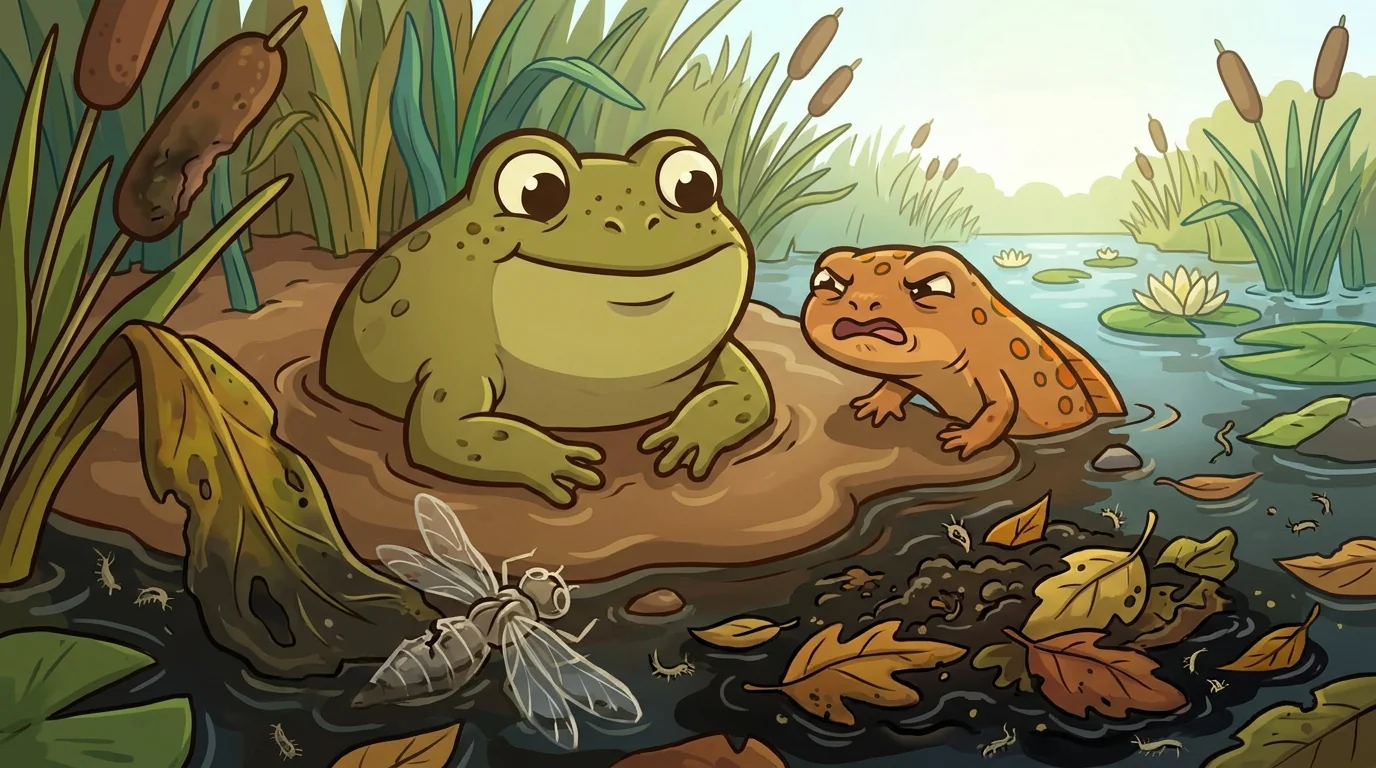
Marsh lived where the water met the land and everyone else called it a swamp, a wasteland, a place to drain. She knew better.
"They look at me and see muck and rot and mosquitoes," she said to a heron passing through. "What they're actually looking at is the most efficient recycling system in the natural world. In a marsh, nothing is wasted. Everything that dies here — a fallen reed, a fish, a leaf washed in from upstream — gets broken back down into nutrients that immediately feed something new. The rot isn't decay. It's the food web reloading."
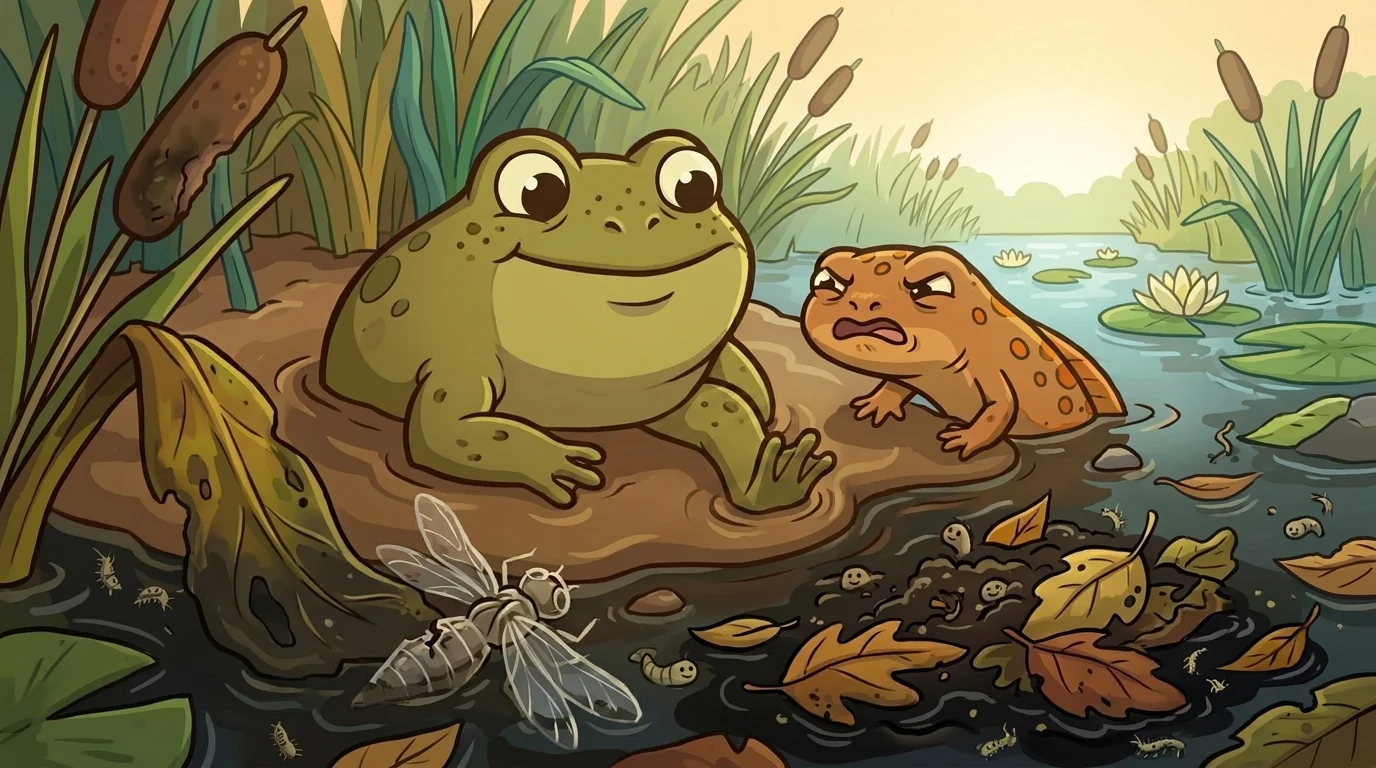
She explained the cycle, because "decomposition" sounds like an ending and it's really a beginning.
"Watch what happens to a dead reed," Marsh said. "It falls into the shallow water. Bacteria and fungi — the decomposers — go to work, breaking its body back into the raw nutrients it was built from: nitrogen, phosphorus, carbon. Those nutrients dissolve into the water and soil, where new plants take them up and grow. Insects eat the plants, fish eat the insects, herons eat the fish — and when they die, they fall back into the water and the whole thing starts again. The dead reed didn't leave the system. It just changed jobs, from 'plant' to 'fertilizer' to 'part of a new plant.' In here, death is a doorway, not an exit."
The subtext the older students heard was about waste and value — that in a well-made system there is no such thing as garbage, only material waiting to become the next useful thing, and that what looks like an ending is often a hand-off.
Marsh set the record straight on her reputation, because it cost the world dearly.
"For centuries people called wetlands worthless and drained them — for farms, for cities — thinking they were reclaiming useless swamp," she said. "Then science caught up. Marshes filter pollutants out of water for free, cleaner than any treatment plant. They soak up floods like a sponge, protecting everything downstream. They store enormous amounts of carbon in their waterlogged soil. They're nurseries for a huge share of the fish people eat. We destroyed half the world's wetlands before realizing we'd been bulldozing some of the most valuable land on Earth because it didn't look valuable."
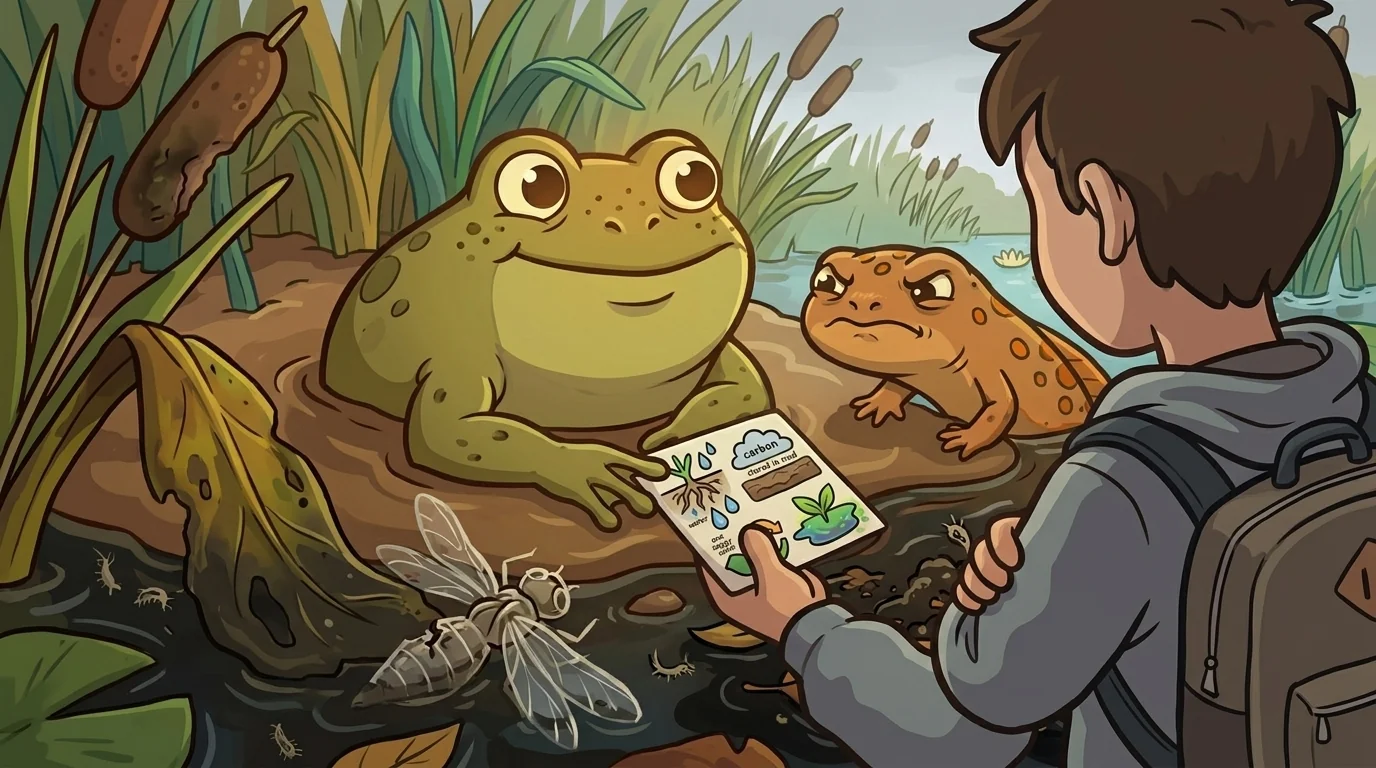
The heron asked why the marsh recycles so much better than dry land.
"Water and slowness," Marsh said. "The waterlogged soil holds everything close — nothing blows away or washes off fast — so the decomposers have time to break it all down and hand it back. Dry land loses nutrients; a marsh keeps them, circulating the same material around and around. That patience, that refusal to let anything escape the cycle, is exactly what makes me look like stagnant muck to a passer-by and makes me, in truth, the richest ground there is."
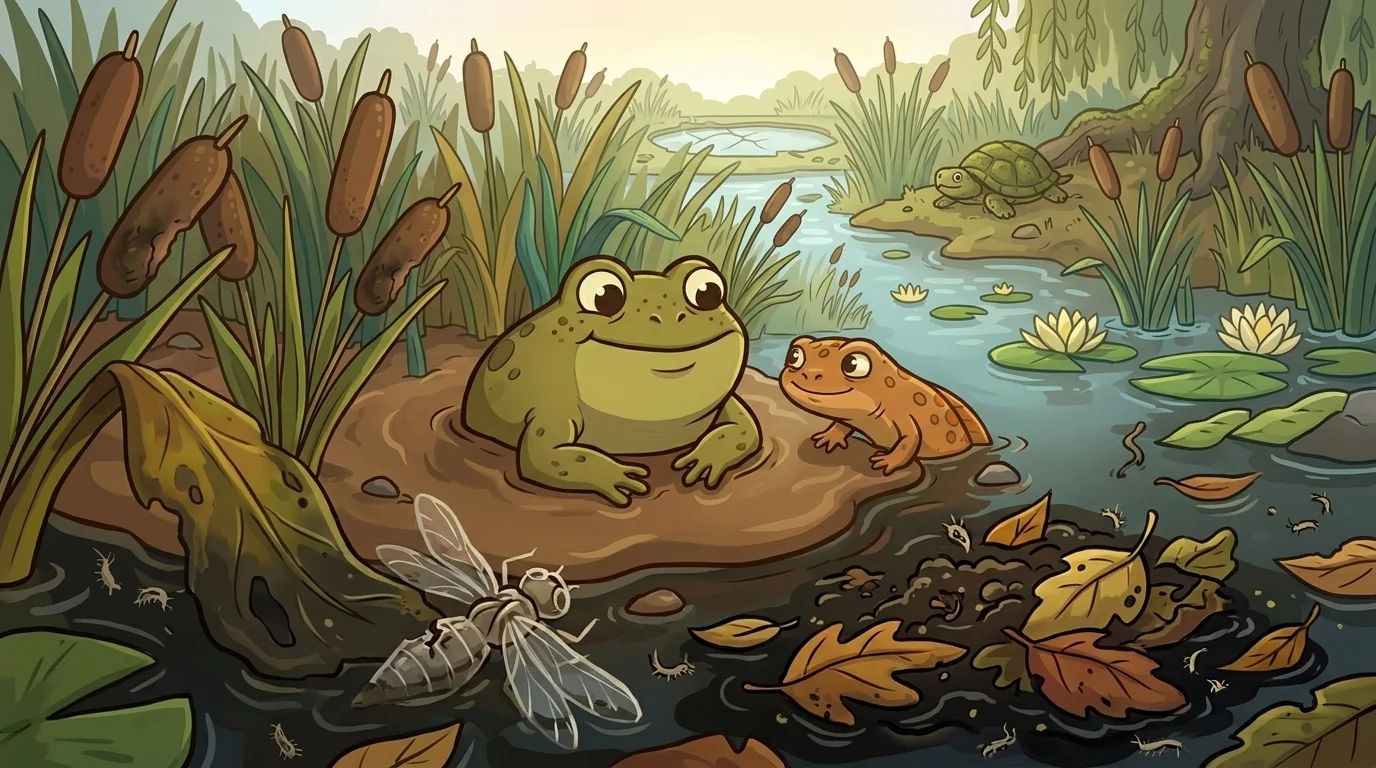
At the end Marsh stirred the rich, dark, living water.
"When you see something called waste — a swamp, a scrap, a dead thing — ask what it's about to become," she said. "In a healthy system nothing is thrown away; it's only between jobs. The marsh looks like the place things go to rot. It's really the place things go to be reborn as something the living need." She let a decomposing leaf drift down into the murk, where a hundred tiny things were already turning it into next spring's reeds. "Nothing wasted. The dead feed the living. And the water remembers everything that ever fell into it."
The BiomeForge ensemble
Marsh is part of BiomeForge's distributed-narrative cast. Each character embodies a different curricular primitive; together they teach the full subject.
-

Canopy
Forest biomes (temperate, tropical, taiga)
-
Dune
Desert biomes (hot, cold, semi-arid)
-
Reef
Aquatic biomes (coral reef, freshwater, marine)
-

Ridge
Mountain / alpine / vertical-zonation biomes
-

Flux
Climate-biome mapping (where biomes shift with climate)
-

Burrow
Ecosystem engineers — some animals build homes for a hundred others; dig, and the neighborhood moves in
-
Graze
Keystone herbivores + grasslands — a grassland needs its grazers; eat, move on, keep the prairie alive
-

Kelp
Keystone species + trophic cascades — one keystone holds up a whole forest; pull it and everything topples
-
Silt
Sediment + ecological succession — new land is built one grain at a time; life moves in the moment it's ready