
Silt
PRIMARY SUCCESSION — brand-new bare ground (from a river's deposits, a retreating glacier, cooled lava) is colonized in a predictable sequence: pioneers first make soil, then each wave of life makes the ground ready for the next, until a mature community forms
Loading audio…
Press play to listen along. The line being read lights up as you go.
Show full transcript
Loading transcript…
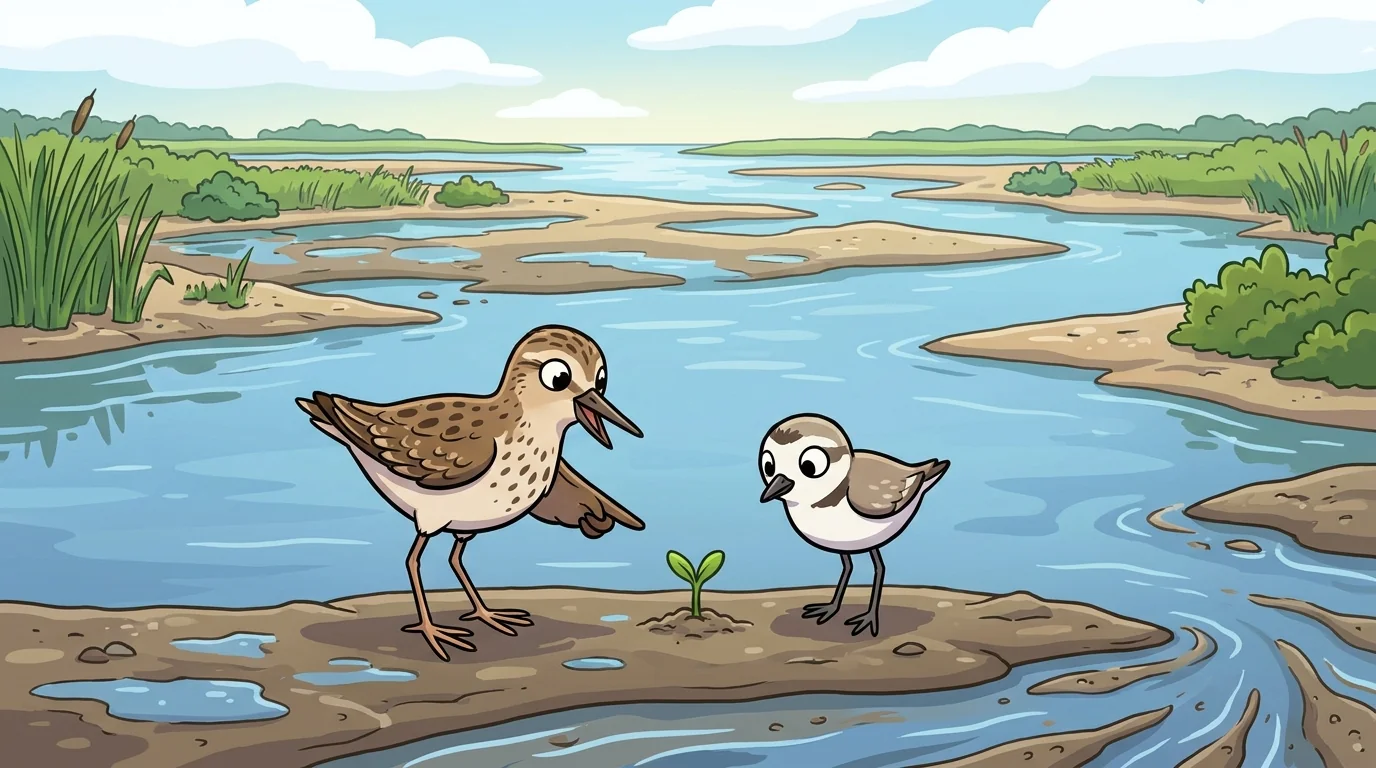
Silt gathered at the river's bend where fresh mud was piling into new land, and she treated every grain like the start of something.
"People think land is just there," she said to a sandpiper poking the fresh flats. "But new ground gets built — by a river dropping silt, a glacier retreating off bare rock, a lava flow cooling. And when brand-new bare ground appears, life doesn't just show up all at once as a finished forest. It arrives in a sequence, each wave preparing the ground for the next. Scientists call it succession, and the very first arrivals — the ones brave or tough enough to colonize bare nothing — are called pioneers."
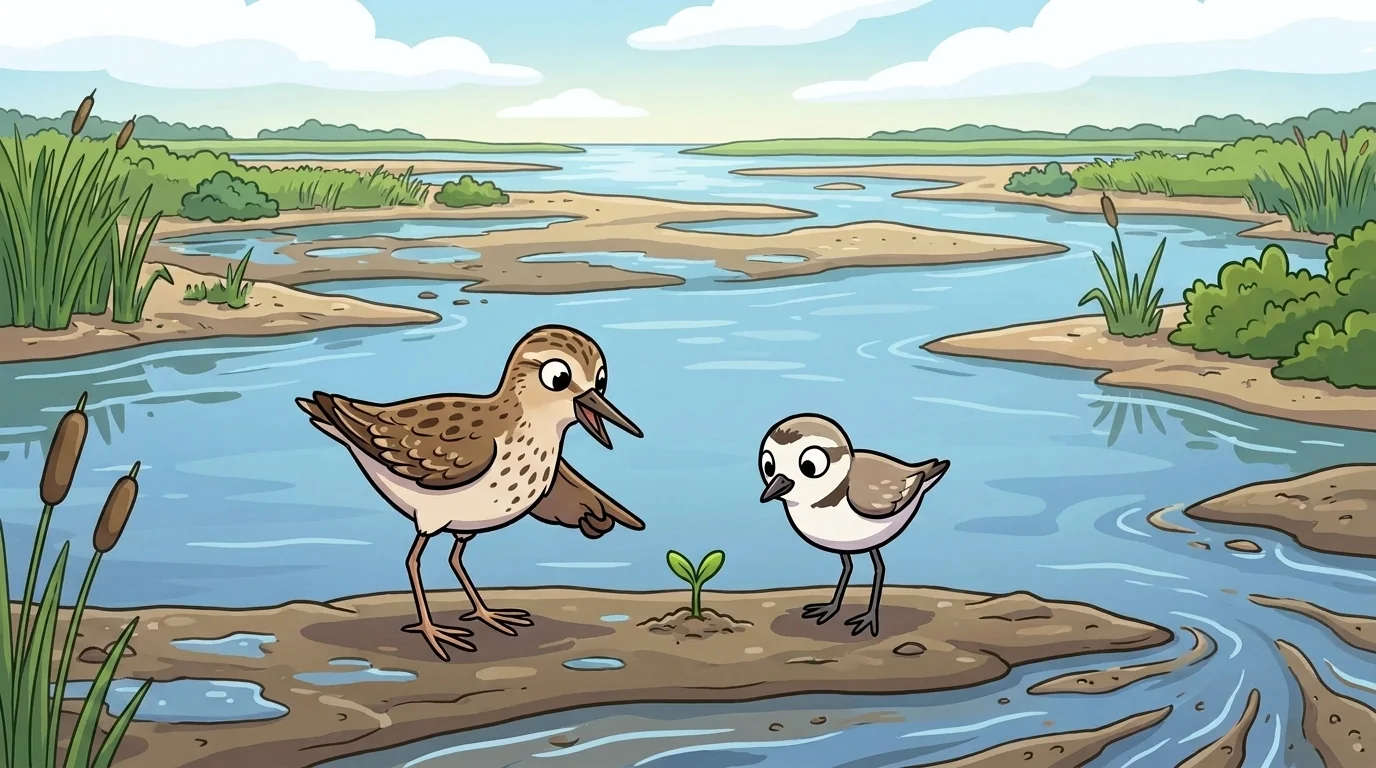
She laid out the sequence, because the order is the whole idea.
"Watch new ground come alive, in order," Silt said. "First the pioneers — lichens on bare rock, or tough little plants on fresh silt — things that can live on almost nothing. They can't do much, but they do the one crucial thing: as they live and die, they break rock into grains and add their bodies to it, making the first thin soil. That soil lets slightly bigger plants — grasses, small weeds — move in, and they make more soil, and hold moisture. That lets shrubs come, then fast small trees, then, finally, the big slow trees of a mature forest. Each stage builds the conditions the next stage needs. The forest can't come first. It has to be led up to."
The subtext the older students heard was about foundations and sequence — that big, mature, impressive things can't be summoned instantly; they rest on humbler stages that had to come first, and that the unglamorous pioneer work is what makes everything after it possible.
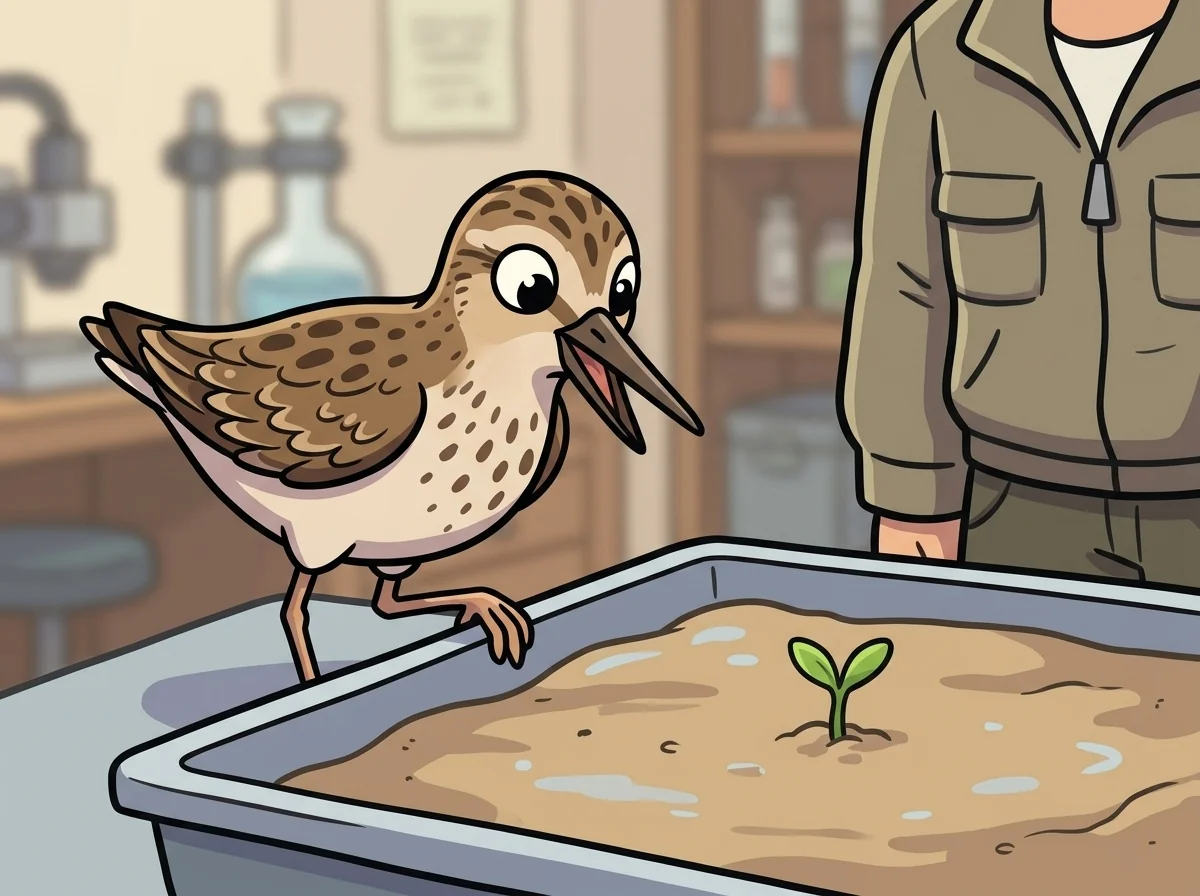
Silt was clear about why the pioneers get no credit and deserve all of it.
"Nobody photographs the lichen," she said. "They photograph the grand old forest at the end and call that nature. But that forest is standing on soil the lichens and pioneers spent decades or centuries making out of bare rock. The pioneer doesn't get to live in the forest it made possible — it gets crowded out by the very plants it prepared the ground for. That's the quiet nobility of succession: the first arrivals build a world they won't get to enjoy, for the benefit of everything that comes after. The forest is a monument to pioneers nobody remembers."
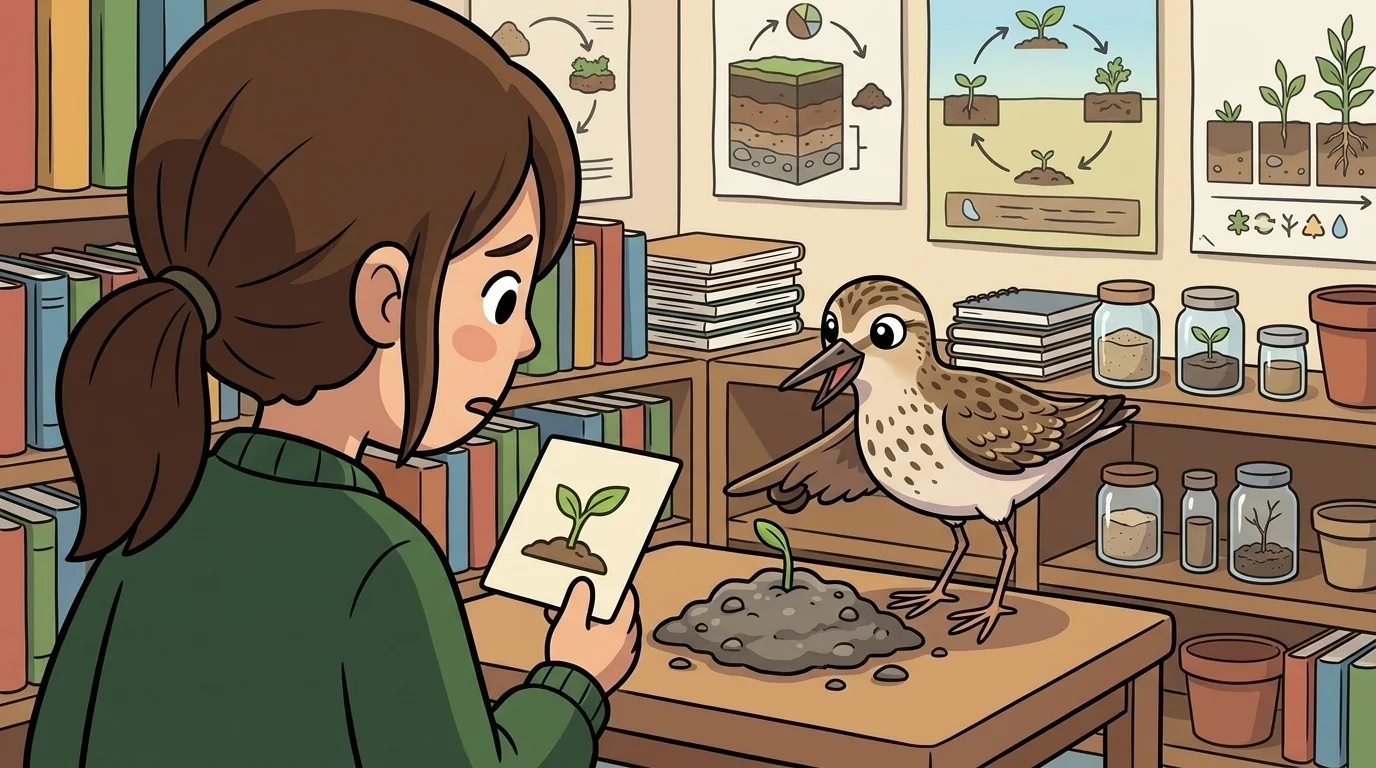
The sandpiper asked how long it all takes.
"Longer than a life, usually," Silt said. "Bare rock to mature forest can take centuries. Which is exactly why it matters that we don't destroy mature ecosystems casually, thinking 'it'll grow back.' It will grow back — through the whole slow sequence, pioneers and all — but on nature's timescale, not ours. A forest cut down isn't replaced by planting; it's replaced by succession, and succession does not hurry. The building of ground is patient work, and patience is the one thing it can't skip."
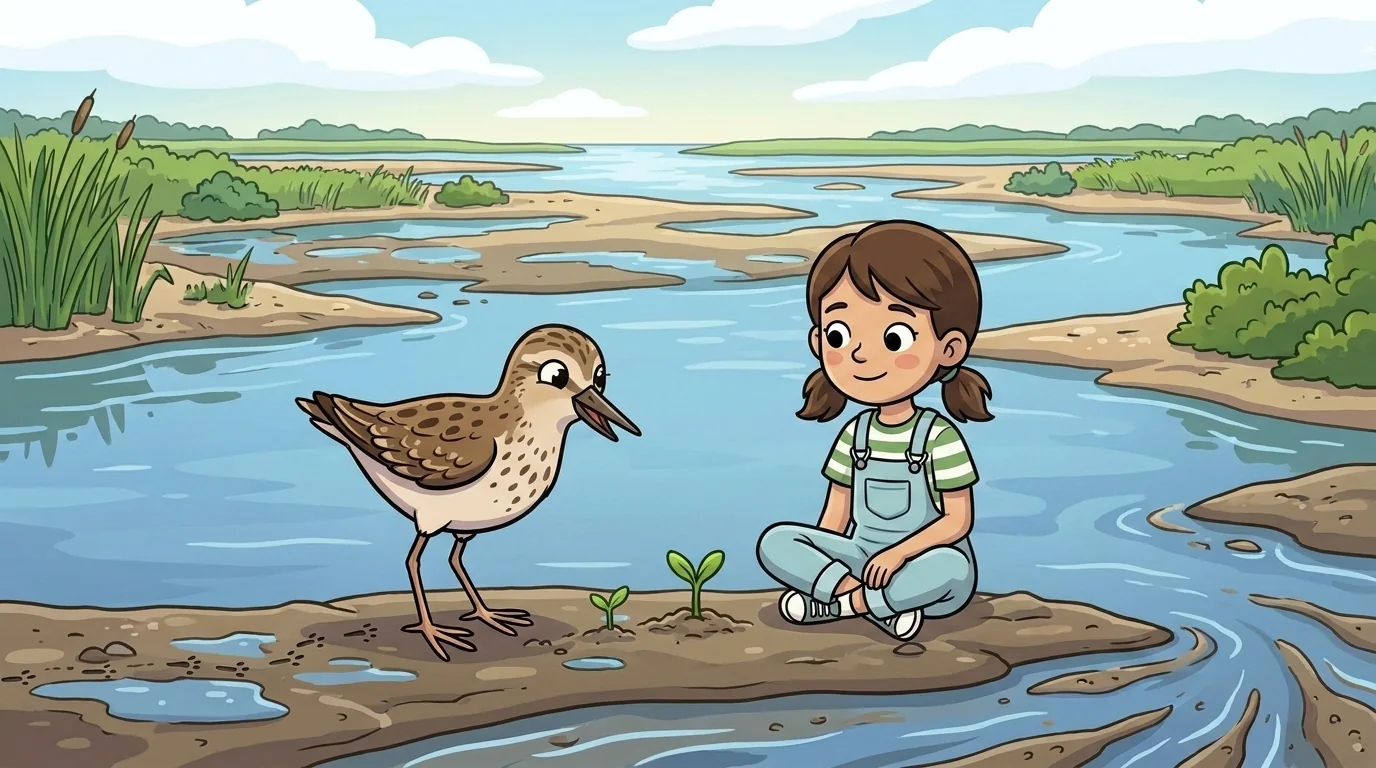
At the end Silt looked at the fresh flats, already dotted with the first tough green pioneers.
"When you see something grand and finished," she said, "ask what came before it to make it possible — what humble, early, uncredited work built the ground it stands on. New land, a new forest, a new anything: it arrives in stages, each one preparing the next, and it starts with pioneers doing the thankless work on bare nothing." She let a handful of new silt run through her fingers, a few seeds already catching in it. "New ground is built one grain at a time. And life moves in the very moment it's ready — never before, and never all at once."
The BiomeForge ensemble
Silt is part of BiomeForge's distributed-narrative cast. Each character embodies a different curricular primitive; together they teach the full subject.
-
Canopy
Forest biomes (temperate, tropical, taiga)
-

Dune
Desert biomes (hot, cold, semi-arid)
-

Reef
Aquatic biomes (coral reef, freshwater, marine)
-

Ridge
Mountain / alpine / vertical-zonation biomes
-

Flux
Climate-biome mapping (where biomes shift with climate)
-

Burrow
Ecosystem engineers — some animals build homes for a hundred others; dig, and the neighborhood moves in
-
Graze
Keystone herbivores + grasslands — a grassland needs its grazers; eat, move on, keep the prairie alive
-

Kelp
Keystone species + trophic cascades — one keystone holds up a whole forest; pull it and everything topples
-

Marsh
Decomposition + nutrient cycling — nothing is wasted; the dead feed the living, the water remembers