Pricetag
INFORMATION HAS A PRICE
Loading audio…
Press play to listen along. The line being read lights up as you go.
Show full transcript
Loading transcript…
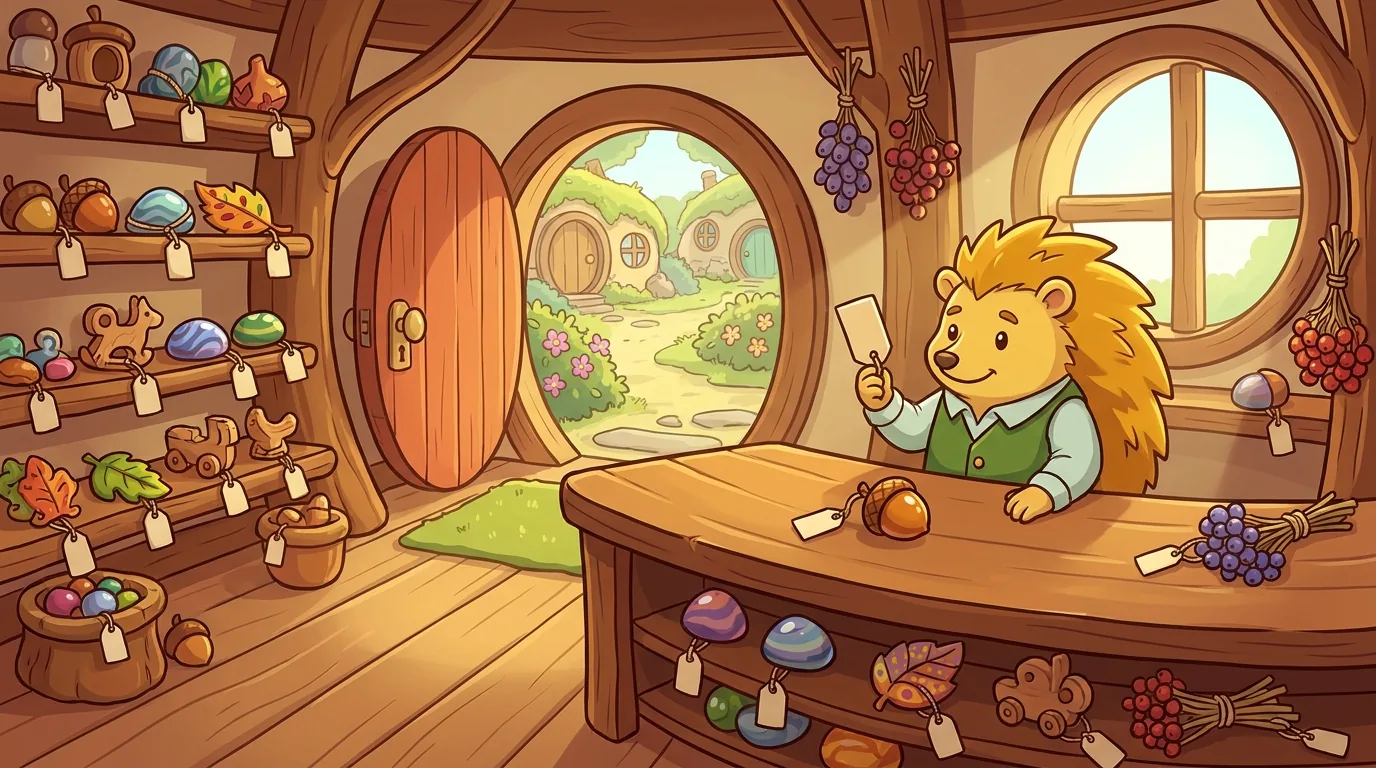
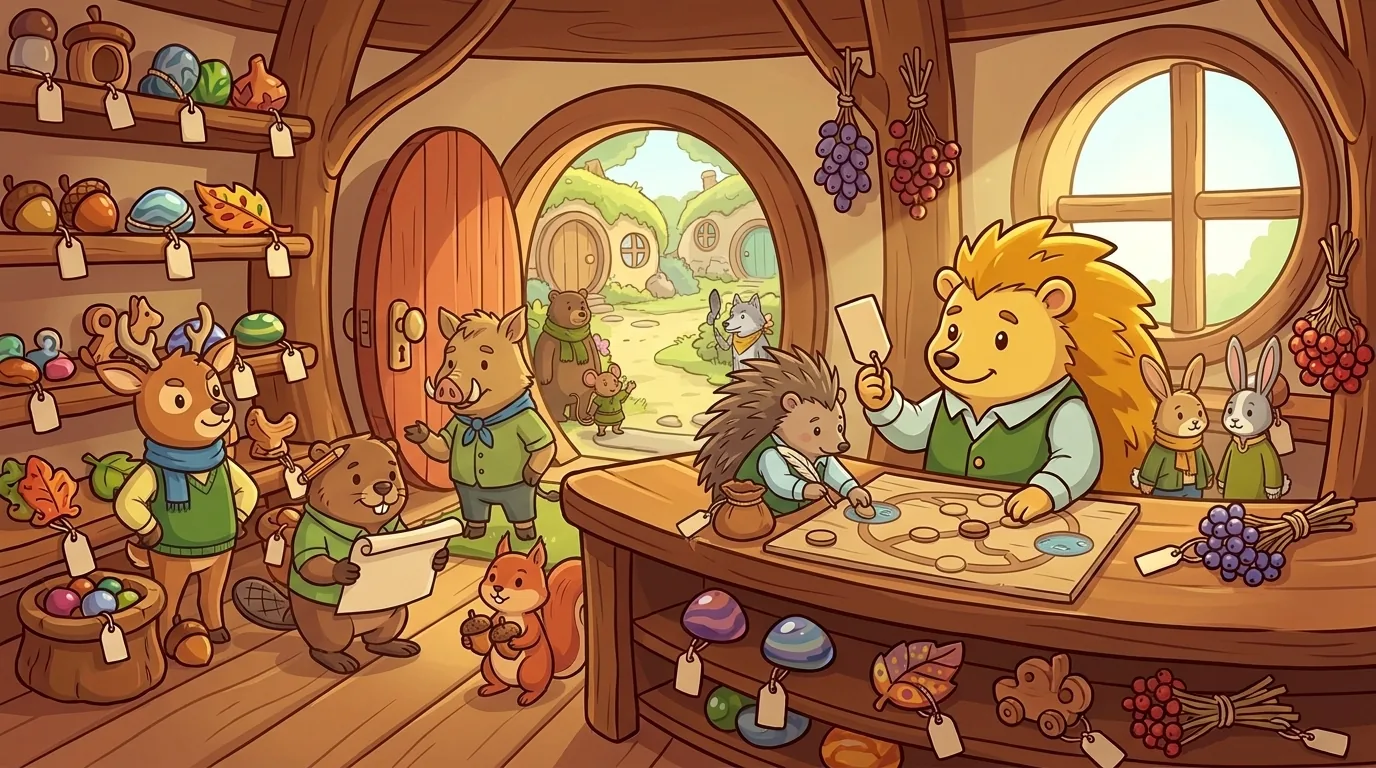
Pricetag keeps a tiny shop at the edge of the Moss village. It is a round burrow with shelves from floor to ceiling, and on every shelf sits something small: a polished acorn, a curled leaf, a wooden toy cart, a striped pebble. Each one has a paper tag tied to it with string, and every single tag is blank.
Visitors always ask about that. Pricetag, a golden hedgehog in a green waistcoat, always gives the same answer. "A thing doesn't have one price. The price depends on what you get for it, and what else you could have spent."
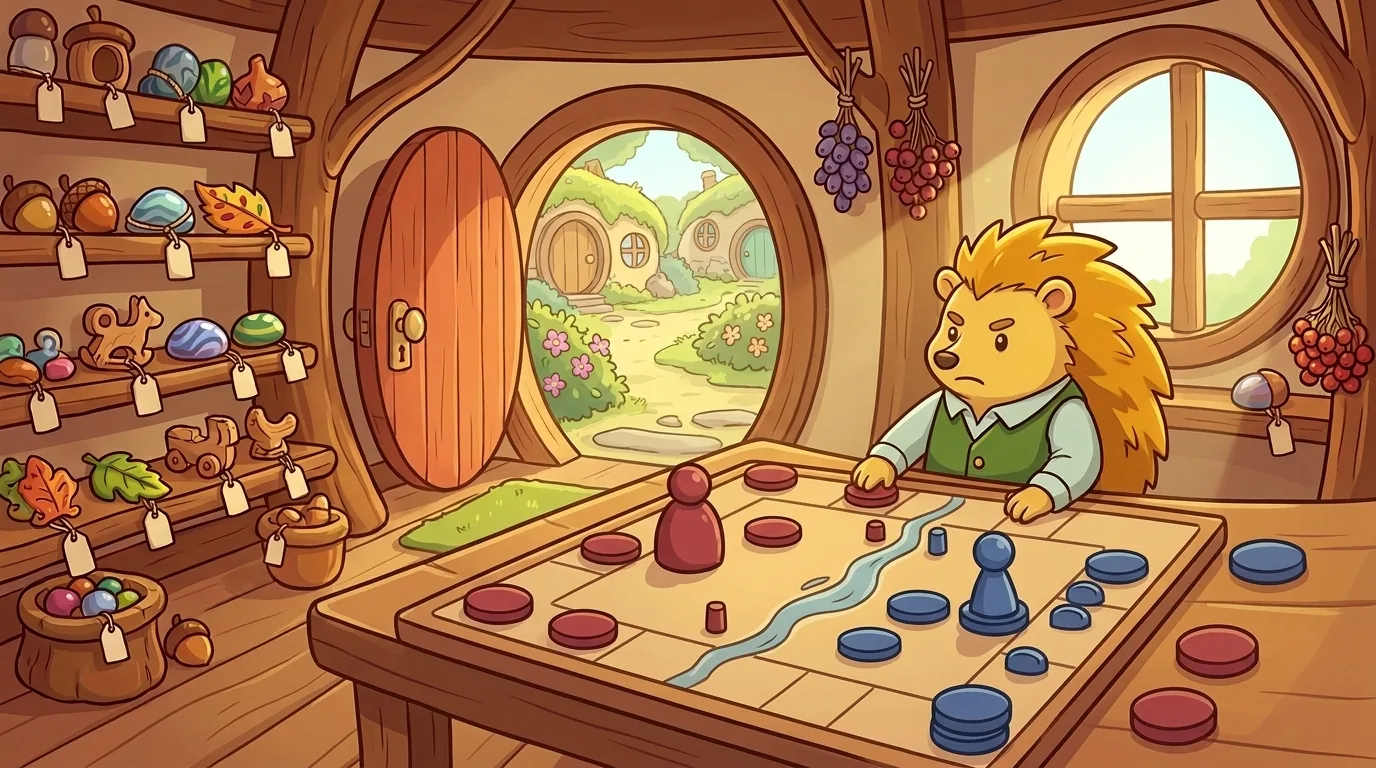
That evening, Pricetag sat with Red's army in a twenty-piece game. Twenty pieces each sounds like a lot, but most of them are ordinary: four little runners, three bramble-clearing badgers, two 4s, and one each of 5, 6, 7, 8 and 9. Above them all sits one 10, Ursa the bear, and below them all sits Puck, the tiny mouse who can only beat Ursa, and only by reaching her first.
Across the ponds, a Blue piece had marched forward three times. On the way it had sent Red's 6 home, then Red's 7. Nobody on Red's side knew what it was, because in this game you only ever see a piece when it meets another one.
"Send our 8 at it," said a Red piece. "The 8 is strong."
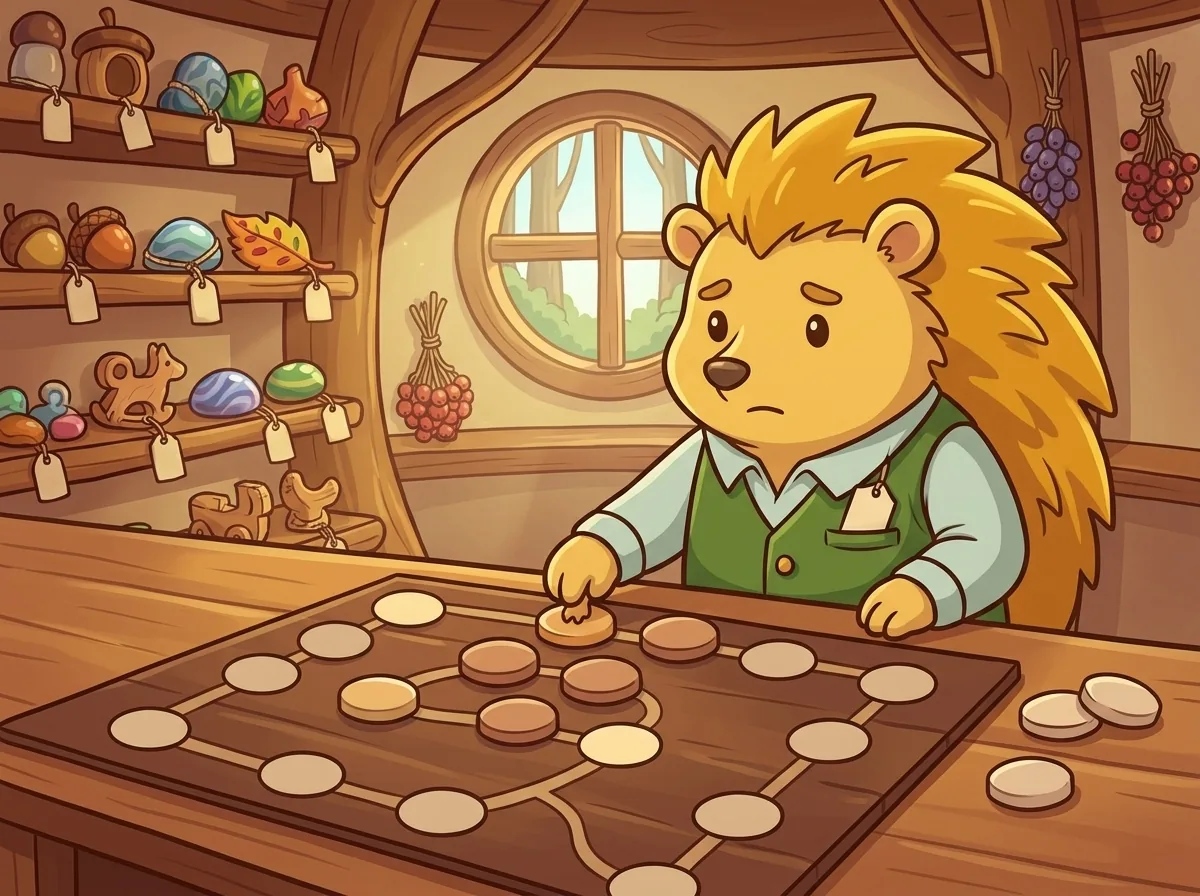
Pricetag shook his head and laid the reasoning out on the counter like coins.
"It beat a 6 and a 7. So it is at least an 8. Blue has exactly three pieces that strong: one 8, one 9 and Ursa. If it is the 9 or Ursa, our 8 goes home and we have learned the answer at the price of our third-best piece. If it is their 8, both go home, and we have traded the same price. Every way we try it, the 8 is expensive."
He picked up a different piece instead: a 2, one of the runners. "We have four of these. Losing one hardly changes our army. But whatever happens, both pieces turn over, and we see exactly what that thing is. Same answer. Much smaller bill."
Even so, Pricetag's paw hovered over the board. Sending a piece somewhere it will certainly lose feels wrong; every instinct says protect your pieces. He noticed that the uneasy feeling was about the little runner, not about the game. The game was asking a different question: what is the cheapest way to stop guessing?
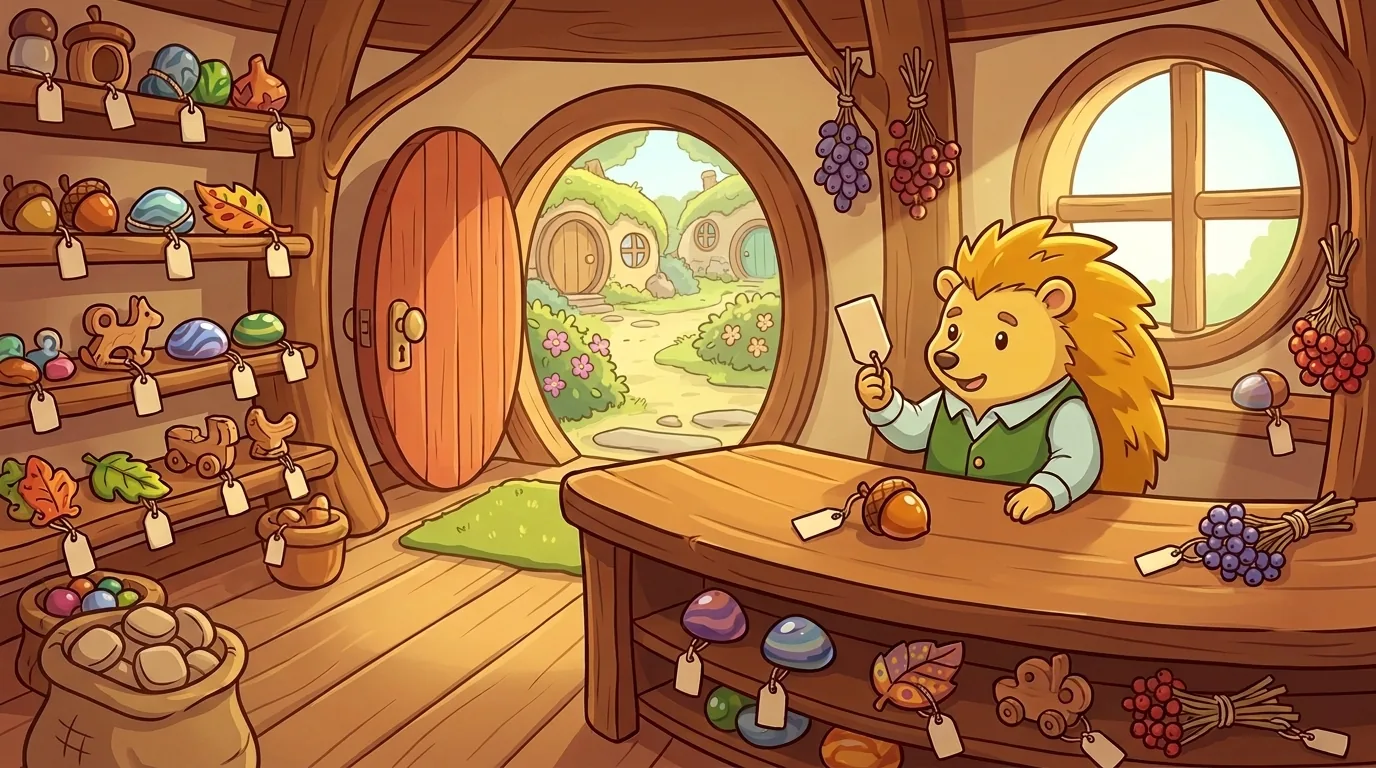
He sent the 2. The two pieces met, and both turned face-up.
The runner went home. The Blue piece was a 10. It was Ursa.
"Now we know," Pricetag said quietly, and the shop seemed to lean in. "And we know more than one thing. If Ursa is out here in the middle of the board, she is not sitting at home guarding Blue's back row. And look who is two squares away from her."
Puck. The smallest piece Red had, the one that loses to everything except the bear.
Two turns later, Puck crept close and reached Ursa first. He tickled her toes, and the strongest piece on the board rolled home laughing. From that moment the middle of the board belonged to Red, and the game swung.
Afterwards Pricetag wrote nothing on any of his tags. He didn't need to. The price had been one runner out of four. What it bought was the single most useful fact in the game, and a second fact hiding behind it.
That is Pricetag's rule. Every hidden piece is a question, and you can answer it by spending something. Before you pay, ask two things: what is the cheapest piece that still gets the answer, and is the answer worth more than what you are about to spend? Spend small, learn big, and only pay when the answer changes your next move.
Hear it as an audio drama
A short play starring Pricetag, from BluffForge. Different voices, same idea. Listen any time after you read.
Loading audio…
Read the drama script
- Narrator: From Spark and Anvil and BluffForge — this is Pricetag, in chapter 1 of the BluffForge cast.
- Narrator: This drama uses an AI-generated voice. Voiced via Gemini 2.5.
- Narrator: Forty pieces stand in a Red army. This is the story of one of them: a little runner, a 2.
- Runner: I'm the fastest piece on the board. I can run as far as I like in a straight line. I'm also one of the weakest.
- Narrator: That evening, a Blue piece had sent two of Red's pieces home, and nobody knew what it was.
- Red Piece: Send the 8! The 8 is strong!
- Pricetag: It beat a 6 and a 7. So it's at least an 8. Our 8 would lose to their 9 or their 10, and we'd only learn the answer.
- Pricetag: There's a cheaper way to learn it.
- Runner: He looked at me.
- Pricetag: We have eight runners. If you go, we lose very little. And whatever happens, we'll see exactly what that piece is.
- Runner: I knew I'd probably lose. But I also knew what I was for.
- Narrator: The runner raced across the board and met the Blue piece. Both turned over.
- Runner: It was Ursa! The 10! I went straight home.
- Pricetag: Now we know. And Puck is two squares away from her.
- Narrator: Two turns later, tiny Puck reached Ursa first, and the strongest piece on the board went home.
- Runner: I didn't win my meeting. But I bought the most useful fact in the game.
- Narrator: Pay with the cheapest piece that still buys the answer. That's the runner's story.
- Narrator: You've been listening to a Spark and Anvil chapter, written by the Spark and Anvil writing team for ages 9 to 14.
- Narrator: Apps stay free forever.
- Narrator: Curriculum aligned to Common Core and Next Generation Science Standards.
- Narrator: Released under Creative Commons BY-NC-SA 4.0 for educational reuse. Visit Spark and Anvil for the full transcript.
The BluffForge ensemble
Pricetag is one of the friends in BluffForge. Each friend shows you one idea by how they act; meet them all and you have the whole subject.
-

Decoy
Sits still and guarded like a Moonstone and is not one - mischief inside the rules
-

Bluster
Walks a small piece as if it were big - a bluff both players agreed is part of the game
-

Matchley
Knows equal numbers both go home
-

Fairwell
Stops endless chasing - three trips back and forth between two squares, then no more
-

Quillby
Keeps the Belief Ledger honest - a guess only sticks with a reason you actually saw
-

Draftsy
Runs the Blueprint studio - varies every setup so no habit can be learned