Molt
THE CHANGE (ARC)
Loading audio…
Press play to listen along. The line being read lights up as you go.
Show full transcript
Loading transcript…
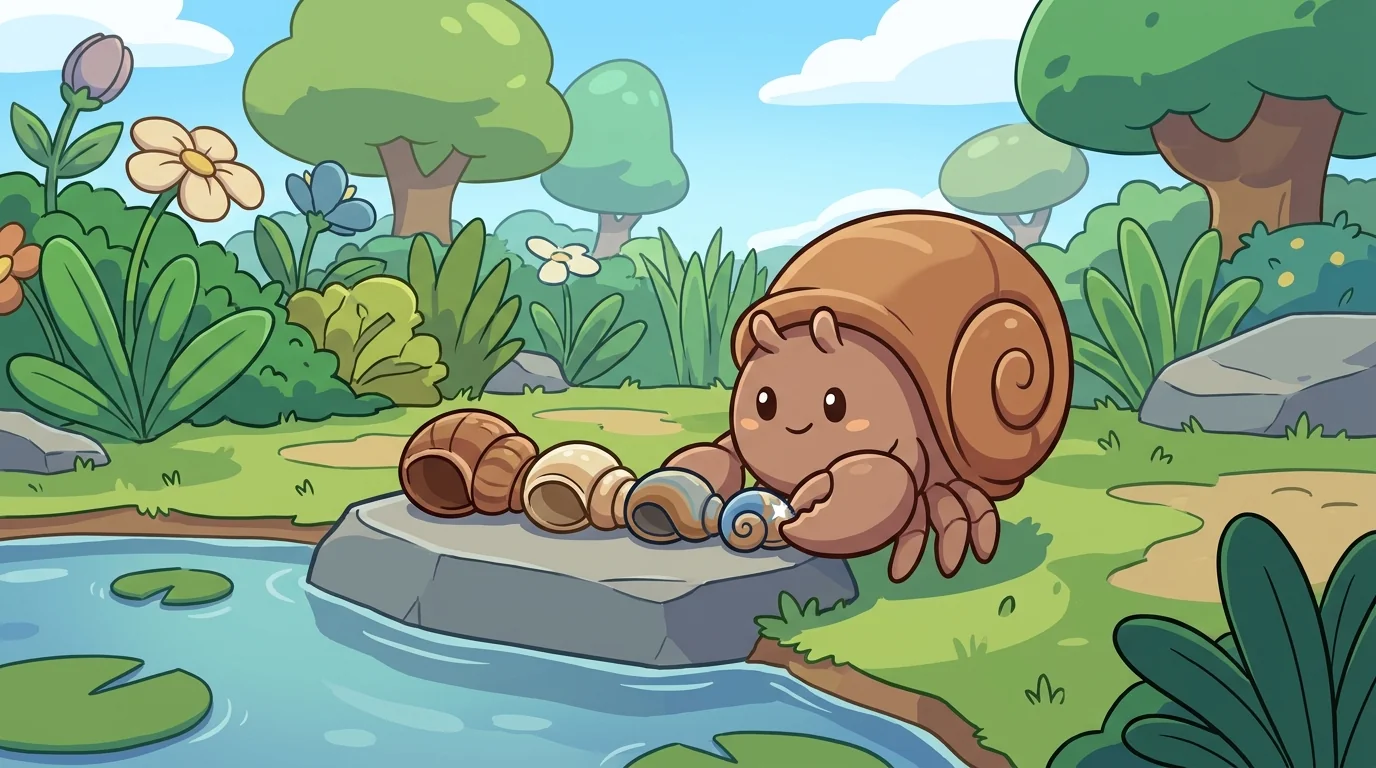
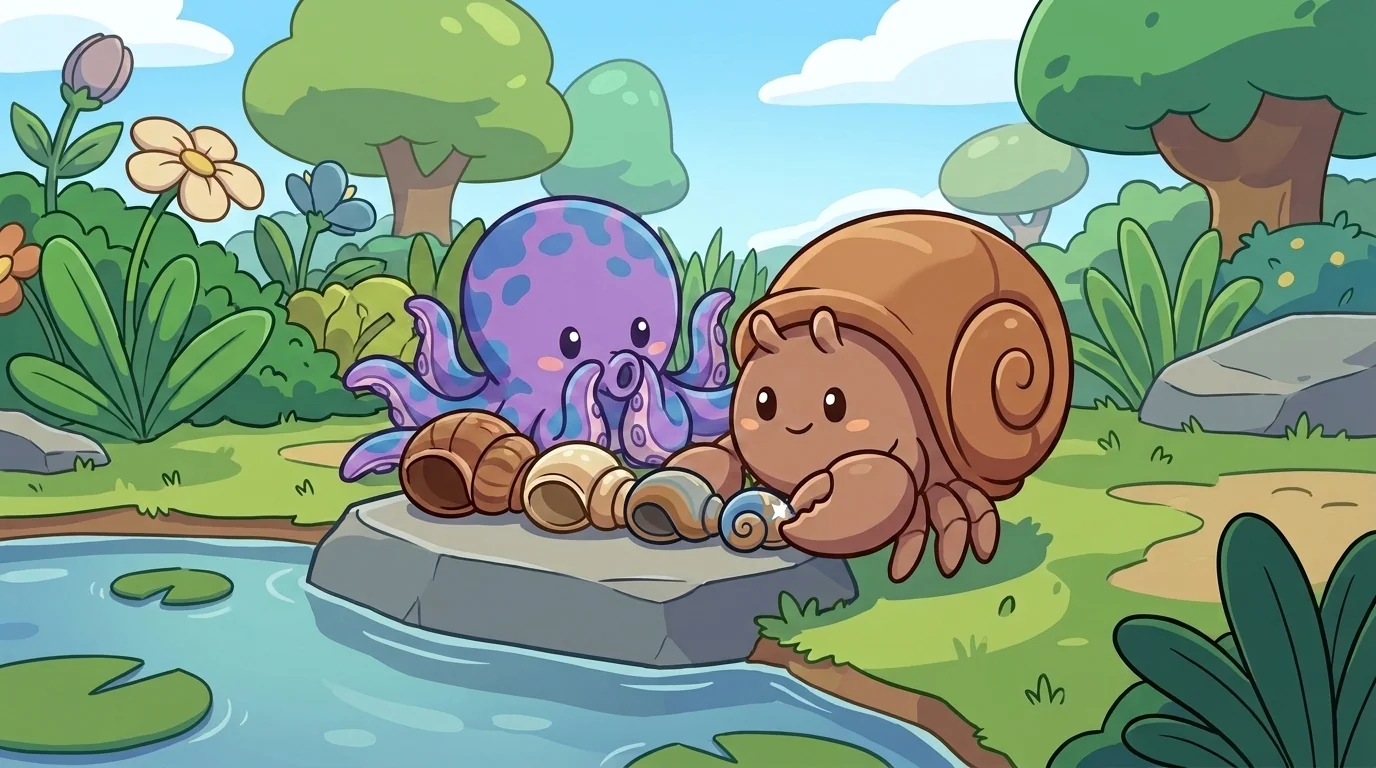
Ink found Molt by the shaded pond at the far edge of the garden, where the air smelled of damp earth. On a flat, mossy rock, Molt was busy arranging a series of hollow, spiraled objects. He looked like a small, round hermit crab, his soft brown body tucked into a sturdy, weathered shell. Behind him, lined up in a neat row, sat four other shells. Each one was slightly smaller than the last, and all of them were completely empty. Molt was polishing the smallest shell with the underside of a damp leaf, working with slow, deliberate care.
"That is a very clean collection," Ink said, stepping quietly over a thick root.
Molt paused, his dark eyes blinking slowly in the dim light before he shook his head. "They are not a collection at all," he said, touching the smallest one with his claw. "They are actually me."
Ink tilted his head, studying the neat row of hollow shapes resting on the flat rock. "They look like empty houses left behind in the deep woods," he remarked.
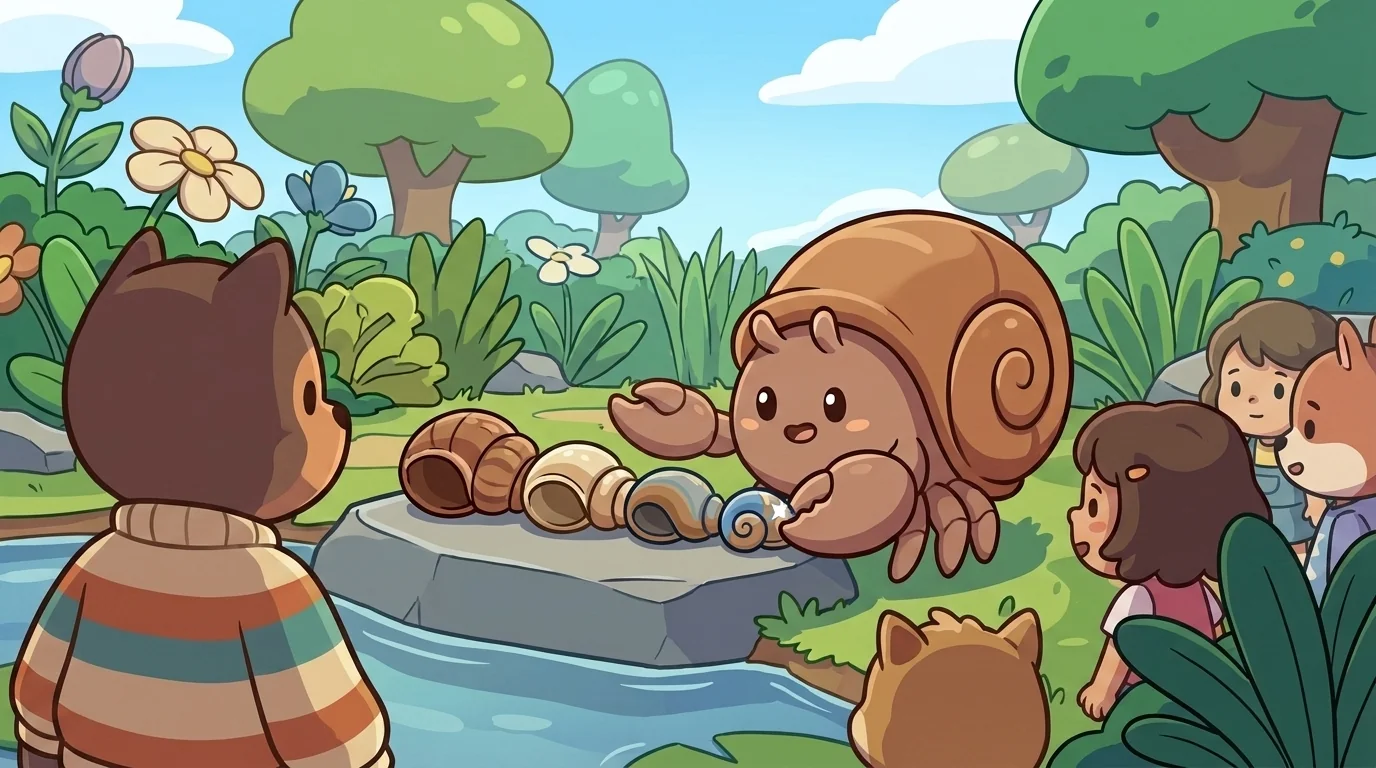
"They were houses," Molt agreed, "but they were also my skin." He pointed a blunt claw at the smallest shell in the line. "This tiny one is who I was when I first crawled out into the light. This next one is who I became after my first big spring in the garden." He tapped each hollow spiral in turn. "And this is who I am today." He patted his current, heavy shell, which was thick and dark and fit him perfectly. "I had to leave all the other shells behind as I grew."
Ink crouched low, his knees cracking in the quiet afternoon air, and peered closely at the tiny first shell. It was no larger than a dried pea, pale and thin enough to let the sunlight pass through its walls. He tried to picture the round, soft creature beside him fitting into something so incredibly fragile. It seemed impossible, like trying to squeeze an oak tree back inside its original acorn.
"You outgrow them as you get bigger," Ink observed.
"I have to," Molt said, shifting his weight on the damp stone. "A shell that fit me last spring would crush my ribs today. When I grow, the old walls get incredibly tight and uncomfortable." He looked down at his claws, turning them over slowly. "It actually gets quite scary when you feel the old walls closing in around you. So I have to climb out, even though I know I will be soft and bare for a while."
The thought of being entirely shell-less in a world full of sharp beaks made Ink shiver. He looked at the empty, calcified armor on the rock. "Doesn't it make you sad to leave all those old homes behind?"
Molt rubbed his claw over the second shell, where a small chip showed near the opening. "A little bit," he admitted, his voice sounding soft against the rustling leaves. "I loved that tiny first one, but I could not have stayed inside it forever. If I had never left, I would still be the smallest, most frightened version of myself. The shells are not sad. They are just proof that I actually grew into someone new."
Ink stared at the row of five shells, feeling a sudden, sharp click in his chest. The entire journey of a life was laid out right there on the mossy granite. It was a physical line stretching from who Molt had been to who he was now. That precise distance was the very thing Ink had been struggling to explain to his writers.
"Molt," Ink said, leaning forward on his knees so they were eye-to-eye. "I teach a class about how to build characters that feel real to the reader."
Molt tilted his head, looking puzzled by this strange problem of unchanging characters. "Do you mean they do not change at all during the story?" Molt asked.
"Not even a single bit," Ink replied, shaking his head with a sigh. "Nothing really happens inside their hearts, even when they face great dangers along the way." He gestured toward the neat row of empty shells resting on the flat rock. "Would you be willing to bring your shells to my class tomorrow morning?"
Molt blinked his small, dark eyes, looking surprised by the request. "Do you really want me to show them all my old, empty selves?"
"I want them to see every single one of your old shells," Ink said.
It took nearly twenty minutes to prepare for the walk. Molt refused to use a basket, fearing the shells would knock and chip. Instead, they carried them two by two, cradled in their palms like fragile eggs. Ink carried the two smallest, which felt weightless and dry against his skin. Molt carried the middle two, walking with a slow, rolling gait to keep his hands level.
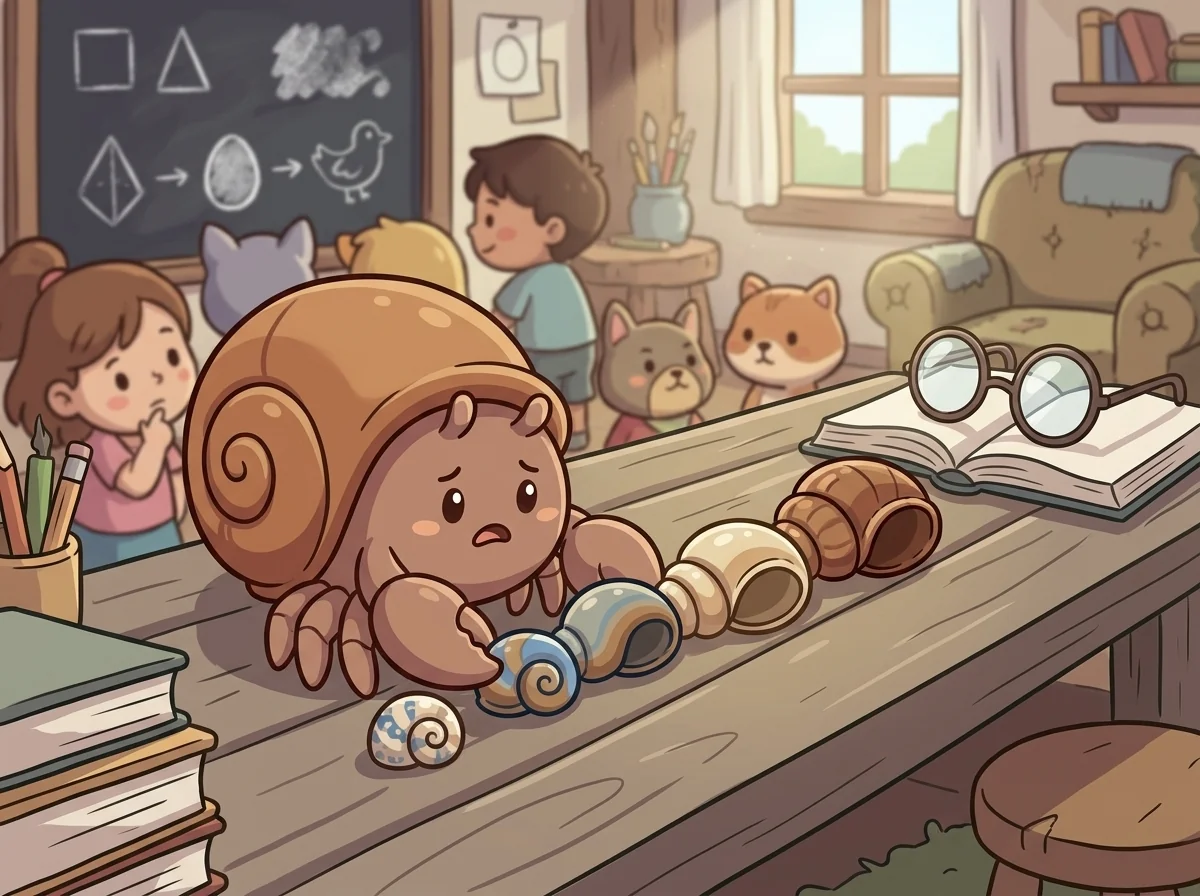
Inside the cottage, the air was warm and smelled of cedar shavings and old ink. A dozen students sat around the long oak lesson-table, their notebooks open and their pencils poised. They watched in silence as Molt carefully arranged his shells in a perfect line across the dark wood. He started with the tiny, translucent one on the far left and ended with his current, heavy home on the right.
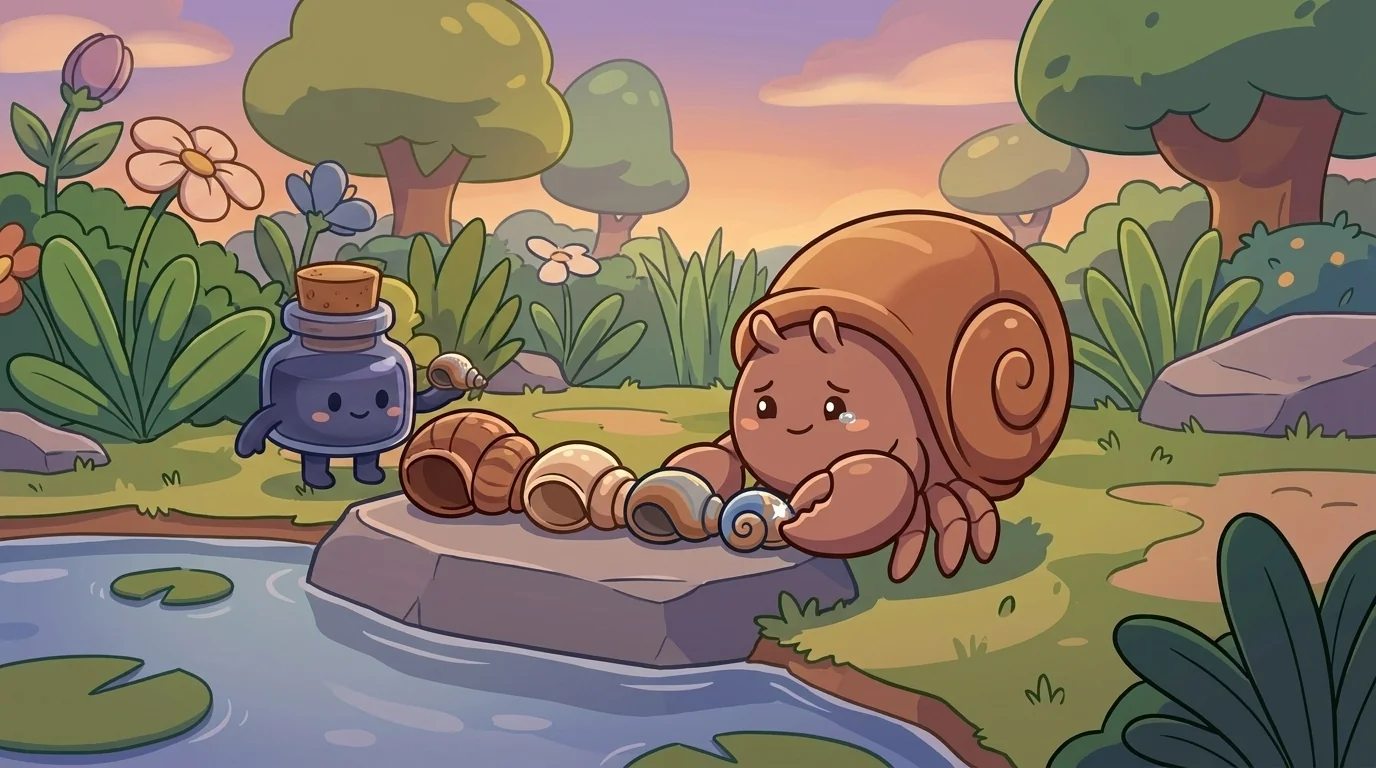
A young writer named Pip leaned over the table, his nose inches from the smallest shell. "Is that tiny one really yours?" he whispered.
"It was indeed mine," Molt said, sitting back on his hind legs. "I lived in it when the great oak trees outside were just tiny sprouts."
Ink stepped up to the front of the room, gesturing to the table. "This is not just a collection of pretty objects found on the beach," he said. "This is actually a physical map of a character's journey through life." He let them study the shells in silence for a few long moments. "Now, imagine a story where Molt starts in that tiny shell, goes on a massive adventure, and ends up in the exact same tiny shell."
"How would that feel to you as a reader who wants a good story?" Ink asked.
The students whispered quietly and shook their heads. Pip frowned, staring down at the tiny, empty shell. "It would feel like a complete waste," he said. "Why go through the whole adventure if you just squeeze back into the same little shell at the end, exactly the same as you started?"
"Exactly," Ink said, and his voice was warm. "A reader follows a story to watch someone change. Every shell in this line is a chapter Molt could never fit back into — and that is the whole secret of a character. He had to shed the old shell to earn the next one. A hero who ends precisely where they began has taken a journey but done no growing, and a story with no growing is the one thing a reader will not forgive. So when you build a character, lay out their shells the way Molt did: ask what each one cost to leave behind, and what the next one made room for."
Molt looked down the row of shells, from the frightened little creature he had once been to the steady teacher he had become, and a quiet, brave warmth spread through his chest. Each empty shell had felt, at the time, like a home he could never bear to leave — and each one, in the end, had only been a doorway. He wasn't afraid of outgrowing things anymore. He was simply, deeply glad to be someone who got to keep on growing.
Hear it as an audio drama
A short play starring Molt, from CharacterForge. Different voices, same idea. Listen any time after you read.
Loading audio…
Read the drama script
- Narrator: From Spark and Anvil and CharacterForge — this is Molt, in chapter 1 of the CharacterForge cast.
- Narrator: This drama uses an AI-generated voice. Voiced via Gemini 2.5.
- Narrator: Ink met Molt by the little pond, where a creature was lining up empty shells on a flat rock. Molt looked like a small round hermit crab, soft and brown, tucked in a snug shell. Behind him, in a neat row, sat four other shells — each a little smaller than the last, all empty. He polished the smallest with the tip of his claw, gently, as if it were precious.
- Ink: What a lovely collection.
- Molt: They're not a collection. They're me. This tiny one is who I was when I was very young. This next one, after that. And this. And this. And this is who I am today. I grew, so I had to leave each old shell behind. But I keep them, so I can see how far I've come.
- Ink: You change shells as you grow.
- Molt: I have to. A shell that fit me last spring would crush me now. When I outgrow one, it gets tight, and a little scary. So I climb out — and for a moment I'm soft, and bare, and unsure. Then I find the next shell, the one that fits the bigger me. Every time, I'm a little different. Braver, usually. Or kinder. Or just more.
- Ink: Doesn't it make you sad to leave the old ones behind?
- Molt: A little. I loved that tiny first shell. But if I'd never left it, I'd still be the smallest, most frightened version of me. The shells aren't sad. They're proof that I grew.
- Narrator: And there it was — the quiet click in Ink's chest. His whole story is right here on this rock. A line from who he was to who he is.
- Ink: Molt, my students keep making characters who are exactly the same on the last page as the first. Would you bring your shells to my class?
- Narrator: So Molt set his shells along the lesson-table, smallest to largest, and the students followed the line with their eyes.
- Ink: Imagine a story where the character ends in the same shell they started in. Nothing learned. Nothing outgrown. Would you feel anything? A story is the distance a character travels — from who they were at the start to who they've become at the end. When you build a character, ask: who are they on page one, and who will they be on the last page? Make them different. Make them outgrow an old shell.
- Student: What if the change is scary for them?
- Ink: It usually is. Molt is soft and bare for a moment, every time he climbs out. But the bare, scary moment is exactly where the story lives.
- Molt: Sometimes I worry about the next molt — the next time it gets tight and I have to climb out and be unsure for a while. But then I look at the row. And I remember — every single time before, the scary part led somewhere bigger.
- Narrator: The change, or arc — a character should not be the same at the end of a story as at the beginning; they grow, learn, soften, or harden. The reader feels the story most when they can see how far the character has come.
- Narrator: You've been listening to a Spark and Anvil chapter, written by the Spark and Anvil writing team for ages 9 to 14.
- Narrator: Apps stay free forever.
- Narrator: Curriculum aligned to Common Core English Language Arts.
- Narrator: Released under Creative Commons BY-NC-SA 4.0 for educational reuse. Visit Spark and Anvil for the full transcript.
The CharacterForge ensemble
Molt is one of the friends in CharacterForge. Each friend shows you one idea by how they act; meet them all and you have the whole subject.
-
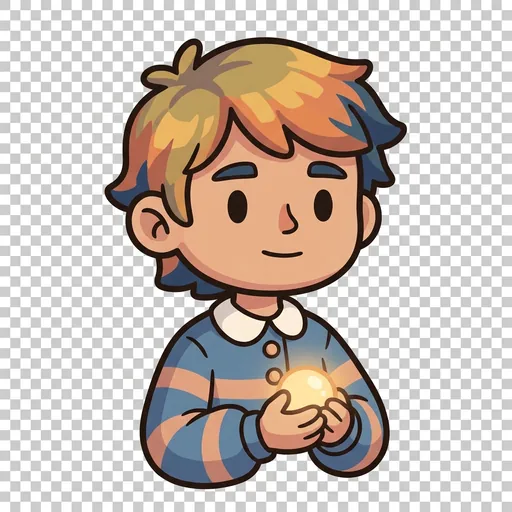
Beacon
Want / engine — moth who walks toward a small floating warm-light she can never quite reach (the want IS her motion)
-
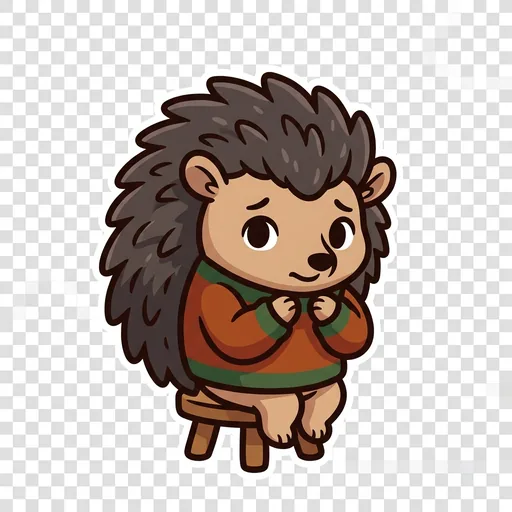
Crouch
Fear / brake — hedgehog who tucks away from one specific wooden-door icon visible in every scene she appears in
-

Eight
Contradiction / depth — octopus with eight arms in eight different directions (three forward / three back / two crossed)
-
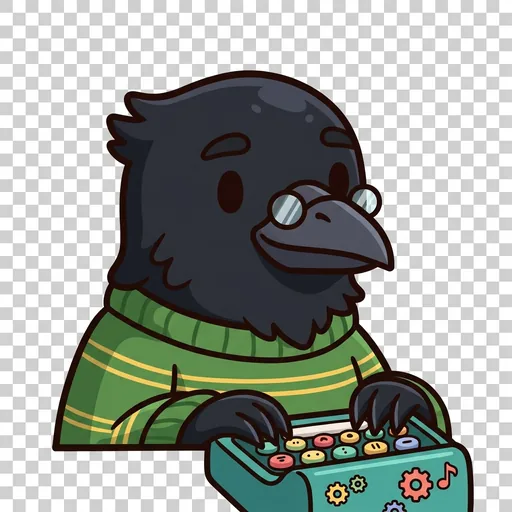
Click
Voice / signature — raven in librarian-glasses with a portable typewriter (same idea, different mouth, different feel)
-
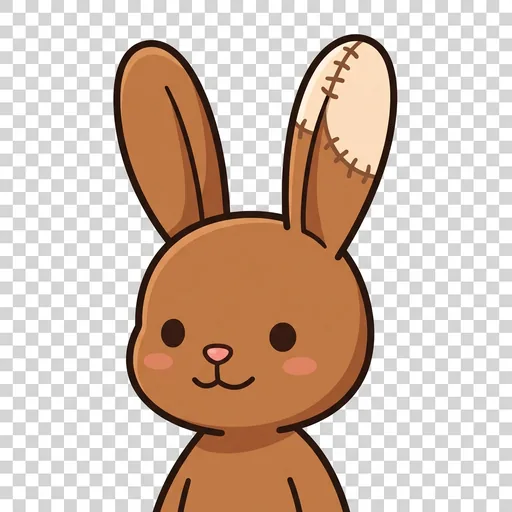
Patch
Backstory / the past — soft brown rabbit with one mended patch on her ear from an old day; everything she does traces back to that healed-over moment
-
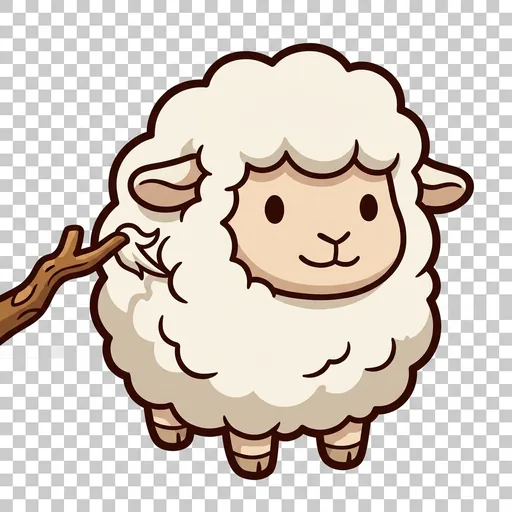
Snag
The flaw — round woolly sheep who always takes the left path and snags his wool on the same branch (the repeated mistake that makes a character feel real)
-
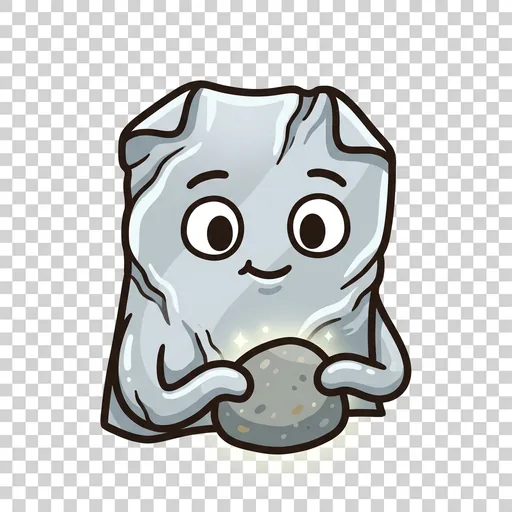
Foil
The foil / contrast — thin silvery foil who lies behind another character so their colors show brighter (you see someone best beside who they are not)
-
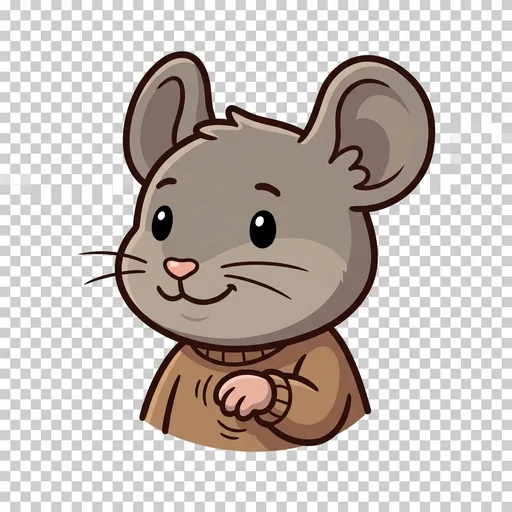
Fidget
The tell / mannerism — quick grey mouse who taps her paw twice before she speaks (the small repeated gesture that makes a character recognizable)
-

Worth
The stakes — sturdy badger who carries one precious glowing bead in cupped paws (what a character has to lose is what makes us care)