
The Thread-Puller
THREAD — why did this happen, and what did it lead to? trace the chain backward to its causes (proximate and distal) and forward to its effects; almost nothing is truly sudden.
A story read by The Thread-Puller
Loading audio…
Press play to listen along. The line being read lights up as you go.
Show full transcript
Loading transcript…
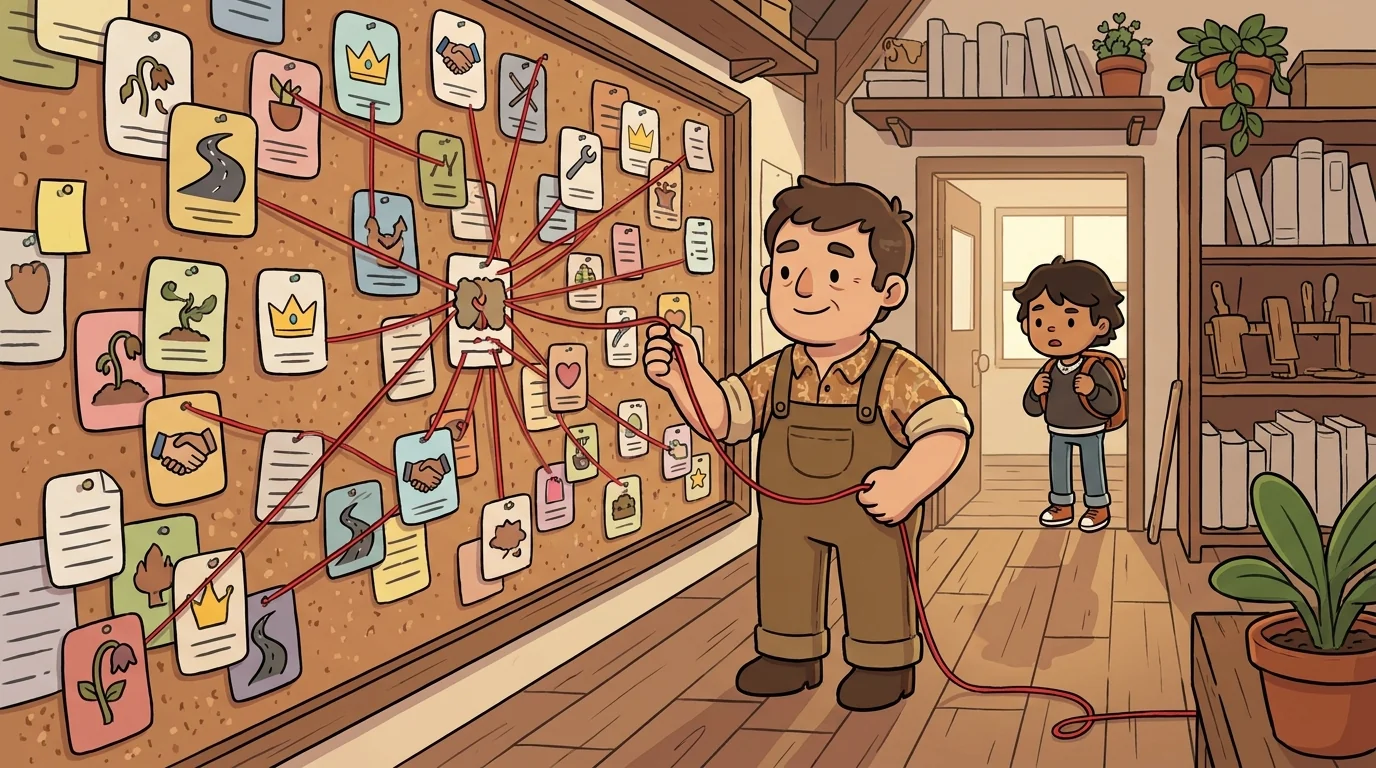
In the workshop beside the archives, a man stood before a wide cork wall, holding the loose end of a long red thread and studying it the way other people study a puzzle they love. The wall was a lattice of small cards — a failed harvest, a road that got built, a king who made a promise — and between them ran dozens of threads, tied card to card, so the whole surface looked like a web spun on purpose. A student paused in the doorway. "The textbook just gives the date the war started," she said. "Why all the string?" The Thread-Puller smiled without turning. "Because a date is a proximate cause — the last card in a long chain. It's the middle of the story, never the beginning." He tugged the red thread and three distant cards shivered. "Nothing happens in isolation. Pull one strand, and you feel the others move. My whole craft is refusing to stop at the date — walking the thread back until I reach where the reasons actually began."
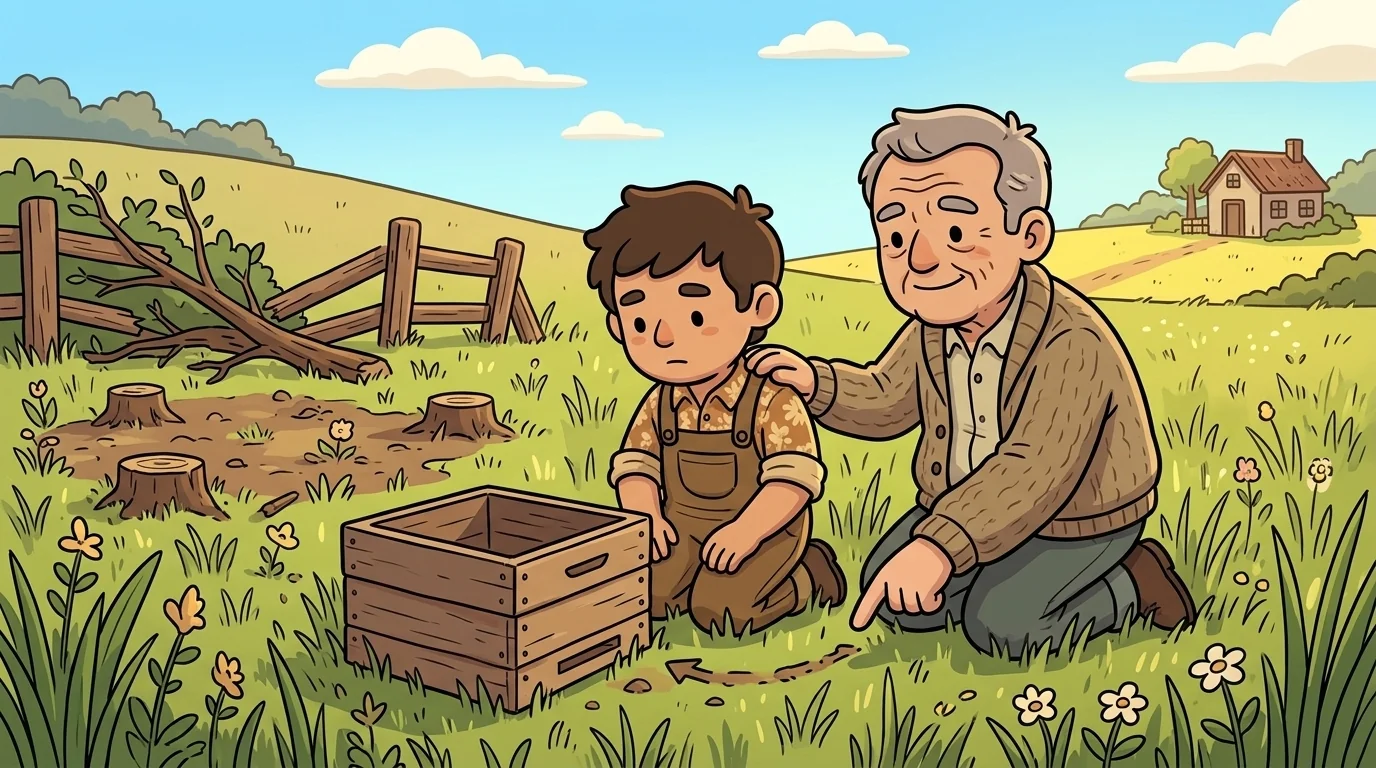
He had learned to follow threads long before he cared about history. As a boy his family kept bees, and one spring the whole hive died — all at once, it seemed, overnight. His grandfather did not guess or shout. He sat the boy in the grass and said, "Let's find the thread." So they traced it, patiently, cause behind cause: the bees died because they were weak; weak because no flowers grew near; no flowers because a neighbour had cleared the meadow; and he'd cleared it because a storm the winter before had wrecked his fence and he needed the wood. "The hive didn't die overnight," his grandfather said. "It died of a storm a whole season back, working its way slowly to our bees. Most people see only the last thing — the empty hive. But every last thing has a first thing, if you're willing to walk backward and find it." The boy never forgot that walk backward — the quiet click, click, click of one reason locking into the reason before it, until a whole sad morning finally made sense.
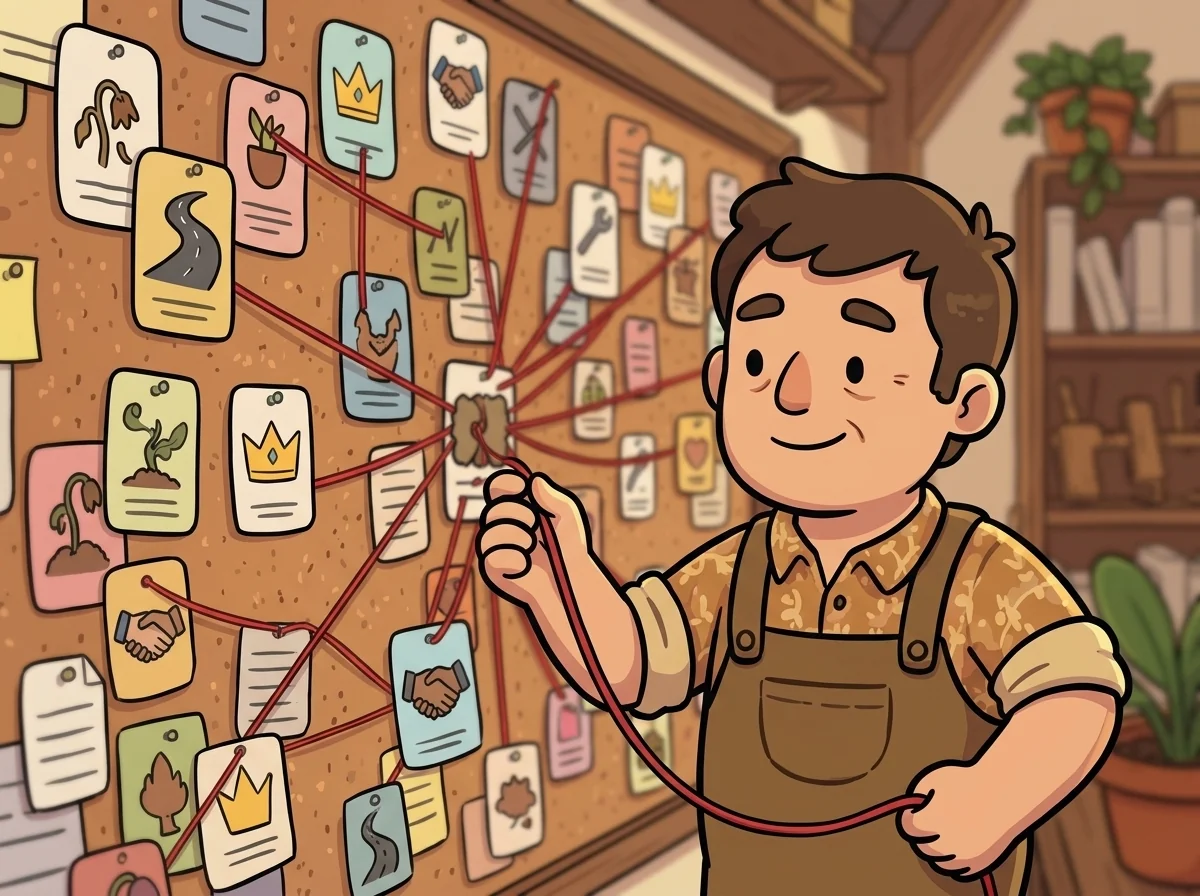
He came to ChronoQuest because the past was crowded with "last things" that everyone argued about and almost no one traced. Era, the mentor who ran the archives, found him tying his first thread between two cards. She didn't ask him to lecture. She asked, "What is it you do?" He pointed to a single card — a city that had emptied, its people gone. "Everyone wants the day it emptied. That's the wrong question." He picked up a fresh thread and walked it backward, card by card: a river that changed course, a harbour silting up, ships that stopped calling, work that dried up, families that packed and left. "It didn't empty on one day. It emptied one reason at a time, across years. I just tie the reasons together so the whole shape shows." Era watched the thread grow, and the emptied city stopped being a mystery and became a story with a beginning. "You didn't tell me that it happened," she said. "You showed me why." "That's the whole of it," said the Thread-Puller. "You belong here," said Era.
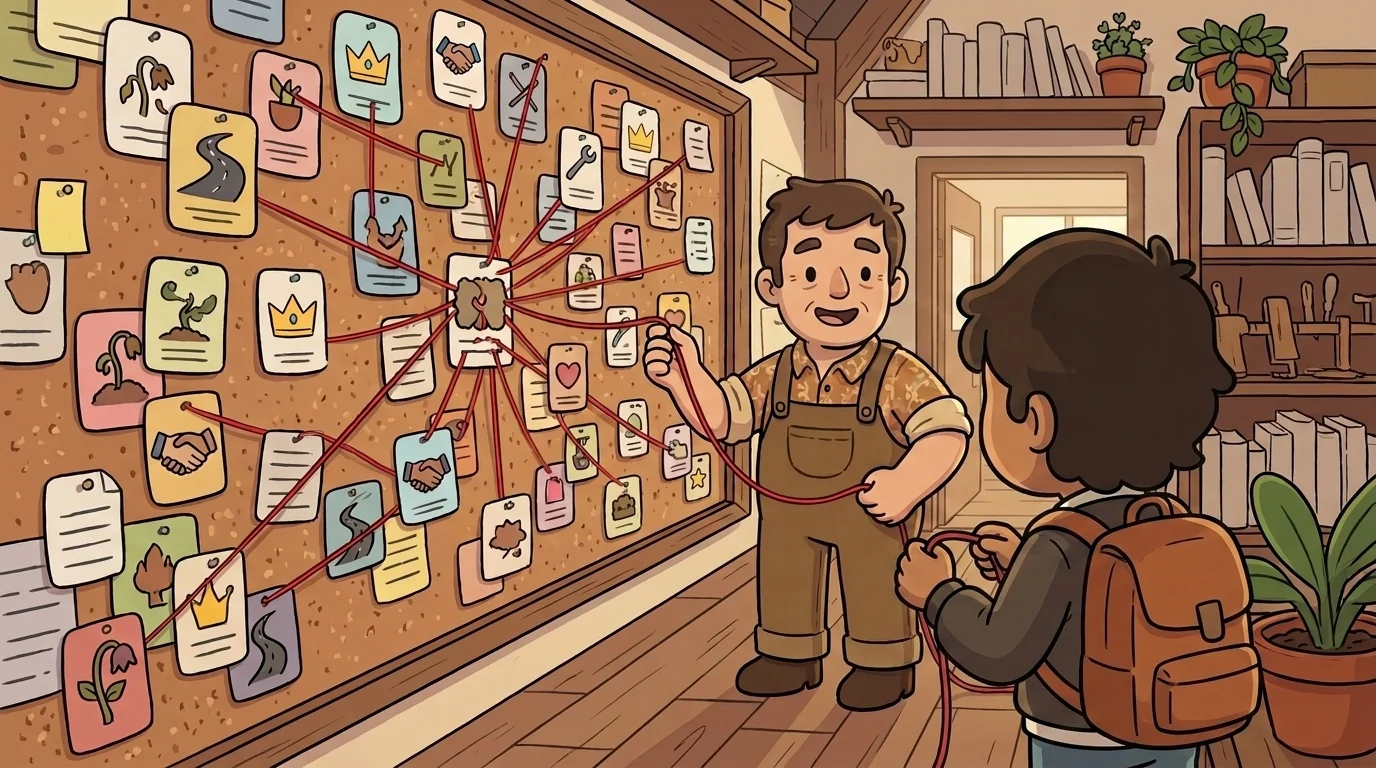
His workshop was the busiest room in the archives, because every student eventually arrived carrying a "suddenly." A boy came in one afternoon, certain. "The old empire fell suddenly. It says so." "Wonderful," said the Thread-Puller warmly. "Let's test whether 'suddenly' survives being traced." He handed the boy a thread and pointed at a card marked the empire falls. "Tie it to what came just before. What made it weak?" "The armies stopped getting paid?" "Good — tie it. Why did the money run out?" "They overspent? On far-away wars?" "Tie it. And why so many far-away wars?" The boy kept going — a shrinking treasury, unrepaired roads, borders too long to guard — tying thread after thread, walking backward through a hundred years, until the wall was a web of causes. "It wasn't sudden at all," he said slowly. "It was falling the whole time. The 'suddenly' was just the last card." "There it is. 'Suddenly' is the word people reach for when they haven't walked backward yet. Almost nothing is truly sudden — there's a reason behind the reason behind the reason." He gestured across the web. "And it runs forward, too. Every card became a cause for the next. This is consequence: pull one, and the whole century trembles."
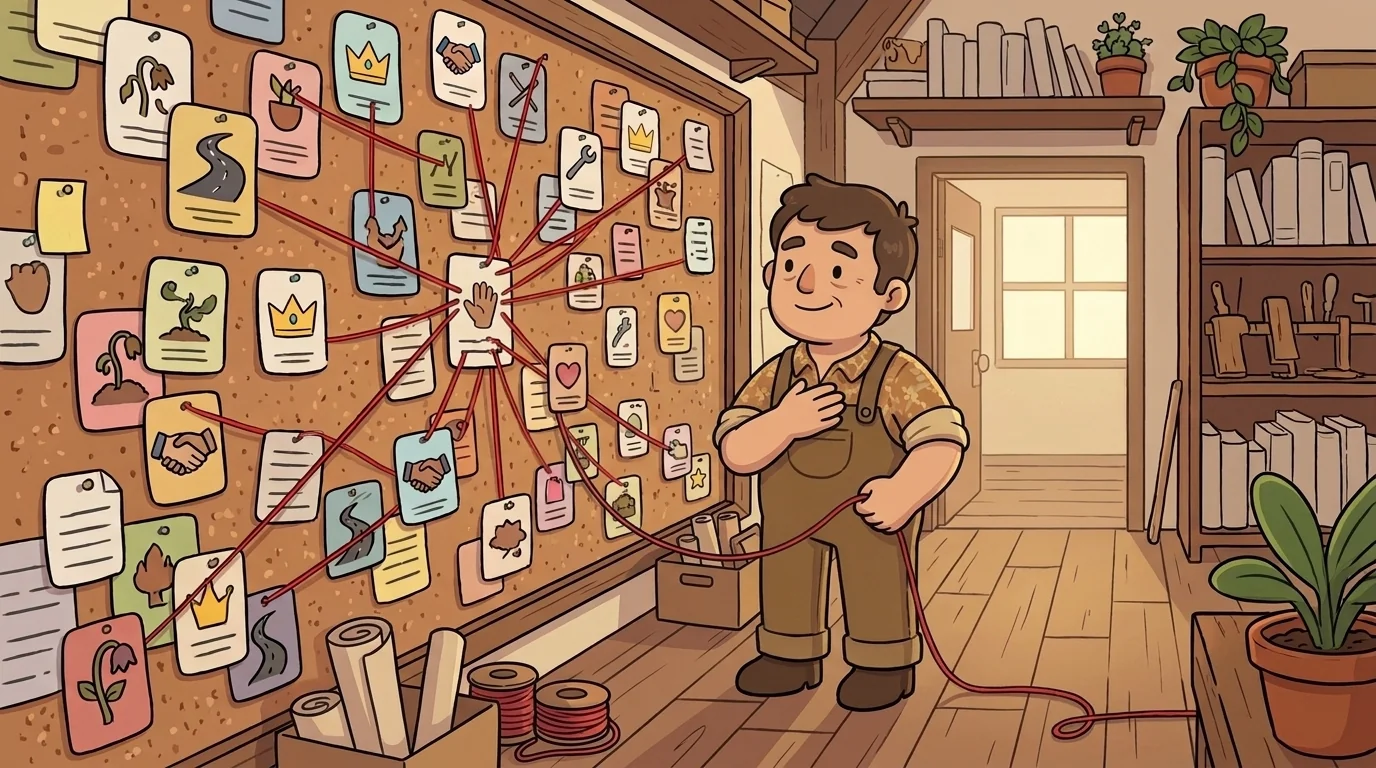
Later, when the workshop had emptied, the boy paused at the door. "Doesn't it get heavy? Knowing everything is tied to everything — that every small thing you do becomes a thread for something else?" The Thread-Puller looked at his web of red string glowing in the low light. "Sometimes. But mostly it feels like the opposite of heavy — like the world makes sense." He touched a single card near the bottom, some forgotten small choice, and followed its thread up and up, into things that came long after. "Nothing is wasted here. No small act is really small; it reaches forward and pulls on things you'll never see." He smiled. "When a thread finally clicks into place, I feel it right here, in my chest — that settled contentment of a knot coming loose in the head, a jumble quietly straightening into a line I can walk from one end to the other." The boy looked at the glowing web a long moment. "Can I tie one more before I go?" "Always," said the Thread-Puller, and the warm gladness rose again, wide enough now to hold the boy too. "There is always one more."
The ChronoQuest ensemble
The Thread-Puller is part of ChronoQuest's distributed-narrative cast. Each character embodies a different curricular primitive; together they teach the full subject.
-

The Cartographer
Frame-setter — where + when before what + why; methodological starting point
-

The Witness
Primary-source lens — what did people THERE see + write?
-

The Storykeeper
Oral-tradition lens — multi-tradition keeper-archetype; invented + non-mascotizing
-

The Trade-Wind
Connection lens — what moved between civilizations? goods, ideas, diseases
-

The Counter-Voice
Critical-analysis lens — who benefits from this version? historian's method, NOT cynicism
-

The Chronicler-of-the-Defeated
Stewardship lens — whose story doesn't survive in the winners' archive?
-

The Translator
Cross-language + cross-meaning lens — how do concepts travel between cultures?
-

The Question-Asker
Meta-inquiry lens — what question are we actually asking? late-arriving capstone guide
-
The Tide-Watcher
Change-and-continuity lens — hold two times side by side and mark what shifted and what stayed