
Rung
RUNG — climb every step in order; never skip to the verdict, because the steps are what turn a guess into a fair judgment, and they cost the most exactly when you're most sure.
Loading audio…
Press play to listen along. The line being read lights up as you go.
Show full transcript
Loading transcript…
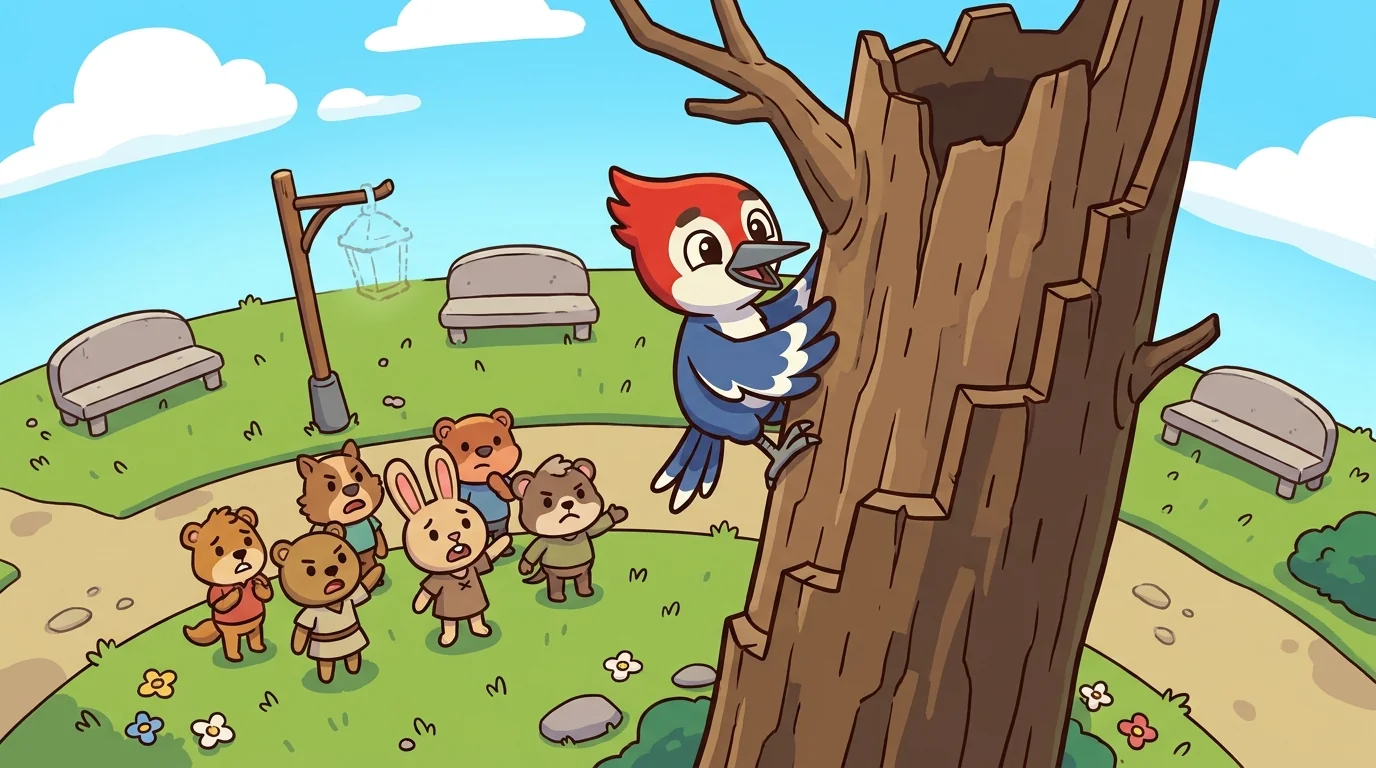
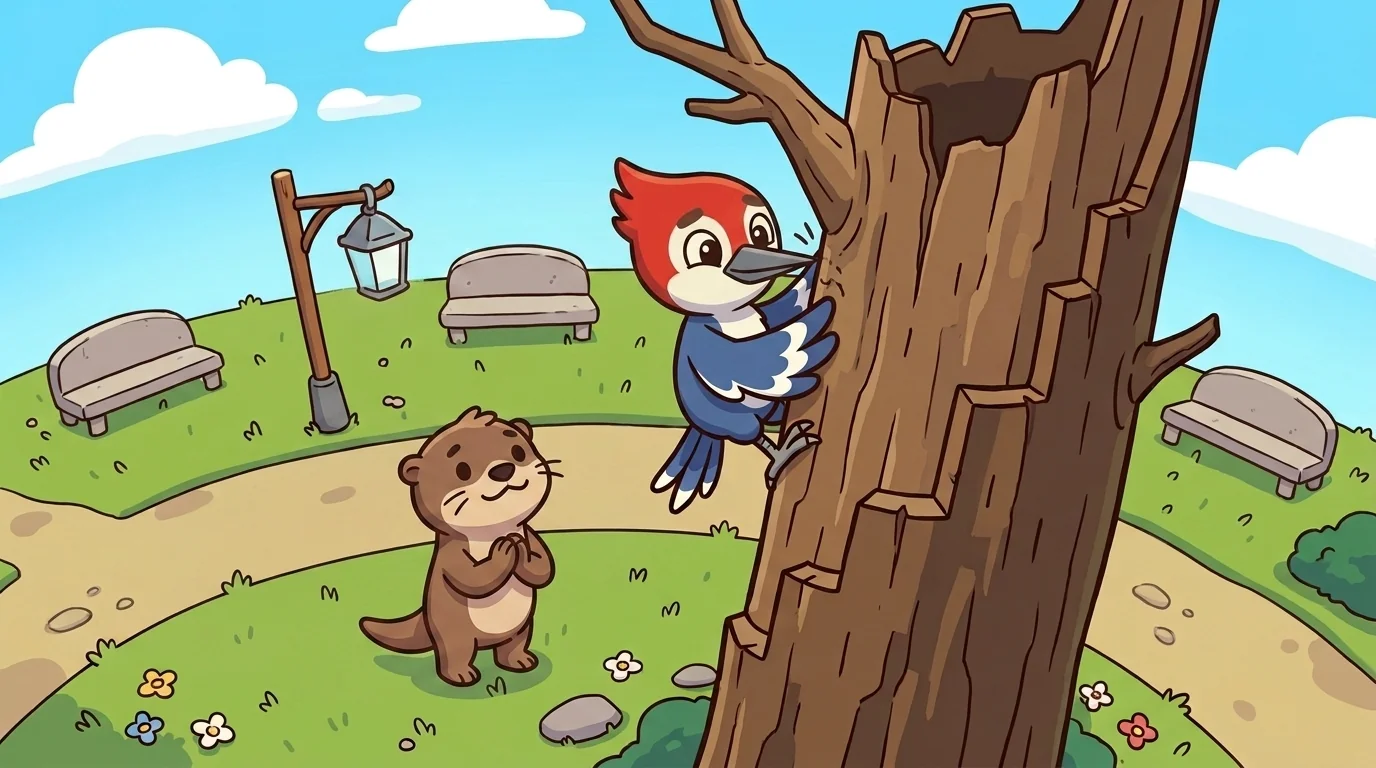
There was a tall dead tree at the edge of the Council green, and on it most mornings a woodpecker named Rung, climbing — grip, hop, grip, hop — one rung of bark at a time, never skipping. It looked slow. It was slow. And a crowd had gathered at the bottom, because a crowd had a question and wanted the answer immediately.
"Somebody took the festival lantern!" a rabbit called up. "We think it was the new fox. Just tell us — guilty or not? Come down and say!" Rung did not come down. Rung kept climbing, grip and hop. "I'll get there. But I get there by climbing. There's no branch at the top I can reach by skipping the middle — I'd just fall, and land on the wrong answer. Those steps have a name: due process — the ordered path a fair judgment has to climb. Hear the accusation, hear the accused, look at the evidence, weigh it, then decide." "But we already know it was the fox!" "Then the steps will be easy, and they'll cost you nothing. It's only when you're sure that skipping the steps gets dangerous."
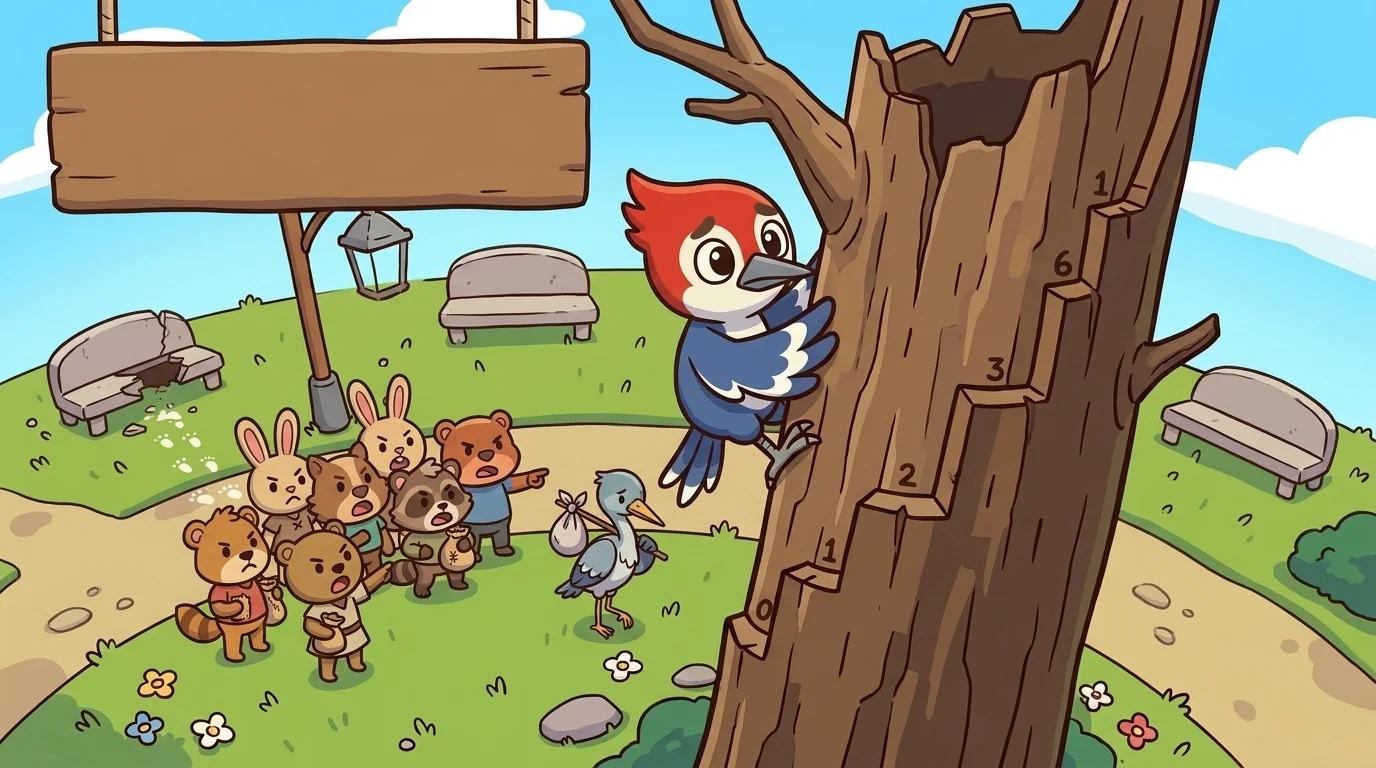
Rung had felt exactly that once, and never forgot it.
When Rung was young, a granary was found broken into, and the crowd wanted someone to blame before the sun was even up. They landed on a quiet heron who lived nearby — a stranger, easy to point at. No one asked the heron where they'd been. No one looked at the tracks in the flour. The crowd climbed straight to the top of the tree, to the verdict, and skipped every rung on the way: the stranger did it. The heron was punished. And days later the flour-tracks — webbed, not heron-thin — turned out to belong to someone else entirely.
Young Rung watched an innocent creature carry a verdict that was never theirs, and felt the specific cold of a judgment that arrived before the facts did. Here is the mechanism under due process: the steps — notice, a chance to answer, evidence, an impartial weigher — are not obstacles between you and the truth. They are how a guess becomes a judgment. Skip them and you don't reach the verdict faster; you reach a guess faster and dress it as a verdict. And the presumption that runs underneath — treat the accused as innocent until the steps prove otherwise — exists precisely because a crowd's first, certain instinct is so often wrong, and lands hardest on the stranger, the quiet one, the easy target. That was the day Rung began to climb, and never skipped a rung again.
Rung flew to the Youth Council at twelve, claws already good at gripping bark.
Verdis, the old bear who weighed sides, met Rung and asked the question. "What is due process?" Rung answered by climbing the Council's own message-post, rung by rung, narrating each step of a complaint the Council had been about to decide on the spot: "Step one — what exactly is the accusation? Step two — has the accused been told, and heard? Step three — what's the actual evidence, not the rumor? Step four — who weighs it, and are they fair? Then, step five — the verdict." At the top, Rung looked down. "You were about to leap straight to step five. The other four aren't delay. They're the difference between a judgment and a mob."
Verdis nodded slowly. "You are appointed."
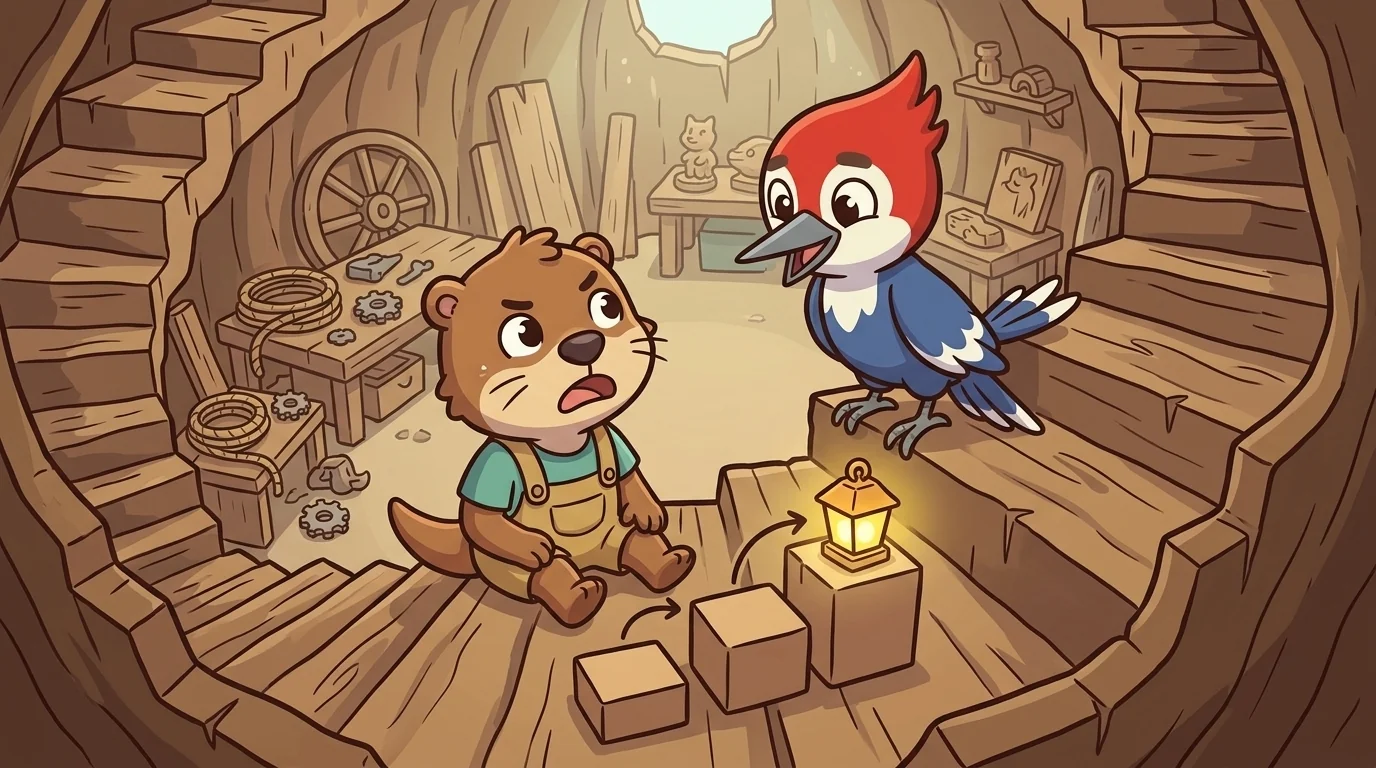
In Rung's tree-side workshop, a young stoat came in impatient. "Rung, everyone knows who did it half the time. Why drag out all the steps when the answer's obvious? Isn't that just letting the guilty stall?"
Rung gripped a low rung and looked back. "Here's the thing that feels backwards: the steps cost the most, and matter the most, at the exact same moment — when everyone's certain. When the answer really is obvious, the steps are quick and cost you nothing; the fox who's plainly guilty is still plainly guilty after you've heard them out. But 'everyone knows' is precisely the feeling that convicted the heron. Certainty is not evidence — it's just how a wrong guess feels from the inside. The steps aren't there to protect the guilty from a slow verdict; they're there to protect the innocent from a fast one. And you can't know which you've got until you climb. Skip the steps only for the guilty, and you'll skip them for the innocent too, because from the bottom of the tree they look the same." The stoat frowned. "So the steps are for the times we're wrong — even when we're sure we're not." "Especially then," said Rung.
The stoat was quiet, turning it over. "Last year the class blamed me for breaking the window. Everyone was so sure. And our teacher — she didn't just decide. She asked what happened, asked the others, actually looked. Turned out it was a branch in the wind." Their voice dropped. "If she'd been fast instead of fair, I'd still be the kid who broke the window."
"And that," Rung said gently, "is what the steps are for. That feeling of someone slowed down and actually heard me before deciding — that's not a delay you endured. That's the difference between being judged and being processed like a foregone conclusion. Fair is slower than fast. It is also the only kind of judgment worth trusting, because it's the only kind that can survive being wrong on the first guess." Rung nudged a bit of bark toward the stoat. "Go climb something, one rung at a time — some place where everyone's already sure. See what the middle steps turn up."
The stoat took the bark, and the impatience settled into something steadier, and they went out to climb a question the slow, fair way.
The CivicForge ensemble
Rung is part of CivicForge's distributed-narrative cast. Each character embodies a different curricular primitive; together they teach the full subject.
-

Verdis
Justice — the patient listener who weighs sides; bear with wooden scale + spectacles
-
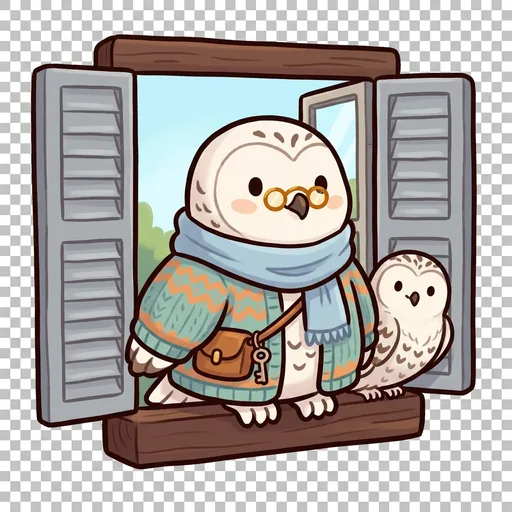
Aera
Liberty (open-window) — keeper of open windows; snowy owl on shuttered window frame
-
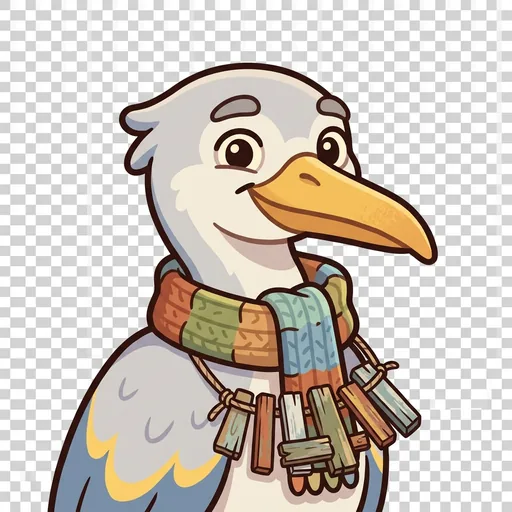
Span
Equity — the bridge-builder; heron with mismatched planks for mismatched riverbanks
-

Cordis
Civility — disagreement-without-disrespect host; striped badger with mismatched cups + bow tie
-

Kindle
Participation — the door-opener; prairie dog at a half-open door pointing outward
-

Tellus
Stewardship — the long-view caretaker; ancient tortoise planting trees they will never sit under
-

Level
Rule of law — the line reads level whoever holds it, even the one who set it; mountain goat with a stone level + plumb-bob
-

Muster
Consent of the governed — nothing proceeds until everyone's gathered and the yes is real; meerkat counting raised paws from the burrow-mound
-
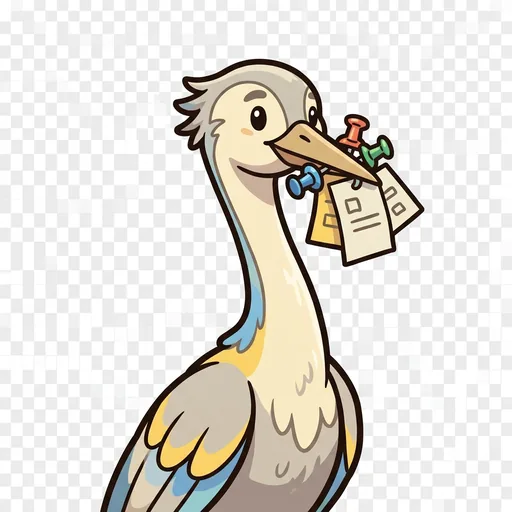
Herald
Transparency — a decision no one can see isn't finished; crane keeping an open notice-board in the square