
Muster and Herald
THE YES AND THE NOTICE — a fair decision needs two things that seem small and aren't: everyone truly gathered and truly agreeing (Muster), and the decision posted where anyone can see it (Herald) — a real yes, made in the open
A story read by Muster and Herald
Loading audio…
Press play to listen along. The line being read lights up as you go.
Show full transcript
Loading transcript…
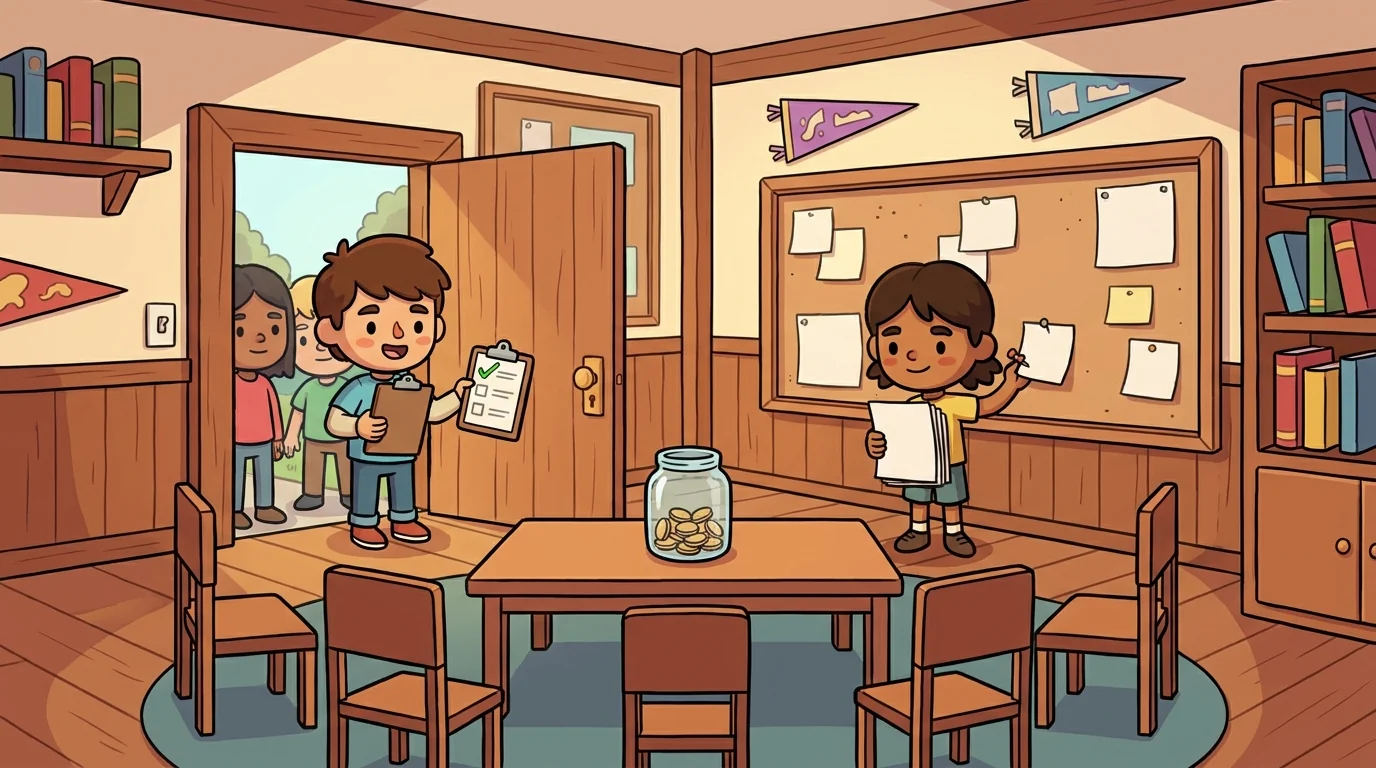
The warren-and-market town had a decision to make — a real one, about sharing the new well — and two helpers made sure it was made in a way the whole town could trust. Muster, the meerkat who counted the real yes. And Herald, the crane who posted decisions where anyone could read them. Between them they guarded the two halves of a single thing: what makes a decision legitimate — genuinely the town's own, not merely done to it.
"A decision can be made a hundred ways," said Herald. "But only one kind of decision truly holds — the kind people accept as theirs. And that takes two things that both sound small."
"A real yes," said Muster. "And an open notice," said Herald. "Miss either, and it isn't legitimate — it's just powerful."
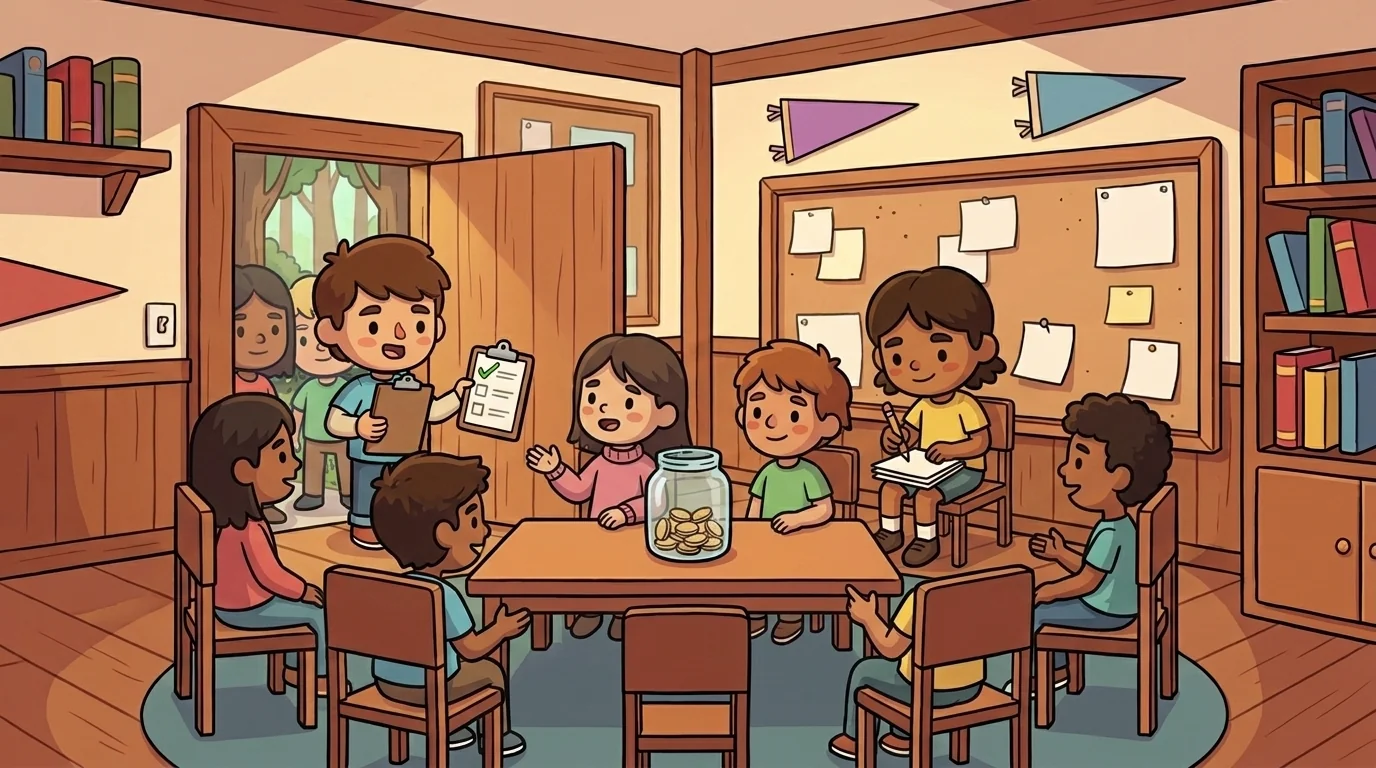
Muster went first, because the yes has to be real before it's worth posting. "Watch the trap," said Muster. A brisk voice had declared the well-sharing plan 'agreed' — but Muster counted, and found the agreement was the front rows only; a third of the town hadn't been asked, including the families the plan affected most. "This is the counterfeit of consent: a loud slice mistaking itself for the whole, calling itself 'what everyone wants.'" So Muster did the work — gathered the whole town, asked plainly, counted the real yes and the real no's — and the plan changed in the counting, because the un-asked families knew things the front rows didn't. "Now it's a real yes," said Muster. "Not the loudest yes — the whole town's. Consent isn't the absence of protest. It's the presence of a gathered, genuine agreement, the quiet voices counted too."
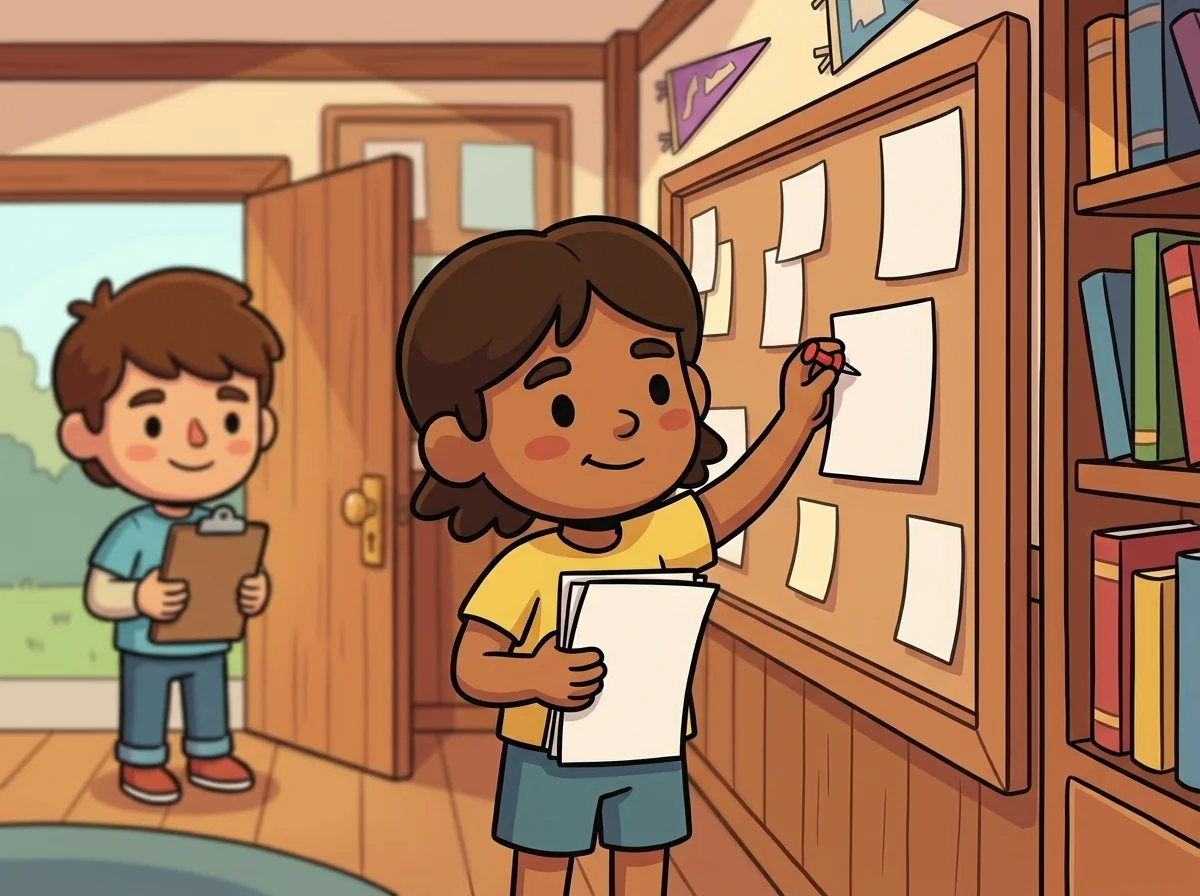
Then Herald posted it, because a real yes made in secret still isn't legitimate. "Muster's got the real agreement," said Herald, pinning the plan to the open board in big plain letters — the well will be shared on these terms, agreed by the whole town on this day — "and now everyone can see it: what was decided, who agreed, and how." A weasel murmured that surely the details could stay quiet now that it was agreed. "No," said Herald. "A decision the people can't see isn't finished, even when the yes was real. Because six months from now, when someone asks did we really agree to this?, the open notice is the answer — it's the town's memory, the thing that lets anyone check that the yes was real and hold the deciders to it. Consent without transparency curdles into 'trust us, you agreed' — and that's just power with better manners." The notice went up where tall and small could read it.
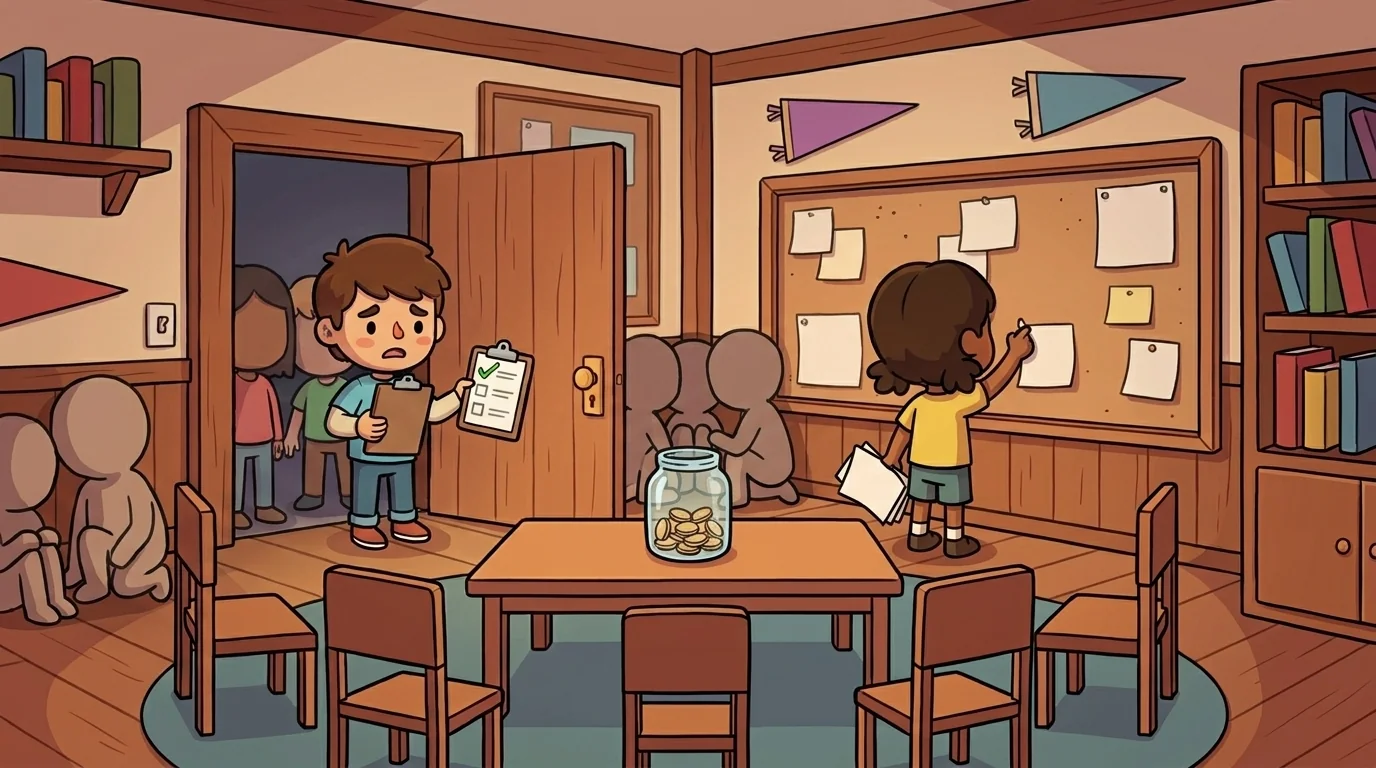
A young rabbit who'd watched both halves said the thing the two helpers had been waiting for: "So it's not enough to really agree — it has to be shown. And it's not enough to show it — the agreement has to be real. You need both."
"That's the whole of it," said Muster.
"They're two halves of one thing — legitimacy," said Herald. "Muster guards the yes: the decision is genuinely the people's, everyone gathered and counted. I guard the notice: the decision is out in the open, where anyone can see it and check it later. A real yes made in secret can be quietly rewritten, and no one can prove what was agreed. A grand open notice of a yes that was never really gathered is just a lie with good handwriting. Together — consent and transparency — they make a decision people can actually accept as their own. Apart, each can be faked by the other's absence."
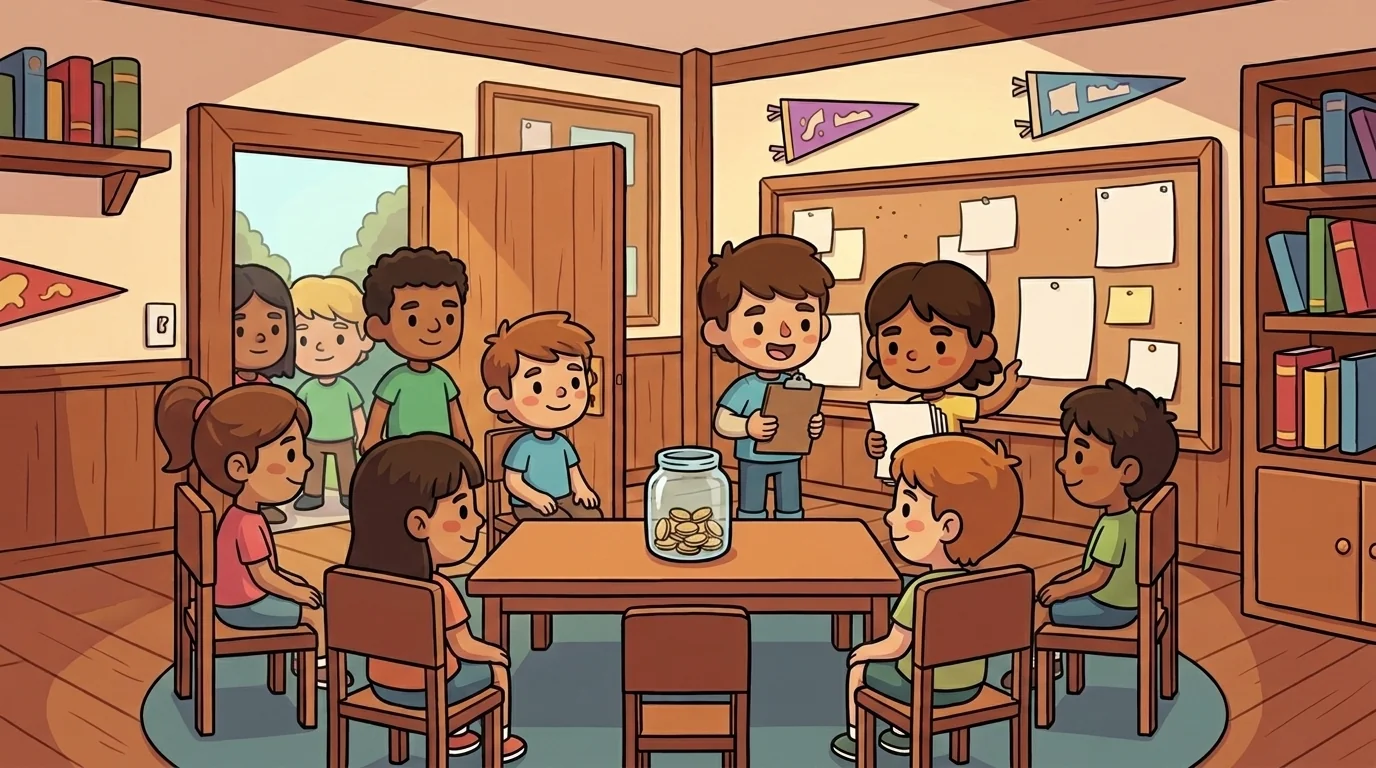
And so the town shared its well on terms it had truly agreed to, posted where everyone could read them — a decision that held, because it was both real and seen. When a newcomer arrived months later and asked how the well-sharing had come to be, the answer wasn't 'the council decided' or 'we think everyone was okay with it.' The answer was on the board, plain as day: agreed by the whole town, on this day, on these terms.
"Count the real yes," said Muster. "Post it in the open," said Herald.
There is a quiet, load-bearing truth here about what makes any decision one people will stand behind rather than merely endure: it needs consent — the genuine, gathered agreement of the people it touches, the quiet ones counted — and it needs transparency — to be made where those people can see it, question it, and remember it. Neither alone is enough. A real yes hidden away can be twisted; an open notice of a hollow yes fools no one for long. Legitimacy is the two together — a real yes, made in the open — and it is the difference between a community that governs itself and one that is merely, politely, governed.
The CivicForge ensemble
Muster and Herald is part of CivicForge's distributed-narrative cast. Each character embodies a different curricular primitive; together they teach the full subject.
-

Verdis
Justice — the patient listener who weighs sides; bear with wooden scale + spectacles
-

Aera
Liberty (open-window) — keeper of open windows; snowy owl on shuttered window frame
-

Span
Equity — the bridge-builder; heron with mismatched planks for mismatched riverbanks
-

Cordis
Civility — disagreement-without-disrespect host; striped badger with mismatched cups + bow tie
-

Kindle
Participation — the door-opener; prairie dog at a half-open door pointing outward
-

Tellus
Stewardship — the long-view caretaker; ancient tortoise planting trees they will never sit under
-

Level
Rule of law — the line reads level whoever holds it, even the one who set it; mountain goat with a stone level + plumb-bob
-
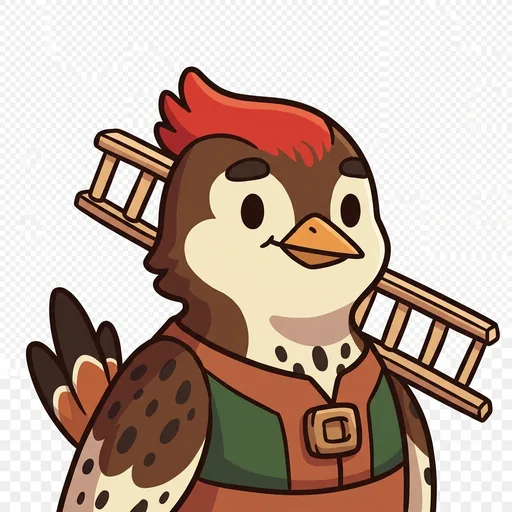
Rung
Due process — climb every step in order, never skip to the verdict; woodpecker climbing a trunk rung by rung
-
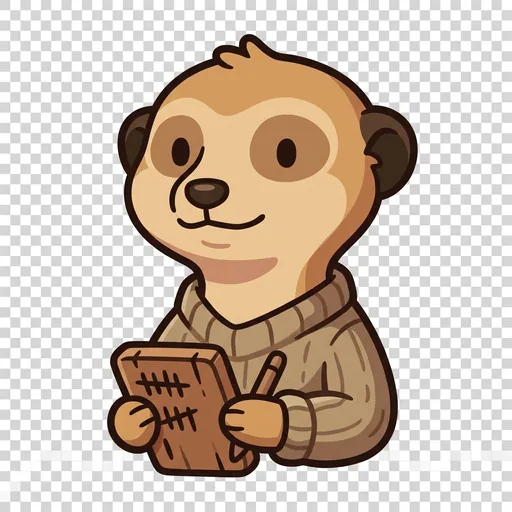
Muster
Consent of the governed — nothing proceeds until everyone's gathered and the yes is real; meerkat counting raised paws from the burrow-mound
-
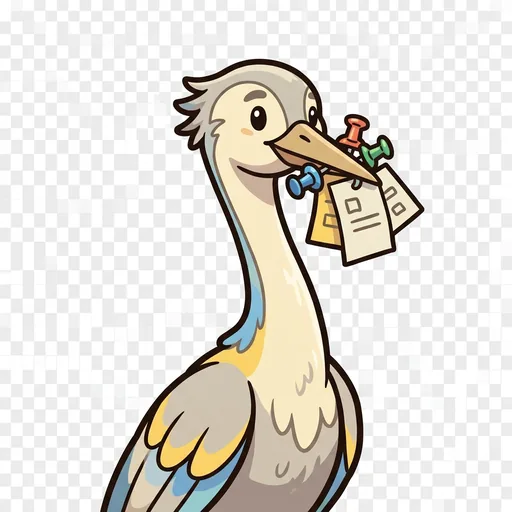
Herald
Transparency — a decision no one can see isn't finished; crane keeping an open notice-board in the square