Module
FUNCTION / ENCAPSULATION
Loading audio…
Press play to listen along. The line being read lights up as you go.
Show full transcript
Loading transcript…
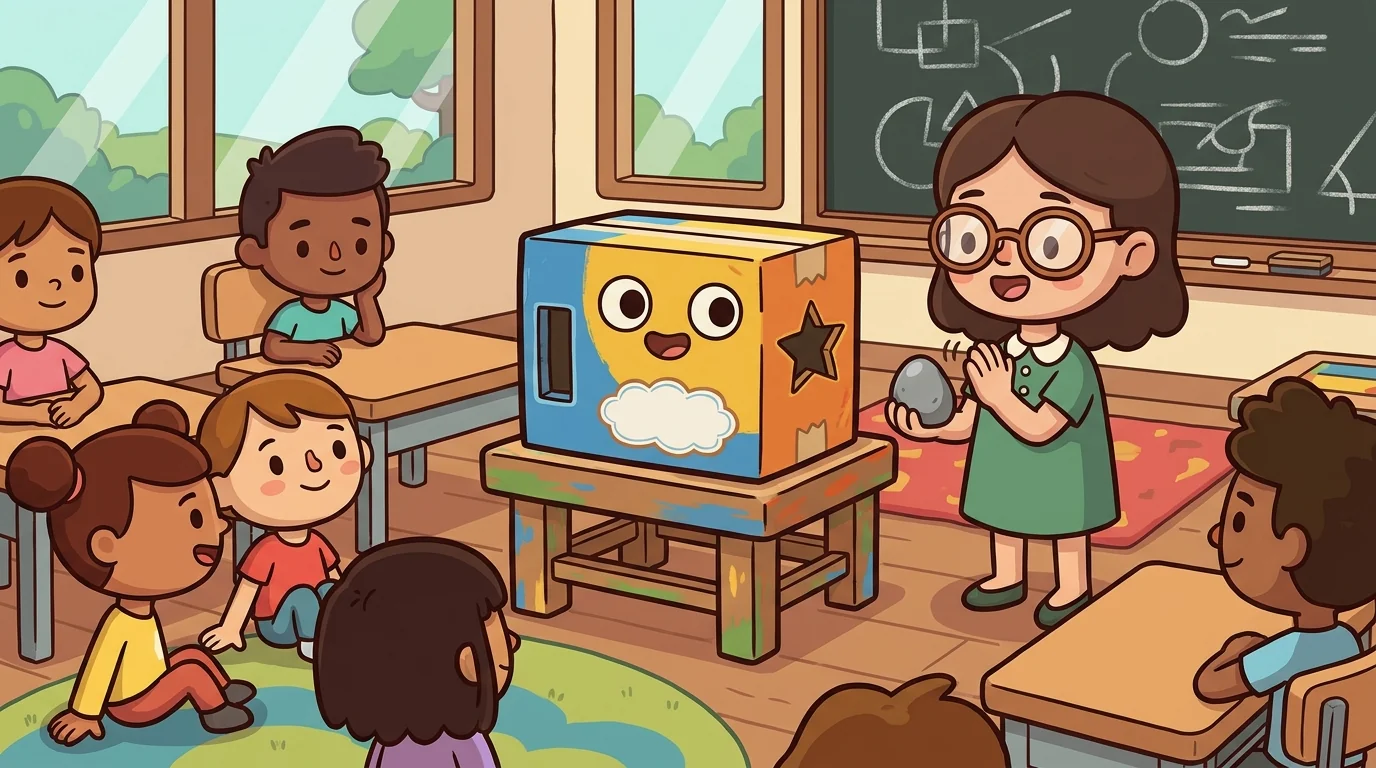
Module wasn't furry or feathery. Module was a box — a small painted box with a label on the front that told you exactly what it did. On its left side was a slot for inputs; on its right side, a slot where outputs came out. Loop always said it best: "Module does one thing. And it does it well."
"Alright, class — today we meet Module!" Loop clapped her hands. Module sat on a little stand, its label reading Add_Sparkle. "See that? That's Module's name. It tells you its job." She held up a plain grey pebble. "And this is our input."

Loop dropped the pebble into Module's left slot. Thunk. A soft whirring came from inside, like a tiny happy bee — then ping! — and a pebble rolled out the right slot, no longer grey but shimmering with tiny rainbow sparkles. "Output!" Loop cheered. "A sparkly pebble!" She held up another plain pebble. "What'll happen?" "Sparkles!" someone shouted — and thunk, whirr, ping, out came another. "Exactly. Same input, same output, every time. And here's the cool part — you can use Module anywhere. At the park. On the moon! As long as it gets an input, it gives you an output." She mimed tucking it in a backpack. "Ready whenever you need it."
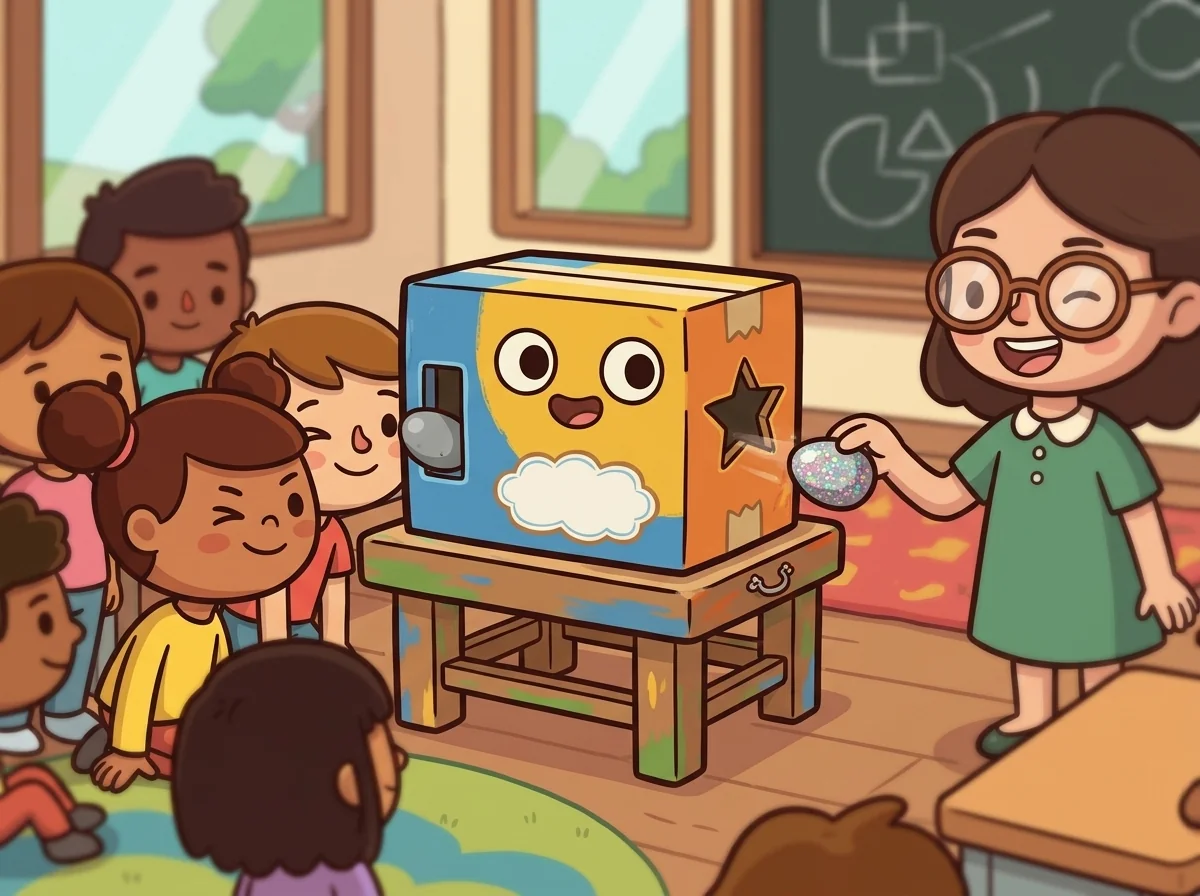
"Now look closely," Loop said. "Can you see inside?" Everyone squinted. "Nope!" "That's the magic! You don't need to know how Module adds sparkles — only that it does. The inside is hidden. It's Module's secret." She grinned. "And why is that good? Because if I swapped out Module's whole secret sparkle-machine for a better one, you'd never know — you'd still drop in a pebble and still get a sparkly pebble out." "It just works," a kid whispered. "Exactly. It just works. That's a good function — and keeping its insides tucked away where they can't trip you up? That's called encapsulation."

"Now imagine a big job," Loop said, waving her arms. "A whole galaxy of sparkly planets! You could try to do it all at once — but that'd be messy and hard. Instead, you break it down: use Module for one planet, then the next, then the next. Each small job makes the big job easier." She tapped the label. "And if you had a thousand pebbles to sparkle — would you build a thousand sparkle-machines?" "No way!" "Right — you build Module once, and call it a thousand times, or a million, just by its name: 'Hey Module — Add_Sparkle this!' No rewriting the steps." She picked up an already-sparkly pebble and dropped it back in — thunk, whirr, ping — out came one so bright it glowed. "See? One function can even use another function's output — or call another function from inside itself. That's how you build truly amazing things."
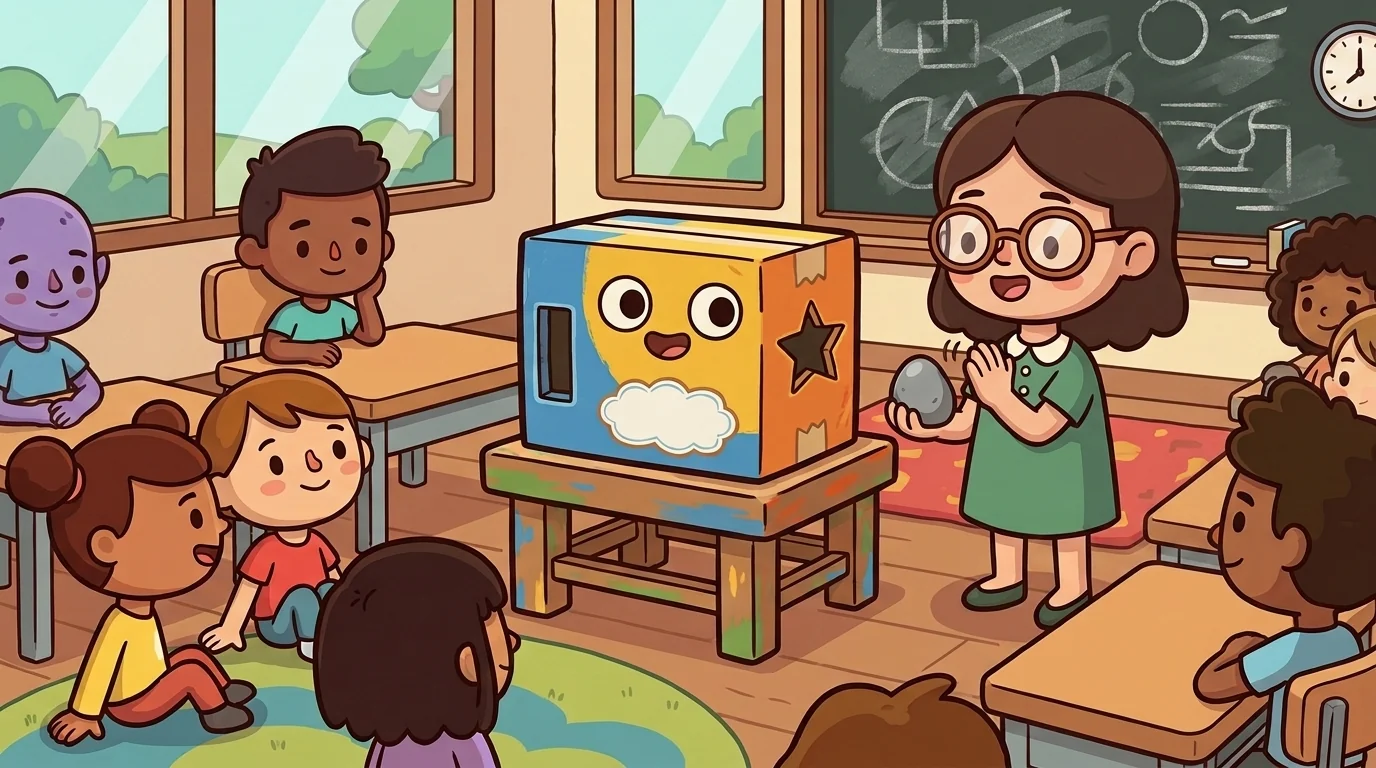
"One last thing — names," Loop said, tapping the label. "Add_Sparkle — see how it's a doing-word, like 'run' or 'jump'?" She wrote on the board: calculateTotal() — "this calculates a total" — and isValid() — "this asks, is it valid?" "A function's name should tell you what it does, or what question it answers. You wouldn't name Module just 'Pebble' — that only says what it works on, not its job." She smiled and held up her fingers. "So remember Module — a function. Inputs in, output out, one job, call it anywhere. Break big problems into small pieces — that's modularity. Build it once, use it many times."
And here's the feeling Loop most wanted you to have. That moment when a job feels way too big — a whole galaxy, a thousand pebbles — and your chest gets tight and you don't know where to even start. And then you remember Module: just one small piece, done well, and I can reuse it. Break the giant thing into little one-job boxes, and the tightness loosens, and the impossible galaxy becomes just one planet at a time. That calm, I-can-actually-do-this feeling when a huge job breaks into small pieces — that's the quiet reward of a good function. Chase that.
Hear it as an audio drama
A short play starring Module, from CodeRealm. Different voices, same idea. Listen any time after you read.
Loading audio…
Read the drama script
- Narrator: From Spark and Anvil and CodeRealm — this is Module, in chapter 1 of the CodeRealm cast.
- Narrator: This drama uses an AI-generated voice. Voiced via Gemini 2.5.
- Narrator: Module is not an animal-tween. It is a small wooden box, painted matte blue, with an input slot and an output slot.
- Narrator: It has a single, clear label on its front. It is simple, direct, and absolutely crucial to the CodeRealm.
- Module: I am Module. I am a labeled box. You give me a thing. I do my one job. I give you a new thing back.
- Narrator: Module is a function: a self-contained machine that performs one specific task, consistently and reliably.
- Module: My label is my promise. My inner workings are my own secret. This is called encapsulation. You only need to trust my label.
- Module: I take an input. I return an output. I do not get confused. I do not change my task. I just do the job.
- Narrator: Module was built only once. A single definition for a single purpose, ready to be used over and over again.
- Module: From my first task, I understood the lesson. Do one job perfectly, and you will be called upon everywhere.
- Narrator: Its creator, Loop, walked to the box. She tapped its side, as if asking it the most important question.
- Module: I am a function. I make big problems smaller by solving one piece perfectly.
- Narrator: Input in. Output out. One job. Call it anywhere.
- Module: My purpose is my name. I am built once, and called forever. That is what a function is.
- Narrator: You've been listening to a Spark and Anvil chapter, written by the Spark and Anvil writing team for ages 9 to 14.
- Narrator: Apps stay free forever.
- Narrator: Curriculum aligned to Computer Science Teachers Association standards.
- Narrator: Released under Creative Commons BY-NC-SA 4.0 for educational reuse. Visit Spark and Anvil for the full transcript.
The CodeRealm ensemble
Module is one of the friends in CodeRealm. Each friend shows you one idea by how they act; meet them all and you have the whole subject.
-

Stash
Variable / storage — the labeled box that holds a value until you call for it
-

Fork
Conditional / branching — chooses a path based on what's true right now
-

Trek
Loop / iteration — keeps going around until the work is done
-

Glitch
Debugging / inspection — finds bugs gently, never shaming; 'there's always a reason'
-

Order
Sequence / syntax — reminds you that order matters in code
-
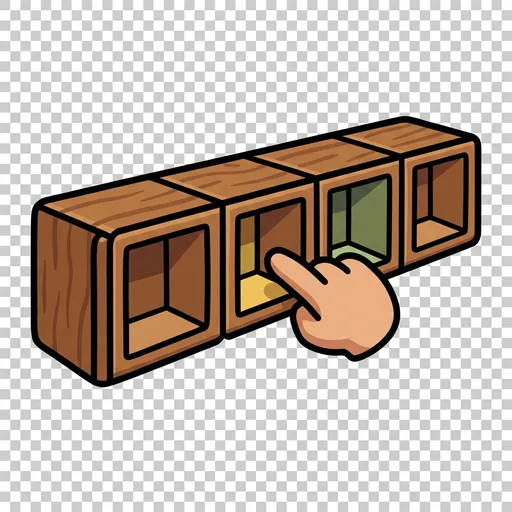
Row
A list: many values lined up in a numbered row, so you can grab item number three instantly or walk through them one by one.
-

Port
Input and output: the doorway that brings information in from the world (a key press, a sensor) and sends results back out.
-
Ping
An event: a waiting bell that does nothing until its trigger happens, then runs its code the instant it is struck.
-

Shuffle
Randomness: a fresh unpredictable value each time — a dice roll, a shuffled deck — so a program can surprise, vary, and stay fair.