
Order, Fork and Trek
THE THREE RUNNERS — every program ever run is built from three control-flow moves: do things in order (sequence), choose a path by a condition (selection), and repeat until done (iteration). Useless apart, unstoppable together — the structured-programming theorem made concrete.
A story read by Order, Fork and Trek
Loading audio…
Press play to listen along. The line being read lights up as you go.
Show full transcript
Loading transcript…
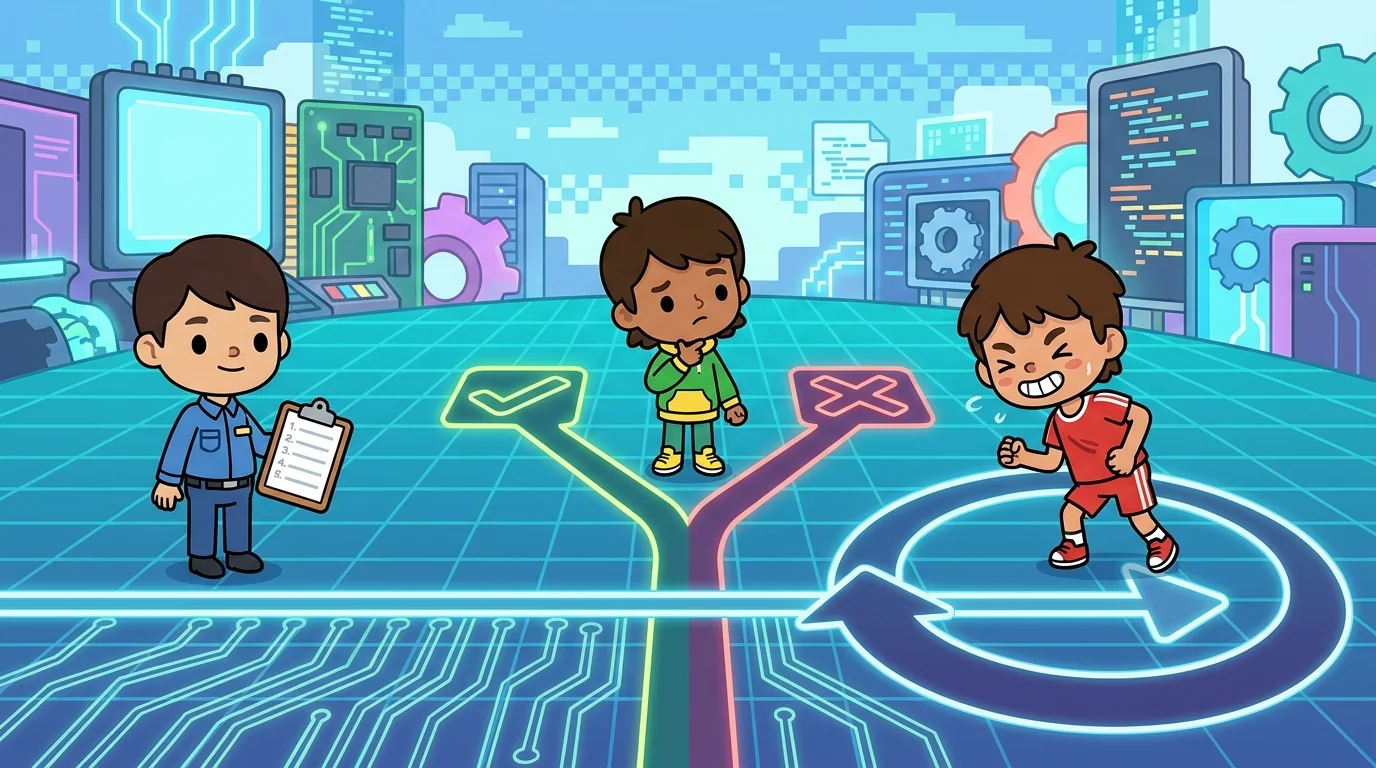
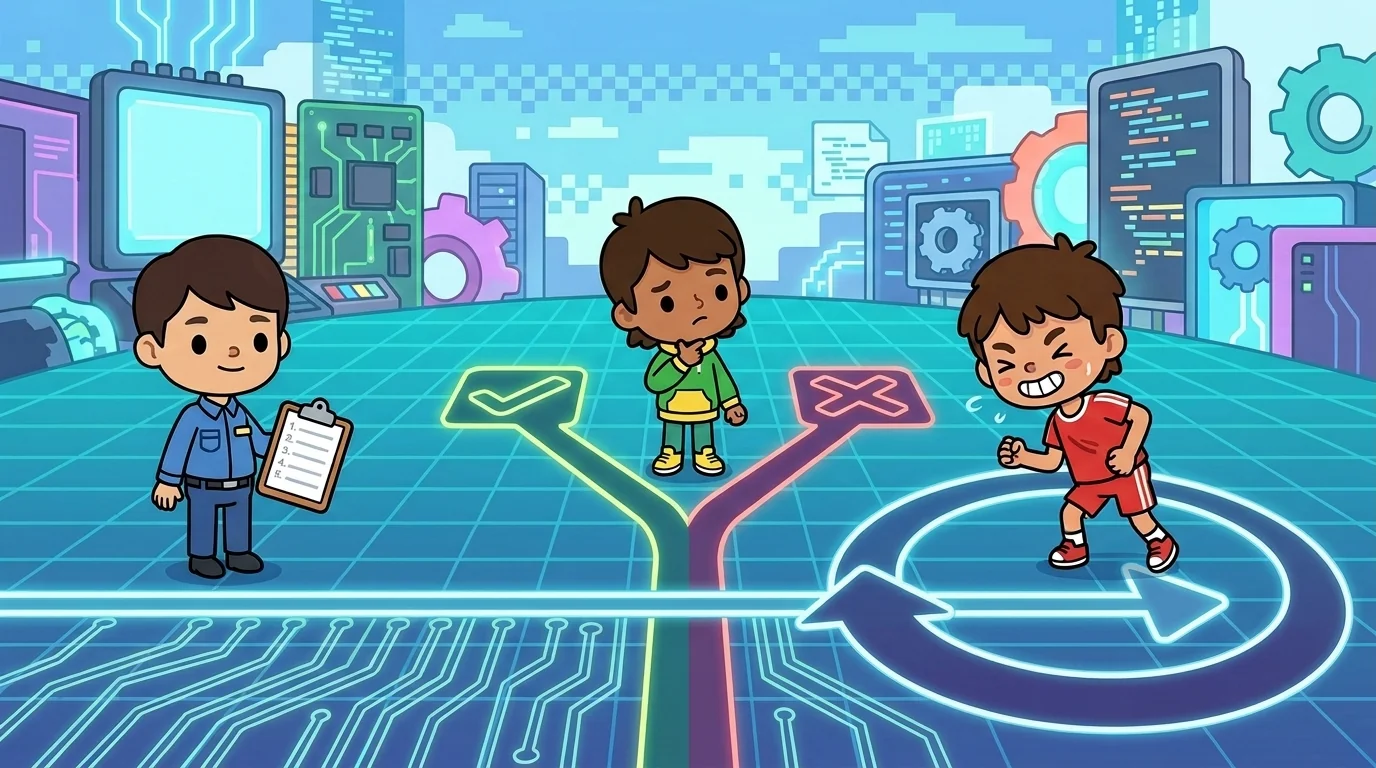
At the very start of every program — before anything happened, before a single light blinked on — there was a starting line, and three runners waiting on it. They did not look alike or act alike, and that was exactly the point, because the strange, provable truth of the whole coding realm is this: every program that has ever run, from the smallest blinking toy to the biggest humming machine, is built out of just these three control-flow moves, working together. Order stood straight and steady, holding a numbered list — sequence. Fork stood where the path split in two, looking calmly from one branch to the other — selection. And Trek stood already leaning forward, a little out of breath from a lap that hadn't started yet, grinning like someone who loved to go around again — iteration. "Ready?" said Order. "Depends," said Fork. "Always," said Trek.
Order went first, because Order almost always goes first. Order's whole nature is the right things in the right order — step one, then step two, then step three; never step two before step one, never the ending before the middle. Order lays the path down one careful stone at a time, and the program walks it exactly as laid. "People think I'm fussy," Order said, setting a stone. "But watch what happens if I'm not." Order swapped two stones — just two, just for a second — and the whole path buckled and threw the program flat on its face. "See? Pour the cereal, then the milk. Wake up, then stand. Open the box, then look inside. Same steps, wrong order — and nothing works. That's sequence. I'm not fussy. I'm the one who remembers that when is part of what." Order set the two stones back where they belonged, and the path lay smooth again.
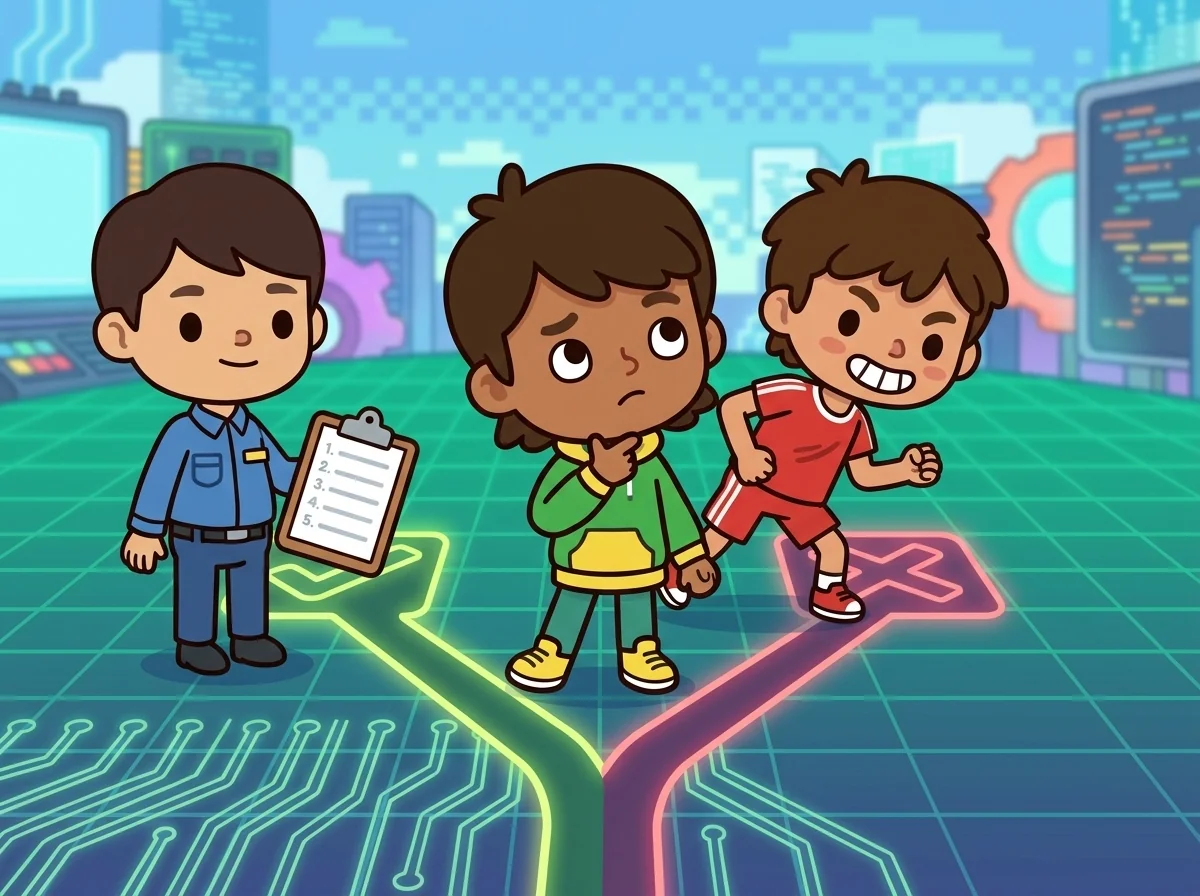
But then the path reached a place where it split, and this was Fork's whole reason for being. Fork stood at the split and did the one thing Order never could: Fork chose. Not ahead of time, not by guessing — Fork looked at what was true right now, this very second, and picked the branch that fit. "Is the door open?" Fork asked the air. The air said yes. "Then we go left." And left they went. A moment later the path split again. "Is it raining?" No. "Then we go right, no umbrella." Fork never fretted over the branch not taken; a choice wasn't a worry, just a clear look at a condition and a steady step onto the branch that matched. "Order knows the steps," said Fork, "but the world keeps changing under our feet. Somebody has to look up and decide which way this time, based on what's true. That's selection. That's me."
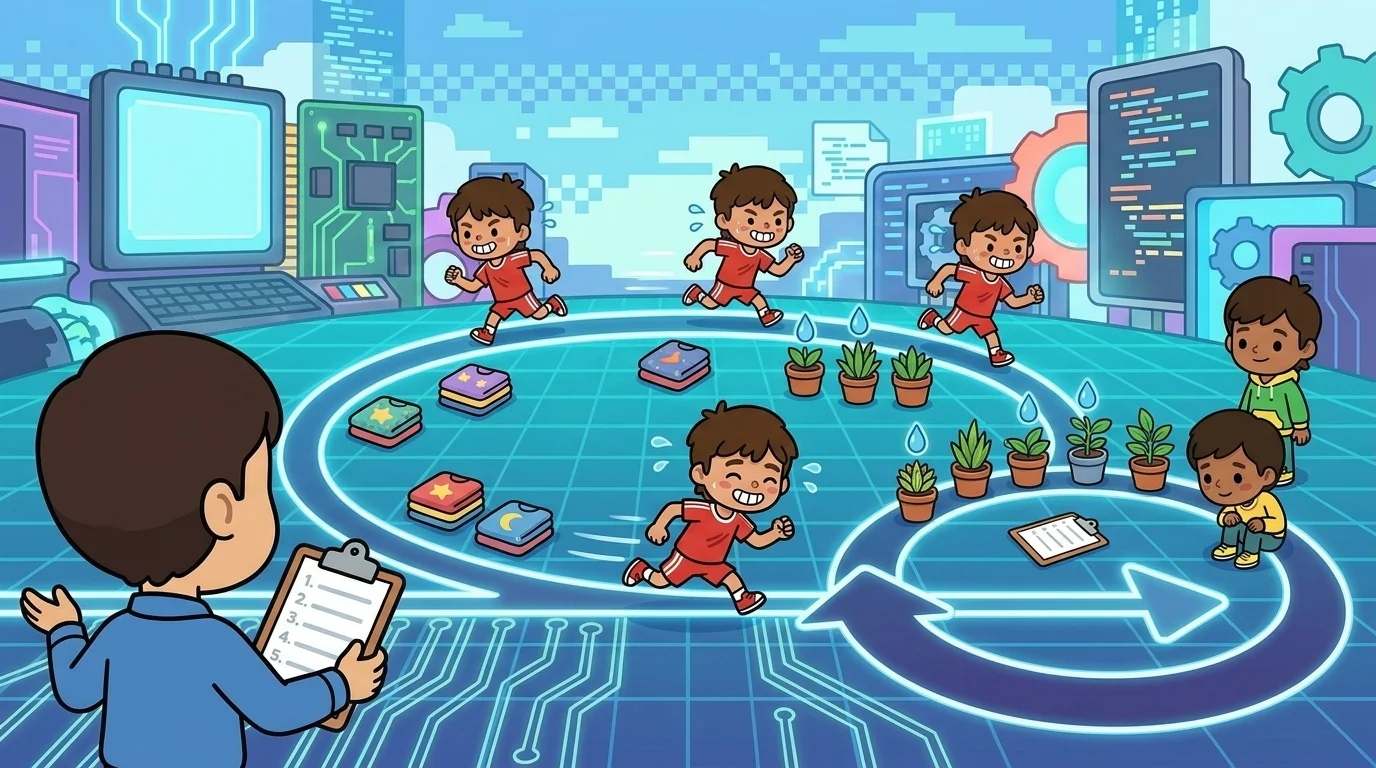
And then the path did a curious thing: it curled around and came back to where it had started, and Trek's face lit up, because a loop was Trek's favourite place in all the realm. Trek ran it. Then ran it again. And again — because Trek's whole nature is keep going around until the work is done, not once, not twice, but as many times as it takes. Fold one shirt, come back, fold the next; water one plant, come back, water the next; take one step of a hundred, come back, take the next. "Doesn't it get boring?" Order asked. "That's the trick," said Trek, rounding the bend. "You don't write a hundred steps. You write one — and I run it a hundred times. One instruction, and I'll go around till every shirt's folded and every plant's watered and there's nothing left on the list. That's iteration." Trek slowed as the last of the work came up empty. "And I stop when it's done — that's the part people forget to love about me. I don't go forever. I go until the condition says the job's finished, and then I rest." (A loop that never checks its stopping condition is the one bug that does go forever.)
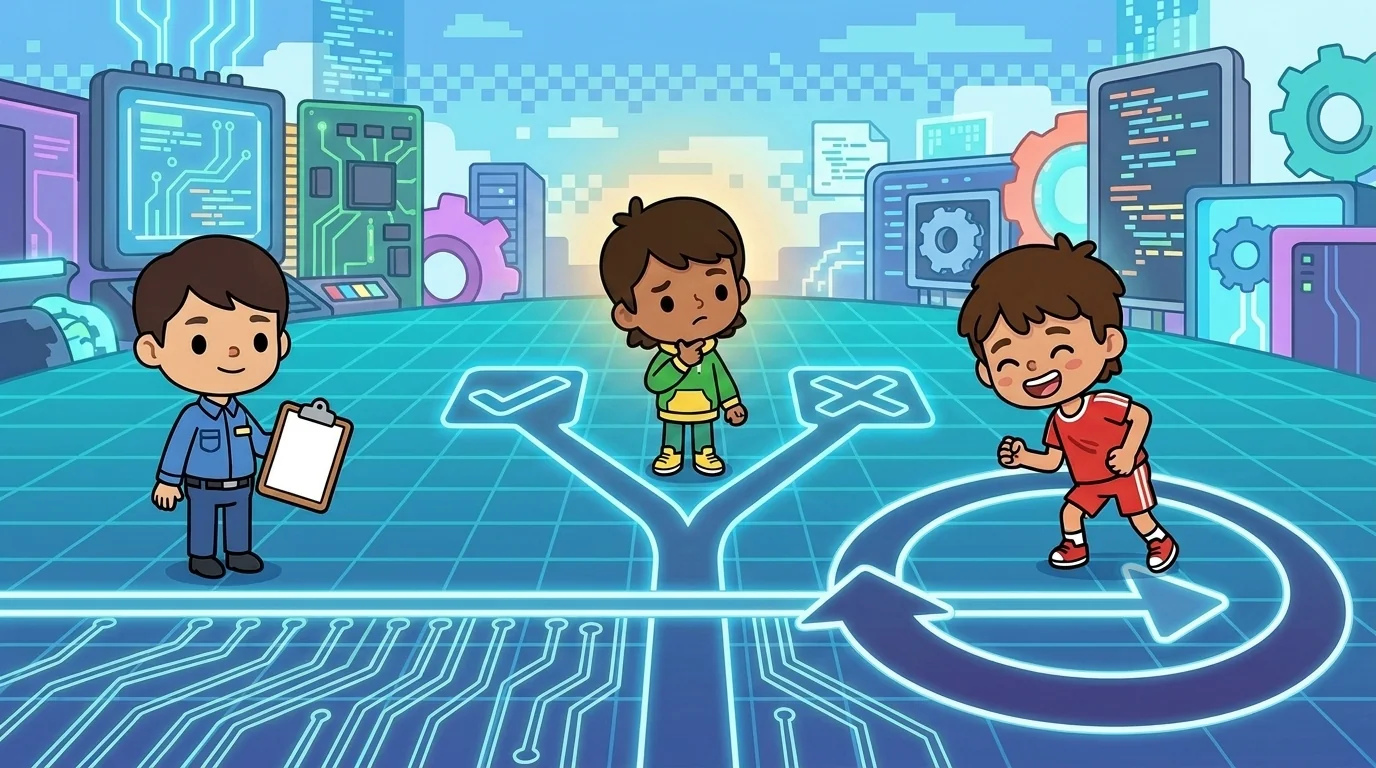
The program had run. The lights, all of them, blinked on. And here is the wonder of it, and the theorem underneath it: not one of the three could have done it alone. Order could put steps in perfect order but could never choose and never repeat. Fork could choose a path but had no steps to walk and no way to go around. Trek could loop forever but had nothing to loop over and no fork to steer it. Sequence, and selection, and iteration — three completely different jobs, useless apart, unstoppable together. Between the three of them, they can build anything the realm has ever seen; that's not a slogan, it's structured programming, and it's the whole reason a handful of simple moves can add up to every program there is. They gathered back at the starting line, the finished program humming warm behind them. "Good run," said Order. "Good choices," said Fork. "Good loops," said Trek, still grinning. And there is a quiet, glad feeling in that — being one particular part of a thing, good at your own strange job and no one else's, standing shoulder to shoulder with others good at theirs, and knowing the whole bright working machine only lit up because every single one of you was exactly, differently, yourself.
The CodeRealm ensemble
Order, Fork and Trek is part of CodeRealm's distributed-narrative cast. Each character embodies a different curricular primitive; together they teach the full subject.
-
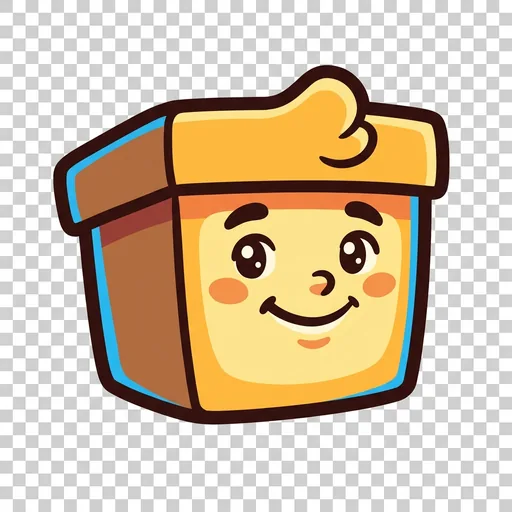
Stash
Variable / storage — the labeled box that holds a value until you call for it
-

Fork
Conditional / branching — chooses a path based on what's true right now
-
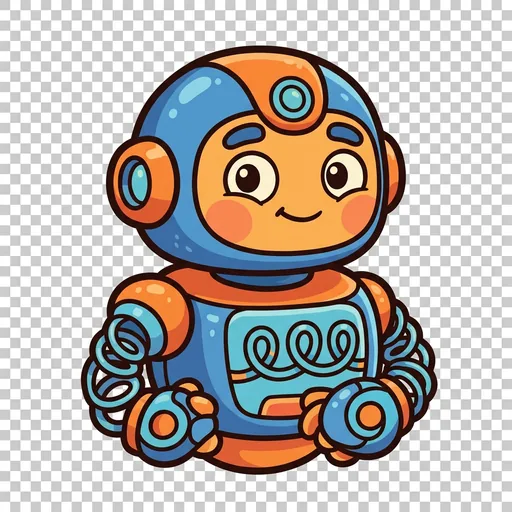
Trek
Loop / iteration — keeps going around until the work is done
-

Module
Function / encapsulation — does one job well and can be called anywhere
-

Glitch
Debugging / inspection — finds bugs gently, never shaming; 'there's always a reason'
-

Order
Sequence / syntax — reminds you that order matters in code
-
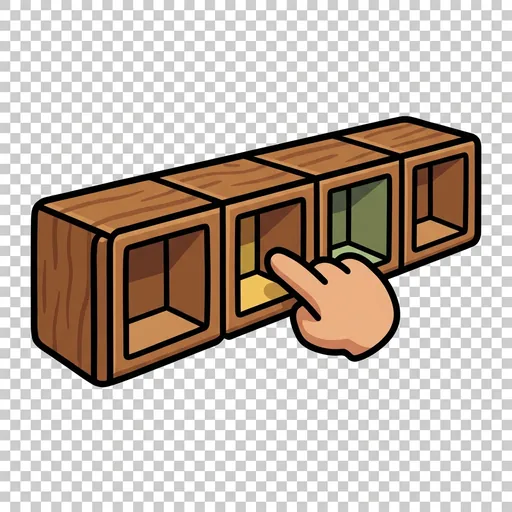
Row
A list: many values lined up in a numbered row, so you can grab item number three instantly or walk through them one by one.
-
Port
Input and output: the doorway that brings information in from the world (a key press, a sensor) and sends results back out.
-
Ping
An event: a waiting bell that does nothing until its trigger happens, then runs its code the instant it is struck.
-

Shuffle
Randomness: a fresh unpredictable value each time — a dice roll, a shuffled deck — so a program can surprise, vary, and stay fair.