
Hum
VOCAL CO-REGULATION — the tone carries more than the words. Slow, low, warm — a voice a flooded feeling can follow down.
Loading audio…
Press play to listen along. The line being read lights up as you go.
Show full transcript
Loading transcript…
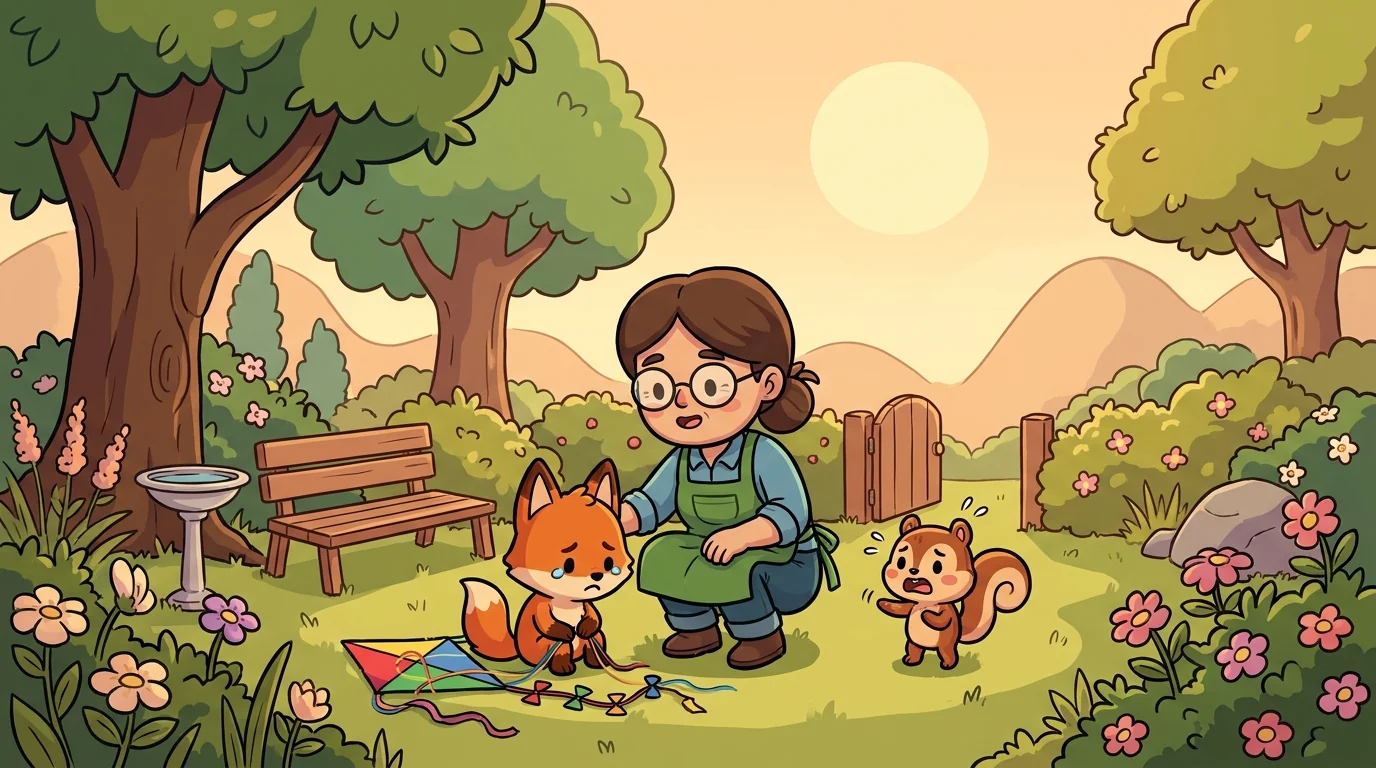
When a companion was spun-up and racing, Hum knew a secret most helpers miss: the flooded creature can barely hear the words. What it hears is the voice — the pace, the pitch, the warmth underneath. So Hum shaped the voice first and trusted the words to ride along.
Hum was a gentle animal with a low, unhurried voice, and when a companion was overwhelmed, Hum did not speak faster to match the panic or louder to be heard over it. Hum went the other way — slow, low, soft — offering a voice the racing feeling could follow, step by step, down out of the storm.
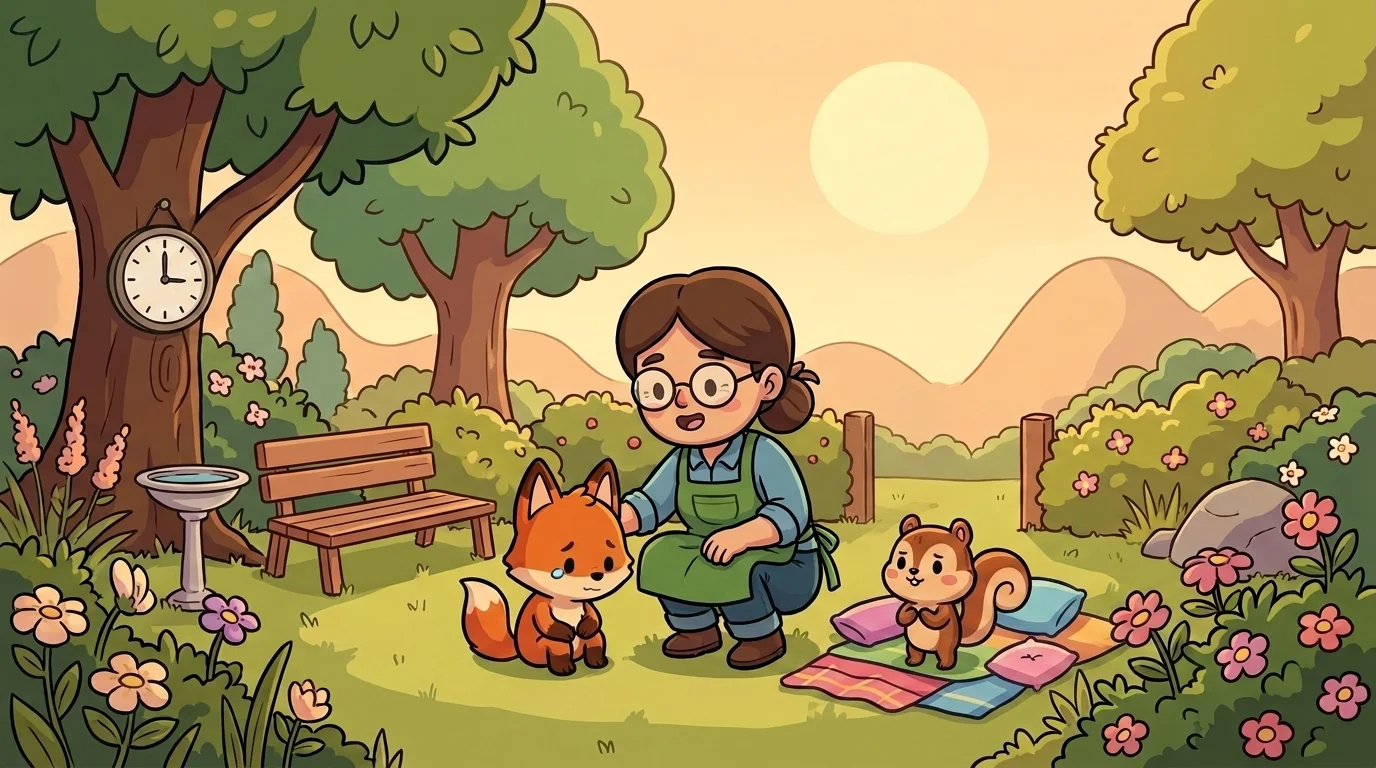
"You said something to me back there," a companion said afterward. "I don't even remember what. But your voice — it was like a hand on my back."
"That was the point," Hum said. "The words were just something for the voice to carry."
Hum had learned this after getting it exactly backwards, young.

A friend had been panicking, and small Hum — anxious to help — had talked fast, in a high worried voice: "It's okay it's okay what's wrong are you okay?" Every word kind, and every word pitched like an alarm. The friend had spun up higher, catching Hum's speed like a fire catches wind.
An older creature stepped in, and small Hum heard the difference instantly: the elder's voice came in slow and low, almost like the start of a song. "Heyyy. There you are. Nice and slow." Not many words. Just a voice with the panic taken out of it. And the friend's breathing began, without being told, to match it — down, and down, and down.
"Your words were good," the elder told Hum later. "But your voice was running as fast as their fear, so that's the thing they followed. A scared voice teaches scared. A slow voice teaches slow." The elder smiled. "You can't hand someone calm you're not carrying yourself. Steady your own voice first. Then it becomes a rope they can climb down."
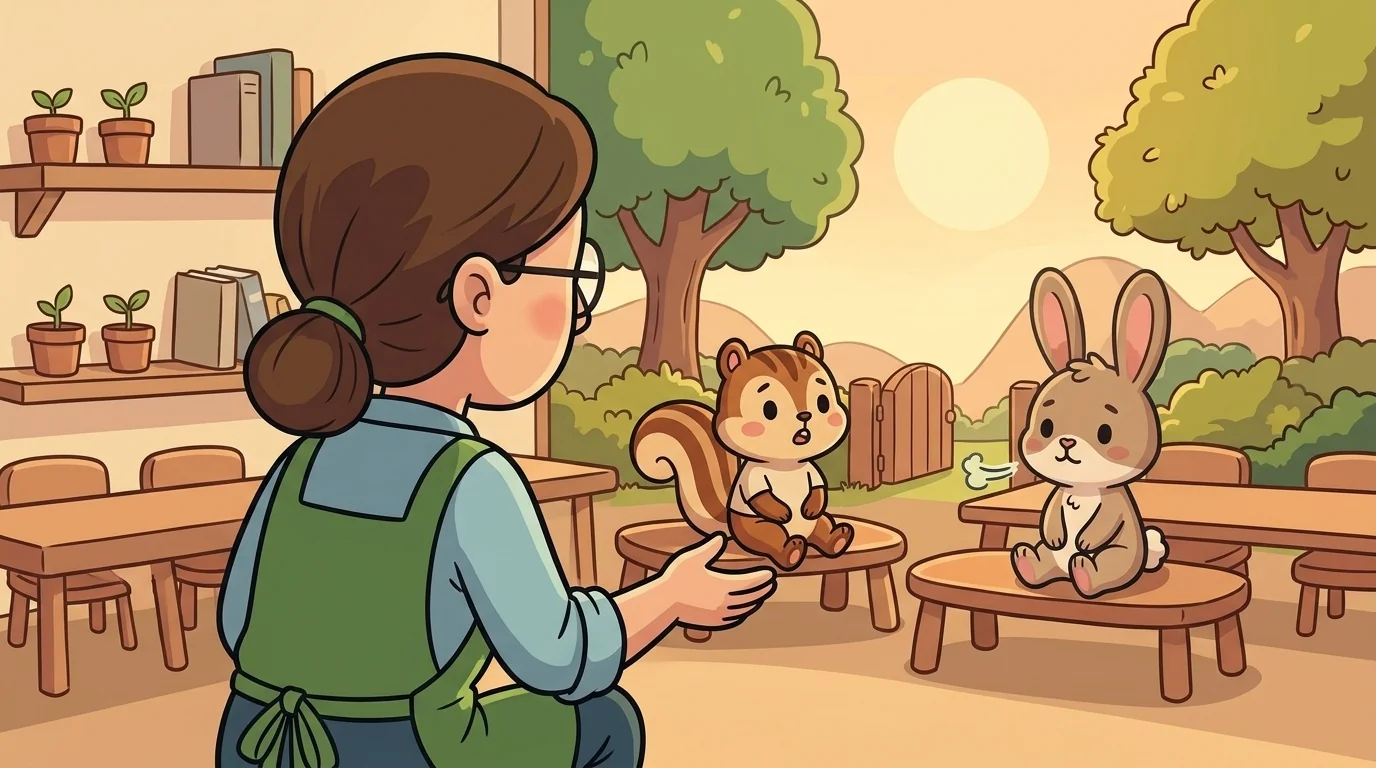
A companion came to Hum wanting the move for a friend who spirals. "I always end up talking really fast when she's upset. I can hear myself doing it and I can't stop."
"Because her fear is contagious, and you're catching it," Hum said gently. "So the move starts with you, before a single word to her. One slow breath of your own. Drop your voice lower than feels natural. Slow it down until it almost feels too slow — that's about right." Hum demonstrated, the words themselves barely mattering: "'Heyyy. I'm here. We've got time.' Slow. Low. Warm." Hum's eyes were kind. "Not sing-song — she'll know if it's fake. Just genuinely slower and softer than the storm. She won't follow your words. She'll follow your pace."
"So I calm my voice, and she borrows the calm out of it."
"The voice is the message," Hum said. "The words are just the boat it comes in on."

Later the companion asked, "What if I don't feel calm? Isn't a calm voice a lie then?"
Hum thought about the fire that catches wind, and the elder's low unhurried "there you are."
"It's not a lie — it's a choice," Hum said. "You don't have to be perfectly calm. You have to offer a slower rhythm than the one they're stuck in, on purpose, as a gift. Slowing your voice actually slows you a little too — it works both ways." Hum's low voice stayed warm. "You're not pretending the storm isn't real. You're just being the one steady sound inside it that they can follow home."
The companion practiced the slow low warmth once, quietly, and felt their own shoulders drop — and understood that the voice you offer someone else is also a voice you get to keep.
The SteadyRealm ensemble
Hum is part of SteadyRealm's distributed-narrative cast. Each character embodies a different curricular primitive; together they teach the full subject.
-

Match
Affect-matching — meet the dysregulation where it is; 'I see you. Right where you are.'
-

Sway
Rhythmic co-regulation — gentle bounce + breath rhythm; 'Slow in. Slow out.'
-

Beside
Containment — bounded presence without overwhelm; 'Right next to you. Not in front.'
-

Word
Naming — gently labeling the feeling; 'Maybe it's ___? Or maybe something else.'
-

Patient
Patience — giving time without rushing; 'Take all the time you need.'
-

Lend
Lends you their calm when yours runs out, because borrowing steadiness is how your own slowly grows.
-

Murmur
Helps you hear the steady voice of someone who has soothed you, tucked inside, for when they are not there.
-

Anew
Celebrates the wobbly first time you steady yourself all alone, because wobbly still counts.
-

Reprise
Shows that once you can steady yourself, you can become the calm for someone else, completing the circle.