
Sway
RHYTHMIC CO-REGULATION — offer a slow steady rhythm (a rock, a breath, a sway) that a jangled feeling can fall into step with. Bodies borrow rhythm before minds borrow words.
Loading audio…
Press play to listen along. The line being read lights up as you go.
Show full transcript
Loading transcript…
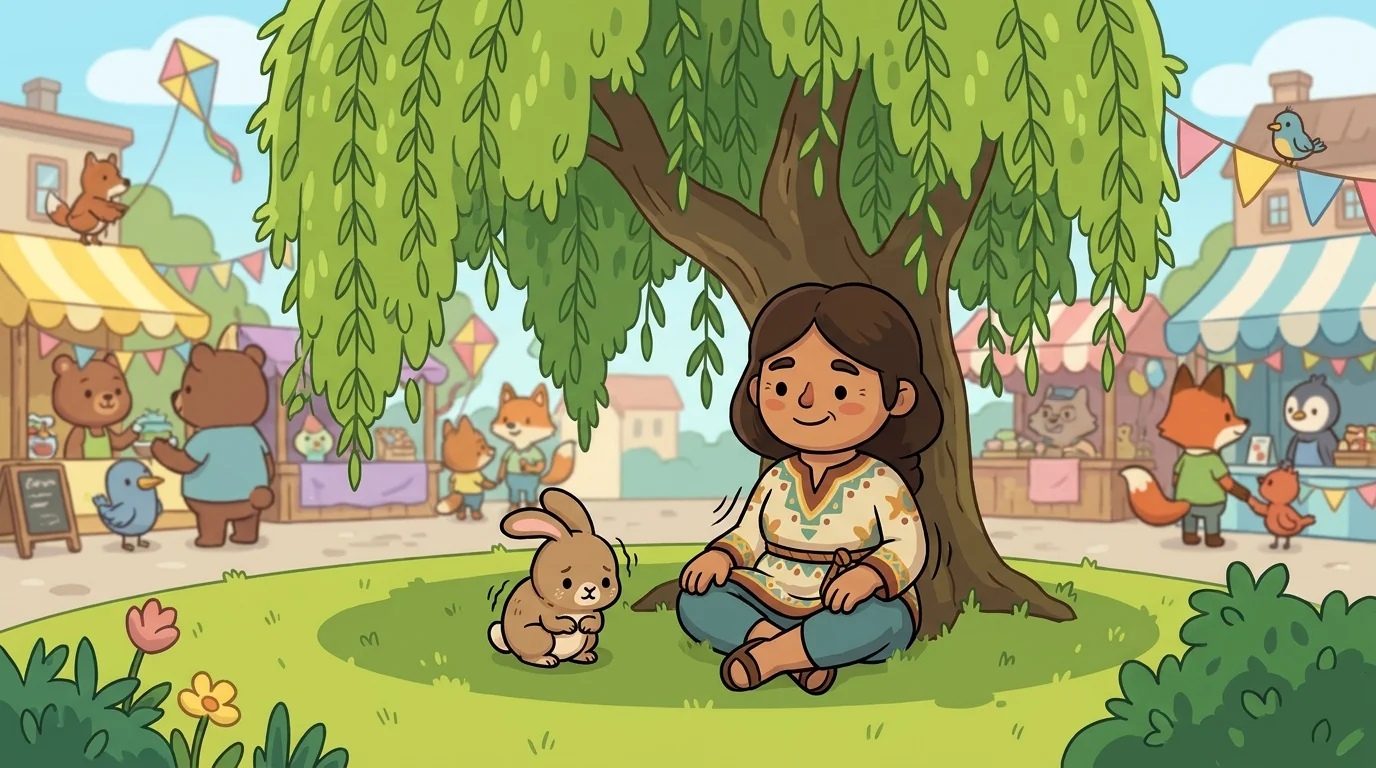
When a companion was jangled — too wound-up for words, feelings firing faster than any sentence could keep up — Sway didn't reach for talking. Sway reached for rhythm. A slow rock. A long even breath, in and out, on a beat. A gentle sway a jangled body could quietly fall into step with, the way you find yourself nodding along to a song before you've decided to.
Sway was a soft, swaying animal who knew a deep old truth: a body borrows rhythm long before a mind can borrow reason. So when everything was too fast, Sway offered slow — not as an instruction ("slow down!") but as a rhythm simply there to be joined, no words required.
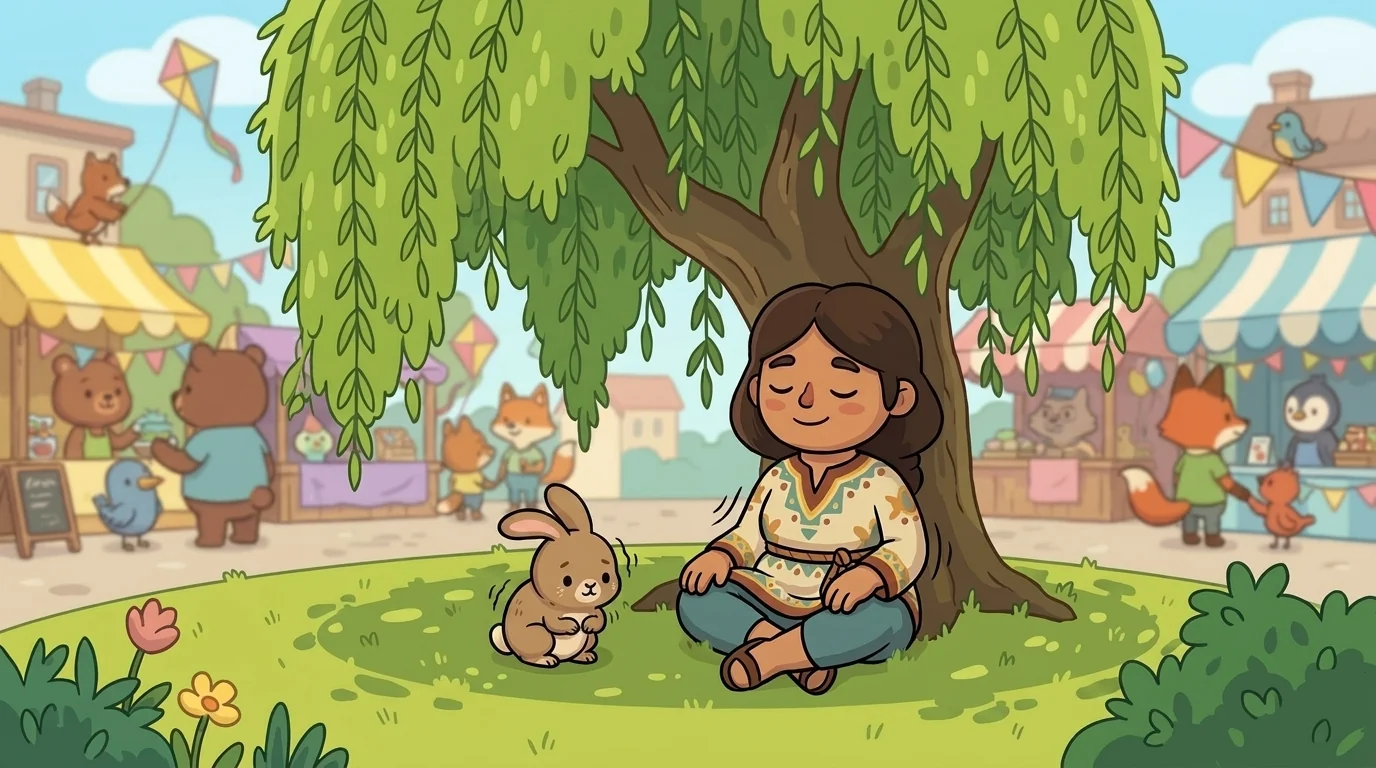
"You didn't say anything that time," a companion said, steadier now.
"There wasn't a word small enough to fit through," Sway said. "But there was a rhythm. There's always a rhythm."
Sway had learned this back when it believed steadying someone was a talking job.
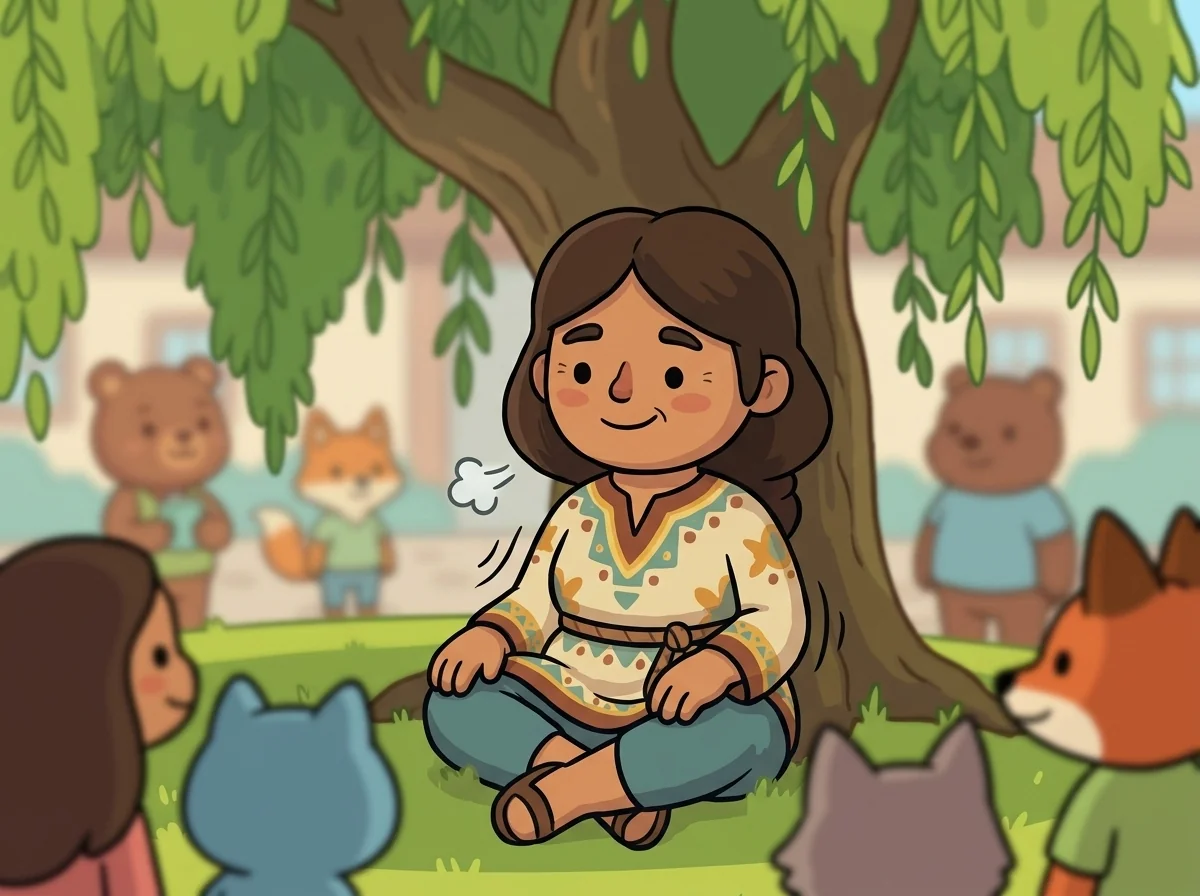
A friend had been shaking, too flooded for sentences, and small Sway had kept asking — "what do you need, tell me, use your words" — pressing for language from a creature who had, in that moment, none. The friend had only shaken harder, ashamed now on top of overwhelmed, unable to produce the words being requested.
An older creature came and, without a word, began to rock — slow, even, side to side, an arm's length away, just... a rhythm in the room. And the friend, needing to do nothing, understand nothing, say nothing, began after a while to rock too, catching the beat the way a boat catches a swell. Their breathing lengthened to match. The shaking eased. Not one word had been spoken.
"You were asking for words from a place words had left," the elder told Sway gently. "When the fast part of someone is offline, you don't reason with it — you can't. You offer the body a slower beat and let the body take it. Bodies remember rhythm even when everything else has scattered." The elder was still swaying, soft. "This is the oldest steadying there is. Older than talking. You've been rocked before you could speak — you just have to offer it back."
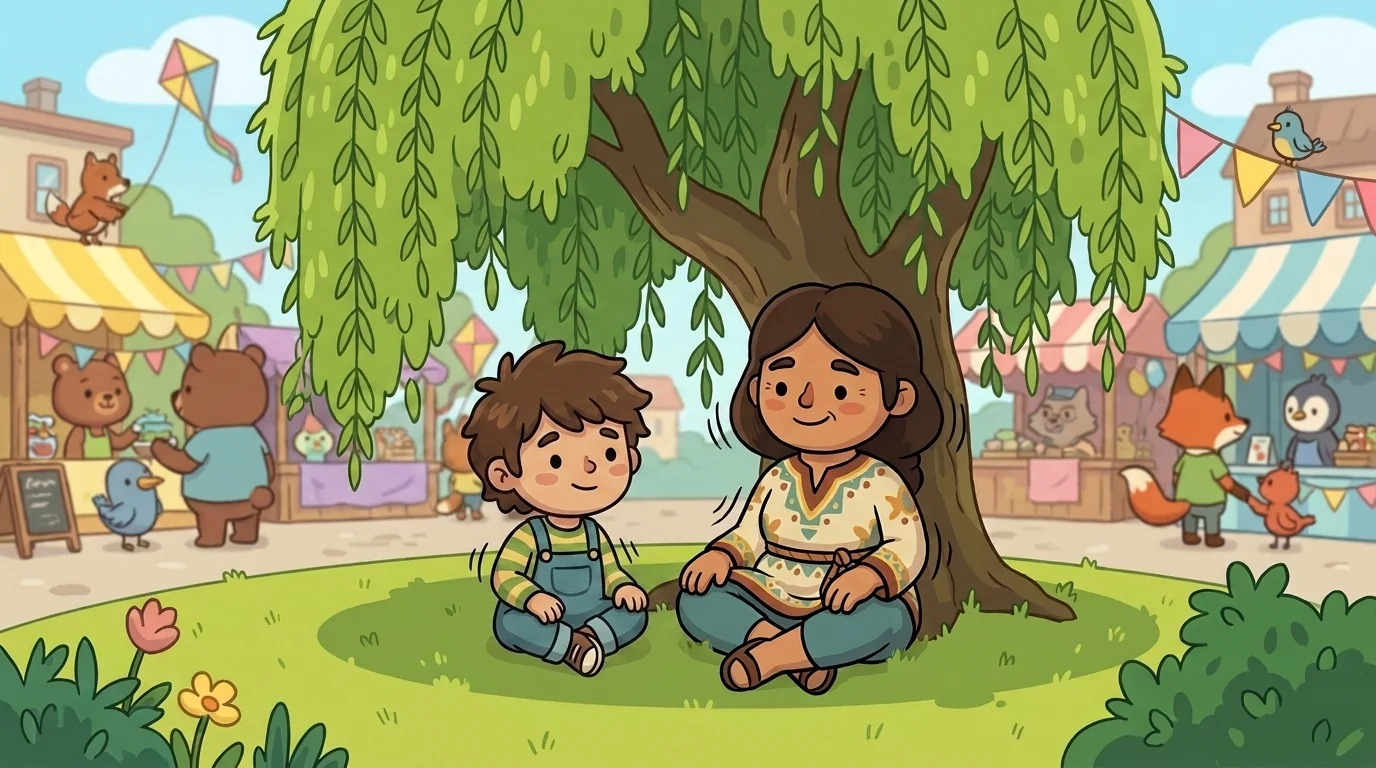
A companion came wanting the move for a sibling who goes nonverbal when upset. "When he's like that, nothing I say lands. I feel useless."
"Because talk is the wrong tool for that moment — not because you're useless," Sway said warmly. "When words have left, offer a rhythm instead. Sit near and breathe slow and audible — let him hear the long even out-breath. Or rock a little. Or tap the softest slow beat on your own knee. Don't tell him to join. Just make the rhythm available." Sway rocked, demonstrating, easy and unhurried. "His body will drift toward the slower beat on its own, the way yours drifts toward a lullaby. You're not fixing him with a rhythm. You're lending his body a slower one to remember."
"So I stop trying to talk him down."
"You give his body something to fall into step with," Sway said. "The words can come later, once the rhythm's done its work."

Later the companion asked, "Why does it work when talking doesn't?"
Sway kept swaying, thinking of the boat and the swell.
"Because a big feeling lives in the body first — the fast breath, the racing heart — and rhythm speaks the body's language," Sway said. "A slow steady beat tells the alarmed body the danger's passing, you can come down now, in a language older than any word." Sway's soft eyes were kind. "That's why a rocking chair, a walk, a hummed tune all help. You're not being simple. You're going under the words to where the feeling actually is — and meeting it with the one thing it can still follow."
The companion tried a slow sway, felt their own breath lengthen to meet it, and understood that sometimes the deepest help has no words in it at all.
The SteadyRealm ensemble
Sway is part of SteadyRealm's distributed-narrative cast. Each character embodies a different curricular primitive; together they teach the full subject.
-

Match
Affect-matching — meet the dysregulation where it is; 'I see you. Right where you are.'
-

Hum
Vocal co-regulation — gentle vocal-tone modulation; 'Hmm. I'm here.'
-

Beside
Containment — bounded presence without overwhelm; 'Right next to you. Not in front.'
-

Word
Naming — gently labeling the feeling; 'Maybe it's ___? Or maybe something else.'
-

Patient
Patience — giving time without rushing; 'Take all the time you need.'
-

Lend
Lends you their calm when yours runs out, because borrowing steadiness is how your own slowly grows.
-

Murmur
Helps you hear the steady voice of someone who has soothed you, tucked inside, for when they are not there.
-

Anew
Celebrates the wobbly first time you steady yourself all alone, because wobbly still counts.
-

Reprise
Shows that once you can steady yourself, you can become the calm for someone else, completing the circle.