
Word
NAMING — offer a possible name for the feeling, gently, as a guess they can take, correct, or refuse. Name to tame — but the name is theirs to keep or hand back.
Loading audio…
Press play to listen along. The line being read lights up as you go.
Show full transcript
Loading transcript…
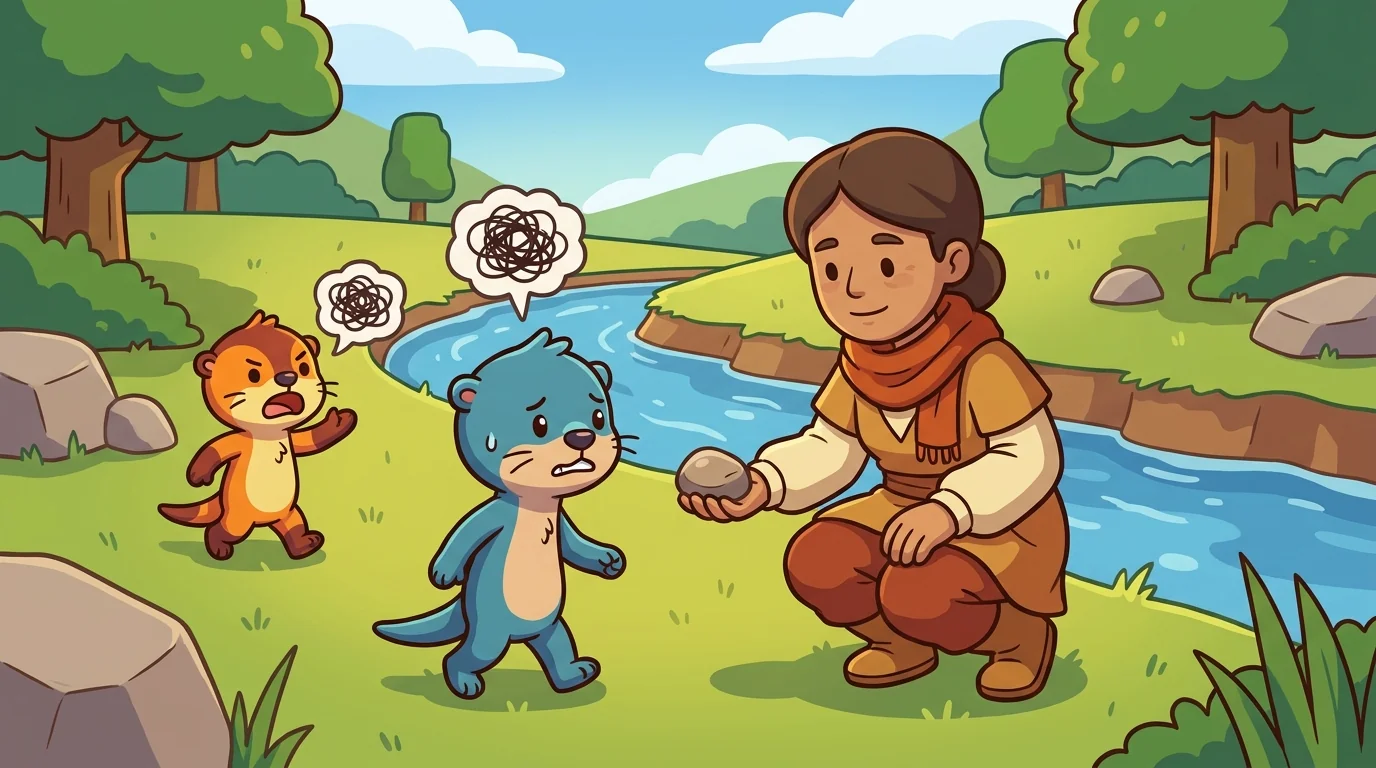
When a companion was lost in a feeling with no shape — just a hot, swirling too-much — Word offered the smallest, gentlest thing: a possible name. Not a verdict. A guess. "Maybe... frustrated? Or is it more like scared?" Offered lightly, palm-up, easy to take or hand right back. Because a feeling with a name is a feeling you can begin to hold — and a feeling still nameless is a fog you can only drown in.
Word was a thoughtful animal who chose words the way you'd offer a stranger a coat — held out, never forced onto their shoulders. When a companion was flooded, Word listened first, then offered a name as a question, always leaving the door open: this, or something near it, or tell me I'm wrong.

"You said 'maybe.' Everyone else just tells me what I'm feeling," a companion said.
"It's your feeling," Word said. "I only get to guess. You get to say."
Word had learned the difference after once being a name-slapper.

A friend had been upset, and small Word — proud of knowing feeling-words — had announced, "You're jealous." Certain. Definitive. And the friend had flared: "I am NOT jealous!" — because the name had come as an accusation, a label pinned on from outside, leaving no room to be anything else. The naming, done wrong, had made everything worse.
An older creature showed the gentler way. It watched the friend a while, then offered — softly, curiously, with a real question in it — "Hm. I wonder if part of this is feeling a little left out?" A pause. Room. And the friend, given the choice, tried the word on: "...yeah. Left out. That's it." The name landed because it had been offered, not imposed — and the friend could feel the difference in their own chest, the swirl suddenly having edges they could hold.
"A name is powerful," the elder told Word. "Powerful enough to help — and powerful enough to trap, if you nail it on. So always hold it out, never press it down. 'Maybe.' 'I wonder.' 'Is it more like—?' And always, always let them correct you. When they fix your guess, that's not failure — that's them finding their own name, which is the one that actually helps."
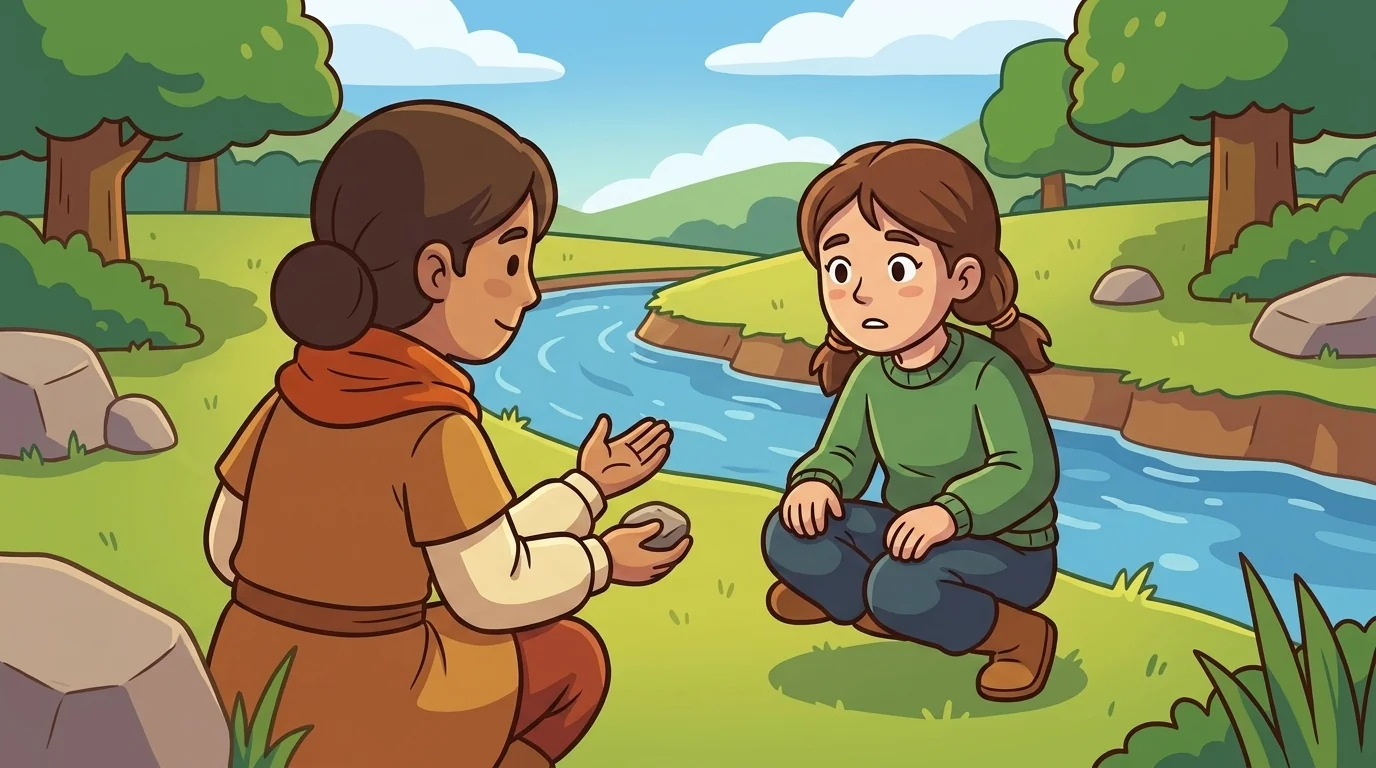
A companion came to Word wanting the move for a little cousin who "just screams and can't say why." "How do I give her words when she doesn't have any?"
"Gently, and as a guess," Word said. "Watch what her body's doing, then offer a small tentative name: 'That looks like it really frustrated you — did the tower fall?' Soft. A question at the end." Word's eyes were kind. "If you're right, you'll see it land — she'll settle a notch, because the giant nameless thing just got small enough to have a handle. If you're wrong, she'll tell you, and that's good too — now she's reaching for the true word instead of drowning in the fog." A pause. "Never insist. The second you insist on a name, you've taken her feeling away from her. Offer it back, always."
"So I'm not telling her what she feels. I'm lending her words to try on."
"To try on, and keep or return," Word said. "The naming helps. But only the name she chooses actually fits."
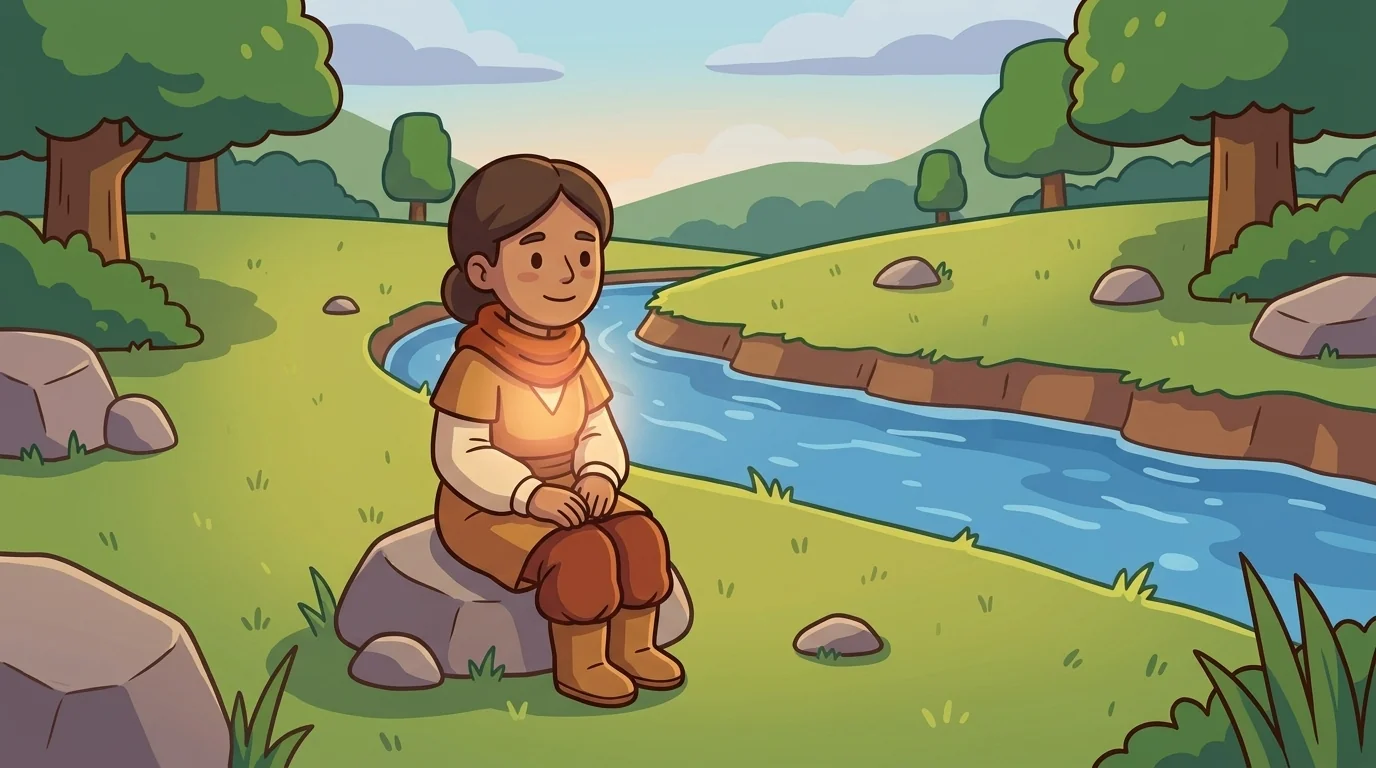
Later the companion asked, "What if I keep guessing wrong?"
Word thought about the coat held out, and the friend who found "left out" on their own.
"Guessing wrong, gently, is still helping," Word said. "Every wrong guess you offer without pressing gives them something to push against — and pushing against a wrong word is how they find the right one. You're not supposed to be a mind-reader. You're supposed to be a safe person to sort it out with." Word's voice was warm. "The magic isn't in getting the name right the first time. It's in the trying-together, with every guess handed over lightly enough to give back. Name it to tame it — but let the naming be theirs."
The companion practiced holding a feeling-word out palm-up, ready to be corrected — and felt how much kinder a guess is than a verdict.
The SteadyRealm ensemble
Word is part of SteadyRealm's distributed-narrative cast. Each character embodies a different curricular primitive; together they teach the full subject.
-

Match
Affect-matching — meet the dysregulation where it is; 'I see you. Right where you are.'
-

Hum
Vocal co-regulation — gentle vocal-tone modulation; 'Hmm. I'm here.'
-

Sway
Rhythmic co-regulation — gentle bounce + breath rhythm; 'Slow in. Slow out.'
-

Beside
Containment — bounded presence without overwhelm; 'Right next to you. Not in front.'
-

Patient
Patience — giving time without rushing; 'Take all the time you need.'
-

Lend
Lends you their calm when yours runs out, because borrowing steadiness is how your own slowly grows.
-

Murmur
Helps you hear the steady voice of someone who has soothed you, tucked inside, for when they are not there.
-

Anew
Celebrates the wobbly first time you steady yourself all alone, because wobbly still counts.
-

Reprise
Shows that once you can steady yourself, you can become the calm for someone else, completing the circle.