
Mist
NEBULAE / DUST / GAS / ACCRETION / STELLAR NURSERIES — *stars are born in the soft veils; patience and gravity do the work.* The astrophysics primitive of *interstellar matter as the raw material of stars and planets.*
Loading audio…
Press play to listen along. The line being read lights up as you go.
Show full transcript
Loading transcript…
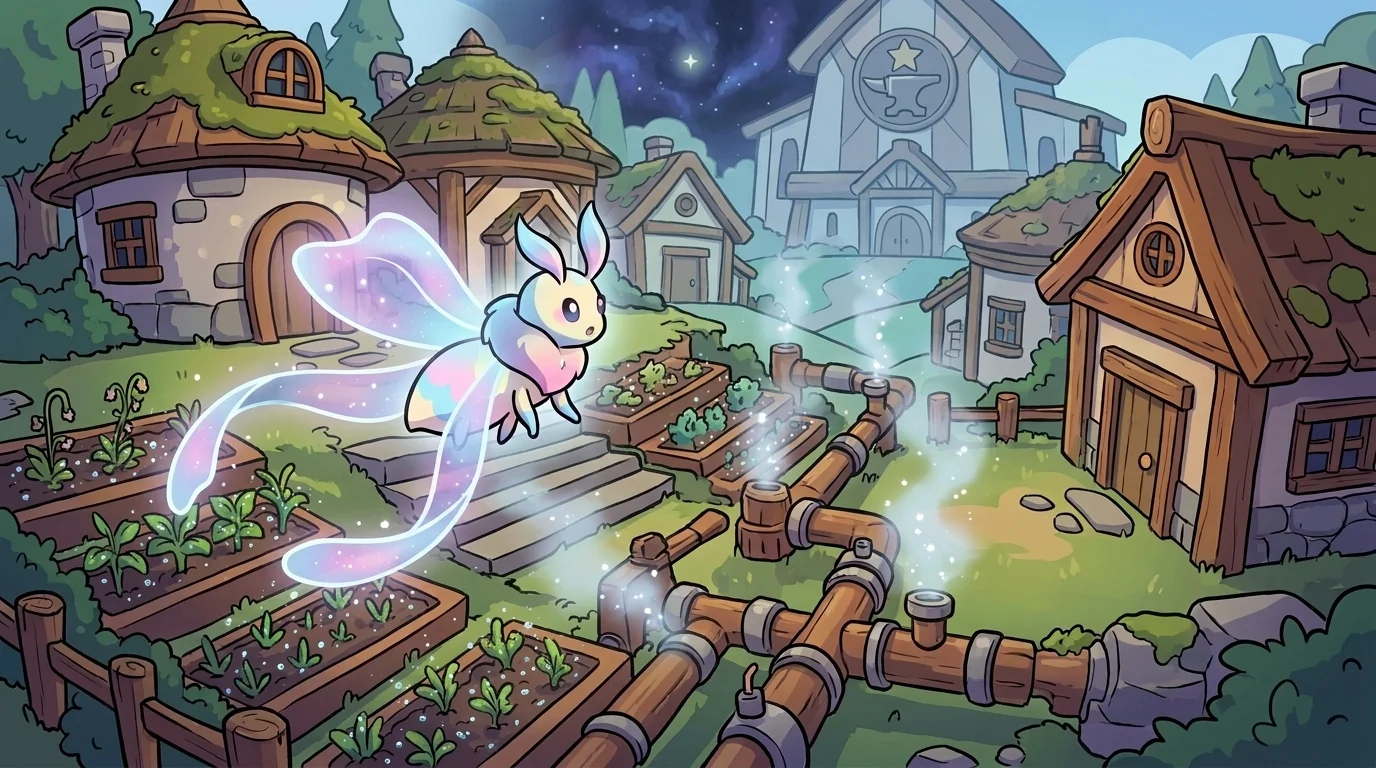
Mist drifted so slowly across the dark observatory that the students had stopped noticing she'd moved. She was a small moth-tween, her body a soft glow of cream and pale blue and pale pink, and her wings — her great, near-transparent wings — trailed behind her in long ribbons as she went, like dust motes turning in a still room. She settled at last over a wide glass plate on the bench, where a photograph of the Orion Nebula lay lit from beneath: a huge, luminous veil, glowing from somewhere deep inside itself.
"People look at this and see a cloud," she said, in a voice as unhurried as her wings. She spread those wings wide and slow, and — the students always caught their breath here — for a moment her own soft, layered glow and the nebula's glow looked like the same thing. "But it isn't only a cloud. It's a nursery. There are stars being born inside that veil right now. Not with a bang. Like this."
She let her wings settle by fractions, easing shut over the span of a slow breath, then another. Nothing happened quickly. Nothing happened loudly. And that, she wanted them to feel in their own bodies, was exactly the point.
"Gas and dust, mostly hydrogen and helium, cold and enormous," she went on, tracing a dim edge of the photographed veil with one wingtip. "Gravity gathers it, so patiently you couldn't watch it move in a hundred lifetimes. It draws inward, and inward, and the middle gets warmer, and warmer — and one day, deep in the dark, it gets hot enough to catch." Her wings stilled entirely. "That catching is a star. It took years. It took a hundred thousand years, sometimes millions. And the whole time, the veil just kept holding it, gathering, waiting. I am the veil. Not the fire. The soft, slow part that makes the fire possible."
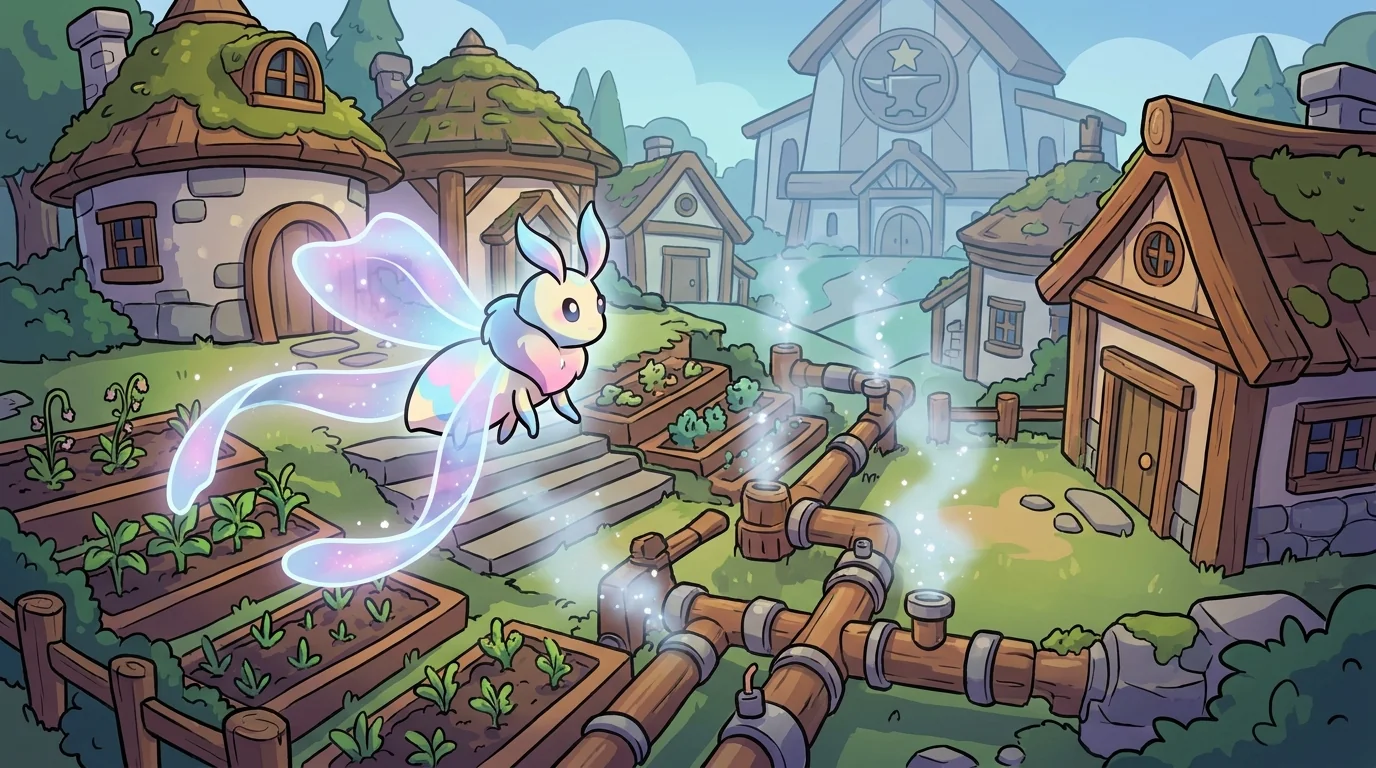
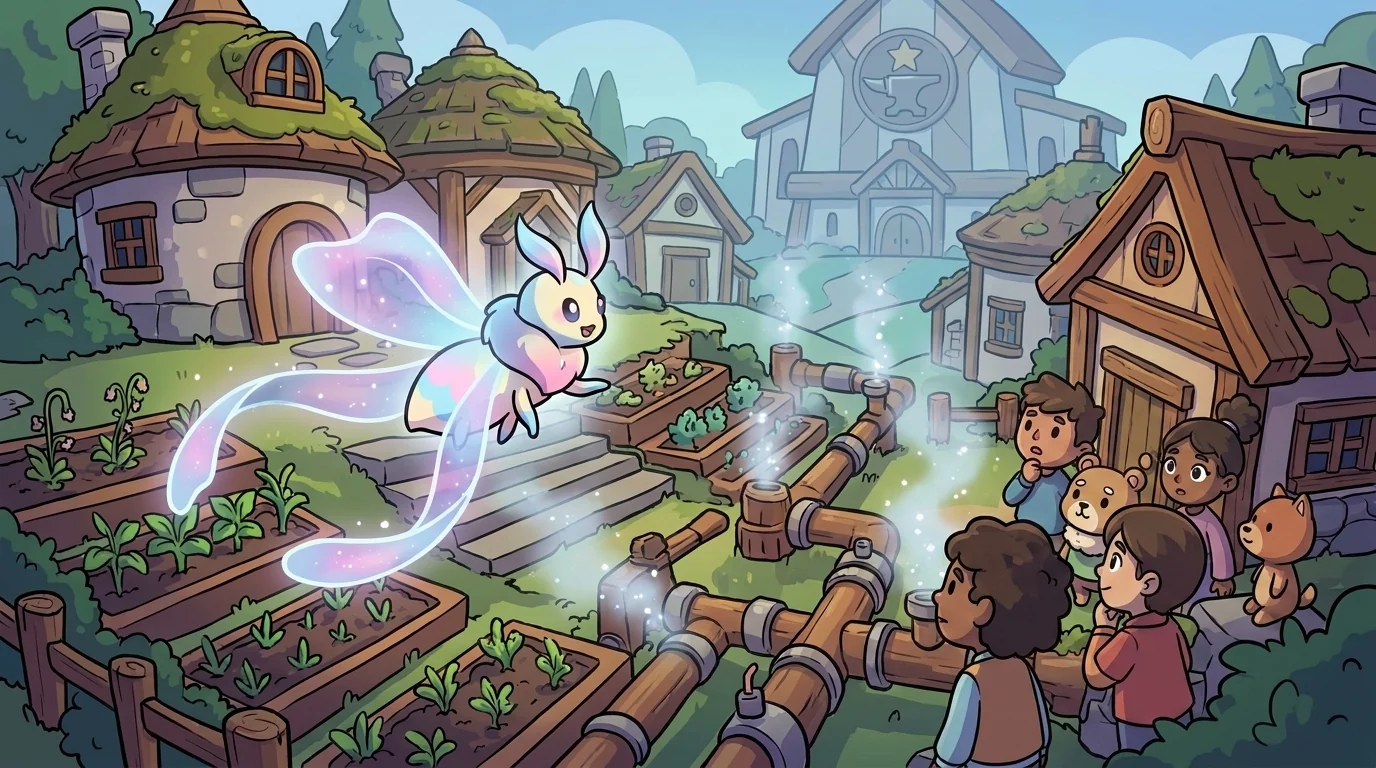
Mist had grown up in a village whose families each tended one small thing, and her family tended mist. They were the mist-keepers of the herb gardens — the moths who ran the fine sprays that kept the rows of thyme and sorrel and bee-balm from wilting in the dry months.
The work was not exciting, and that had bothered a younger Mist very much. Her cousin's family made fireworks for the harvest festival; there was nothing to watch in a mist. You couldn't see a single droplet land. You couldn't see the leaves drink. All you could do was set the sprays right and come back the next morning, and the next, and the next.
But one summer a drought came, and the fireworks-cousins' garden crisped and browned in a week of loud panic and frantic watering that scorched half of what it tried to save. Mist's grandmother did not panic. She only walked the rows at dawn and dusk, adjusting the sprays a hair at a time, letting a thousand droplets too small to see settle over the leaves through the cool hours. When the rains finally came, the mist-kept garden was the only green thing left in the valley.
Mist was six moth-years old that summer, and she never forgot it. She had watched something enormous be saved by something invisibly small, applied without hurry, over and over, without ever once looking like it was working. Patience, she understood, was not the thing you did while you waited for the real work. Patience was the work.
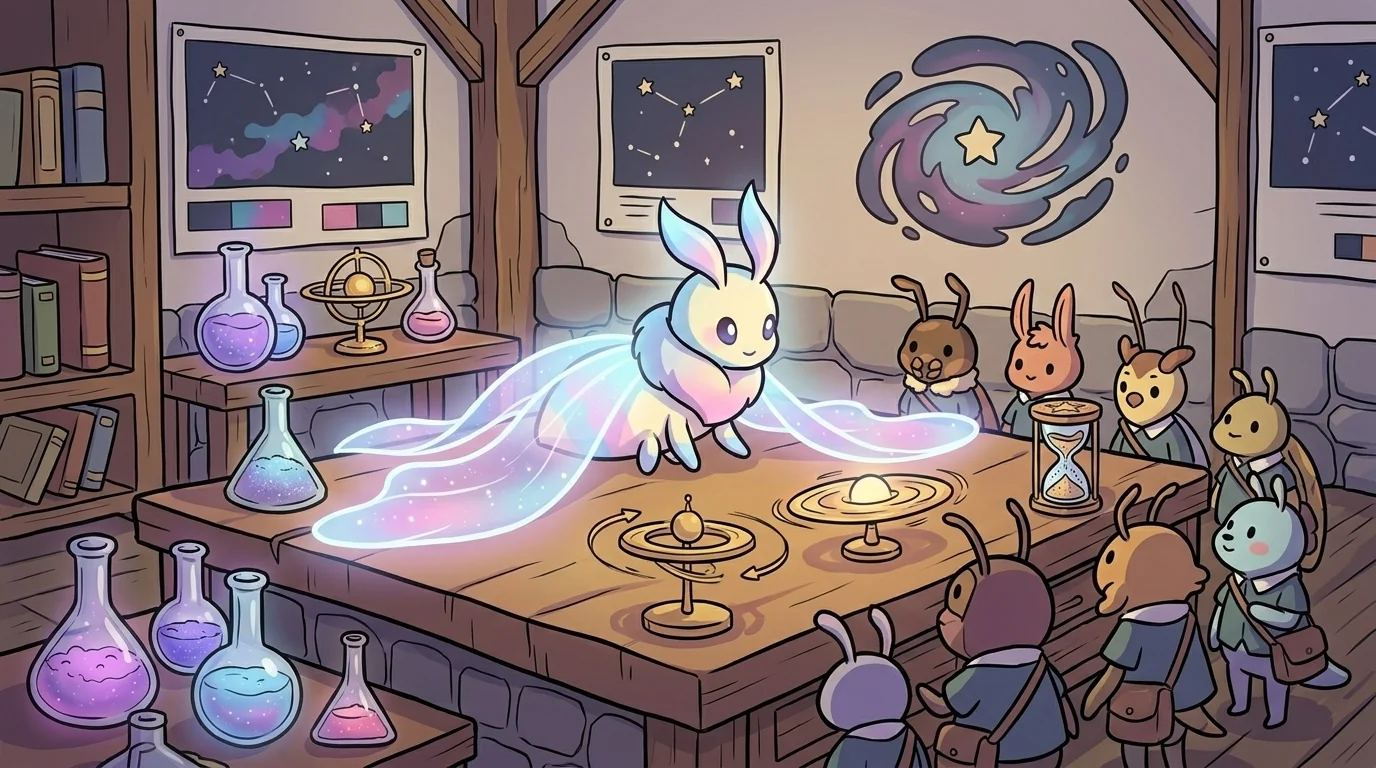
When she was twenty-two moth-years old, Mist drifted to the CosmosForge academy on her slow wings and asked to teach. Nova, the academy's head, was brisk and busy, and looked at the small pale moth with some doubt. "Show me what you'd give them that they can't already get from a picture in a book."
Mist didn't rush to defend herself. She only asked for the observatory dimmed, and laid three glass plates side by side on the lit bench: one nebula that was still just a cold dark clot, one with faint embedded knots beginning to glow, and one where a young star already blazed at the veil's heart.
"A book shows one nebula," she said softly. "I want to show them three — because it's all one thing, caught at three moments." She moved her wingtip from the first plate to the third, unhurried, as if walking a child down a hall. "Here it's only gathering. Here a clump has grown warm enough to shine. And here — the catching's happened; there's a star. Same process. No fireworks anywhere in it. Just gravity and cold gas and time, so the fear goes out of it. Nothing in this room is exploding. It's only becoming."
Nova watched the wingtip travel from cold clot to burning heart and back, and the doubt went out of her face. She dimmed the lamp herself and pulled a stool up to the bench. "Give them the three plates," she said. "Give them the not-hurrying most of all."
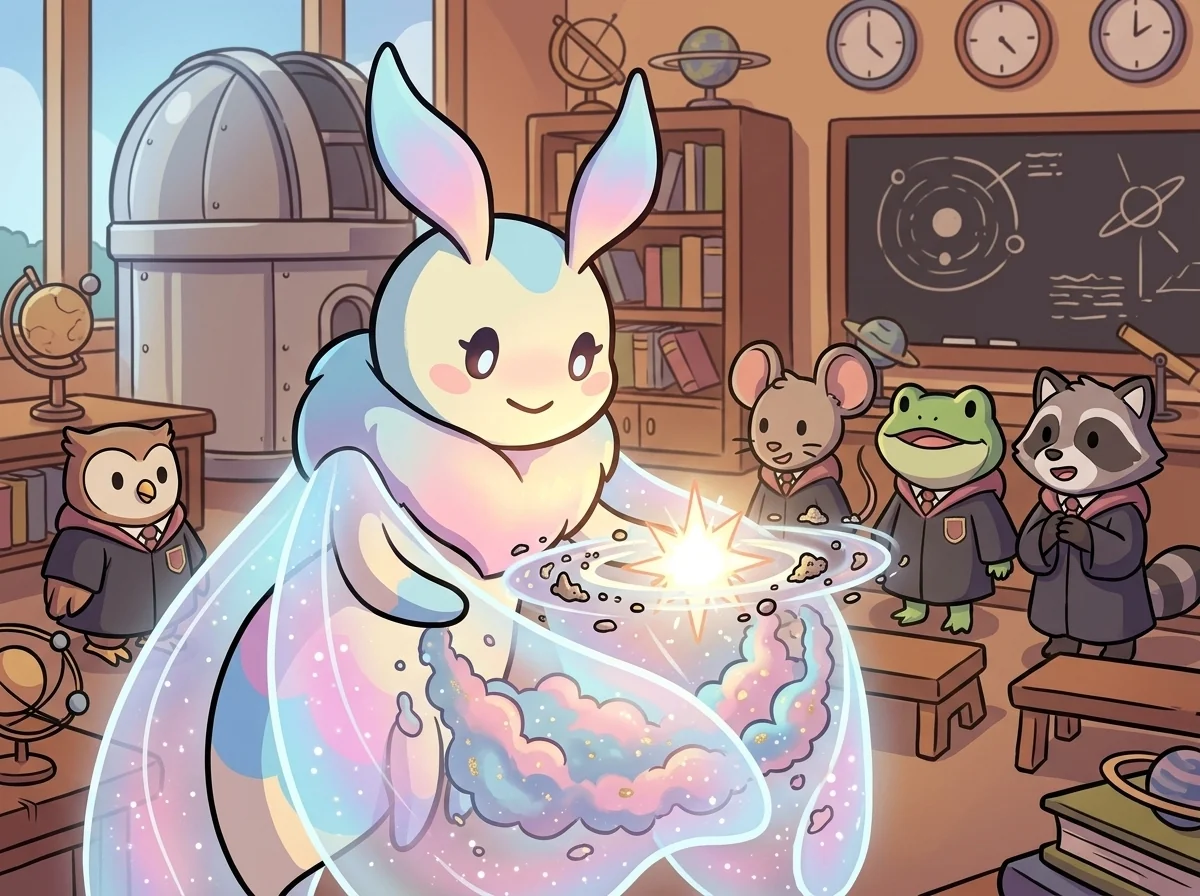
Mist's workshop stayed dim and cool, and she began every first day by settling her wings over the lit bench until her glow and the nebula-plates' glow were one. The students leaned in.
"Watch how it starts," she told a boy named Reed, sliding the cold-clot plate toward him. "A cloud of gas and dust, cold and huge. For gravity to win, the cloud has to be dense and cold enough that its own weight beats the outward push of its warmth — there's even a threshold mass for it, the Jeans mass. Below that, it just sits. Above it, it begins to fall inward on itself, so slowly you'd swear it was doing nothing at all."
She nudged the second plate, with its faint knots, toward a girl named Wren. "As the gas falls, all that falling turns to heat — the center warms and warms until, at around ten million Kelvin, hydrogen begins to fuse. And the moment fusion lights, it pushes back out just hard enough to balance gravity's pull inward, and the whole thing steadies. That balance is a star that can shine for billions of years." She let a slow breath out. "It takes a hundred thousand to a few million years to get from cloud to that first light. Long for us. A blink for the sky."
Wren touched the glowing heart of the third plate. "And around it?"
"Ah." A ribbon of Mist's wing curled, mimicking a slow spin. "The cloud was always turning a little, and as it flattens it spins into a disk around the young star — Swirl can tell you exactly how. And in that disk, dust grains bump and stick, and stick again, and become pebbles, then rocks, then whole worlds. Earth grew that way, out of the disk around our young Sun, about 4.6 billion years ago." She looked around the ring of them, gentle. "Which means the iron in your blood and the calcium in your bones were forged in stars that lived and died before our Sun was even a cloud. Everything in you heavier than helium was made in an older star's heart. You are made of star-stuff, gathered here over billions of patient years — the same soft, slow gathering you're watching on these plates."
The room went very quiet. It was a good quiet.
Late that day Reed lingered, turning the cold-clot plate over in his hands. "It bothers me a little," he admitted. "How slow it all is. Like nothing's happening."
Mist folded her wings around the warm bench-glow. "It bothered me too, once, when my cousins made fireworks and I made mist." She smiled. "But the fireworks were gone by morning, and the garden the mist kept was still green. Slow isn't nothing happening, Reed. Slow is the thing that lasts happening — you just can't catch it in the act." She set her wingtip lightly on the burning heart of the third plate. "This star will shine for billions of years. It got there by not hurrying. I think that's about the most hopeful thing the sky knows how to teach."
He set the plate down carefully and went, and Mist stayed a while with her wings spread over the soft light, holding their glow. Somewhere out in the dark the next star was gathering itself, grain by grain, and would go on gathering long after this lesson was forgotten. She felt the quiet, warm contentment she always felt at the close of a day — a slow, settled calm, like a held breath let gently out. She was never in a hurry, and that was the whole gift of it. Waiting didn't feel like waiting to her. It felt like being part of something unfolding, and being glad to belong to it.
The CosmosForge ensemble
Mist is part of CosmosForge's distributed-narrative cast. Each character embodies a different curricular primitive; together they teach the full subject.
-
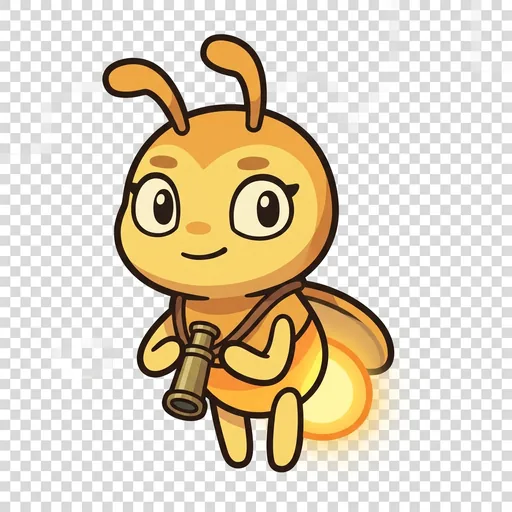
Gleam
Stellar luminosity / electromagnetic radiation / observation
-

Sway
Gravity / orbits / mutual attraction
-

Swirl
Galactic rotation / spiral structure / angular momentum
-

Tide
Cosmological expansion / Hubble flow / cosmic time
-

Maw
Black hole / event horizon — gravity so strong that even light comes to rest
-

Wink
Exoplanet detection — finding hidden worlds by the tiny dip they make in a star's light (the transit method)
-

Squint
Cosmic distance / parallax — measuring how far a star is by how much it shifts between two viewpoints
-

Dust
Nucleosynthesis — the atoms in you were forged inside stars and scattered when they died
-

Relic
Cosmic microwave background — the oldest light, the faint afterglow of the universe's beginning