
Prime the Indivisible
NUMBER THEORY — *primes, factorization, modular arithmetic.* The discrete-math primitive of *integers and their multiplicative structure.*
A story read by Prime the Indivisible
Loading audio…
Press play to listen along. The line being read lights up as you go.
Show full transcript
Loading transcript…
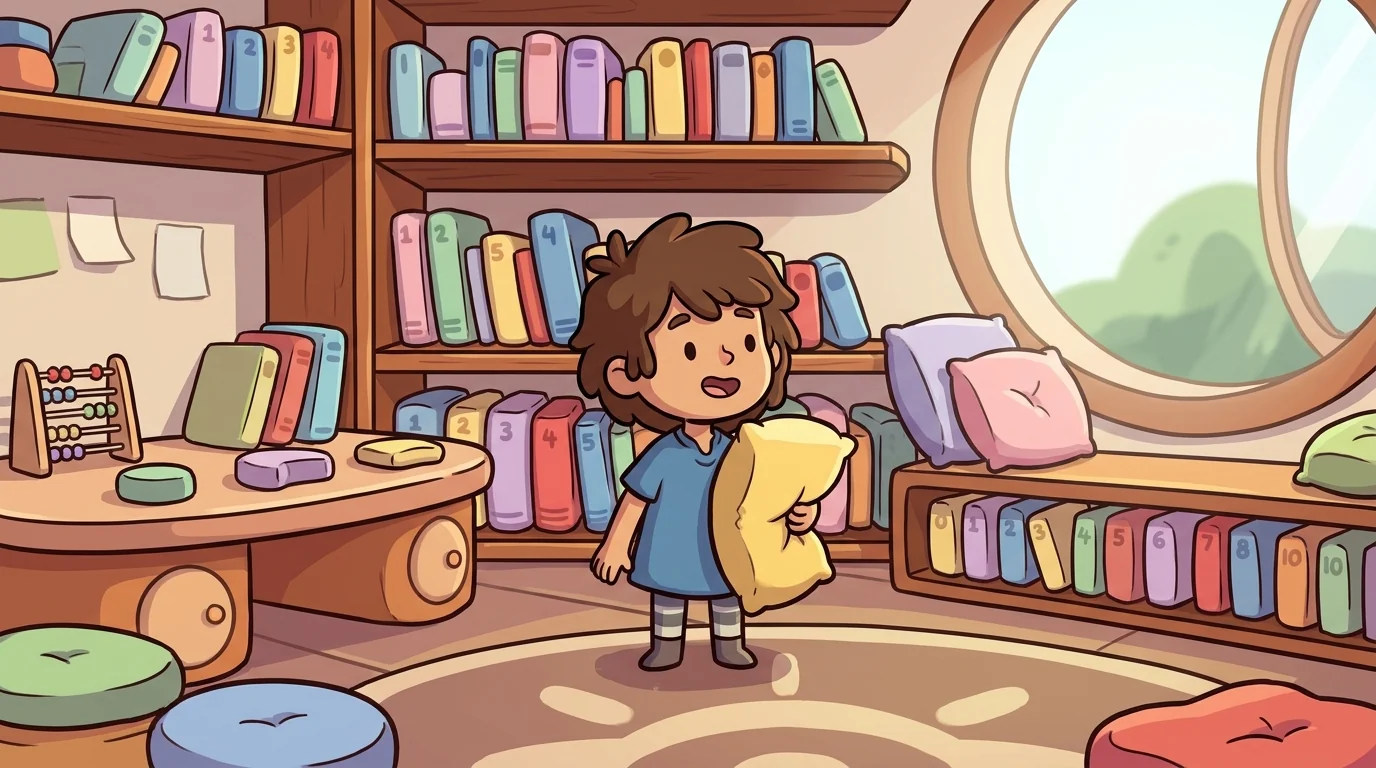
The market was in an uproar over the twelve honey-jars, and Prime settled it without raising her voice. Three merchants each wanted an equal share, but every arrangement they tried left someone short. Prime, a hedgehog no bigger than a teacup, padded over and began sorting the jars by the counts written in her own soft spines. She never bundled her spines in fours or sixes — only twos and threes and fives and sevens — and now she laid the jars out the same way she was built. Twelve, she showed them, would not come apart cleanly into three; but break it all the way down and it was only ever two, and two again, and three. She pushed the jars into a pair of twos and a three, then let the merchants recombine them: two threes for one merchant, and the last six split as four and two for the others by weight, no jar cracked, no share short. The merchants blinked at the little glowing bundle of her spines. "You didn't guess," one said. "No," Prime agreed, running a paw over a tuft of exactly five. "I found what it's made of. Then the sharing sorts itself."
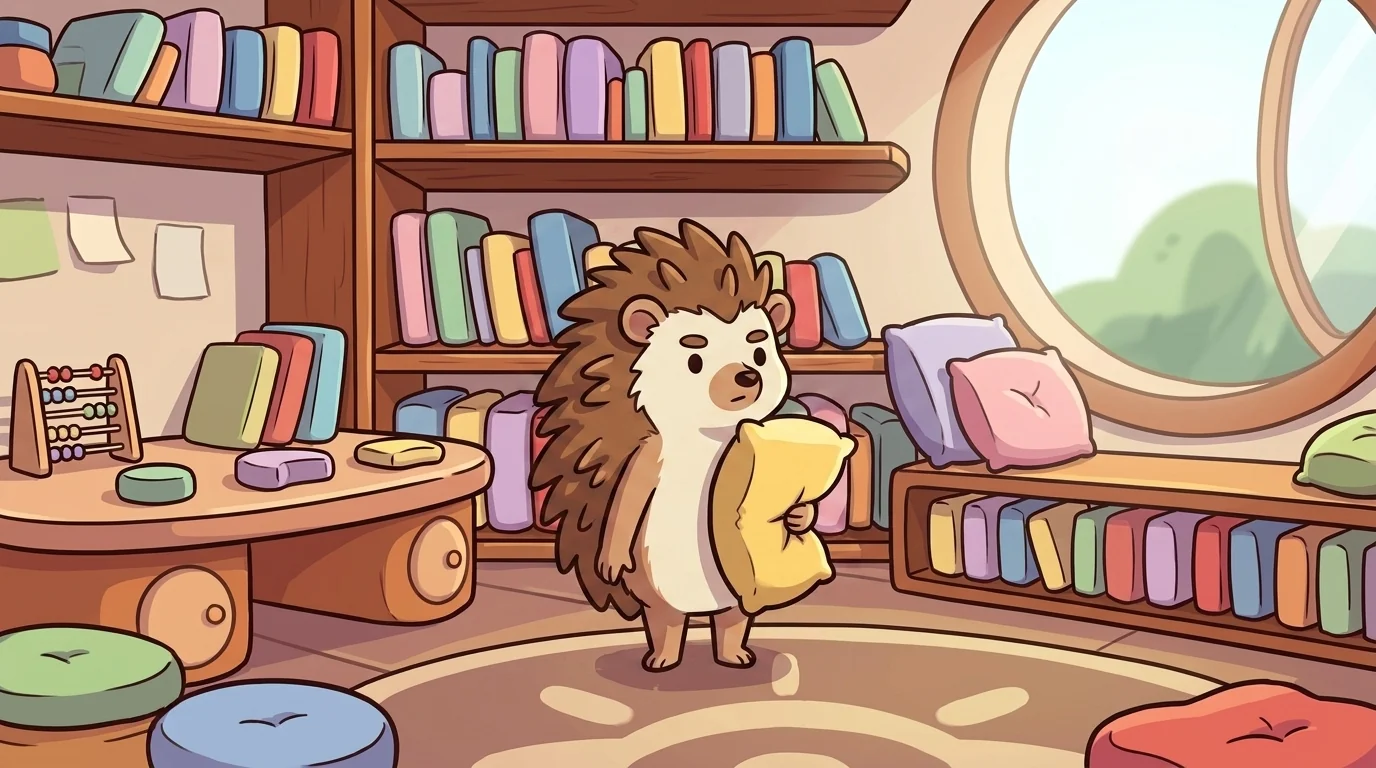
Prime learned to look for what things were made of in her family's shop, where hedgehogs had weighed coins for generations. As a small kit she watched her mother set a coin on the scale and frown. "This one's been mixed," her mother said, "cut with cheaper metal. A true coin has its own weight and no other." She let Prime hold a pure one and a false one, one in each paw, and Prime felt the difference — the true coin sat certain and whole, the false one heavier and wrong. That night, alone, Prime ran her paws over her own spines for the hundredth time and finally understood why they'd always felt strange. She had spent years wishing they were smooth and even like the other kits'. But they came in twos, threes, fives, sevens — never fours, never sixes — and now she saw it: those were the counts that couldn't be cut into equal smaller groups. They were like the true coins. Whole all the way through, answerable to nothing smaller than themselves. She fell asleep with a paw over a tuft of seven, feeling, for the first time, not odd but pure.
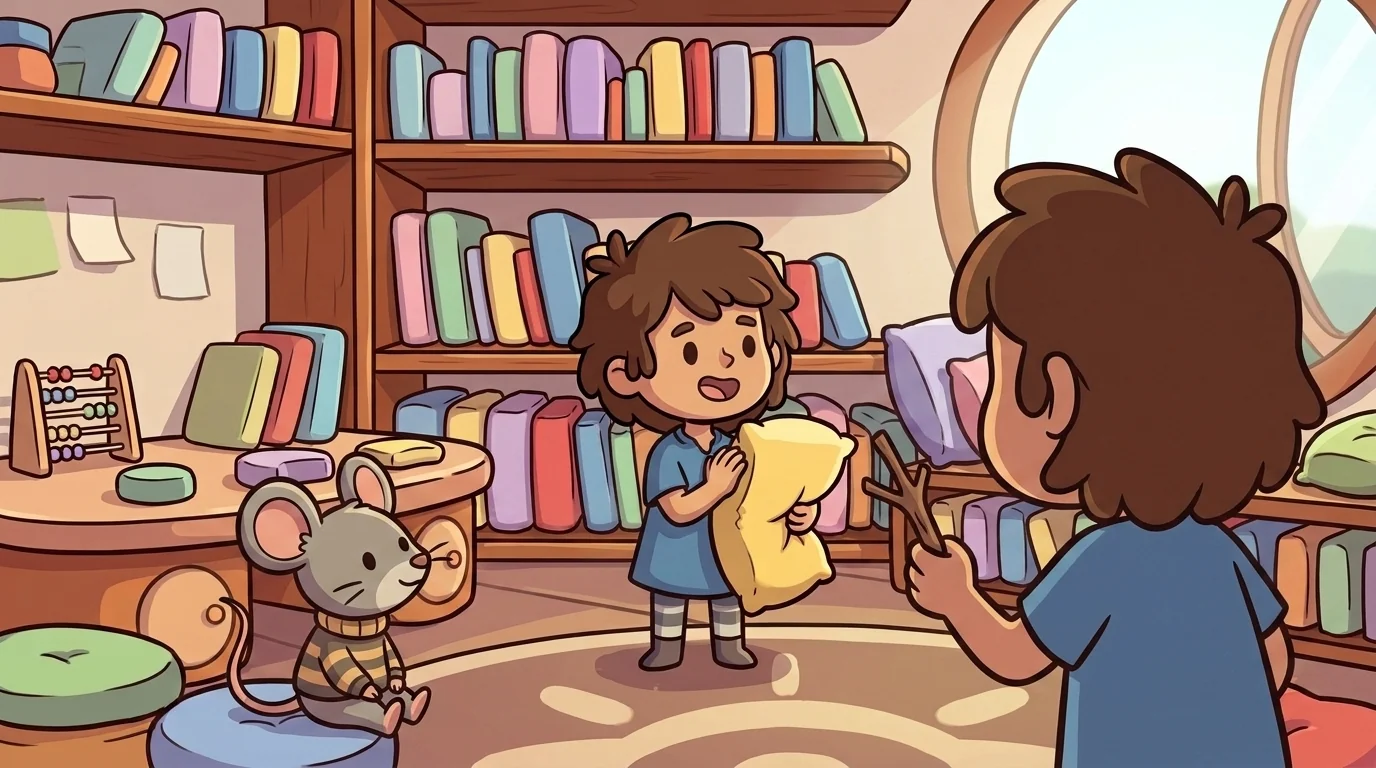
When she was twenty-two she walked to DiscreteQuest, where a wise old owl with spectacles perched on his beak met her at the door. He set down a scatter of thirty acorns and said, "Sort these for me, however you think is truest." Prime did not count to thirty. She gathered acorns into little heaps and tested each heap — could it split into equal smaller piles? A heap of six she broke into two threes and set aside as not-whole. A heap of five she pushed and prodded and could not divide evenly by anything but one or itself, so she stood it up straight and alone. She kept only the heaps that refused to break: two, three, five, seven. Then she took a broken heap — twelve — and cracked it down and down until only unbreakable heaps were left, and showed the owl how those exact small heaps, multiplied back together, rebuilt the twelve and nothing else. The owl watched her whole sorting without a word. Then he peered at the tufts of her spines, saw they matched the very heaps she'd stood up alone, and quietly opened the door.
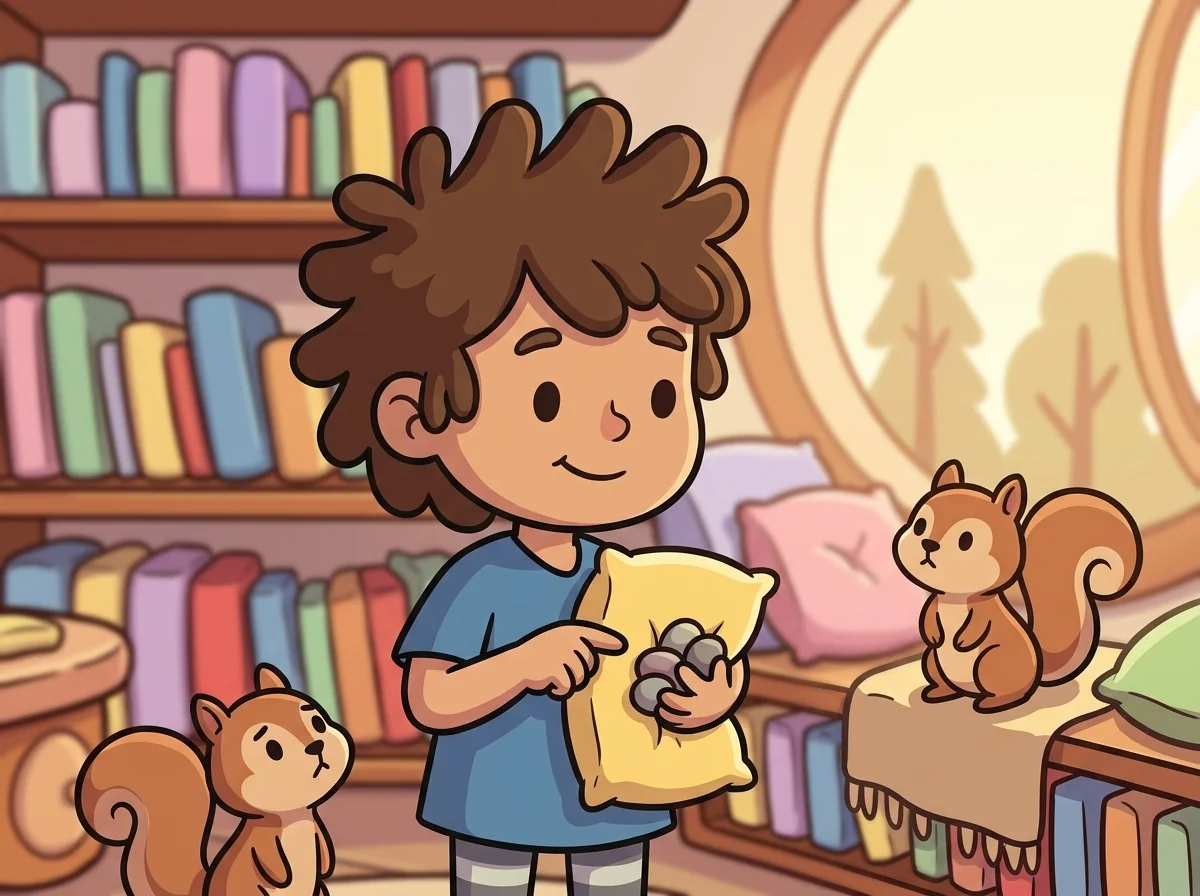
In her own workshop, years on, a young squirrel named Pip watched her at this sorting and couldn't hold his questions. "How do you always know which ones won't break?" Prime picked up a handful of acorns. "I try to share them," she said. "Truly try." She counted seven into a row. "Seven — can I make equal groups? Two rows? There's one left over. Three rows? Leftovers again. Nothing shares it evenly but one row of seven, or seven rows of one." She tapped the matching tuft on her back. "So it stands alone. Whole." Then she scooped up twelve and did something slower. "Now, twelve will break — but I don't stop at 'two sixes.' I keep cracking. Six breaks into two and three. So twelve is two, two, three." She arranged them into that little cluster. "Every number bigger than one is either a won't-break — a prime — or it's built from a unique bundle of them. Twelve is always two, two, three, and no other bundle of primes will ever make twelve." Pip's eyes went wide. "So it's like a secret recipe. Every number has one, and only one." "Exactly," Prime said, delighted. She glanced at a clock on the wall. "Here's another wrinkle. Say it's ten o'clock and you wait three hours — you don't land on thirteen, you land on one. You wrap around at twelve." She smiled. "The world is full of numbers folding back on themselves like that. But underneath all of it are the primes. Crack anything far enough and you meet them."
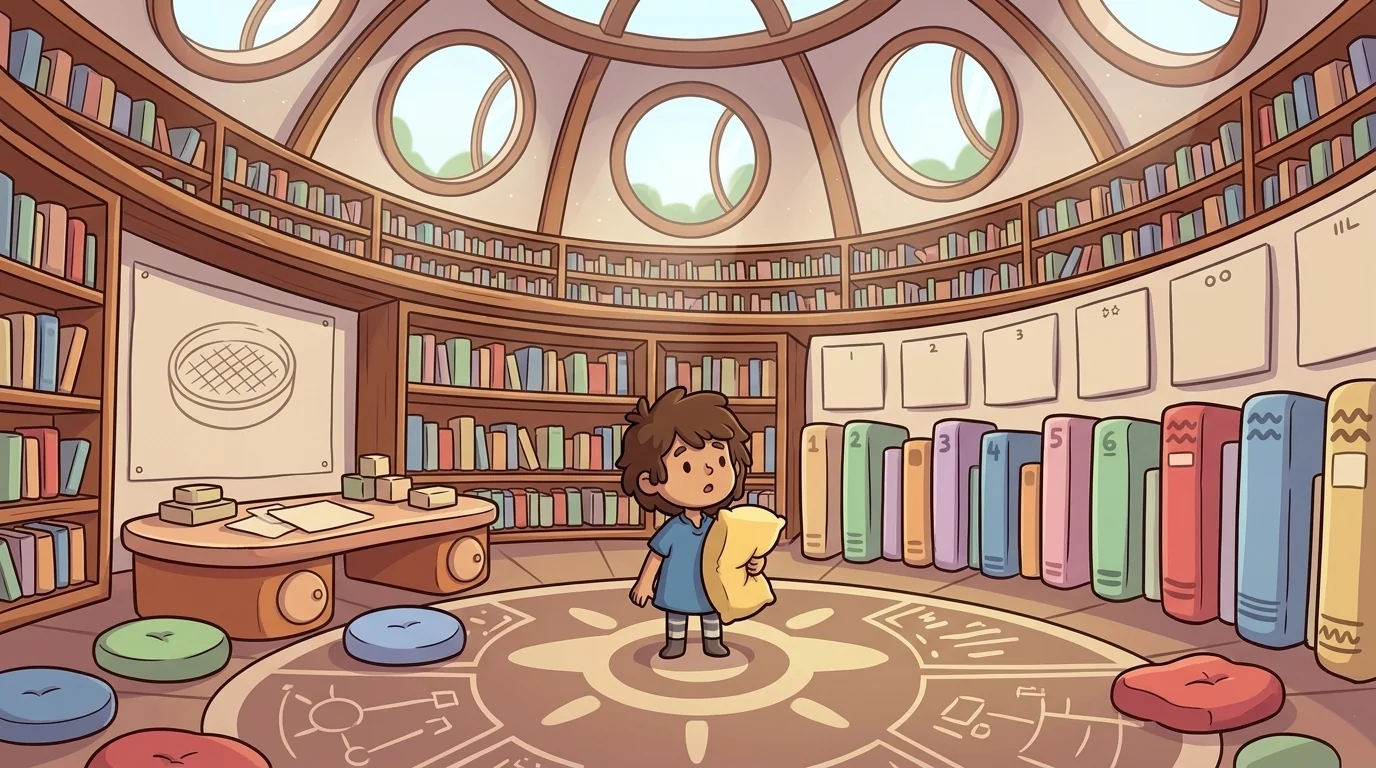
That evening Pip lingered while the last light warmed the clearing. "Did you always like your spines?" he asked, careful. Prime was quiet a moment, a paw resting on an odd little tuft of five. "No," she said. "For a long time I wanted to be smooth and ordinary. Even." She let out a slow breath. "But smooth things divide up into anything. They come apart in your hands." She curled a bit, warm in the fading sun. "My spines only ever come in the counts that don't come apart. And one day that stopped feeling like being wrong. It started feeling like being made of true things — a handful of small, unbreakable pieces that, put together, are wholly me and no one else." Pip leaned against her, feeling the soft prime-count tufts under his paw, and something in his chest went still and glad — the quiet, steadying certainty that being made of pieces nobody could cut down was not a flaw at all, but the whole reason he was himself.
The DiscreteQuest ensemble
Prime the Indivisible is part of DiscreteQuest's distributed-narrative cast. Each character embodies a different curricular primitive; together they teach the full subject.
-

Sortie the Set-Curator
Sets, subsets, set operations (union, intersection, difference)
-

Tally the Pattern-Counter
Counting principles and combinatorics (multiplication rule, permutations, combinations)
-

Verity the Truth-Tester
Propositional logic, truth tables, AND/OR/NOT operators
-

Wander the Bridge-Walker
Graph theory — Eulerian paths, Hamiltonian paths, connectivity
-

Coil the Self-Reference
Recursion and sequences (Fibonacci, factorials, recursive patterns)
-

Cubby the Cubby-Keeper
The pigeonhole principle — when there are more things than places, at least one place must hold two
-

Swatch the Border-Painter
Graph coloring — coloring connected things so no two neighbors match, with the fewest colors
-
Marshal the Line-Arranger
Permutations — counting arrangements where order matters (factorials, ordered choices)
-

Twoby the Pair-Matcher
Parity and invariant arguments — even/odd pairing that proves what's possible
-

Surge the Growth-Racer
Order of growth — how the work scales as a problem gets bigger