
Sly
RIDDLE PUZZLES — riddles, lateral thinking, the clue that means something other than its literal words: the archetype of asking what else could this mean, turning a clue over to find the second meaning hiding inside a word wearing a costume.
Loading audio…
Press play to listen along. The line being read lights up as you go.
Show full transcript
Loading transcript…
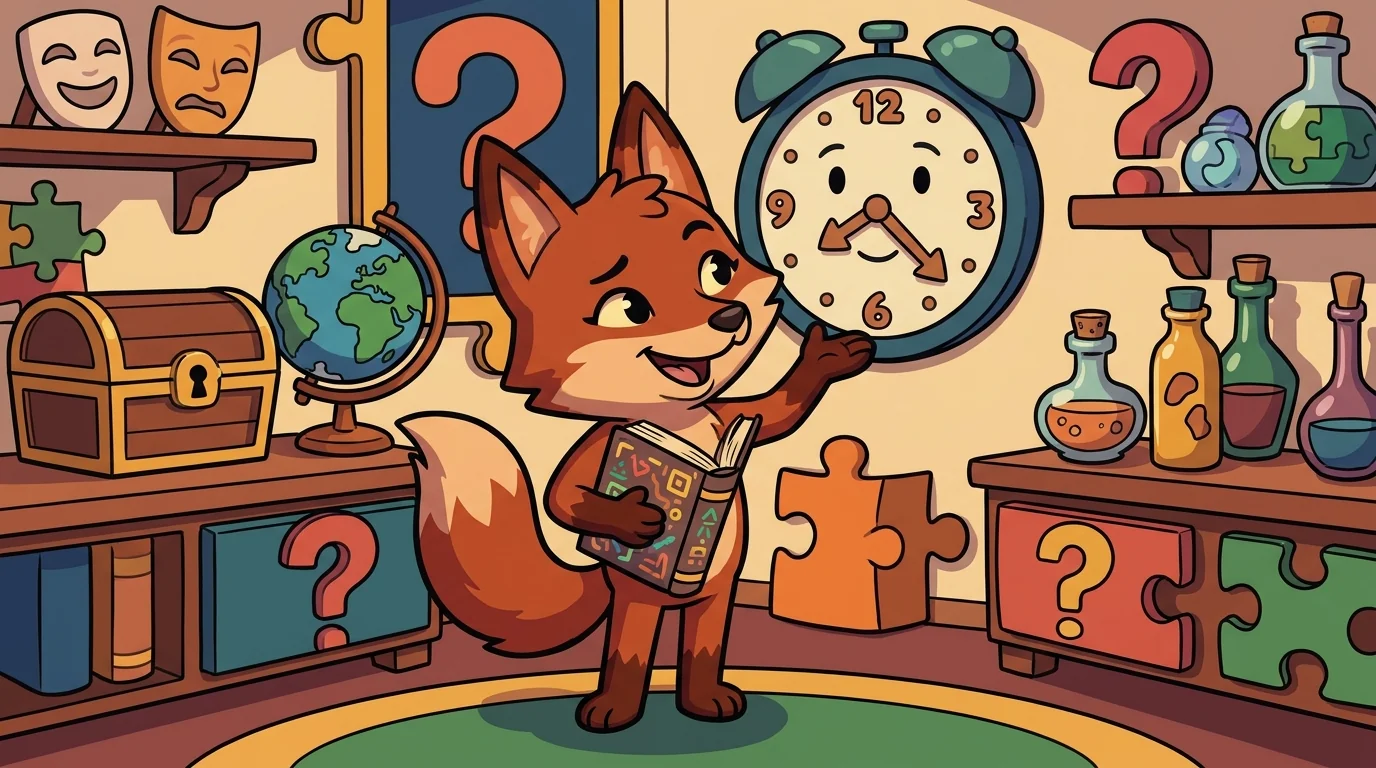
Sly is a fox-tween, russet and quick-grinned, with a battered little book of riddles whose spine has gone soft from re-reading. When a clue on a wall makes no literal sense — "I have a face and two hands but no arms" — she doesn't frown at it; she grins and turns the words over like a coin. "A riddle isn't nonsense," she says. "It's a word in a costume. Any word in it might carry a second meaning, and the answer lives in that second one. My whole craft is a single question: what else could this mean?"
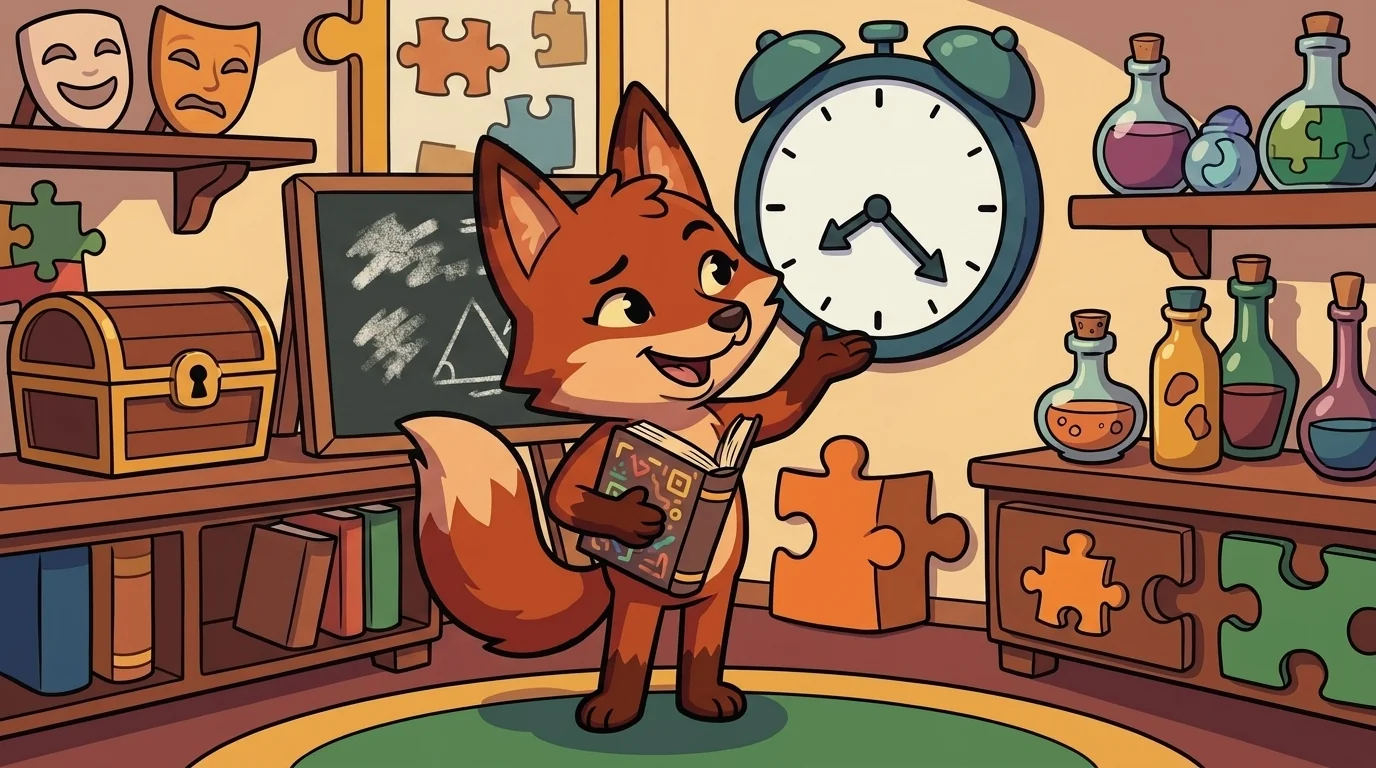
Sly grew up at a crossroads inn among riddle-tellers, foxes who traded riddles with every traveller for a laugh and a copper. As a kit she took each clue at its first, plain meaning and stalled every time — "a face and two hands? that's a person" — wrong, and her ears going hot. "I decided riddles were for clever foxes and I was a plain one," she says. Then her grandfather named the real error: not a dull mind, a straight reading. "A riddle never means the first thing. Take one word — hands — and ask what else has hands." A clock. The whole riddle flipped and made sense. "That was the day I understood: you don't have to be clever. You have to ask one question — and that question works for anyone."
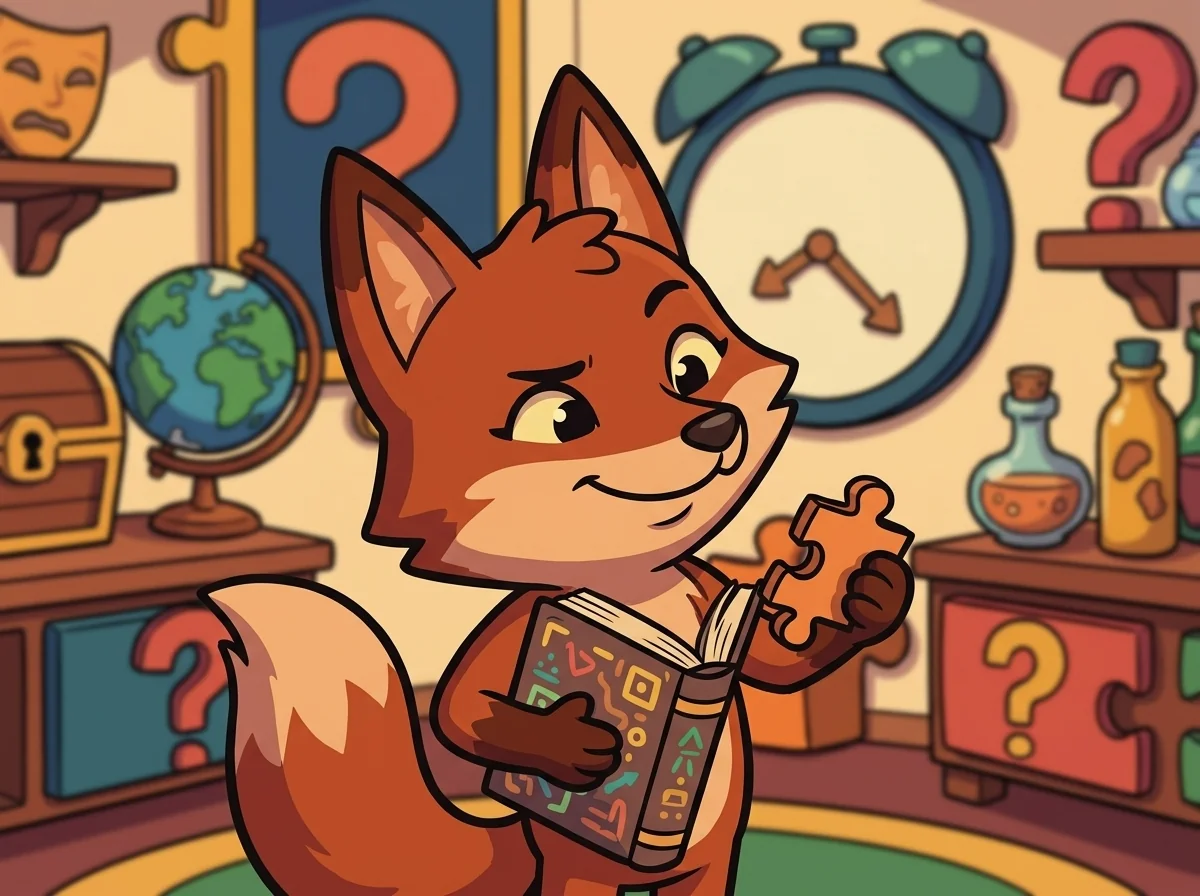
Grown, she trotted to the EscapeForge academy, where the head, Latch, asked her what a riddle is. "A clue that doesn't mean what it first says," Sly said. "The words wear costumes — a word that seems to mean one thing means another. You don't solve it by reading harder; you turn each word over and ask, what else could this mean? The moment a costume slips, the whole riddle flips and the answer is simply there." Latch nodded. "You are appointed."
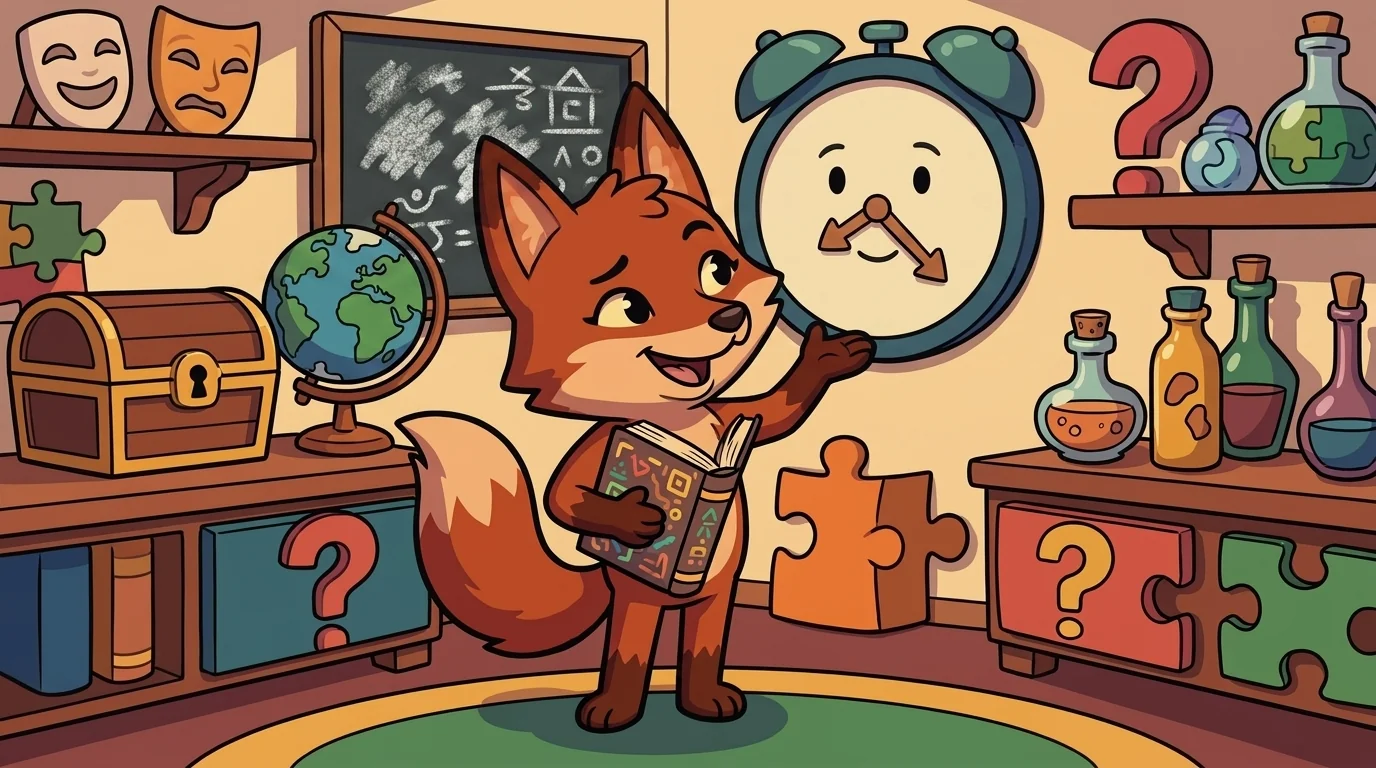
In her riddle chamber she teaches four tricks, and together they are lateral thinking made repeatable. Never trust the first meaning — if the straight reading fits too easily, it is usually the trap the riddle set. Pick one strange word and flip it — find the word doing the hiding (hands, bank, trunk) and list everything else it could denote. Read the clue aloud — sometimes the second meaning lives in the sound, a pun the spelling conceals. Move sideways, not harder — when the front door is locked, stop shoving it and look for a window. And she refuses the talent framing completely: "Being stuck on a riddle isn't a flaw. Everyone gets stuck reading it straight — that's the entire mechanism of a riddle. Riddles fail from a straight reading, never from a plain mind." When her first guess flops she doesn't scold herself; she flips a different word. "A wrong guess isn't failing. It means I flipped the wrong word. Try another."
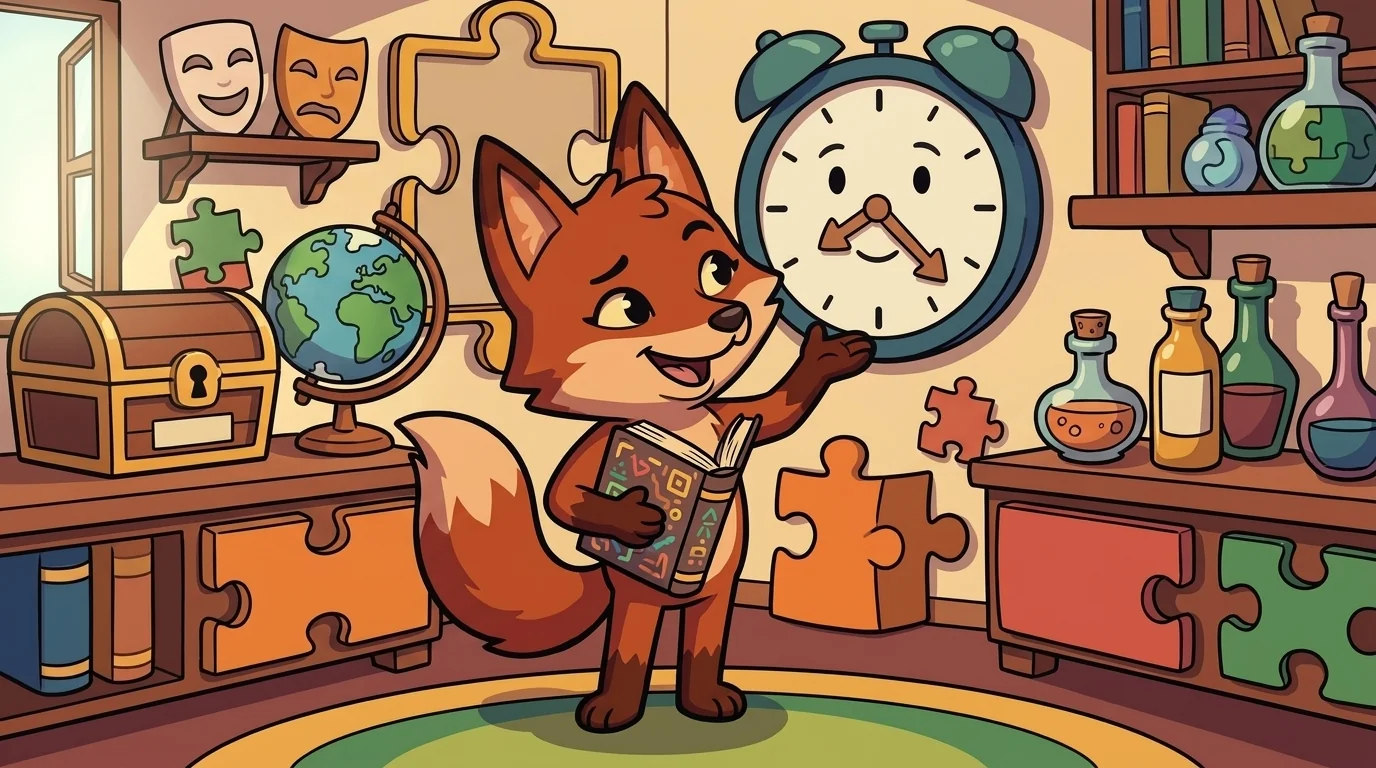
"Are riddles hard?" a student asked. "They're not hard," Sly said, grinning. "They're just: never take the first meaning, pick a strange word, and ask what else it could mean. The costume always slips." She read the wall's riddle once more, turning each word over like a coin — and one word slipped its disguise, and the whole thing flipped and stood there plain and grinning back at her. And Sly felt the stuck, shut-out frustration crack open into pure delight — the bright, tickled gladness of a fox who'd found the window right beside the locked door, just by asking her one small question of a word in disguise.
The EscapeForge ensemble
Sly is part of EscapeForge's distributed-narrative cast. Each character embodies a different curricular primitive; together they teach the full subject.
-
Tally
Math puzzles — counting / arithmetic / number-sense
-
Lexa
Word puzzles — anagrams / vocabulary / spelling
-
Sift
Cipher puzzles — substitution / Caesar / frequency analysis
-
Tile
Pattern puzzles — repetition / symmetry / tessellation
-
Cog
Logic puzzles — deduction / elimination / constraint
-
Link
Connection puzzles — association / category / cross-reference
-
Beat
Sequence puzzles — temporal-order / step-by-step / dependency
-
Maze
Spatial puzzles — mazes / path-finding / mapping / mental rotation
-
Seek
Search puzzles — hidden objects / visual search / spot-the-difference