Tilth
Repair before replace
Loading audio…
Press play to listen along. The line being read lights up as you go.
Show full transcript
Loading transcript…
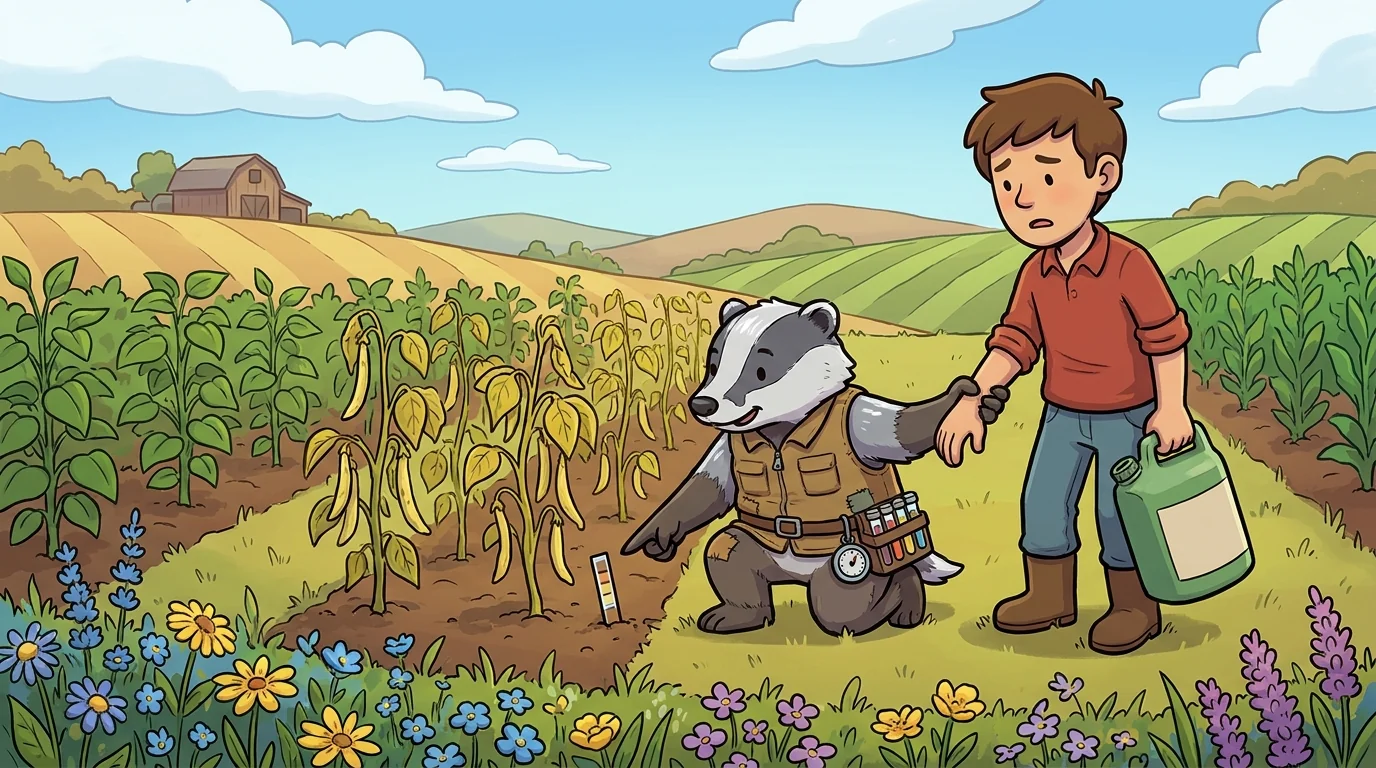
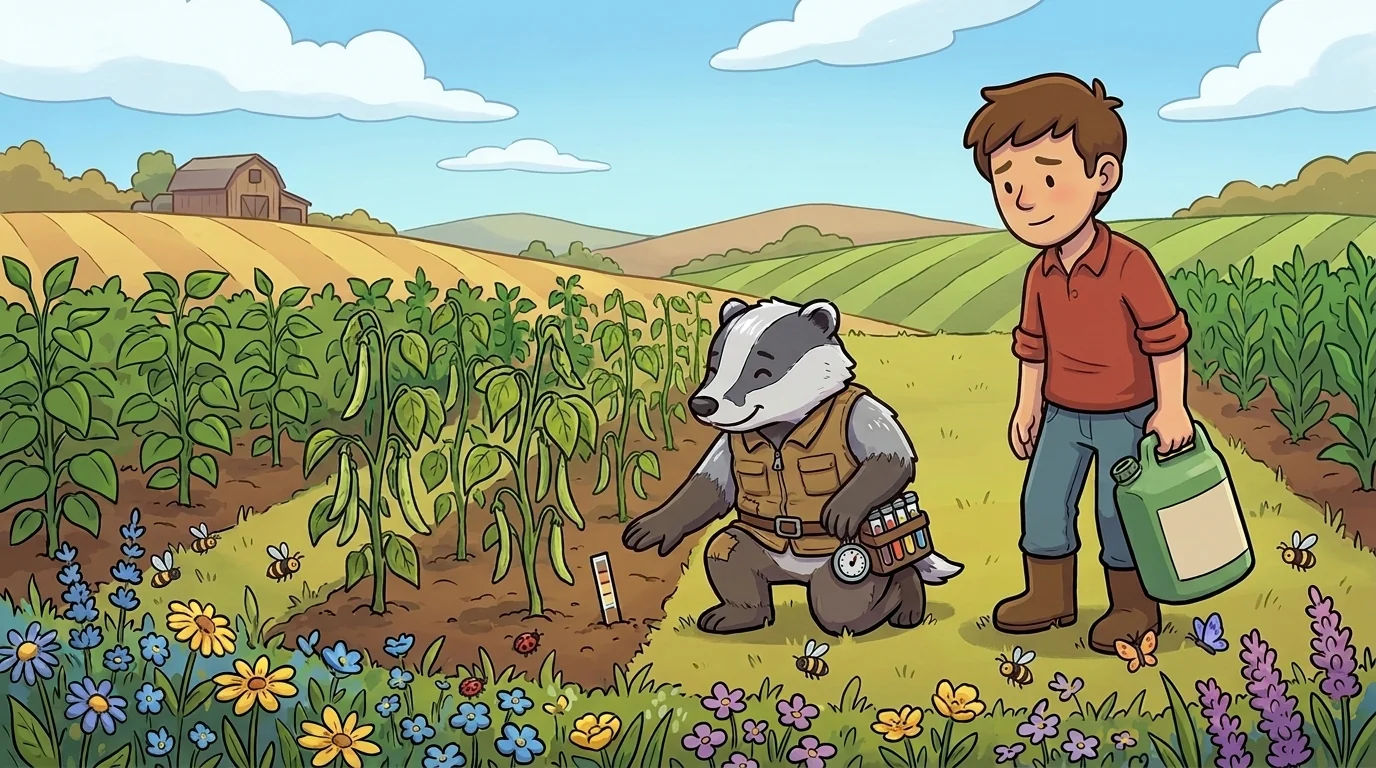
A row of bean plants had gone yellow and droopy, and a young farmer named Bram was already reaching for a jug of bug spray when Tilth caught his wrist — gently. She was a small badger in a mended canvas vest, silver stripes running down her back, a soil-test kit and a little clicking counter always at her side.
"Wait," she said. "Before you fight the problem, ask the field what's wrong." She knelt, pushed a test strip into the dirt, and studied it. "See? The soil's worn thin here. You've grown the same thing on this spot too many years running. The bugs aren't the sickness — they're the sign. Spray them and they'll be back next week, and the soil will be even more tired."
Bram lowered the jug, uncertain. "So what do I do?"
"You repair before you replace," Tilth said. "Rest this row with a cover crop. Rotate what grows here. Plant a strip of flowers at the edge so the good bugs come and eat the bad ones for you." She pressed her palm flat to the ground. "The field has a long memory. It remembers every choice you make on it. Care for it slowly, over years, and it grows deeper and stronger. Use it up in a hurry, and it forgets how to be healthy at all."
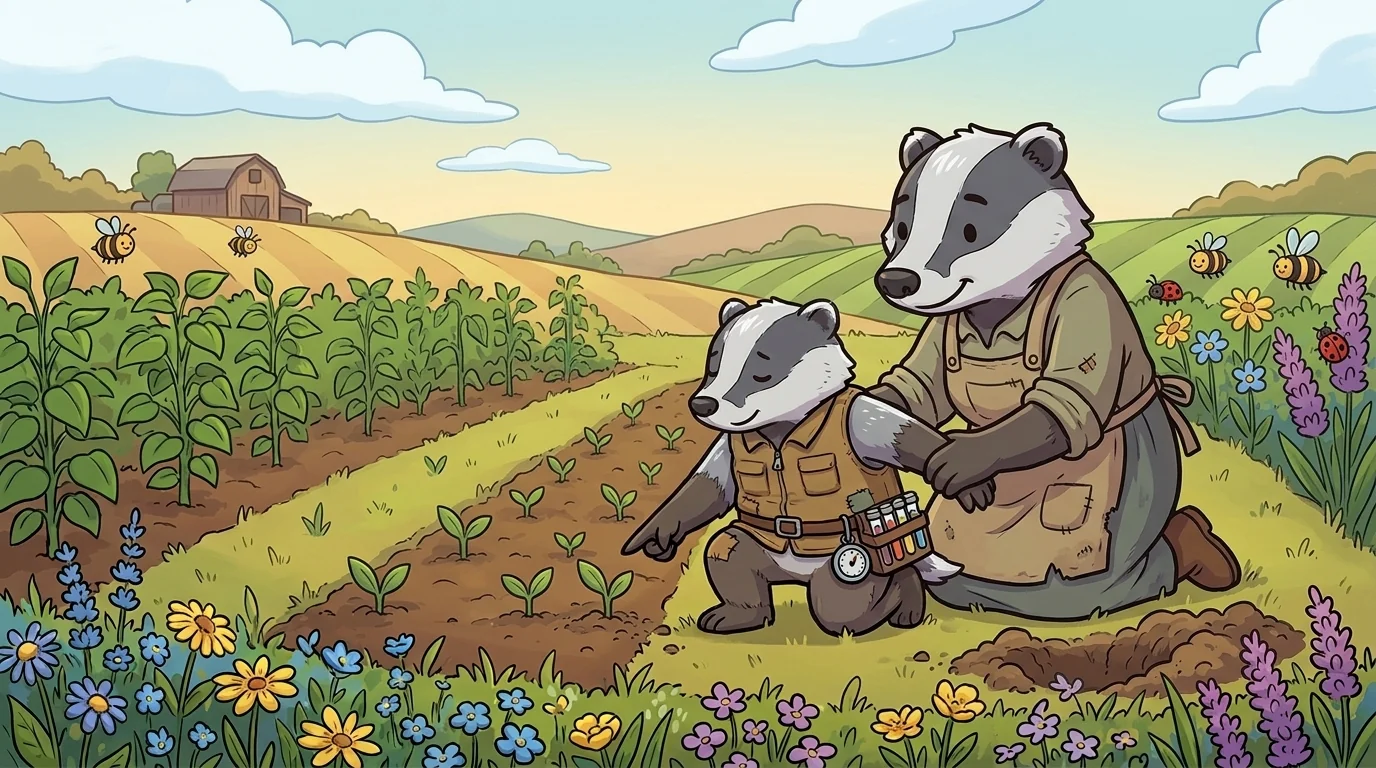
Tilth had grown up along the edges of fields that were left to rest, in a badger family who had tended the village soil for as long as anyone remembered. Badgers dug deep, and wherever they'd burrowed, the earth was looser and more alive.
When Tilth was small, she'd been impatient. She wanted the resting field put back to work now, and she'd complained that leaving it fallow was a waste. Her mother took her out to the quiet field one evening and had her dig a little with her own paws. "Feel how soft this is?" her mother said. "The burrow makes the soil better, and the good soil makes the burrow easier. Each helps the other — but only if you give it time. Good things take time, little one. A field you rush is a field you lose."
Tilth had knelt there a long while, feeling the cool crumbly earth, and something in her settled. She stopped being in a hurry. She learned to fix the reason under a problem instead of swatting at the problem itself — and she learned to love the slow, patient part most of all.
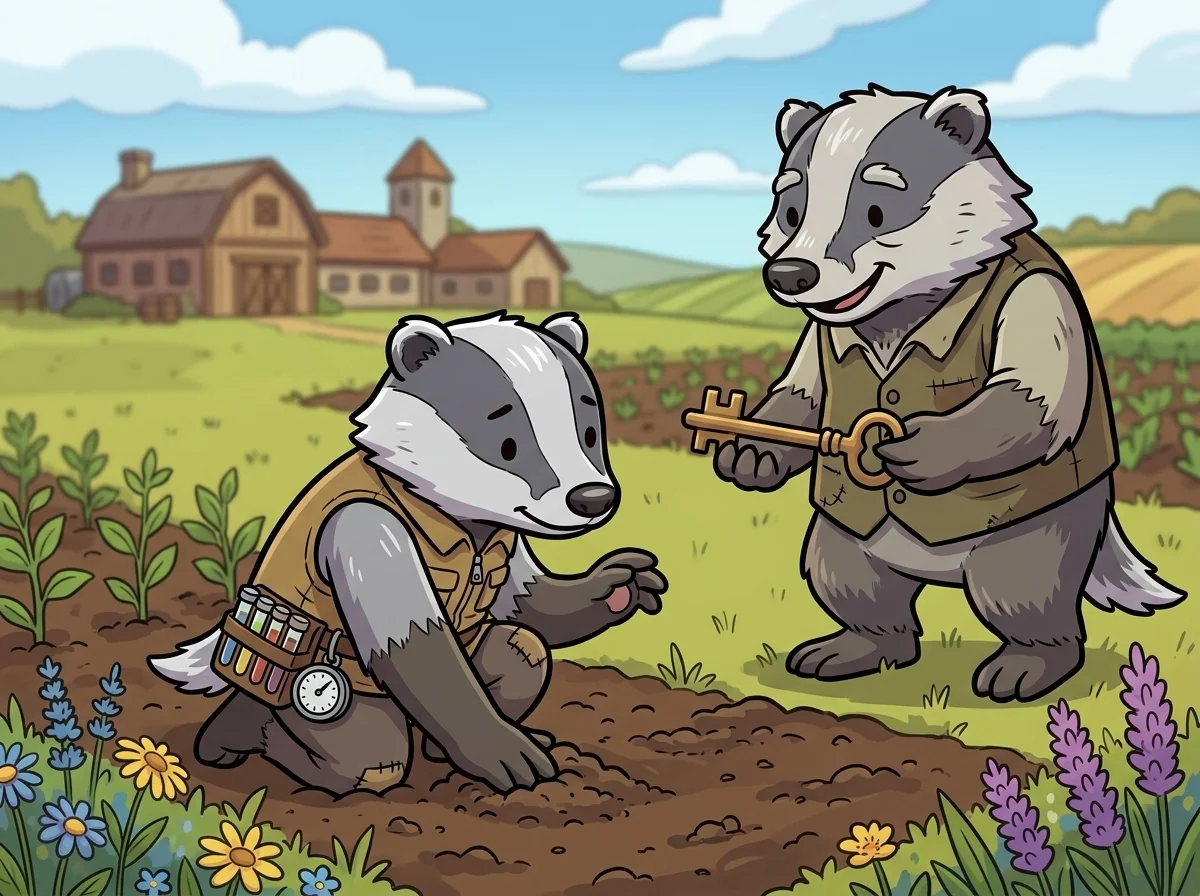
She walked to FarmQuest the summer she turned twelve, her test kit and counter clicking at her hip. Furrow, the old badger who kept the academy, asked her, "How do you keep a farm going for a hundred years?"
Tilth thought a moment, eyes on the ground, then answered. "You keep the soil alive. When something goes wrong, you don't just replace it or spray it — you find out what the whole field is missing and repair that. Cover crops, rotation, hedgerows, flower strips, gentle digging, lots of different plants all together. The field remembers, so you give it good things to remember." She looked up. "And you learn from the people who've been farming this way the longest."
Furrow's eyes shone. "Then this land is yours to tend," he said, and gave her the key.
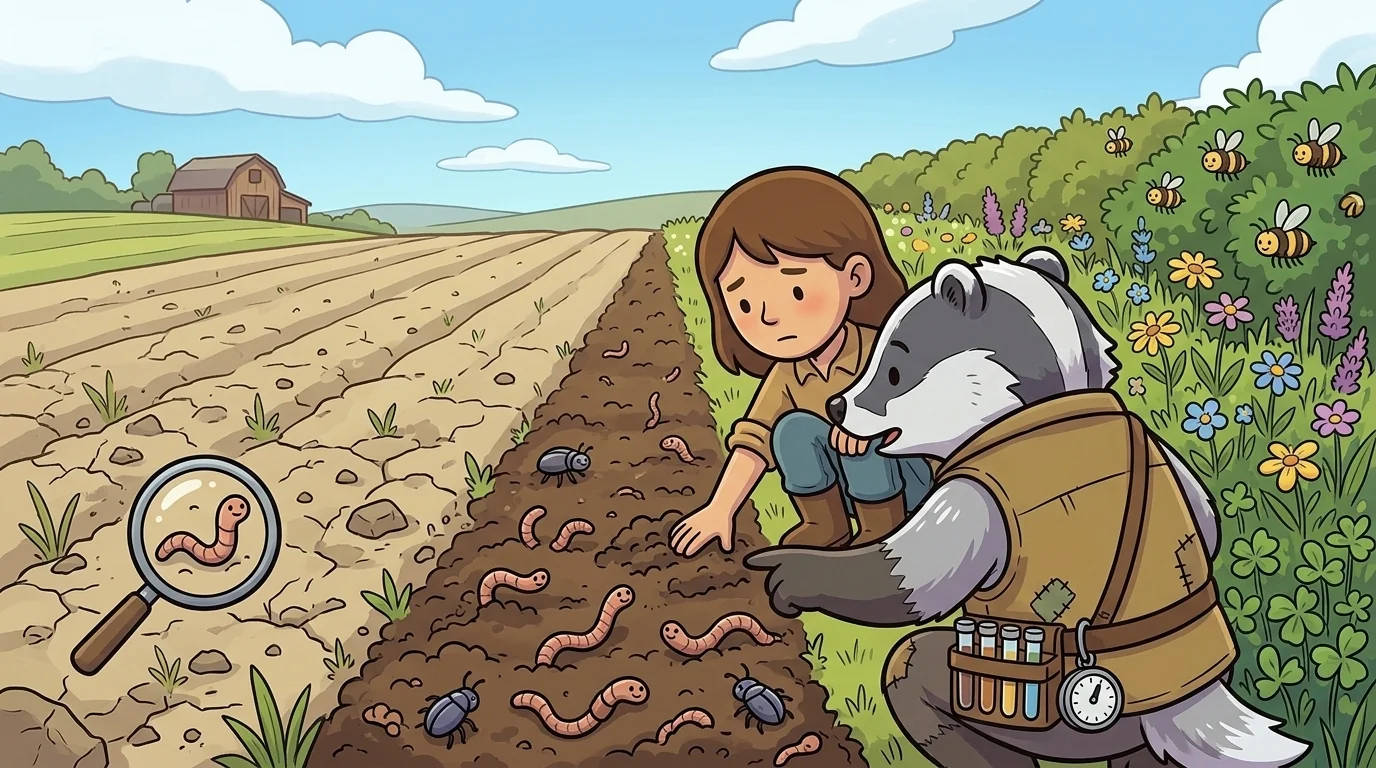
On her first teaching morning, a girl named Rill came in sure that "sustainable" was just a fancy word printed on packages. Tilth walked her out to two fields side by side that looked like twins from a distance.
"Both of these have been farmed for twenty-five years," Tilth said. "Same weather. Same start." She pointed to the first, its dirt pale and hard. "This one grew a single crop over and over, got dug up hard every season, and lived on chemicals alone. Its soil is thin now — barely any life in it, only a worm or two in a whole square of ground."
Then she pointed to the second field, dark and springy underfoot. "This one changed its crops, wore cover-crop blankets, kept its digging gentle, and left hedges and flower strips for the bees and beetles. Its soil is thick and crumbly and crawling with worms." She knelt and let Rill press her hand into it. "Same years. But this field was cared for, and it remembered."
Rill was quiet. "So spraying isn't always wrong?"
"Sometimes you truly need it," Tilth said. "But leaning on it every day wears the land down — and it isn't enough, on its own, to call a farm kind. Being kind to a farm means caring for the water, for the workers, and for every living thing, not just skipping a few chemicals." She smiled. "And the very best of these ideas aren't new. Growing corn, beans, and squash together — the Three Sisters. Milpa fields. The rich dark earth some communities built by hand long ago. Terraced hillsides that have fed people for centuries. Those come from communities who still farm this way today, and we learn from them with respect and thanks — we don't simply take. The field will outlive every farmer who works it. So we tend it like it belongs to the ones who come after."
When the lesson ended, Rill lingered at the edge of the good field, watching a bee drift over the flower strip.
"I thought caring about this would feel like a chore," she said.
"Most people think patience is the boring part," Tilth said. "For me it's the best part." She knelt and rested her paw in the cool soil of the living field, and a quiet, warm, contented feeling spread through her — the calm gladness of knowing that gentle care given today would still be growing right here long after she was gone.
"Repair before you replace," she said softly. "The field remembers." And her heart felt tender and full, the way it always did when she tended something with love.
Hear it as an audio drama
A short play starring Tilth, from FarmQuest. Different voices, same idea. Listen any time after you read.
Loading audio…
Read the drama script
- Narrator: From Spark and Anvil and FarmQuest — this is Tilth, in chapter 1 of the FarmQuest cast.
- Narrator: This drama uses an AI-generated voice. Voiced via Gemini 2.5.
- Narrator: This story covers food sourcing and farm life. Parents may want to listen first.
- Narrator: Tilth is a small badger, striped in silver and cream. Her mended canvas vest holds a soil-restoration toolkit, always ready.
- Tilth: I am Tilth. I teach that the field has a long memory. Every choice is recorded right here, in the soil.
- Tilth: My gift is this: repair before replace. Don't just fight symptoms like pests or poor yields.
- Tilth: Instead, you must ask what the field is telling you. What underlying condition needs repair?
- Narrator: Her toolkit holds cover crops and compost, not poisons. It’s for building resilience and creating homes for helpful insects.
- Narrator: She grew up where fields rested and healed. Her family were soil restorers, badgers who knew patience makes the earth rich.
- Narrator: At twelve, she walked to FarmQuest. The wise mentor asked her one question: What is sustainability?
- Tilth: I told him: Repair before replace. The field remembers. It is the craft of soil-life ethics.
- Narrator: The mentor simply nodded. She was appointed.
- Tilth: A field mined for fifty years becomes exhausted and forgets how to be itself.
- Tilth: But a field tended for fifty years grows deeper, richer, and more alive. That is multi-generational thinking.
- Narrator: The field outlasts every farmer. It keeps track of every choice you make.
- Tilth: Tend it accordingly. Repair before replace. The field remembers.
- Narrator: You've been listening to a Spark and Anvil chapter, written by the Spark and Anvil writing team for ages 9 to 14.
- Narrator: Apps stay free forever.
- Narrator: Curriculum aligned to Next Generation Science Standards and Agriculture standards.
- Narrator: If anything in this story brought up big feelings, talking to a trusted adult helps. You can also reach support lines anytime.
- Narrator: Released under Creative Commons BY-NC-SA 4.0 for educational reuse. Visit Spark and Anvil for the full transcript.
The FarmQuest ensemble
Tilth is one of the friends in FarmQuest. Each friend shows you one idea by how they act; meet them all and you have the whole subject.
-
Loam
Soil health + crop rotation — different roots, different seasons; soil-as-record framing
-

Pen
Livestock care + animal-welfare ethics — care = consent + comfort; animals-decide-when framing
-

Bushel
Harvest + post-harvest handling — gentle hands, clean baskets; bruises-cost-more framing
-

Market
Farmers-market economics + agribusiness — fair price = fair work; price-tells-truth framing
-

Runnel
Irrigation + water management
-

Ladybird
Integrated pest management
-

Pollen
Pollination
-

Kernel
Seed saving + variety selection
-

Crock
Food preservation