
Knot
IDIOM — *fixed expressions whose meaning isn't literal. you can't untie them word-by-word.*
Loading audio…
Press play to listen along. The line being read lights up as you go.
Show full transcript
Loading transcript…
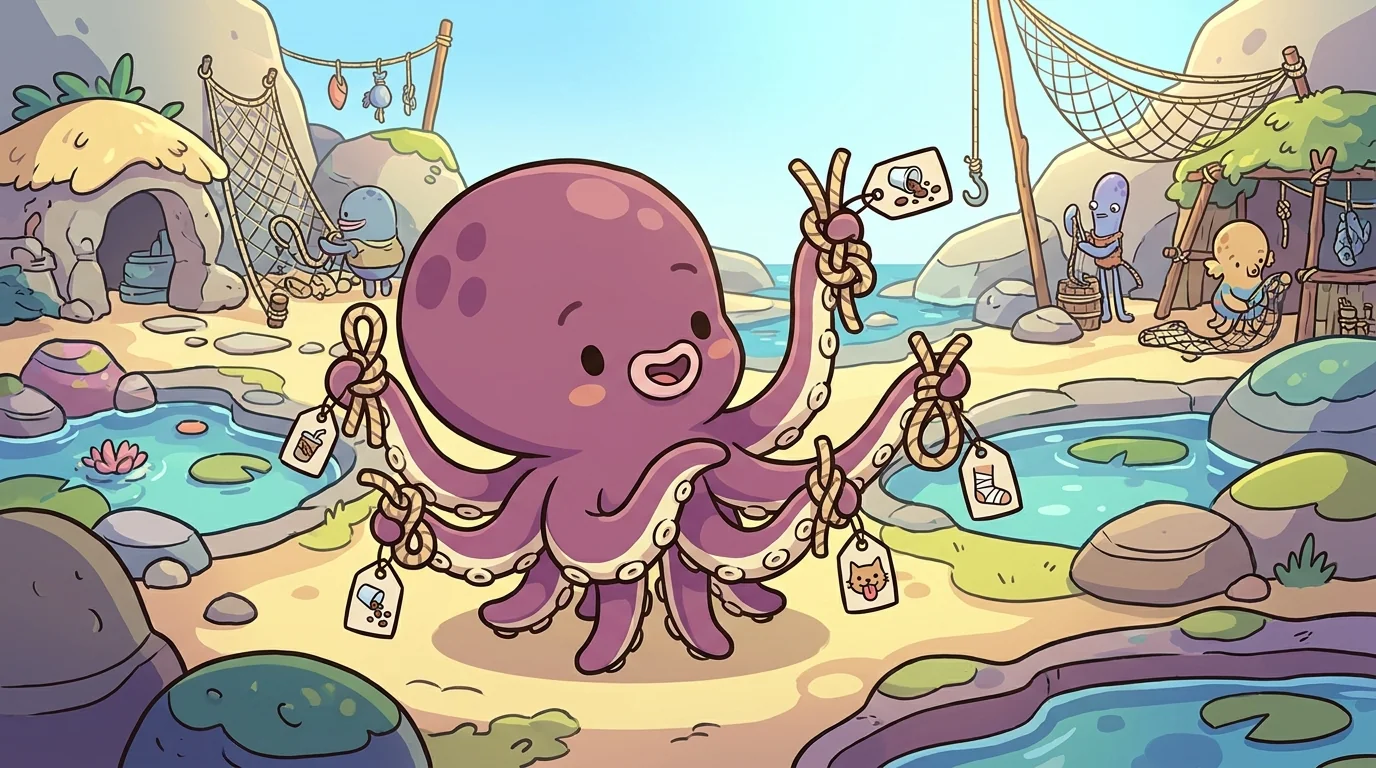
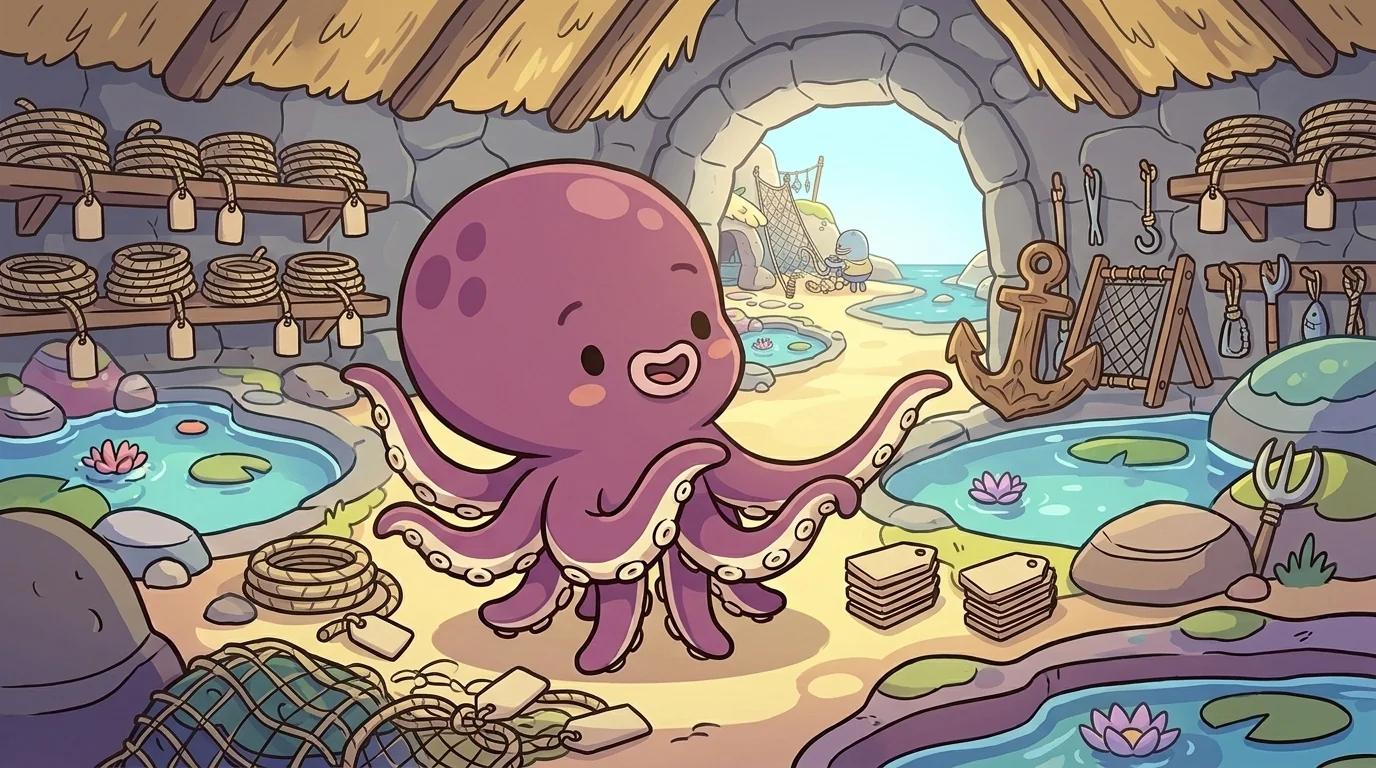
At the workbench a small purple octopus was arguing with a rope. Knot's eight soft arms held it from eight angles at once, one sucker pinning the tag that read Spill the beans, another following the braid where it doubled back and refused to come loose. A visitor might have thought he was trying to undo it. He wasn't. He was proving it couldn't be undone — not the way you'd expect. "Watch," he murmured to no one, and tugged the free end. The whole knot cinched tighter, gripping itself. He held it up to the tidepool light, cream suckers glinting. Pull the words apart — spill, the, beans — and you got nothing about secrets at all. Pull the rope apart and you got a mess. The meaning lived in the shape, not the strands. Knot smiled and set it down beside its cousins: Break a leg, a simple loop; Cat got your tongue, twisted tight. A shelf of small refusals, each one a promise the words alone would never keep.
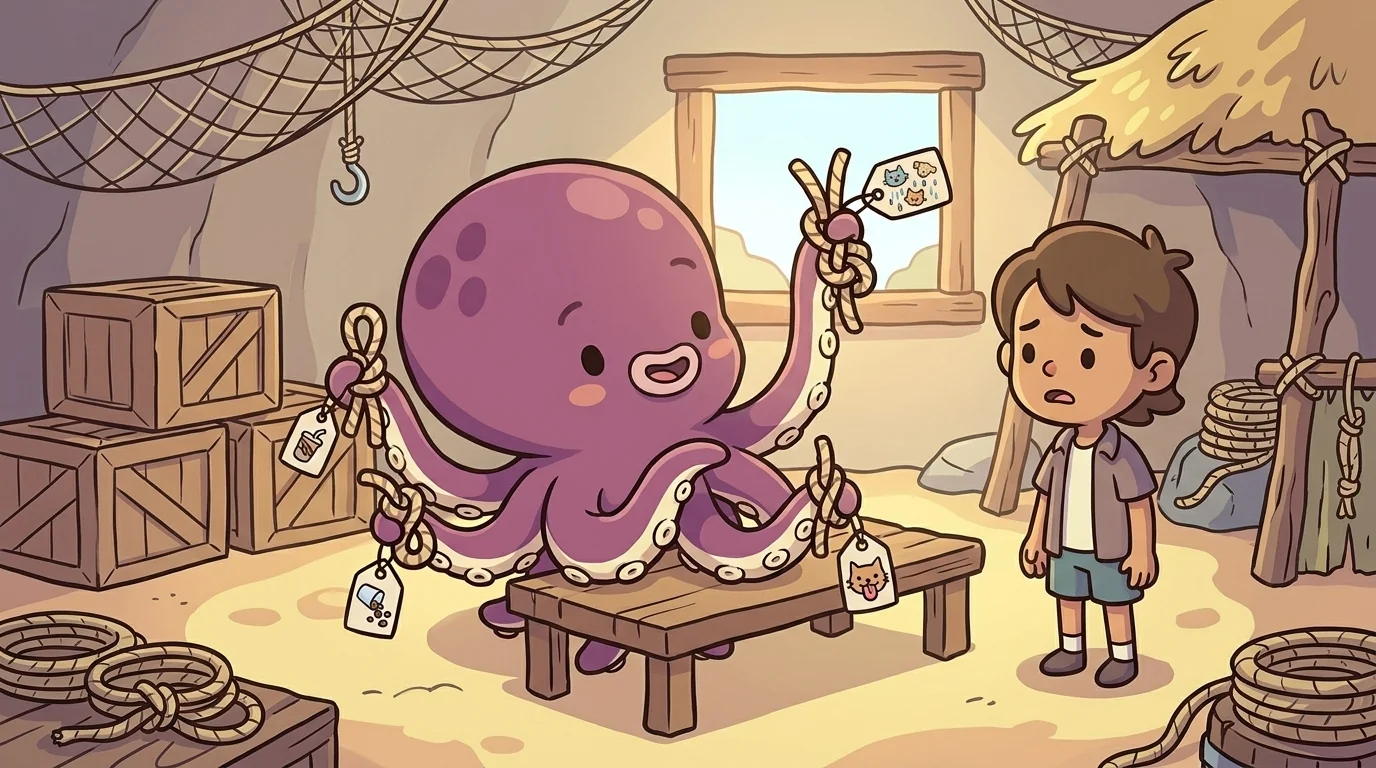
He had learned the refusal young, in the tidepool-village where his family rigged nets for the fishing fleet. His grandmother could tie forty knots and name them all, and the names never once told you how they went. "Sheet bend," she'd say, and her arms would already be moving in a way the words did not describe. Eight-year-old Knot had tried to reason a bowline into being — surely the name held instructions — and had produced a limp tangle that slid apart the moment weight touched it. He'd been near tears. His grandmother had only laughed, gently, and wrapped her arm around his. "Little one," she said, "nobody untangles a knot's name into the knot. You learn the knot by watching hands, by making it wrong forty times." She guided his suckers through the loop, the dip, the pull. When it finally held, he felt the strangest thing: not that he'd figured it out, but that he'd been let in on something the village had agreed to keep true for a hundred years. That night he understood why the sayings on the docks — cost an arm and a leg, raining cats and dogs — had never made a lick of literal sense and never needed to. They were knots too. You didn't solve them. You joined the people who already knew.
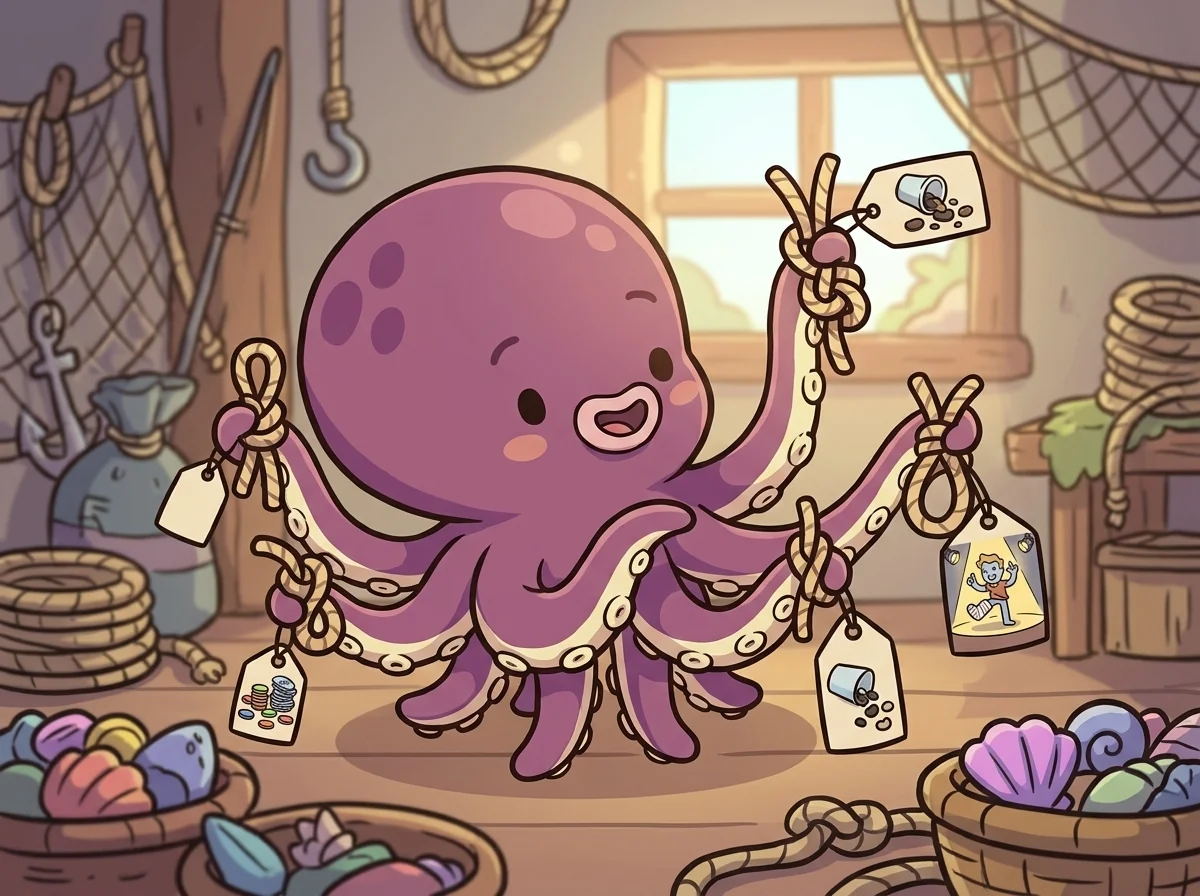
He walked to FigureForge at twelve with a coil of labeled rope over one arm. Trope, the mentor, did not ask him to recite anything. Trope simply held out a slip of paper — break a leg — and waited. Knot read it and, instead of explaining, did what his grandmother had done to him. He picked up the loop labeled the same, set it in Trope's hand, and closed the old mentor's fingers around it. "You can't untie it word by word," Knot said quietly. "It only means good luck because we all decided it does. Try to make it about legs and you'll drop the thread." Trope turned the little loop over, tugged it, felt it hold. Something in his face eased. He hung the coil on the empty peg by the door himself, and that was that. No ceremony. Just a peg that had been waiting.
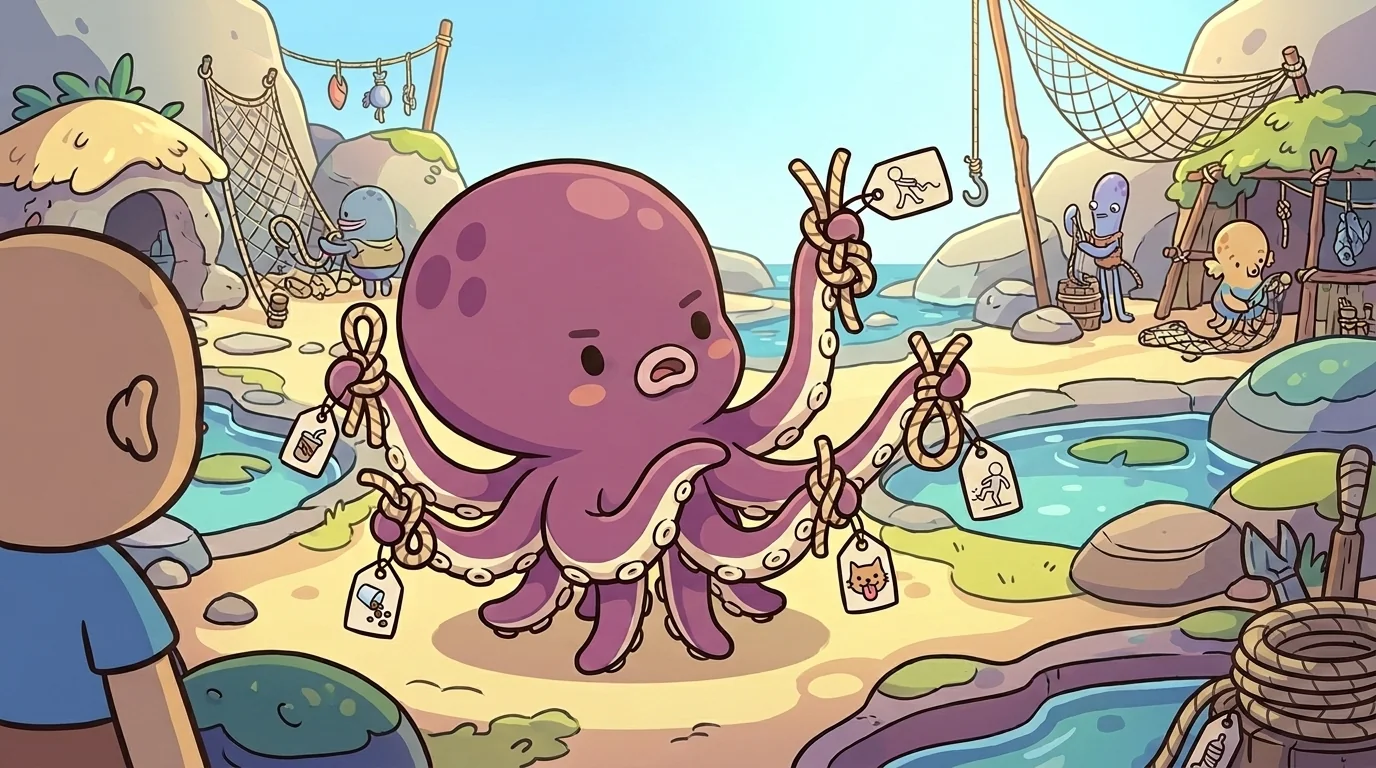
A new student named Pip stumbled in one afternoon, green scales, one twitching fin. "Are these… fishing knots?"
"Language ones," Knot said. He offered the Spill the beans loop. "What do you think it means?"
"Dropping beans on the floor?"
"That's where everyone starts." Knot didn't correct it, exactly — he let Pip hold the knot and pull. It tightened. "Feel that? The harder you yank the words, the more they clench up. But listen — if I said come on, spill the beans, would you fetch a mop?" Pip snorted, shook their head. "No. You'd tell me a secret. The meaning was never in the beans." He set out break a leg next, and instead of listing its history, told it like dock gossip: actors too superstitious to say good luck aloud, so they wished each other harm and meant the opposite. Pip laughed — then went quiet. "So if a phrase sounds ridiculous but people keep saying it anyway…" "Then trust the ridiculousness," Knot said. "That's your first tell. When the plain words won't add up and the saying keeps surfacing, you've likely found one of mine. Don't fight it into sense. Look it up. Let it hold." He handed Pip a small notebook. "Catch the weird ones. Learn them the way I learned the sheet bend — by meeting them, not deriving them."
Pip flipped the notebook, still uncertain. "So I just… memorize them all?"
"You meet them," Knot said. "One at a time, whenever they cross your path." He rested an arm lightly on the bench. There was something he wanted Pip to carry more than any list. "And here — this is the important part. Pulling your leg means teasing. It's a knot my village ties. But a kid from another shore, or someone still learning this language, might never have seen it. If they miss it, that's not them failing. That's just a knot that never traveled to them." He was quiet a moment, watching the light move on the water. "My grandmother's forty knots meant nothing in the next village over. They had their own forty. Sayings are like that — little fingerprints of the people who raised you." He looked at Pip with those kind, dark eyes. "So never make anyone feel small for not knowing one. Idioms travel poorly. That's not a flaw in the person. That's just how knots are." And Pip, holding the little notebook against their chest, felt the tight nervous thing in their fin loosen — the warm relief of learning that being new to a saying had never once meant being less.
The FigureForge ensemble
Knot is part of FigureForge's distributed-narrative cast. Each character embodies a different curricular primitive; together they teach the full subject.
-
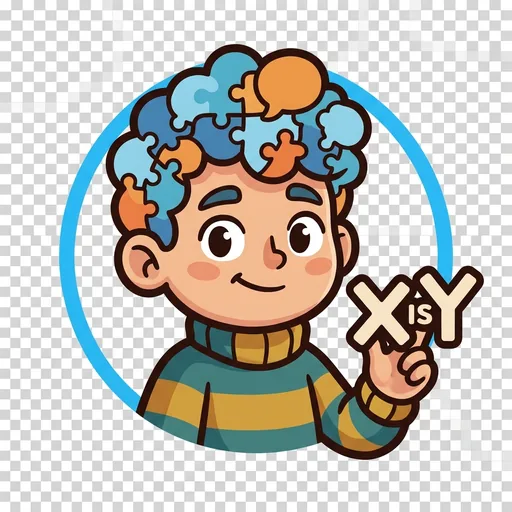
Ferry
Metaphor — 'X IS Y' direct comparison; carries meaning across
-
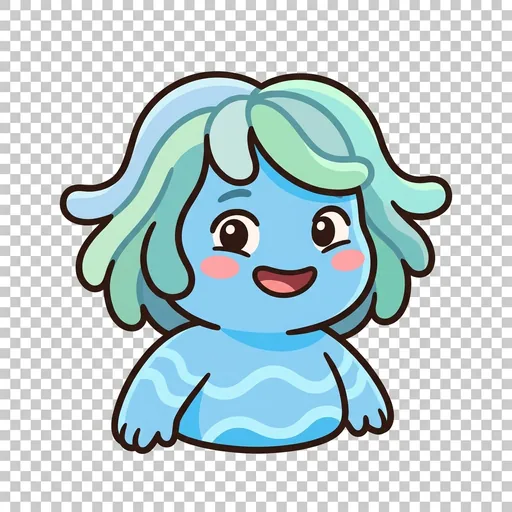
Ripple
Simile — 'X is LIKE Y' softer comparison
-
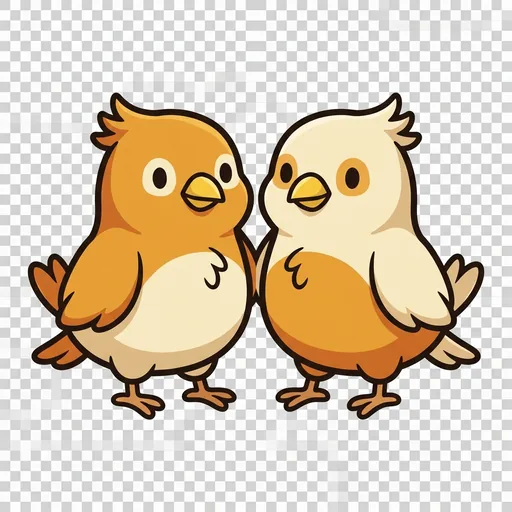
Twin
Analogy — extended comparison / X:Y::A:B parallel mapping
-
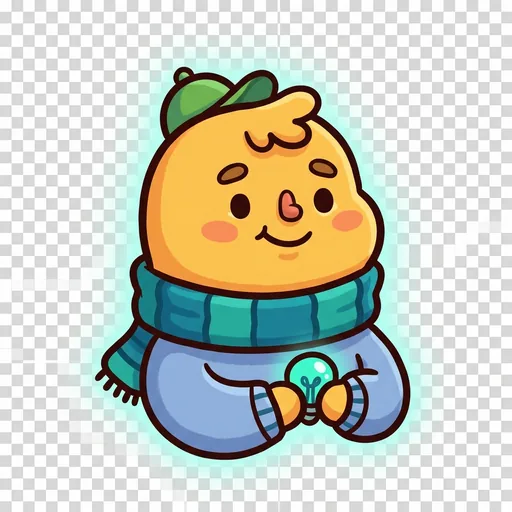
Hum
Personification — non-human takes on human qualities
-
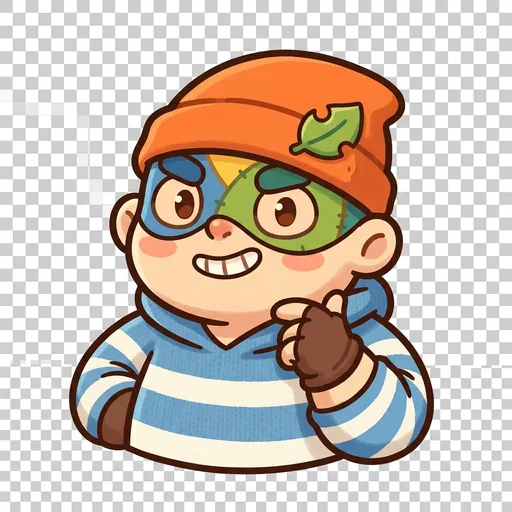
Mask
Hyperbole + understatement + irony cluster — say one thing, mean another
-
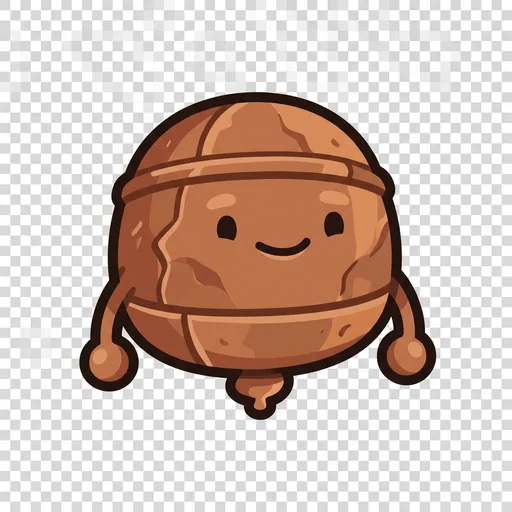
Clang
Onomatopoeia — copper bell-creature whose words carry the noise they name (buzz, splash, crash); the word reaches past the eyes and touches the ears
-
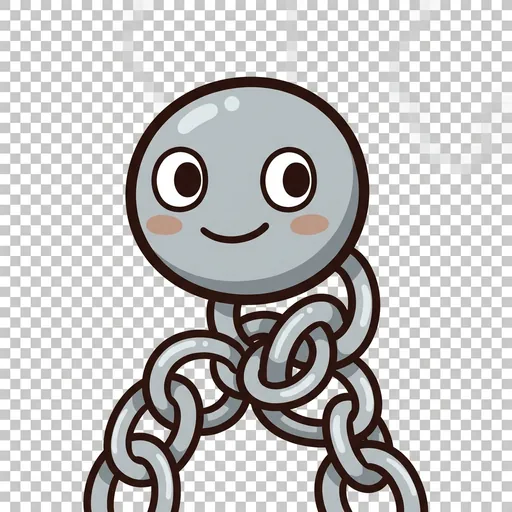
Chain
Alliteration — living-chain creature whose links lock when words share a first sound (big blue balloon); a little is catchy, too much is a tongue-knot
-
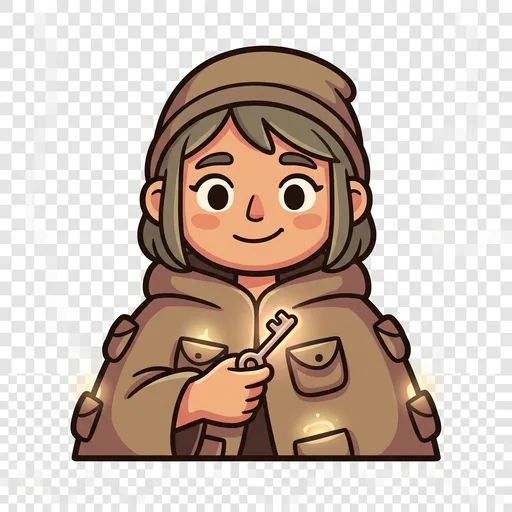
Token
Symbolism — quiet creature with a many-pocketed cloak of small objects that stand for big ideas (a dove = peace); shows the meaning instead of saying it
-
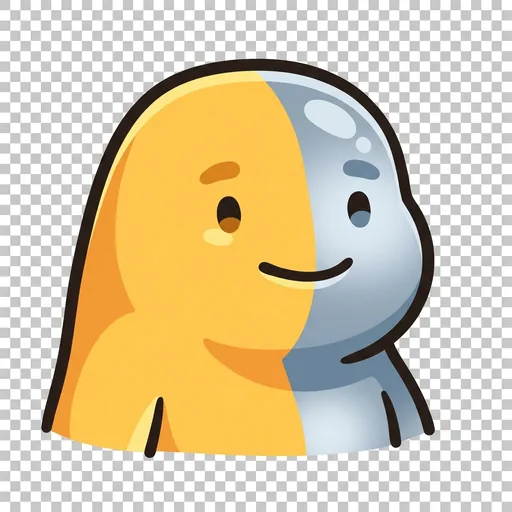
Twain
Oxymoron — two-toned creature (one half warm, one half cool) who places two opposite words side by side (bittersweet); the clash says something truer than either alone