Token
SYMBOLISM
Loading audio…
Press play to listen along. The line being read lights up as you go.
Show full transcript
Loading transcript…
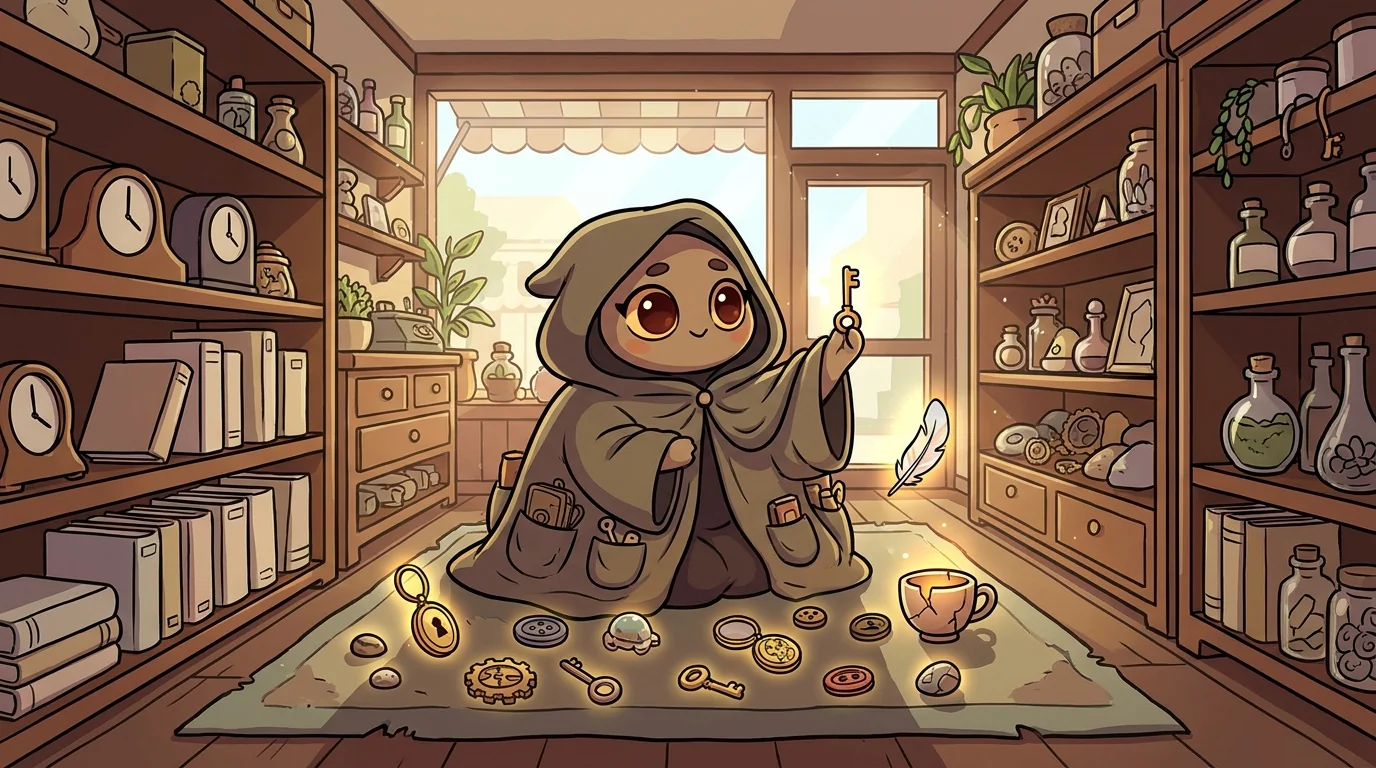
Trope's detective cast met Token in a quiet curiosity-shop, where she sat surrounded by small, ordinary objects, each one glowing very faintly.
Token was a gentle, deep-eyed creature with a wide cloak full of little pockets, and from each pocket she could draw a small object. But every object she held seemed to glow with a meaning far bigger than itself. She lifted a tiny key, and somehow it felt like a fresh start. She lifted a single feather, and it felt like freedom. She lifted a small cracked cup, and it felt like something broken that's still loved.
"Your little objects feel... huge," a young detective said softly.
Token nodded, her deep eyes warm. "That's the quiet magic," she said. "My name is Token. I keep the symbols — small things that stand for big ideas." She held up the tiny key. "This is just a key. But in a story, it can stand for hope, or a new beginning, or a secret about to open. The object is real and small. The meaning it carries is large."
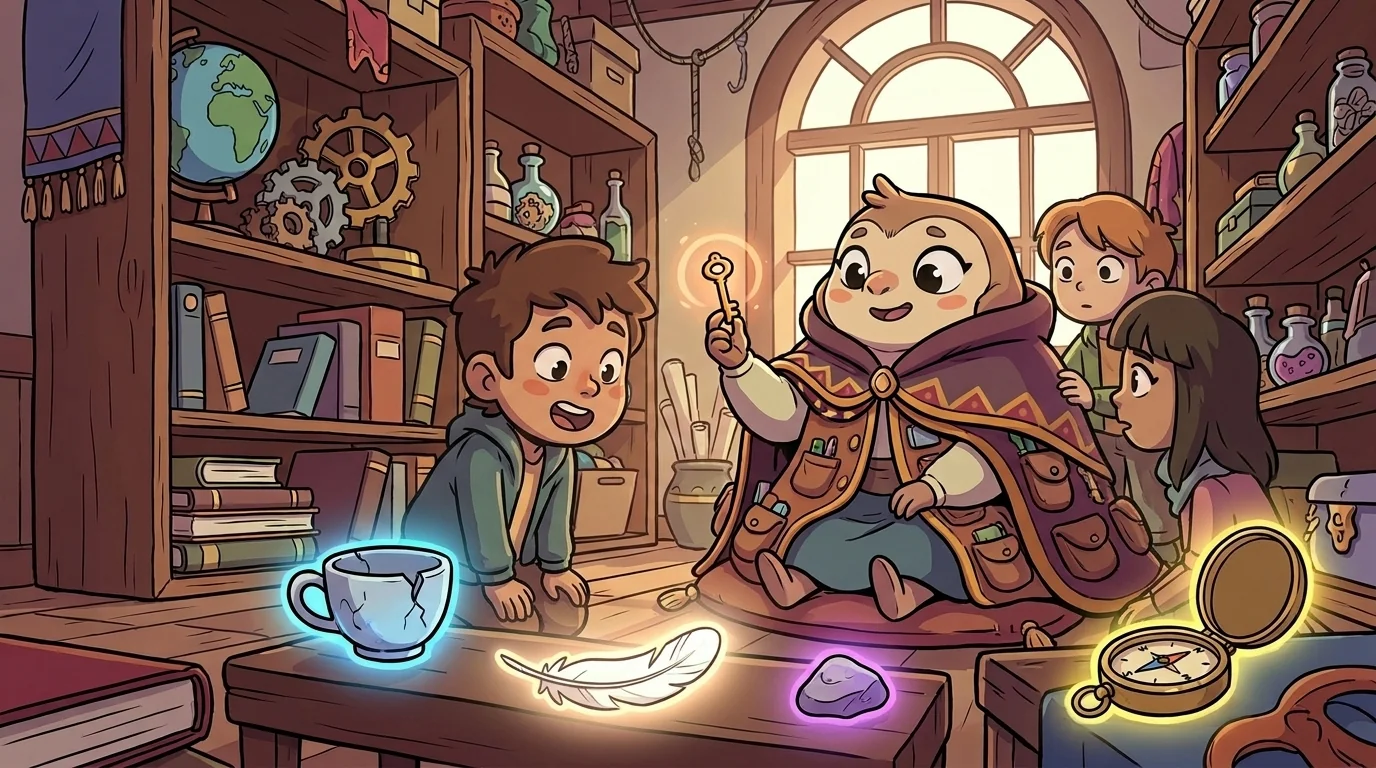
The detectives gathered round the glowing objects. "How is that different from a metaphor?" one asked, thinking of Ferry.
"A good question, detective," Token said. "Ferry says one thing is another — the world is a stage. But a symbol doesn't say anything. It just... is. A real object, sitting in the story, quietly carrying a big meaning." She set a small white dove-feather on the table, and it seemed to fill the room with a feeling of peace, though no one had said the word. "I didn't tell you 'peace,'" Token said gently. "The feather did. That's a symbol. It lets a story show a big idea instead of announcing it."
A young detective breathed out. "So the reader feels the meaning, without being told." "Yes," Token said. "And the feeling they find themselves is the one they keep."
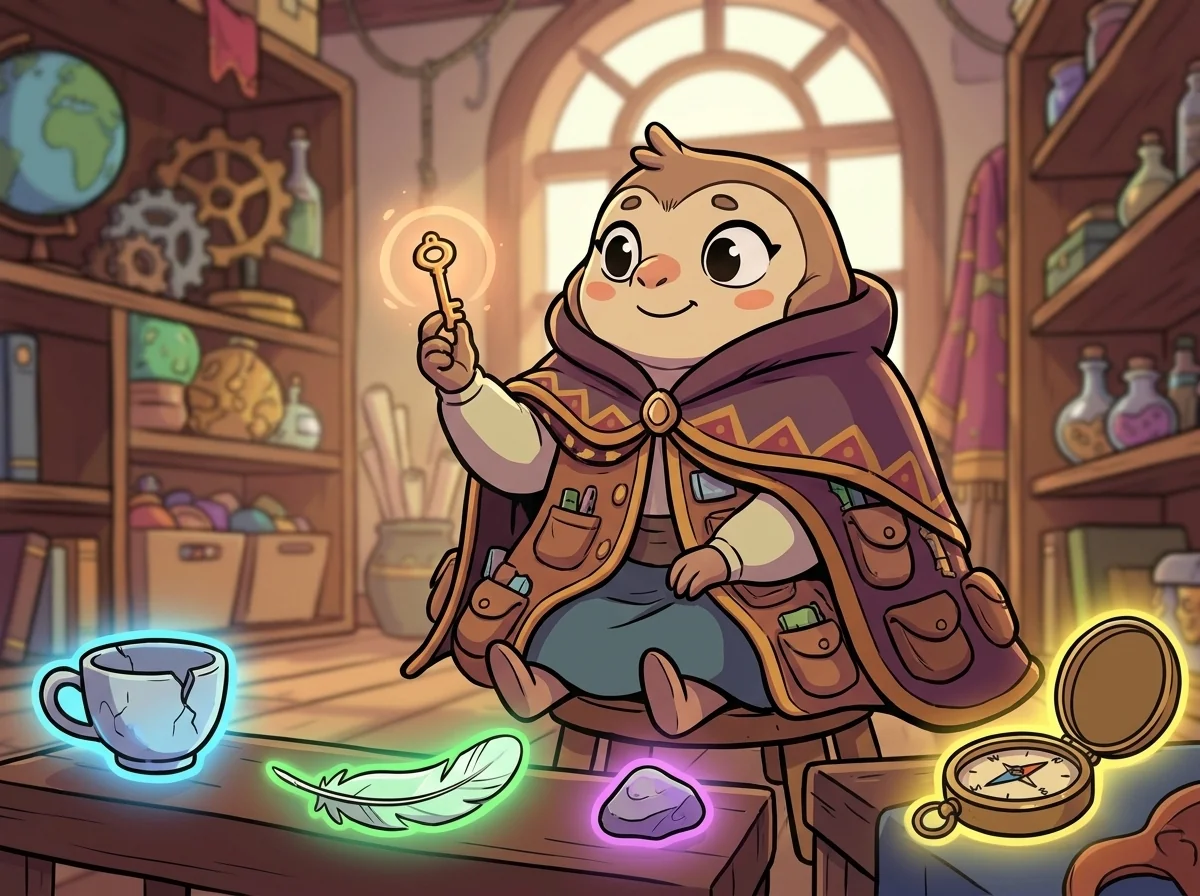
Trope asked Token to join the detective cast. "These young detectives explain everything out loud," Trope said. "They never let an object carry a meaning. I think you could teach them to use a symbol."
Token smiled, deep and warm. "I'll come," she said. "I do love a small thing that means a great deal."
So Token joined the cast, and the detectives' stories began to glow with quiet meaning.
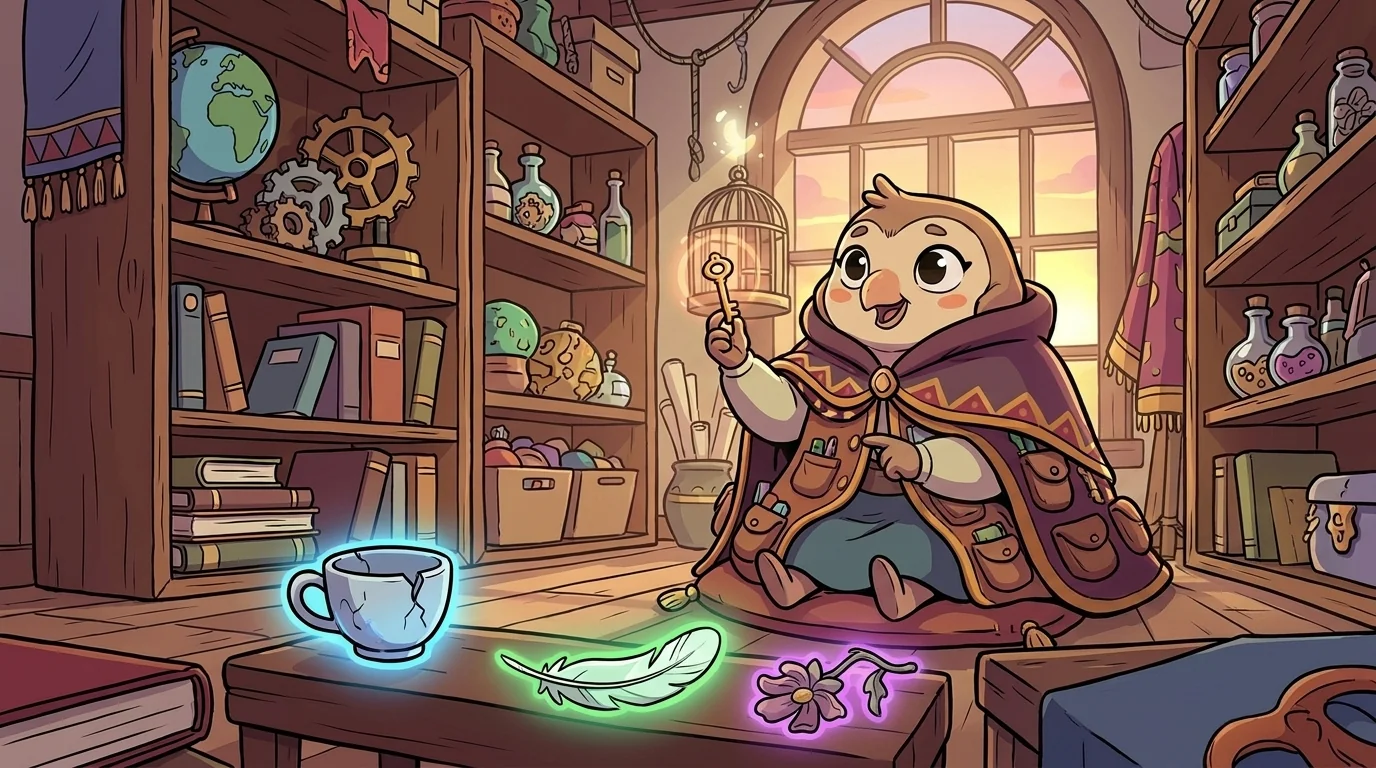
When Trope teaches symbolism, Token leads, drawing objects from her pockets. "Pick something real in your story," she tells the detectives, "and let it carry a bigger idea. A wilting flower for a fading friendship. A locked door for a secret. A sunrise for a fresh chance. Don't explain it — just let the object sit there and mean it."
A young detective had a character simply say she felt trapped. Token suggested an object instead: a bird in a cage by the window. The detective wrote it in — and now the reader felt the trapped feeling, watching that caged bird, without a word of explaining. "That's a symbol," Token said. "You showed the big idea with a small thing."
"Here's the detective's clue," she added. "A symbol is an object that keeps showing up, or that the story lingers on, that seems to mean more than it should. When you notice a writer pausing on a small thing — a ring, a scar, a storm — ask yourself: what bigger idea is this standing for? That's how you catch a symbol."
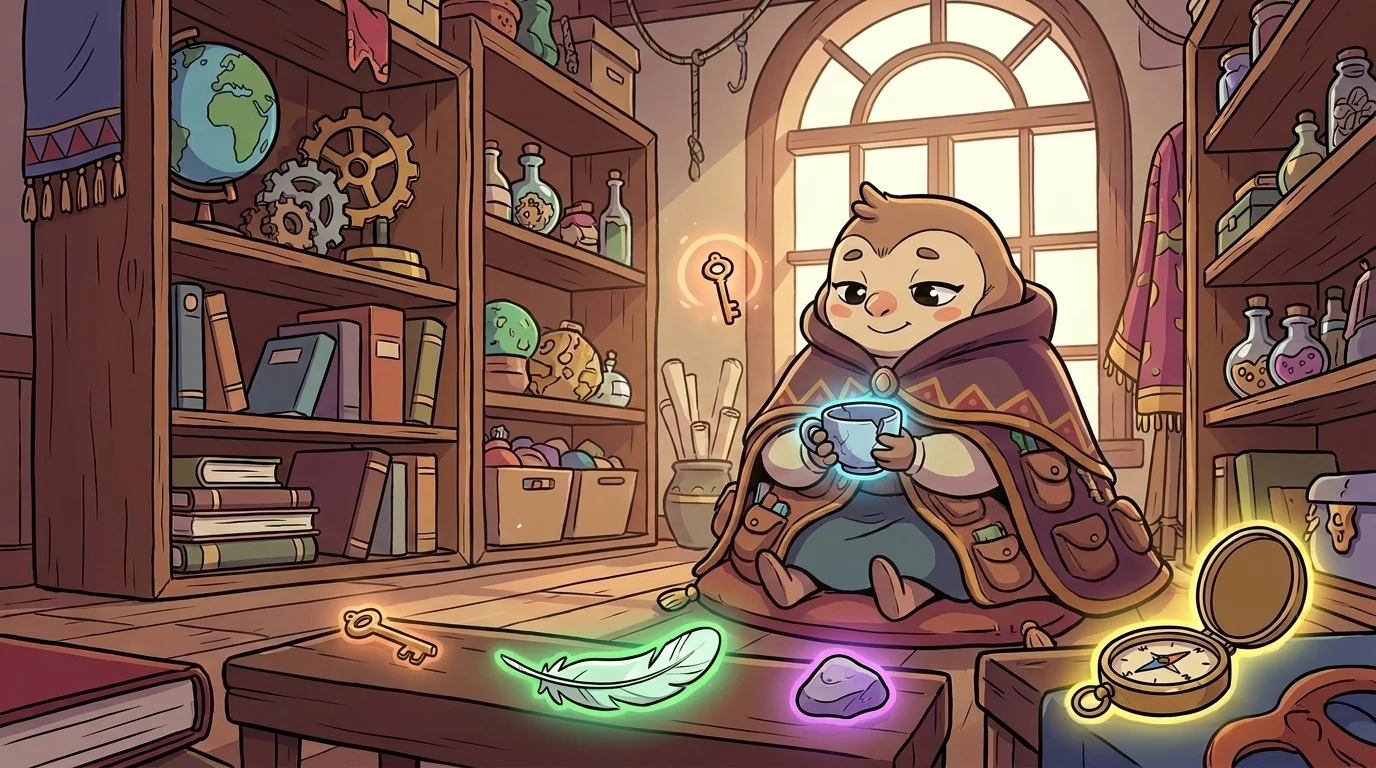
After the lesson, Token sat with the detectives in the quiet shop, turning the small cracked cup gently in her hands.
For a long time, Token had wondered if she was too quiet to matter. The other figures of speech announced themselves — bold metaphors, loud sound-words, clinking chains. She just... held small things, and let them mean. She'd wondered if anyone even noticed her quiet magic.
But turning the little cracked cup in the soft light, Token understood her gift most deeply. Her quietness was the magic. A symbol works precisely because it doesn't announce itself — it lets a reader discover the big meaning on their own, in their own heart, and a meaning you find yourself is one you never forget. She didn't need to be loud. She trusted the reader, and the small glowing object, to do the rest. A warm, deep contentment settled over her, like a held keepsake. She was the quiet one who let small things mean everything. And she tucked the little cup back into its pocket, glad.
Hear it as an audio drama
A short play starring Token, from FigureForge. Different voices, same idea. Listen any time after you read.
Loading audio…
Read the drama script
- Narrator: From Spark and Anvil and FigureForge — this is Token, in chapter 1 of the FigureForge cast.
- Narrator: This drama uses an AI-generated voice. Voiced via Gemini 2.5.
- Narrator: Trope's detective cast met Token in a quiet curiosity-shop, where she sat surrounded by small, ordinary objects, each glowing very faintly. Token was a gentle, deep-eyed creature with a wide cloak full of little pockets, and every object she held seemed to glow with a meaning far bigger than itself.
- Token: That's the quiet magic. My name is Token. I keep the symbols — small things that stand for big ideas. This is just a key. But in a story, it can stand for hope, or a new beginning, or a secret about to open. The object is real and small. The meaning it carries is large.
- Narrator: "How is that different from a metaphor?" a detective asked, thinking of Ferry.
- Token: A good question. Ferry SAYS one thing is another — the world is a stage. But a symbol doesn't say anything. It just is. A real object, sitting in the story, quietly carrying a big meaning.
- Narrator: She set a small white dove-feather on the table, and it seemed to fill the room with a feeling of peace, though no one had said the word.
- Token: I didn't tell you "peace." The feather did. That's a symbol. It lets a story SHOW a big idea instead of announcing it — and the feeling the reader finds for themselves is the one they keep.
- Narrator: Trope asked her to join the cast, to teach detectives who explained everything out loud and never let an object carry a meaning.
- Token: Pick something real in your story and let it carry a bigger idea. A wilting flower for a fading friendship. A locked door for a secret. A sunrise for a fresh chance. Don't explain it — just let the object sit there and mean it.
- Narrator: A detective had a character simply SAY she felt trapped. Token suggested a bird in a cage by the window instead — and now the reader felt the trapped feeling, without a word of explaining.
- Token: Here's the detective's clue: a symbol is an object the story lingers on, that seems to mean more than it should. When a writer pauses on a small thing — a ring, a scar, a storm — ask: what bigger idea is this standing for?
- Narrator: For a long time Token had wondered if she was too quiet to matter, while the other figures announced themselves.
- Token: But my quietness IS the magic. A symbol works precisely because it doesn't announce itself — it lets a reader discover the big meaning in their own heart, and a meaning you find yourself you never forget. I'm the quiet one who lets small things mean everything.
- Narrator: You've been listening to a Spark and Anvil chapter, written by the Spark and Anvil writing team for ages 9 to 14.
- Narrator: Apps stay free forever.
- Narrator: Curriculum aligned to Common Core and Next Generation Science Standards.
- Narrator: Released under Creative Commons BY-NC-SA 4.0 for educational reuse. Visit Spark and Anvil for the full transcript.
The FigureForge ensemble
Token is one of the friends in FigureForge. Each friend shows you one idea by how they act; meet them all and you have the whole subject.
-
Ferry
Metaphor — 'X IS Y' direct comparison; carries meaning across
-

Ripple
Simile — 'X is LIKE Y' softer comparison
-
Knot
Idiom — fixed expressions whose meaning isn't literal
-
Twin
Analogy — extended comparison / X:Y::A:B parallel mapping
-
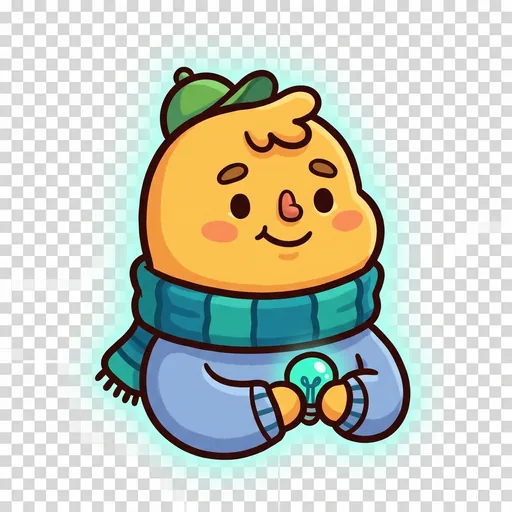
Hum
Personification — non-human takes on human qualities
-

Mask
Hyperbole + understatement + irony cluster — say one thing, mean another
-

Clang
Onomatopoeia — copper bell-creature whose words carry the noise they name (buzz, splash, crash); the word reaches past the eyes and touches the ears
-
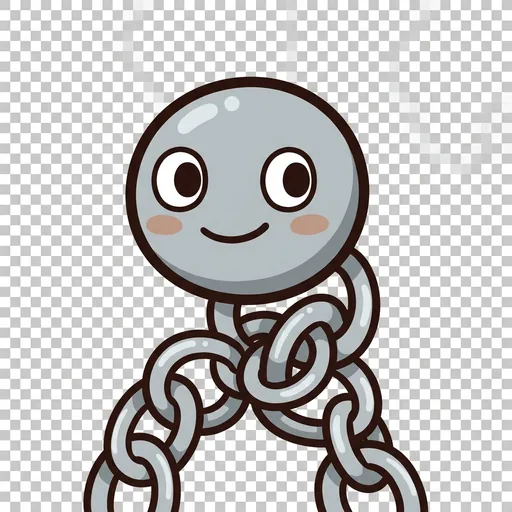
Chain
Alliteration — living-chain creature whose links lock when words share a first sound (big blue balloon); a little is catchy, too much is a tongue-knot
-

Twain
Oxymoron — two-toned creature (one half warm, one half cool) who places two opposite words side by side (bittersweet); the clash says something truer than either alone