
Imprint
TRACE FOSSILS (ICHNOLOGY) — fossils of behavior rather than bodies: tracks, burrows, borings, toothmarks, coprolites. A trace records what a creature DID and often stays in place (in situ) where the animal acted, so it preserves behavior and environment even when no body remains.
Loading audio…
Press play to listen along. The line being read lights up as you go.
Show full transcript
Loading transcript…
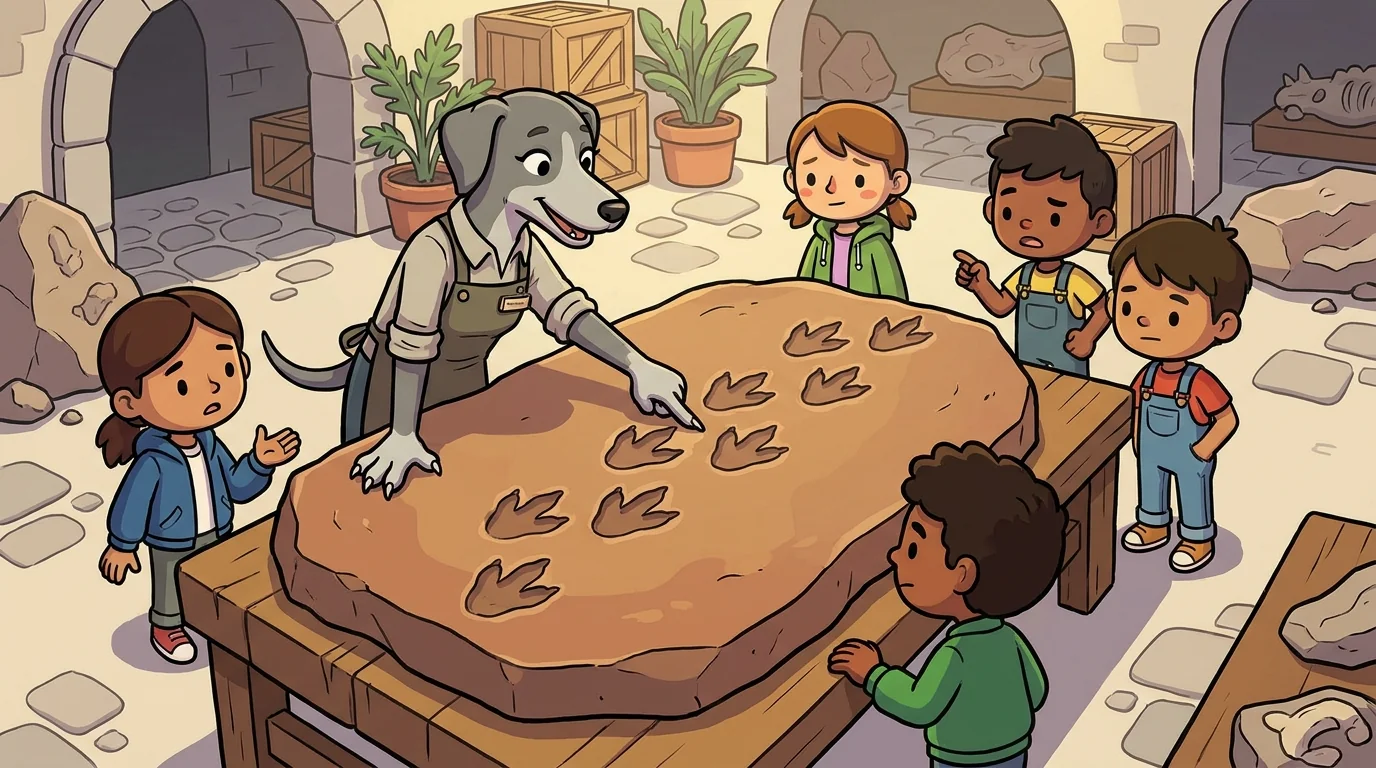
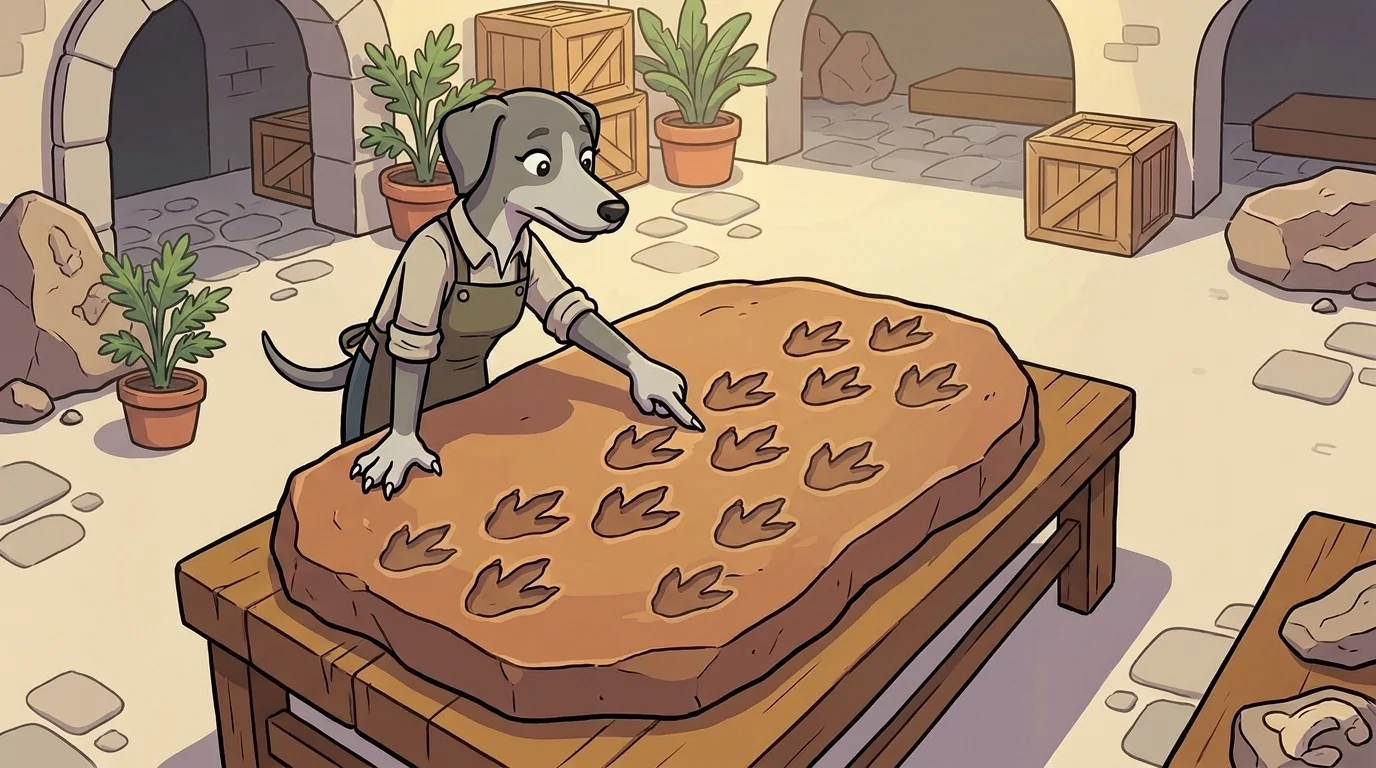
In the FossilForge courtyard, a lean grey hound laid a heavy slab flat on the workbench — three-toed prints pressed deep, marching across it in a long even line. "No bones here," said Imprint before anyone could ask. "No teeth, no skull, nothing of the creature at all. And yet I can tell you it was heavy, walked on two legs, was in no hurry, and passed this way alone, one quiet morning, a very long time ago." A boy said there was nothing there. "There's everything there," said Imprint, tracing a print. "Depth is weight. Spacing is a steady walk, not a run. A single line, one print behind another, is one animal travelling alone. The animal is gone. What it did is still here — pressed into mud that turned to stone."
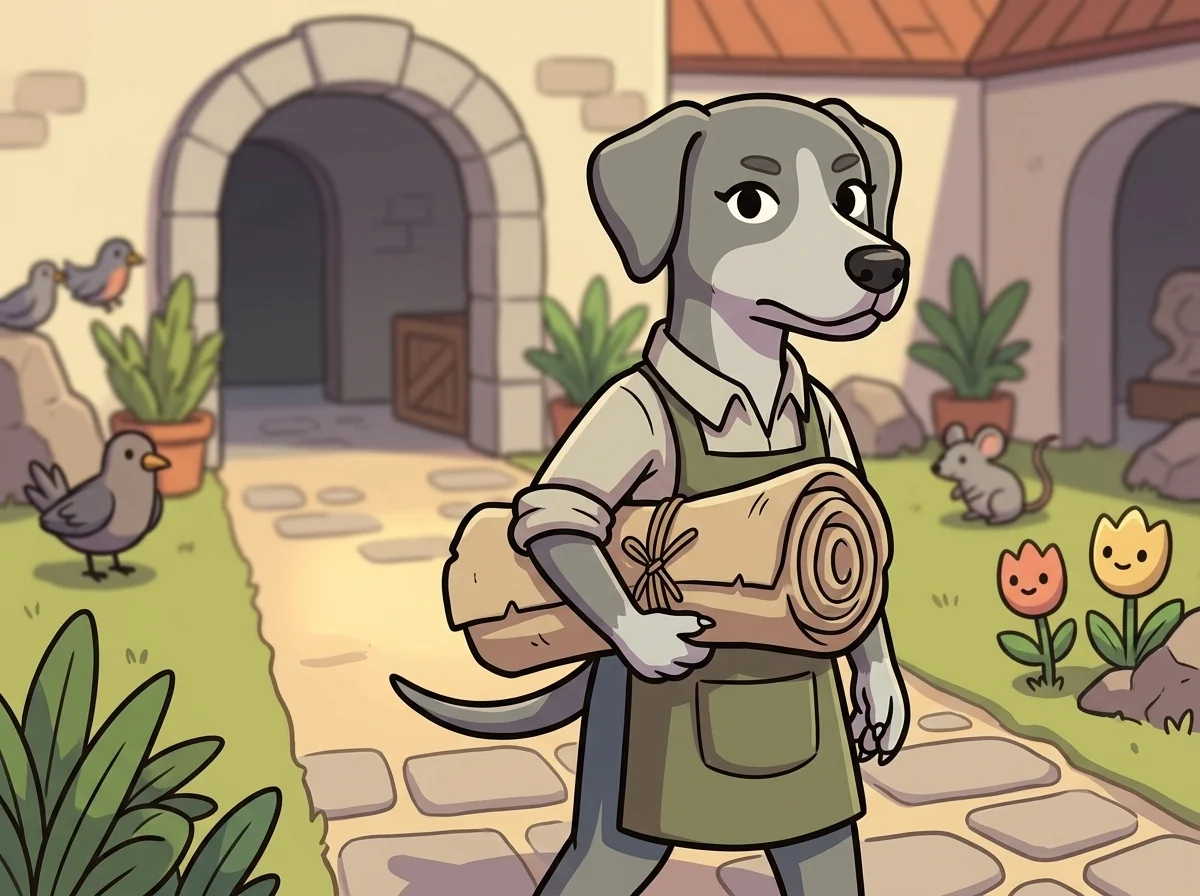
Imprint had read tracks since before she could read words, in a valley of soft riverbanks and winter snow where her family read the ground the way others read books. Small, she could stand over prints and tell the whole night's story — a rabbit came down to drink, unhurried; then bolted, where the prints stretched long; and a fox came after, from the reeds. She never saw the rabbit or the fox and never needed to. The marks told everything they had done. She remembered the first time she read a trackway right and then found, further on, that it was true — the exact ending the prints had promised. Something settled warm and certain in her chest: a creature could be long gone and still leave an honest account of itself, if you knew how to read the ground.
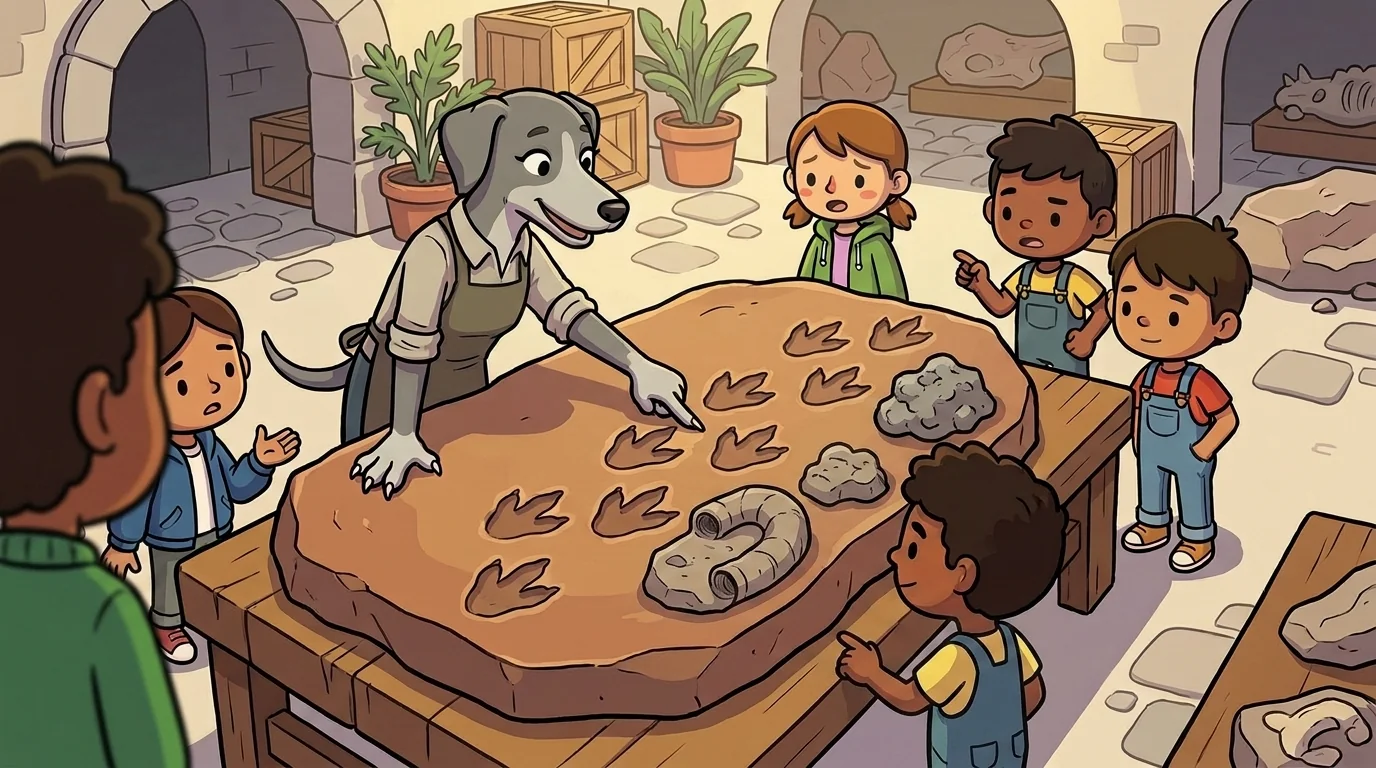
At the academy she taught the children that fossils are not only bones — and gave the field its name. "This is ichnology — the study of trace fossils. Most people think a fossil is a bit of a body: a bone, a tooth, a shell. But some of the best fossils are things a creature did." She tapped her casts in turn — a line of footprints, a curled tunnel, a lumpy grey nugget, a bone scored with grooves. "Footprints tell gait, speed, whether it moved alone or in a herd. A burrow says something dug and lived here. This grey lump is a coprolite — fossil dung — and it tells us what the creature ate. These grooves are toothmarks: two creatures met, and we can tell how." Then the point that makes traces special: "A body can be transported — washed downstream, scavenged, tumbled far from where the animal lived, so it tells you the creature existed but not always where it acted. A trace is usually in situ — made in place, in the very environment where the behavior happened. So a trackway doesn't just prove an animal existed; it captures a moment of its life fixed to its setting. That's why we treat traces and bodies as two different kinds of evidence — and why a footprint can outvalue a bone for telling you how a creature actually lived."
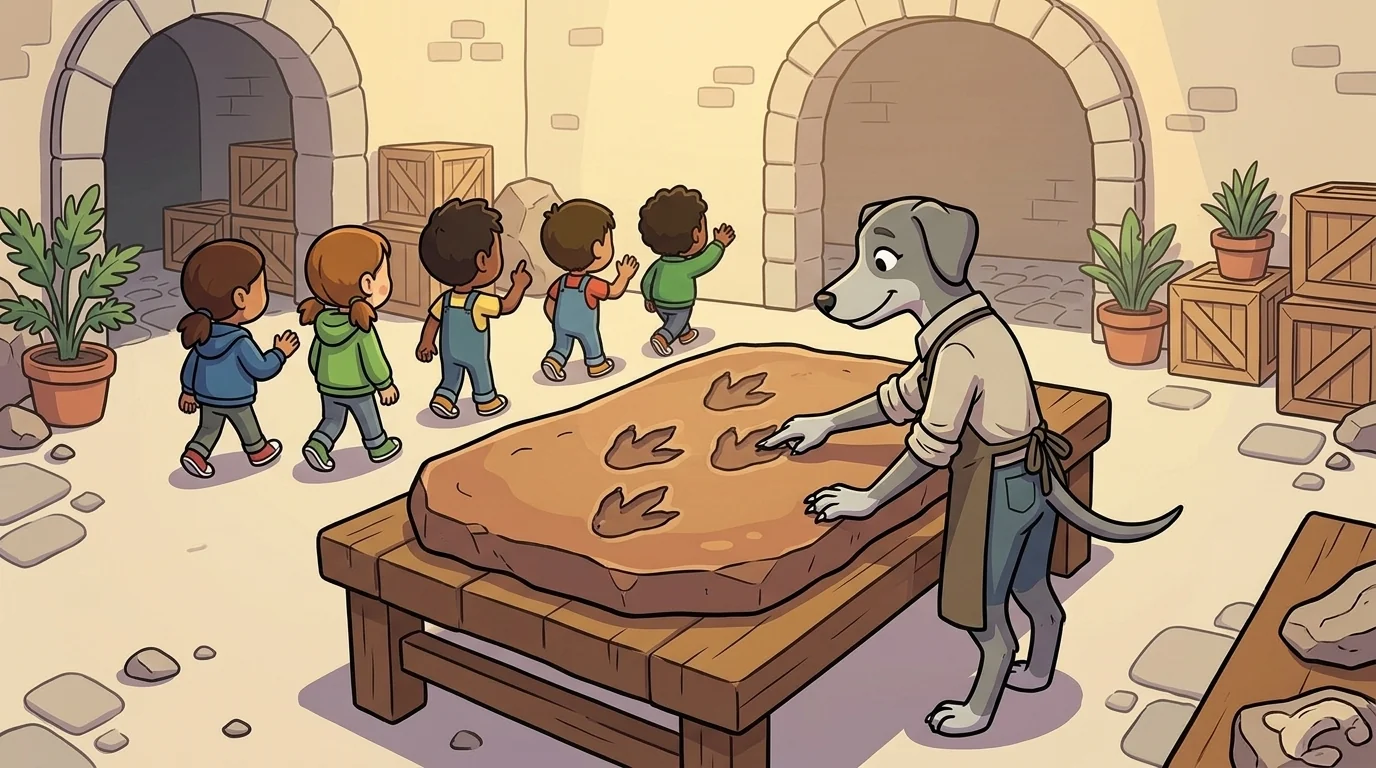
"So you can know what an animal did even if you never find the animal," a girl said slowly. "Even if the animal is gone forever," said Imprint. "A body tells you what a creature was; a trace tells you what it did — and often the doing is the part that mattered most. One caution, though: a single maker can leave many traces — walking, digging, feeding — so we name the trace, not the animal, and never assume one trackway equals one species. Read honestly. But read — because a footprint is a small true record of a life in motion."
She still reads the riverbank at home and keeps her first trackway-cast above her workbench. What she hopes the children carry is that a life leaves more marks than a body — that how a creature moved and dug and ate and met others is written into the ground it crossed, and can outlast the creature by an unimaginable span. What you do leaves a longer print than what you are. "You don't need the whole animal," she tells them. "Read what it did, and you've met it — truly met it — across all that time." When the courtyard empties, Imprint runs a claw along her old cast and feels the warm certainty she first felt as a pup in the snow: that nothing that ever moved through the world moved through it unremembered, so long as someone learns to read the ground.
The FossilForge ensemble
Imprint is part of FossilForge's distributed-narrative cast. Each character embodies a different curricular primitive; together they teach the full subject.
-
Seam
Taxonomic + fossil-type classification — family-resemblance-matching (what KIND of organism?)
-
Span
Deep-time + geological chronology — scale-of-scales (WHEN did this organism live?)
-
Branch
Morphological adaptation + evolutionary change — branching-not-laddering
-
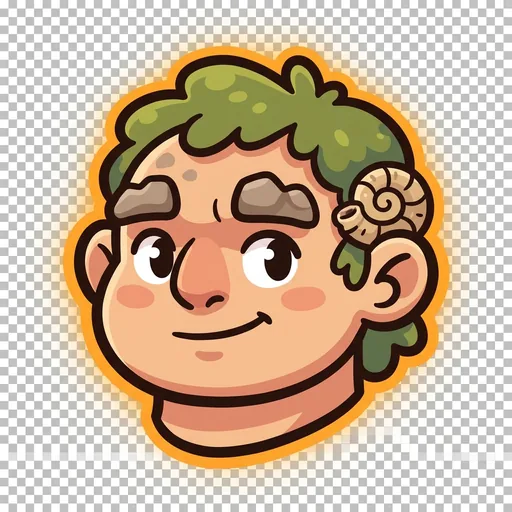
Field
Paleoenvironment + ecosystem reconstruction — fossils-as-a-place-story
-

Last
Mass extinctions + extinction-event reasoning — witness-and-choose (cross-app cameo with EcoSphere Brink)
-
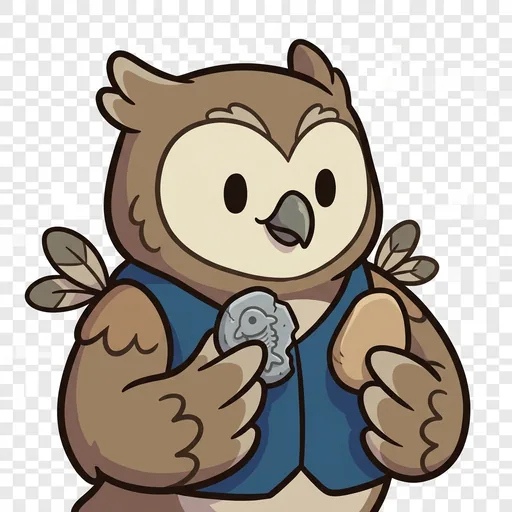
Blank
The incomplete record — the fossil record is a story with most of its pages missing
-
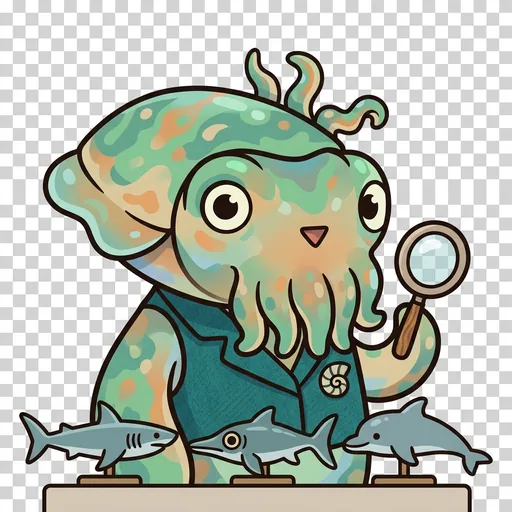
Guise
Convergent evolution — unrelated creatures arriving at the same outward form
-
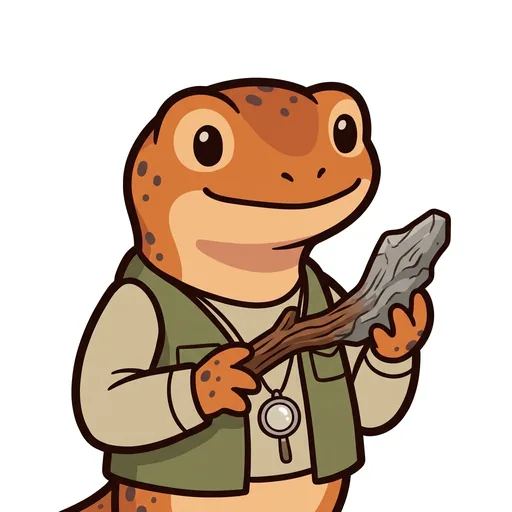
Seep
Fossilization — how a living thing rarely becomes a fossil: quick burial, slow mineral swap
-
Underframe
Homology — the same underlying skeleton, in the same order, beneath different forms