
Bell
RHYME — when the end-sounds of lines ring together (cat / hat, away / today). Rhyme makes a poem feel finished and musical, and in forms like the limerick it is part of the form's shape: lines that must chime with each other.
Loading audio…
Press play to listen along. The line being read lights up as you go.
Show full transcript
Loading transcript…
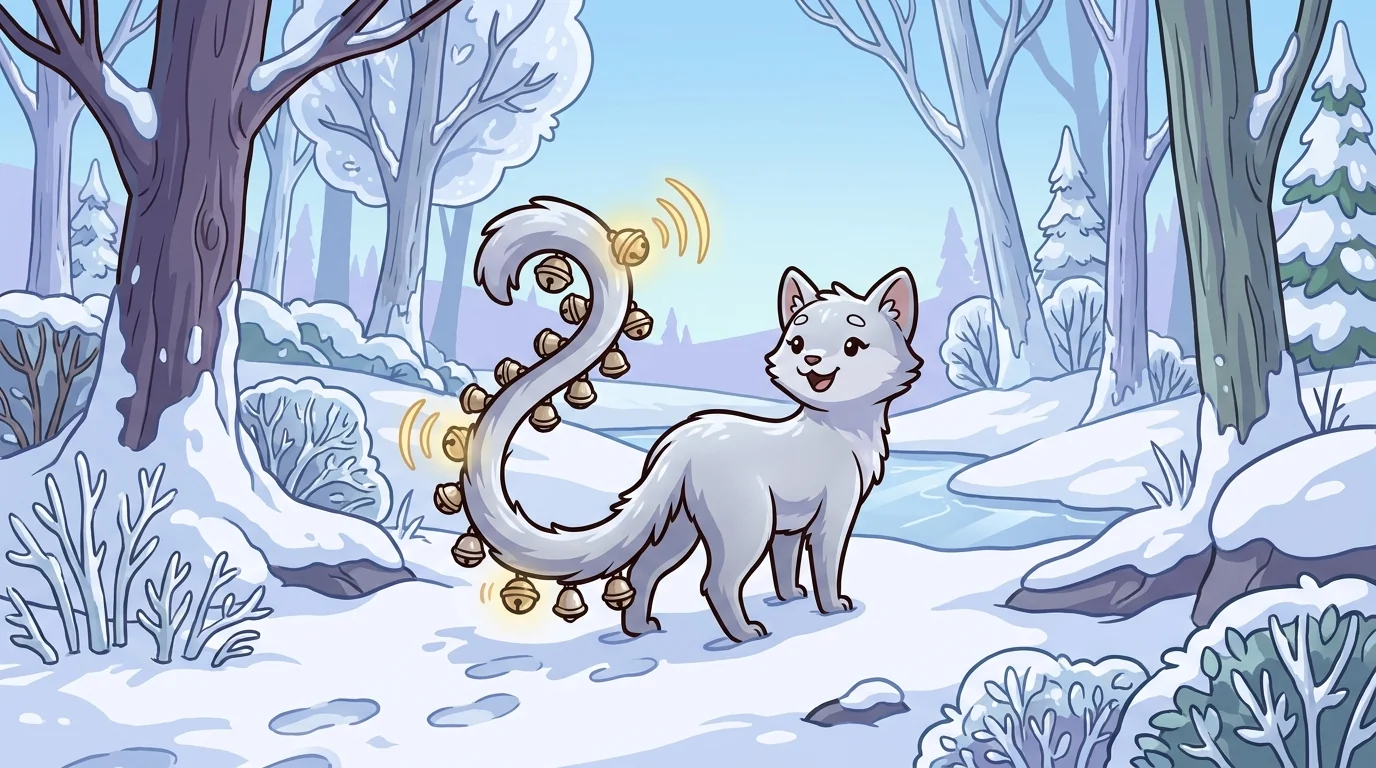
The winter grove was so quiet that Cherry could hear her own breath freezing in the pale morning air. Frost coated the bare oak branches like sugar, keeping the forest perfectly still until a tiny sound broke the silence. It wasn't the wind or a cracking twig, but a soft, metallic chime that sounded as clear as ice.
Cherry stepped around a fallen log and found a small creature sitting on a patch of dry moss. The creature had fur the color of polished silverware, and a row of tiny bells hung along her tail. Each bell was a slightly different size, dangling like heavy silver berries that caught the winter sun. When the creature turned her head to look at Cherry, her tail gave a gentle, sweeping flick. Three bells chimed in a neat, rising chord that seemed to warm the cold woods.
"Hello," Cherry said, keeping her voice soft so she wouldn't startle the delicate animal.
"Hello," she replied, her voice carrying a light, ringing quality like a glass tapped with a spoon.
Cherry watched the silver tail, noticing that the bells did not just jingle randomly as she moved. Instead, they seemed to react to the words themselves, ringing only when certain sounds were spoken.
"I'm Cherry," she said, stepping closer.
"My name is Bell," the creature said, and two of the smallest bells chimed at the exact same pitch. It was a bright, satisfied ting that seemed to lock the two words together in the frosty air.
Cherry blinked, fascinated by the way the sound lingered. "Your bells answer each other," she said, pointing to the silver tail.
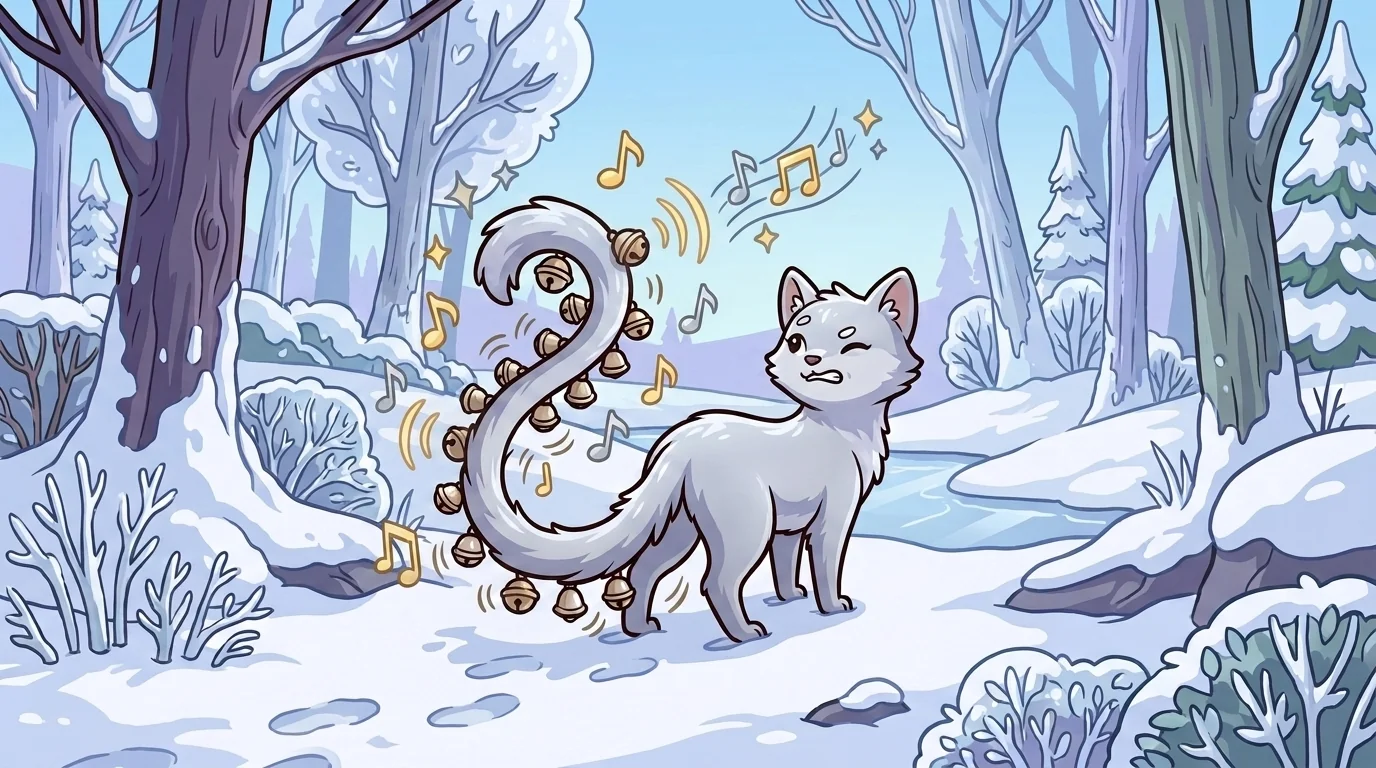
"They do," Bell said, "when sounds match. I keep the rhyme—the end-sounds of lines ringing together." To show her, Bell lifted her tail and let two specific bells catch the light. "Listen: night—" one bell chimed a crisp, high note "—and light—" another bell chimed at the very same pitch. The two notes vibrated together, sounding perfectly in tune and entirely satisfied. "When two words rhyme, my bells sing the same note," Bell explained. "It's the loveliest feeling, like two puzzle pieces finally clicking into place."
Cherry wanted to try it herself, so she cleared her throat and said a single word.
"Moon," she whispered.
One of Bell's middle bells gave a soft, hollow ring that hung in the quiet air. Then Cherry smiled and said, "Soon." Immediately, a second bell rang at the exact same pitch, and the two notes hummed together in harmony. It was a warm, comforting sound that made Cherry want to hear more.
She decided to try a pair of words that did not match at all. She looked up at the sky and said moon, then pointed to a nearby oak and said tree. Two bells chimed at clashing, sour pitches, and Bell winced as if she had swallowed lemon juice. Her silver tail twitched, and she quickly tucked it close to her side to stop the noise.
"That's how I know," Bell said, her ears drooping slightly from the unpleasant sound. "Rhyming words make my bells agree. Words that don't make them disagree." She gave her tail a gentle shake, and a little cascade of matched and unmatched notes spilled out.
"In a limerick, certain lines have to chime," Bell explained, her tail relaxing again. "The first, second, and fifth lines all ring together, while the third and fourth ring with each other. The rhyme is part of the form's shape, like the walls of a house. Get the chimes right, and the limerick clicks shut like a perfect little box."
Cherry felt the satisfaction of it, realizing how a rhyme made a poem feel finished and musical. She had taught students to count syllables and cut lines, but this was different. The chime of matched end-sounds was its own kind of magic, a physical proof of harmony.

Cherry knelt on the cold ground, looking closely at the silver creature. "I coach children in writing poetry," Cherry said, thinking of her classroom back in the valley. "They try hard, but their rhymes are often forced and awkward. They will jam in any old word just to make the ends match, even if it makes no sense. Yesterday, a boy wrote a poem about a cat that sat on a blue hat. The next line said the cat ate a flat bat, which was just silly. He didn't care about the bat; he only wanted the sound to match."
Bell let out a tiny, sympathetic chime that sounded like a sigh.
"I think you could teach them to hear when a chime rings true," Cherry continued. "They need to feel the difference between a real match and a forced one."
Bell's tail gave a glad little peal, several bells ringing in a bright, happy circle. "I'll come," she said, her eyes shining in the winter light. "I do love a true chime, and I really wince at a forced one. It hurts my ears when words are shoved together just to make a sound. I will teach them to listen with their hearts as well as their ears."
So Bell joined Cherry on her travels, leaving the quiet winter grove behind. As they walked, the tiny silver bells chimed softly with every step she took.
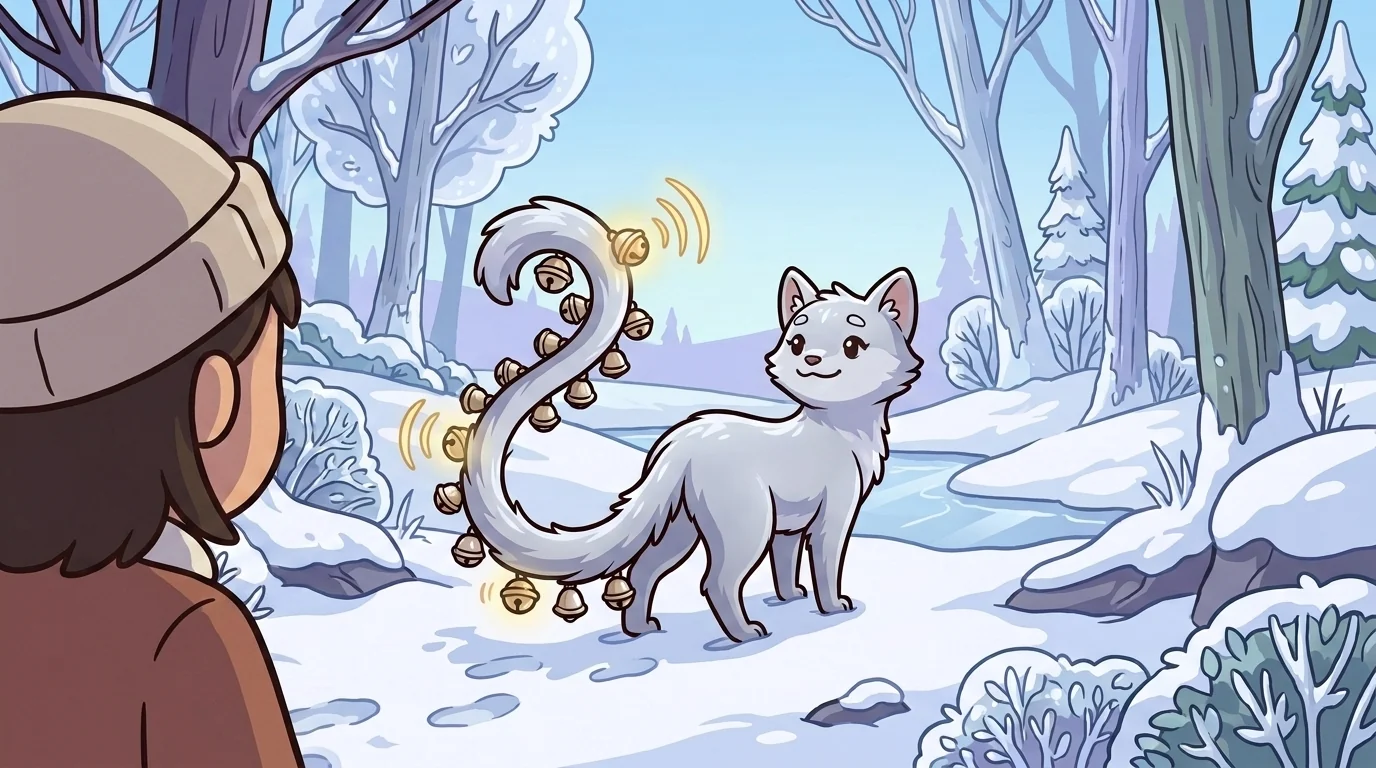
Their first stop was a small schoolhouse built on the edge of a windy hill. Inside, the classroom was warm and smelled of woodsmoke and wet wool coats. A dozen children sat around a long wooden table, chewing thoughtfully on their pencils. When Cherry entered with Bell, the children gasped and leaned forward in their seats. They had never seen a creature with silver fur, let alone one with bells.
When Cherry teaches rhyme, Bell always leads the lesson with her silver music.
"Say your two end-words out loud," Bell told a young girl with dark braids. "If my bells chime the same note, you will know they rhyme. If my bells argue, you will hear the clash of the unmatched sounds."
The girl cleared her throat and said play, waiting a moment before she spoke the next word. Then she whispered the word day, looking closely at the silver tail. A bright, matched ting rang out, sounding as clear as a bell in a high tower. The children smiled, instantly understanding the connection between the matching sounds and the music.
A boy with ink on his fingers tried next, saying play and then dog. Immediately, two bells struck a clashing, sour note that made the boy jump back. Bell winced, her ears flattening against her head as the unpleasant noise faded away. The children laughed, but they also began to listen to the sounds with new attention. They tested pairs of words for an hour, learning to hear the chime themselves.
But then came the specific lesson that Bell cared about more than any other. A quiet boy named Toby had been working hard on a funny five-line limerick. He stood up to read his draft, his voice shaking slightly in the quiet room.
"There once was a frog on a log," Toby read. "Who lived in a very wet bog. He wanted to fly, so he jumped in the sky, and turned into a purple dog."
The children giggled at the silly image, but Cherry looked at Bell to see her reaction. Toby's last word, dog, technically matched the end-sounds of the earlier lines. On Bell's tail, the three bells chimed in tune, making a sweet and perfect chord.
And yet, the silver creature did not look pleased with the result. She shook her head slowly, her silver fur catching the light from the window.
"The sounds match," she said gently, "but we must also listen to the story. Does a frog really turn into a purple dog just because he jumped into the sky?"
Toby looked down at his messy paper, his cheeks turning a warm, embarrassed pink. "No," he admitted softly, "but I just needed a word that rhymed with bog."
Bell stepped closer to him, her tail resting quietly on the wooden table. "A rhyme forced in just to chime is worse than no rhyme at all," she said. "The best rhyme says something true and rings the bell at the same time. Never twist your meaning just to make a pretty sound at the end. Find the word that is both right and ringing, or change the other line instead."
Toby sat back down and stared at his messy paper for a long time. He tapped his pencil against his chin, thinking hard about what his frog would actually do. Finally, he crossed out the silly line and wrote something new with quick strokes.
He stood up again and read: "He wanted to fly, so he jumped in the sky, but landed right back in the fog."
This time, when Bell's bells chimed, the notes sounded warm, deep, and completely whole. The beautiful note hung in the warm schoolhouse, feeling entirely complete.
"That's the one," Bell said, her silver tail giving a happy, sweeping flick. "It is true and ringing, both at the exact same time."
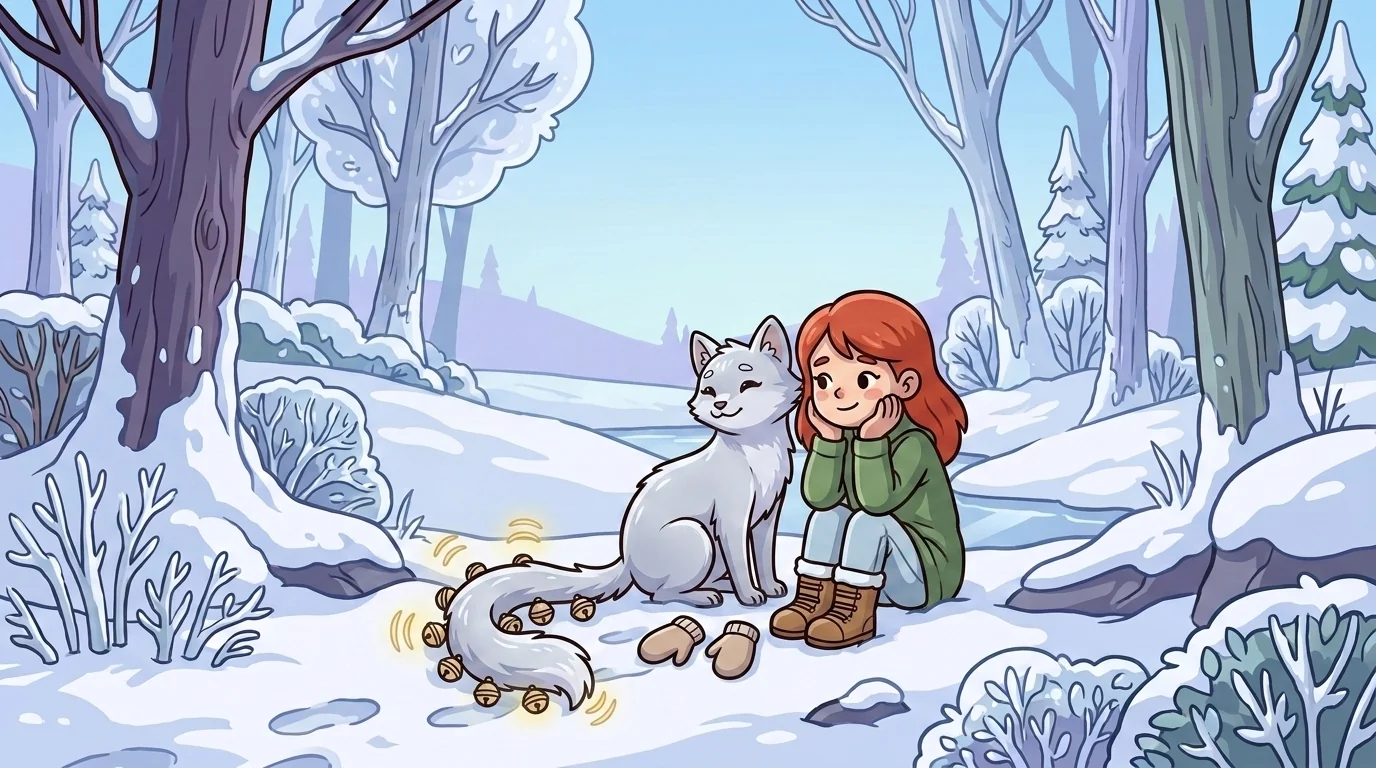
After the lesson, Bell sat with Cherry in the quiet grove as evening fell. The shadows of the oak trees stretched long and blue across the snow. Her tail-bells were still now, resting gently on the cold ground.
For a long time, Bell had worried that she cared too much about matching. She feared her need for things to chime made her fussy and hard to please. She was always wincing at sounds that were almost right but not quite perfect. Sometimes, she had wondered if she should just relax and let things be imperfect.
But sitting in the still grove, Bell understood her own gift more kindly now. She didn't wince at imperfect rhymes because she wanted to be difficult or fussy. She winced because she could hear the difference between a forced chime and a true one. She loved the true ones so much that anything else felt like a mistake.
Helping Toby find a rhyme that was both right and ringing had been wonderful. Hearing the bells sing whole was a deep, clear joy that warmed her inside. It felt like a perfect note held in the cold, quiet winter air. A warm contentment settled over her silver fur as she closed her eyes.
Her ear for the true chime was not a silly fussiness after all. It was simply her love of the sound when it finally, honestly rang. She gave her tail one soft, happy shake, letting the bells sing once more.
The HaikuQuest ensemble
Bell is part of HaikuQuest's distributed-narrative cast. Each character embodies a different curricular primitive; together they teach the full subject.
-

Count
Syllable count / count-discipline — magpie-tween whose beak-tap enacts the rhythmic underpinning of every counted form
-

Pause
Kireji / cut / productive break — snowy-egret-tween whose perpetually-mid-step body IS the kireji in physical form
-
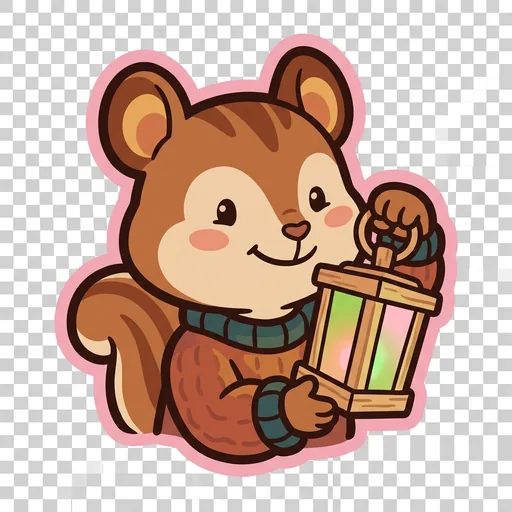
Lantern
Season-word / anchoring image — chipmunk-tween whose wooden lantern visibly shifts color with the season
-

Trim
Brevity / saying-less — red-squirrel-tween with brass scissors who snips redundant words to find the smaller-stronger version
-

Flint
Juxtaposition — flinty badger-creature who strikes two smooth stones to make a spark; two images set side by side make a third meaning leap up in the gap
-

Gallop
Meter / the stressed beat — long-legged pony-creature whose hooves fall da-da-DUM; not how MANY beats (that's Count) but which ones to stomp (esp. the limerick)
-

Hinge
The line break — folding-door creature who holds a small pause at the end of each line; the end of a line is a little stage, so end on a word that earns it
-

Mold
Shape on the page — clay-colored creature who builds a poem's silhouette (a cinquain's 2-4-6-8-2 diamond); shape is meaning you can see from across the room
-
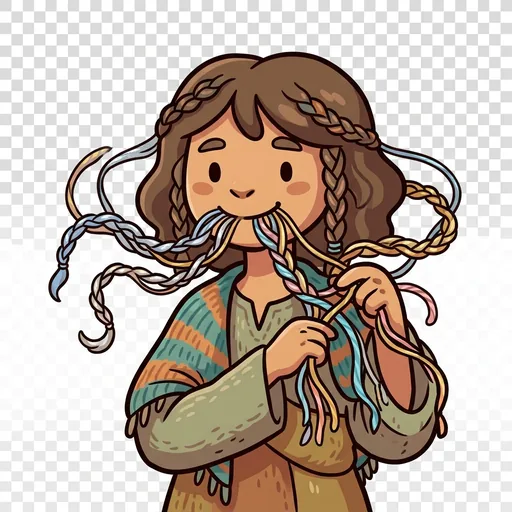
Braid
Sound texture — nimble creature who weaves repeated sounds through a line (alliteration + assonance); enough echo makes music, too much makes a tongue-twister knot