
Flint
JUXTAPOSITION — placing two images next to each other so they spark against one another. In a haiku, two small pictures set side by side make a third meaning leap up between them, like a spark struck from two stones.
Loading audio…
Press play to listen along. The line being read lights up as you go.
Show full transcript
Loading transcript…
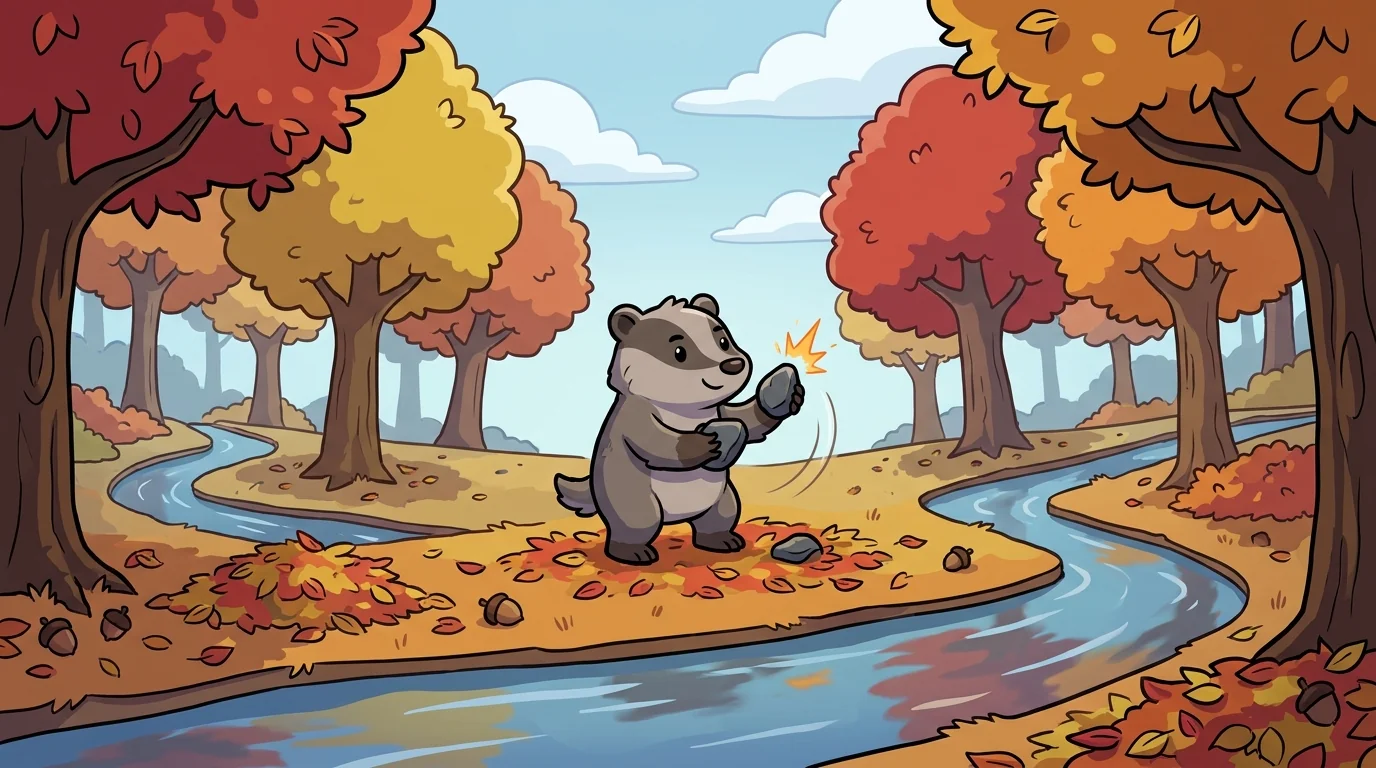
The autumn air in the woodland grove smelled of damp earth, wet stone, and decaying oak leaves. Two streams ran close together here, separated only by a narrow, moss-covered spit of grey gravel. One stream was quick and loud, while the other crept along, silent and dark as cold oil. They would join together eventually, but for now, they ran in a tense, parallel race through the trees.
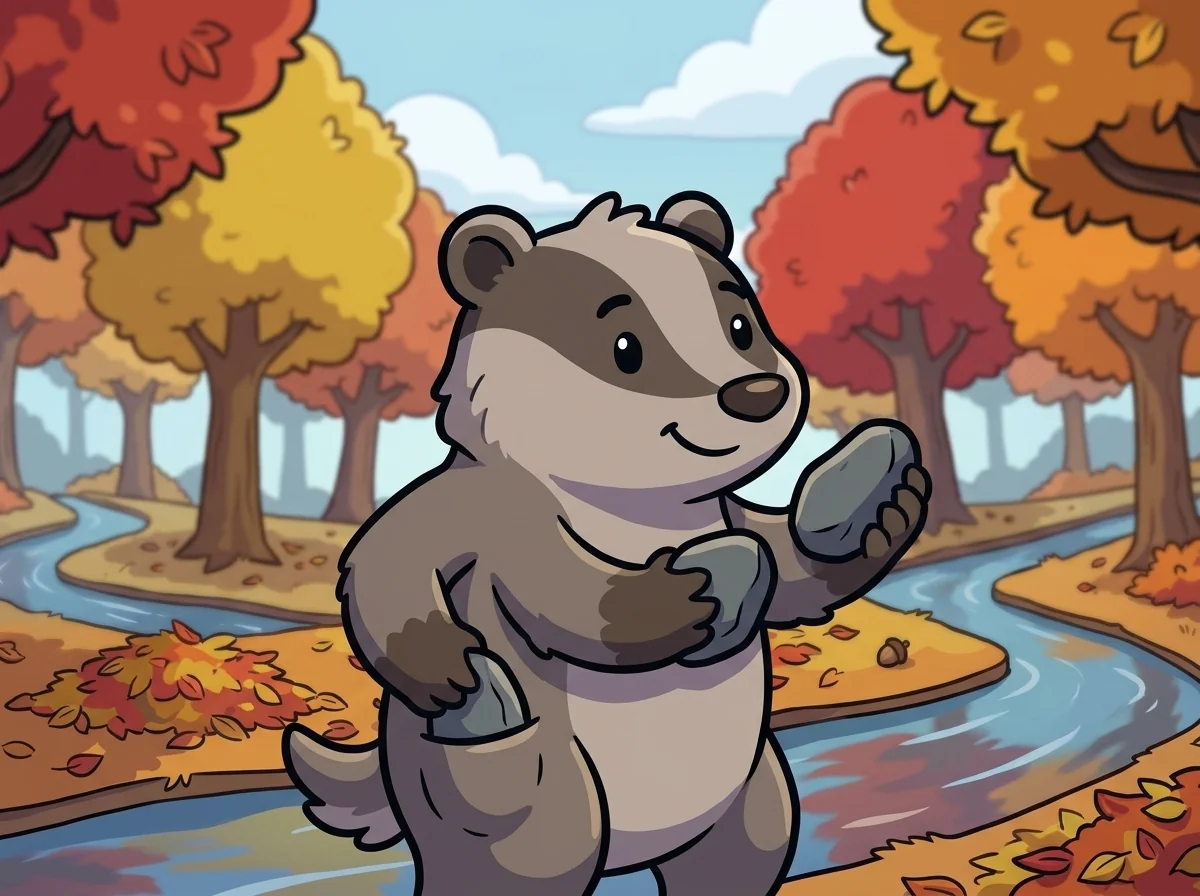
Cherry sat on a mossy log, holding a warm tin cup of pine-needle tea in both her hands. She watched a small, sturdy creature sitting on the gravel spit between the two rushing currents. He looked like a badger, with thick, flinty-grey fur, small ears, and broad, capable paws. In each paw, he held a heavy river stone, worn smooth and flat by years of water.
The creature did not look up when Cherry approached, keeping his dark eyes fixed on his hands. With a sudden, sharp flick of his wrists, he struck the two stones together.
Tk.
A tiny, blue-white spark leapt into the cool air, hung for a second, and then vanished. He pulled his hands back, paused for a beat, and struck them together once more.
Tk.
Another spark danced in the gap, shining brightly against the grey morning shadows of the woods.
"The spark isn't in either stone," Cherry said, her voice quiet so she wouldn't startle him. "It's between them."
The badger-creature paused, his paws hovering in the air as he looked up at her. His dark eyes were bright and sharp, and a slow grin spread across his face.
"You actually see it," he said, his voice sounding like pebbles grinding together in a current. "Most folks only look at the stones, wanting to know what they are made of."
He tapped the left stone, then the right, before looking back up at her.
"But the spark—the bright, living thing—happens in the empty space between them. My name is Flint, and I strike two pictures together to see what jumps up."
Cherry set her tin cup down on the log and leaned forward, deeply interested in his work.
"Show me with pictures," she said, watching him slide the stones into his deep coat pockets. "Not stones."
Flint set his river rocks carefully on his knees and closed his eyes to think for a moment.
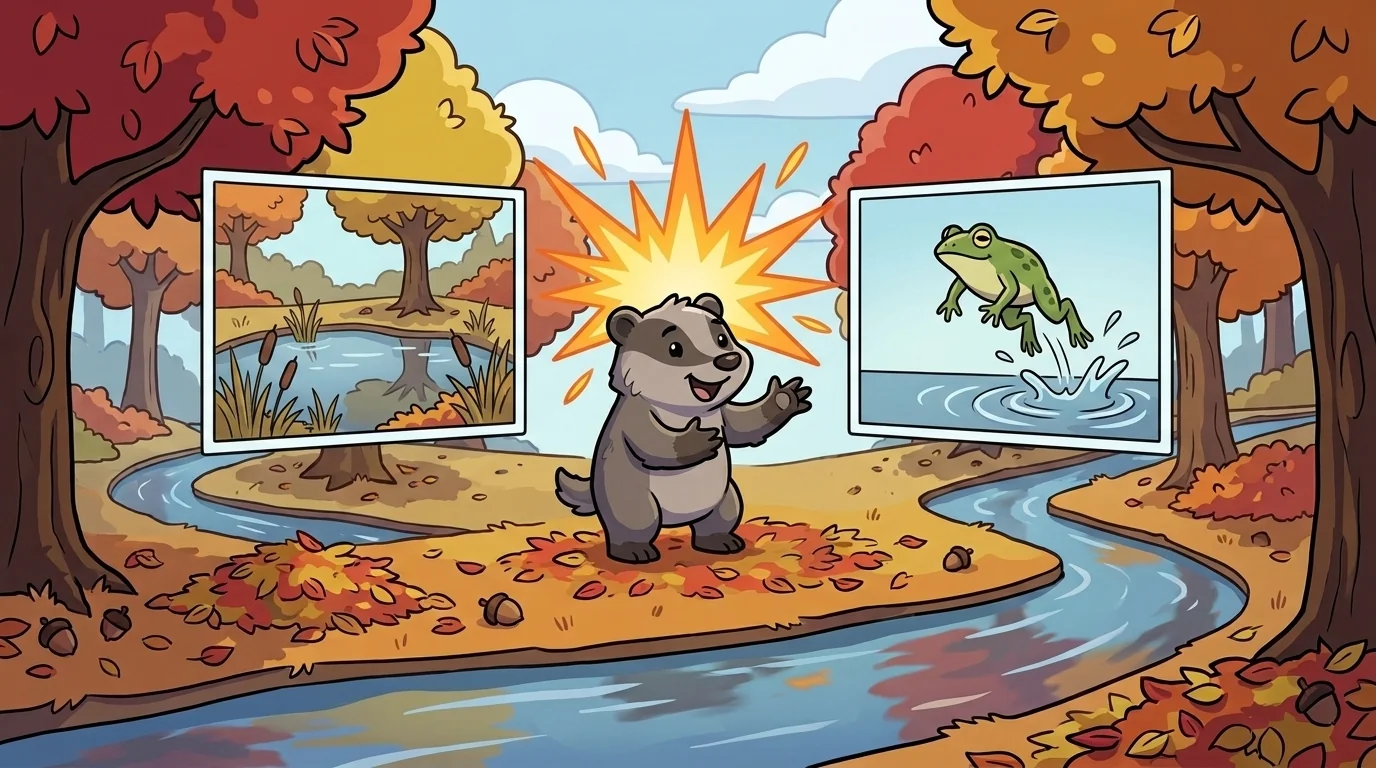
"A haiku often holds two small images," Flint said, his voice dropping to a low, gravelly murmur. "He drew a slow, circular shape in the damp air with his right paw, saying, \"An old, still pond.\""
He paused, letting the quiet of the autumn grove settle between them before he continued.
He raised his left paw, mimicking a quick, downward arc toward the gravel spit.
"A frog jumping in," he whispered, bringing his paws close together but not quite touching.
His eyes snapped open, shining with a sudden, bright intensity that startled her.
"Set side by side, those two pictures make a third thing leap up in your mind," he explained. "You get the plop in the quiet, the sudden ripple in the calm."
He leaned back against a tree root, looking thoroughly satisfied with what he had shown her.
"That feeling isn't in the pond alone, and it isn't in the frog alone, either. It sparks up between them."
Cherry felt a small, cold thrill run down her spine as she listened to him. For years, she had taught children to write one clear, descriptive image at a time. She had praised them for describing a single red leaf or a cold autumn wind. But Flint was teaching something deeper, showing her the leap of meaning that happens between two things.
"The Japanese poets who gave us the haiku knew this well," Cherry said softly. "They called it the two-image spark, and it is one of the oldest secrets of their craft."
Flint nodded slowly, his grey head bobbing as he let Cherry name the historical traditions. He was content just to hold the stones and let her handle the teaching terms.
"Come with me," Cherry said, standing up and brushing dry moss from her trousers. "I travel to the mountain villages to coach children in writing short poems."
Flint looked down at his stones, his expression turning doubtful and a bit stubborn as he hesitated.
"I am a creature of the gravel spit, and I like the sound of the water," he muttered.
"Their poems are often flat," Cherry urged, stepping closer to the edge of the rushing stream. "They write one nice picture, but nothing happens because there is no spark."
Flint rubbed the smooth surface of his left stone with his broad, grey thumb. He looked at the two streams, then back at Cherry, and finally sighed in defeat.
"I never go anywhere with just one stone, anyway," he said, slipping the rocks into his pockets. "You need two to make a spark, after all."
So Flint joined Cherry on the muddy road, his deep pockets clinking softly with every step he took.
Two days later, they sat in a drafty schoolhouse at the edge of a mountain village. A dozen children sat on low wooden benches, chewing on the ends of their graphite pencils.
When Cherry introduced the concept of juxtaposition, the children looked confused and slightly bored. The word sounded too big, like a heavy piece of furniture they didn't know how to move.
Flint stood on a low wooden stool so everyone in the room could see him clearly. He pulled his smooth stones from his pockets and struck them together with a sharp flick.
The sudden tk made three children jump, and a blue spark flared and died in the air.
"Pick two pictures," Flint told them, his gravelly voice carrying easily across the quiet room. "Don't explain how they connect, but just set them side by side for the reader."
He tapped his temple, adding, "First image, then a turn, then a second image that rubs against it."
"The spark always happens in the gap between them."
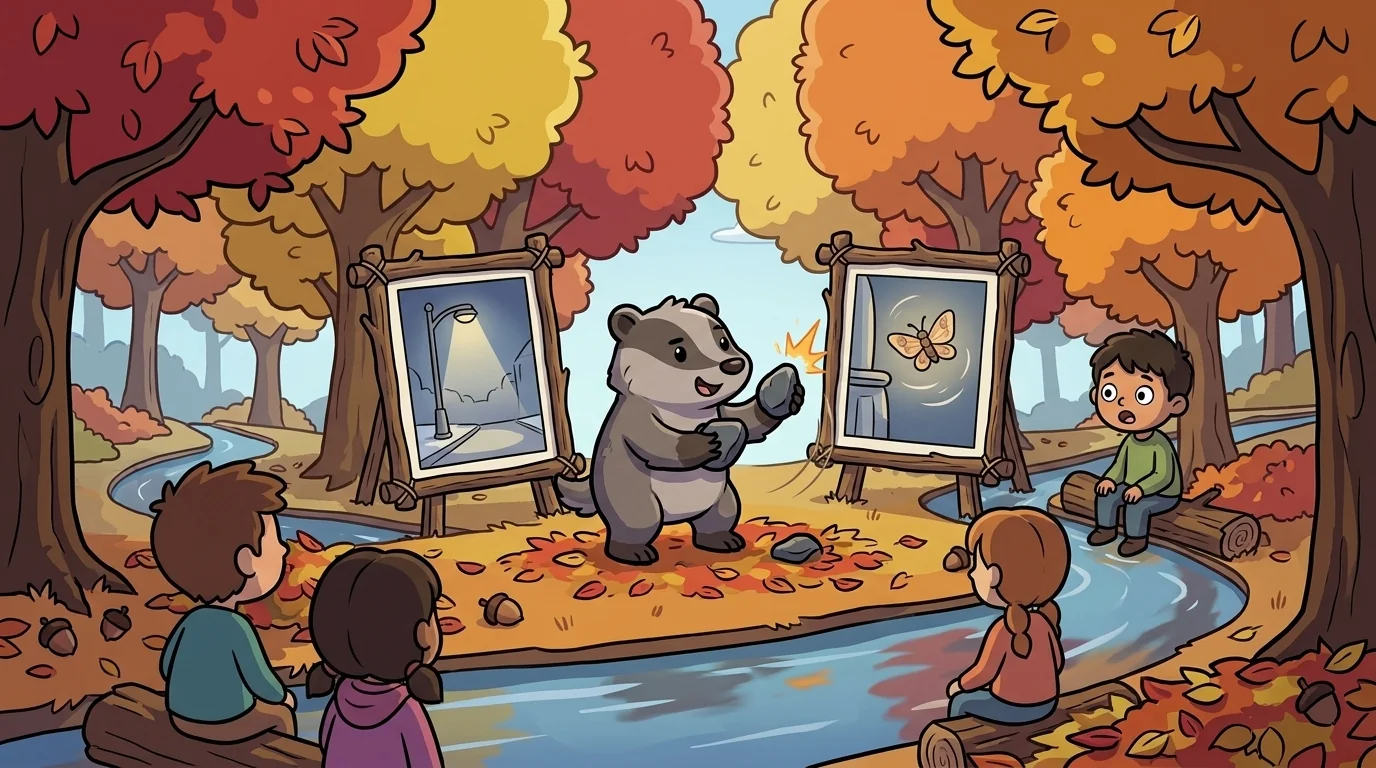
A quiet girl in the back row, her fingers stained with purple ink, stared at her notebook. She had written two flat lines: The winter streetlight is bright. A moth is flying around it.
Flint hopped down from his stool and shuffled over to her desk, looking at her page.
"Too much explaining," he said gently, tapping the paper with his blunt, grey claw. "You are telling us what to think, so let the pictures strike each other instead."
He pointed to her pencil and nodded, encouraging her to try the lines again.
The girl hesitated, then crossed out her words and wrote three short, sharp lines.
winter streetlight / a single moth / still circling
Flint clapped his paws together, making the stones clink loudly inside his deep pockets.
"Do you feel the spark?" he asked the class, looking around at the other students.
The students were silent for a moment, staring at the blackboard as they thought about it.
Then a boy near the window spoke up, his voice quiet in the still room.
"It feels lonely, because the light is cold, but the moth won't give up."
The girl's eyes went wide, and she looked down at her notebook in absolute surprise.
"I didn't write the word 'lonely' anywhere," she whispered, looking up at Flint. "It just appeared in my mind."
"It appeared in the gap," Flint said, his whiskers twitching with delight as he smiled. "You struck that feeling from two stones."
"But here is the secret most people miss," Flint warned, holding up his two rocks. "Don't make the two pictures too alike, because two identical stones will never spark."
He tapped the wooden desk with a stone to emphasize his point to the children.
"You need a little difference, like the still and the moving, or the huge and the tiny."
"The spark lives on the difference between them, not on the things that are the same."
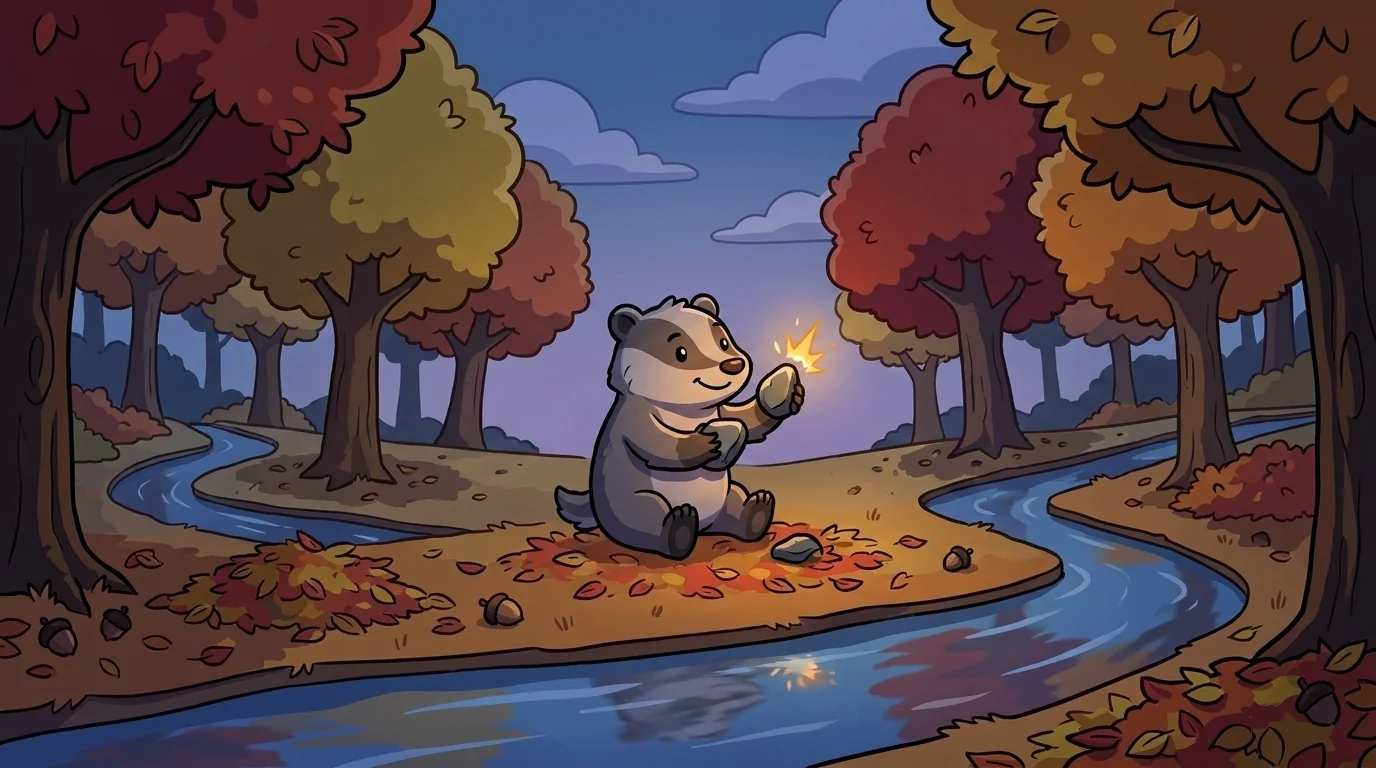
That evening, after the schoolhouse had grown dark and the children had gone home, Flint sat alone. He watched a small creek behind the inn, his breath rising in pale, frosty clouds. He pulled his stones from his pockets and held them in his broad paws.
For a long time, Flint had felt like an incomplete, half-broken sort of creature. With one stone in each paw, he was never quite whole on his own. He had often wondered if he was destined to always need something else to make magic.
But now, watching the stars reflect in the dark water, Flint finally understood. He was not meant to be the spark, and indeed, no one was. The spark was never a single thing you could keep in a pocket. It lived only in the relationship between two different things, in the brave gap where they met.
Being the one who brought those two things close enough to touch was a gift. A quiet, glad fullness settled over his chest as he sat in the cold night. He did not need to be whole by himself. He just needed to bring two pictures together, and trust the spark to leap.
He struck the stones one last time, watching the tiny light flare and die.
The HaikuQuest ensemble
Flint is part of HaikuQuest's distributed-narrative cast. Each character embodies a different curricular primitive; together they teach the full subject.
-
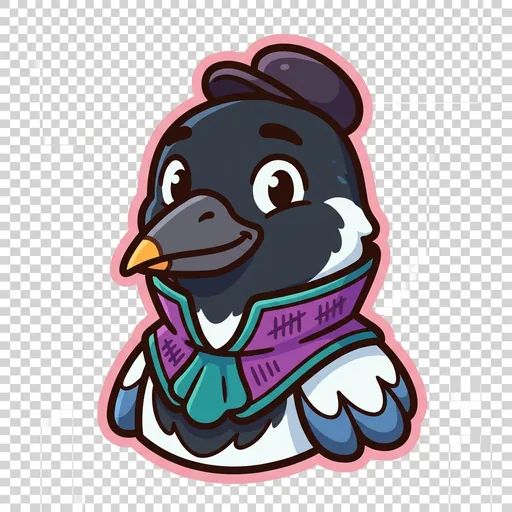
Count
Syllable count / count-discipline — magpie-tween whose beak-tap enacts the rhythmic underpinning of every counted form
-
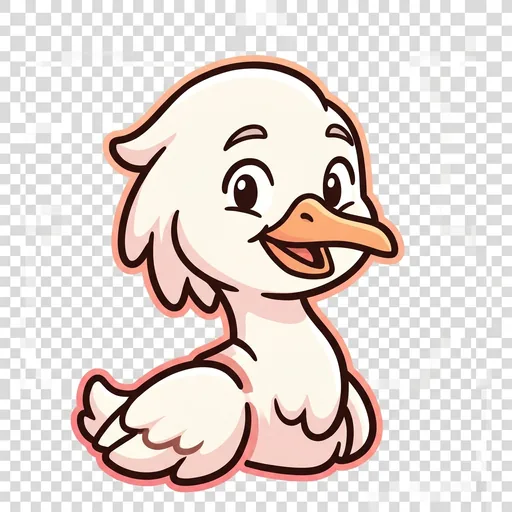
Pause
Kireji / cut / productive break — snowy-egret-tween whose perpetually-mid-step body IS the kireji in physical form
-
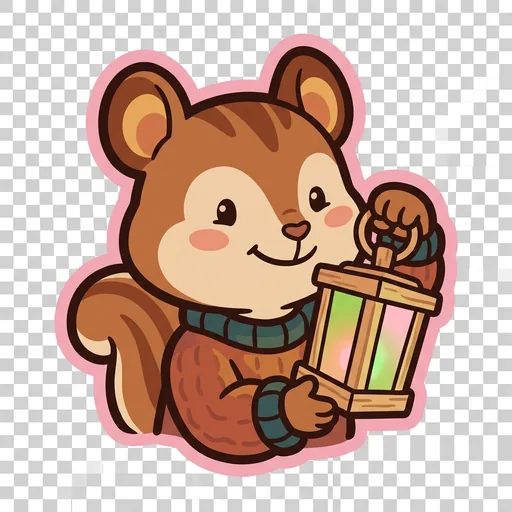
Lantern
Season-word / anchoring image — chipmunk-tween whose wooden lantern visibly shifts color with the season
-
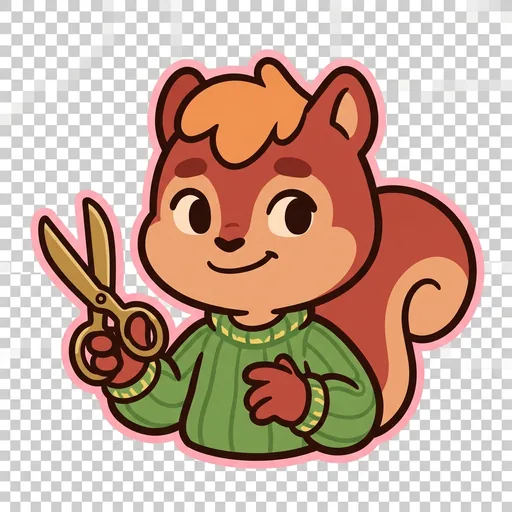
Trim
Brevity / saying-less — red-squirrel-tween with brass scissors who snips redundant words to find the smaller-stronger version
-
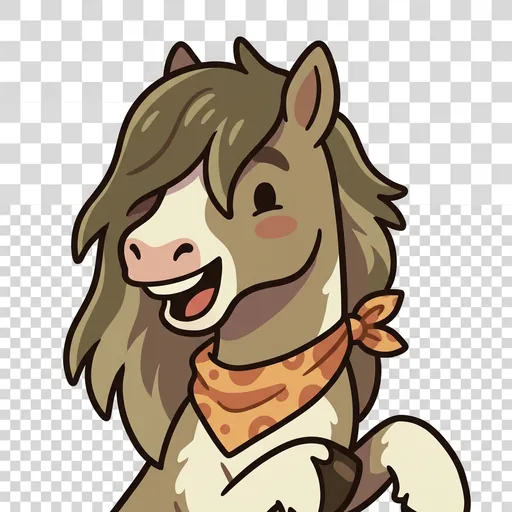
Gallop
Meter / the stressed beat — long-legged pony-creature whose hooves fall da-da-DUM; not how MANY beats (that's Count) but which ones to stomp (esp. the limerick)
-

Bell
Rhyme — silver creature with tuned tail-bells that chime the same note when end-sounds match; a forced rhyme jammed in just to chime is worse than none
-
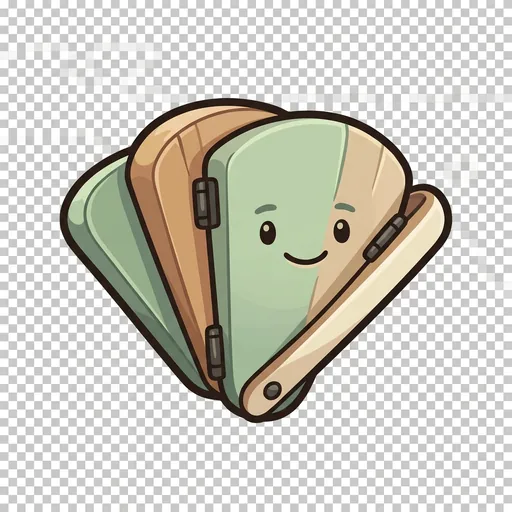
Hinge
The line break — folding-door creature who holds a small pause at the end of each line; the end of a line is a little stage, so end on a word that earns it
-
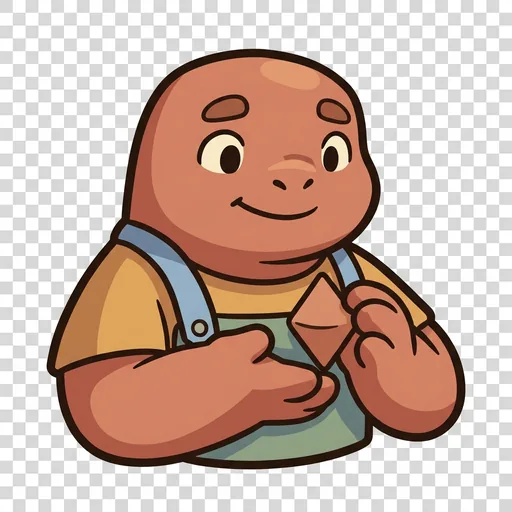
Mold
Shape on the page — clay-colored creature who builds a poem's silhouette (a cinquain's 2-4-6-8-2 diamond); shape is meaning you can see from across the room
-
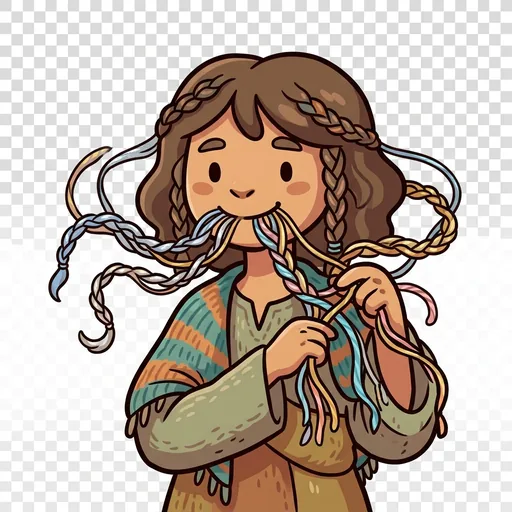
Braid
Sound texture — nimble creature who weaves repeated sounds through a line (alliteration + assonance); enough echo makes music, too much makes a tongue-twister knot