
Mold
SHAPE ON THE PAGE — some poems are built to a visual shape. A cinquain grows then shrinks (2-4-6-8-2 syllables), making a little diamond. Concrete poems take the shape of what they describe. The form's silhouette is part of its meaning.
Loading audio…
Press play to listen along. The line being read lights up as you go.
Show full transcript
Loading transcript…
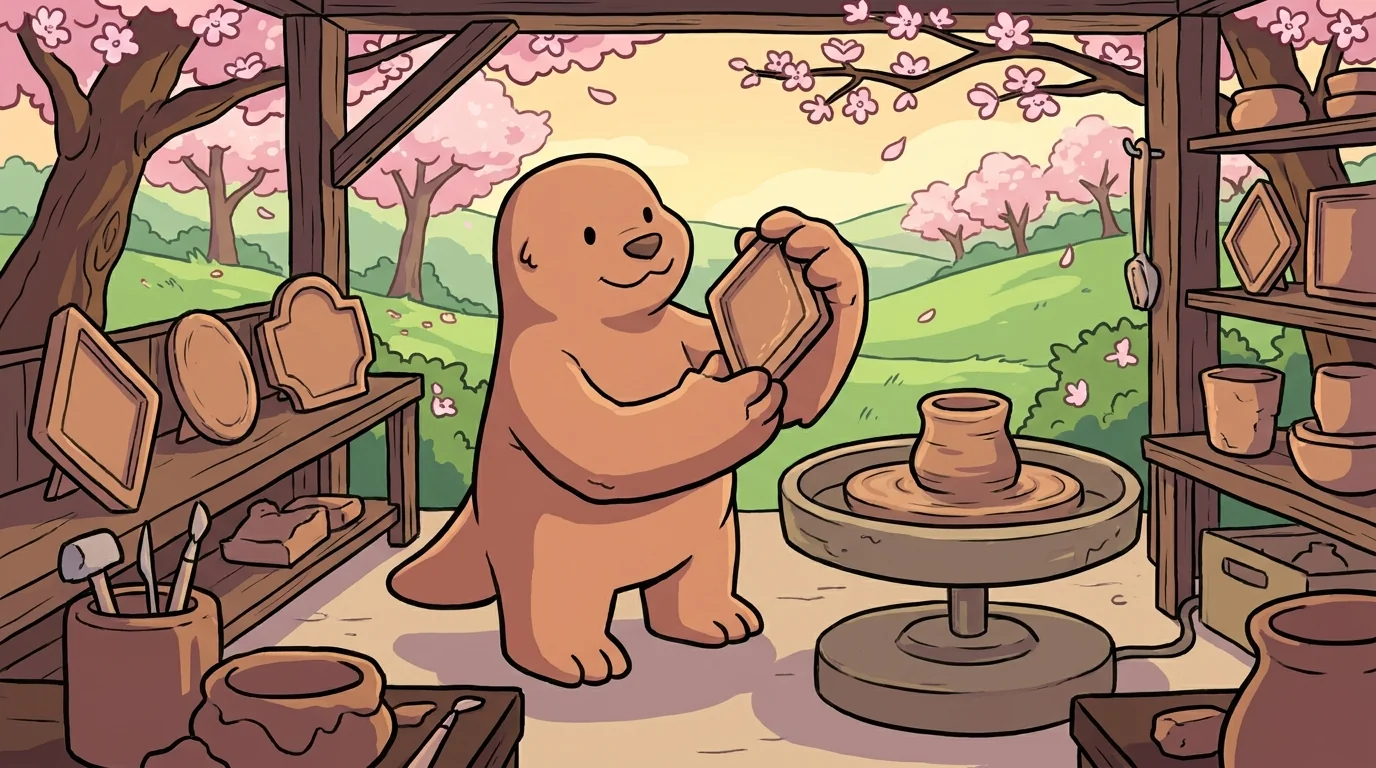
Cherry found the workshop at the edge of the grove, where the birch trees gave way to hard-packed river clay. The open shed smelled like damp silt, dried river moss, and cool well water. A heavy wooden potter’s wheel sat in the center of the floor, turning slowly under the rhythmic push of a foot treadle.
The creature sitting on the low bench was the exact shade of unbaked earthenware. Their broad paws moved over a spinning lump of gray clay with quiet, deliberate pressure. Mold did not look up when Cherry’s boots crunched on the gravel outside the doorway. They kept their thumbs pressed into the clay, coaxing the spinning mass into a clean, balanced geometric block.
Cherry leaned against the rough timber post and watched.
Mold lifted their hands from the wheel and let the treadle slow to a stop. Using a thin wire tool, they sliced the piece from the wheel head and held it up against the evening light. The shape was narrow at the top, swelled outward into a wide, sharp center, and then tapered down to a tiny base. It was a precise, symmetrical diamond.
From thirty paces back, Cherry did not need to squint to understand what it was.
"You make things that can be read from across the room," Cherry said.
Mold turned the small clay object in their paws. Their coat was rough and gray-brown, dusted across the shoulders with powdery white slip.
"The shape is the first thing you see," Mold said. Their voice was low and calm, like stones rolling under smooth water. "It reaches your eyes before you can read a single word. My name is Mold. I keep the shape of a poem on the page."
They placed the clay diamond on a wooden drying rack beside several identical pieces.
"Most people think a poem begins with a sound," Mold continued, wiping their thumbs on a canvas apron. "They listen for the rhyme or count beats on their knuckles. But your eyes are faster than your ears. When you open a book, your eye catches the outline before your mind starts sounding out letters."
Cherry stepped closer, her curiosity piqued. "You mean a silhouette?"
"Exactly that," Mold said. "Take an American cinquain. Adelaide Crapsey invented it to hold a very specific weight. It starts on a short line of two syllables. Then it widens to four, expands to six, and peaks at eight. Then it snaps right back down to two."
Mold tapped the clay diamond on the drying board.
"Small, wider, widest, then a tiny finish," Mold said. "It forms a distinct diamond. You can recognize the structure from the doorway before you even know what the poem is about."

Cherry studied the row of clay forms on the drying rack. She had spent weeks teaching students how to count syllables, but the children always treated the lines like an ordinary grocery list.
"Show me why the outline matters," Cherry said. "Beyond just looking tidy on white paper."
Mold reached into a bucket, pulled out a fresh handful of dark river mud, and slapped it onto the center of the wheel. The wheel began to spin again with a low, rhythmic hum.
"Watch how the form breathes," Mold said. Their fingers pressed into the mud, pulling a tiny neck of clay upward. "Line one is two beats. It introduces an idea, small and still."
Mold’s hands widened, coaxing the clay outward into a thicker ring.
"Line two opens to four beats. The thought gains momentum." Their palms spread wider still. "Line three is six beats. The poem is stretching out now, carrying more detail."
With a swift, controlled touch, Mold flared the clay out into a broad, sweeping disk. "Line four hits eight beats. That is the widest part of the river. It holds the heaviest description or the main action."
Then, with a sudden inward tuck of both thumbs, Mold collapsed the top edge inward, leaving only a tiny clay crown at the very top.
"And line five drops back to two," Mold whispered. "It closes the thought like a latch. The widening pulls the reader forward, line by line, until that last tiny punch drops. The silhouette creates the tension. The words just fill the space."
Mold pulled another piece of clay from the trough and shaped a tall, needle-thin spire without using the wheel.
"It works for concrete forms too," Mold added. "A poem about a church steeple or an old pine tree wants to stand tall and narrow. A poem about a creek wants to snake diagonally across the page. If the shape contradicts the subject, the reader feels the mistake instantly."
Cherry nodded slowly. She had seen students squeeze long, heavy thoughts into tiny lines, creating an unbalanced mess that made no visual sense.
"I have been teaching them the math," Cherry admitted. "Two, four, six, eight, two. But to them, it is just arithmetic. They do not see the diamond."
"Numbers are invisible until you give them a body," Mold said.

Cherry crossed her arms and looked around the quiet shed. "Come with me to the schoolhouse. The students need to understand what happens to a page when their lines wander off."
Mold looked down at their clay-crusted paws, then back at the drying shelves lined with diamonds, pyramids, and pillars.
"I prefer working where it is quiet," Mold said honestly. "Children tend to erase things until the paper tears."
"They do," Cherry agreed. "They also write eight syllables on line two and wonder why the poem feels like it is falling over. You could show them why the balance matters."
Mold was silent for a moment, scraping a dried ribbon of clay from the edge of the wheel with one blunt claw.
"I do love a silhouette you can read from the hall," Mold said softly. "I will come. We will teach them to build with their eyes first."
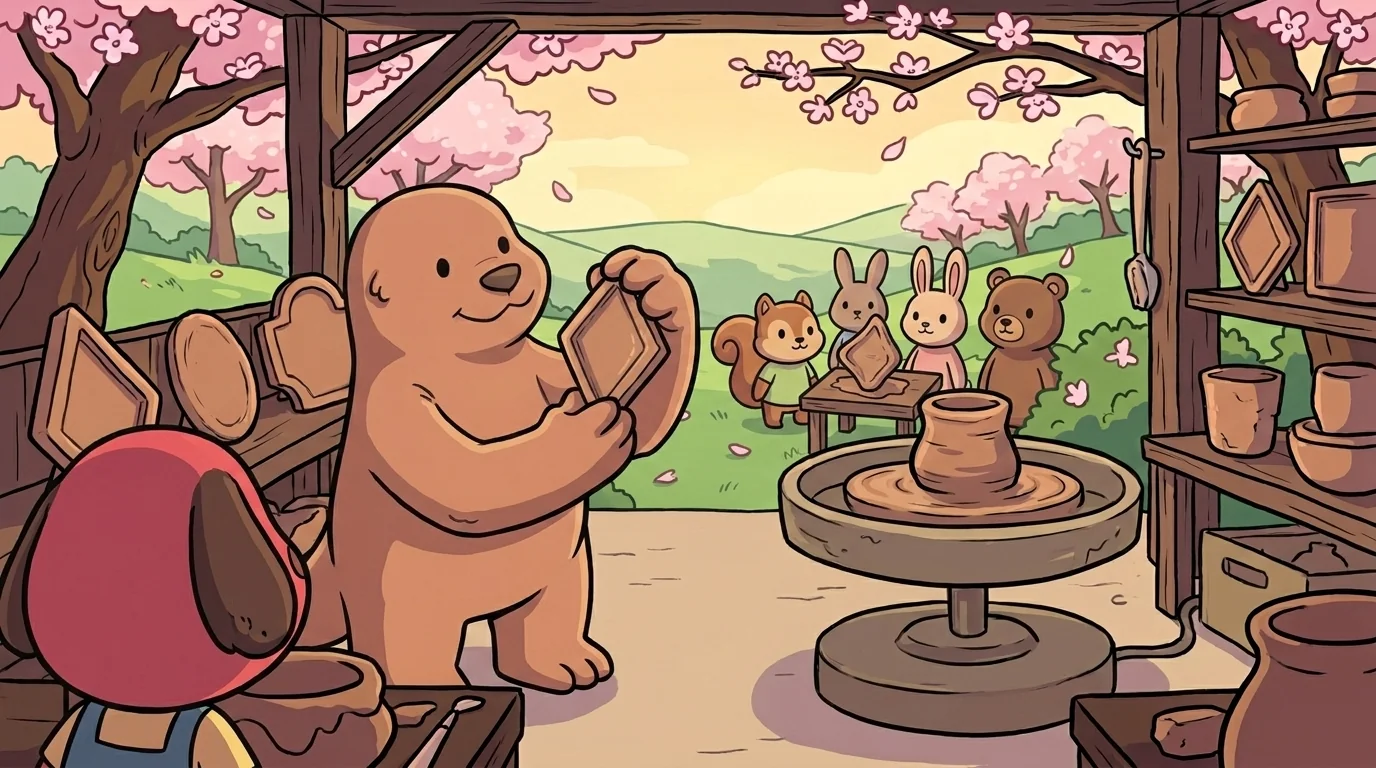
The next morning, the classroom tables were covered in butcher paper, pencils, and wooden rulers. The students sat with their notebooks open, staring down at draft lines they had scribbled during the morning bell.
Mold did not hand out erasers. Instead, Mold set a heavy wooden stand at the front of the room and placed a slab of dark slate on it.
"Do not read your cinquains to your neighbor yet," Mold told the class. "Step back from your desks. Push your chairs in and walk to the back wall."
The students looked at each other, confused, but did as they were told. A dozen eleven-year-olds backed up until their shoulders hit the rear chalkboard.
"Now look at your papers from across the room," Mold said. "Look at the dark ink against the white sheet. Do you see a diamond, or do you see a lopsided heap of firewood?"
A boy named Marcus shifted his weight. "Mine looks like a staircase. The lines just keep getting longer all the way to the bottom."
"Then you wrote a ramp, not a cinquain," Mold said without cruelty. "What happened to your last line?"
"I had a lot of things left to say," Marcus muttered.
"A cinquain does not let you wander," Mold explained, holding up a small clay diamond for the room to see. "Line five must bring the reader home. It should be two syllables, sharp and clear. When you make the last line eight beats long, your diamond loses its bottom point. The whole structure tips over."
Another student, Maya, pointed at her desk. "Mine looks pinched in the middle. Like someone squeezed its waist."
Mold walked down the aisle, glanced at Maya’s notebook, and held it high above their head so the entire room could see the outline. The third line was barely three words long, while the second and fourth lines stuck out like sharp elbows.
"Look at the silhouette," Mold said. "Line three should be six syllables. Maya wrote three. The eye catches that gap before the ear ever hears the meter."
Maya took her pencil back and began tapping out beats against her knuckles. "If I add an adjective to describe the storm, the line gets wider."
"Try it," Mold said.
Maya scribbled two words into the blank space. When Mold held the notebook up again, the jagged dent had smoothed out into an even, balanced slope. The class let out a collective murmur of recognition.
"You did not just balance a math problem," Mold told Maya. "You repaired the shape. Now the page looks like what the poem is trying to do."
Mold set the notebook down and turned to face the room.
"Remember this rule," Mold said. "Not every poem wants to be a picture. A traditional haiku is three quiet, even lines. A standard narrative stanza is a solid brick of text. You should never force a shape onto a poem that wants to be flat and quiet. But when a form calls for a silhouette, you must honor it. Let the reader’s eye receive the gift before their brain begins to work."

That evening, after the children had gone home and the chalk dust had settled, Mold returned to the grove workshop. The dusk was cool, and the crickets were beginning their steady cadence in the tall grass near the kiln.
Mold sat on the wooden bench beside the silent wheel. They picked up a small, freshly cut diamond of clay and smoothed its corners with a damp thumb.
For many seasons, Mold had carried a quiet doubt. The other woodland teachers worked with grand things—deep metaphors, ancient rhymes, emotional epiphanies. Mold only worked with borders, margins, and physical forms. It was easy to worry that caring about outlines was shallow, as if paying attention to appearances meant missing the soul of the work.
Mold turned the small clay shape over in their broad paws. The clay caught the blue twilight on one flat facet and held a cool shadow on the other.
The worry was unnecessary. Form was not a disguise; it was the vessel that held the feeling. A solid silhouette gave wandering thoughts a safe place to land. It welcomed the reader before a single syllable had to carry its weight.
Mold set the diamond down on the top shelf alongside the others, perfectly centered, perfectly still. They brushed the dry gray powder from their paws, listening to the grove settle into the dark, entirely content with the work.
The HaikuQuest ensemble
Mold is part of HaikuQuest's distributed-narrative cast. Each character embodies a different curricular primitive; together they teach the full subject.
-

Count
Syllable count / count-discipline — magpie-tween whose beak-tap enacts the rhythmic underpinning of every counted form
-
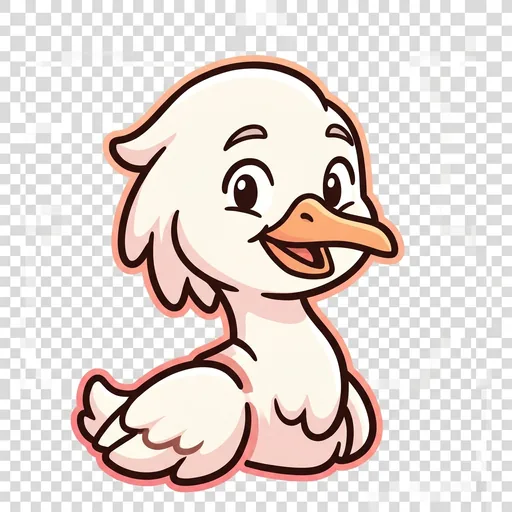
Pause
Kireji / cut / productive break — snowy-egret-tween whose perpetually-mid-step body IS the kireji in physical form
-
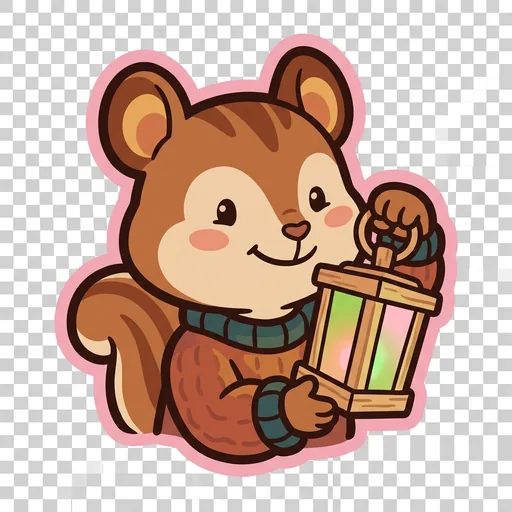
Lantern
Season-word / anchoring image — chipmunk-tween whose wooden lantern visibly shifts color with the season
-
Trim
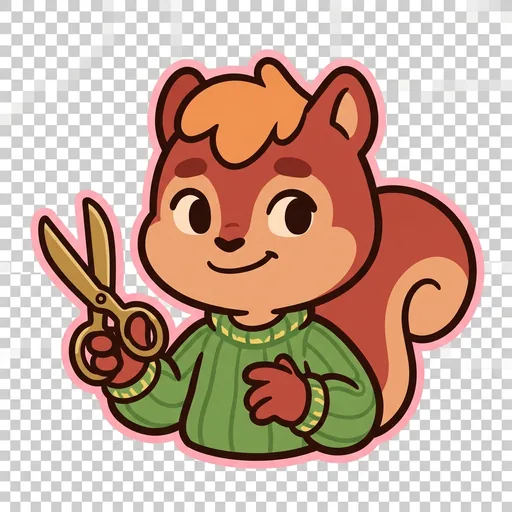
Brevity / saying-less — red-squirrel-tween with brass scissors who snips redundant words to find the smaller-stronger version
-

Flint
Juxtaposition — flinty badger-creature who strikes two smooth stones to make a spark; two images set side by side make a third meaning leap up in the gap
-
Gallop
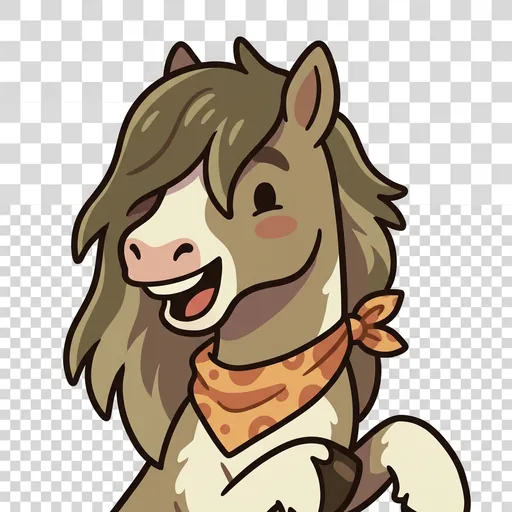
Meter / the stressed beat — long-legged pony-creature whose hooves fall da-da-DUM; not how MANY beats (that's Count) but which ones to stomp (esp. the limerick)
-

Bell
Rhyme — silver creature with tuned tail-bells that chime the same note when end-sounds match; a forced rhyme jammed in just to chime is worse than none
-
Hinge
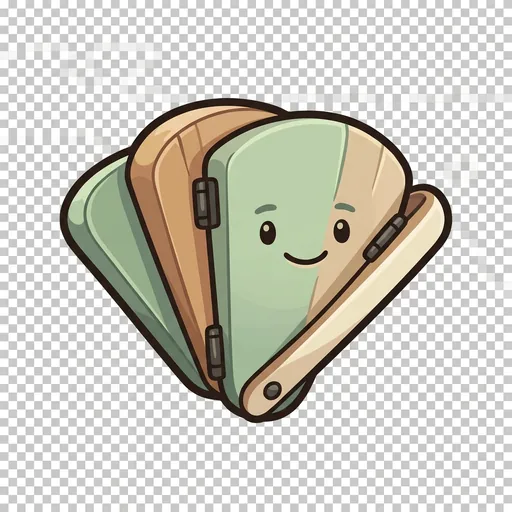
The line break — folding-door creature who holds a small pause at the end of each line; the end of a line is a little stage, so end on a word that earns it
-
Braid
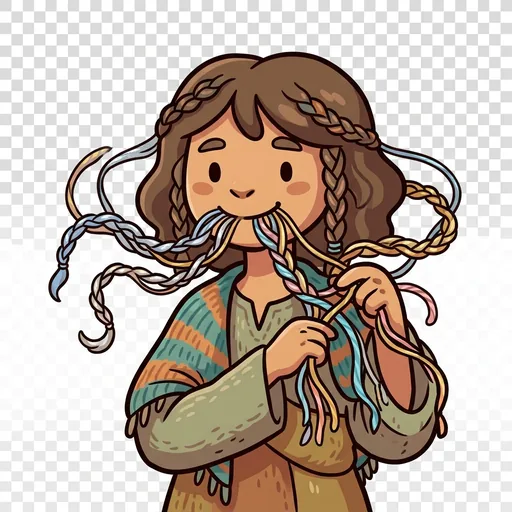
Sound texture — nimble creature who weaves repeated sounds through a line (alliteration + assonance); enough echo makes music, too much makes a tongue-twister knot