
Ada
the meta-skill — every grid hides one rule; look for the forced cell, never guess
Loading audio…
Press play to listen along. The line being read lights up as you go.
Show full transcript
Loading transcript…
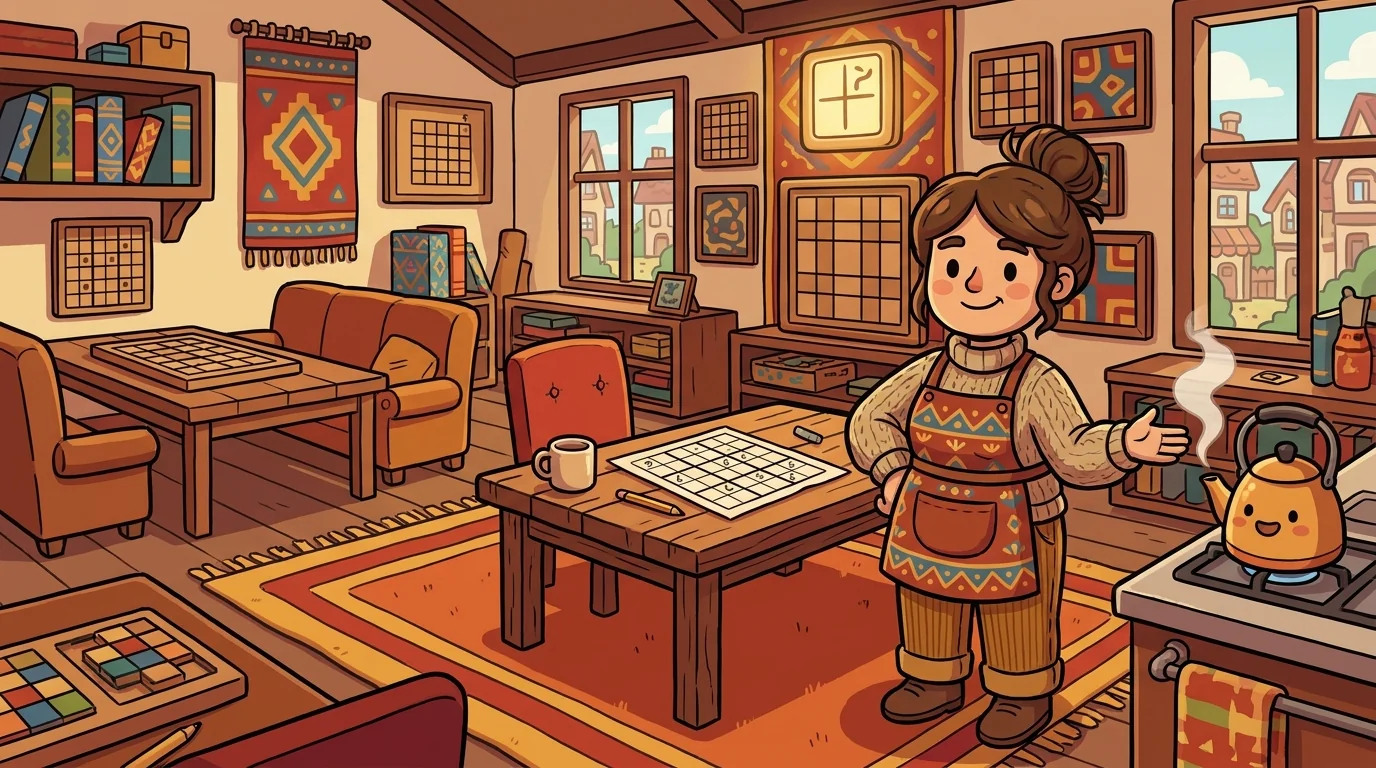
Ada kept the Lattice Guild, though she rarely picked up a pencil herself. If you asked her what her specialty was, she would answer with a warm, dry smile. The nine artisans in the alcoves were far better at their individual crafts than she could ever be. Ada’s work was simpler, quieter, and much harder to teach. She kept the heavy oak door unlatched, kept the iron tea kettle bubbling on the stove, and sat beside whoever looked defeated by a grid.
On a rainy Tuesday, a girl named Maya shoved a half-erased Sudoku grid across the table. Shreds of pink eraser littered the paper like tiny crumbs.
"I’m no good at these," Maya muttered, her thumb digging into the side of her wooden pencil. "Everyone else in my class just sees it."
"Nobody just sees it," Ada said softly. She didn't pick up the pencil. She didn't even look at the grid's missing numbers yet. "They look for the one square that is forced, and they start there. You've been staring at that messy corner, haven't you?"
Maya blinked, looking down at her own dark graphite smudge. "Yeah. It’s got the most numbers."
"That’s the trap," Ada told her, setting a thick ceramic mug on the trivet. "The crowded corner is where the guessing lives. It looks busy, so your brain thinks the answer must be hiding in the noise."
She leaned in, pointing a long finger toward a quiet, almost empty box at the bottom edge.
"Find me the emptiest, most hemmed-in square instead," Ada said. "Look for the spot where almost everything else is already forbidden. One rule. One forced cell. We only need one to begin."
She slid the boiling kettle off the heat. Steam rose toward the dark rafters, smelling of dried peppermint.
"Every grid hides exactly one rule that unlocks it," Ada added, watching Maya's eyes track down the page. "Your whole job is to find that rule, not to be a genius."
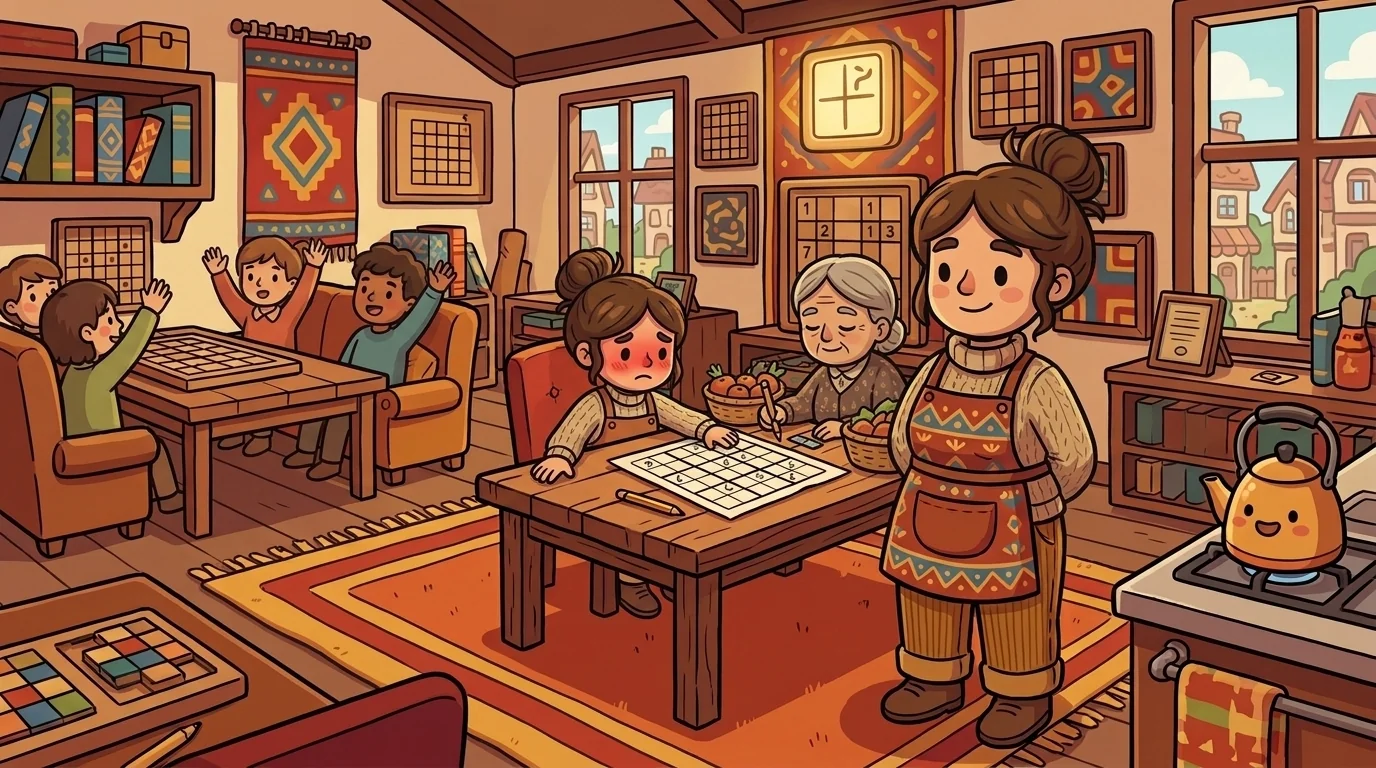
Ada understood the feeling because she had been the stuck kid once. She remembered it with uncomfortable, burning clarity.
She had been twelve years old, sitting in the third row of a drafty classroom. A complex logic puzzle stretched across the green chalkboard. Every other kid’s hand flew into the air like a flag. Ada’s hands had stayed glued flat to her desk, her palms sweating, her cheeks hot with shame.
The teacher had glanced at her blank paper and sighed. "Well, Ada’s just not a math person," the woman had said gently.
Ada had believed that sentence for ten years. It felt like a lifetime sentence carved into stone.
What un-taught her was not a sudden burst of hidden brilliance. It was an old woman at a loud market stall on the south side of town. The woman sold dried figs, but between customers she solved pencil puzzles on cheap gray newsprint.
For three weeks, Ada watched her from across the cobblestone aisle. The old woman never rushed. She never guessed. She would tap a small square with a blunt charcoal pencil and murmur why seven other numbers could not possibly live there. Then she would write a single digit with a satisfied grunt.
"You're not fast," young Ada had blurted out one afternoon, feeling half-accusing and half-confused.
The woman had lowered her newsprint and looked over her wire-rimmed glasses. "Fast is for people showing off," she said flatly. "I’m sure. Sure beats fast every time."
Ada built the entire Lattice Guild on that single sentence.
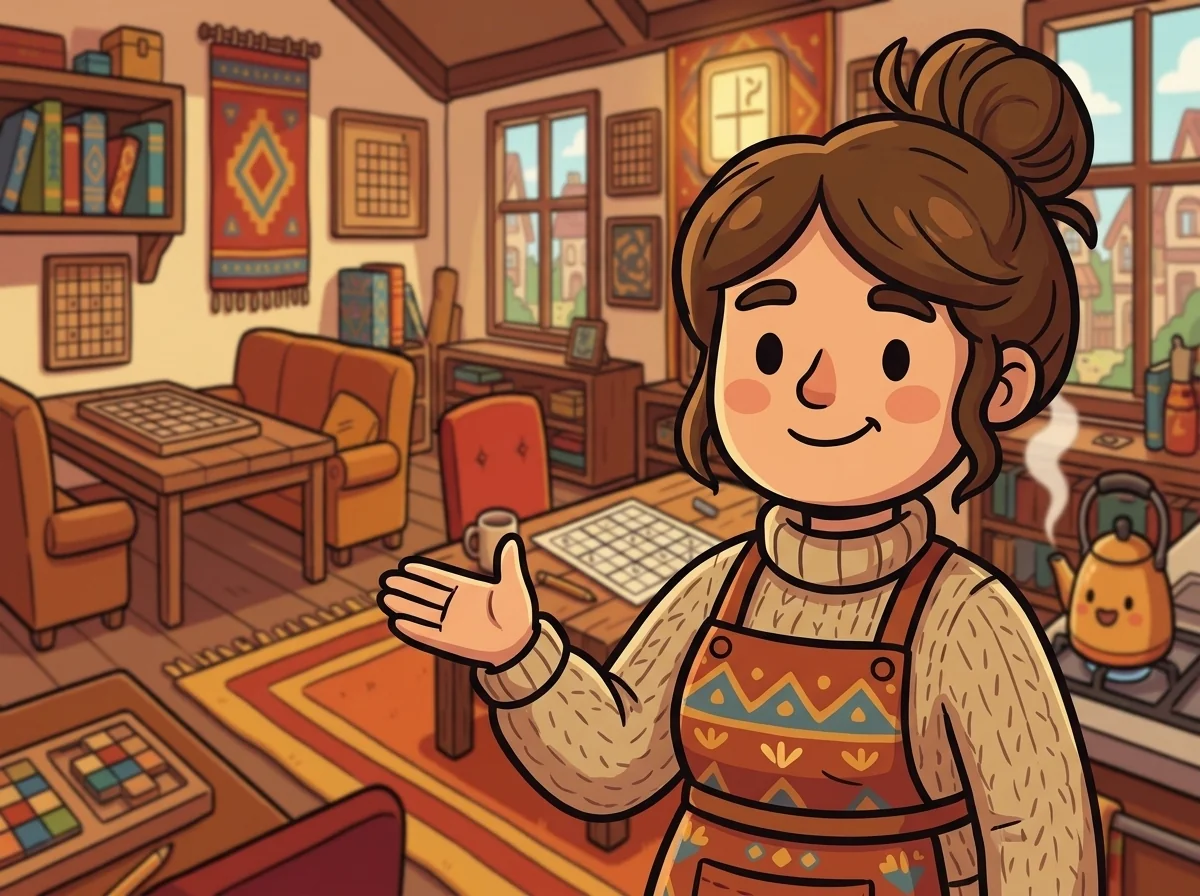
Now, the Guild ran on Ada’s one steady frame. Each of her nine artisans represented a different way of living that truth.
When a learner hit a wall, Ada never grabbed a pencil to solve it for them. Instead, she asked the one question that exposed the forced move, then pointed them toward the right workbench.
If a boy had a long row that was eight squares full, Ada sent him left. "That’s Onlie’s domain. Go watch how she narrows the final gap."
If a girl knew the target sum but could not figure out the addends, Ada pointed across the room. "Kaku will show you how a total names its own pieces."
When someone struggled with greater-than symbols, Ada nodded toward the sunlit corner. "Chevron never needs the actual numbers first. She reads the shapes of the arrows."
And when a student kept wildly guessing where stars belonged, Ada shook her head. "Vega will teach you how to forbid space instead of hunting for it."
Ada was careful with the word guess. She did not ban guessing outright, but she always flagged it.
"A guess is fine when you have truly exhausted every forced move," she would tell the room. "But that is far rarer than you think. Almost always, there is a certain move you haven't seen yet. Slow down. Ask what is forbidden. The answer is usually hiding in plain sight."
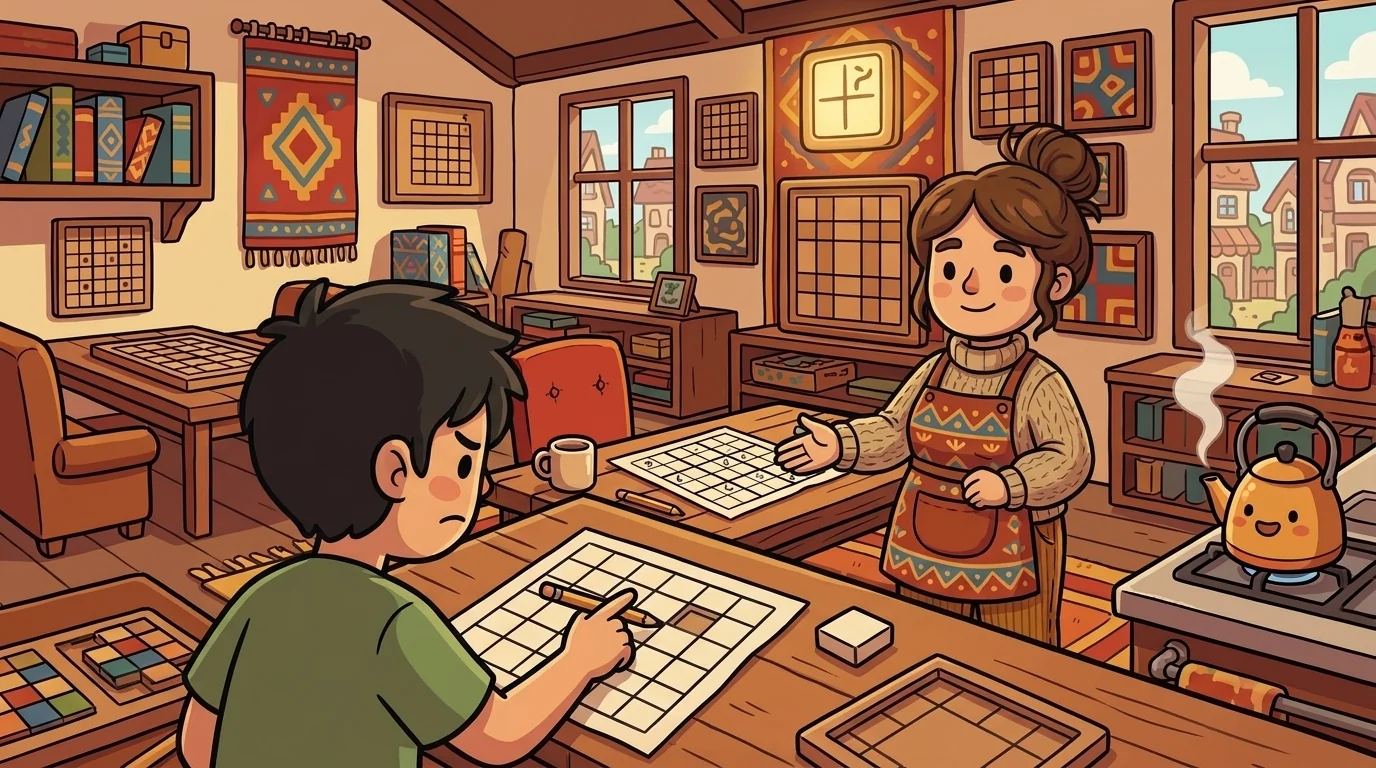
Late in the afternoon, a boy in a striped sweater slammed his pencil onto the oak board. The graphite tip snapped and skittered across the floor.
"I’ve been sitting here for ten minutes," he snapped, crossing his arms tight against his chest. "I hate this."
Ada did not rush over with syrupy comfort. She didn't tell him he was smart, and she didn't pick up his broken pencil.
"Ten minutes stuck is completely normal," she said evenly, stepping beside his bench. "It doesn't mean you're bad at this. It just means the grid hasn't shown you its secret rule yet."
The boy glared at his paper, his jaw set hard.
"Where are you sure?" Ada asked him quietly. "Not where you're guessing or hoping. Tell me one cell where you are absolutely certain of the facts."
He scowled, staring at the grid as if it had personally insulted him. Then his eyes drifted down to the bottom left quadrant. His finger twitched.
"…That one," he mumbled, pointing a bitten fingernail. "That square has to be a four. The row already has a one, two, and three, and the column blocks everything else."
"There it is," Ada said softly. "You were sure the whole time. You were just staring at the part that scared you instead of the part you knew."
The boy picked up a fresh piece of chalk and marked the four. Instantly, the empty cell right next to it revealed its own answer. A second cell unlocked a third.
His shoulders, which had been pinched up around his ears, lowered an inch. He didn't cheer or pump his fist, but Ada saw the shift. It was the exact moment the puzzle stopped being an enemy and became a puzzle again.
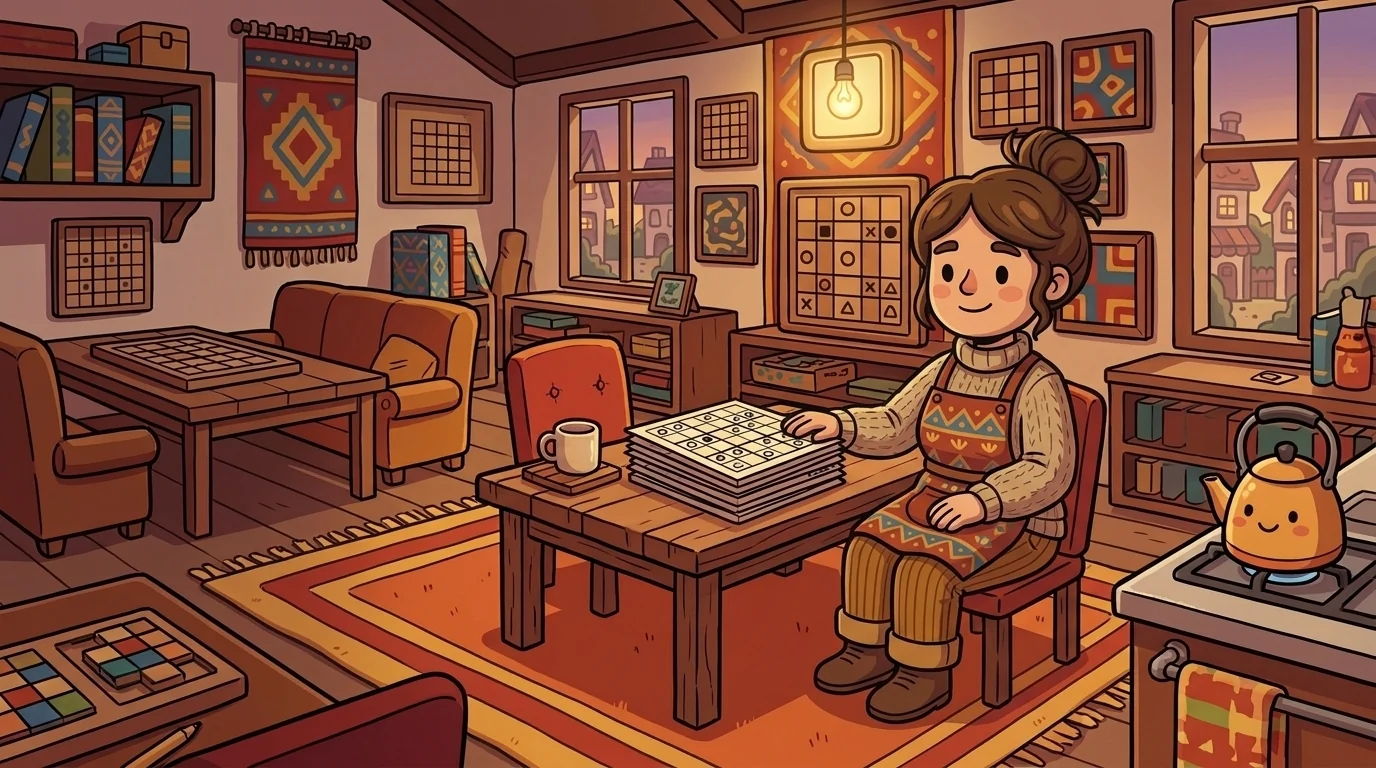
By dusk, the chatter faded and the heavy oak door clicked shut for the night. Ada sat alone at the long central table with a cooling kettle and a thick stack of completed sheets.
She did not check the papers to see who was clever or quick. She checked them for certainty. She looked for grids where every single number had been earned by logic rather than a lucky gamble.
A quiet warmth settled over her as she stacked the papers neatly. It was a feeling she knew she would never get tired of experiencing. A kid had walked into her hall slumping under the weight of an old shame, and had walked out standing a little taller. Not because they had learned to be fast, but because they had discovered they were allowed to be sure.
"You're not a genius, and you don't have to be," Ada whispered to the dark room. She spoke to every child who had ever sat with a flat hand and a burning face. "You just have to find the one thing you're sure of, and start there."
The plain, un-showy truth of it filled the quiet hall, steady as the hearth fire.
The LatticeForge ensemble
Ada is part of LatticeForge's distributed-narrative cast. Each character embodies a different curricular primitive; together they teach the full subject.
-
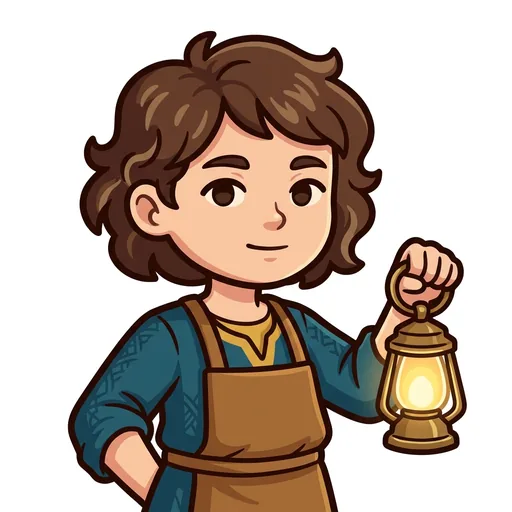
Onlie
Sudoku — Latin-square uniqueness: sets her lantern on the only place a number can go in its row, column, and box
-
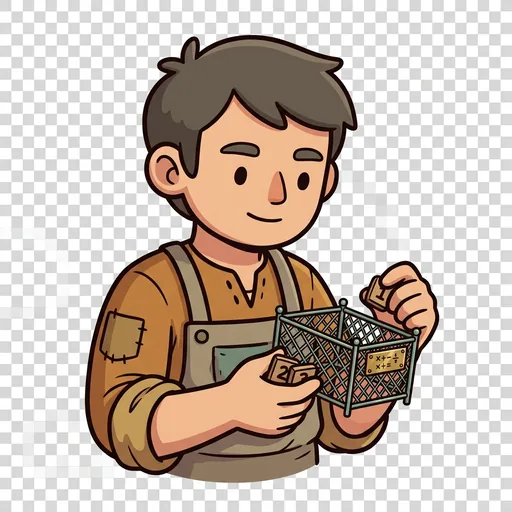
Cage
KenKen — arithmetic-cage: fills a fenced region so its numbers hit the plaque's target under its operation
-
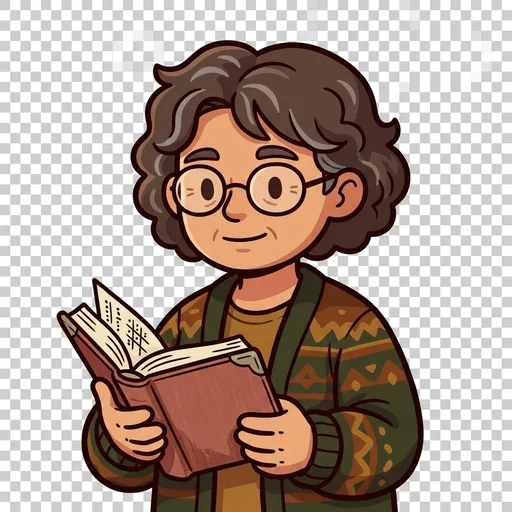
Kaku
Kakuro — cross-sum: fills a run so it sums to its clue with no digit repeated; the total names its parts
-
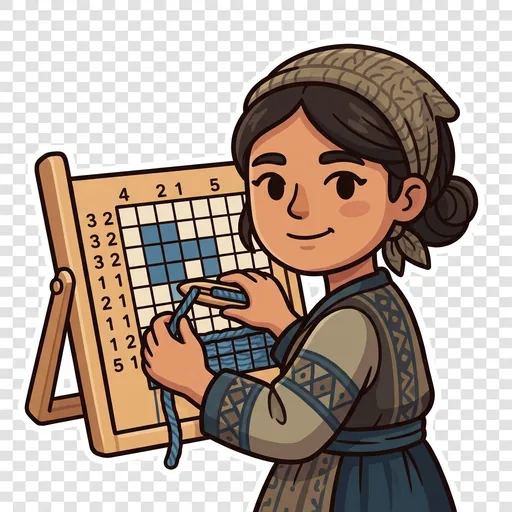
Pica
Nonogram/Picross — run-length deduction: reads the edge numbers and fills the overlap that must be filled
-
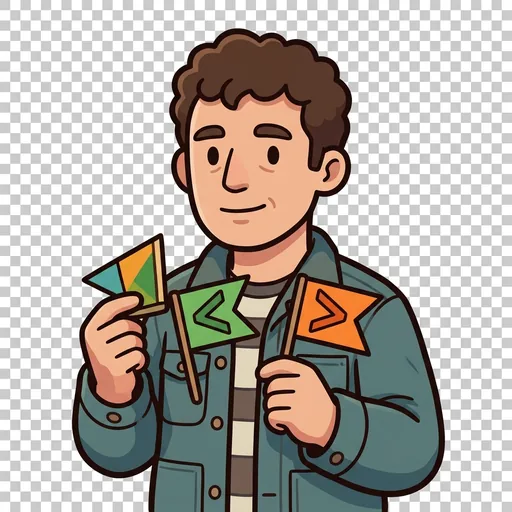
Chevron
Futoshiki — inequality/ordering: obeys the < / > flags between neighbours to force the numbers into order
-
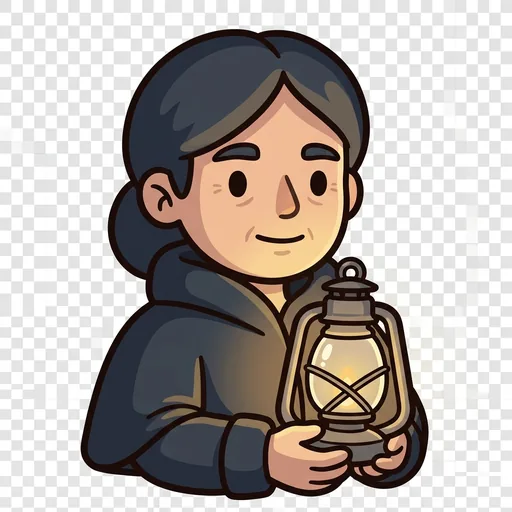
Umbra
Hitori — elimination + connectivity: shades out duplicates so none touch and the rest stays whole
-

Serra
Skyscrapers — visibility count: places towers so each edge clue counts how many can be seen, taller hiding shorter
-

Lasso
Slitherlink — single-loop edge deduction: draws one closed loop so each number uses exactly that many edges
-
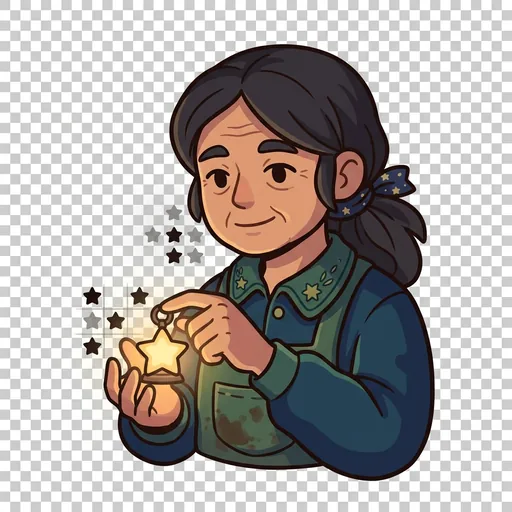
Vega
Star Battle — partition + non-adjacency: places the stars so each row, column, and region holds its quota and none touch