
Chevron
the inequality constraint — the < / > signs between neighbours order the numbers
Loading audio…
Press play to listen along. The line being read lights up as you go.
Show full transcript
Loading transcript…
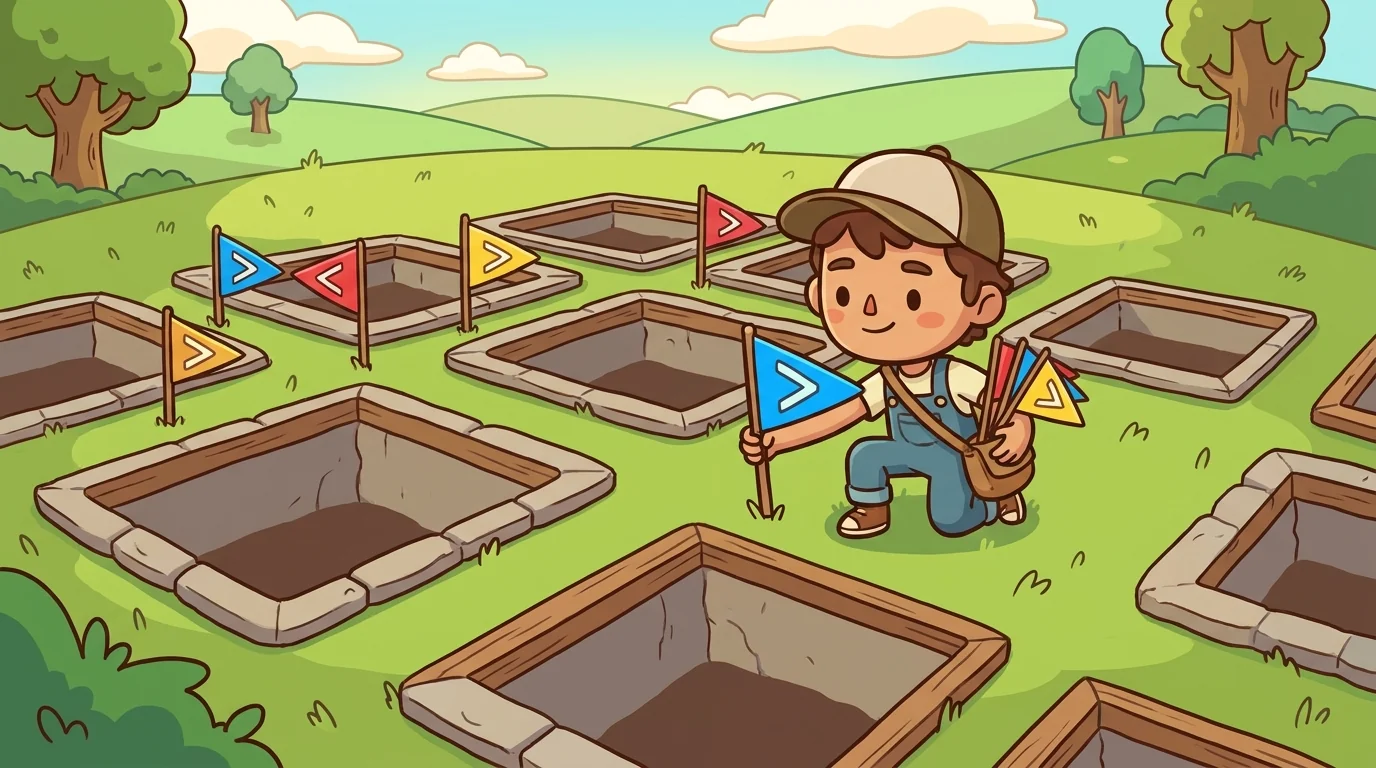
Chevron carried small brass flags shaped like sharp V's in a felt pouch, planting them into the wooden channels between grid squares. An arrow pointing from one cell to its neighbour meant something exact, pointing its open mouth at the larger number and its tip at the smaller value. Together, these brass flags established a strict inequality between two side-by-side spaces without using any actual written digits. They carried no numerical values at all, showing only the pure relationship between neighbours.
"So you do not even know what numbers belong in those squares?" Maya asked, watching him place a flag between two blank cell frames.
"Not at first," Chevron said, smoothing the velvet border of the puzzle board, "but knowing which number is bigger is far more powerful than it appears." He set four blank wooden tiles into a straight horizontal row across the oak desk. "Suppose I know this first square is greater than the second square, and the second square is greater than the third."
"That simple sequence creates a continuous chain of arrows straight across the row."
Maya squinted at the row of blank timber, shaking her head. "They still just look like empty boxes to me."
"They are constrained boxes," Chevron corrected gently as he tapped the cell at the far end of the arrows. "Look at this box at the bottom of the chain, because nothing in a four-cell row can be smaller than this space."
"That means this end box must hold a one, while the box at the start of the chain must hold a four."
"The arrows sorted those ends before I picked up a single numbered tile from the bag."
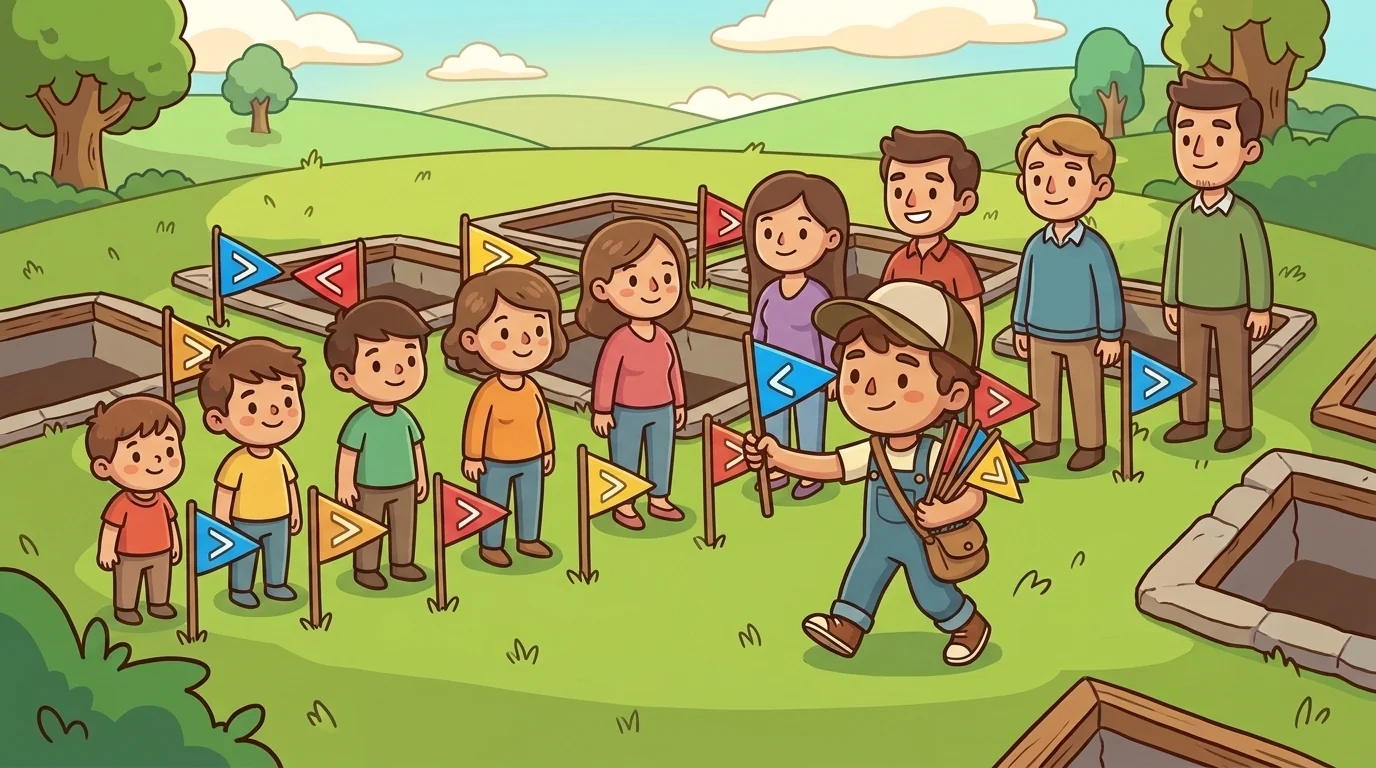
Years before Ada brought him into the workshop, Chevron worked as a chief line-marshal at civic ceremonies in the city courtyard. His duty was simple to describe, requiring him to stand eighty townspeople in precise height order before the magistrates arrived. He never carried a measuring tape, nor did he ask anyone to report their height in feet or inches.
Instead, Chevron walked down the long crowd, comparing citizens in quick, quiet pairs to make adjustments. He would tap the arm of the taller person and guide them behind the shorter one, letting those basic comparisons cascade through the crowd like ripples. Within fifteen minutes, eighty adults stood aligned in a perfectly smooth, ascending row.
One warm afternoon, a visiting inspector from the capital arrived carrying a heavy iron scale and a thick ledger. The official marched down the line, his boots clicking sharply on the flagstones, until he stopped in front of Chevron with a scowl.
"Where are your measurement logs?" the inspector demanded, tapping his ledger with a steel pen. "What is the exact height of this fifth man from the left?"
Chevron shrugged lightly, adjusting his marshal badge. "I have no idea how tall he is, but I know his place in order."
"Order is what you actually wanted, even if you thought you needed exact measurements."
The inspector grumbled and stomped away, but the line itself remained perfectly sorted and completely still.
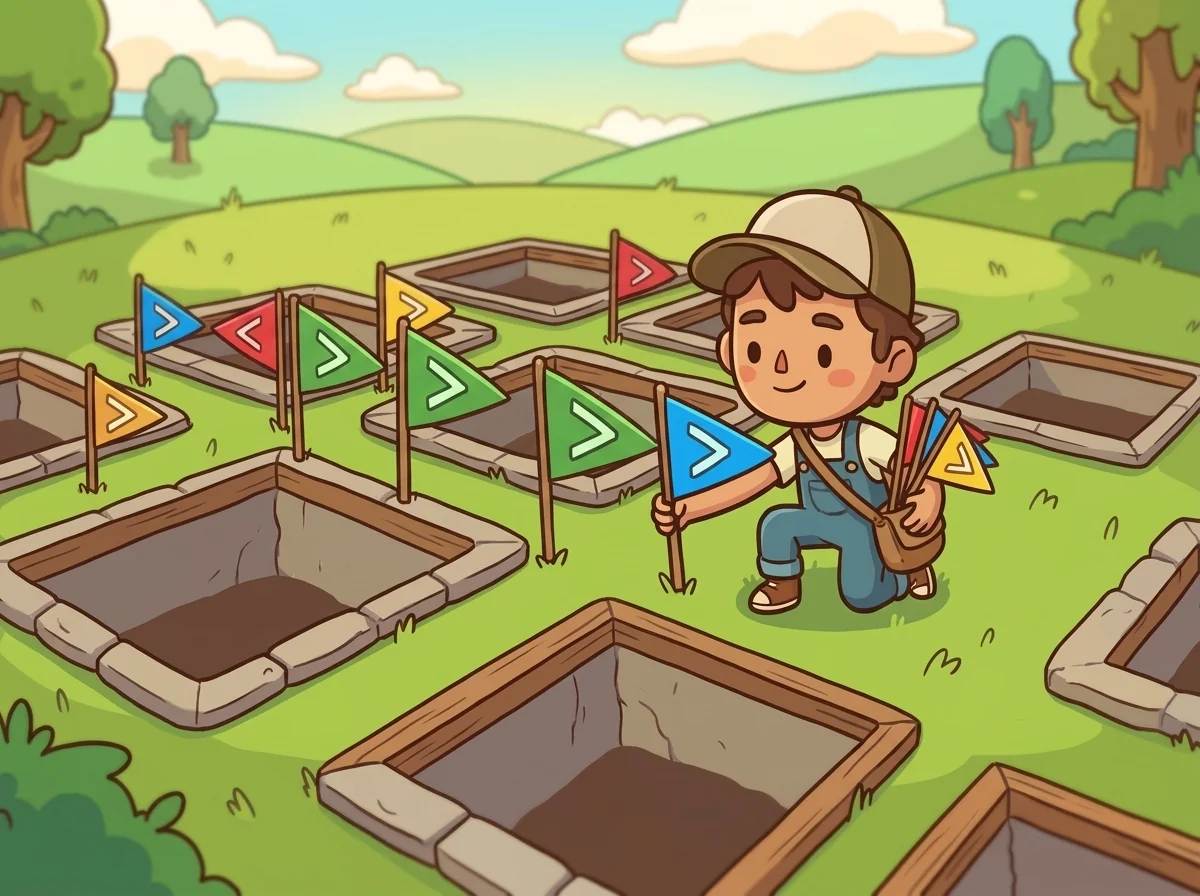
Ada recruited Chevron after watching him solve a complex Futoshiki grid in the central square without touching a single number tile until the very end.
"You started nowhere near a digit," Ada had noted, sitting on the stone wall beside his workbench. "You built the whole board using only the arrows."
"The arrows are the free information," Chevron explained as he laid out his brass flags. "Consider a grid cell with three greater-than arrows all pointing away from it."
"Every neighbour touching that cell is smaller, so in a five-by-five grid, that cell must be a five."
"You do not need to guess, because a cell that three arrows point toward must be a one."
"Pin the extremes first, and the middle sorts itself."
His method was to hunt for the longest arrow chains and the most cornered cells across the entire grid. A square that had to be larger than three neighbours could never hold a low digit, because the arrows strictly forbade it. Chevron crossed off the forbidden candidates on his slate tablet, working in the exact same manner as Onlie. Where only one valid candidate remained, he placed the wooden tile with the calm hand of a marshal calling a name.
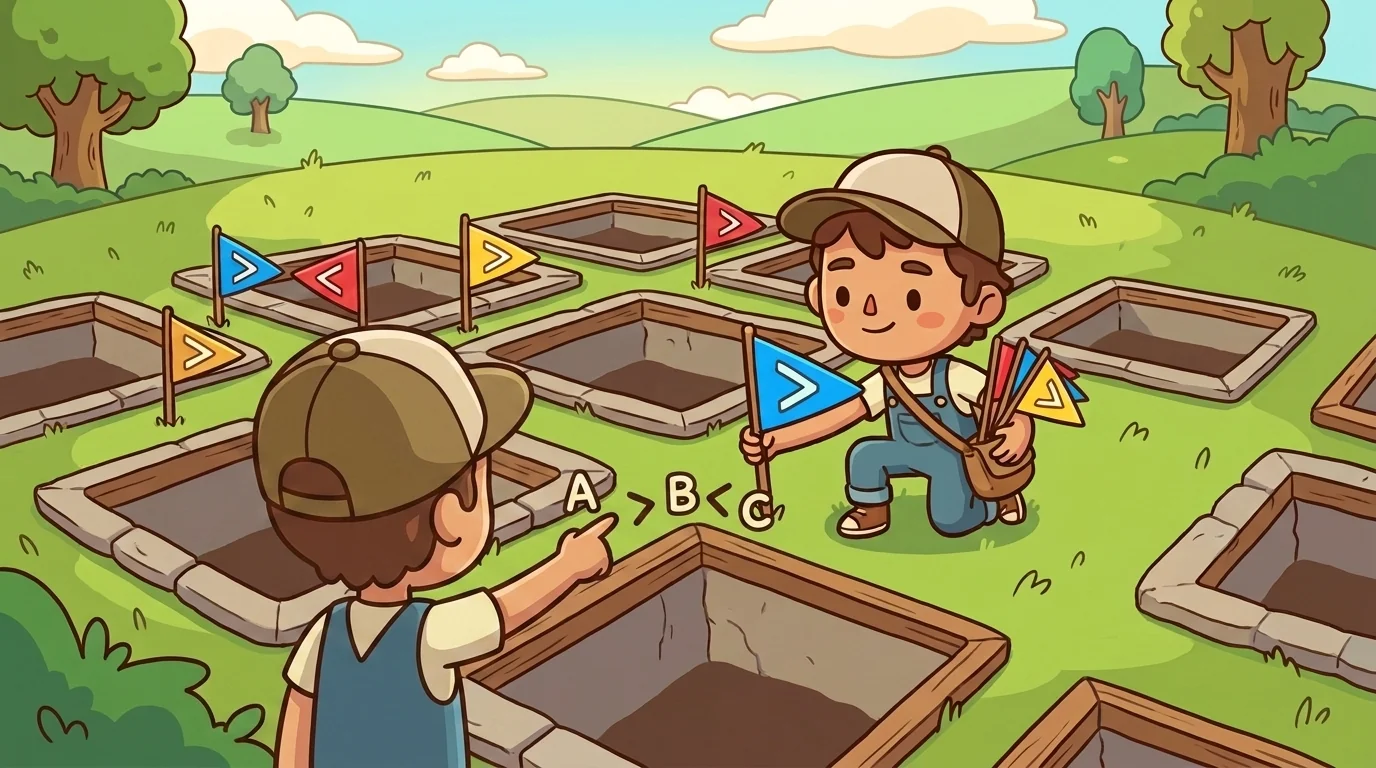
A younger student named Pip sat at the workshop bench with a five-cell row and a single brass flag planted between two squares.
"That gives us almost nothing," Pip complained, slumping over his elbows on the desk. "It is just one tiny arrow."
"It gives you far more than nothing," Chevron said, sliding a wooden stool beside the boy. "Look at the larger cell where the open mouth points, and tell me if that larger cell could ever hold a one."
Pip paused, staring down at the carved wooden board before shaking his head. "No, because something has to be smaller than that cell, and nothing is smaller than one."
"Exactly," Chevron said, "so cross off one from that cell’s list of possibilities."
"Now look at the smaller cell at the point of the arrow, and tell me if that smaller cell could hold a five."
"No," Pip said, sitting up straighter, "because nothing in a five-grid can be bigger than five."
"You just eliminated a candidate from two different cells using one arrow," Chevron said.
Chevron pointed further down the row where two arrows met on a single square, one pointing in and another pointing out. "This middle square is bigger than its left neighbour, but smaller than its right neighbour," Pip observed.
"So it is trapped in the middle," Chevron noted, watching the boy think. "If the right neighbour is already capped at three, what happens to this middle box?"
"It gets squeezed down," Pip said, his pencil moving fast across his slate tablet. "It cannot be a three or a four, so it can only be a two, which means the left neighbour must be a one!"
The boy watched the chain react like a line of tumbling dominoes as the entire row fell into proper order.
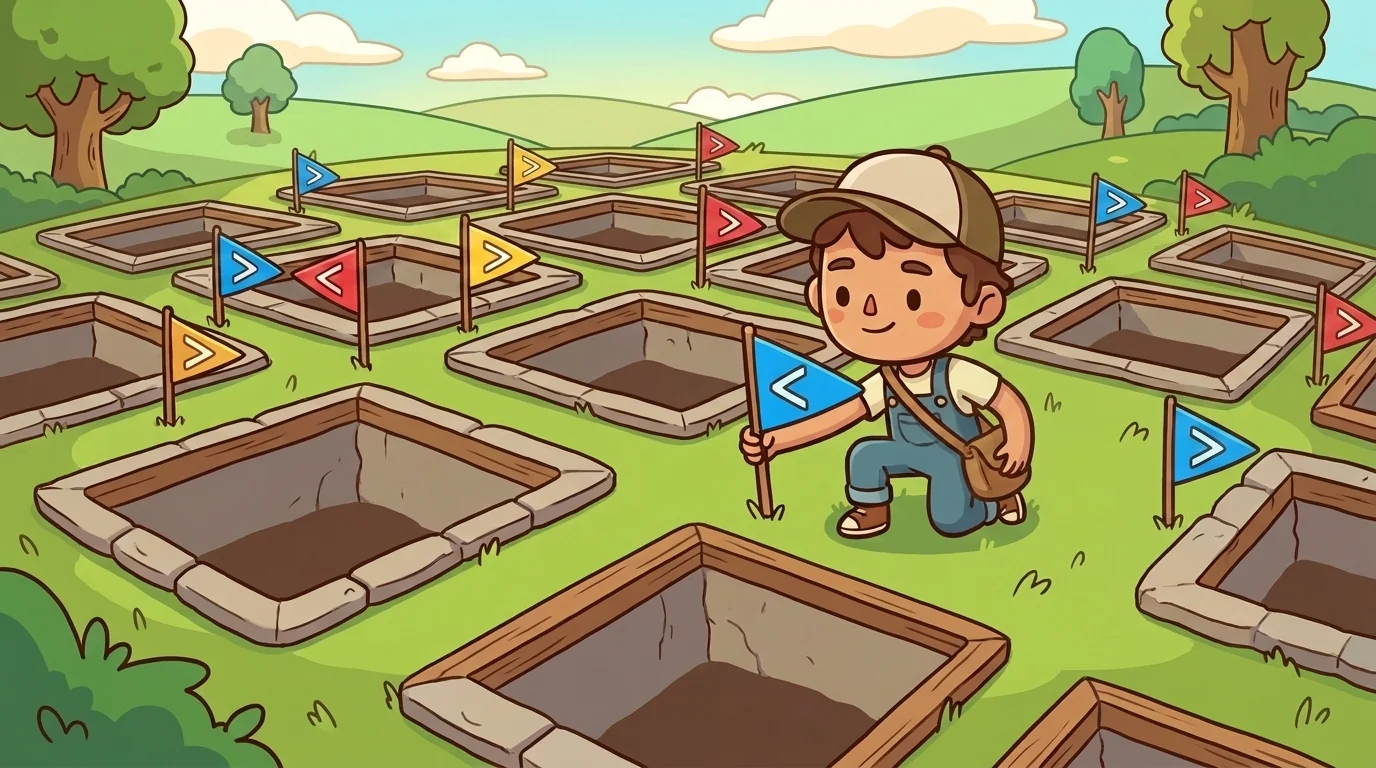
At the end of the afternoon, Chevron walked along the long table to check his work across the finished board. He inspected every brass flag on the five-by-five grid to make sure the open mouth always rested on the larger number. The sharp tip pointed directly at the smaller digit, keeping every inequality true while every row and column formed a quiet agreement.
A deep steadiness came over him when the final arrow checked out under his fingers. It was the same settled feeling he remembered from the courtyard, when eighty citizens stood silent and straight in the afternoon sun. His breathing went slow and even as he admired the finished grid.
"I never needed to know the numbers first," Chevron said, planting his last brass flag with a soft click. "I only needed to know who beats whom, and the order does the rest."
The LatticeForge ensemble
Chevron is part of LatticeForge's distributed-narrative cast. Each character embodies a different curricular primitive; together they teach the full subject.
-

Onlie
Sudoku — Latin-square uniqueness: sets her lantern on the only place a number can go in its row, column, and box
-
Cage
KenKen — arithmetic-cage: fills a fenced region so its numbers hit the plaque's target under its operation
-
Kaku
Kakuro — cross-sum: fills a run so it sums to its clue with no digit repeated; the total names its parts
-
Pica
Nonogram/Picross — run-length deduction: reads the edge numbers and fills the overlap that must be filled
-

Umbra
Hitori — elimination + connectivity: shades out duplicates so none touch and the rest stays whole
-

Serra
Skyscrapers — visibility count: places towers so each edge clue counts how many can be seen, taller hiding shorter
-
Lasso
Slitherlink — single-loop edge deduction: draws one closed loop so each number uses exactly that many edges
-
Vega
Star Battle — partition + non-adjacency: places the stars so each row, column, and region holds its quota and none touch
-

Ada
Mentor host — keeps the puzzle guild; teaches 'every grid hides one rule — find the forced cell, never guess'