
Kaku
the cross-sum — a run of cells sums to its clue with no digit repeated in the run
Loading audio…
Press play to listen along. The line being read lights up as you go.
Show full transcript
Loading transcript…
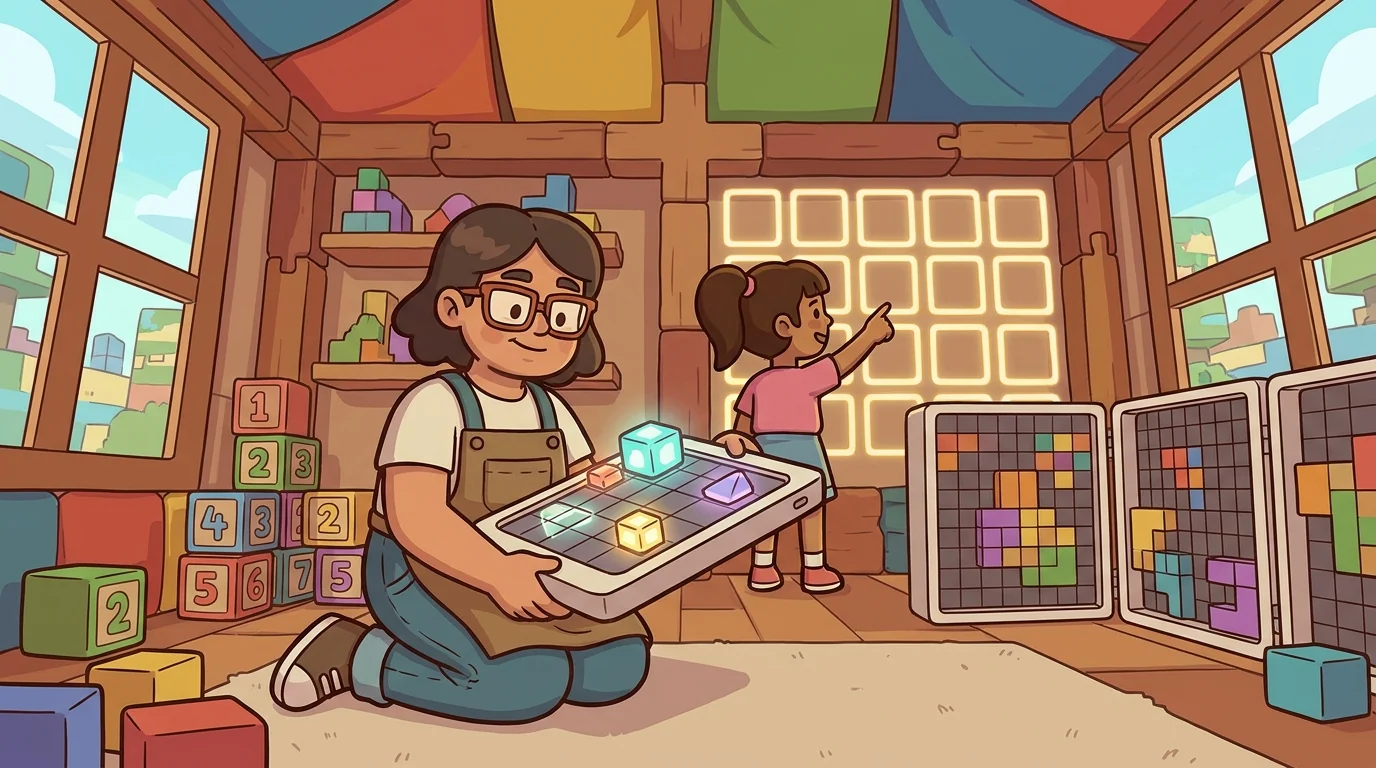
Kaku kept a heavy leather ledger bound with brass corners. It did not list flour prices, trade taxes, or bushels of wheat. Her pages held grids where numbers marched in short horizontal and vertical lines. Above or beside each line sat a boxed figure called a clue total. The digits in the line had to sum to that clue, and no digit could repeat within the same run.
"Try a short run," Kaku said, tapping a two-cell box with her brass pen. "The clue total is three."
Maya chewed on the frayed end of her hair and scowled at the paper. She was twelve years old and hated feeling tested. "One and two," Maya said after a beat.
"Only one and two," Kaku said without raising her gaze from her inkpot. "There is no other pair of different digits that adds to three." She wrote 3-in-2 → {1,2} along the cream margin. "What about a two-cell run with a clue of seventeen?"
"Eight and nine," Maya answered herself before Kaku could speak.
"Eight and nine," Kaku repeated with a nod. "The clue named its parts right from the start. It just did not reveal their exact order yet."
Kaku turned the ledger so the girl could see the neat columns of notes. Every entry listed a clue total alongside the exact set of numbers that total forced. In grid-keeping, these unyielding combinations were called forced sets.
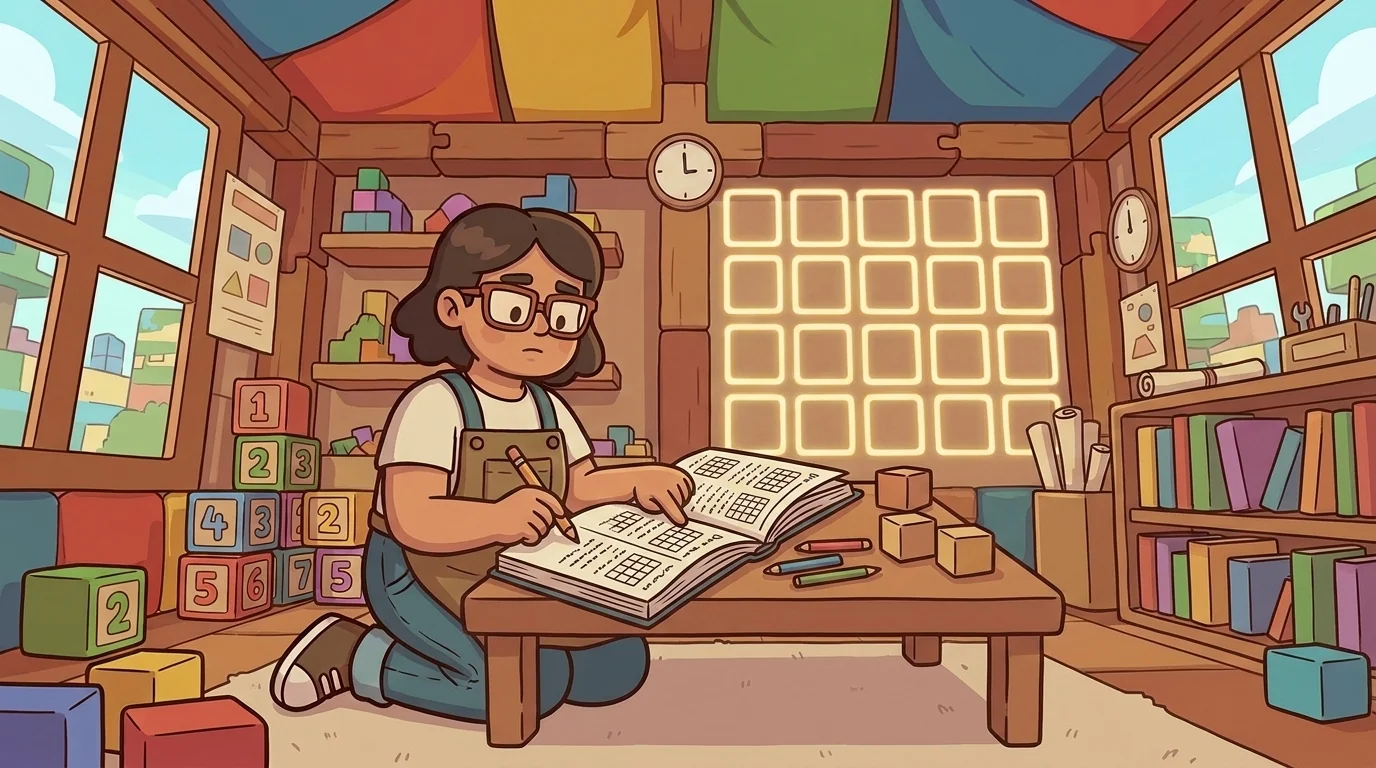
Before joining the Guild, Kaku kept books for a flour mill down by the river. She was the sort of person who could not sleep if a balance sheet remained unsettled. One rainy night, an entire page of ledgers went completely wrong. A long column of figures refused to match the running balance at the bottom.
Kaku sat alone at her desk while the tallow candles burned down to stubs. She did not guess which entry was wrong. She did not try to smooth over the difference with false math. Instead, she worked the extremes. She calculated the smallest value the column could take if every cell held its lowest legal digit. Then she calculated the largest value if every cell held its highest digit.
The true total had to sit squarely between those boundaries. Where it failed, Kaku knew instantly which entry was lying. She found the error by nine in the evening and slept like a stone.
By morning, she realized she had uncovered a fundamental rule of numbers. A sum total does not merely show what fits in a space. It shows what is entirely impossible. A three-cell run with a clue total of six can only hold one, two, and three. Those are the smallest three different digits you can choose. There is no slack in the math. The clue total locks them into place.
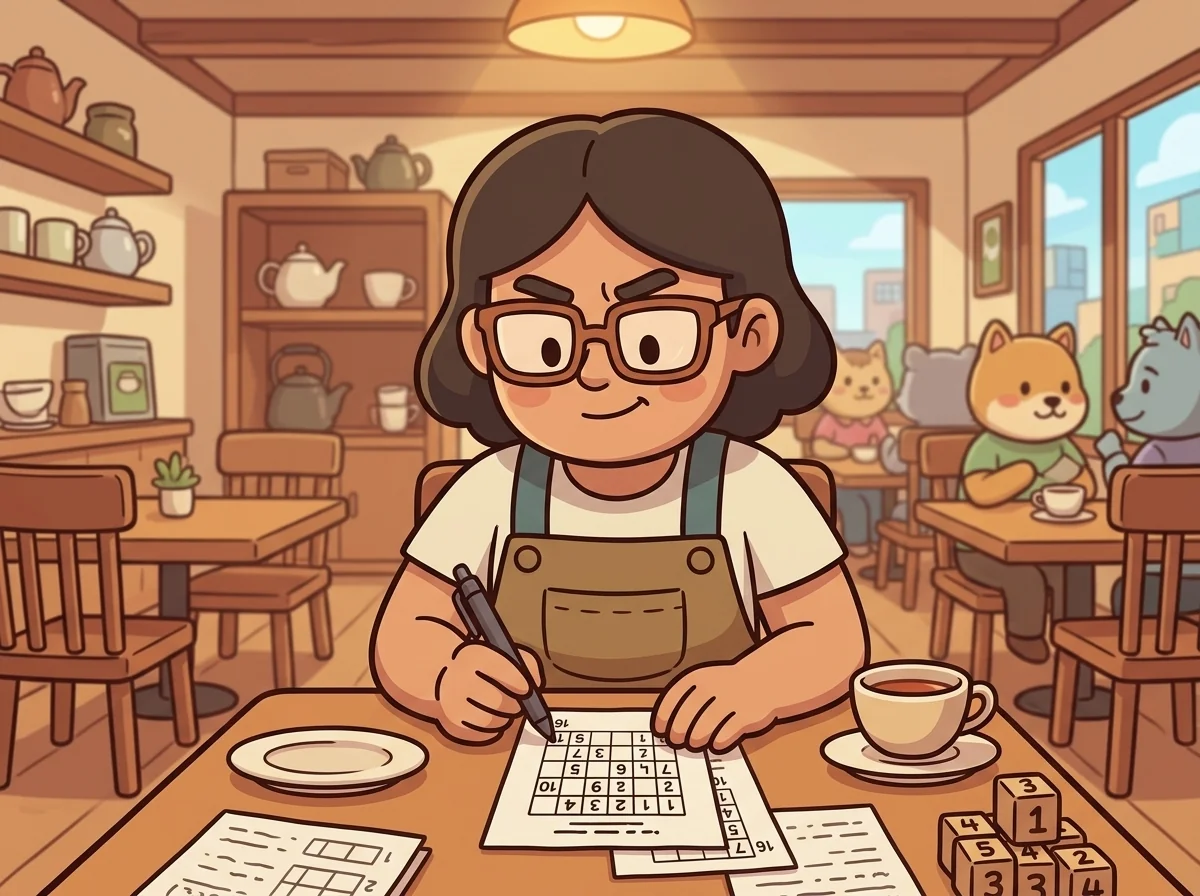
Ada found her weeks later inside a noisy tea shop near the docks. Kaku was sitting by the window, scribbling puzzle grids across a greasy paper receipt.
"You are computing the forced sets in your head," Ada said, pulling out a stool without asking.
"Most people assume a sum total is flexible," Kaku said, setting down her pencil. "They think a larger number gives them endless options. It is usually the exact opposite."
"A small total in a long run is the tightest clue in the grid," Kaku explained. "The same is true for a massive total in a short run. They leave almost no freedom at all."
"Come keep the Guild's ledger," Ada said, leaning her arms on the table. "We have complex runs that nobody else knows how to solve."
Kaku agreed before her tea had time to grow cold.
Her method was simple: start where the totals were meanest. A four-cell run clued 10 was always one, two, three, and four. Those four numbers are the only different digits that add to ten. A two-cell run clued 16 was always seven and nine.
Kaku filled those rigid sets first. Then she let the crossing runs settle the exact order of the numbers. A crossing run occurs where a horizontal row and a vertical column share a single cell. If the horizontal run demands a seven or a nine, and the vertical run demands a three or a seven, only seven works for both. The shared cell takes the seven, and the rest of the run falls into place.
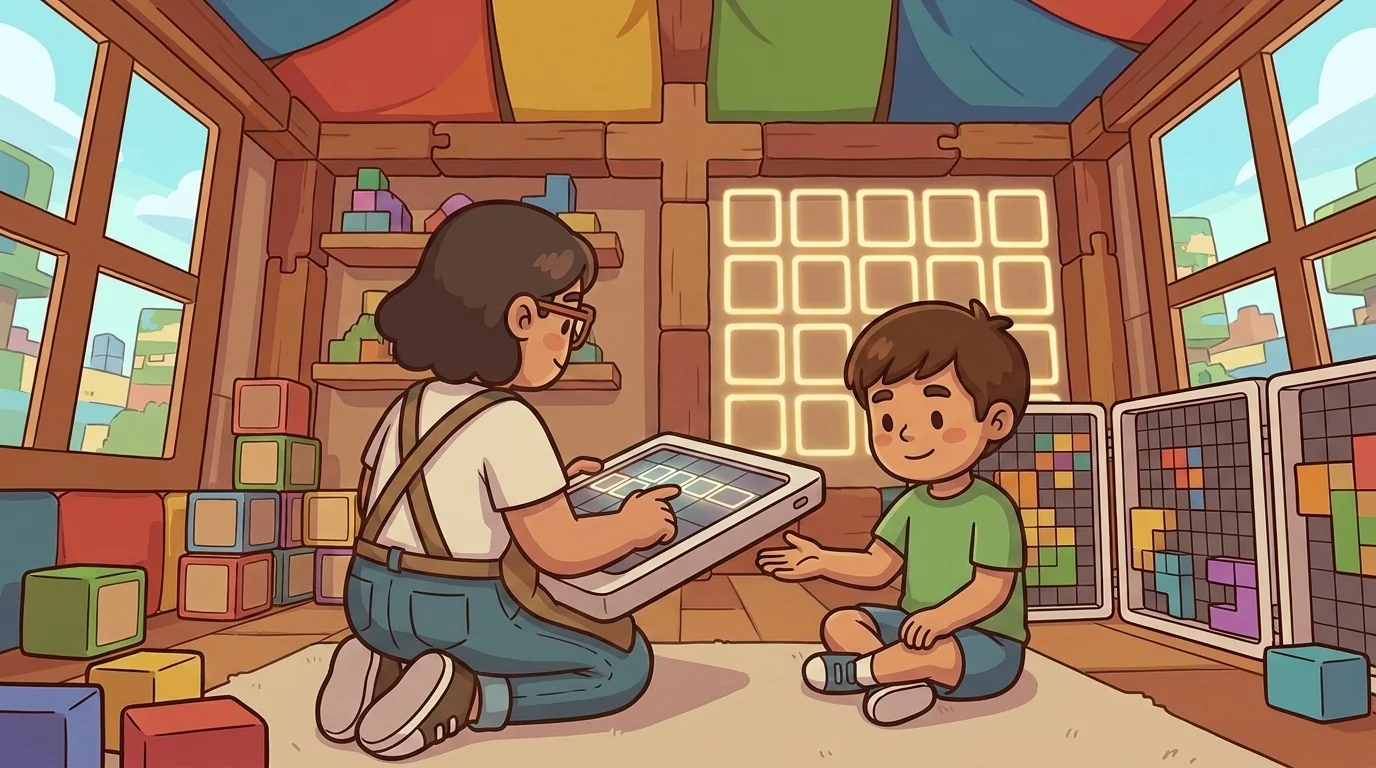
A young Guild apprentice brought her a puzzle run on a scrap of thick parchment. He slapped the paper on her desk with a heavy sigh.
"This run is broken," the boy insisted, rubbing his soot-stained forehead. "It has three cells, and the clue total is twenty-four."
"Seven, eight, and nine," Kaku said without hesitating.
"Seven, eight, nine," the boy repeated, staring at her in disbelief.
"They are the three biggest different digits allowed," Kaku explained. "Twenty-four is the maximum value three cells can possibly hold. There is no choice about which numbers you must use. You only have to discover their proper order."
"How did you know that instantly?" he asked.
"Because twenty-four in three cells has no slack," Kaku said gently. "When a run is stretched to its maximum or squeezed to its minimum, the set is forced. Learn the extreme sums by heart, and half the grid solves itself."
She took his hand and wrote 24-in-3 → {7,8,9} across his palm with her wooden stylus. He closed his fingers over the ink as if holding a secret.
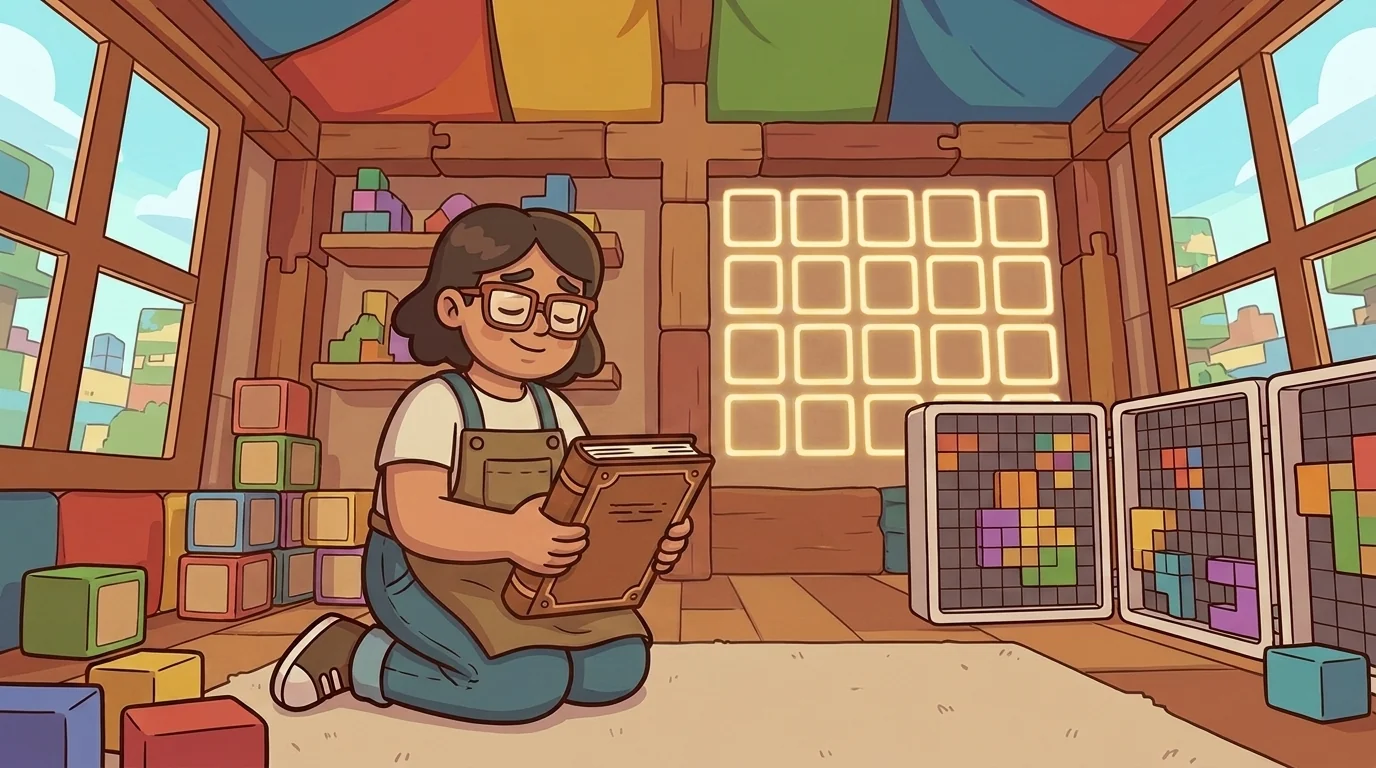
Later that afternoon, Serra stopped by Kaku's desk with an armful of wooden survey rods. Serra loved sightlines the way Kaku loved numbers. Both knew that limits reveal the truth long before guesswork does.
"Is the master grid balancing?" Serra asked quietly.
"It is," Kaku said, tracing a long vertical run with her index finger. "The extremes gave us our anchors, and the crossings did the rest."
At the close of a grid, Kaku ran her pen down every clue total one last time. She checked each run against its promised total. Three summed to three. Ten summed to ten. Twenty-four summed to twenty-four. No digit was doubled anywhere in a run. The entire ledger balanced.
She let out a slow breath she had been holding since the very first clue. It was that quiet, tight breath you keep while a hard problem remains unsolved. When the last sum verified, her breath released long and even. The quiet pressure behind her sternum eased.
"The total knew all along," Kaku said softly, closing her ledger with a gentle thud. "It named its own parts. I just wrote them down in the right order."
The relief of a necessary truth finally coming together was as good as a full night of sleep.
The LatticeForge ensemble
Kaku is part of LatticeForge's distributed-narrative cast. Each character embodies a different curricular primitive; together they teach the full subject.
-

Onlie
Sudoku — Latin-square uniqueness: sets her lantern on the only place a number can go in its row, column, and box
-
Cage
KenKen — arithmetic-cage: fills a fenced region so its numbers hit the plaque's target under its operation
-
Pica
Nonogram/Picross — run-length deduction: reads the edge numbers and fills the overlap that must be filled
-
Chevron
Futoshiki — inequality/ordering: obeys the < / > flags between neighbours to force the numbers into order
-

Umbra
Hitori — elimination + connectivity: shades out duplicates so none touch and the rest stays whole
-

Serra
Skyscrapers — visibility count: places towers so each edge clue counts how many can be seen, taller hiding shorter
-

Lasso
Slitherlink — single-loop edge deduction: draws one closed loop so each number uses exactly that many edges
-

Vega
Star Battle — partition + non-adjacency: places the stars so each row, column, and region holds its quota and none touch
-

Ada
Mentor host — keeps the puzzle guild; teaches 'every grid hides one rule — find the forced cell, never guess'