
Lasso
the single closed loop — each number uses exactly that many of its four edges; the drawn edges form one loop with no branches
Loading audio…
Press play to listen along. The line being read lights up as you go.
Show full transcript
Loading transcript…
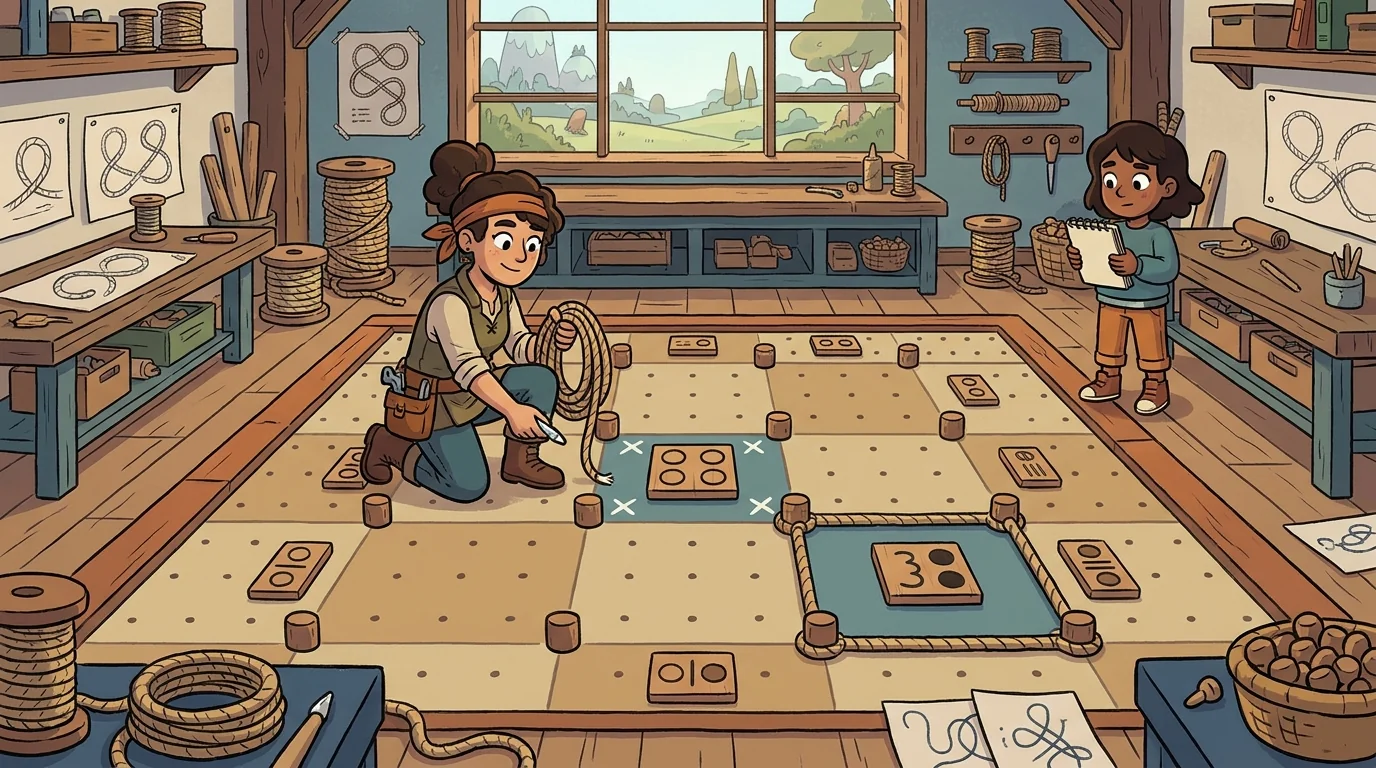
Lasso worked with rope on a sea-weathered oak drafting table in the academy workshop. Her hands were broad and calloused, stained with pine pitch from her years on the docks. In front of her lay a smooth slate board marked with a neat grid of silver dots. Between those dots, a person could draw crisp chalk lines or leave the spaces blank.
Scattered across the field were small numbers sitting inside the square cells. Each number gave the exact same strict instruction: exactly this many of my four edges are part of the rope. A 0 meant no edges could be drawn around that cell. A 3 meant three of its four edges belonged to the line. When the puzzle was finished, the drawn edges had to form one single closed loop. There could be no loose ends, no crossing lines, no extra side branches, and no small separate loops. It had to be one continuous length of rope, tied cleanly back to itself.
"A zero is the easy one, right?" Maya asked, looking up from her own workbench. "You just ignore it because nothing goes around it."
"A zero is a gift," Lasso said, taking a fresh piece of white chalk.
She firmly marked small X's across all four edges surrounding the 0.
"Here is the secret most people miss," Lasso said, setting down her chalk with a quiet thud. "The blanks are worth just as much as the drawn lines. Knowing where an edge cannot go forces its neighbours just as hard as drawing a line. Look right next to that zero at this three."
She pointed her chalk at a 3 sharing a border with the blanked 0.
"The zero already killed the edge between them," Lasso explained to Maya. "That leaves the three with only three open sides remaining. It has no choice left."
With three swift, confident strokes, Lasso drew the remaining edges around the 3. The white chalk stood out sharp against the dark slate board.
Maya blinked, tracing the new shape with her fingers. "So the blank did the work."
"The blank made the line inevitable," Lasso said softly.
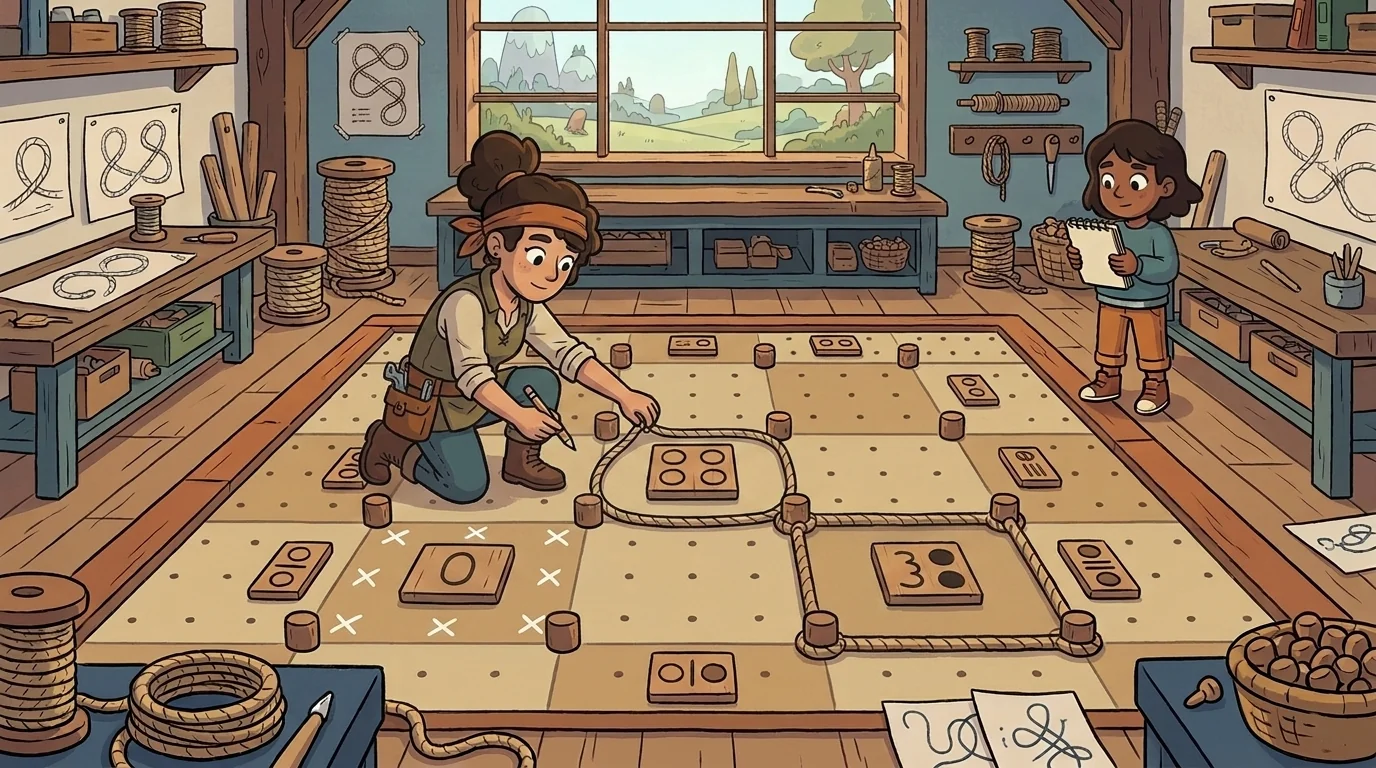
Before coming to the academy, Lasso had been a master ropewright down on the tidal docks. She spent her youth splicing heavy hemp lines for three-masted cargo ships. A knot that slipped under load could snap a spar or sink a laden barge. A loop with a loose end was far worse than no loop at all. It looked complete to the eye, but it failed the moment a storm hit.
On the waterfront, Lasso learned to inspect every inch of the rigging system. She checked not just where the heavy rope went, but everywhere it did not go. She looked for empty cleats, unrigged eyelets, and iron rings left bare.
"The gaps tell the whole story," the head ropewright had told her on her first winter on the wharf. "A splice never fails where you paid attention. It fails in the dark corner you forgot to inspect. Mark your blanks as carefully as you lay your strands."
The hard lesson about branching came during her third year on the harbor. She had allowed a winch line to split, running two separate paths from a single iron ring. When a sudden squall hit the harbor, the twin lines pulled against each other. The block jammed, the boom swung wild, and three heavy tallow barrels smashed into the dock.
From that day forward, Lasso understood the basic rule of the dots. A loop could pass straight through a dot, coming in one edge and going out another. That meant exactly two edges met at that point. Or the loop could bypass the dot completely, leaving it with zero edges. But a dot could never have three edges meeting at its center. Three edges meant a split path, and a split path meant disaster.
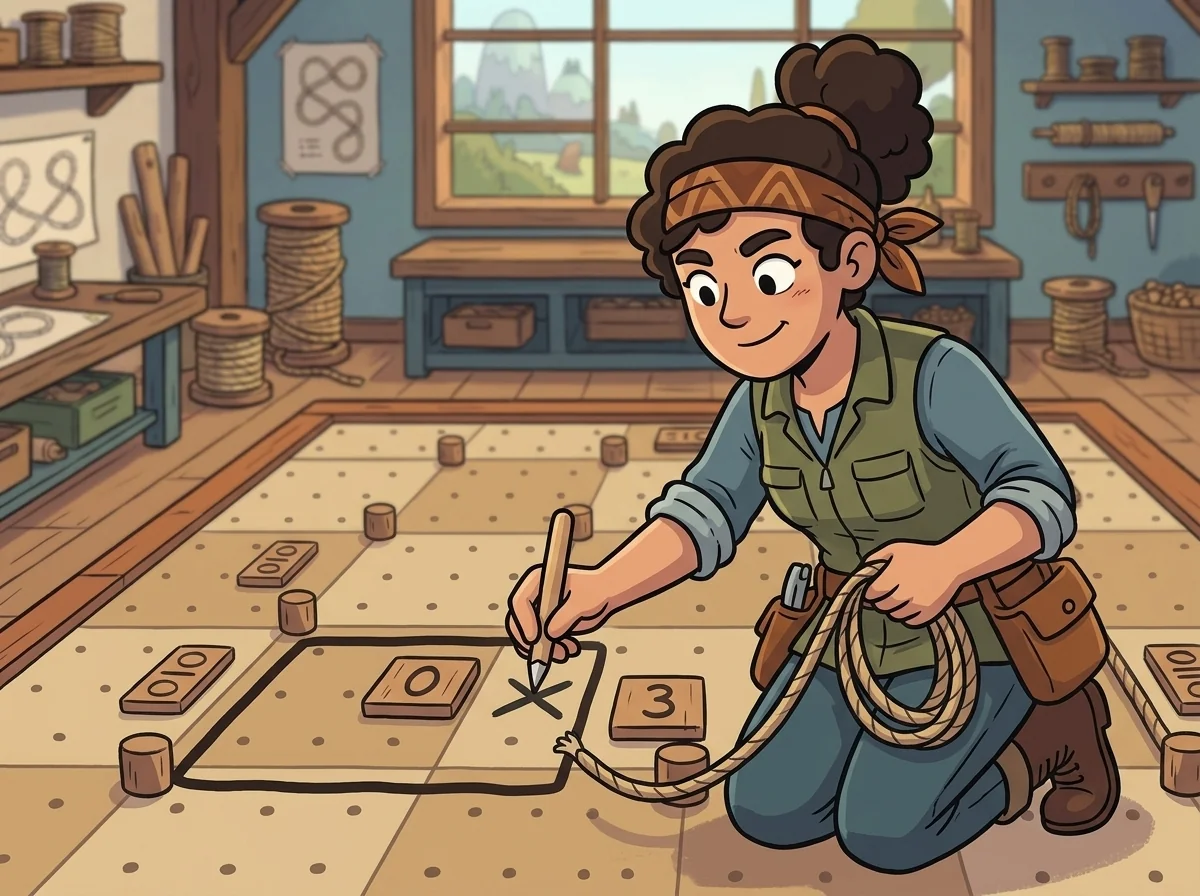
Ada had recruited Lasso after watching her tackle a massive Slitherlink grid in the central hall. Lasso had filled half the board with crisp chalk X's before drawing a single line.
"You are solving the entire puzzle backwards," Ada had said, watching her work with bright eyes.
"I am solving it both ways," Lasso replied without looking up from the board. "Every dot follows a strict rule. The rope either passes through it with exactly two edges or avoids it with zero. It can never have one edge, and it can never have three."
She pointed her chalk at a dot already touched by two drawn lines.
"If a dot already has two lines, I mark its other two edges with X's immediately," she said. "The loop has already entered and exited, so no other line can touch that dot without branching."
She tapped another dot surrounded by three X's.
"If a dot has three X's around it, its last edge must be a line," Lasso continued. "Otherwise, any line hitting that dot would dead-end with nowhere to go. The numbers and the dots argue with each other, and I just draw whatever certainty forces."
Lasso showed Maya how the numbers worked together across the grid. When two 3s sat side by side, they forced a specific pattern. The edge between them had to be drawn, along with the two outer parallel edges. A corner 1 could only send lines inward away from the outer border.
Step by step, Lasso threaded certainty across the board. She added a line where a dot demanded a path, and placed an X where a number was satisfied. Every placement narrowed the possibilities until the rope had only one path left to follow.
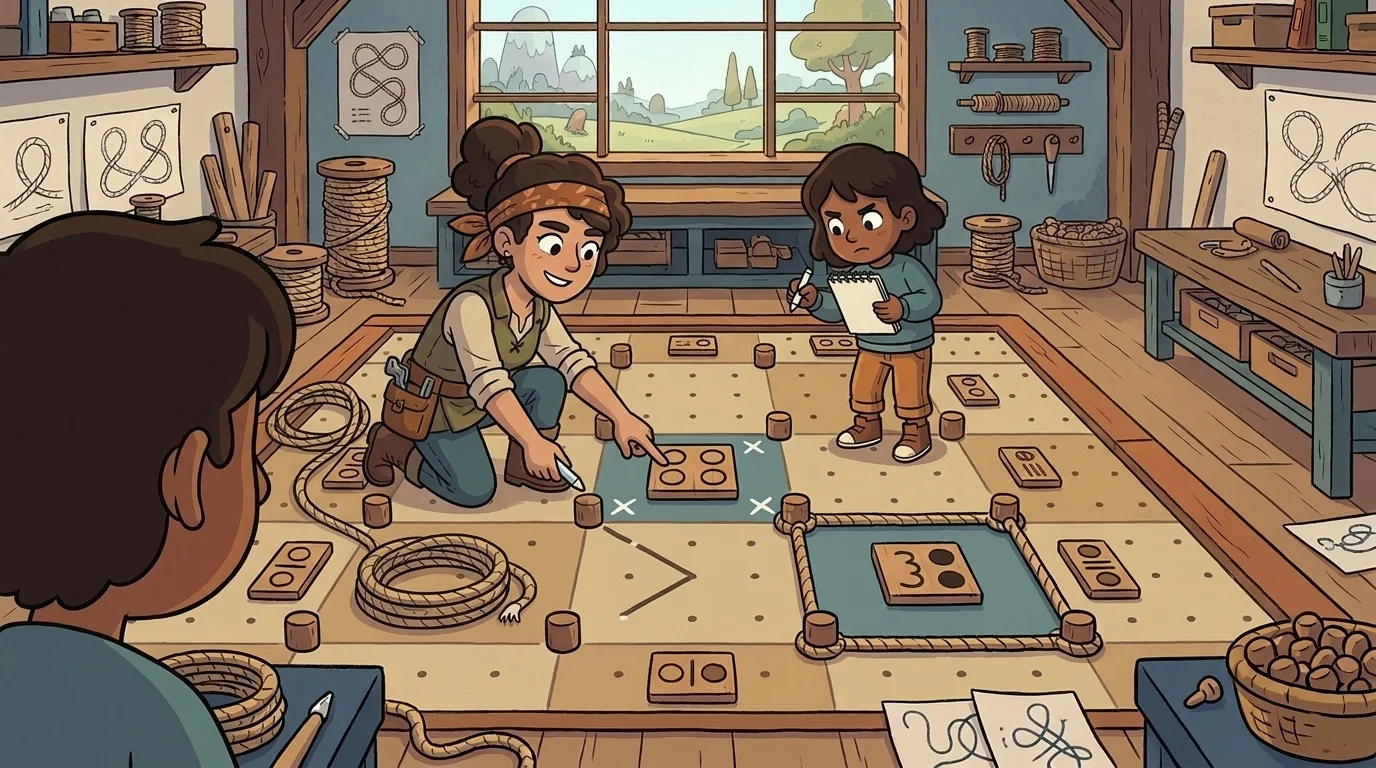
Across the workbench, a young student named Leo was working on his own grid. He kept making hasty guesses, drawing dark lines that abruptly stopped at bare dots.
"Where does that line go next?" Lasso asked gently, placing her hand on the edge of his board. She pointed to a chalk stroke that terminated at an open silver dot.
Leo rubbed his chin, smudging grey slate dust across his cheek. "Um. Nowhere yet. I was going to decide later."
"A dot with one line isn't allowed — the rope can't stop in midair," Lasso said. "Either a second edge continues the path, or that first line was wrong. Look at the dot's remaining options."
Leo leaned in close, counting the X's already marked around that specific dot. Three of the surrounding edges were already blocked off by previous deductions. Only one open space remained.
"So it has to continue there," Leo said, his eyes widening.
He drew the forced line straight forward. The new line immediately ran into the side of a 3, which snapped three more edges into place like falling dominoes.
Leo grinned, looking up from his board. "It's like the grid solved itself!"
"You didn't guess the path," Lasso said with a warm smile. "The 'no loose ends' rule drew it for you."
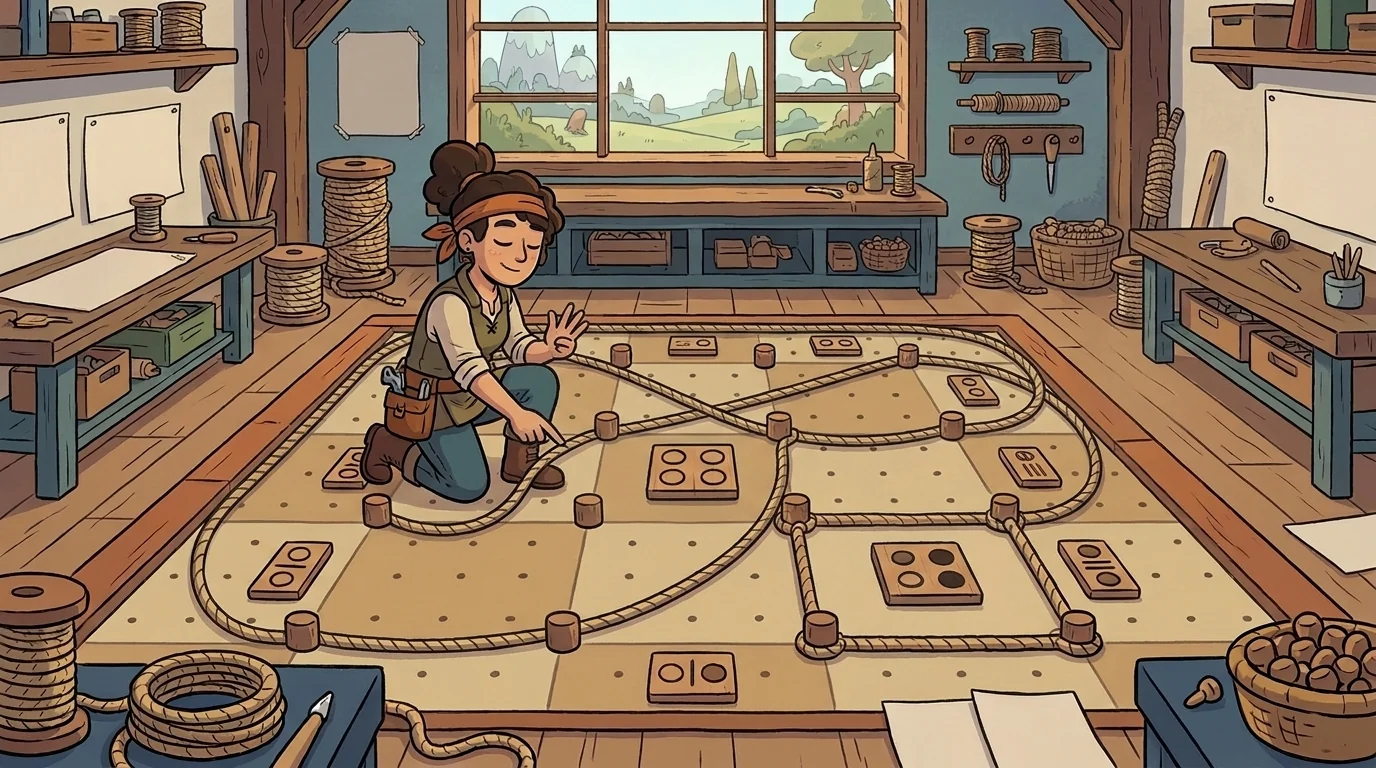
As the afternoon wore on, Lasso turned back to her own large grid. The outer edges were nearly complete, but a tricky section in the middle remained open.
"What happens if you close a loop too early?" Maya asked, watching over Lasso's shoulder. "Like if four lines make a small square right here?"
"If you close a small loop early, you break the primary rule," Lasso explained, pointing her chalk at the open center. "The drawn edges must form one single closed loop. If you make a small closed box over here while the rest of the rope is still wandering, you end up with two separate loops."
She traced the open path near the bottom corner. The chalk line turned gracefully past a 2, bypassed a 0, and skirted around a pair of 1s. It moved upward along the left margin, forced inward by a row of X's, until it was only one edge away from the starting point.
Lasso paused, taking a quiet breath. The whole workshop seemed to hold its breath with her.
She lowered the chalk and drew the final segment. The white line clicked smoothly into the origin point.
When the last edge fell into place, Lasso ran a calloused fingertip along the entire length of the rope. Starting at any dot, her finger moved continuously along the path and arrived right back where it began. It passed every drawn edge exactly once, never branching and never breaking into extra paths.
She made a slow pass around every cell, counting the satisfied numbers one final time. The three had three edges, the zero had none, the two had two, and the one had one. Every condition had been met without a single guess.
There was a deep, quiet satisfaction in a loop that closed properly. It was the ropewright's old certainty—the knowledge that this rig would hold firm under the heaviest load. The half-held tension of an open path and the quiet worry of a loose end melted away the instant her finger completed the circuit. Her hands, which always tightened slightly over an unfinished grid, finally relaxed.
"The gaps told the story," Lasso said, the low rhythm of the tidal docks under her voice. "And the rope came back to itself."
It stood on the slate as one single length of rope, closed and true.
The LatticeForge ensemble
Lasso is part of LatticeForge's distributed-narrative cast. Each character embodies a different curricular primitive; together they teach the full subject.
-

Onlie
Sudoku — Latin-square uniqueness: sets her lantern on the only place a number can go in its row, column, and box
-
Cage
KenKen — arithmetic-cage: fills a fenced region so its numbers hit the plaque's target under its operation
-
Kaku
Kakuro — cross-sum: fills a run so it sums to its clue with no digit repeated; the total names its parts
-
Pica
Nonogram/Picross — run-length deduction: reads the edge numbers and fills the overlap that must be filled
-
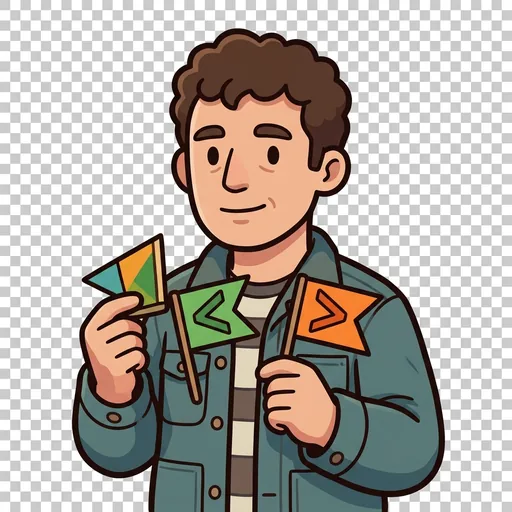
Chevron
Futoshiki — inequality/ordering: obeys the < / > flags between neighbours to force the numbers into order
-
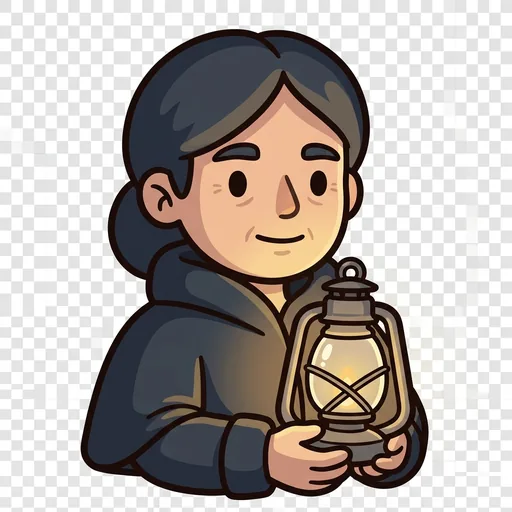
Umbra
Hitori — elimination + connectivity: shades out duplicates so none touch and the rest stays whole
-

Serra
Skyscrapers — visibility count: places towers so each edge clue counts how many can be seen, taller hiding shorter
-
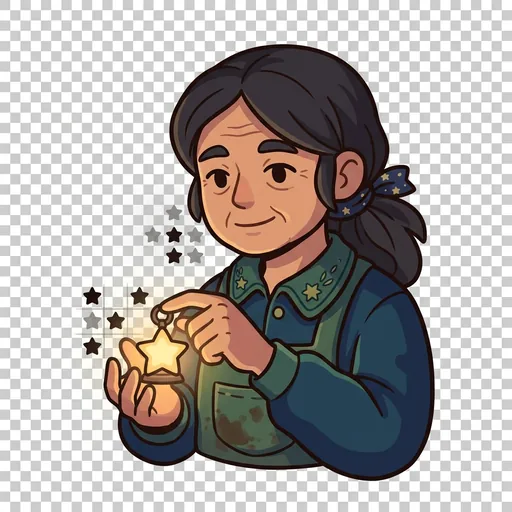
Vega
Star Battle — partition + non-adjacency: places the stars so each row, column, and region holds its quota and none touch
-

Ada
Mentor host — keeps the puzzle guild; teaches 'every grid hides one rule — find the forced cell, never guess'