
The No-Guess Three
three deduction-only families — inequality ordering / elimination-with-connectivity / single-loop edge deduction, each proving the next cell is forced
A story read by The No-Guess Three
Loading audio…
Press play to listen along. The line being read lights up as you go.
Show full transcript
Loading transcript…
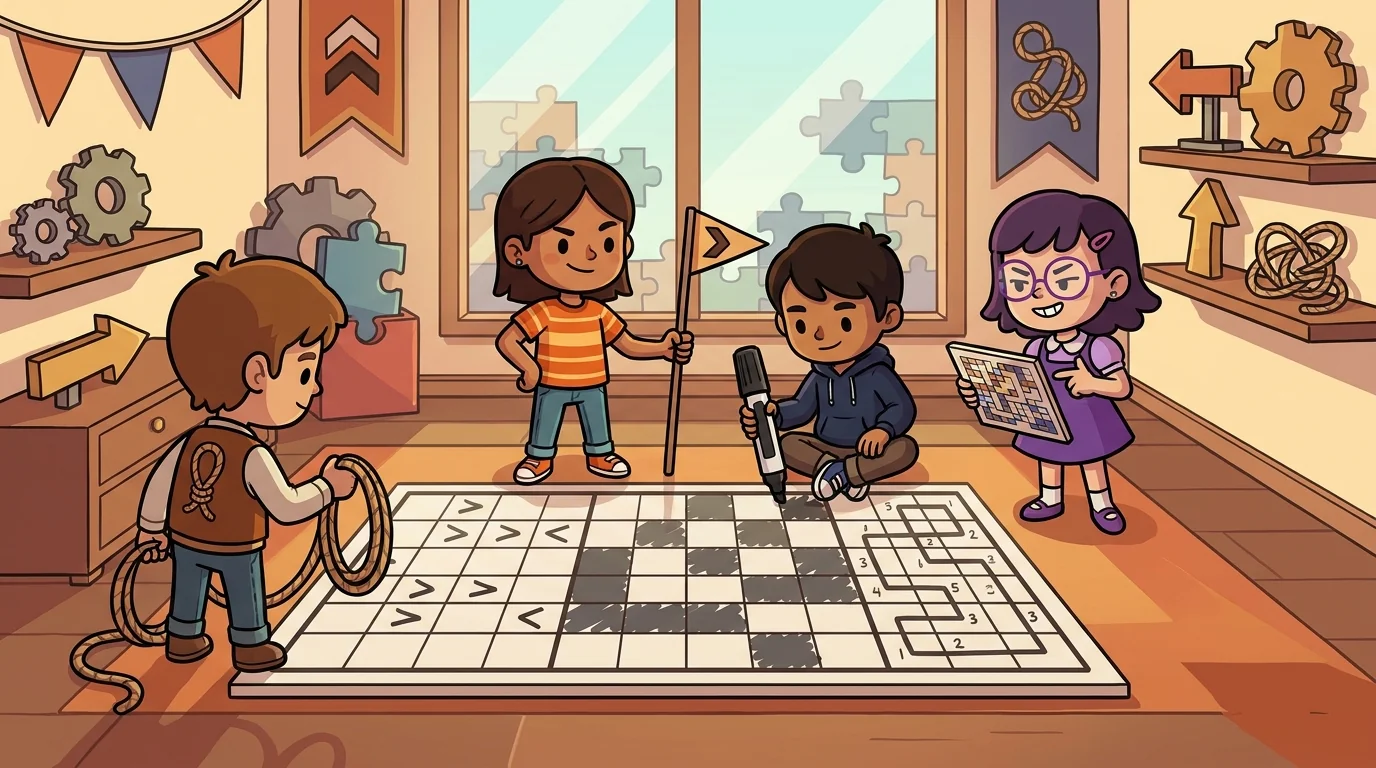
The draft on the workshop table smelled faintly of fresh printer ink and pencil lead. Chevron, Umbra, and Lasso sat around the heavy slate counter, their sleeves rolled up. Between them lay a single sheet of paper.
The three of them shared a strict motto, which also served as a standing dare: deduce it, never guess it.
Their favorite puzzles looked nothing alike on the surface. Chevron worked with inequality grids, chasing chains of sharp arrows across rows. Umbra dealt in elimination, shading dark shadows across Hitori boards while keeping the unshaded path whole. Lasso lived for the loop, threading a single continuous line through Slitherlink dots without leaving a dead end. Yet all three shared a stubborn belief. They believed that a grid always contains a forced next step if you are patient enough to find it.
To them, guessing was not a shortcut. A guess was simply admitting that you had run out of patience.
Ada stood by the chalkboard, her teacup resting in her hand. She had designed this morning's grid herself. It was a wicked combination of all three styles. Inequalities ran down the left edge. A Hitori shading region filled the middle. A Slitherlink border wrapped around the outer boundary like a fence.
Ada smiled sweetly over the rim of her cup. "You could just guess a few cells in the middle to get started. It would save you twenty minutes."
Chevron picked up his hard graphite pencil. He planted a small chevron symbol in the margin like a flag.
"We could," Chevron said, his voice as steady as a stone wall. "We won't."
Chevron took the first shift because numerical relations offer free information if you know how to read them. He did not touch a single number at first. Instead, he studied the directional arrows running down the left column.
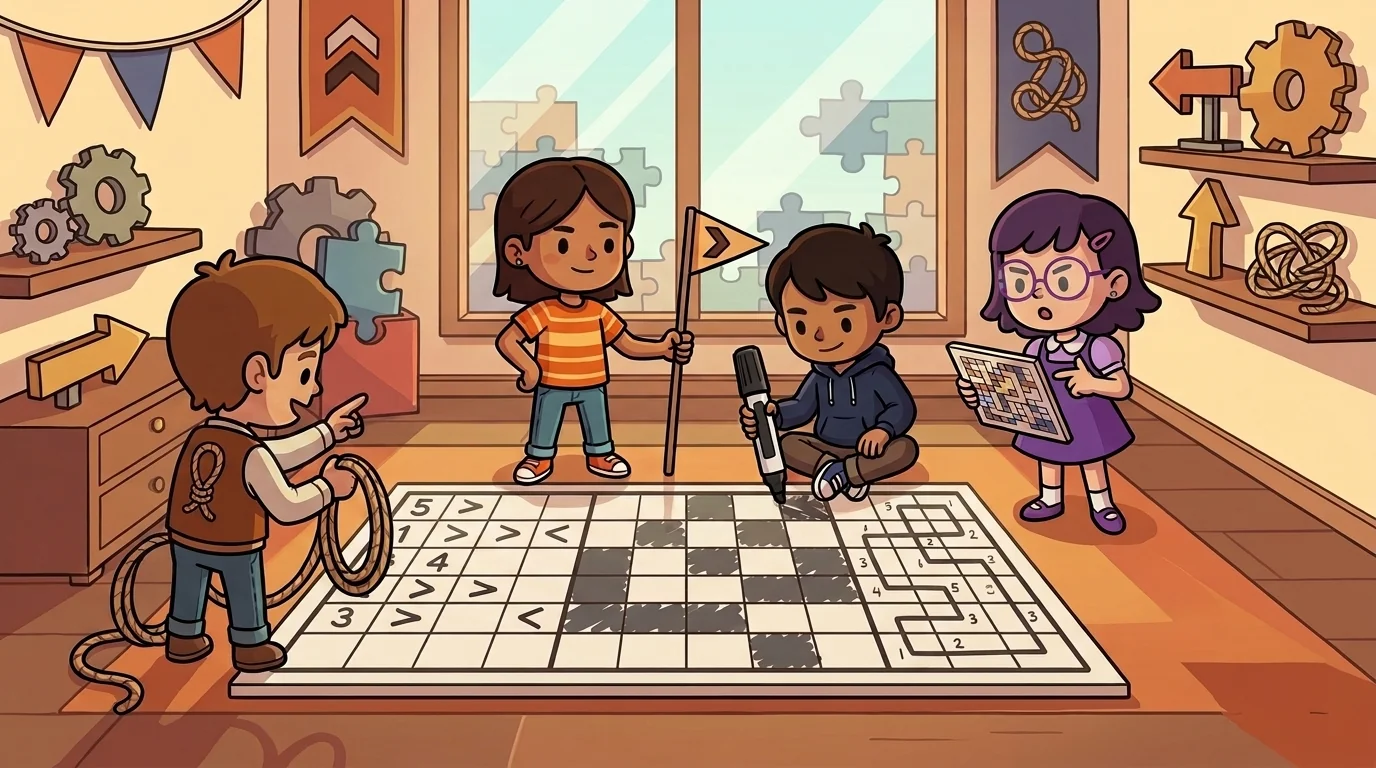
A chain of four consecutive greater-than signs ran from top to bottom.
"Look at this chain," Chevron said, pointing with the tip of his lead. "The top cell beats the cell below it. That second cell beats the third, and the third beats the fourth."
He looked at the small five-by-five section of the grid.
"In a five-row column, the top cell must be a five," Chevron explained. "If it were a four, you would run out of smaller numbers before reaching the bottom. No guessing required. The arrows forbid any other digit."
He wrote a crisp five in the top box. The rest of the chain fell instantly into place like dominoes. The second cell became a four. The third became a three. The fourth became a two. Four cells were fixed in ten seconds without a single roll of the dice.
"That five sits right on the edge of the shadow region," Chevron said, sliding the paper toward the center. "Over to you, Umbra."
Umbra drew a quiet breath and leaned over the shaded zone. Her eyes swept across the row that Chevron had just anchored.
In Hitori, duplicate numbers in the same row cannot both remain visible. One of them must be shaded out. However, shaded cells are not allowed to touch each other, and the remaining light cells must stay connected in one unbroken path.
A second five sat three squares away in that same row.
"I cannot shade Chevron's five," Umbra said softly. "His five was forced by logic. If I dark cell it, his whole chain breaks."
She tapped the duplicate five on the right.
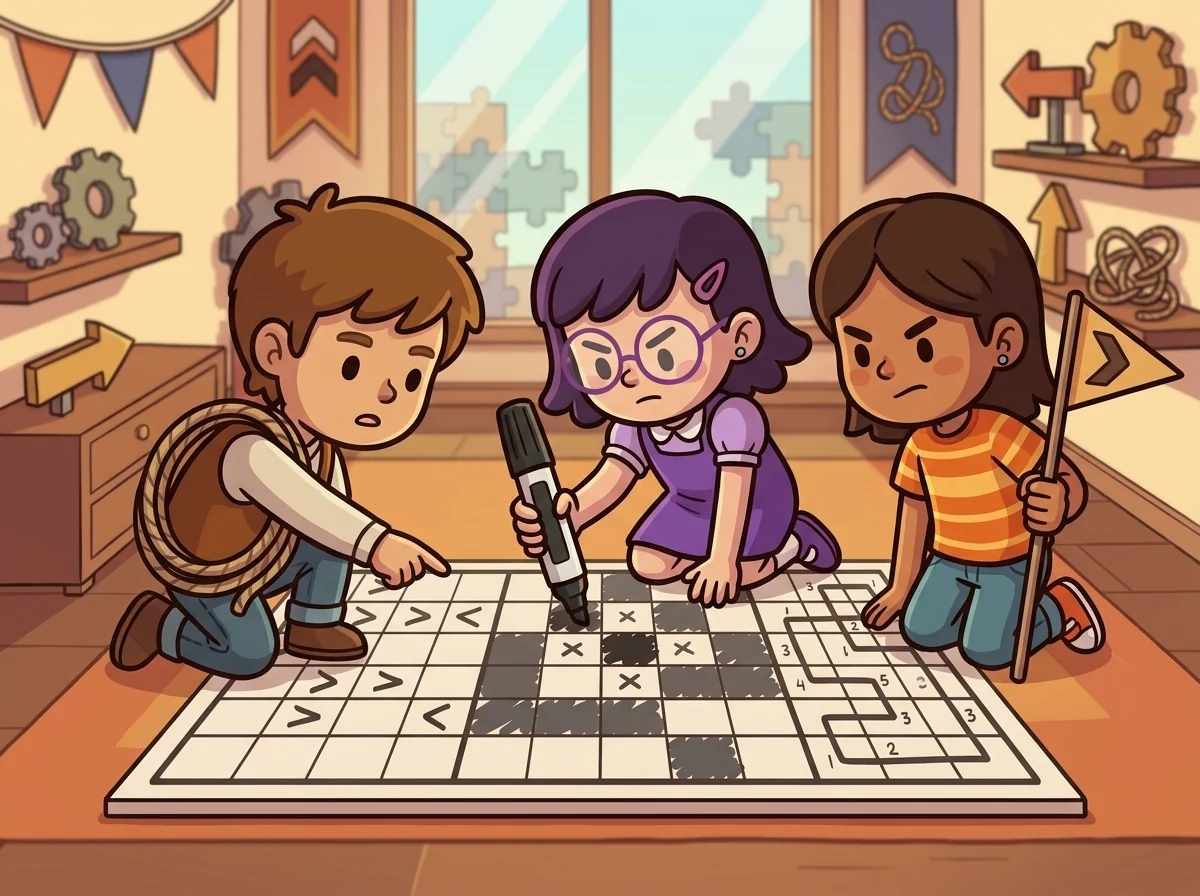
"That means this duplicate is the one that must go dark," she said.
Umbra shaded the square with light, clean strokes of her pencil. As soon as the cell went dark, she marked its four immediate neighbors safe with small white dots. Dark cells could never touch side-by-side.
"Now look at the light path," Umbra said, tracing a finger through the white squares around her shadow. "The unshaded path still flows from corner to corner. Nothing is stranded in the dark."
She shifted the page toward Lasso's side of the table.
"And those safe neighbors I just marked?" Umbra added. "They touch your border."
Lasso took her turn at the edge of the paper. She held her mechanical pencil lightly, like a thread of rope.
Umbra's safe cells gave Lasso exact information about where her loop could and could not go. She locked her eyes on a cell marked with a 3 clue along the outer boundary.
"This cell needs three loop edges around it," Lasso said. Her pencil hovered above the grid. "But Umbra's shading rule just blocked off the top side. That side is dead space."
She tapped the remaining three sides of the cell.
"Four sides total, and one is impossible," Lasso said. "That means the other three sides are all forced."
With three quick clicks of her pencil, she drew three dark lines around the clue. Then she moved her tip to a grid dot near the corner. Three sides around that dot were already marked with small X's.
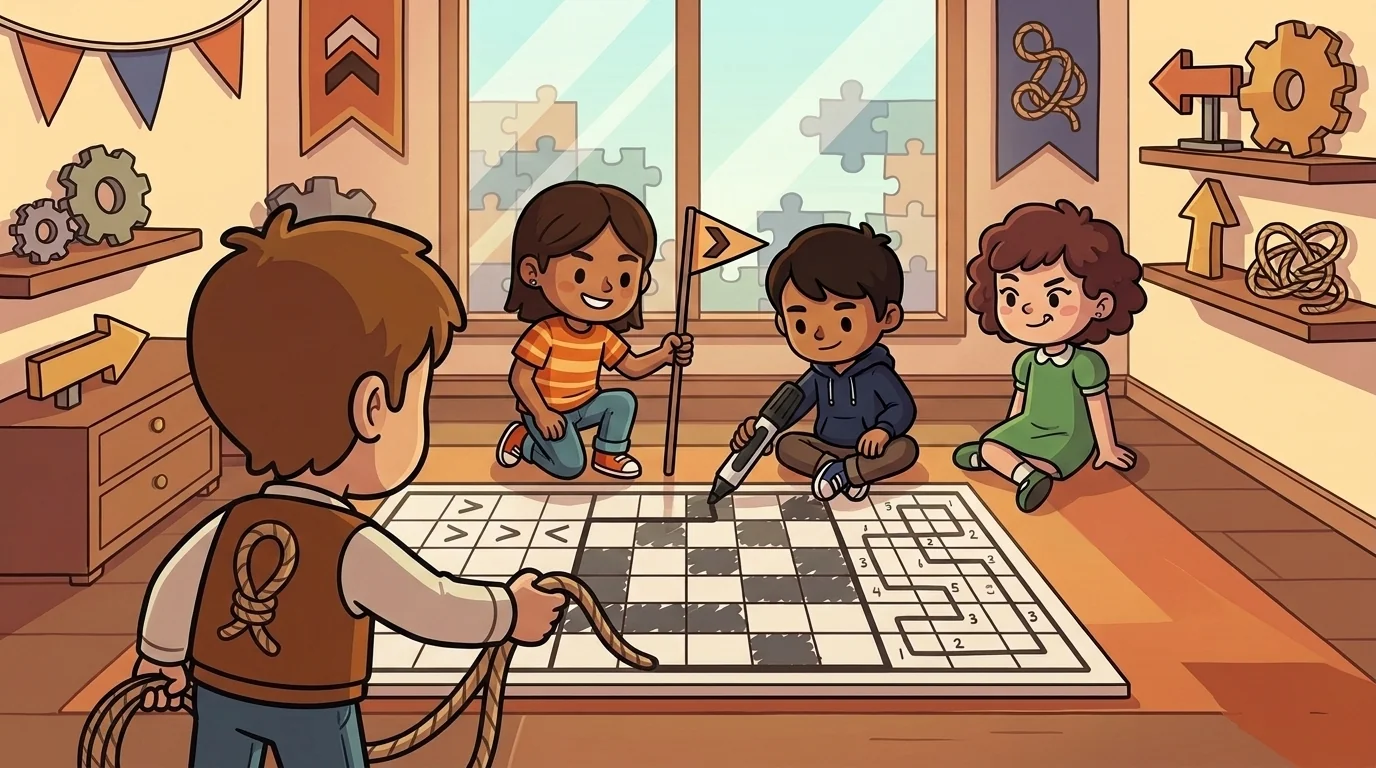
"A loop cannot stop in midair," Lasso noted. "If a line enters a dot, it must leave that dot. Dead ends are forbidden by the rules."
Since three directions were blocked by X's, the fourth direction was the only escape route left. Lasso pulled the line forward, extending the continuous loop toward the lower corner.
"No dead ends, no branches," Lasso said. "The rules are drawing the path for us."
The hardest part of the grid waited in the bottom-right sector. All three systems overlapped in a dense cluster of clues. An inequality arrow pointed toward a Hitori cell, which shared a corner with a Slitherlink 0 clue.
For a moment, the table was silent except for the ticking of the wall clock.
"If this cell is a one," Chevron murmured, "the arrow forces the neighbor to be a two."
"Which duplicates the two in my third column," Umbra chimed in, leaning closer.
"So my cell goes dark."
"And a dark cell there means the loop cannot cross that boundary," Lasso finished, snapping a line into place. "Which forces the edge to turn left."
They worked in tight rhythm now, passing the pencil like runners in a relay. Chevron called out forced numbers. Umbra laid down shadows that protected the open path. Lasso pulled her loop through every open gap, weaving the outer line tight against the inner board.
Neither of them reached for an eraser. Neither of them paused to ask what if. Every move grew directly out of the step before it.
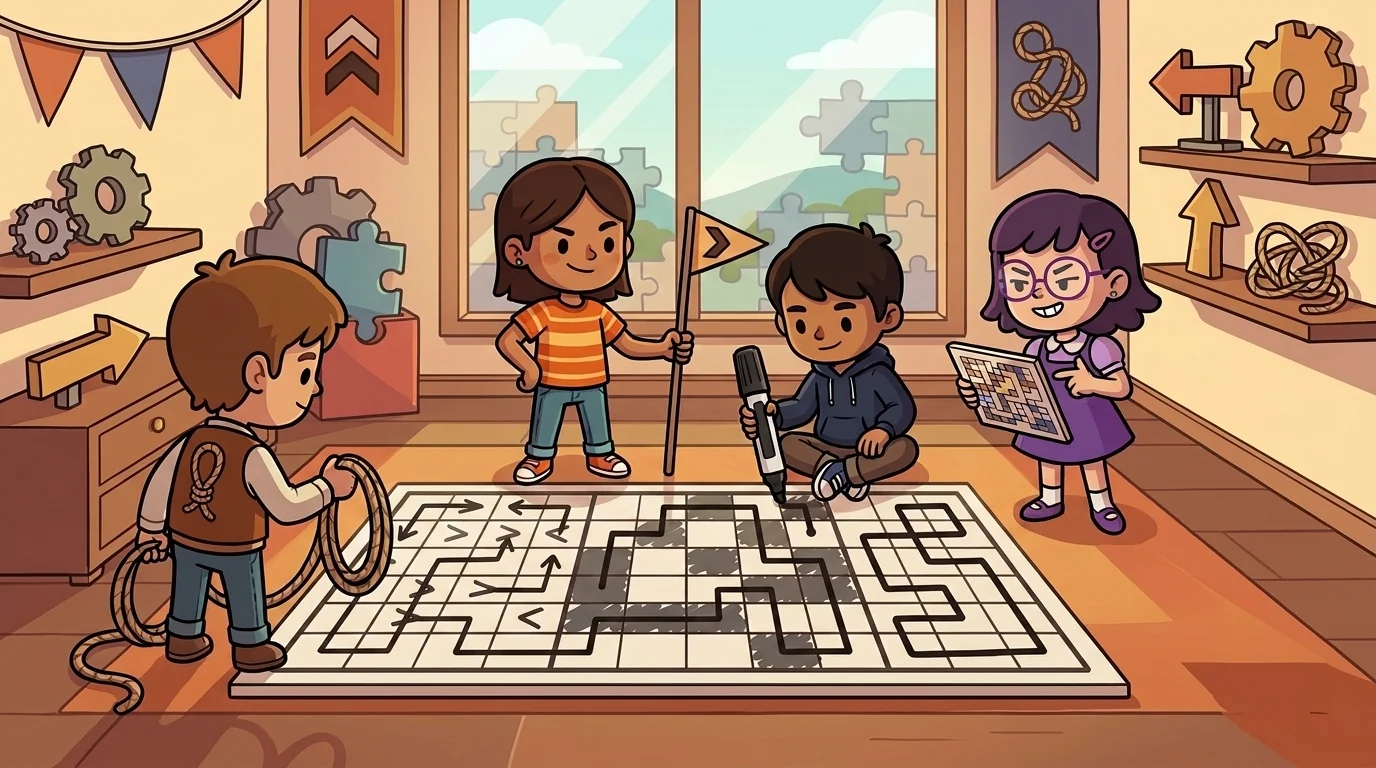
Ten minutes later, Lasso's pencil met the starting dot. The line clicked shut, forming one complete, unbroken loop around the grid.
Every cell in the middle held a clear digit or a neat shadow. Every arrow on the left was satisfied.
Ada leaned forward from the counter and looked over their shoulders. She studied the paper for a long moment before taking a slow sip of her tea.
"No stumbles?" Ada asked softly. "No quick guesses when you got stuck in the bottom corner?"
Chevron stood up, marshal-steady as always. He turned the sheet around so Ada could read it from her side.
"Trace it backward," Chevron dared her. "Find one move that relied on luck."
Ada did not need to trace it. She had designed the puzzle, so she already knew the answer. Every number had come from an arrow chain. Every shadow had come from a duplicate rule. Every line segment had come from an exact count.
There is a quiet kind of pride in a puzzle solved this way. A lucky guess feels exciting for a second, but that feeling quickly fades into relief. A forced move feels different. A forced move feels like truth, and truth does not evaporate when you look away.
Umbra blew away a small flake of eraser dust from her lit path. Lasso ran a fingernail along the dark perimeter of her closed loop, following it all the way home.
"Deduce it, never guess it," Umbra said quietly for all three of them.
Ada nodded once, satisfied. On the slate table, every mark remained exactly where it belonged, proved beyond doubt.
The LatticeForge ensemble
The No-Guess Three is part of LatticeForge's distributed-narrative cast. Each character embodies a different curricular primitive; together they teach the full subject.
-

Onlie
Sudoku — Latin-square uniqueness: sets her lantern on the only place a number can go in its row, column, and box
-
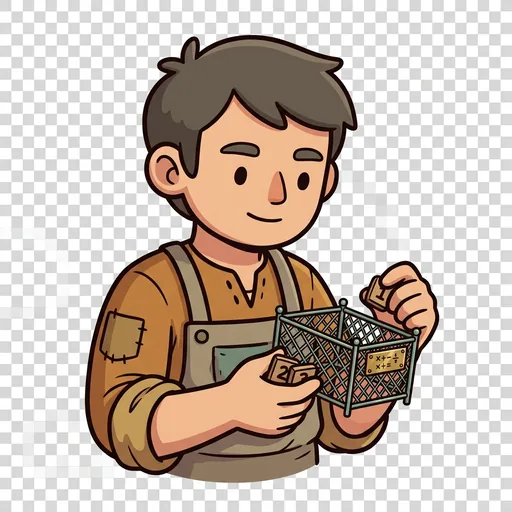
Cage
KenKen — arithmetic-cage: fills a fenced region so its numbers hit the plaque's target under its operation
-
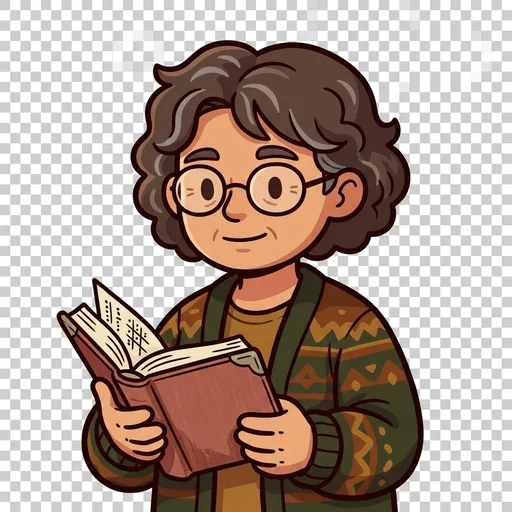
Kaku
Kakuro — cross-sum: fills a run so it sums to its clue with no digit repeated; the total names its parts
-
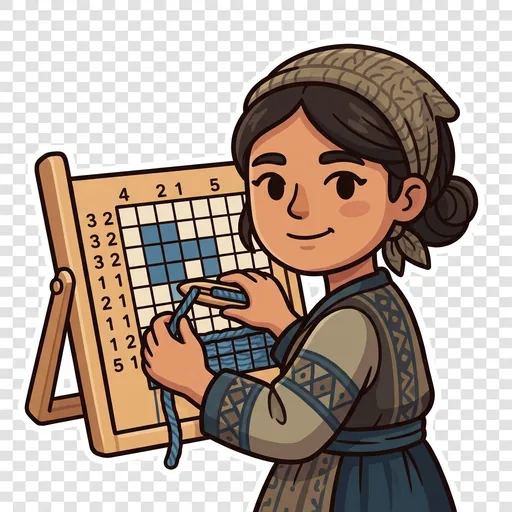
Pica
Nonogram/Picross — run-length deduction: reads the edge numbers and fills the overlap that must be filled
-
Chevron
Futoshiki — inequality/ordering: obeys the < / > flags between neighbours to force the numbers into order
-
Umbra
Hitori — elimination + connectivity: shades out duplicates so none touch and the rest stays whole
-

Serra
Skyscrapers — visibility count: places towers so each edge clue counts how many can be seen, taller hiding shorter
-

Lasso
Slitherlink — single-loop edge deduction: draws one closed loop so each number uses exactly that many edges
-
Vega
Star Battle — partition + non-adjacency: places the stars so each row, column, and region holds its quota and none touch
-

Ada
Mentor host — keeps the puzzle guild; teaches 'every grid hides one rule — find the forced cell, never guess'