
Pica
run-length deduction — the numbers beside a line dictate its runs of filled cells
Loading audio…
Press play to listen along. The line being read lights up as you go.
Show full transcript
Loading transcript…
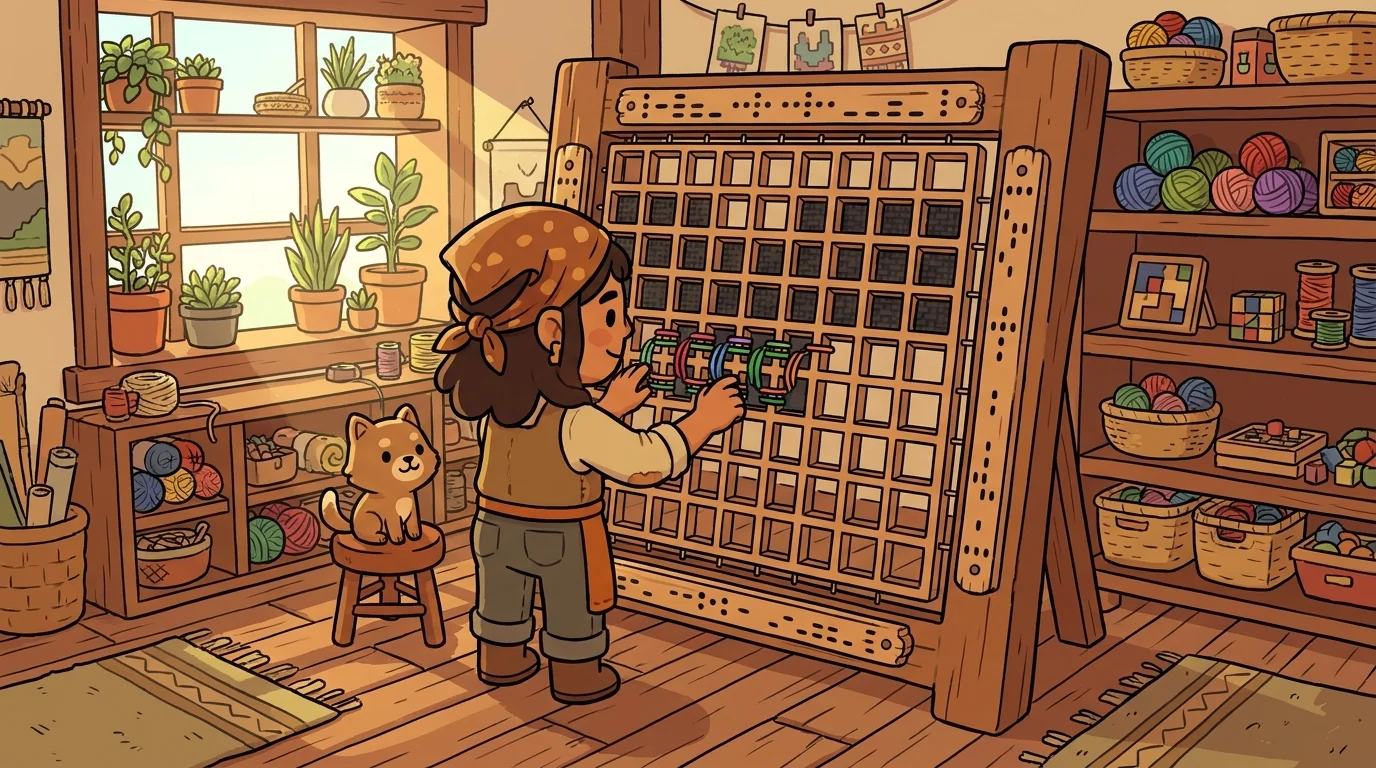
Pica worked at a wooden upright frame that looked almost like a rug loom. Instead of warp threads and yarn shuttles, her frame held a clean grid carved into white ash wood. Small brass tiles with stamped numbers sat in neat grooves along the top edge of every column and down the left margin of every row. Those numbers were not simple totals. They were precise instructions listing the length of every filled run of dark tiles in that line, written in order, separated by at least one blank space.
"So if a row has ten empty slots," Maya said, leaning over the counter, "and the clue on the left margin just says seven..."
"It means one single block of seven dark tiles sits inside those ten spaces," Pica said, her hands moving with quiet habits. "The block can slide back and forth. But watch what happens when you test the limits."
She pushed seven dark tiles all the way to the left side of the row, filling slots one through seven. Then she slid the entire seven-tile block all the way to the right side, filling slots four through ten.
"Look at the middle four spaces," Pica whispered, pointing her stylus at slots four, five, six, and seven. "No matter where that block slides, those four middle slots stay covered. The ends are loose, but those four middle squares belong to you forever."
Maya tapped her chin with her pencil. "You solved almost half the row without knowing where the ends land."
"That is the core of the craft," Pica said, locking the four middle dark tiles into place with a crisp wooden click. "You never need to see the ends to be absolutely sure of the middle."
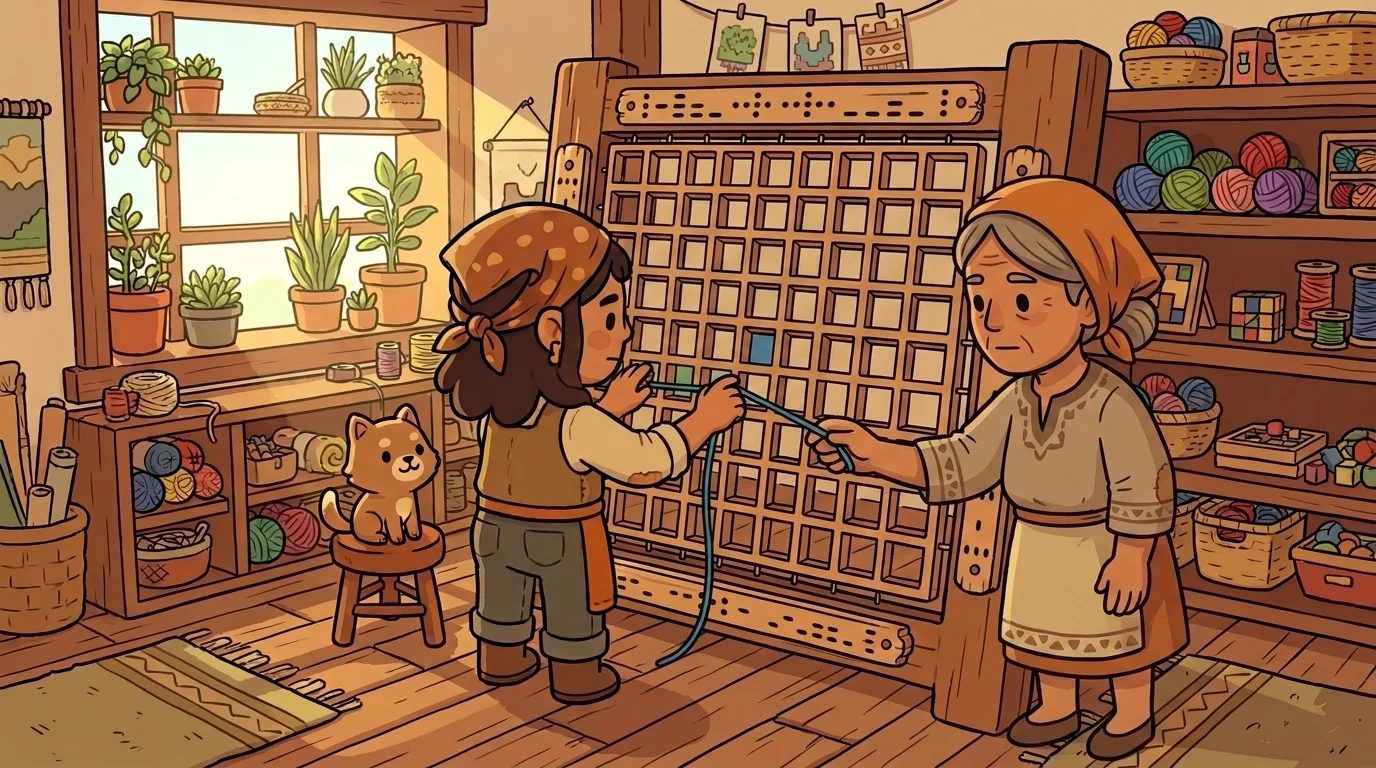
Pica had learned the work in a noisy river town full of weaver sheds, where the looms clacked from dawn until dusk. Her aunt used to sit beside a broad oak frame, reading long paper strips punched with numbered stripe lengths. Her aunt never guessed where a pattern began. She would lay the longest stripe length against the width of the stretched cloth and calculate its footprint.
"This stripe is so wide it cannot hide," her aunt used to say, marking the fixed canvas with charcoal. "It has no choice but to cover these middle threads."
When Pica was nine years old, she tried to rush a pattern by filling an entire row. She thought she already knew what the finished blanket should look like. Her aunt had caught her wrist gently before the shuttle crossed the threads.
"You are filling a square you will only have to pull out later," her aunt warned her. "Fill only what is forced to be filled. Mark every square that must stay empty. The picture arrives when you stop reaching beyond what you actually know."
That advice became Pica's rule. Certainty always came first. The rest of the solution followed certainty the same way a strong thread followed a needle through heavy cloth.
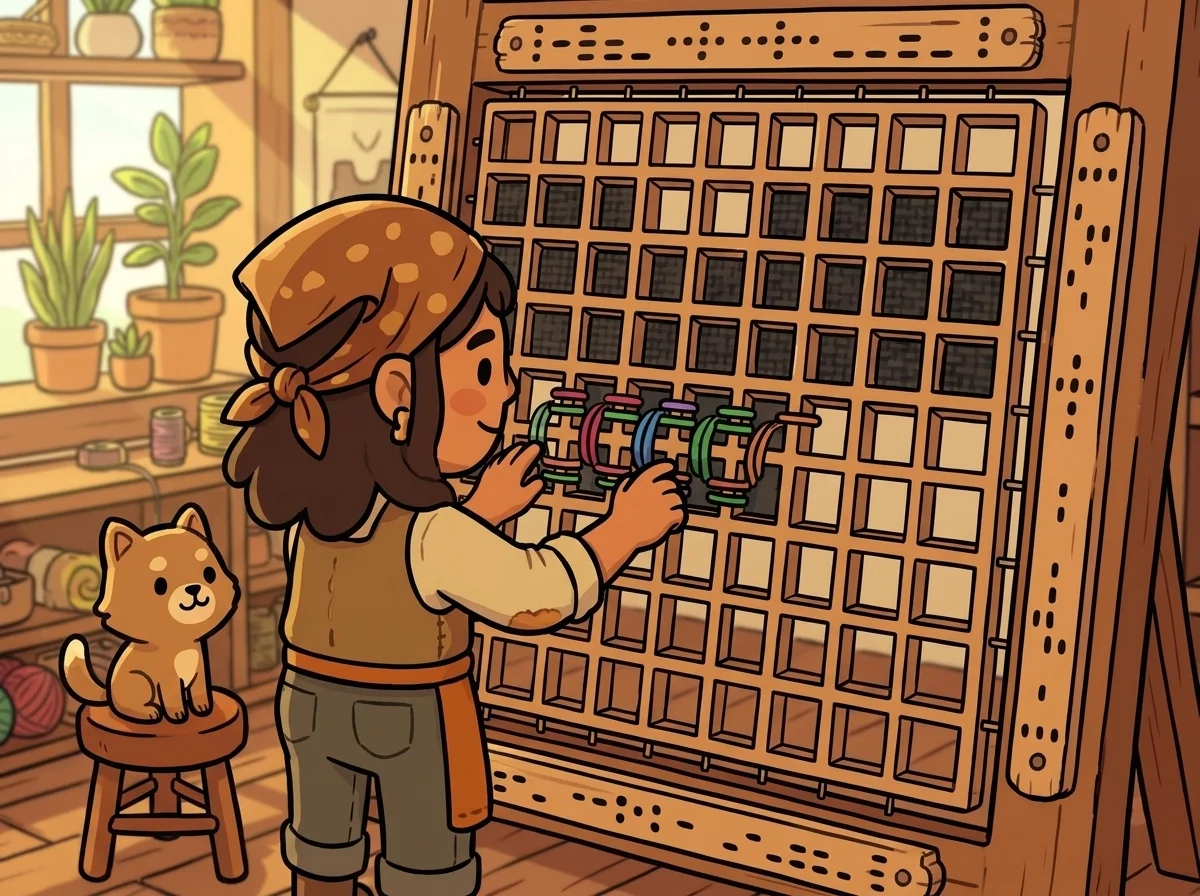
Ada stood behind Pica one afternoon, watching her work on a massive, abandoned board known as a Nonogram. The board was a sea of gray squares surrounded by dense columns of tiny numbers.
"You are not painting that board," Ada observed, resting her elbows on the tall back of Pica's stool. "You are proving it."
"Every dark tile I drop into a socket comes with a reason," Pica replied without looking up. "I can prove why it cannot be blank. Every cross mark I carve into an empty slot carries a reason why it cannot be filled. The clue numbers do all the arguing. I simply listen to what they demand."
Pica worked through overlap and outer boundaries. A long run inside a short row had almost no room to move, which created huge overlapping sections of forced dark tiles. Whenever a run touched the outer wall of the frame, its placement became absolute. Once a run finished its full count, the space right beside it had to be left blank, because two distinct runs could never touch directly.
Those forced empty spaces acted like solid stone walls. They squeezed the remaining numbers into tighter spaces, forcing new overlaps to appear across neighboring rows and columns. Step by step, the hidden picture walked itself open across the grid.
Lasso leaned against the adjacent workbench, watching Pica place a row of neat wooden crosses in the empty slots. He gave her a low nod of approval.
"A forced wall is as good as an anchor," Lasso said in his dry tone. "Building on a solid boundary beats guessing every single day of the week."
Serra strolled past, glancing at the emerging grid with her head tilted to one side. "It is very neat, Pica, but it looks like a flat tile floor. A good skyline gives you room to breathe."
"A skyline is just empty air and luck," Pica answered with a small smile. "A completed grid is a truth that cannot be undone."
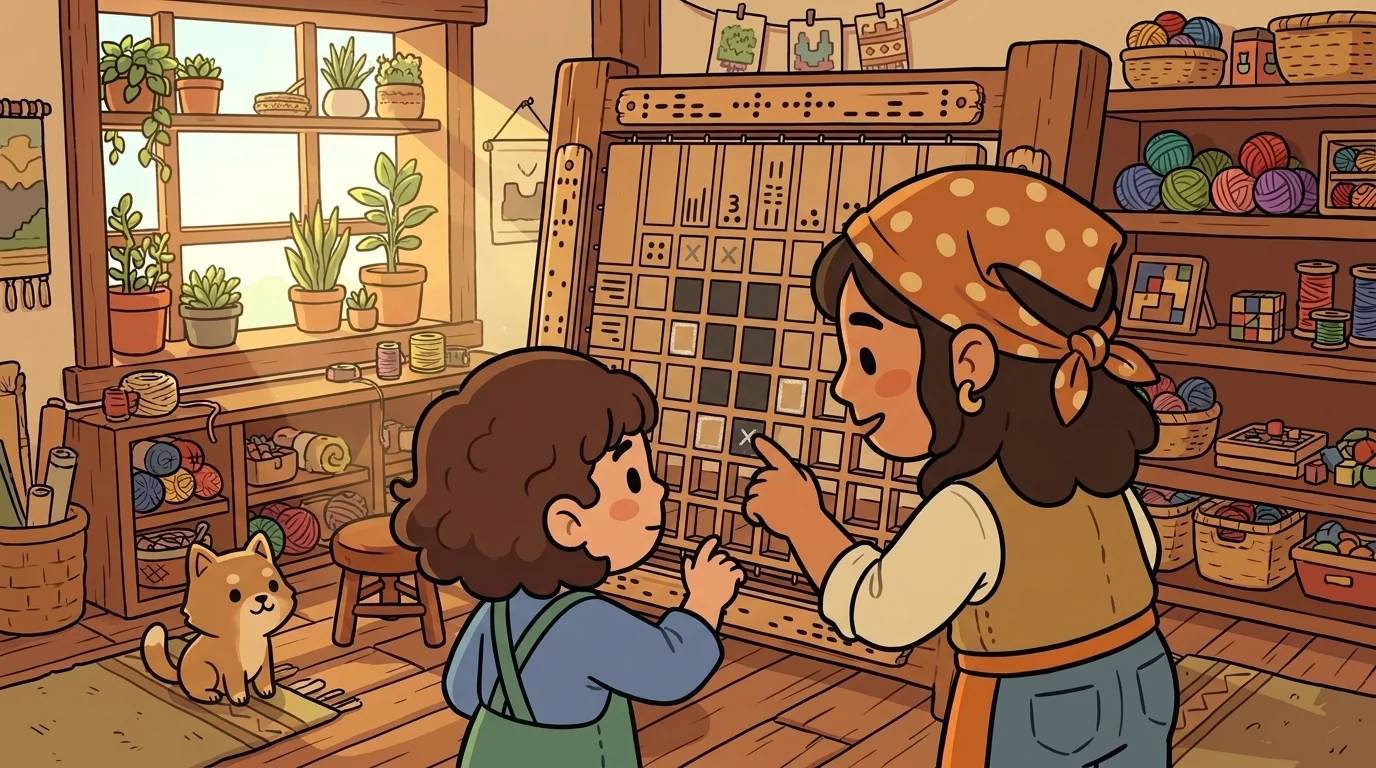
Later that afternoon, a young girl sat at a small table in the corner, trying to solve a tiny pocket grid. She was coloring in squares at random with a blue lead pencil because she thought the shape looked like a swimming fish.
Pica pulled up a stool beside her and set her wooden stylus on the table. "What are the clue numbers written above that column?"
"Three, and then two," the girl said, rubbing her thumb over a smudged corner.
"And how many total spaces exist in that line?"
"Ten spaces," the girl answered.
"Three dark tiles, a required blank space, and two dark tiles make six total spaces," Pica said calmly. "Slide that whole pattern all the way to the top. Then slide that whole pattern all the way to the bottom. Where does the three-tile run overlap itself?"
The girl counted down the wooden grid with her index finger, moving up and down the row twice. "The second space down is covered in both directions."
"That is one dark tile you will never have to erase," Pica said softly. "Always build outward from the tiles you can defend. Never build from a feeling."
The girl filled the second slot with dark charcoal, then placed a clean cross mark in the forced blank space right below the finished group. Suddenly, the squeezed remaining space forced the smaller two-tile run directly into place. The entire column cleared itself in three quick motions.
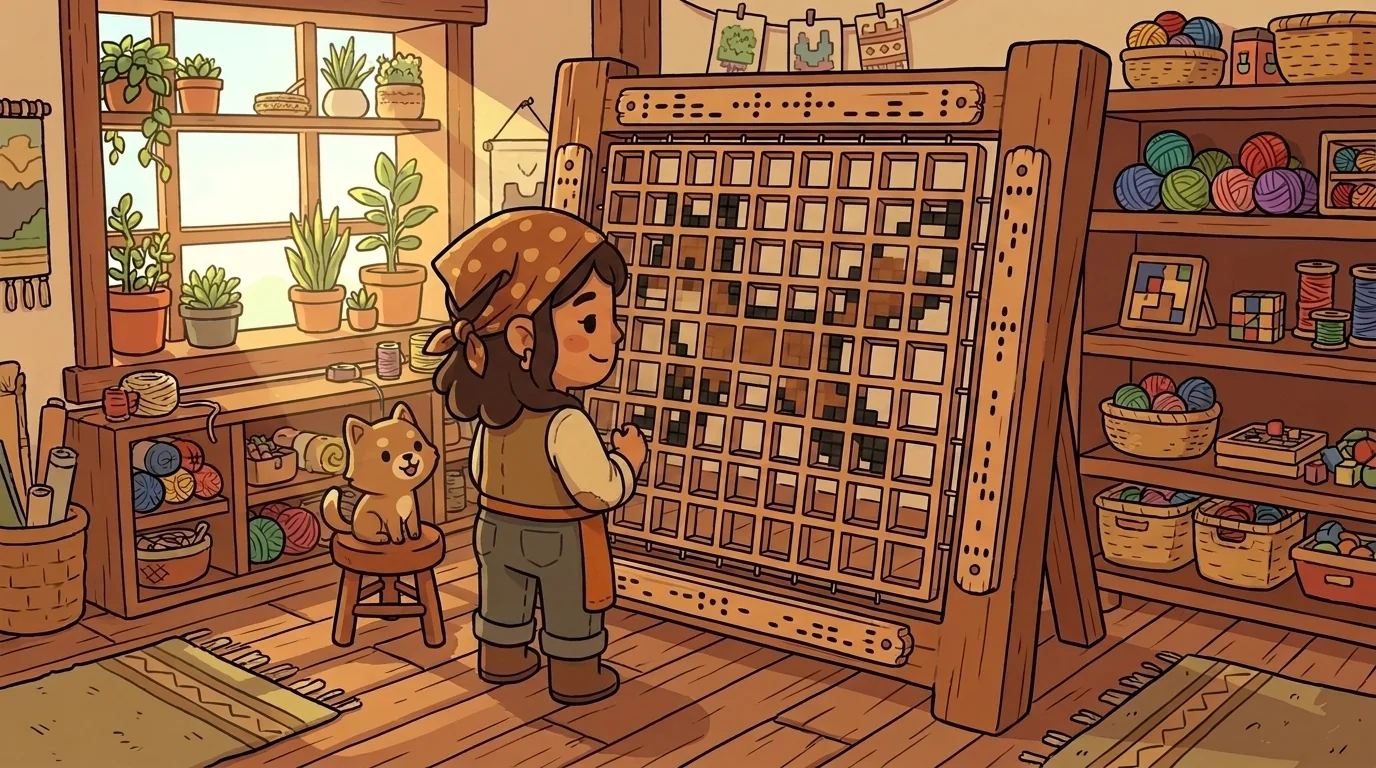
When a large board was fully solved, Pica stepped back three paces, exactly the way her aunt used to step back from the heavy loom frame. Across the sea of dark squares and small carved crosses, a clean black image stood out against the timber—a flying bird, a brass key, or a running fox.
Every single dark tile could point back to a clue number that demanded its existence. Every single blank space had a clear reason to be empty.
Pica felt a quiet warmth spread through her chest, like the calm light of early dawn spreading across a quiet workshop. It was the feeling of sitting patiently with a puzzle until it finally chose to reveal its true face.
"You never need the ends to be sure of the middle," Pica murmured to herself, running her fingers over the smooth wooden frame. "Stand firm on the middle. The picture will always come to you."
The LatticeForge ensemble
Pica is part of LatticeForge's distributed-narrative cast. Each character embodies a different curricular primitive; together they teach the full subject.
-

Onlie
Sudoku — Latin-square uniqueness: sets her lantern on the only place a number can go in its row, column, and box
-
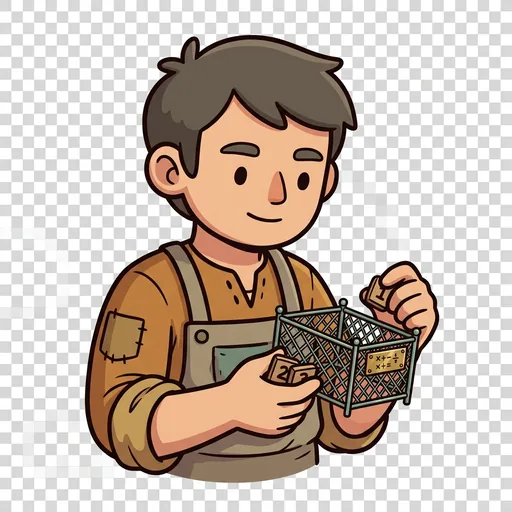
Cage
KenKen — arithmetic-cage: fills a fenced region so its numbers hit the plaque's target under its operation
-
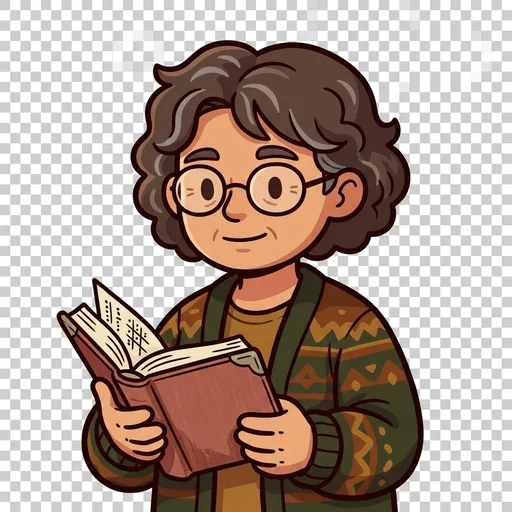
Kaku
Kakuro — cross-sum: fills a run so it sums to its clue with no digit repeated; the total names its parts
-
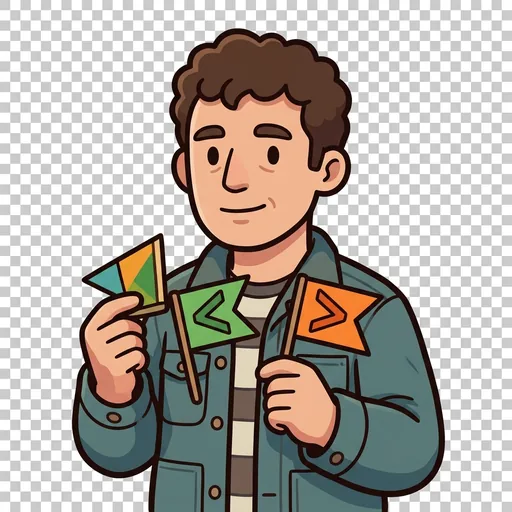
Chevron
Futoshiki — inequality/ordering: obeys the < / > flags between neighbours to force the numbers into order
-
Umbra
Hitori — elimination + connectivity: shades out duplicates so none touch and the rest stays whole
-

Serra
Skyscrapers — visibility count: places towers so each edge clue counts how many can be seen, taller hiding shorter
-

Lasso
Slitherlink — single-loop edge deduction: draws one closed loop so each number uses exactly that many edges
-
Vega
Star Battle — partition + non-adjacency: places the stars so each row, column, and region holds its quota and none touch
-

Ada
Mentor host — keeps the puzzle guild; teaches 'every grid hides one rule — find the forced cell, never guess'