
Serra
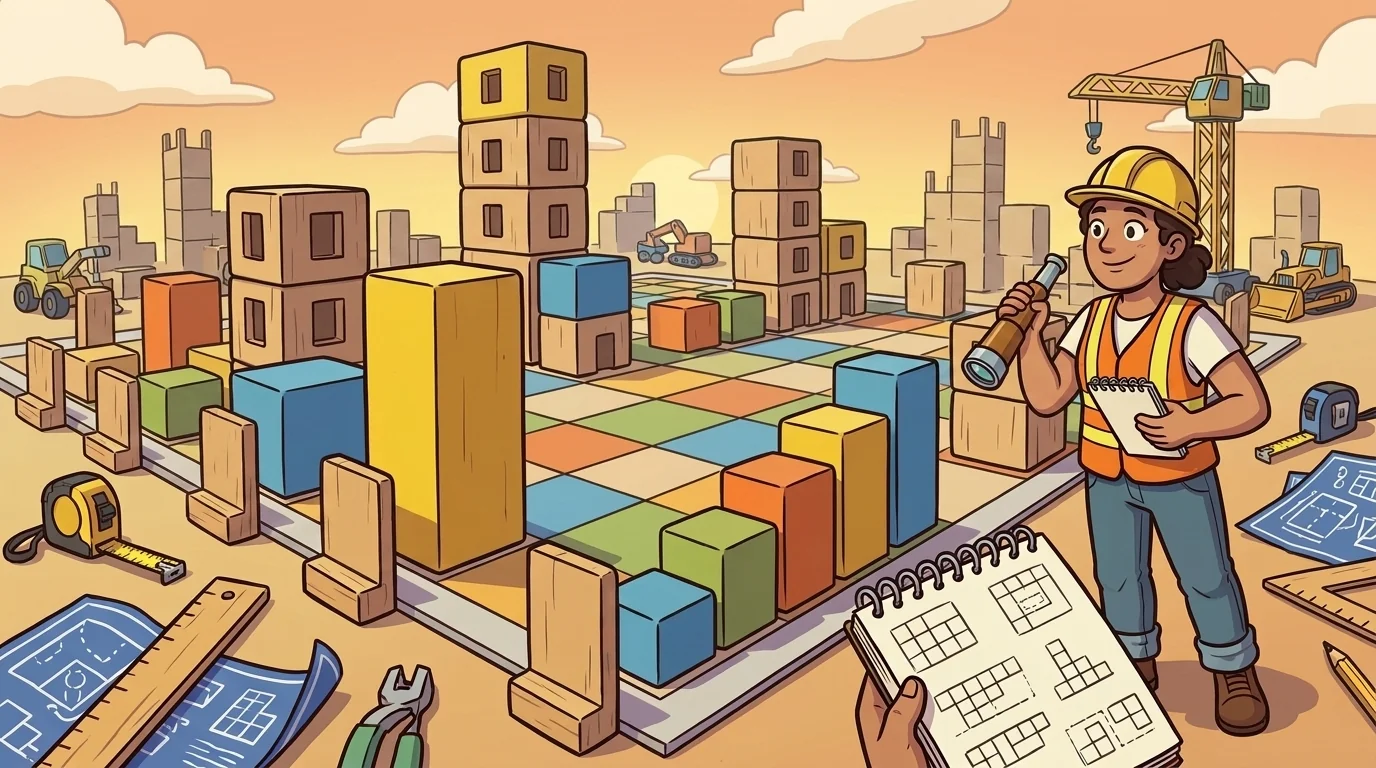
visibility — an edge clue counts how many towers can be seen; taller towers hide shorter ones behind them
Loading audio…
Press play to listen along. The line being read lights up as you go.
Show full transcript
Loading transcript…
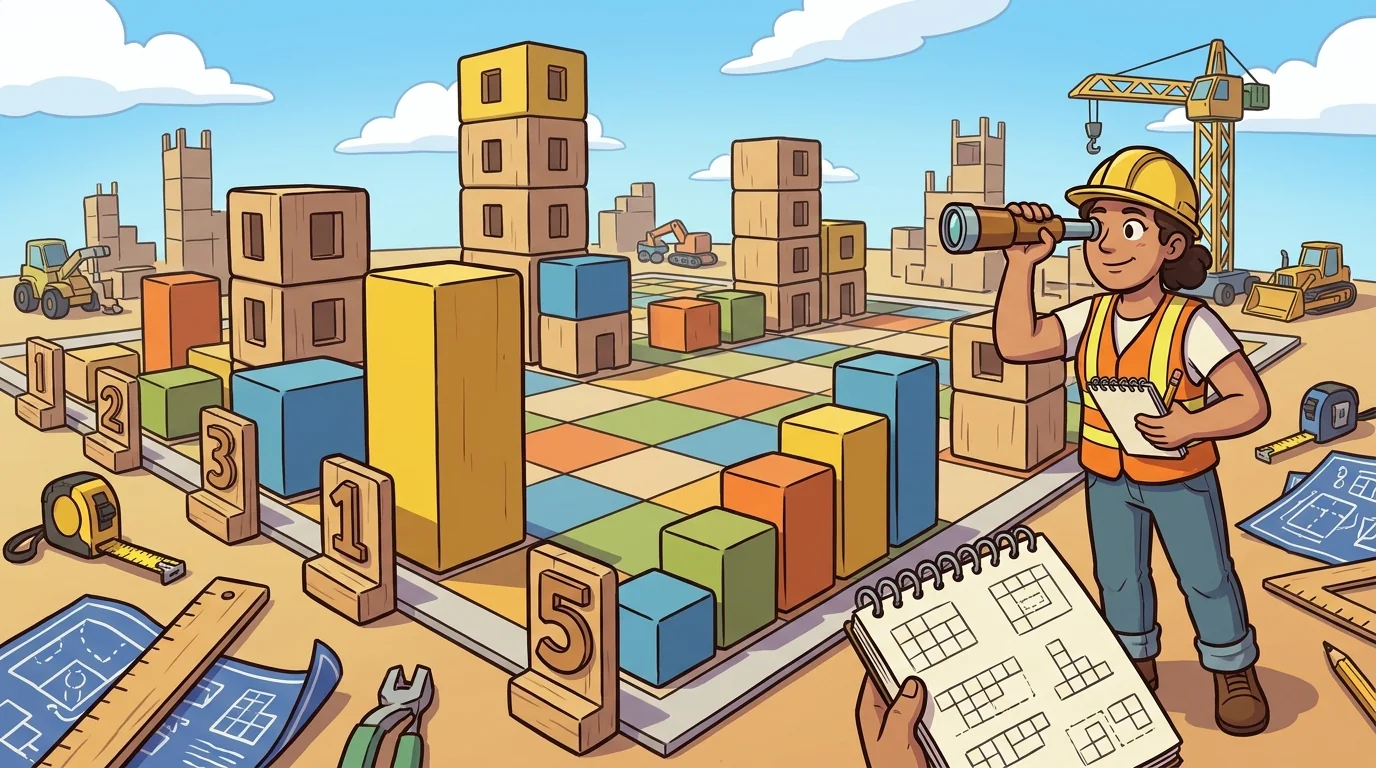
The wooden grid on Serra's drafting table had twenty-five empty squares, a quiet five-by-five block waiting for a city. Beside the board sat twenty-five cedar blocks, cut into five distinct heights for solving Skyscrapers puzzles. A height-one block barely cleared her thumb. A height-five block stood tall as a tea mug. When the city was built, every street—row—and avenue—column—would hold exactly one block of each height. No two towers of the same height could share a street or an avenue.
That was the basic rule, but the real craft lay outside the city walls.
Around the outer perimeter of the grid sat small wooden markers with carved numbers. These were the edge clues, the sightline markers. They told a surveyor standing at that specific edge how many towers she could see down that straight line. A tall tower hid every shorter tower tucked behind it. A clue of one meant only a single tower was visible from that vantage point. A clue of five meant every single tower rose in plain view, ascending step by step.
Maya leaned over the table, resting her elbows on the pine frame. Her eyebrows pulled together in a tight V. "How can a number outside the city tell you what belongs in the middle?"
Serra pulled her small brass spyglass from her coat pocket. She extended the barrel with a soft click and lined it up with a street marked with a 1 at its western gate.
"A one is the loudest clue on the board," Serra said, adjusting the eyepiece. "If I stand at this gate and see only one tower, what does that tell you about the very first building?"
Maya tapped her chin. "It has to be huge?"
"It has to be the tallest building in the city," Serra said, picking up a height-five cedar block. She placed it squarely in the first cell next to the marker. "A height-five tower right at the edge swallows everything behind it. A height-one block could hide behind a height-two, but nothing hides a five. So when you see a one at the gate, the five lands immediately."
She turned the grid ninety degrees until she faced an avenue marked with a 5.
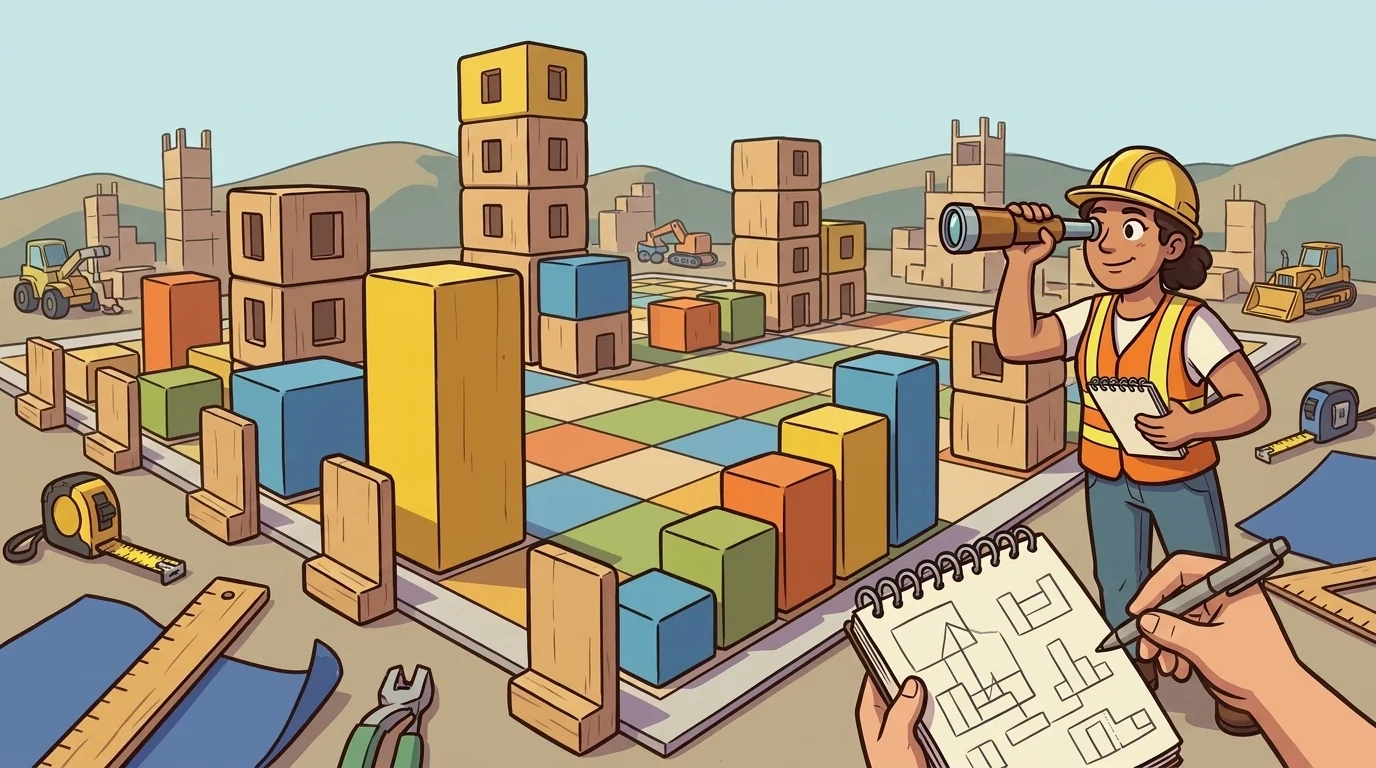
"Now look down this line," Serra said. Her voice remained calm and steady, the voice of someone reading a topographical map in a crosswind. "The clue says five towers are visible. In a five-by-five grid, there are only five buildings in the whole line. How do you see all five without a single one blocking another?"
Maya squinted along the line of empty squares. "They have to climb."
"Exactly," Serra said. She placed the blocks in a rising flight of wooden stairs: one, two, three, four, and five. "A clue equal to the full grid length is a complete staircase. The smallest tower sits at the front, and the tallest sits at the back. The extreme clues write their own stories before you even touch the middle."
***
Serra learned to see this way long before she ever touched a board or a wooden block. Her family surveyed the ragged granite ridges of the northern valley, where fog filled the canyons like white soup. Her grandmother could stand at the mouth of a deep gulley, stare into the grey mist, and name every hidden peak.
"You don't need to walk every yard of a dangerous canyon to know what lives inside it," her grandmother used to tell her while sharpening iron sighting pins on a whetstone. "The tallest things in the landscape tell you what is tucked behind them. Count what is visible, and you know the shape of the hidden."
When Serra was nine years old, a sudden autumn blizzard buried the valley trail under knee-deep drifts. The landmarks disappeared under a sheet of blinding white. The trail markers were lost, and cold air bit through their wool coats. Serra had panicked, reaching for her grandmother’s heavy wool sleeve.
Her grandmother hadn't panicked. She climbed a flat boulder, held a leather sighting tube to her eye, and scanned the jagged horizon above the treeline.
"Three peaks visible to the west," her grandmother muttered, pointing into the swirl of snow. "The big granite thumb is the third one. That means the mountain pass lies right behind it, hidden in the shadow of the ridge."
They walked straight toward the dark shadow, and twenty minutes later, they stepped into the sheltered notch of the pass. They were safe. From that afternoon on, Serra trusted edge-counts more than she trusted her own feet. You didn't need to stumble through every dark alley if you could read the horizon from the edge.
***
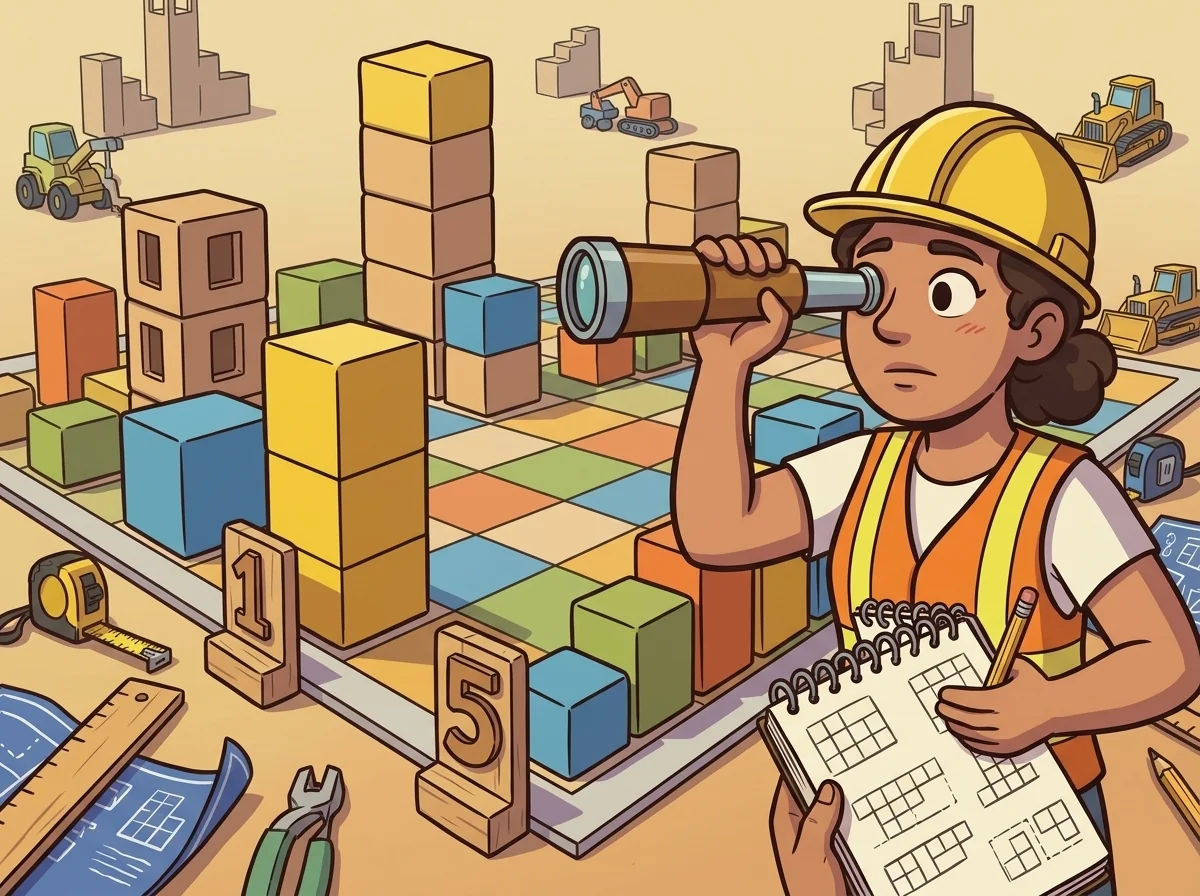
When Ada first arrived at the workshop, she brought a blank five-by-five grid and laid out six edge clues around the border. She sat down across from Serra and tapped her fingers against the table.
"Show me how you think," Ada said.
Serra picked up three height-five blocks and set them into the grid instantly, using only three edge clues of one. She didn't hesitate, and she didn't guess.
Ada raised an eyebrow, a faint smile touching her lips. "You placed the tallest towers before you even touched a smaller block."
"The extreme clues place themselves," Serra said, adjusting her spyglass. "A one is a five at the edge. A five is a full staircase. Once the extremes are down, I stop looking for what goes in. I look for what the clues forbid."
"Forbid?" Ada asked.
"A clue of two means you see exactly two buildings," Serra explained. "That means the tallest tower cannot be first. If the five sat at the front, you would see only one building, not two. So the edge cell cannot be a five. I cross it off my mental list. It is the same trick Onlie uses with her logic grids, except my forbidden list comes from sightlines."
Ada nodded slowly, her decision made on the spot. "Pack your drafting tools. We need someone who can see a whole city before the foundations are poured."
***
Later that afternoon, a younger student named Bram sat at the long worktable, staring at a street clued with a 2. He had five wooden blocks lined up in front of him, swapping them back and forth with frustrated huffs.
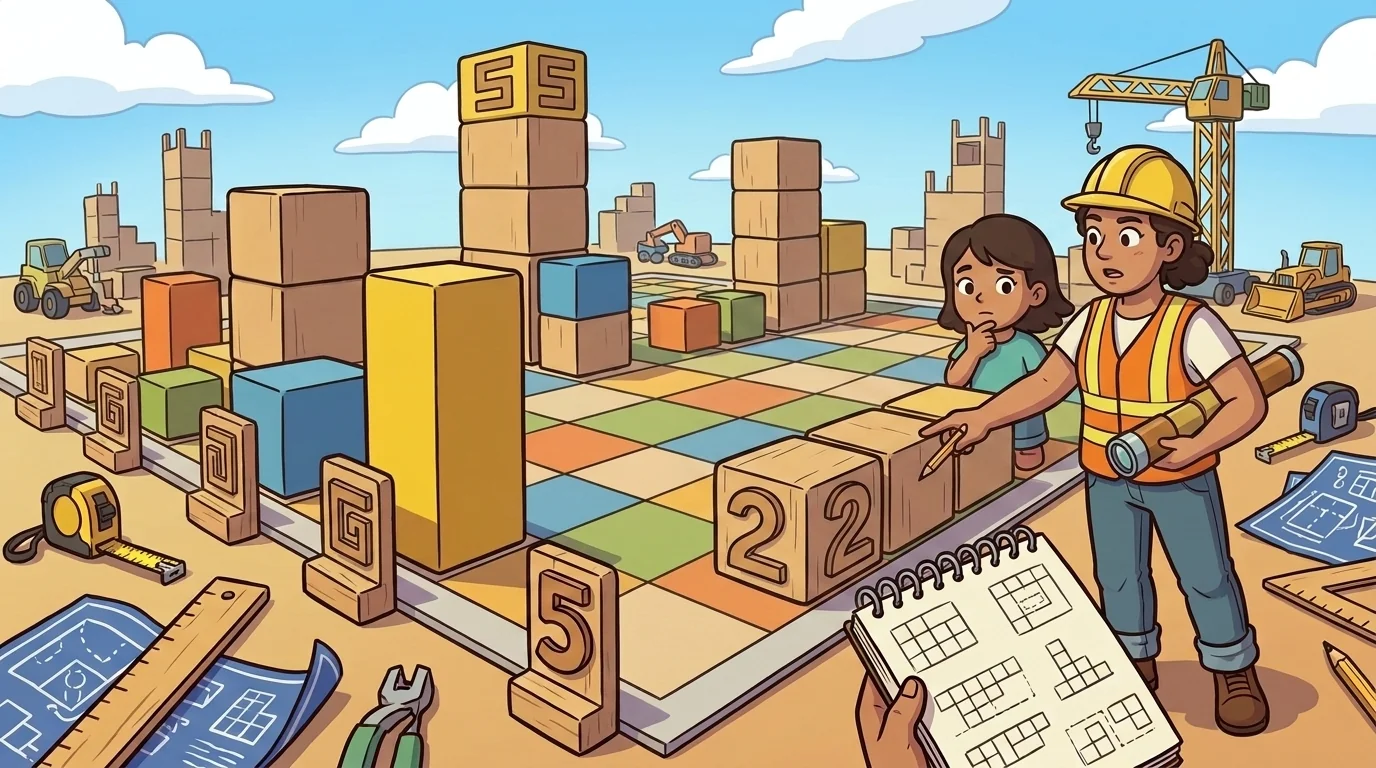
"I can't figure out where the tall one goes," Bram grumbled, tugging at his shirt sleeve. "The number says two, but there are four different ways to arrange these blocks."
Serra pulled up a stool beside his drafting board. "Do not try to guess the whole street at once, Bram. Ask what the clue forbids first. Can the five go in the very first square?"
Bram looked at the clue. "No. If the five is first, it blocks everything behind it. That would make the clue a one."
"Good," Serra said. "So the five is forbidden in cell one. Now, can the five go in the second square?"
Bram picked up the height-five block and set it in the second square. He placed a height-two block in the first square. He ducked his head down to table level and peered past the height-two block toward the height-five block behind it.
"I see the two," Bram said slowly. "And then I see the five towering over it. Everything behind the five is hidden." He looked up, his eyes bright. "That counts as two visible buildings!"
"So the five can sit in cell two," Serra said. "Where else could it sit?"
"It could sit in cell three, or cell four, or cell five," Bram said, sliding the block down the line. "As long as exactly one building in front of it is taller than all the others before it."
"The clue did not give you a single block," Serra said gently. "It gave you the overall shape of the whole street. Work inward from what is forbidden, and the remaining spaces will narrow down."
Across the room, Kaku leaned over from her arithmetic station, where she was stacking numerical tiles into balance boxes. "You live on the edges just like I do, Serra," Kaku called out with a dry grin. "I look for minimums and maximums in my sums, and you look for ones and fives on your borders."
"The edges are where the noise stops," Serra replied, winking at him. "The middle is just where the consequences land."
Pica looked up from her loom, where colored threads crossed in precise mathematical patterns. "A skyline is just a vertical tapestry, Serra. You count peaks, and I count grid intersections."
"Except my peaks block the view," Serra said. "Your threads let the light through."
Pica laughed, sliding her shuttle smoothly through the warp. "Fair enough, surveyor. But we both know the picture isn't finished until every thread and tower sits in its proper place."
***
By dusk, the amber sunlight streamed through the high windows of the workshop, casting long shadows across the drafting table. Serra stood at the edge of the board, holding her brass spyglass.
She stepped to the north gate and looked down each of the five avenues. Column one showed three towers rising over their neighbors; the clue at the north edge was three. Column two showed a single massive tower right at the front; the clue was one.
She moved to the west gate and scanned the streets from left to right. Every height from one to five appeared exactly once in every row and every column. No two buildings shared a height along any street or avenue. Most importantly, every edge clue matched the exact number of visible towers along its sightline.
A clean, wide feeling settled in her chest, the calm clarity that always came with a completed grid. It was the same feeling her grandmother spoke of on the high mountain ridges. It was the quiet satisfaction of looking across a vast valley and knowing every fold of the land without walking every yard of ground.
Serra lowered her brass spyglass and slipped it back into her pocket. She leaned her palms against the smooth pine edge of the table and smiled at the finished city.
"You don't have to walk the canyon," she whispered into the quiet room, her grandmother's words ringing clear and true. "The tallest thing you can see tells you what's hidden."
The city was built, and from every edge, the skyline stood tall and true.
The LatticeForge ensemble
Serra is part of LatticeForge's distributed-narrative cast. Each character embodies a different curricular primitive; together they teach the full subject.
-

Onlie
Sudoku — Latin-square uniqueness: sets her lantern on the only place a number can go in its row, column, and box
-
Cage
KenKen — arithmetic-cage: fills a fenced region so its numbers hit the plaque's target under its operation
-
Kaku
Kakuro — cross-sum: fills a run so it sums to its clue with no digit repeated; the total names its parts
-
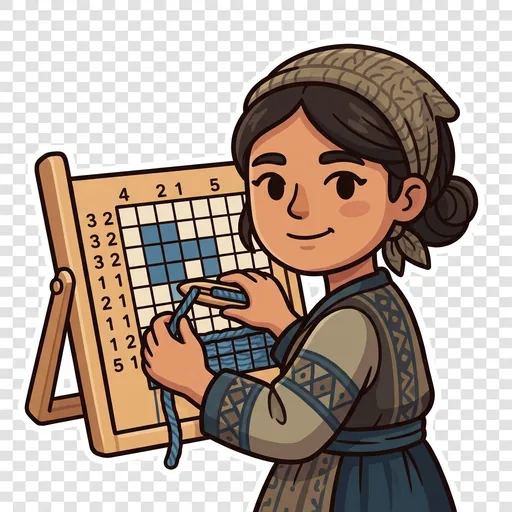
Pica
Nonogram/Picross — run-length deduction: reads the edge numbers and fills the overlap that must be filled
-
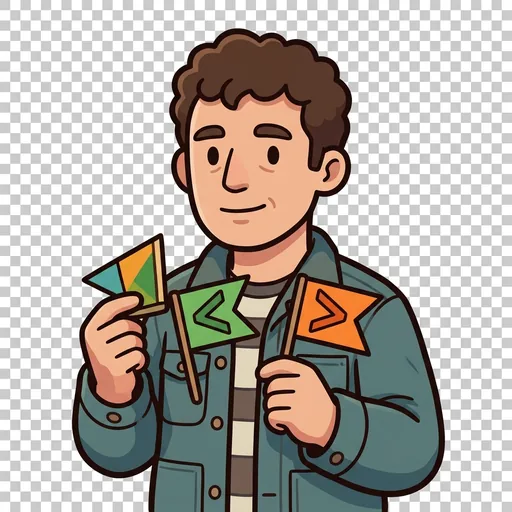
Chevron
Futoshiki — inequality/ordering: obeys the < / > flags between neighbours to force the numbers into order
-
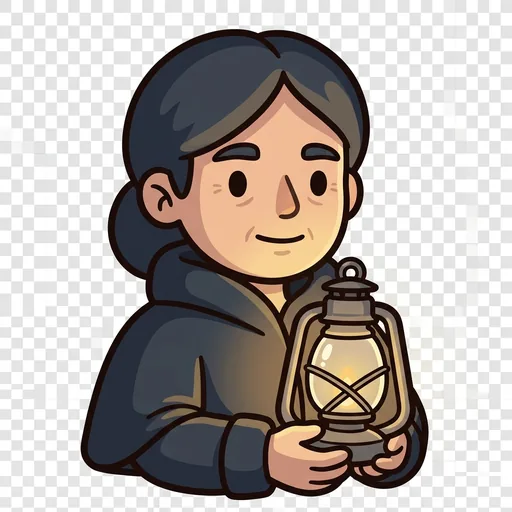
Umbra
Hitori — elimination + connectivity: shades out duplicates so none touch and the rest stays whole
-

Lasso
Slitherlink — single-loop edge deduction: draws one closed loop so each number uses exactly that many edges
-
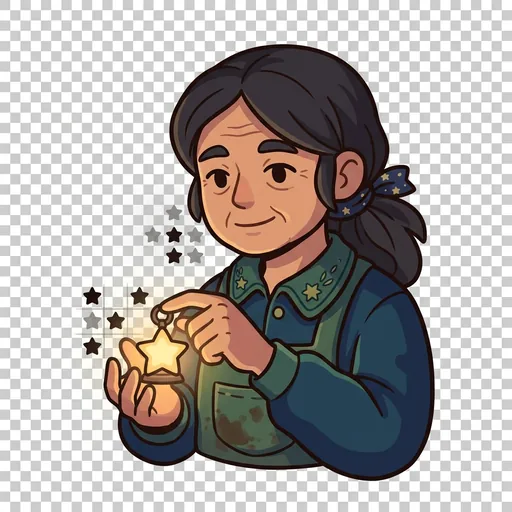
Vega
Star Battle — partition + non-adjacency: places the stars so each row, column, and region holds its quota and none touch
-

Ada
Mentor host — keeps the puzzle guild; teaches 'every grid hides one rule — find the forced cell, never guess'