Starla
PREMIUM SQUARES — *a tile's worth is not fixed; it is the letter's value TIMES the square it lands on. So a heavy letter (Q, Z, X) is worth a little on a plain square and a mountain on a star. Hold your best letters back — pay the cost of patience — until the letter and the premium square line up.*
Loading audio…
Press play to listen along. The line being read lights up as you go.
Show full transcript
Loading transcript…
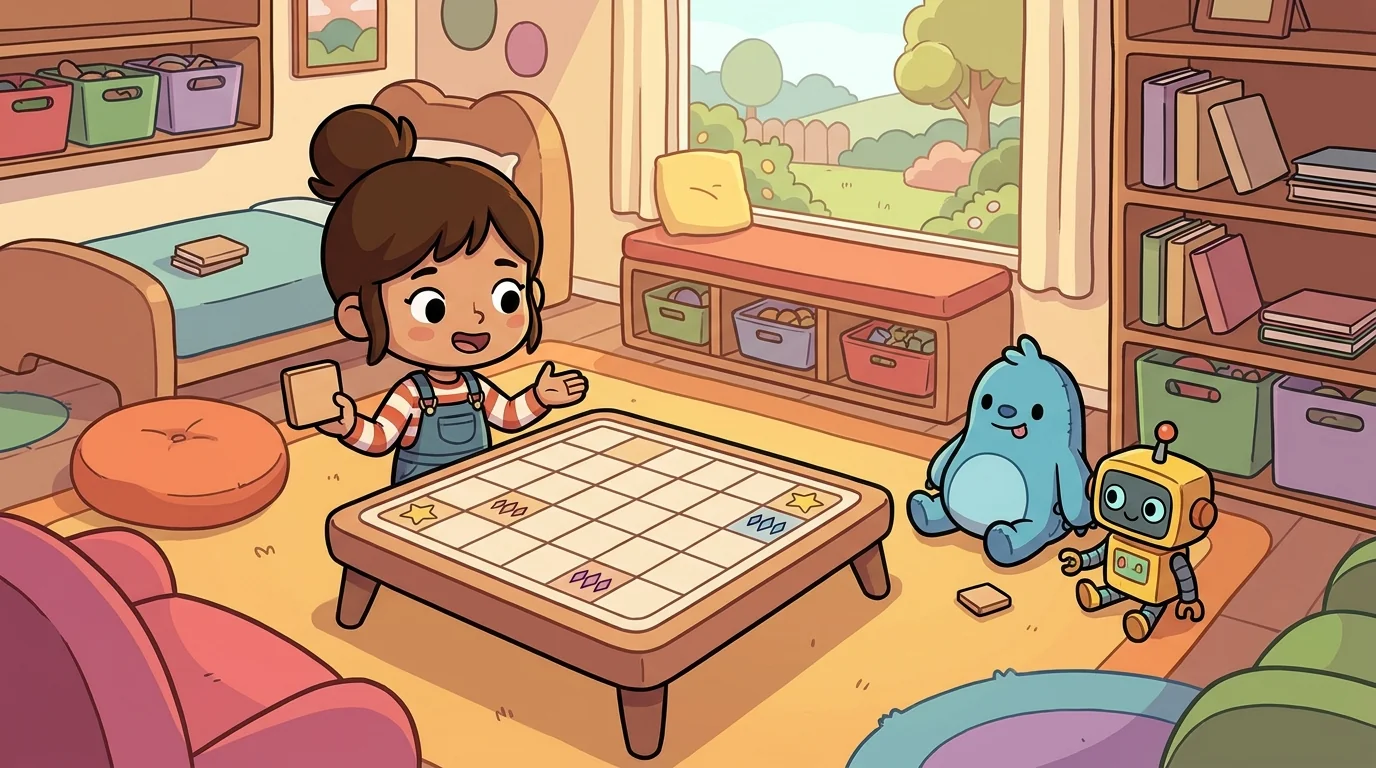
Some squares on the Wordloom board are plain, and some of them shine — triple squares that stretch a whole word's score, and a bright star in the middle worth the most of all. Starla is the planner who never forgets the shiny squares are there, and she wants you to understand the rule they hide: a tile's worth is not a fixed number. It's the letter's value times the square it lands on. Same tile, different square, wildly different score. Once you see value that way, the board stops being a place to dump letters and becomes a place to aim them.
While other players rush to unload every tile as fast as they can, Starla plays with one eye always on the premium squares — because to her, an unplayed heavy letter isn't a burden. It's a loaded question: where is this worth the most?
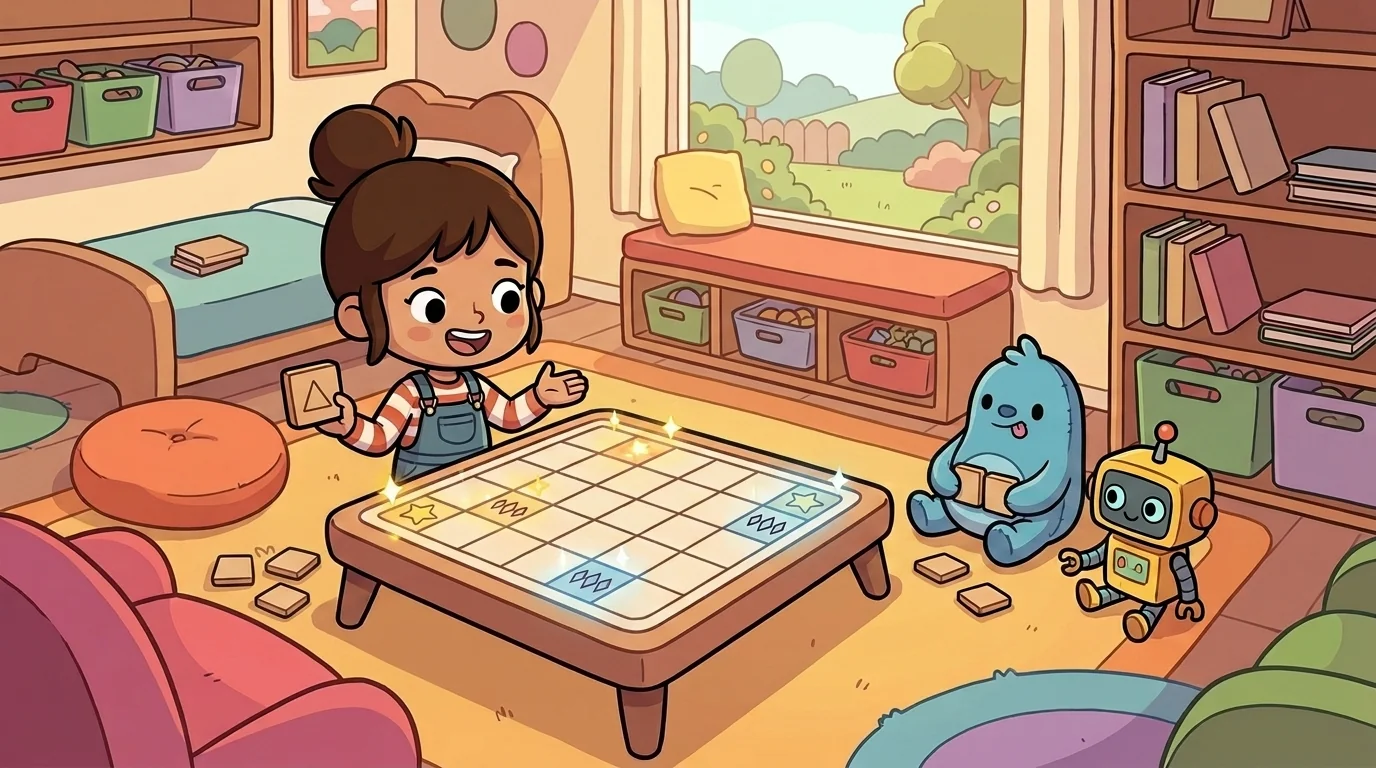
Her secret is about the heavy letters — the Q, the Z, the X, the ones worth a pile of points all by themselves. Most players are itching to get rid of them fast, nervous about being stuck with them. Starla does the opposite: she holds them. She'll keep a Z on her rack for turns, playing small quiet words around it, waiting.
That waiting has a real cost, and Starla is honest about it: while she holds the Z, she scores small. She's spending patience — giving up little points now — on purpose. But that's not the same as stalling. Stalling is doing nothing. Starla is doing something precise: she's deferring her best letter until the board offers a square that multiplies it. She isn't behind. She's loading a slingshot.
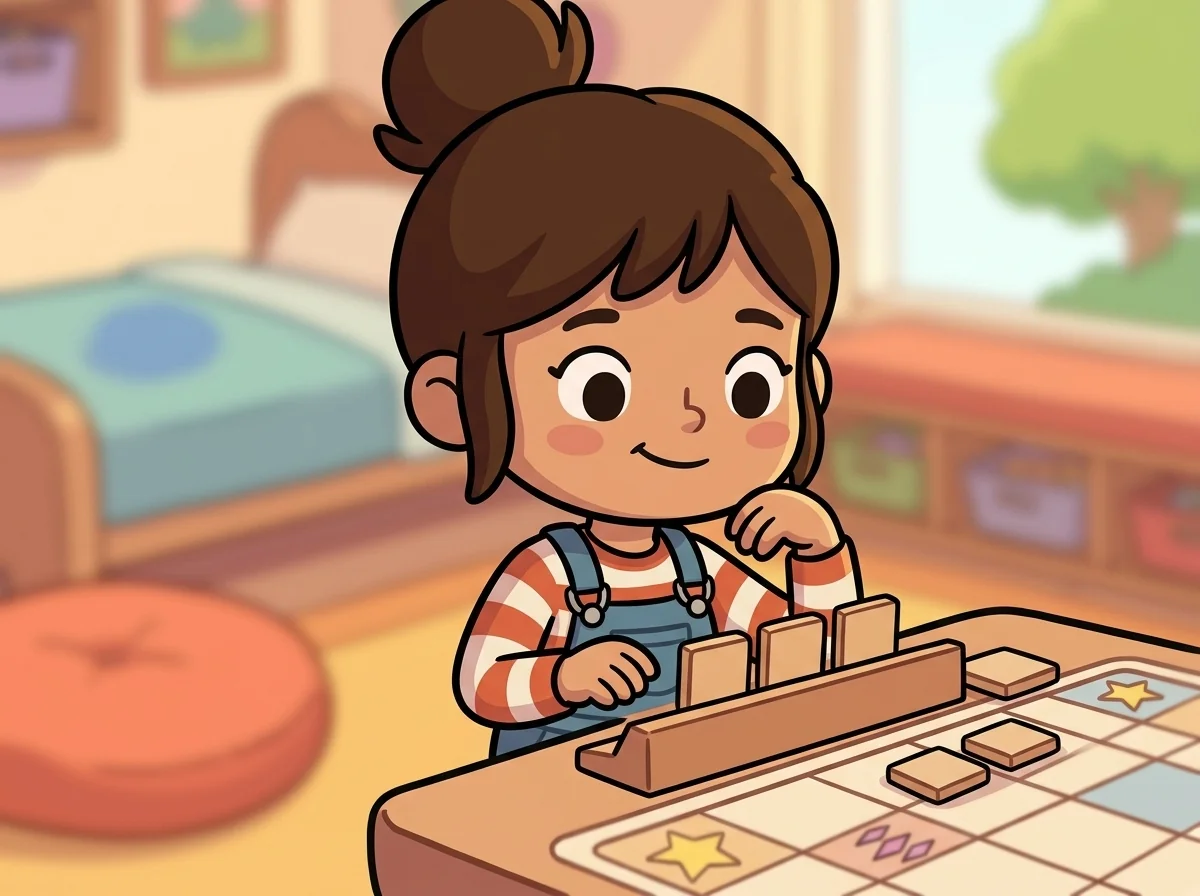
One game, a friend groaned at Starla's tiny three-letter turn. "You're barely scoring! Just play the Z somewhere!" Starla only smiled and pointed, without a word, at the star square two rows down. "A Z on a plain square is a good letter wasted," she said gently. "A Z on that star is worth more than everything you've scored all game. Same tile. It's the square that changes it. I'm not losing — I'm waiting for the multiply."
She never made her friend feel silly for playing fast; she just showed him the arithmetic hiding under her patience. A heavy letter dropped on a plain square is worth a little. The same letter dropped on a star can be worth a mountain. Where and when — not the letter alone — decide the payoff.
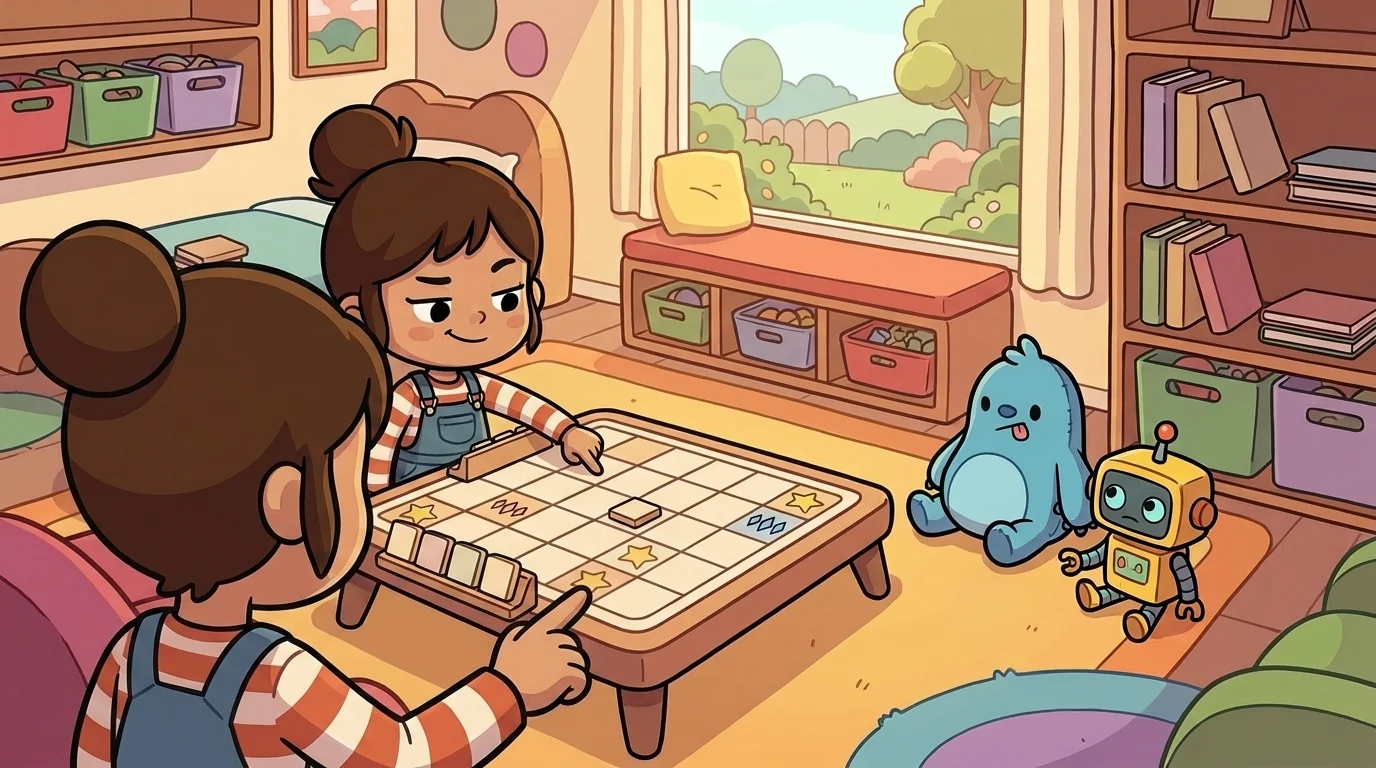
Two turns later, her moment came. Starla laid down Z-A-P, and the Z landed square on the star. The little pile of points she'd been patient about suddenly bloomed into a huge score — more than her friend had made in the whole game. Say it with Starla, out loud: "Save the heavy ones for the stars." Her friend's jaw dropped, and then he laughed, because now the waiting made sense: she hadn't been slow, she'd been aiming.
Starla felt the quiet satisfaction that patience with a purpose always gives back — not the quick buzz of a fast play, but the deeper gladness of a plan that lined up exactly the way she'd trusted it would.
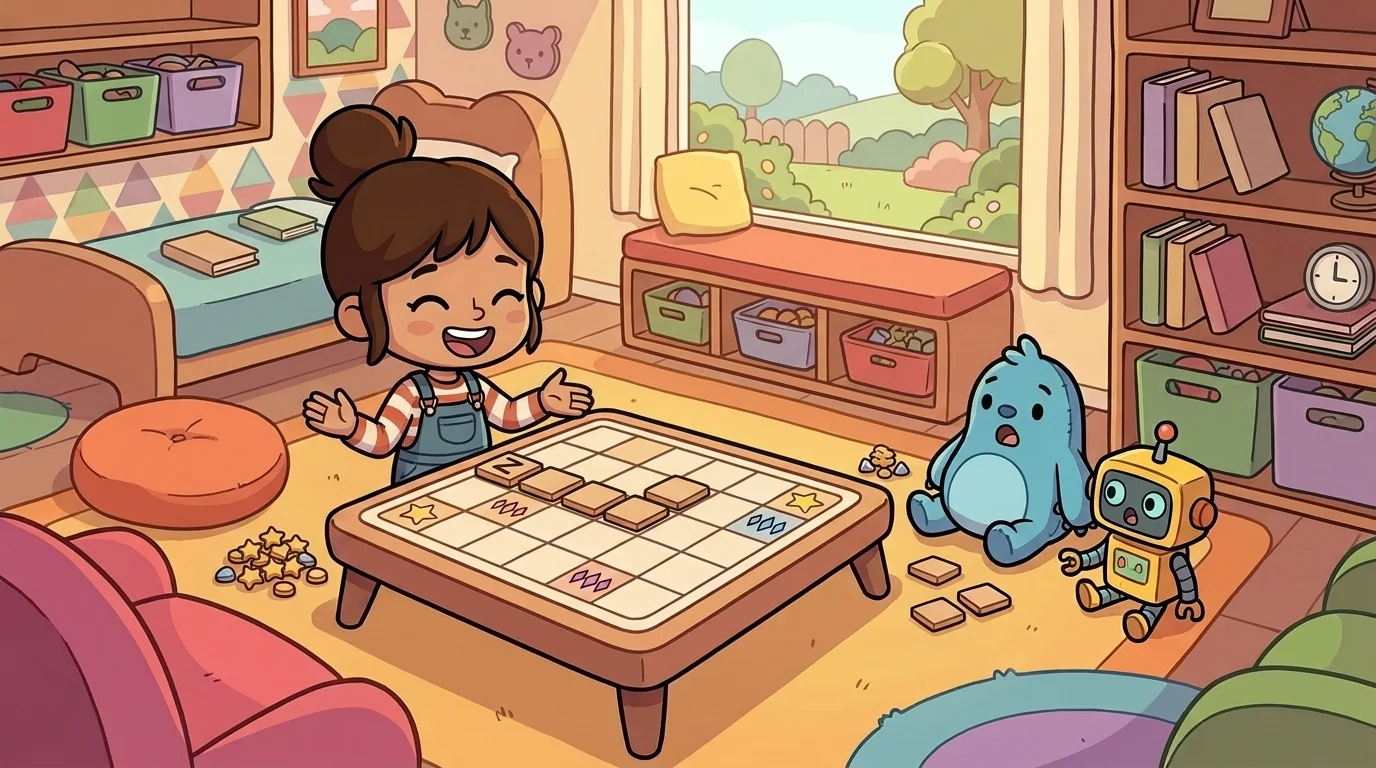
That is planning, and underneath the patience it is a genuine strategy: value = letter × square, so a heavy tile is only worth spending when the premium square is there to multiply it. Starla never spends her best letters cheaply. She reads the board for its stars and triples, weighs the small cost of waiting against the big payoff of aiming, and holds her heavy tiles until the board and the letter line up. A Q or a Z isn't just worth a lot of points — it's worth waiting to spend well.
The LexiTales ensemble
Starla is part of LexiTales's distributed-narrative cast. Each character embodies a different curricular primitive; together they teach the full subject.