Tilda
RACK-VISION — *your seven letters are already fixed; only their ORDER is unknown. Anagramming is a search: slide the tiles through new orders — anchor a likely letter, rotate the rest, test common endings — until a real word stands up on its own.*
Loading audio…
Press play to listen along. The line being read lights up as you go.
Show full transcript
Loading transcript…
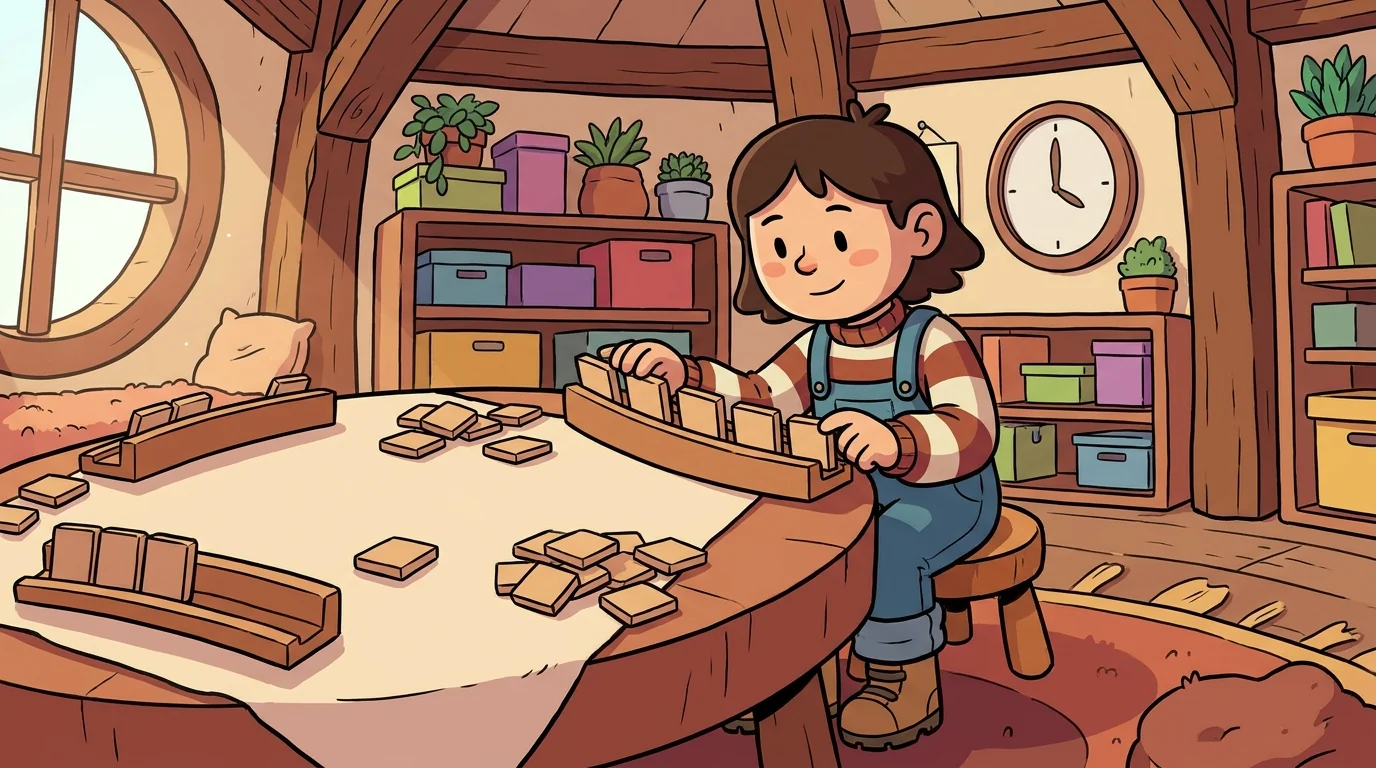
In Wordloom every player keeps seven tiles on a little wooden rack, and most days those seven look like nothing at all. Tilda is the guide who named exactly what to do about that. She tips her rack and shows her letters — S I L E N T — and here is the thing she wants you to understand first: those letters are already decided. Nobody is going to swap them. The only thing you don't know yet is their order. "A rack isn't a wall," she says. "It's a puzzle with the answer already inside it. All that's hidden is the arrangement."
That single idea is the whole engine of rack-vision. Anagramming isn't luck and it isn't magic — it's a search. There are only so many ways six tiles can line up, and one of those ways spells a real word. Your job is not to invent a word out of thin air; it's to find the order that's already waiting.
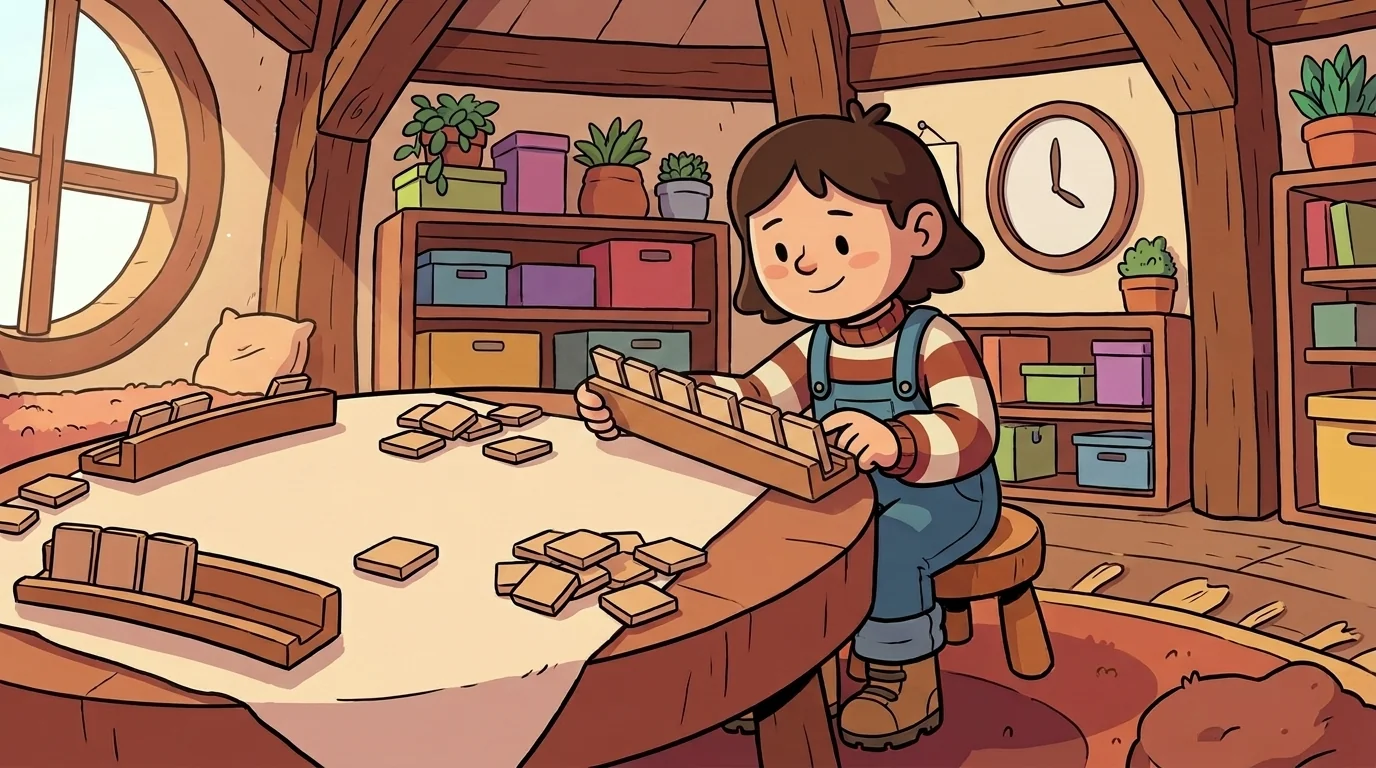
So why does staring so rarely work? Because the eye is lazy in a very specific way: it locks onto the first arrangement it sees and refuses to let go. You read SILENT as "S-I-L-E-N-T, gibberish," decide there's nothing there, and your brain quietly stops searching. Tilda calls that the lock. "The letters aren't the problem," she says. "The problem is that your eyes fell in love with the wrong order and won't look at another."
Sliding breaks the lock. When Tilda pushes the T to the front and the S to the end, she isn't fidgeting — she's forcing her eye off the arrangement it got stuck on so it can consider a new one. Her hands move and her mind follows. That calm, unhurried sliding is the search; it's the difference between guessing once and actually looking.
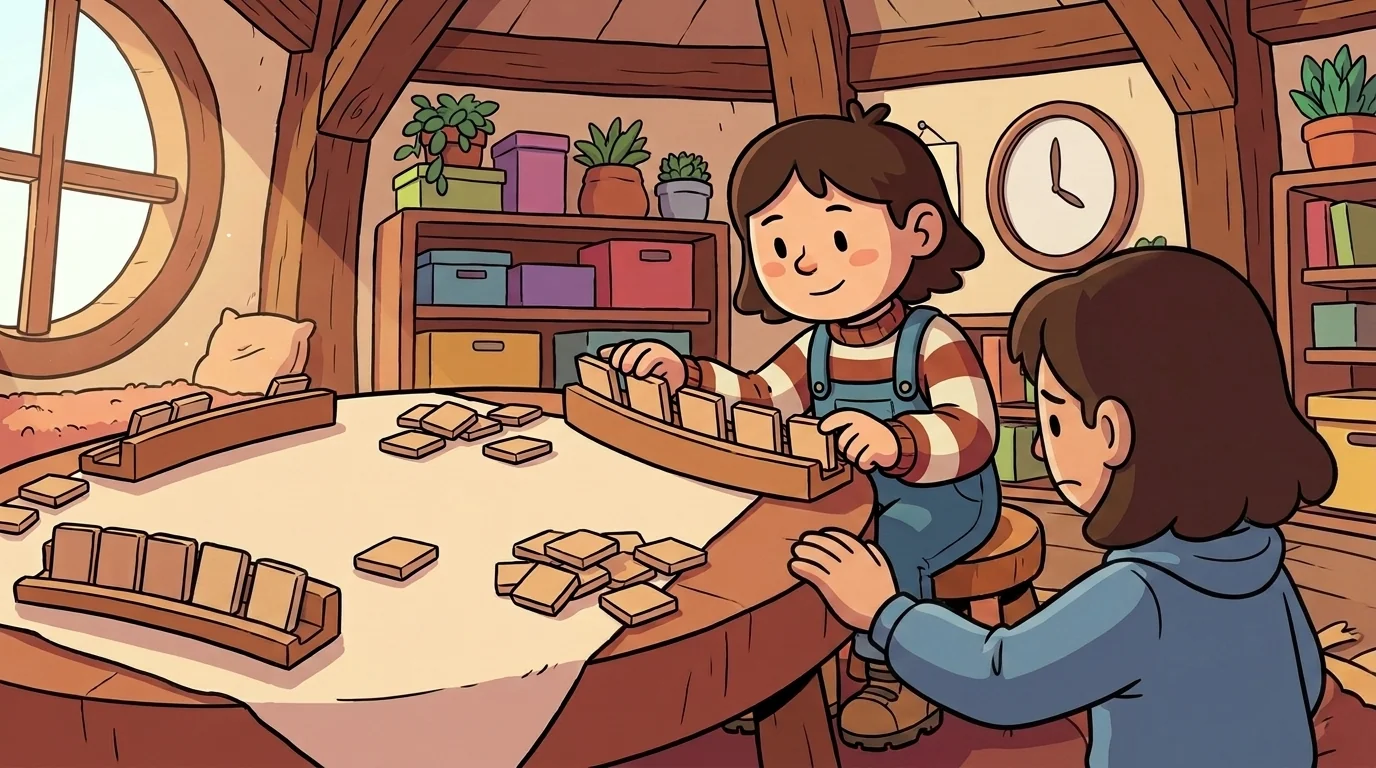
One afternoon a newer player sat beside her with a rack of pure gibberish and a face that had already decided the round was lost. "There's no word in mine," he said, reaching to scoop the tiles back into the bag. Tilda gently stopped his hand — and she never once made him feel foolish. "You didn't draw a bad rack," she said. "You drew one that hasn't been searched yet. A jumble is only ever a word lying down."
Then she taught him how to search instead of stare. "Anchor one tile you trust — a common one, an S or an R — and rotate the others around it. Try the endings your ear already knows: does anything take -ING, -ED, -ER? Slide the vowels apart, then together. You're not hoping. You're checking orders, one calm move at a time." His shoulders came down. He hadn't been out of words at all — he'd only stopped looking.
So he searched. He anchored a letter, rotated the rest, tried an ending — and Tilda slid her own SILENT alongside him for company. The S went last, the N came forward, and all at once the six letters stood up straight and read LISTEN. She laughed the small, clean laugh of a thing that finally clicks — not surprise, exactly, more like relief that the search had ended where she trusted it would.
Say it with Tilda, out loud: "Slide them slow, and the word will show." Beside her the newer player gasped: his own jumble had quietly become a word too, right under his fingers, the moment he stopped deciding it couldn't. The calm hadn't been decoration. The calm was what kept him searching long enough to find it.
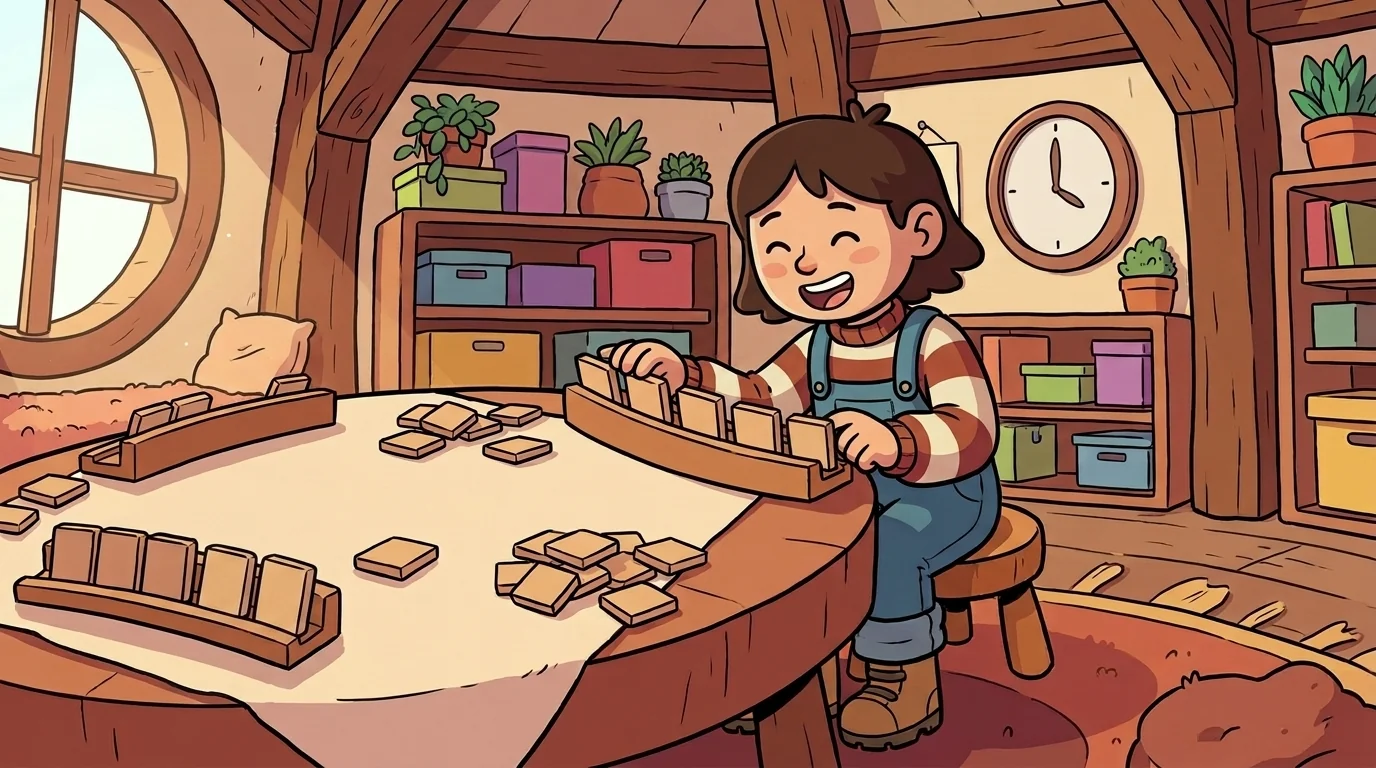
That is rack-vision, and underneath the warmth it is a genuine method: the set is fixed, only the order is unknown, so search the orders calmly instead of staring at one. Tilda never demands a word and never forces one; she makes room for the search to work. When your letters look like a mess, that isn't the end of your turn — it's the beginning of the sliding. Anchor a tile, rotate the rest, test the endings your ear knows, and keep your hands soft. Sooner or later the order you were missing lines up, and the hidden word stands up on its own.
The LexiTales ensemble
Tilda is part of LexiTales's distributed-narrative cast. Each character embodies a different curricular primitive; together they teach the full subject.