Wefta
CROSS-WORD — *a crossing is a two-way constraint. Thread a new word through a board word at a shared letter, and BOTH directions must spell real words at once. The move only counts if it reads clean both ways — so you always check across as well as down.*
Loading audio…
Press play to listen along. The line being read lights up as you go.
Show full transcript
Loading transcript…
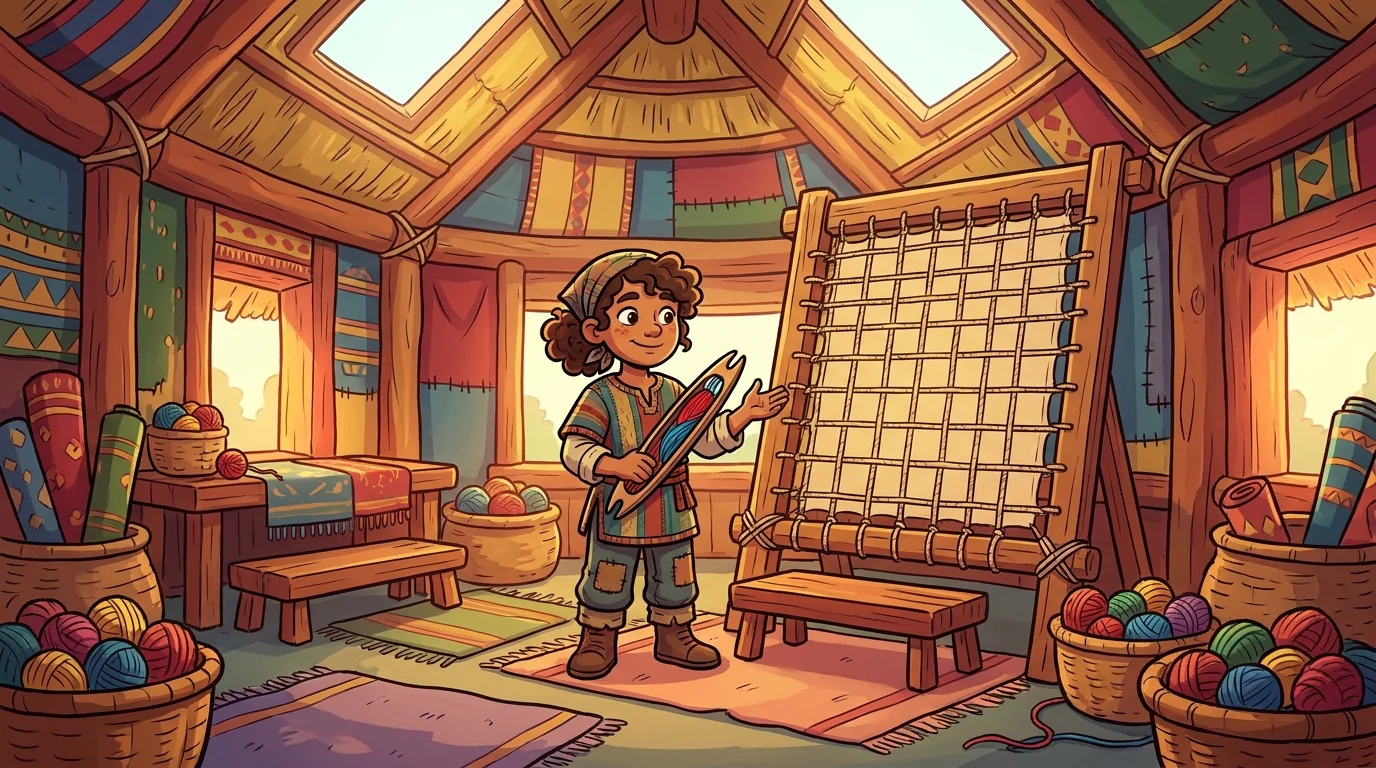
They call Wefta the weaver, because she does not lay her words down all alone. She threads them through the words already on the board, the way you'd weave one thread across another so a cloth holds together. And she wants you to see the rule that makes weaving different from just playing a word: a crossing is a two-way promise. When your new word crosses an old one, you're not making one word — you're making a place where two words must both be true at once, meeting at the single letter they share.
A word standing by itself only has to please one reader. A crossing has to please two at the same time. That double demand is exactly what makes it worth slowing down for.
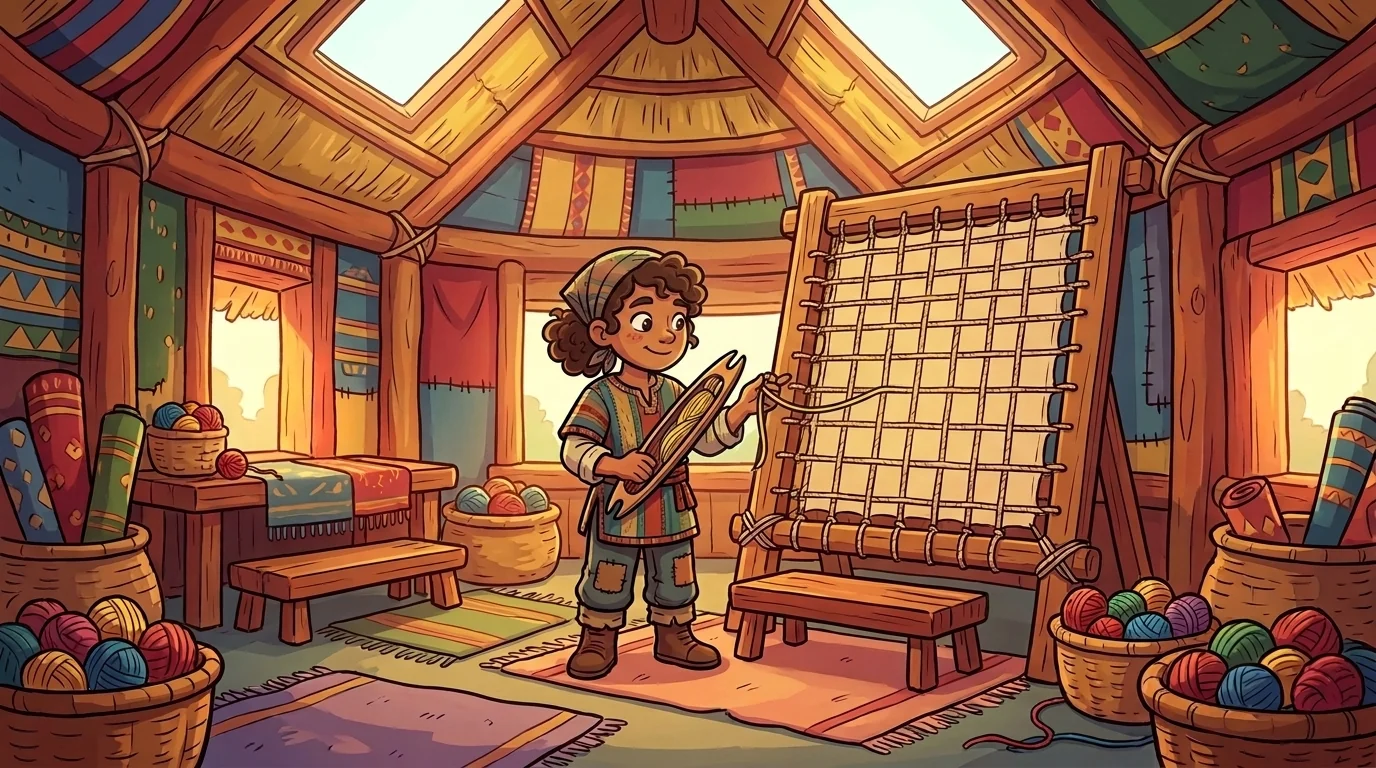
Here is how she weaves. One turn the board had the word STAR lying across it, and Wefta wanted to play down the board. She noticed that STAR offered her a T to share. So she built a word down through that very T — T-I-L-E, TILE — hanging off the STAR like a thread pulled through cloth. Now the board read STAR one way and TILE the other, crossing at the letter they held in common. Two words, one shared tile, both of them real.
The shared letter is the whole hinge of it. Your down-word and the board's across-word are locked together at that single square — change nothing about it, and yet it has to serve both words at once. Find the letter two words can share, and you've found where a crossing can live.
The trick — and Wefta will tell you this is the heart of it — is that a crossing only counts if it reads clean in both directions. A younger weaver once threaded a word down through a board word and made his own word perfectly, but he forgot to check the little word his tiles made going across. It wasn't real, and the whole move fell apart. He went red and quiet.
Wefta didn't sigh or roll her eyes. "That happens to everyone," she said. "Weaving means you look both ways — down and across — not because you're careless, but because that's just what weaving is. The move has two directions, so checking has to have two directions too." She never once made him feel foolish for missing it; she only showed him the second look.
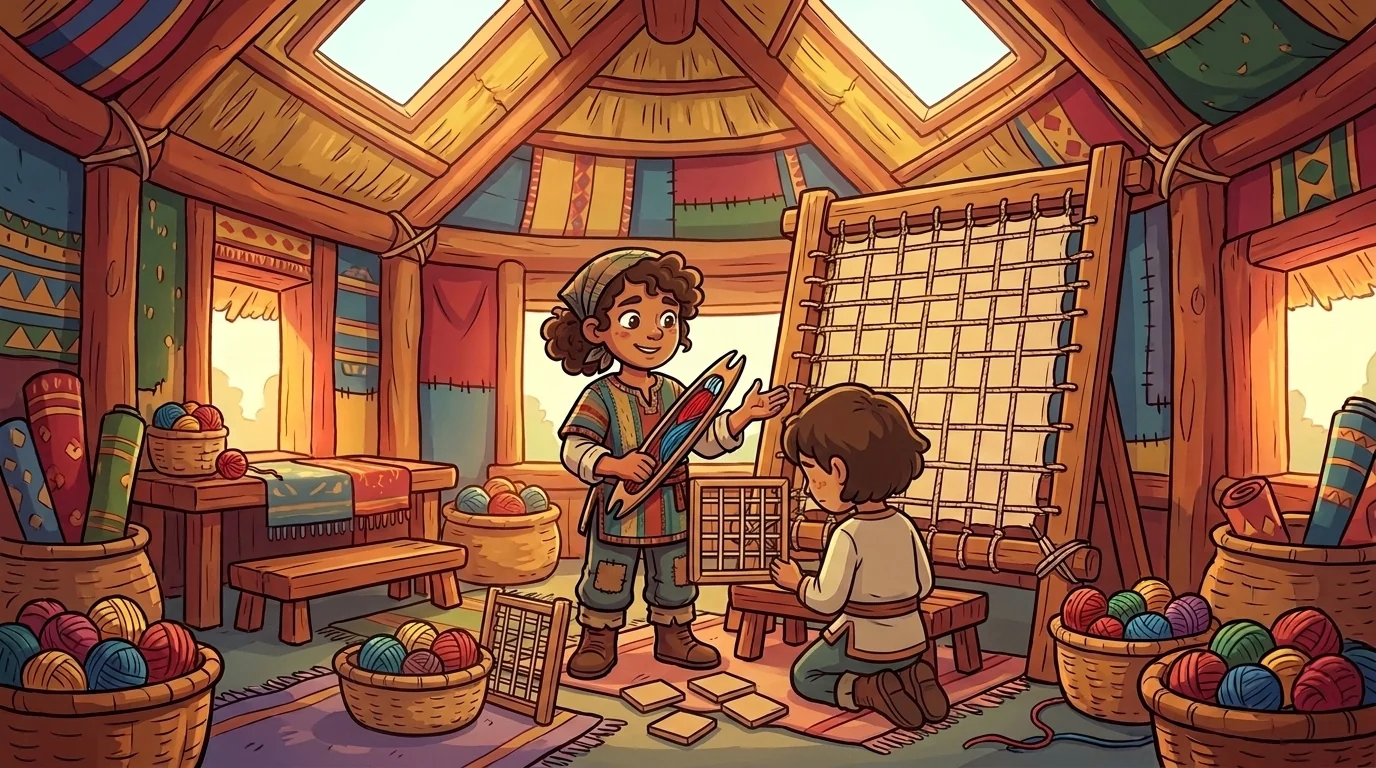
So he looked both ways. He slid his word down through a shared letter, and this time he traced it across as well — and across it also spelled something true. Both threads held. Say it with Wefta, out loud: "Cross it clean — both ways must read." He grinned at the little woven knot of letters he'd made, two words holding hands at one tile, and Wefta felt the steady, careful gladness of a weave that holds — the quiet reward of having looked twice on purpose.
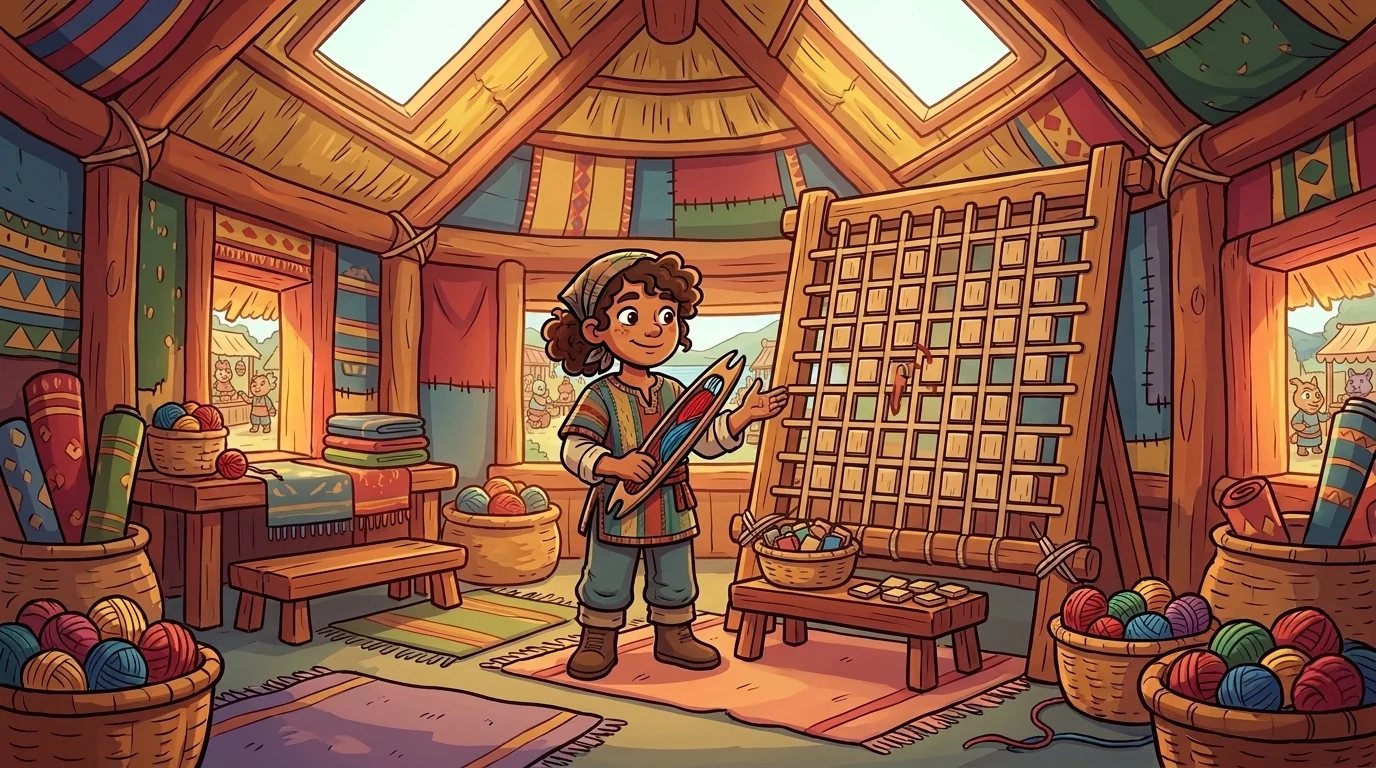
That is the crossing, and beneath the patience it is a genuine method: a crossing must satisfy two words at once, so you always verify both directions before you trust it. Wefta never plays a word off alone in a corner when she can weave it through what's already there. Find the letter your new word can share with an old one, thread it through, and then — always — read it both ways. When both directions are true, the weave holds.
The LexiTales ensemble
Wefta is part of LexiTales's distributed-narrative cast. Each character embodies a different curricular primitive; together they teach the full subject.