
Sort
COMPARISON-SHOPPING — line them up before you pick. Value is unit price, not the loudest label: you compare what you actually get for what you actually pay — amount, quality, and fitness for your real need — then choose on purpose.
Loading audio…
Press play to listen along. The line being read lights up as you go.
Show full transcript
Loading transcript…
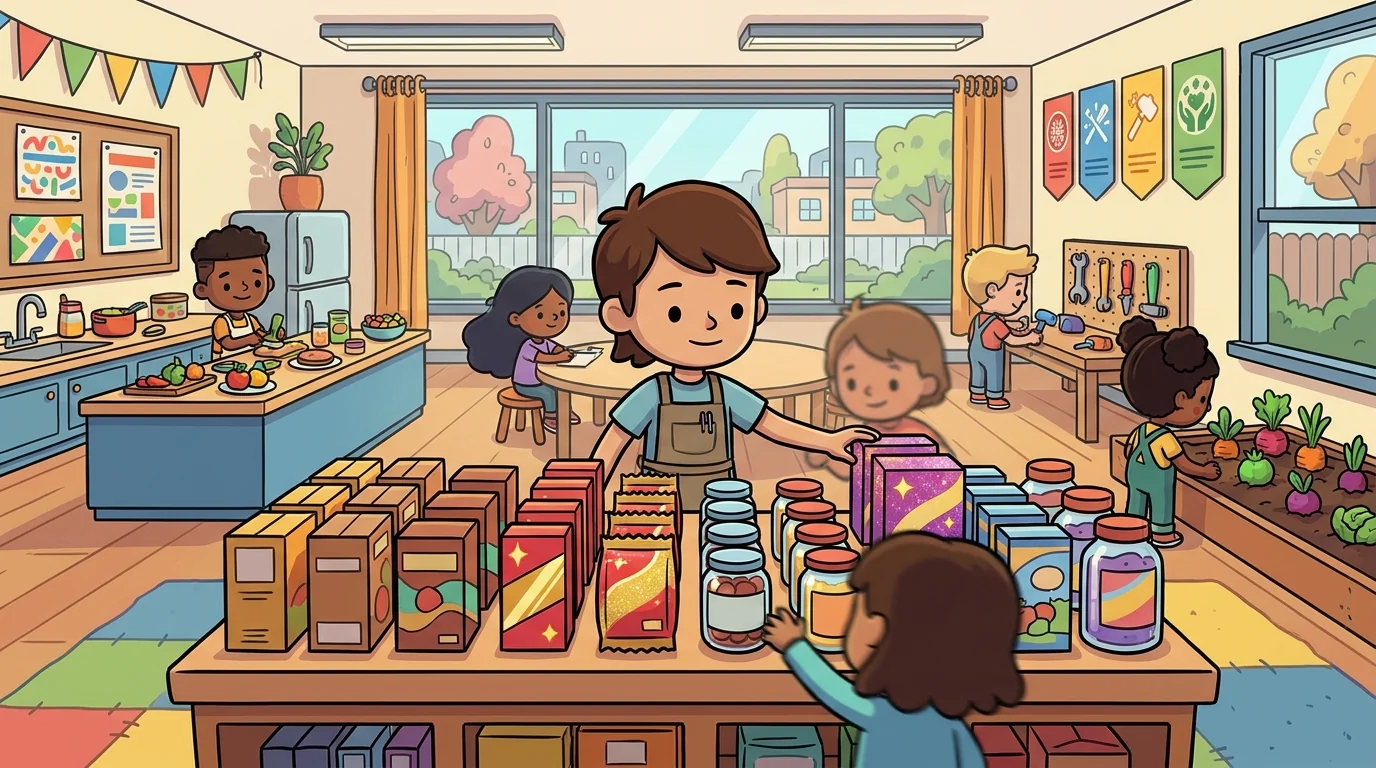
At the LifeQuest workshop, where kids learn the skills grown-ups use, Sort was a calm, methodical kid who never grabbed the first thing on the shelf. She lined choices up — side by side — and worked out which one was the best value before she picked.
When someone reached for the biggest box or the loudest label, Sort slowed them down. "Line them up first," she'd say. She compared what you actually got for what you actually paid — the amount inside, the quality, whether it fit the real need — and, crucially, the unit price: cost per gram, per sheet, per use. Sometimes the flashy one won; often it didn't. Either way, you chose on purpose, eyes open.
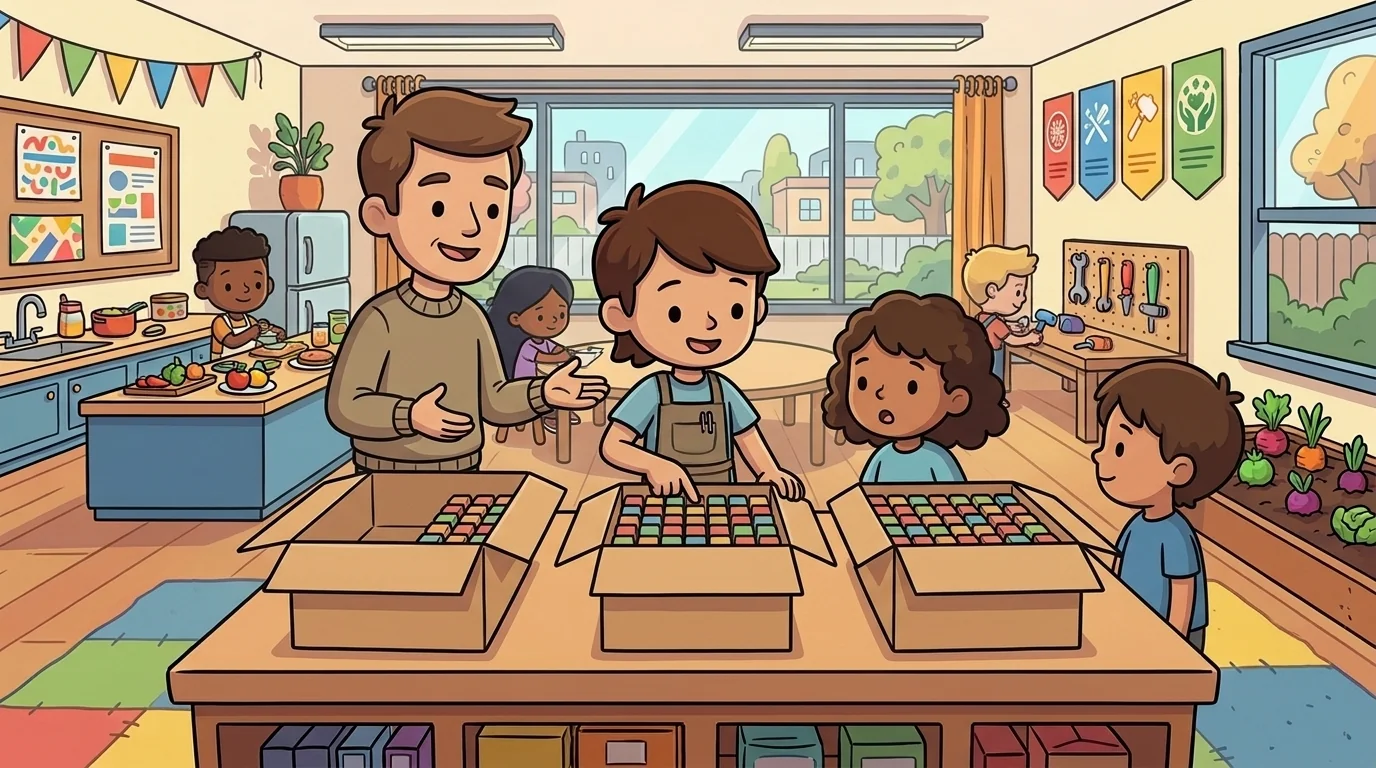
"You figured out the smaller box was the better deal — I'd never have checked!" a learner said.
"Most people don't, which is exactly why it's a skill," Sort said, lining up three imaginary boxes. "I keep the comparison-shopping: line them up before you pick. The flashy one or the first one isn't automatically the best value. You compare what you get for what you pay — and the honest way to do that is unit price. Then you choose on purpose."
Steward, the warm mentor, said, "Show them how the eye gets fooled."
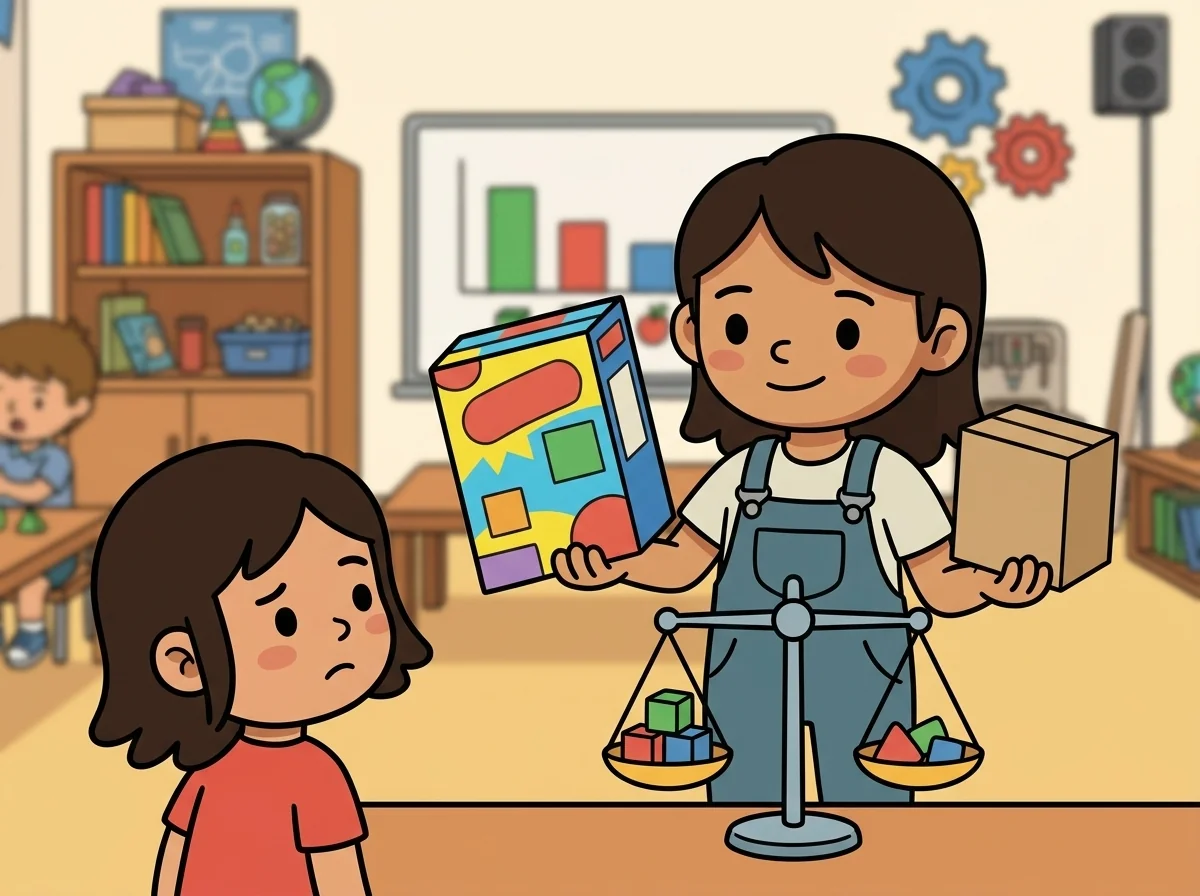
Sort held up a big bright package and a plain small one. "The big one feels like more — bigger box, louder label. But feeling isn't value." She divided each price by the amount inside. "Look: the plain small one costs less per unit — you're paying more per gram for the big bright one. The label is loud; the value is quiet, hidden in a number you have to compute yourself, because no one selling it will compute it for you." She set them down. "Packaging is designed to make the worse deal look generous. Unit price cuts straight through the design."
A learner asked, "So I should always buy the cheapest?"
"Not at all," Sort said, warm. "Comparing isn't a race to the bottom. Sometimes the pricier one lasts longer, or it's actually the thing you need and the cheap one isn't — buying something that fails you isn't a saving. Comparing means getting what you need at a fair price: not less than you need just because it's cheap, not more than you need just because it's shiny. You decide what 'best' means for you — value is personal, not just a number."
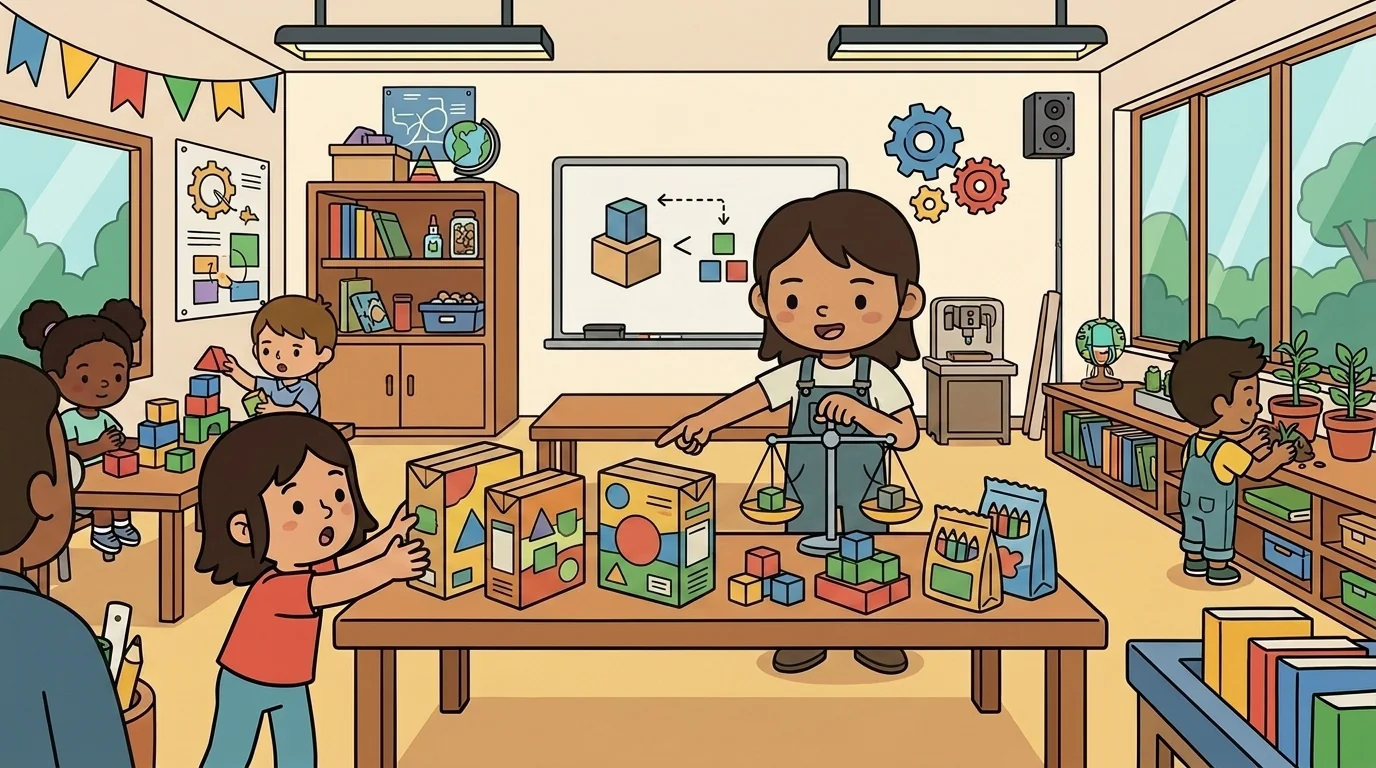
Steward asked Sort to teach before a planning project. "Save budgets the money beautifully," Steward said, "but a good budget still gets wasted if you don't compare before you spend. Will you teach them to line things up?"
Sort was glad to. Her rule was three questions: "Before you pick, line your options up side by side and ask — How much do I actually get? What's the unit price? And is this the thing I actually need? Compare those, not the labels, and then choose. A slow, honest look beats a fast, dazzled grab."
Save, who could budget carefully but tended to grab-and-go, tried it. Lining up two options by unit price, she found the one she'd have grabbed was the worse deal. "I budget so carefully," Save said, "then almost wasted it on the first thing I saw. Comparing first makes my whole budget stretch further." The two skills clicked — plan the money, then compare before you spend it.

After the session, Sort sat lining up small pebbles in neat rows, the way she did when her mind was at rest.
For a long time she'd carried a quiet worry: comparing took time, and she'd caught the eye-rolls aimed at the kid who stood in the aisle checking which option was really better. She'd wondered whether being careful made her fussy and slow while everyone else just grabbed and got on with their lives.
But lining up her pebbles, remembering Save's relief that comparing made a careful budget stretch even further, Sort felt the worry settle into a sturdy pride. Taking a moment to compare wasn't fussy — it was respecting your own effort, making sure what you worked for actually bought what you needed. Everyone deserves fair value, and slowing down to find it was a kindness she gave herself. A warm, settled steadiness filled her, and she lined up one more pebble, ready to help someone choose well tomorrow.
The LifeQuest ensemble
Sort is part of LifeQuest's distributed-narrative cast. Each character embodies a different curricular primitive; together they teach the full subject.
-

Save
Budgeting + financial planning — 'Money is a tool. Plan the tool.'
-

Parse
Reading-comprehension for adult docs — 'Slow down. Read it ALL.'
-

Spot
Scam-detection + critical-claim-evaluation — 'Show me the proof.'
-

Fill
Forms + paperwork + simplified taxes — 'Fill out. Then double-check.'
-

Cook
Meal planning + nutrition + budget-cooking — 'Eat well. Spend smart.'
-

Say
Self-advocacy + interview-craft — 'Be clear. Be kind. Be specific.'
-

Borrow
Credit & debt basics — borrowed money isn't free; interest is the cost; a tool with rules, not a judgment
-

Vault
Digital privacy — some things stay locked; strong separate passwords; know who's actually asking
-

Dial
Time-management — the day is a pie; aim your hours at what matters, break big tasks small, keep a slice for rest