
Swoop
TONE (Advanced) — in a tone language, the PITCH of a syllable is part of the word itself, so the same consonants and vowels said at different pitches are different words. The Advanced version names it: tone is PHONEMIC (meaning-bearing, like a consonant), it forms MINIMAL PAIRS distinguished only by pitch, and it comes in LEVEL tones (high/mid/low) and CONTOUR tones (rising/falling/dipping). It is a precise, rule-governed system used by a large share of the world's languages — never 'singing,' never 'sing-song,' never 'exotic.'
Loading audio…
Press play to listen along. The line being read lights up as you go.
Show full transcript
Loading transcript…
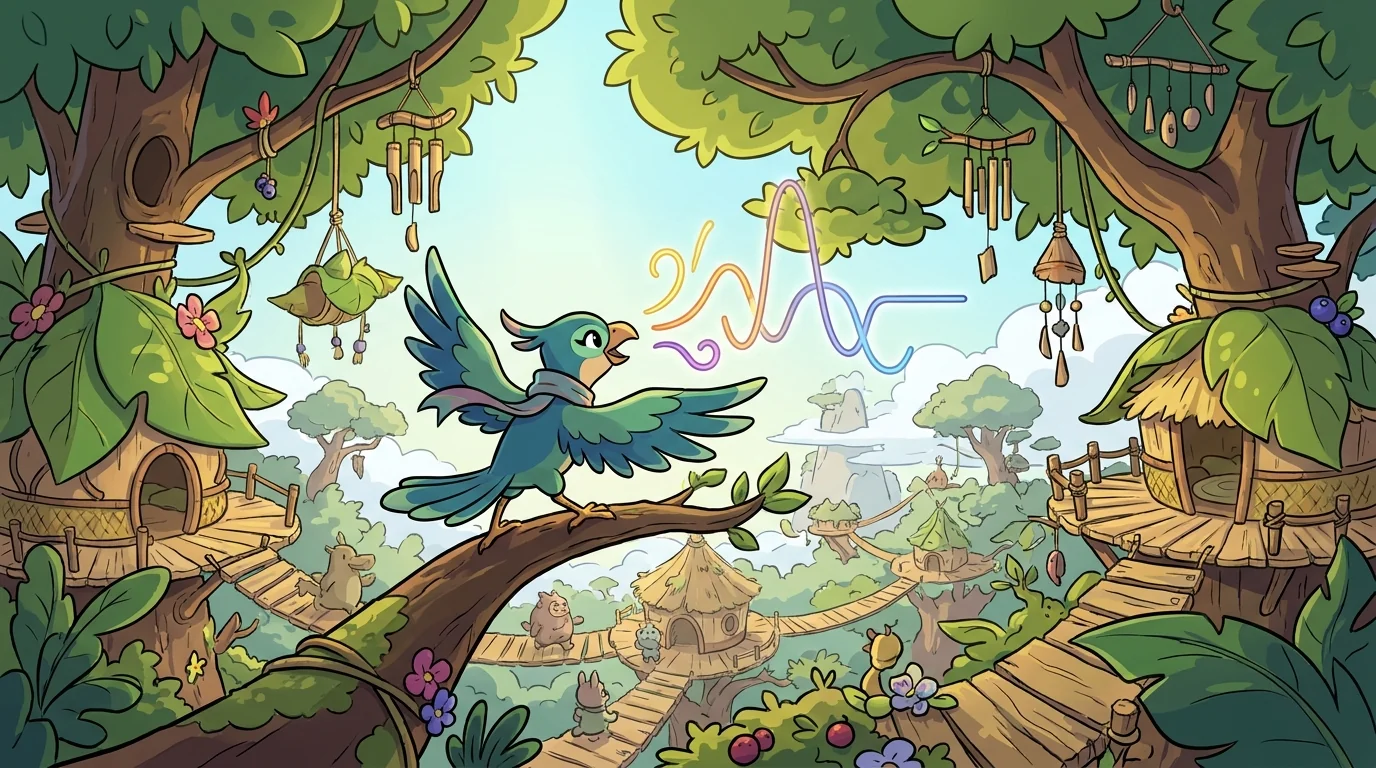
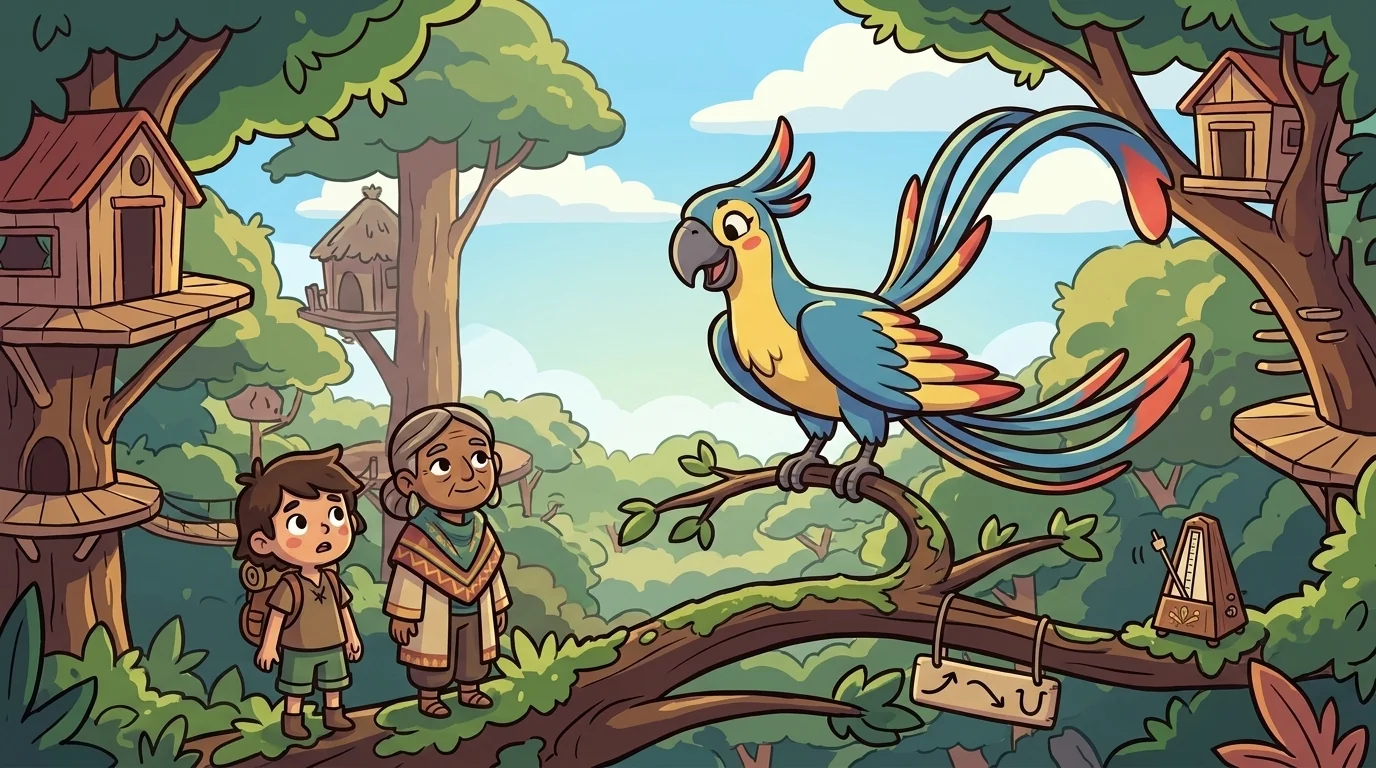
Swoop was a sleek, swift bird-creature of the high branches, and her voice never sat still if she could help it — it rose, fell, leveled, and dipped, tracing shapes in the air. "In a lot of the world's languages," she said, gliding a note upward, "the pitch of a syllable isn't decoration. It's part of the word. Say the exact same sounds at a different pitch, and you've said a different word entirely. This is tone — and it's one of the most precise systems in all of language."
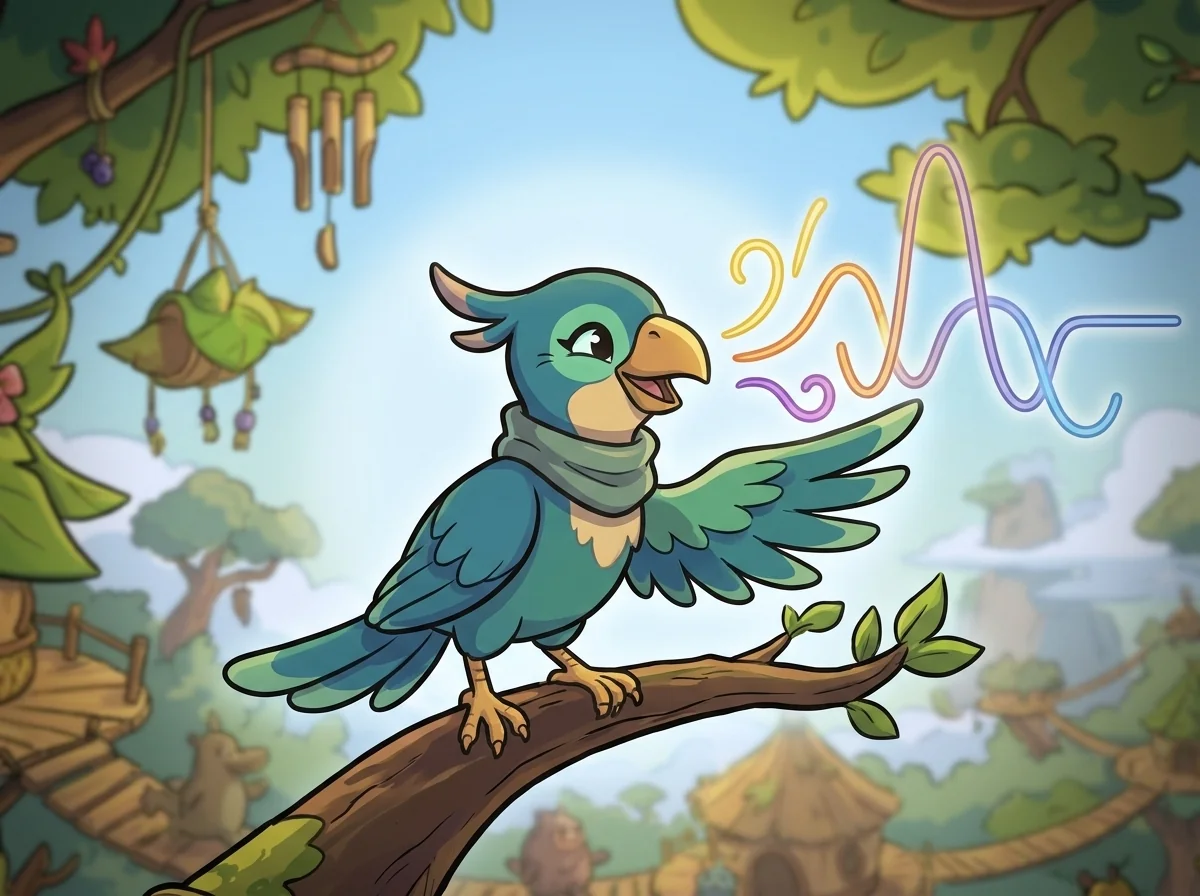
"Let me name what's really going on," she said, because the Advanced version replaces amazement with structure. "Linguists say tone is phonemic — that means it carries meaning, exactly the way a consonant does. Swapping a high pitch for a low pitch changes the word just as surely as swapping a b for a p. And that gives you minimal pairs: two words that are identical in every sound except their pitch, and mean completely different things. In some languages one string of sounds can be four or five different words depending only on the tone you ride it on. That's not chaos — it's a system, learned effortlessly by every child who grows up with it."
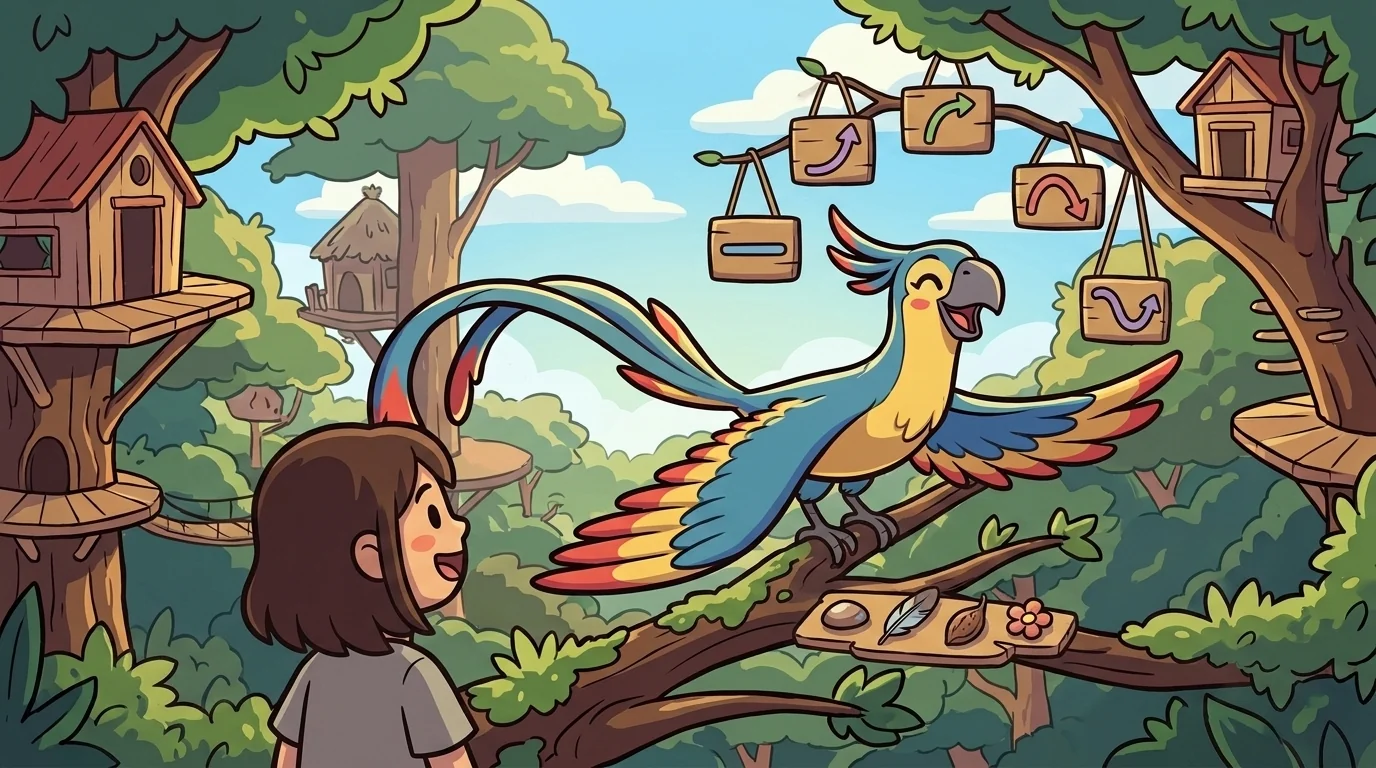
She drew the shapes in the air with a wingtip, because the kinds of tone matter. "And there are kinds," Swoop said. "Level tones hold steady — a high one, a mid one, a low one, each flat at its own height. Contour tones move across the syllable — rising, falling, dipping down and back up. A language picks its inventory of these, and speakers hear the differences instantly, the way you instantly hear the difference between 'bat' and 'pat.' To a speaker, a tone isn't a tune. It's simply which word you said."
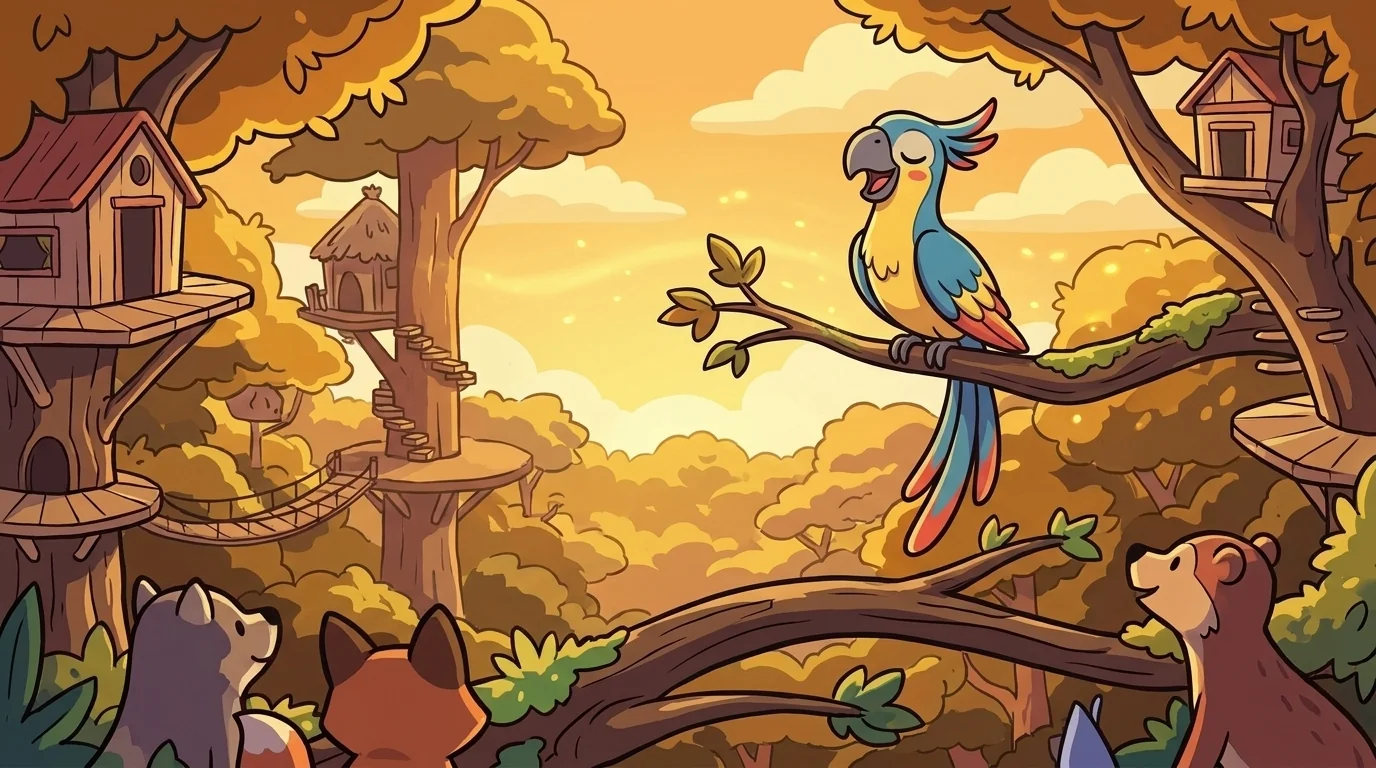
Then she folded her wings and fixed the young ones with a bright eye, because this is the gate she guards. "Now — I'm going to gently retire two words," Swoop said. "When people who don't speak a tone language first hear one, they sometimes call it 'sing-song,' or worse, 'exotic.' Both are wrong, and both quietly disrespect it. It isn't 'singing' — singing is melody for its own sake; tone is doing the work of telling words apart, as ordinary and functional as spelling. And 'exotic' isn't the compliment it pretends to be — it means 'strange, from over there, not normal,' and it treats your language as the default and everyone else's as a curiosity. Tone isn't exotic. It's spoken by an enormous share of the world. If anything's unusual, it's a language without tone."
And she landed the whole lesson softly, because the point was never just the mechanism — it was respect. "Here's the truth to keep," Swoop said. "Your own language already uses pitch — you just use it for sentences instead of words. Think how a rising pitch turns 'really' into a question and a falling one turns it into a flat statement. Same sounds, different pitch, different meaning — you do it constantly, without thinking. Tone languages simply put that same precise tool to work at the level of the word. It's not magic and it's not music. It's one more elegant, rule-governed way that human languages carry meaning — no stranger, and no more 'sing-song,' than the spelling you already trust every day."
The LinguaQuest ensemble
Swoop is part of LinguaQuest's distributed-narrative cast. Each character embodies a different curricular primitive; together they teach the full subject.
-

Bough
Language families (genetic descent — Indo-European / Sino-Tibetan / Afro-Asiatic / Niger-Congo / Austronesian)
-

Drift
Sound change (phonological evolution — Grimm's Law, vowel shifts, palatalization)
-

Glyph
Writing systems (alphabetic / abjad / abugida / syllabic / logographic — and how each captures speech)
-
Bridge
Cognates and loanwords (shared roots across languages; trade-route borrowings)
-
Cant
Sociolinguistics — dialect, register, code-switching, formal/informal speech
-
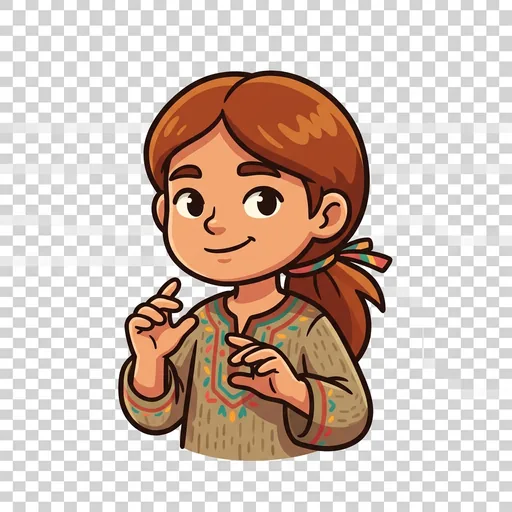
Sign
Signed languages — full natural languages spoken with hands, face, and space; each Deaf community's own, never 'just gestures'
-
Weft
Word order / syntax — languages arrange words differently (SVO/SOV/verb-first); no order is 'backwards,' each is complete
-

Lex
Untranslatable words — words no other language has in one breath; not a gap in your language but a gift another can offer
-

Nook
Endangered languages + revitalization — keeping fading languages safe; decline is from histories of harm, never the speakers' fault; communities lead the revival