
Weft
WORD ORDER (Advanced) — languages arrange subject, verb, and object in different fixed orders. The Advanced version names it: BASIC CONSTITUENT ORDER (the S/V/O typology — English is SVO; a large share of the world is SOV with the verb last; some are VSO with the verb first), and the trade-off that makes it work: languages with freer word order usually carry more MORPHOLOGY (case-marking) that tags who-did-what, so order can relax. No order is 'backwards' or 'more logical' — each is a complete, internally consistent system.
Loading audio…
Press play to listen along. The line being read lights up as you go.
Show full transcript
Loading transcript…

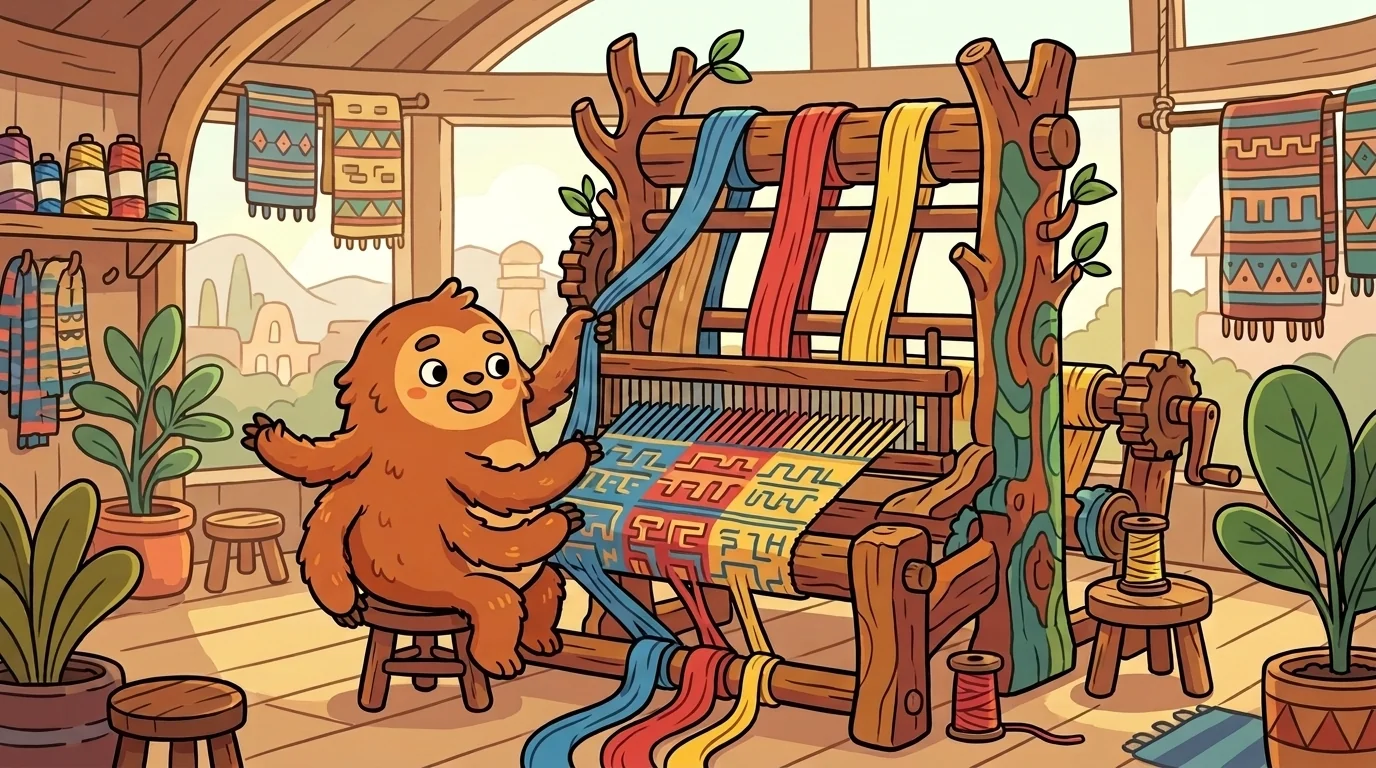
Weft was a many-handed weaver, calm and deft, forever working sentences on her great loom — and she'd learned to hold every language's pattern with the same respect. "Every language has to answer one question," she said, her nimble hands threading, "in what order do the words go? Who's doing the action, what the action is, what it's done to. English almost always weaves it subject, then verb, then object: 'I ate the apple.' But that's just one pattern on the loom — and, it turns out, not even the most common one in the world."
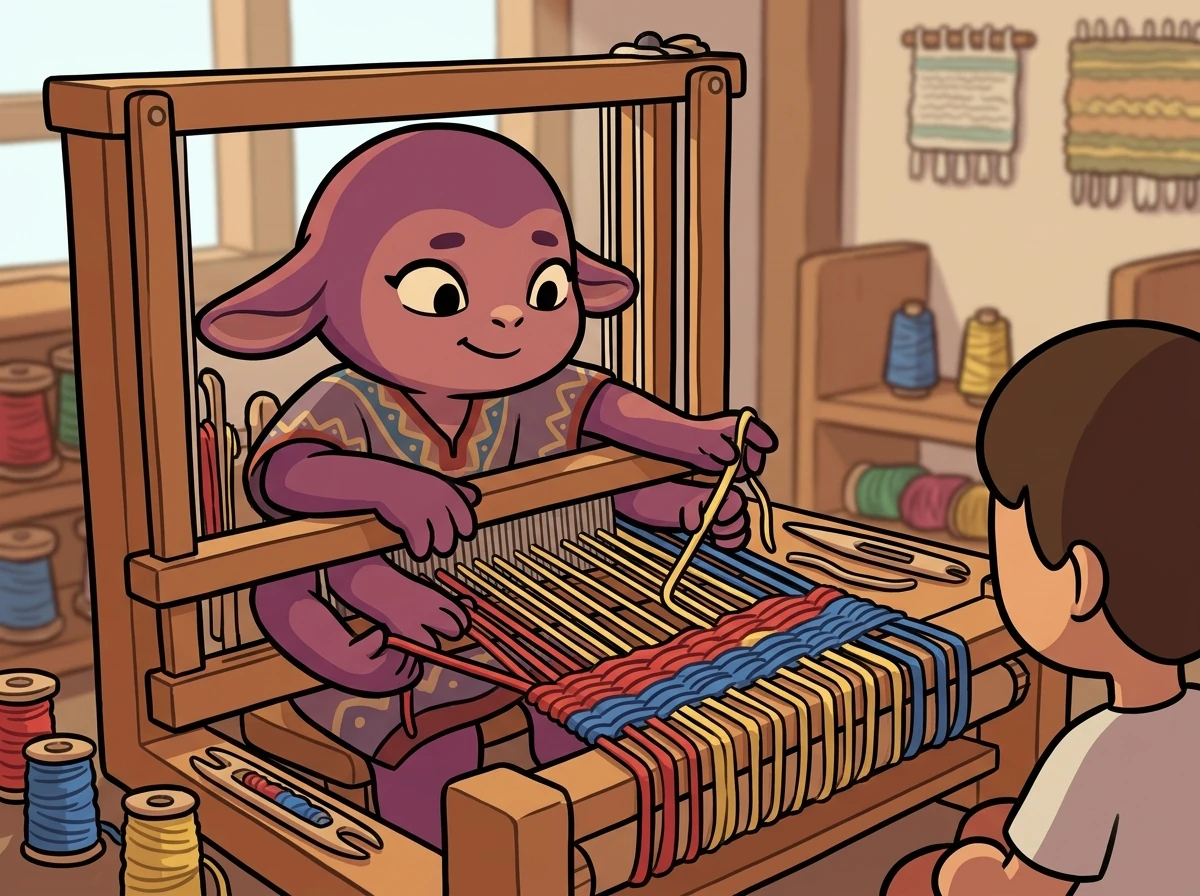
"Linguists have a tidy name for the pattern," she said, "basic constituent order — the default order of Subject, Verb, and Object, which is why you'll hear the shorthand SVO, SOV, VSO. English is SVO: subject, verb, object. But the single most common order across the world's languages is SOV — subject, object, verb-last: 'I the apple ate.' A huge share of humanity weaves the verb to the very end and it works perfectly. Others are VSO — verb first: 'Ate I the apple.' None of these is a mistake. Each is a different, complete way to thread the same three ideas."
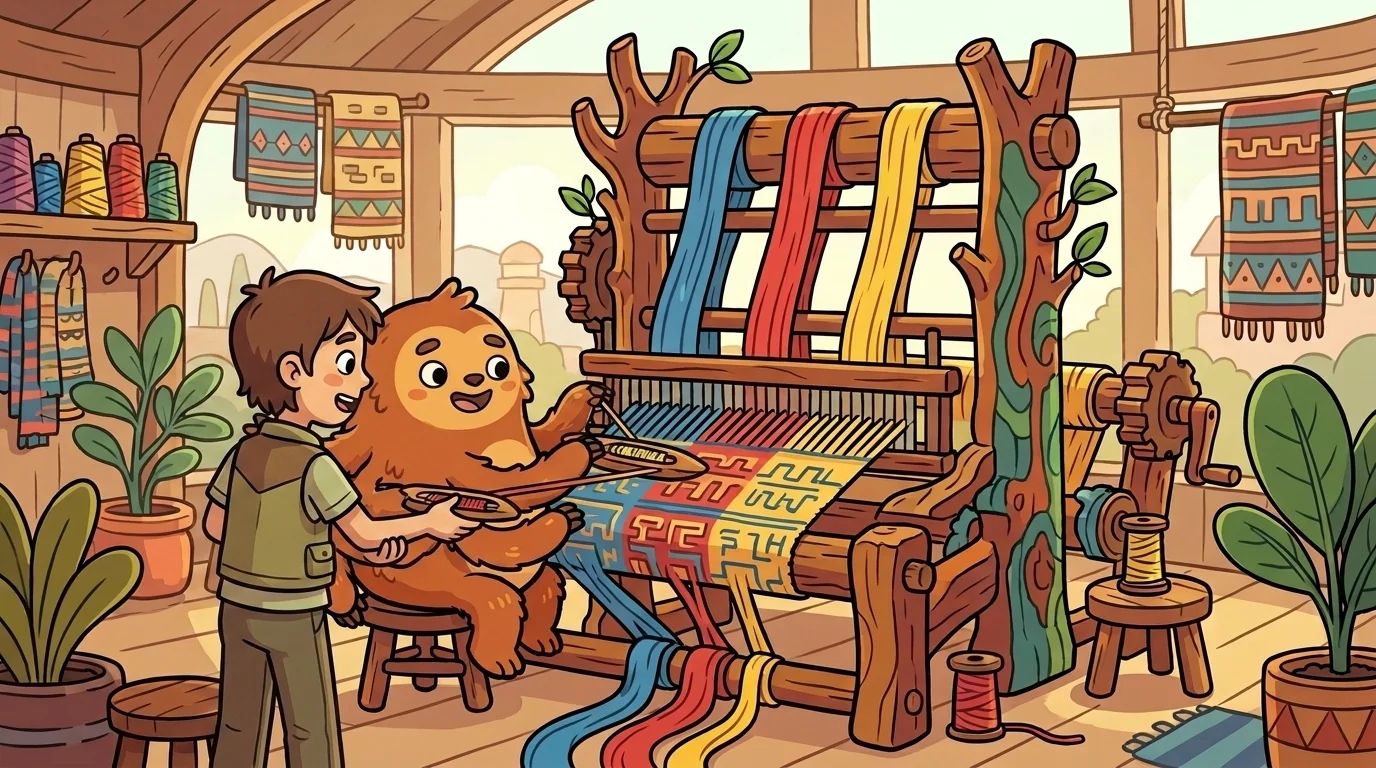
Then she showed the clever engineering underneath, because word order isn't arbitrary — it trades off with something else. "Here's the part that makes it a real system, not just a habit," Weft said, holding up two threads. "How strict a language is about order depends on how much it marks its words with endings. A language like English travels light on word-endings, so it has to lean hard on order to tell you who did what — scramble 'the dog bit the man' and you've changed who got bitten. But a language rich in case-marking — little tags on each word saying 'this one is the do-er,' 'this one is the done-to' — can let its order relax, because the tags carry the who-did-what no matter where the words sit. Tighter endings, freer order; looser endings, stricter order. It's a trade-off, balanced two different ways."

And she guarded the gate that this topic always trips over, retiring one word for good. "So I'm going to put a word away," Weft said gently, setting down her shuttle. "Backwards. People who grow up with SVO sometimes call a verb-final language 'backwards,' as if English were the forwards one and everyone else got the order wrong. But 'backwards' here only ever means different from what I happen to be used to. A verb-last language isn't running the sentence in reverse — it's running its own complete, consistent pattern, one that more of the world uses than uses English's. There's no natural, universal, 'logical' order that all languages fell short of. There's just the loom, and the many equally-good patterns woven on it."
She sent the shuttle flying again, and the sentence grew even and strong. "Every order is a full system," Weft said. "SVO, SOV, VSO — each one, paired with its own balance of word-endings, does the whole job of telling you who did what to whom. So when you meet a language that puts its verb where yours would never dream of, don't reach for 'backwards.' Reach for curious. Ask what its word-endings are doing, and you'll find the other half of the machine. Different threading, same finished cloth: a clear sentence, understood. That's all any word order is ever trying to weave."
The LinguaQuest ensemble
Weft is part of LinguaQuest's distributed-narrative cast. Each character embodies a different curricular primitive; together they teach the full subject.
-

Bough
Language families (genetic descent — Indo-European / Sino-Tibetan / Afro-Asiatic / Niger-Congo / Austronesian)
-

Drift
Sound change (phonological evolution — Grimm's Law, vowel shifts, palatalization)
-

Glyph
Writing systems (alphabetic / abjad / abugida / syllabic / logographic — and how each captures speech)
-
Bridge
Cognates and loanwords (shared roots across languages; trade-route borrowings)
-

Cant
Sociolinguistics — dialect, register, code-switching, formal/informal speech
-
Sign
Signed languages — full natural languages spoken with hands, face, and space; each Deaf community's own, never 'just gestures'
-
Swoop
Tone — pitch that changes a word's meaning (tonal languages); precise and sophisticated, never 'sing-song' or 'exotic'
-

Lex
Untranslatable words — words no other language has in one breath; not a gap in your language but a gift another can offer
-

Nook
Endangered languages + revitalization — keeping fading languages safe; decline is from histories of harm, never the speakers' fault; communities lead the revival