
Pinion
GEAR TRAIN — meshing teeth trade turning-speed for turning-force, and pass motion along. A small gear driving a big gear turns it slower but stronger (a gear ratio); gears also reverse direction and carry motion around corners. Torque and speed trade; work is conserved.
Loading audio…
Press play to listen along. The line being read lights up as you go.
Show full transcript
Loading transcript…
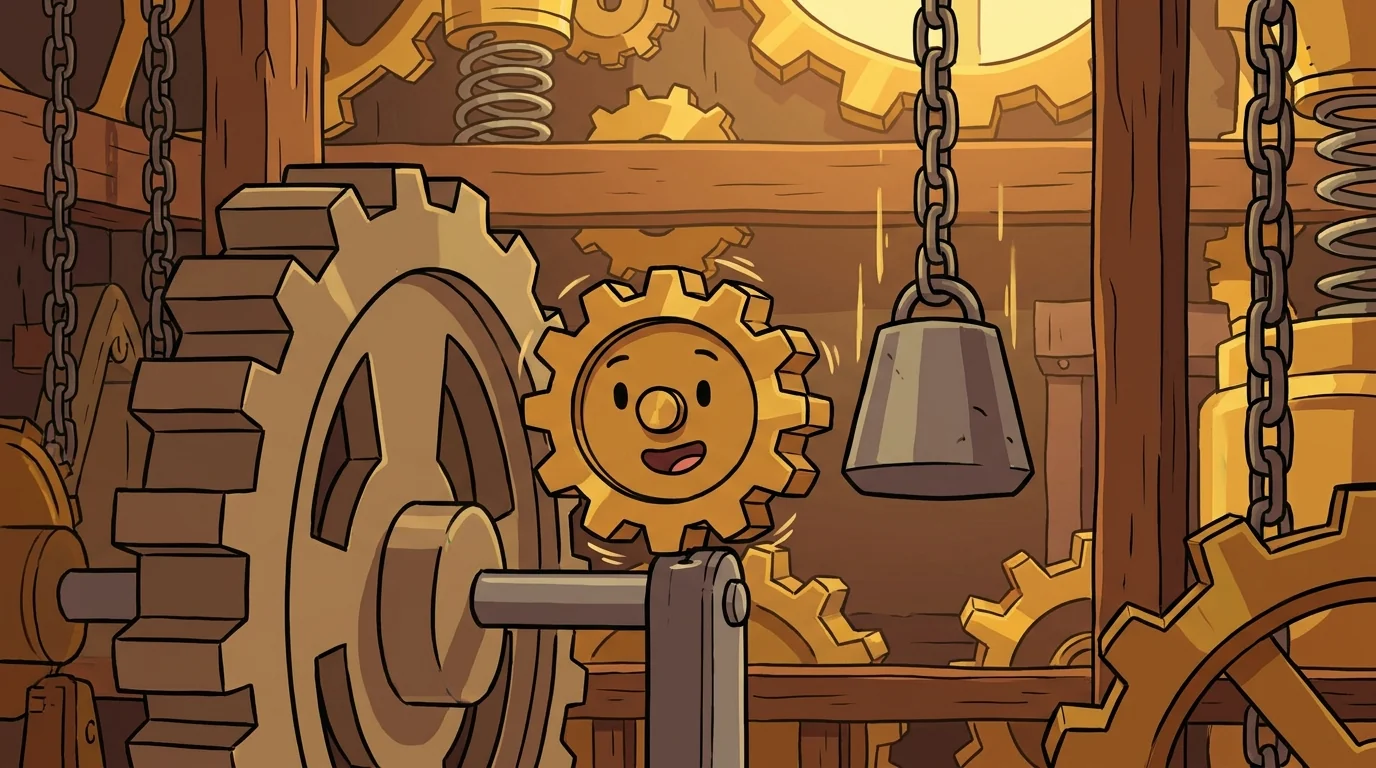
Deep in the workshop clock, a small brass gear whirred fast on its post, its neat teeth catching the teeth of a wheel three times its size. Every two quick spins Pinion made, the great wheel heaved slowly around just once — and that slow, mighty turn dragged a heavy pendulum-weight up its chain. Pinion could never have lifted that weight alone. But meshed against the big wheel, its fast little spins became one strong slow turn, and up the weight climbed. "Feel that?" Pinion said, teeth clicking crisply into the wheel's. "You give me a light, fast turning. I hand back a slow, heavy one. Meshing teeth trade turning-speed for turning-force — speed for torque. Same work as you gave me, just a different shape. I never make power; I reshape it." Its hub-eye gleamed as the weight rose. Because the total work is conserved: what you lose in speed you gain in force, and the books always balance.
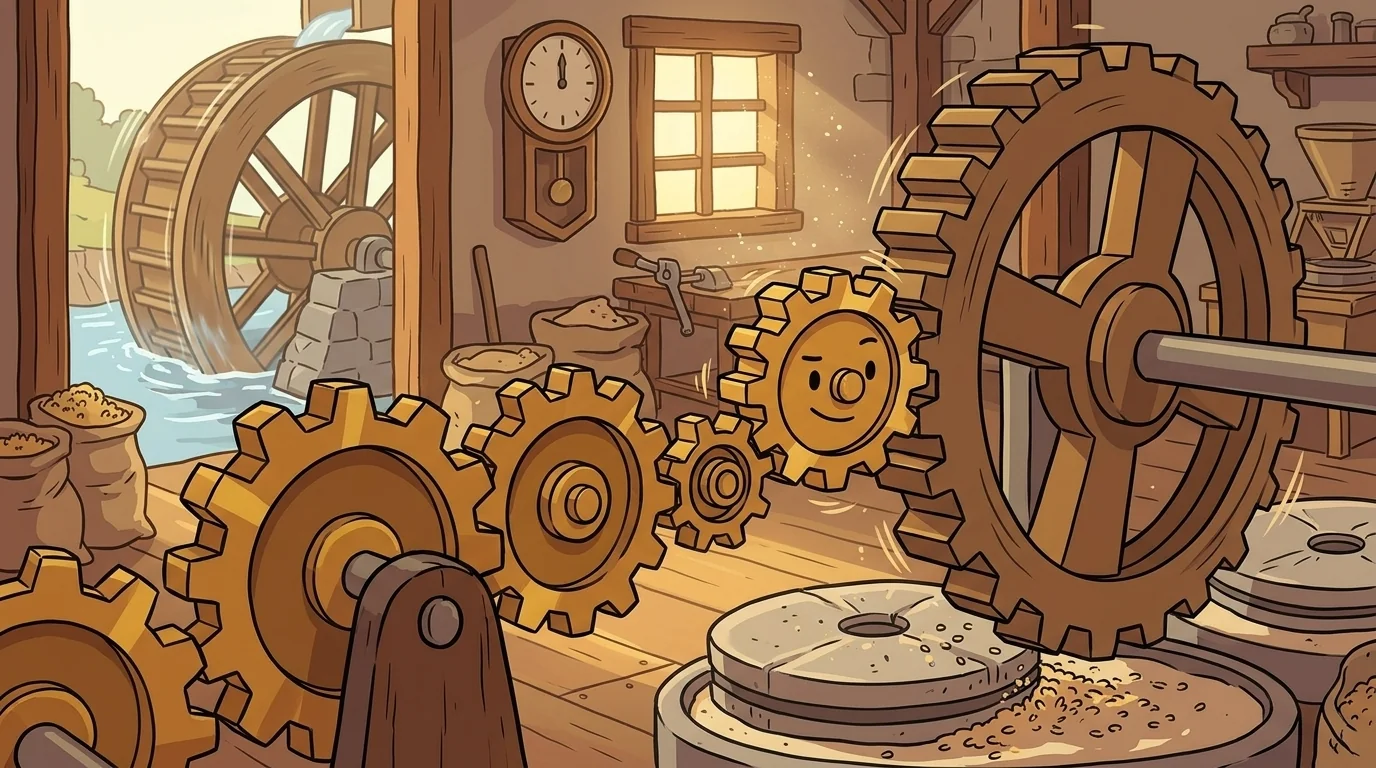
Once, Pinion had lived inside a flour mill, one gear among dozens. A single great water-wheel turned slowly at the river, and that slow turn entered the line of gears and travelled through — small gears spinning it faster, big gears slowing it and forcing it stronger — until at last it reached the millstones and ground the grain. What amazed young Pinion was that the turning was never made anywhere along the line. The river gave one steady push; the gears only passed it hand to hand, trading speed for force and force for speed at each mesh, carrying it around corners, sending it exactly where it was needed. One turn at the water-wheel could become a thousand tiny turns or one enormous grinding one — just by which gears met which, by the ratio of their teeth. That trade — turning handed down a line, reshaped at every step but never lost — became the thing Pinion loved best. When the old mill fell silent, the workshop lifted Pinion out of the dust and gave it a place among the clockwork.
The first day at the workshop, Cog — a gear itself — rolled up beside Pinion, teeth nearly touching. "Show me what you do." Pinion spun twice against the big wheel; the wheel turned once, ponderous and strong. "I trade. Give me a fast easy turning and I'll give you back a slow powerful one — or the other way round, if you mesh me the other way. I flip the direction — two meshed gears always turn opposite ways. I carry motion around a corner. But I never add a scrap of it or lose one; the work in equals the work out. Two small gears in a row, and I turn this way while my neighbour turns that way — motion passed straight along the line." Cog gave a slow, pleased turn, its own teeth meshing for a moment with Pinion's. "A gear teaching gears," it said. "Fitting."
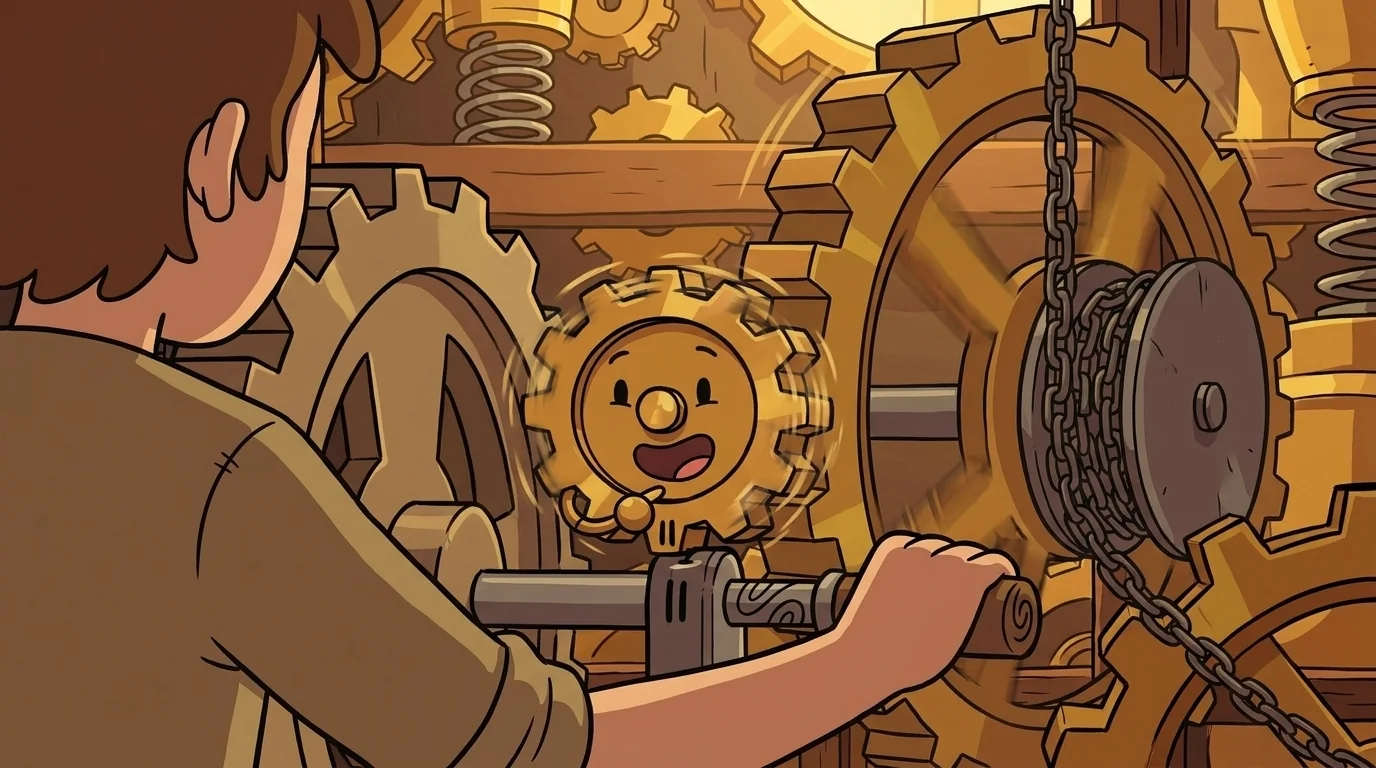
An apprentice named Pip stepped up to a hand-crank linked to Pinion, which meshed with a big gear twice its size, a weight hanging from the big gear's chain. "Count my teeth, then the big gear's," Pinion said. Pip counted — Pinion had half as many. "So I turn twice for each single turn of the big one. That two-to-one is a gear ratio. Now crank." Pip cranked; Pinion whirred around twice, fast and light; the big gear heaved around once, slow — and lifted the weight, which Pip could never have raised by spinning that big wheel with his bare hands. "Two of my turns for one of the big gear's, and in exchange the big gear turns with twice the force. I took your fast, easy cranking and handed back one slow, strong turn. Same work in, different shape out." Pip cranked again, feeling the heavy weight climb. Then Pinion had Pip line up three gears in a row. "Now watch motion travel." Pip turned the first; it spun the second the opposite way; the second spun the third back the first way; and the weight at the end rose. "A bike, a windmill, a hand-mixer — none of them make turning. They pass it along, trading speed for force wherever they need it. Choose your gears, and you choose your trade."
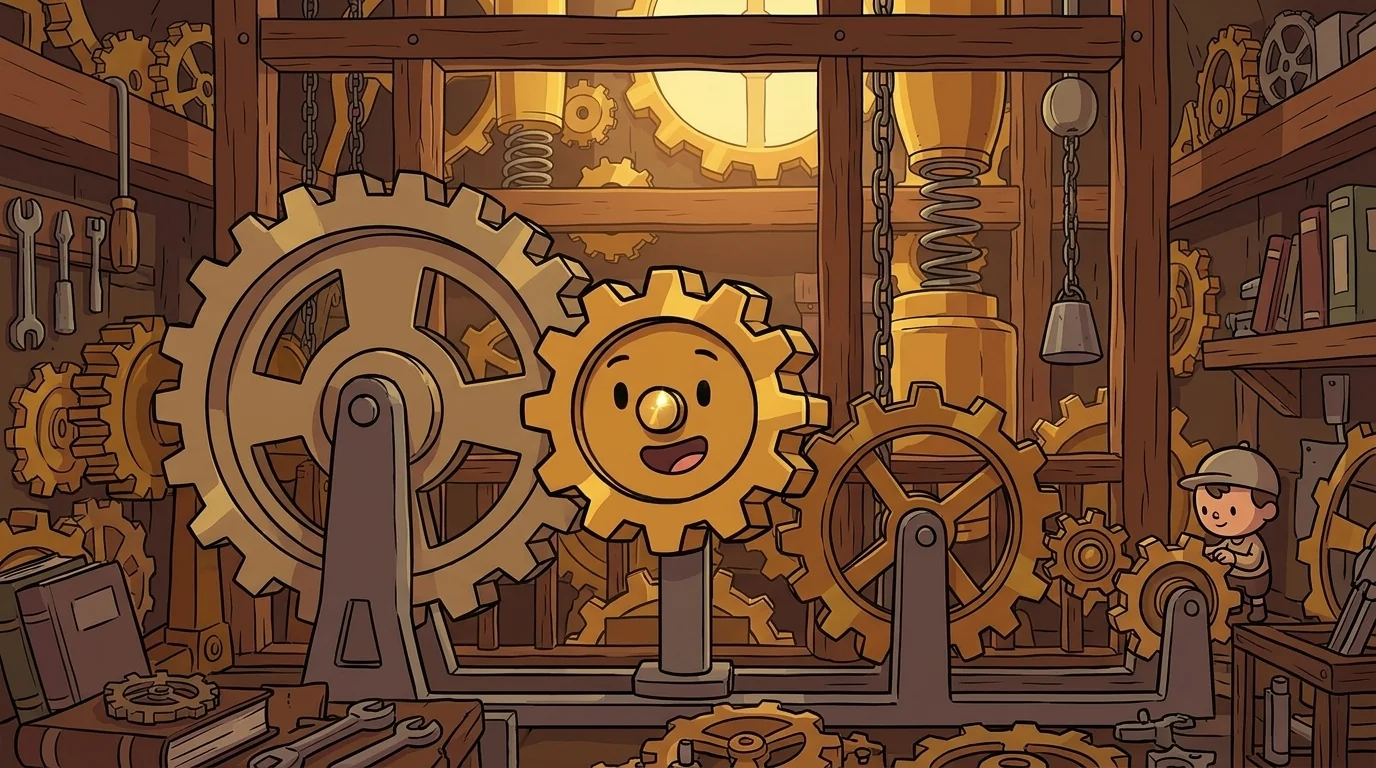
When Pip finally let the crank still, the three gears coasted to a stop, teeth settling into each other with a soft, snug click. "That sound," Pinion said. "Teeth catching teeth, just right. Two parts made to fit, handing motion back and forth, nothing spilled. When gears mesh true, the whole machine feels alive." Pip rested his fingers on the smallest gear, feeling it seat perfectly against its neighbour, and something clicked into place inside him too — the warm, settled satisfaction of understanding how the whole line worked, of watching parts fit each other exactly as they should. He turned the crank once more, gently, and felt the trade travel all the way down: fast to slow, light to strong, the little gear giving up its speed so the big one could give back its force. He grinned, the pieces suddenly clear and clean in his mind, and the row of gears hummed on, warm and glad, parts that fit.
The MachineForge ensemble
Pinion is part of MachineForge's distributed-narrative cast. Each character embodies a different curricular primitive; together they teach the full subject.
-
Pry
Lever — push longer to lift heavier; the trade between force and distance
-
Hoist
Pulley — pull down here and watch it go up there; redirecting force
-
Ramp
Inclined plane — climb the long slow way; less force, same work
-
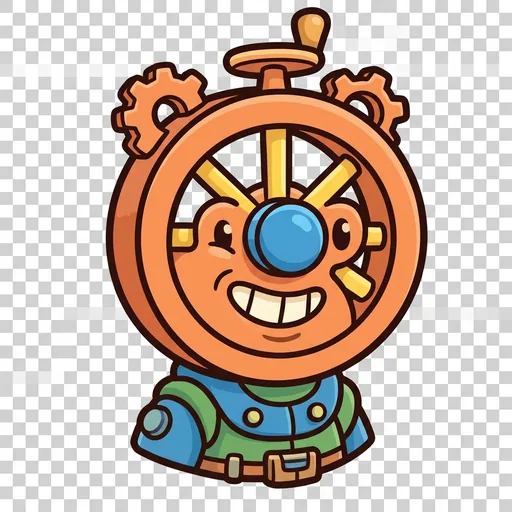
Spoke
Wheel-and-axle — one turn of the hub, many turns of the rim
-
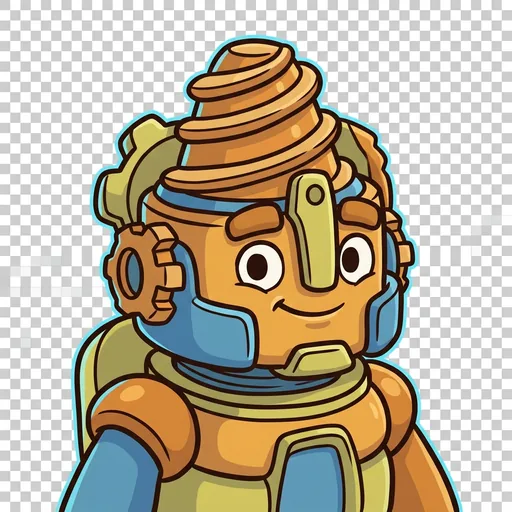
Auger
Screw — round and round becomes step and step; spiral inclined plane
-

Cleave
Wedge — push forward and split it apart; force concentrated to a sharp edge
-
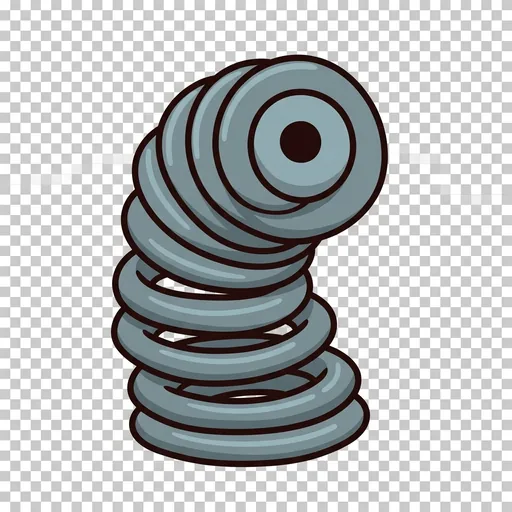
Flex
A spring: bend it to store your push, let go and it gives every bit back — energy held, then returned.
-
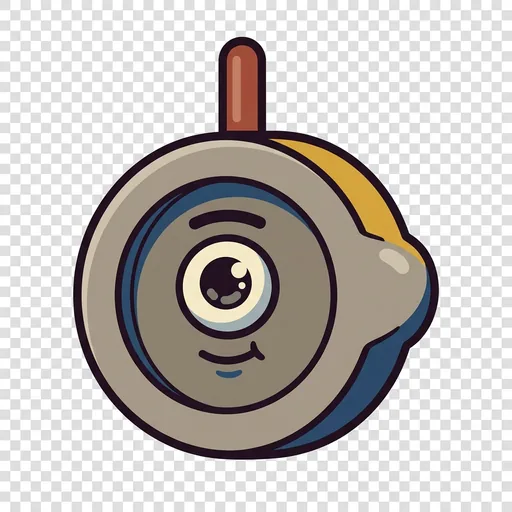
Lobe
A cam: a spinning shape with a bump that turns steady spinning into a repeating push, like a music box keeping a beat.
-
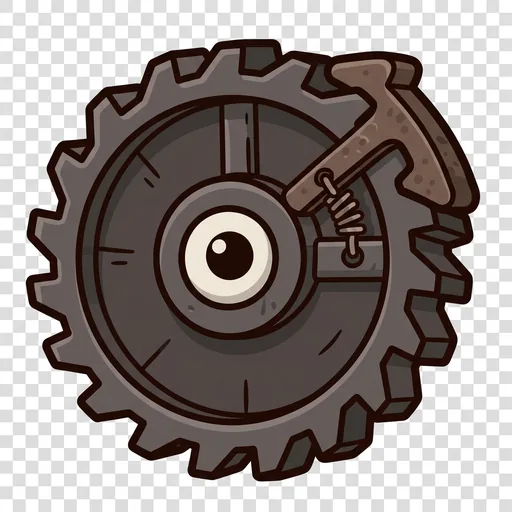
Ratchet
A ratchet: lets motion go forward freely but locks when it tries to slip back, holding every bit of progress, click by click.