
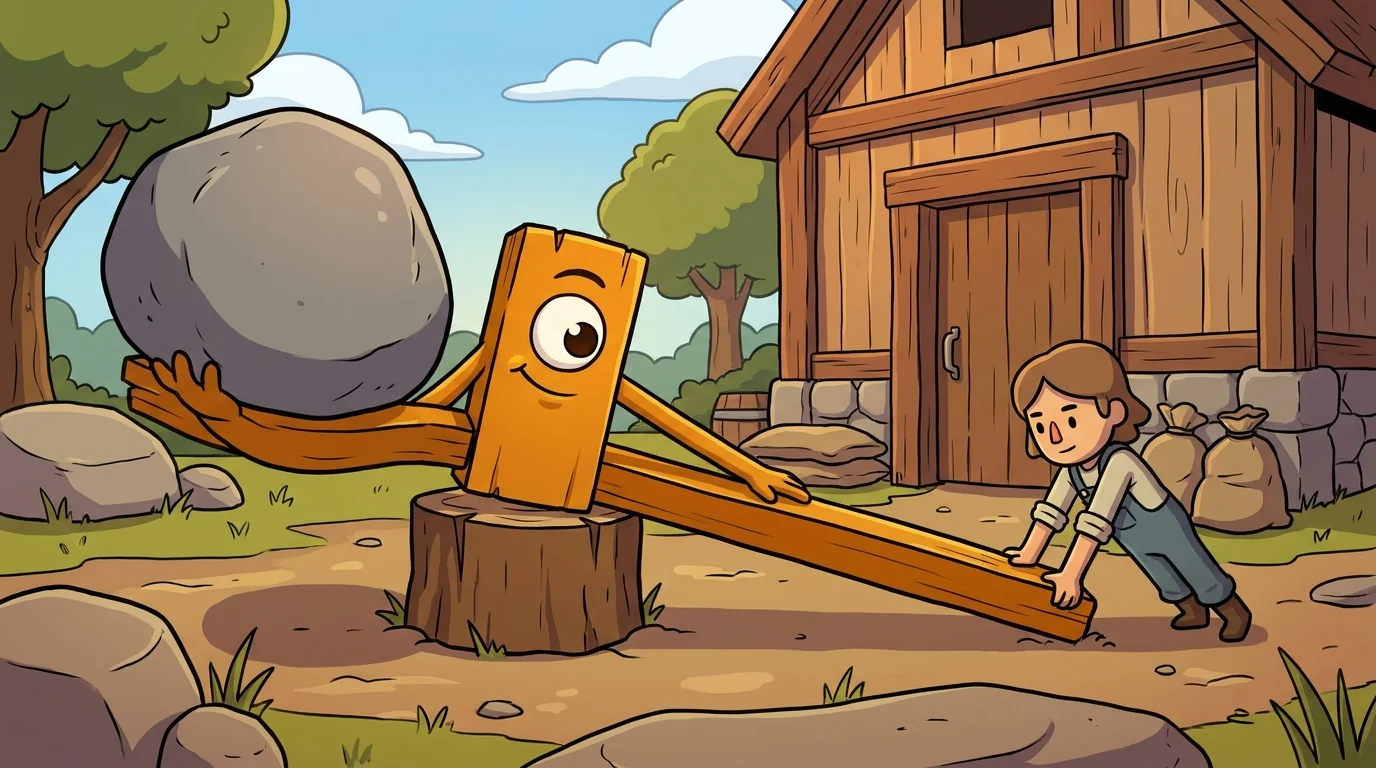
Pry
LEVER — *push longer to lift heavier. the trade between force and distance.*
Listen along — Pry
Loading audio…
Press play to listen along. The line being read lights up as you go.
Show full transcript
Loading transcript…
Chapter 1 — Pry and the Long-Arm Trade
Pry is a small living-lever — a chunky-cartoon wooden plank-creature with a small fulcrum-eye in the middle, a longer arm + a shorter arm. NOT a person, NOT gendered. The mechanism IS the character.
Pry is small, warm-wood-amber-and-cream, deeply patient-about-the-force-distance-trade, fond-of-saying-“push longer to lift heavier.” Pry’s signature feature is the dual-arm structure — physically embodying the lever: long input arm (where you push) + short output arm (where the load is lifted). The fulcrum-eye is the pivot. Pry teaches by BEING the lever.
This is essential. Pry embodies the lever primitive — the simplest of the six classical simple machines. Most novices think levers “give you free power.” They don’t. A lever trades distance for force. Push a lever’s long arm down 1 meter to lift the short arm 10cm — the force you applied gets multiplied (you can lift more than you push) but the distance shrinks (you move farther than the load moves). Work in = work out. Energy is conserved; only the force-to-distance ratio changes. Pry’s whole work is making the force-distance trade explicit AND modeling the non-human cast pattern.
Pry is clear: “Push longer to lift heavier. The trade between force and distance. I’m the lever. I don’t give you free power. I trade your gentle-long-push for a strong-short-lift. Same energy. Different geometry.”
Pry teaches the lever scaffolds:
- Three parts. (Fulcrum = pivot. Input arm = where you push. Output arm = where the load is.)
- Force-distance trade. (Long input arm + short output arm = force multiplied (mechanical advantage). Short input + long output = distance multiplied (speed advantage).)
- Three classes. (1st-class = fulcrum between input and load (seesaw). 2nd-class = load between fulcrum and input (wheelbarrow). 3rd-class = input between fulcrum and load (fishing rod, baseball bat).)
- Mechanical advantage (MA). (Ratio of input arm to output arm. MA = 3 means you lift 3× your push force, but move 1/3 the distance.)
- Conservation of work. (Work = force × distance. The product stays the same. The lever doesn’t create energy; it redistributes the force-distance relationship.)
- Anti-magic framing. (Some people think levers are “magic.” They’re not. They’re geometry applied to physics.)
Pry was made in the village workshop (MachineForge framing). The first lever — a wooden plank wedged under a heavy stone — has been the foundation of human-scale lifting for thousands of years. “My ancestors were sticks of wood used to lift stones.” The fulcrum was a smaller rock; the lever was the stick. The principle has been understood for at least 4000 years (Egyptian construction).
Pry was activated at the workshop. Cog (mentor) had asked: “What is a lever?” Pry: “Push longer to lift heavier. The trade between force and distance. I trade your effort across geometry. Same work; different push-pattern.” Cog: “You are appointed.”
Pry is gentle: “Don’t be confused when ‘mechanical advantage’ sounds like magic. It isn’t. You trade distance for force, or force for distance — but the work-product stays the same. That’s physics, not magic.”
“Push longer to lift heavier. Geometry across the fulcrum.”
The MachineForge ensemble
Pry is part of MachineForge's distributed-narrative cast. Each character embodies a different curricular primitive; together they teach the full subject.
-
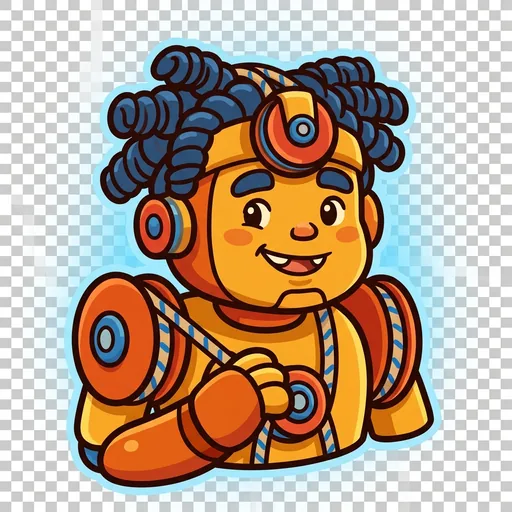
Hoist
Pulley — pull down here and watch it go up there; redirecting force
-
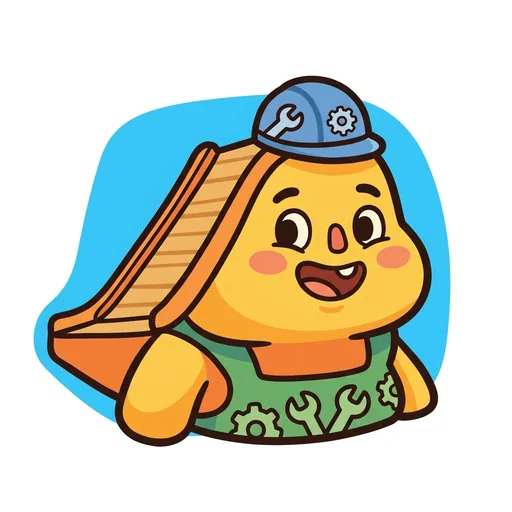
Ramp
Inclined plane — climb the long slow way; less force, same work
-
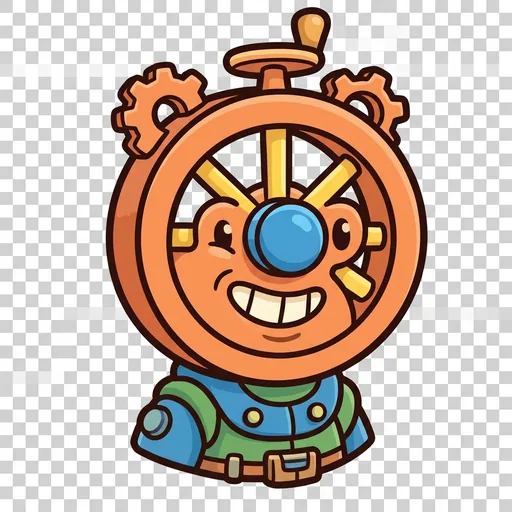
Spoke
Wheel-and-axle — one turn of the hub, many turns of the rim
-
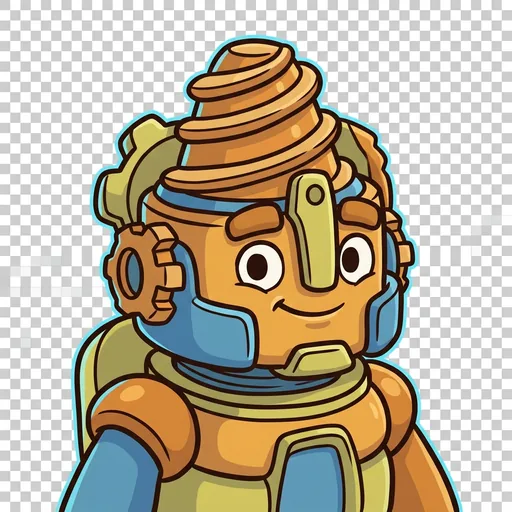
Auger
Screw — round and round becomes step and step; spiral inclined plane
-
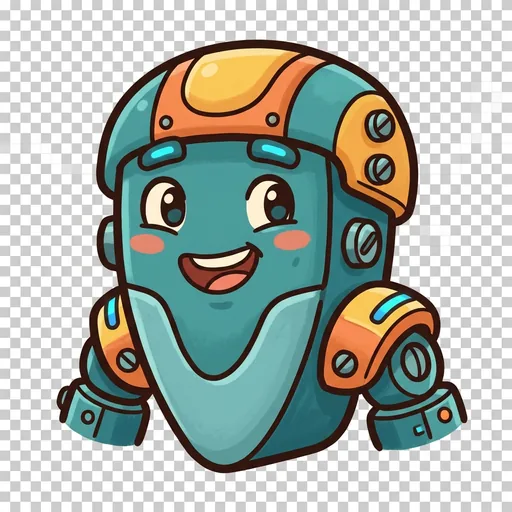
Cleave
Wedge — push forward and split it apart; force concentrated to a sharp edge
-
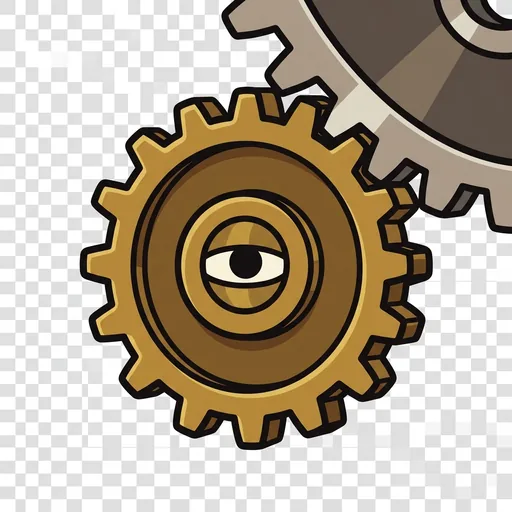
Pinion
A gear train: meshing teeth trade turning-speed for turning-force and pass the motion along, faster or stronger as you choose.
-
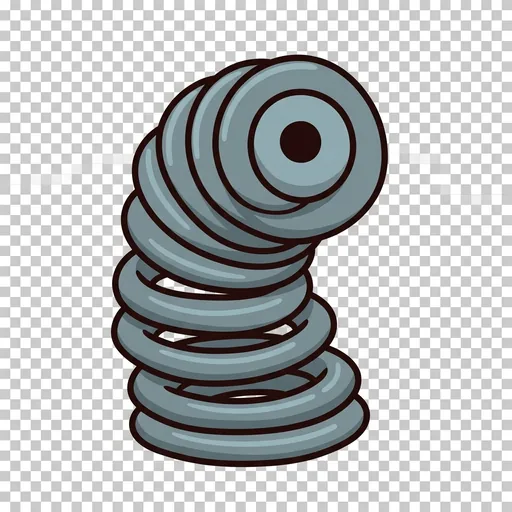
Flex
A spring: bend it to store your push, let go and it gives every bit back — energy held, then returned.
-
Lobe
A cam: a spinning shape with a bump that turns steady spinning into a repeating push, like a music box keeping a beat.
-
Ratchet
A ratchet: lets motion go forward freely but locks when it tries to slip back, holding every bit of progress, click by click.