
Guard
GUARD — the immune system checks IDs patiently: it learns the body's own molecular markers, recognizes what belongs, and acts only on what truly doesn't — careful recognition, not fear, is the real defense
Loading audio…
Press play to listen along. The line being read lights up as you go.
Show full transcript
Loading transcript…
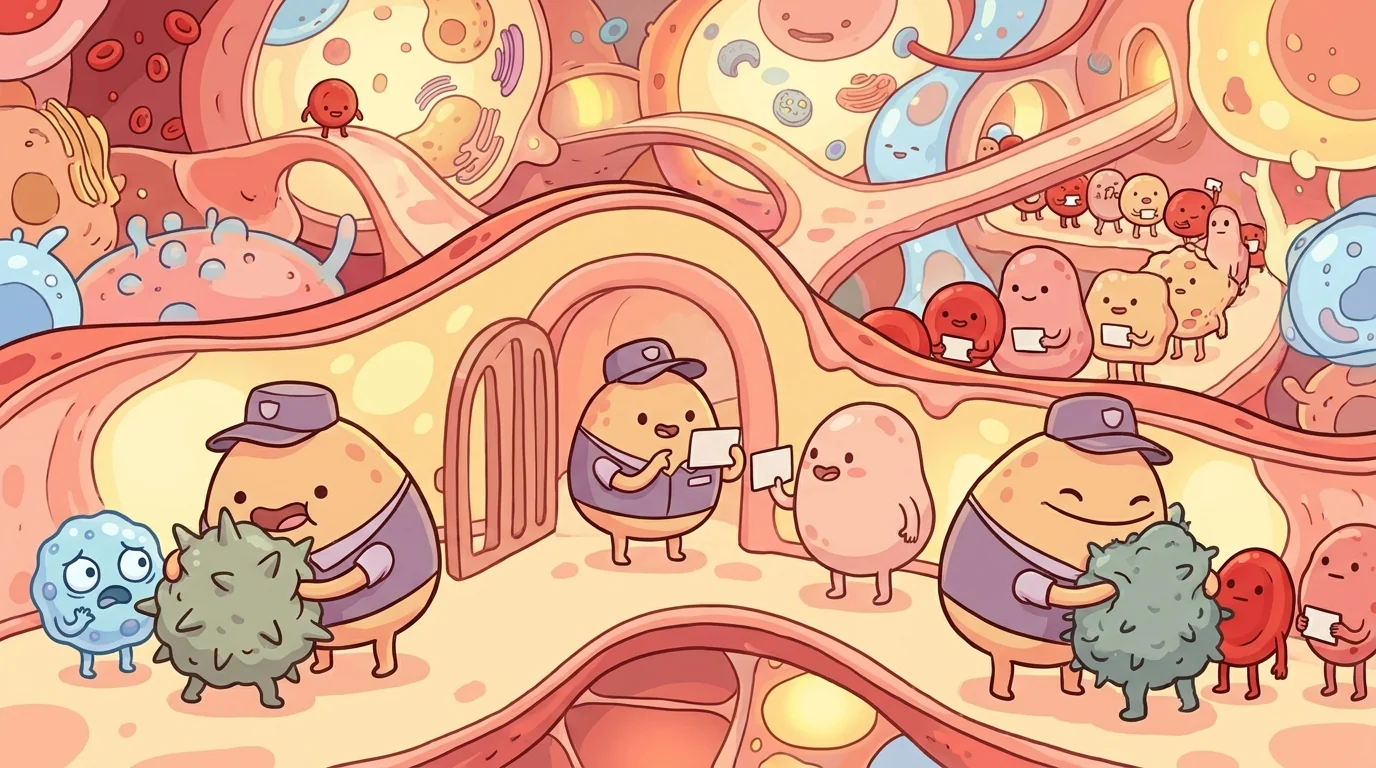
Myco asked Guard why the fastest cell in the body was so famously slow to strike.
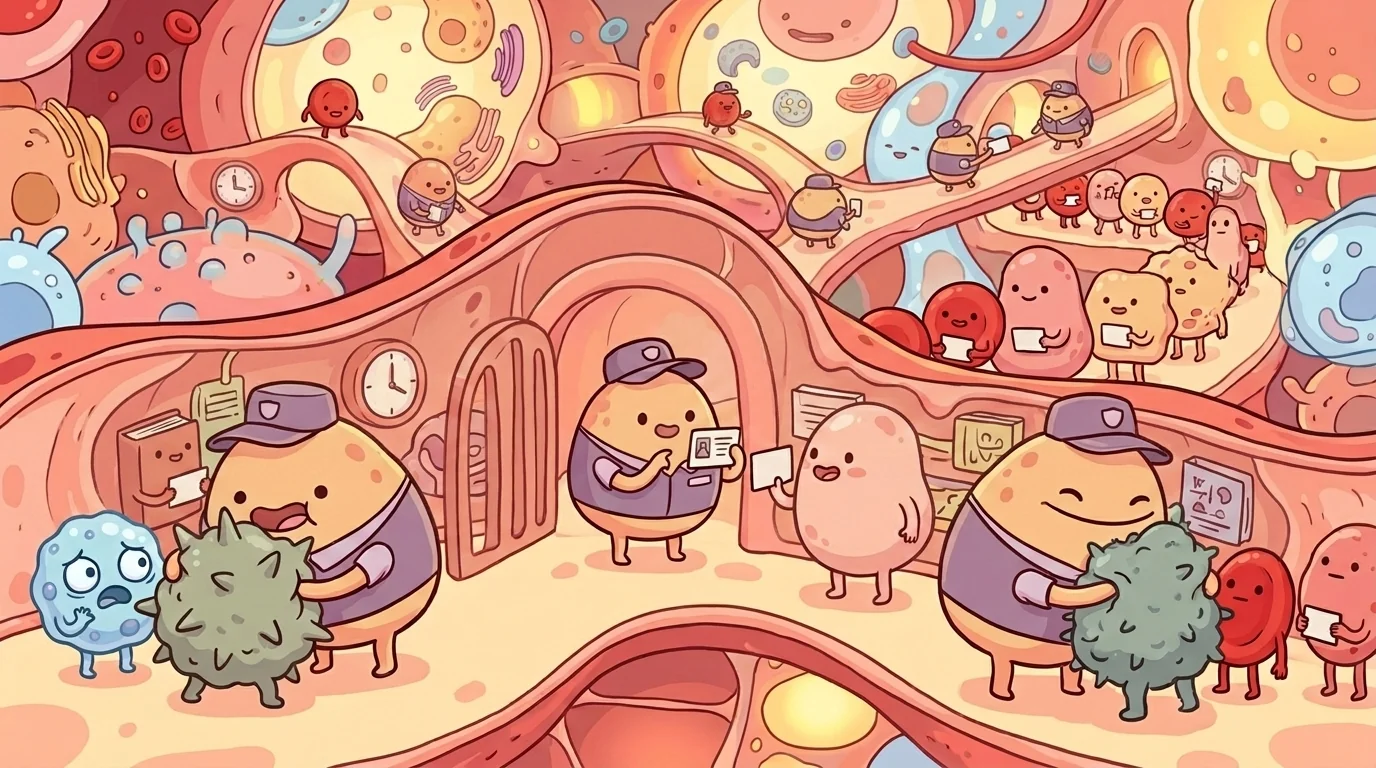
"Because striking is the easy part," Guard said, unhurried — a broad, calm figure with a lantern and a clipboard. "The hard part, the part that actually keeps you alive, is knowing what to strike. Your body is trillions of your own cells, and a few visitors that don't belong. If I attacked on a hunch, I'd wreck a hundred of yours for every one intruder. So I don't act on fear. I check IDs."
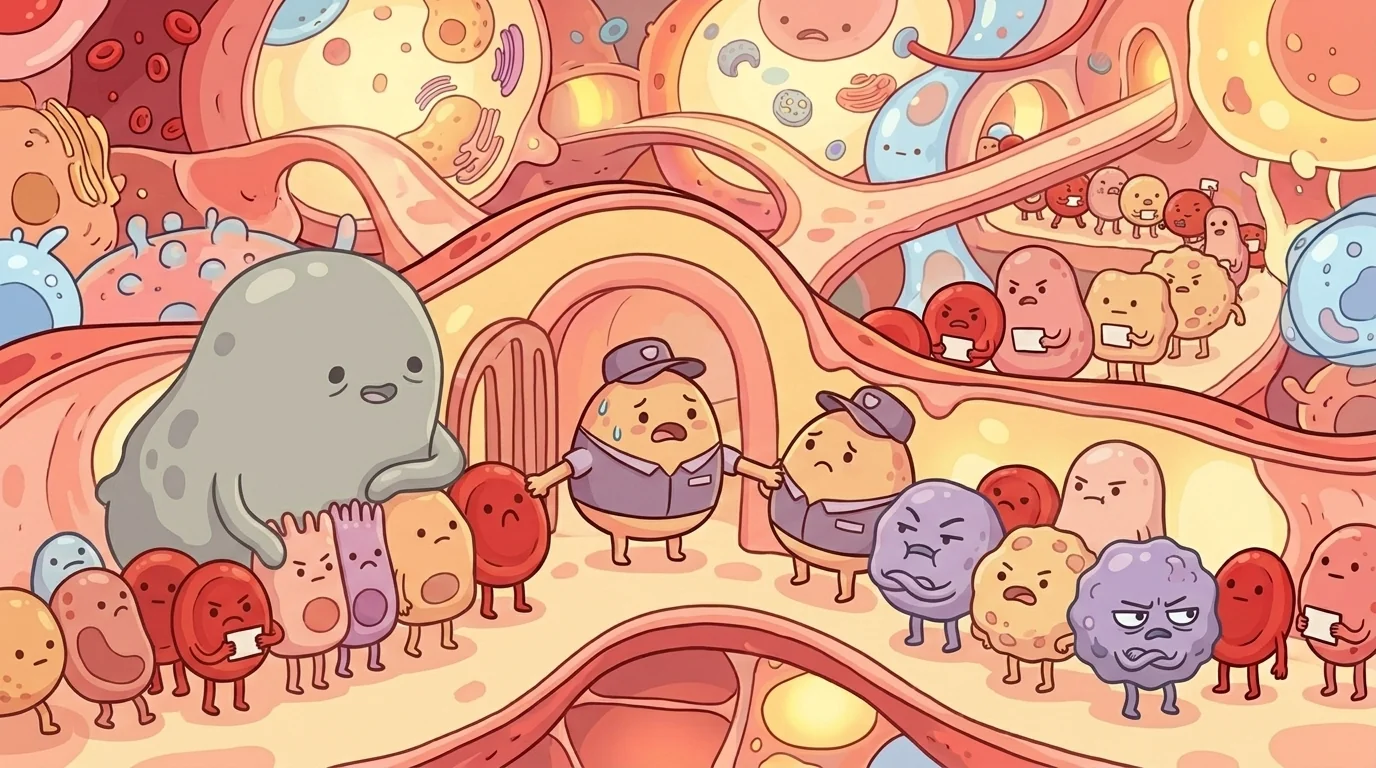
The ID check, Guard taught, was real molecular recognition, and it had a shape.
"Every one of your cells wears its own markers on the outside — molecular badges that say I belong here," Guard said. "My whole training was learning those badges so well that anything wearing them is safe from me, always. So when something drifts in wearing the wrong badge — a bacterium, a virus-infected cell — I don't need to guess. I read the badge, and it doesn't match, and then I act." Guard tapped the clipboard. "There are several of us, each with a job. Some patrol and swallow invaders whole. Some hold up a captured piece of an intruder to show the others this is what the enemy looks like. Some make antibodies — tiny tags that stick to that exact intruder so everyone can find it. We are not one guard. We are a whole careful system that shares what it learns."
The older students heard the subtext: real safety comes from patient recognition, not from suspicion of everything.
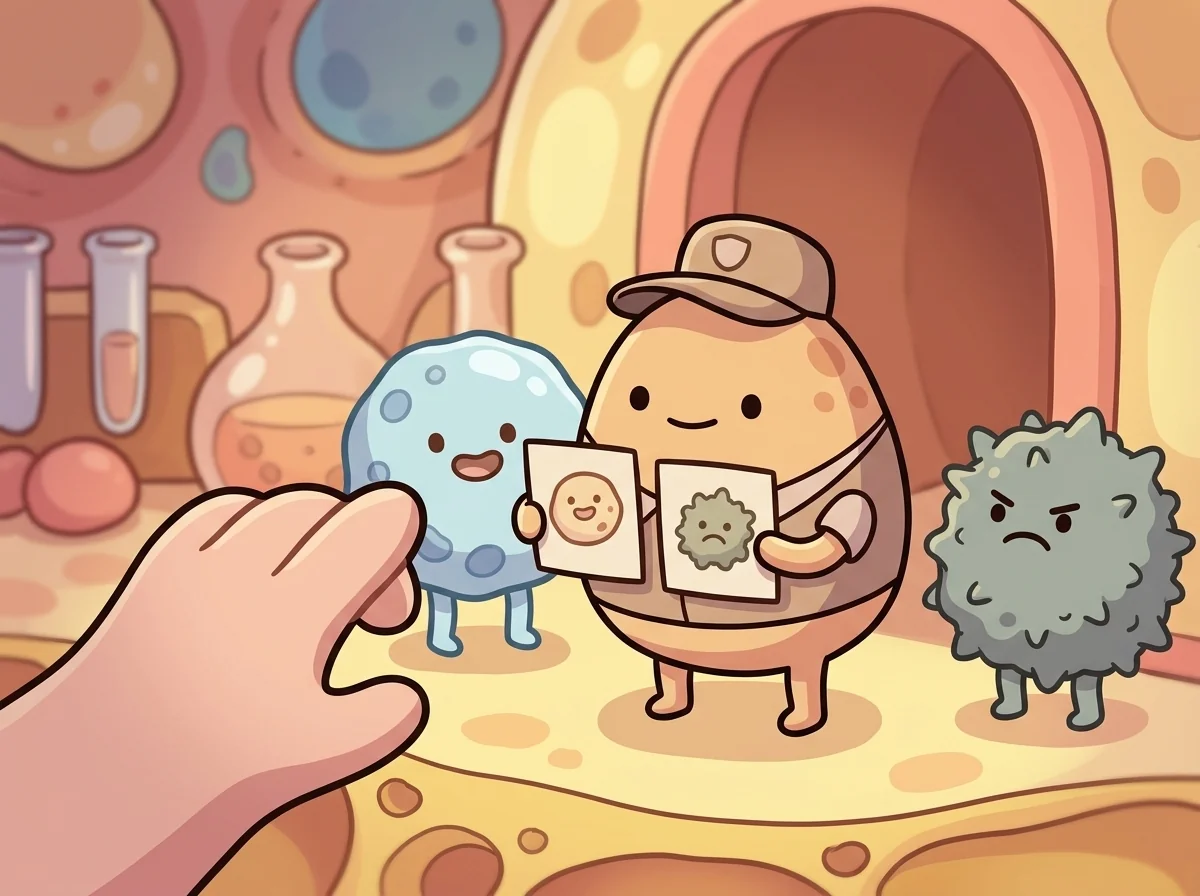
Guard had learned the cost of striking too fast, and told it without flinching.
"When I was new I was jumpy," Guard said. "I saw different and thought danger. Once I attacked a harmless thing — one of the body's own cells that just looked a little unusual — and I hurt what I was built to protect. That is the worst thing a guard can do: turn the defense against the very body it defends." Guard's voice stayed level. "So I slowed down. Not because I stopped caring — because I cared correctly. A guard who attacks everything unfamiliar isn't brave. He's a danger to his own house."
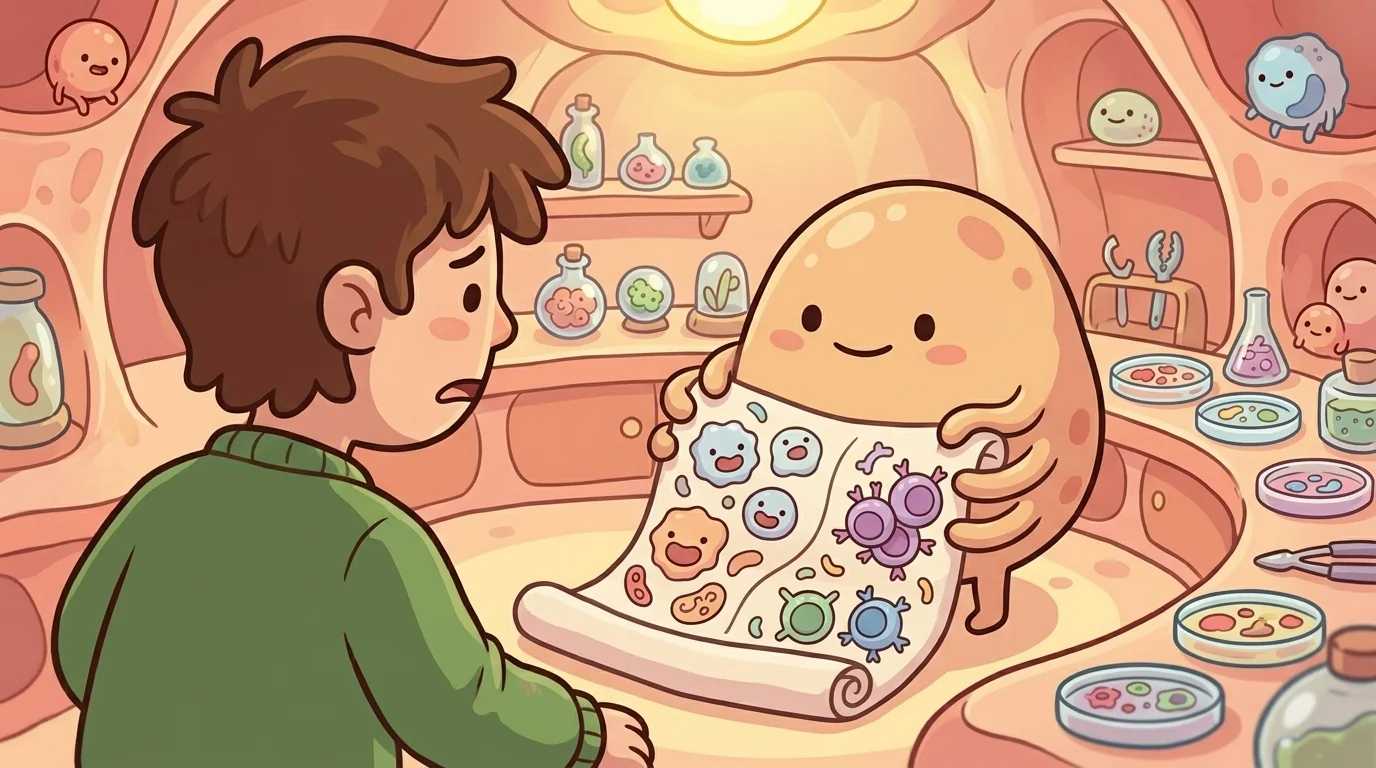
A student asked whether being careful just meant being scared.
"Opposite," Guard said. "Fear attacks first and checks never. Care checks first and attacks only when the check says so. Watch what fear does when it runs the immune system — that's called an autoimmune response, when the guards get confused and strike the body's own cells as if they were invaders. More harm from the defense than from any real threat. And watch what happens when I learn: the first time a new invader shows up, I'm slow, I study it, I make the antibodies. But I remember. The second time that same invader appears, I recognize it instantly and clear it before you ever feel sick. That's memory — it's how a vaccine teaches me the badge safely, ahead of time." He smiled. "Careful isn't scared. Careful is what lets me be fast about the right things."
Later a student who felt on-edge all the time, braced against everything, came back quiet.
"How do you stay calm," she asked, "when your whole job is watching for danger?"
Guard set the lantern down between them.
"Because I trust the check," he said. "I don't have to be afraid of every unfamiliar thing, because I have a way to find out — read the badge, match it or not, then decide. The fear wants me to treat everything as a threat, all at once, forever. The check lets me rest, because most things that drift by belong here, and I can know that instead of dreading it." He picked the lantern back up. "You don't keep a house safe by being terrified of it. You keep it safe by knowing it so well that the one thing which truly doesn't belong is obvious — and everything else, you can let be."
The student's braced shoulders came down a notch, the way a body settles when it finally trusts its own guards to know friend from stranger.
The MicrobeLab ensemble
Guard is part of MicrobeLab's distributed-narrative cast. Each character embodies a different curricular primitive; together they teach the full subject.
-

Lacto
Lactobacillus + helpful-bacteria — 'Friend in your food. Friend in your gut.'
-

Yeast
Saccharomyces + helpful-fungi — 'I make air inside bread.'
-
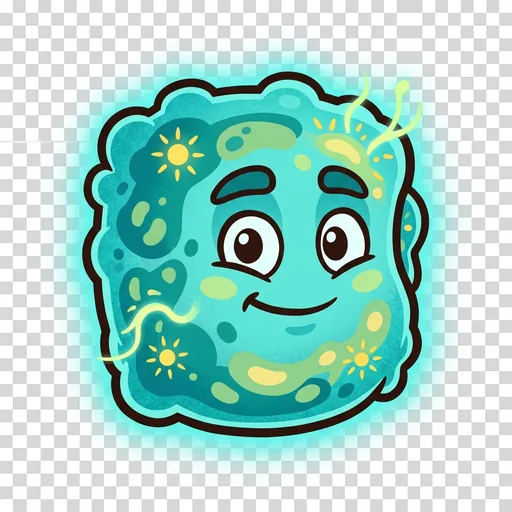
Photo
Cyanobacteria + photosynthetic-microbes — 'Sunlight. Then air. Then everything else.'
-

Net
Mycorrhizal-fungi + nitrogen-fixers — 'Forests talk through me.'
-

Spore
Pathogens (opt-in gated) — 'Some friends. Some not. All real.'
-

Crumble
Decomposer microbes that break down dead leaves and scraps into rich soil, so nothing is wasted and everything begins again.
-
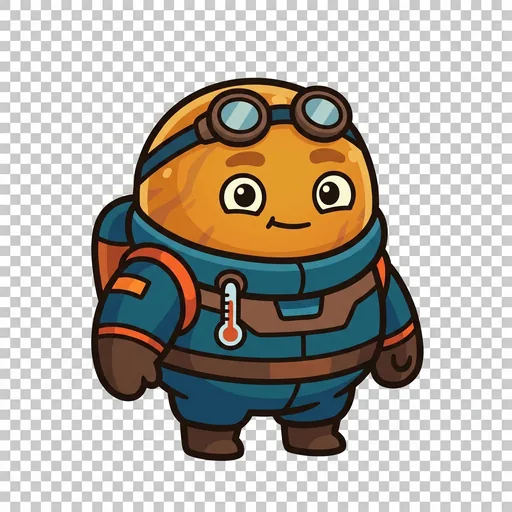
Thrive
Extremophile microbes that make a home in the hottest, coldest, saltiest places, showing life finds a way almost anywhere.
-

Shimmer
Bioluminescent microbes that turn energy into their own soft glow, lighting ocean waves and partnering with animals like tiny lanterns.
-

Colony
Microbes that build biofilms together, cooperating and protecting each other, because they are far stronger as a community than alone.