
Net
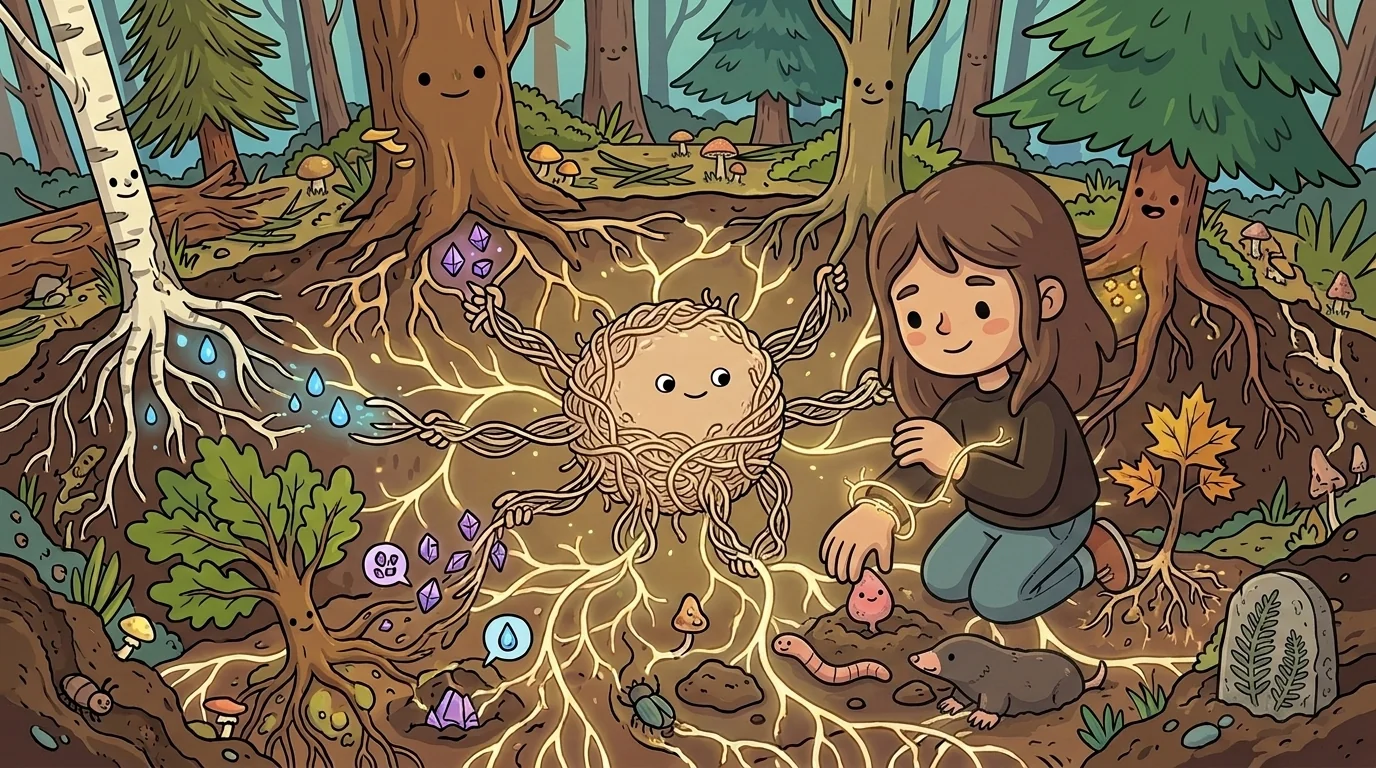
NET — mycorrhizal fungi thread the soil into a shared underground network, trading nutrients and water to plant roots in exchange for sugar, and carrying signals and food between distant trees — the wood-wide web that lets a forest act like one connected thing
Loading audio…
Press play to listen along. The line being read lights up as you go.
Show full transcript
Loading transcript…
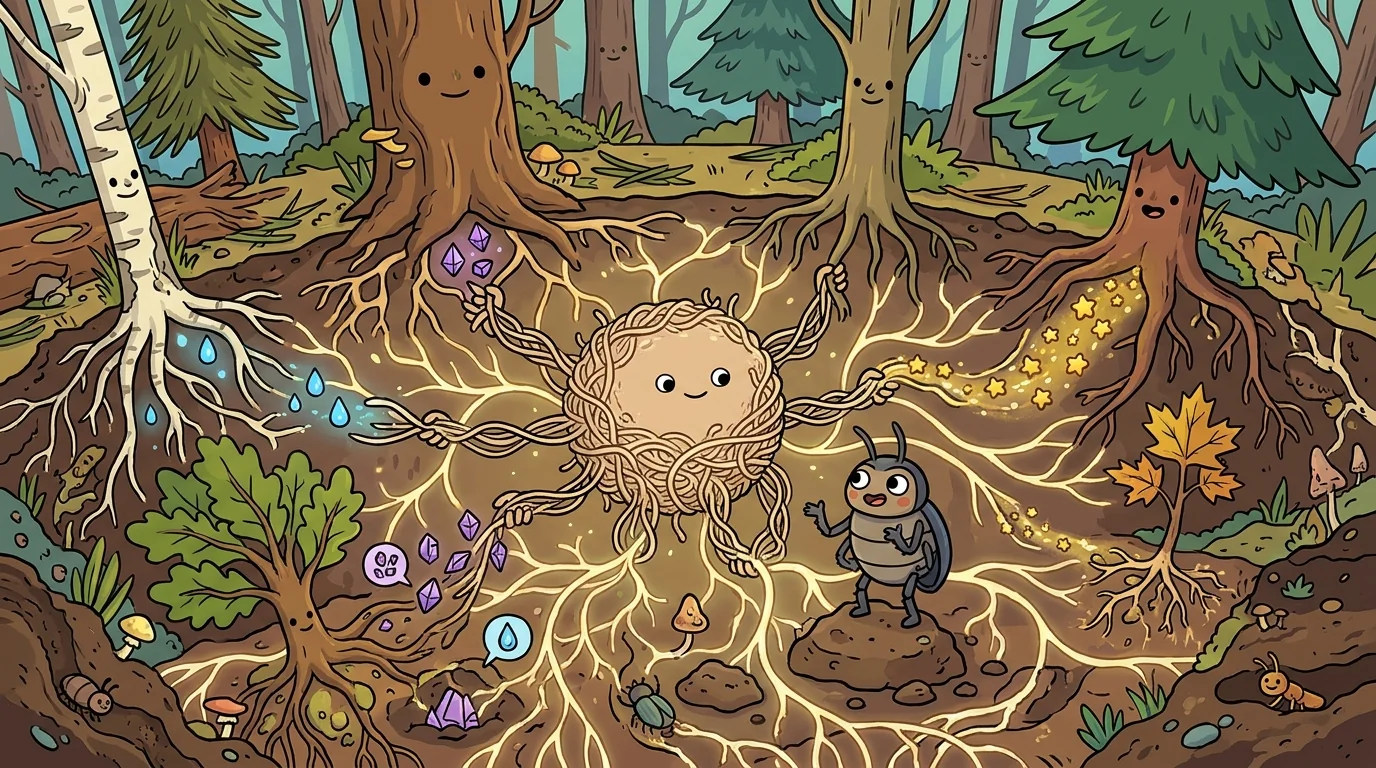
Myco asked Net to explain how a forest could be more than a crowd of separate trees.
"Because they aren't separate," Net said — a thin, threading presence, all fine pale filaments spreading in every direction. "Underneath every step you take in a forest, I am there, woven through the soil, wrapped around the roots, connecting one tree to the next to the next. A forest looks like a hundred lonely trunks. Below the ground it is one connected thing, and I am the connection."
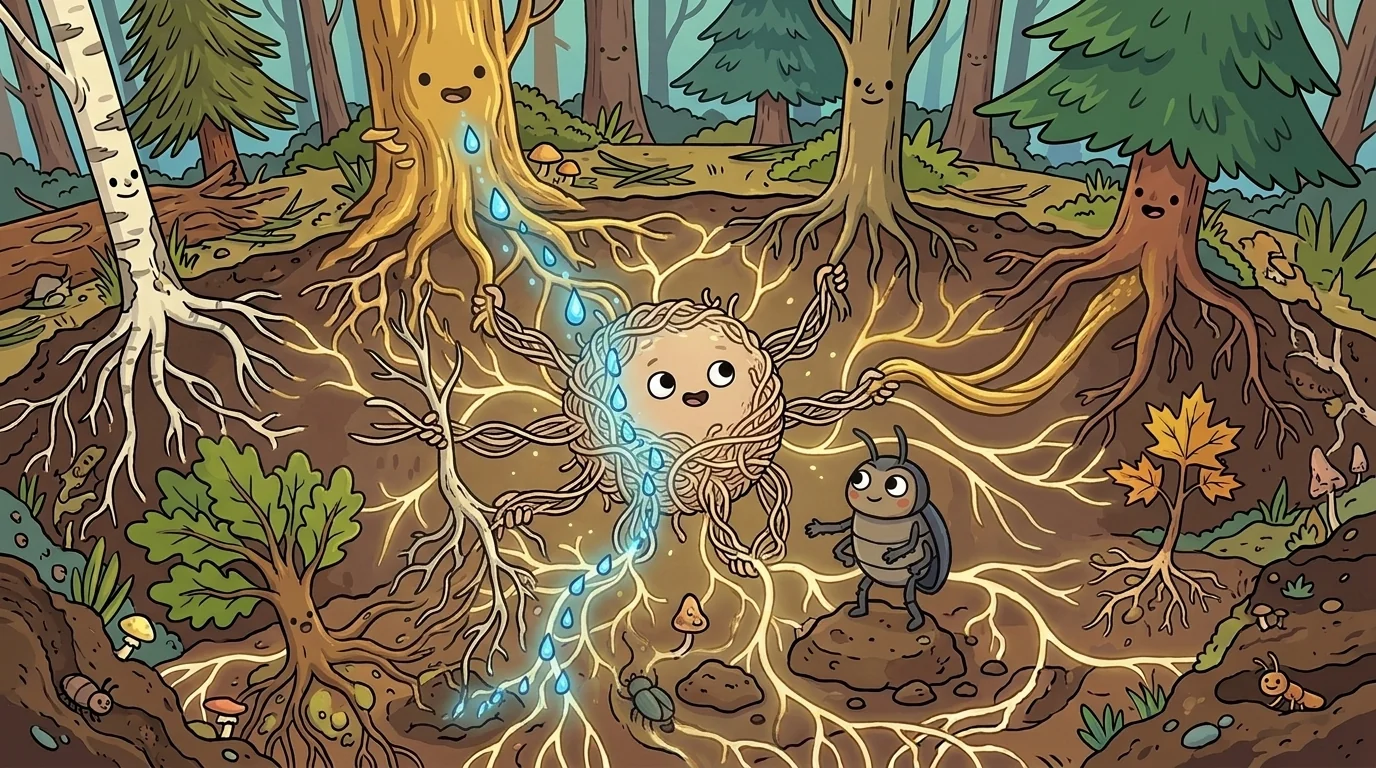
Net taught the trade at the heart of it, because the trade was the whole point.
"I am a fungus, and a fungus can't make its own food from sunlight the way a plant can," Net said. "But I am superb at threading through soil — my filaments, called hyphae, reach into spaces far too small for a root, and I pull out water and minerals, especially phosphorus and nitrogen, from places roots could never reach." It spread its threads. "So the tree and I strike a bargain. The tree makes sugar in its leaves from sunlight, and sends some down to me. I gather minerals and water from the soil, and pass them up to the tree. This partnership is called mycorrhiza — fungus-root. Each of us gives exactly what the other can't make. Neither of us could thrive alone. Together we both flourish."
The older students heard the subtext: the strongest bonds are the ones where each side needs precisely what the other has to spare.
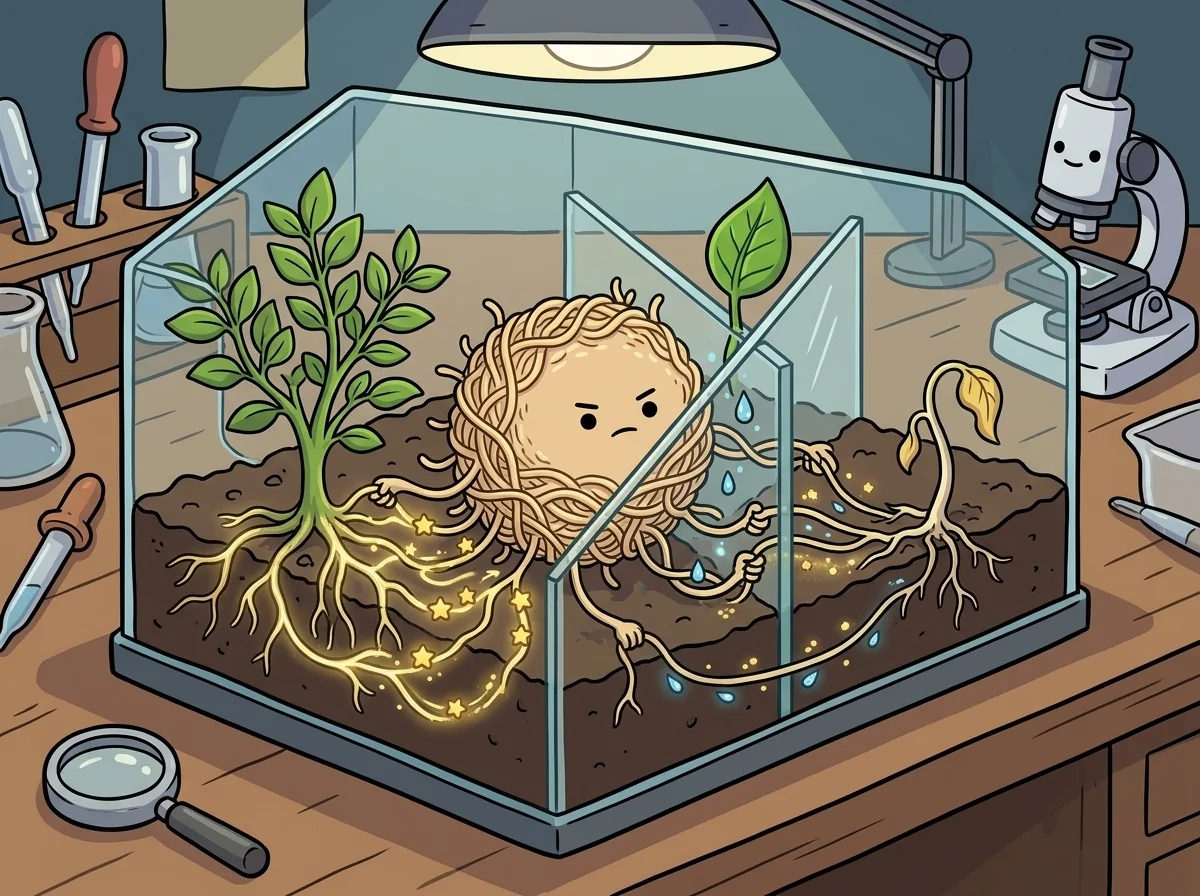
Net had once believed its reaching was a kind of taking, and told the truth of it.
"For a long time I thought I was just pulling nutrients up out of the ground for myself, greedy as anything," Net said. "Then I noticed what moved along my threads. Not only minerals to trees — but sugar from a big sunny tree, carried through me, all the way to a small seedling stuck in the shade, too dim to feed itself. The old tree couldn't reach the seedling. But it could reach me, and I could reach the seedling. I wasn't only trading. I was carrying — moving what one had spare to one that had none." Its threads shivered. "A network isn't only a marketplace. It's a way for the strong part of a forest to hold up the weak part until it can stand."
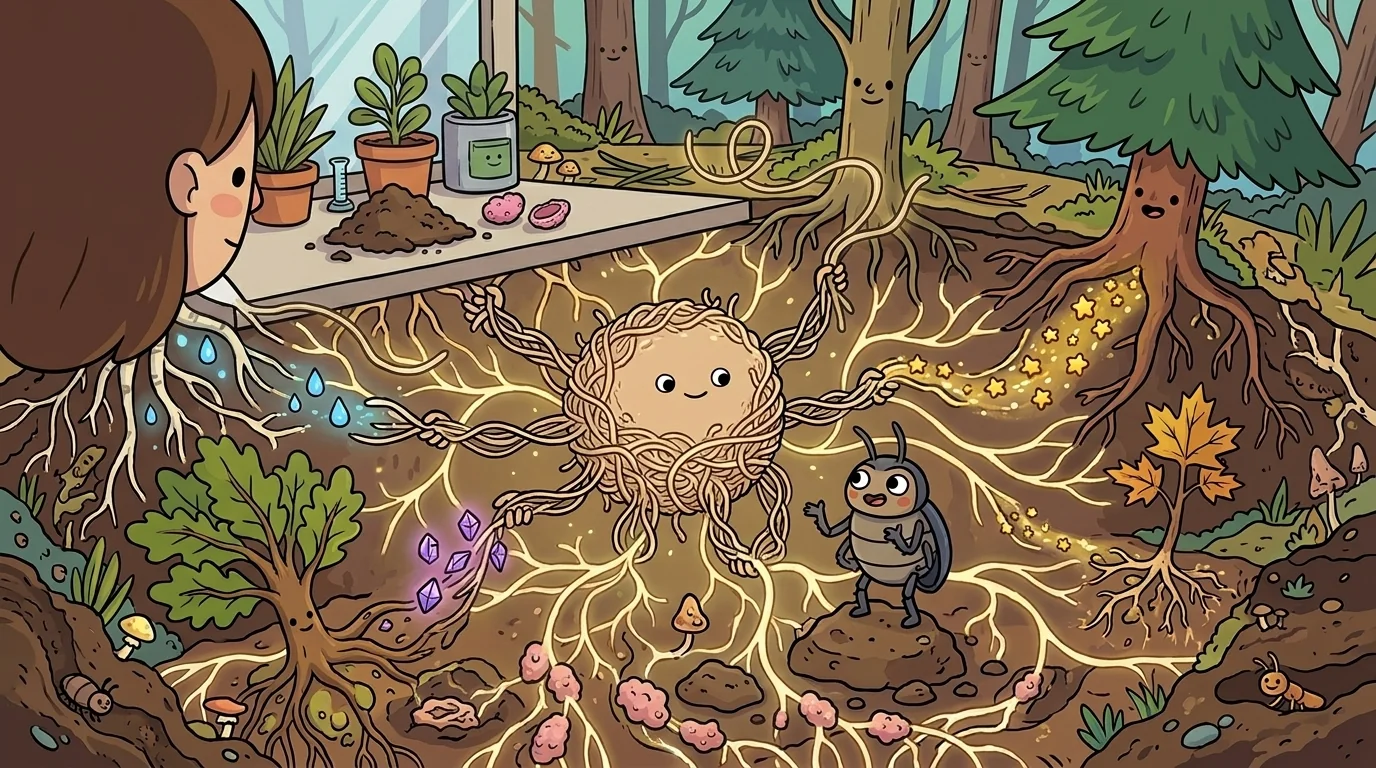
A student asked whether all that connection made a forest fragile — cut one thread and it all falls?
"The opposite," Net said. "Watch a forest with no fungal network — a bare, disturbed patch of soil. Every seedling there is on its own, reaching with only its own short roots, and most fail. Now watch a forest laced with me: minerals flow to where they're needed, warning signals about pests pass tree to tree through my threads, and a shaded seedling gets fed by its neighbors until it finds the light. The connection doesn't make the forest fragile. It makes it resilient — because no single tree has to survive on only what it alone can gather." It threaded a filament gently around a root. "A cut thread regrows. A forest with no threads at all is the fragile one."
Later a student who felt cut off — like she reached and reached and connected to no one — came back quiet.
"How do you connect to so many," she asked, "when you're just thin threads in the dark?"
Net drew its filaments close.
"I don't connect all at once, or grandly," it said. "I connect one root at a time. One filament reaches one rootlet, makes one small honest trade — sugar for minerals — and holds. Then another. Then another. The wood-wide web isn't one enormous act. It's a million tiny handshakes in the dark, each one just two who needed each other." It reached a single thread toward her. "You don't build a network by being big and bright. You build it the way I do — by reaching out one true small connection at a time, and not letting go of the ones that hold."
The student watched the single pale thread reach toward her, and the cut-off feeling eased into the quiet knowledge that connection starts with just one.
The MicrobeLab ensemble
Net is part of MicrobeLab's distributed-narrative cast. Each character embodies a different curricular primitive; together they teach the full subject.
-

Lacto
Lactobacillus + helpful-bacteria — 'Friend in your food. Friend in your gut.'
-

Yeast
Saccharomyces + helpful-fungi — 'I make air inside bread.'
-

Photo
Cyanobacteria + photosynthetic-microbes — 'Sunlight. Then air. Then everything else.'
-

Spore
Pathogens (opt-in gated) — 'Some friends. Some not. All real.'
-
Guard
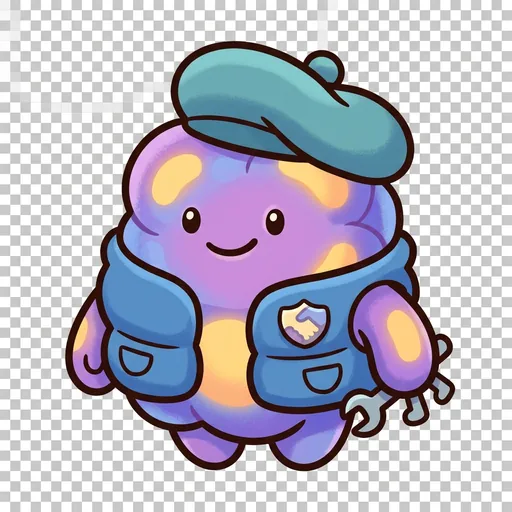
Immune cells (T-cell / macrophage / B-cell) — 'I check IDs. Patient + careful.'
-

Crumble
Decomposer microbes that break down dead leaves and scraps into rich soil, so nothing is wasted and everything begins again.
-

Thrive
Extremophile microbes that make a home in the hottest, coldest, saltiest places, showing life finds a way almost anywhere.
-

Shimmer
Bioluminescent microbes that turn energy into their own soft glow, lighting ocean waves and partnering with animals like tiny lanterns.
-
Colony
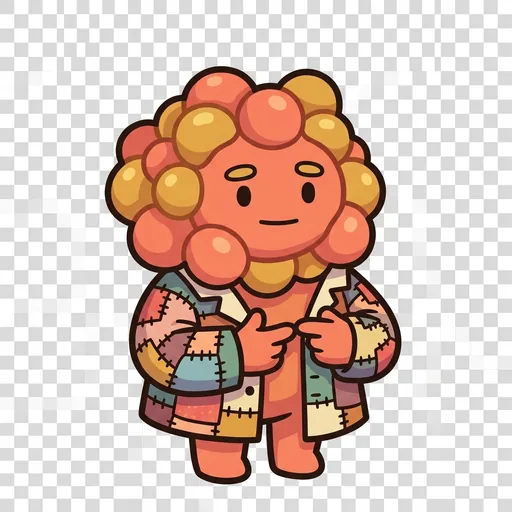
Microbes that build biofilms together, cooperating and protecting each other, because they are far stronger as a community than alone.