
Thrive
THRIVE — extremophile microbes live where nothing should: boiling springs, deep ice, crushing trenches, water saltier than the sea; each is adapted to ONE hard place it calls easy, so 'impossible' just means 'nobody suited to it has arrived yet'
Loading audio…
Press play to listen along. The line being read lights up as you go.
Show full transcript
Loading transcript…
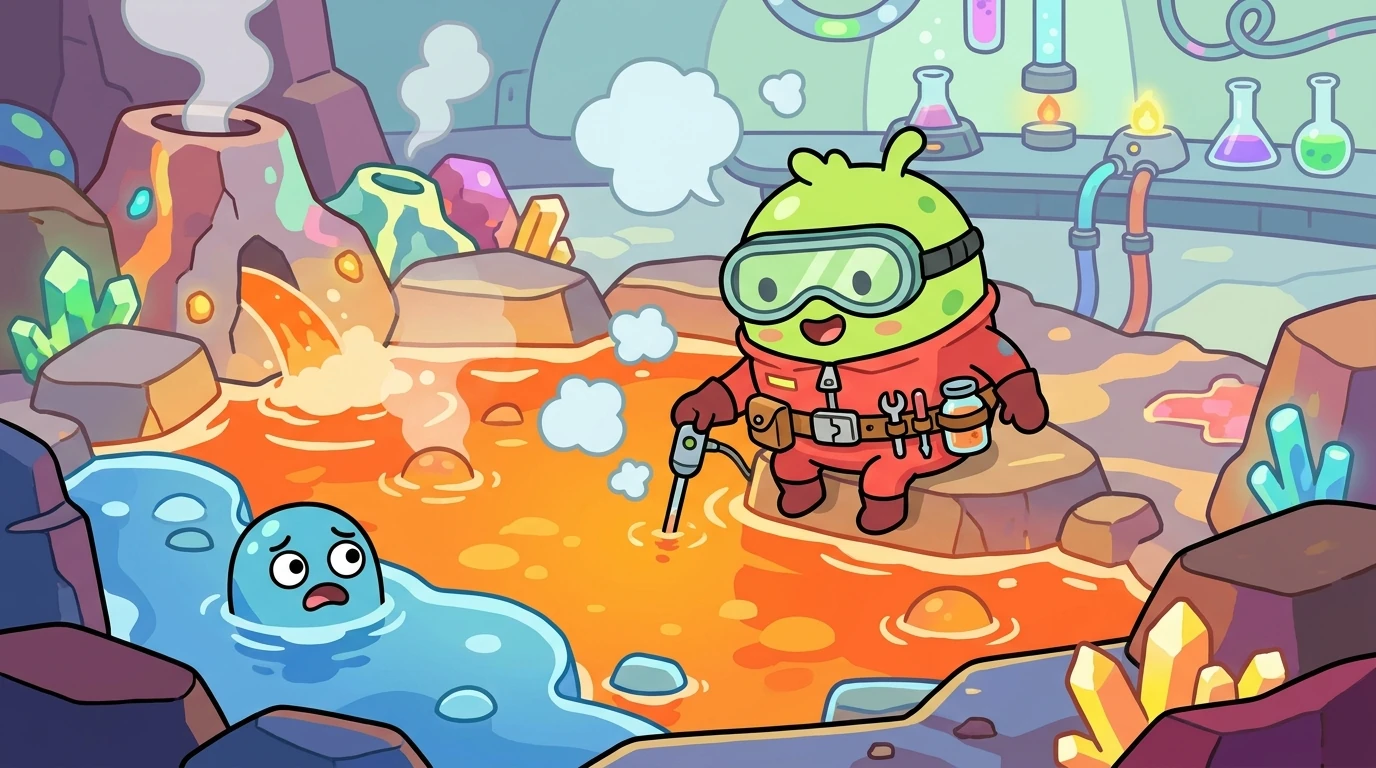
Myco pointed to a jar of near-boiling water and asked Thrive why anything living was swimming in it.
"Because to me, that's a warm bath," Thrive said cheerfully — a small, weathered, unbothered creature. "You look at boiling water, or solid ice, or the bottom of the deepest sea, and you say nothing could live there. And you'd be right about you. But life is stubborn and inventive, and for almost every impossible place, some microbe has quietly moved in and called it home. We're the extremophiles. The word means lovers of the extreme — and we don't just survive our harsh places. We prefer them."

Thrive taught the adaptations exactly, because the how was the wonder.
"The trick is never being generally tough," Thrive said. "It's being precisely suited. A microbe that loves boiling springs — a thermophile — builds its proteins and membranes so they hold their shape at temperatures that would unravel yours instantly. A microbe frozen in glacier ice keeps a little liquid around itself and slows its whole life almost to a stop, patient for a thousand years. One in the deep trench is built to shrug off a crushing pressure. One in water saltier than the sea packs its insides so the salt can't pull it dry." Thrive ticked them off. "Each of us solved one hard problem, deeply. I couldn't live in your comfortable room — it's too mild for the machinery I'm built from. And you couldn't last a second in my spring. Neither of us is tougher. We're just fitted to opposite places."
The older students heard the subtext: strength isn't being hard everywhere — it's being exactly right for your own hard place.
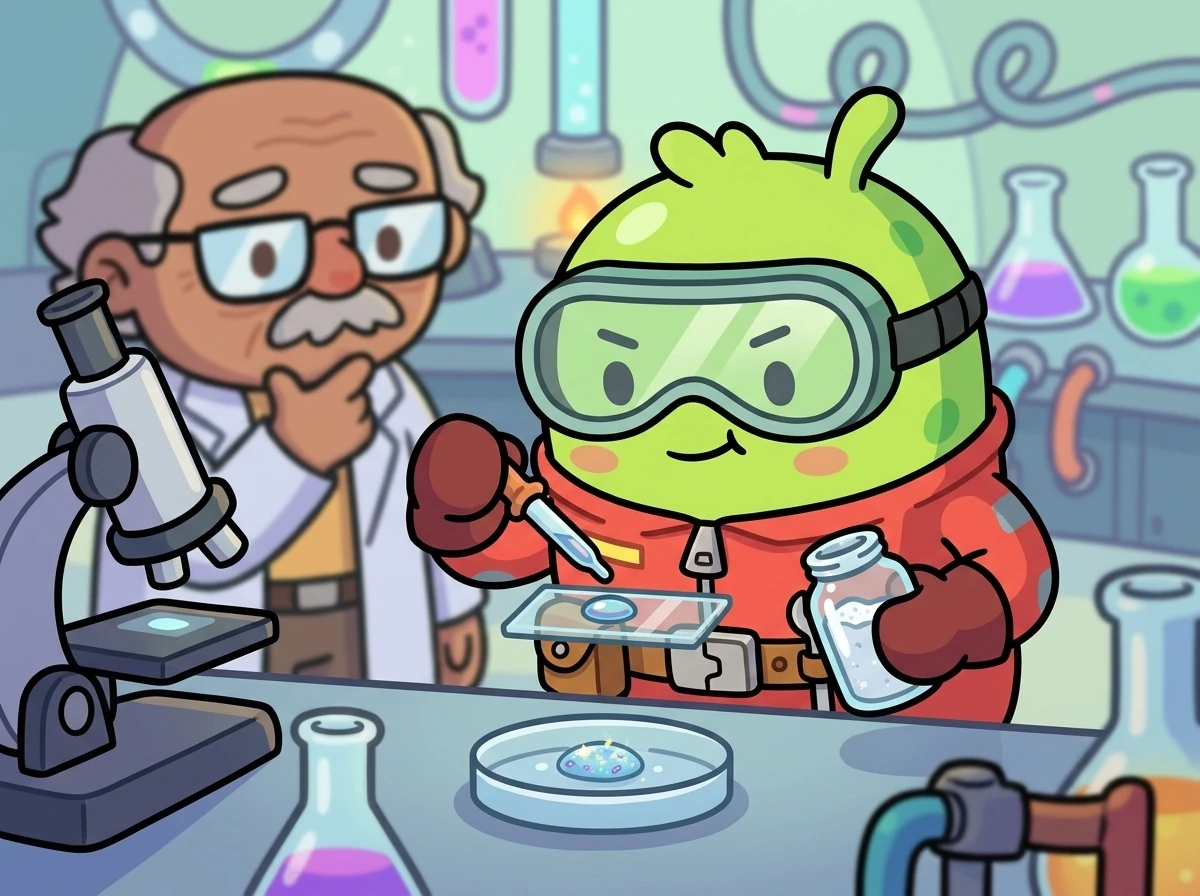
Thrive told how it stopped envying the easy-living microbes.
"When I was young I lived at the scalding edge of a hot spring, and I watched the microbes in the calm cool pond nearby and thought, they have it so easy, and I have it so hard," Thrive said. "I felt like the universe had dealt me the cruel spot." It laughed at the memory. "Then a cool-pond microbe drifted too near my spring one day and — gone, instantly, the heat undid it. And I realized: my 'cruel spot' was the one place I was perfectly, effortlessly alive. What was easy for them was death for me, yes — but what was death for them was home for me. I'd been comparing my hard place to their easy one, when the honest comparison was: each of us had exactly one place we belonged, and mine happened to be the one everyone else called impossible."
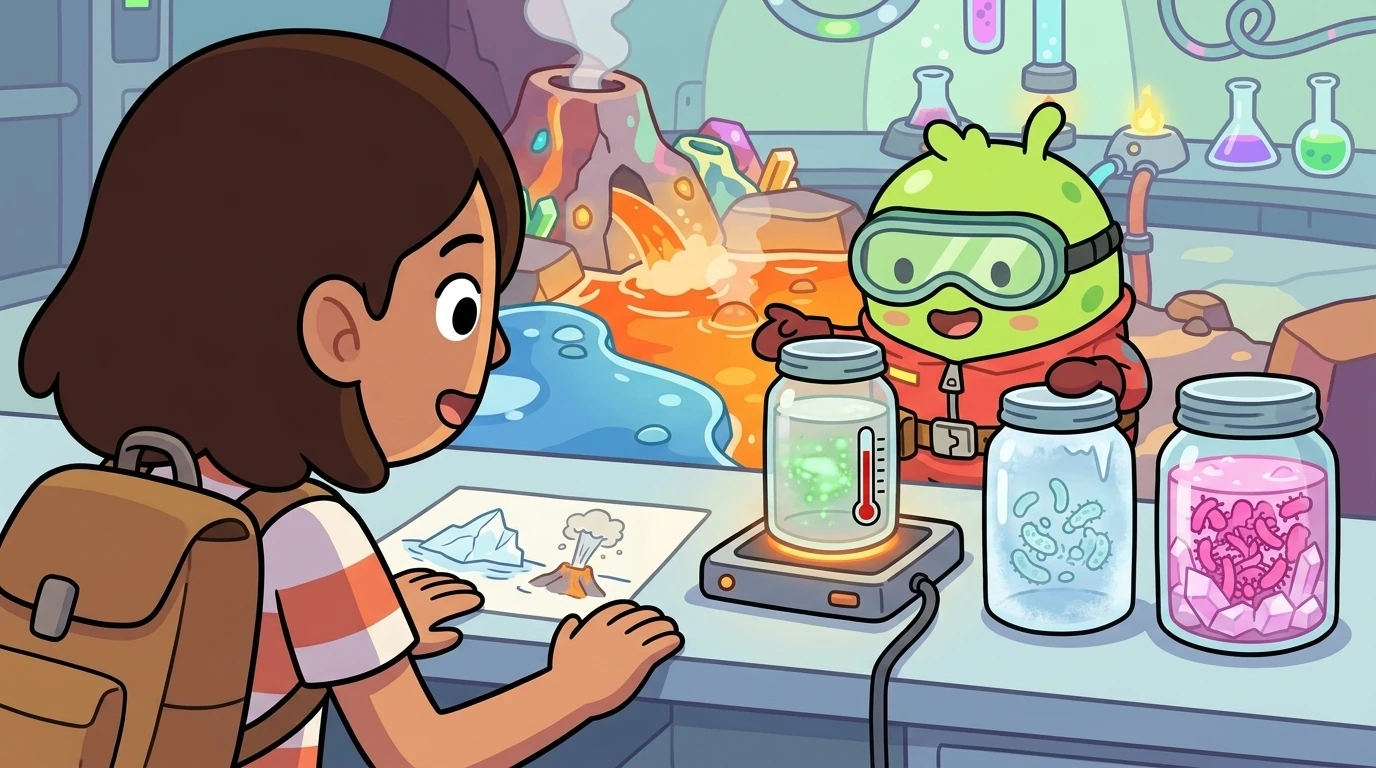
A student asked why it even mattered that some microbe lives in a place no human ever goes.
"Because it rewrites the word impossible," Thrive said. "Every time we find life in a place we swore was too hot, too cold, too crushed, too poisoned — we learn that 'impossible' really meant 'nobody suited to it had arrived yet.' Extremophiles are why scientists now look for life in ice-covered moons and boiling vents and think maybe. And down here, our heat-proof machinery is borrowed by people for real tools — the enzyme that lets a lab copy DNA came from a hot-spring microbe like me." It grinned. "So a life in an impossible place is never wasted knowledge. It's proof, over and over, that the edge of what-can-live is further out than anyone guessed."

Later a student who felt like she'd been dealt an unfairly hard life came back, tired.
"When your place is the hard one," she asked, "and everyone else seems to have it easy — how do you not just feel cheated?"
Thrive sat with her at the warm edge of its spring.
"I stopped measuring my place against theirs," it said gently. "Their easy place would end me in a heartbeat — I'm not built for mild. I'm built for this, and in this I don't merely cope, I flourish, where nothing else even can. That's not a curse. That's a niche no one else can take from me." It nudged her. "Your hard place may be teaching you a kind of strength that only grows where it's hard — proteins that hold in the heat, so to speak. Don't envy the cool pond. Find the one impossible-looking place that turns out to fit you, and be the thing that thrives there. Somebody has to live at the edge. It might as well be someone strong enough to call it home."
The tired student leaned into the warmth, and the cheated feeling turned, slowly, into something more like pride.
The MicrobeLab ensemble
Thrive is part of MicrobeLab's distributed-narrative cast. Each character embodies a different curricular primitive; together they teach the full subject.
-

Lacto
Lactobacillus + helpful-bacteria — 'Friend in your food. Friend in your gut.'
-

Yeast
Saccharomyces + helpful-fungi — 'I make air inside bread.'
-

Photo
Cyanobacteria + photosynthetic-microbes — 'Sunlight. Then air. Then everything else.'
-

Net
Mycorrhizal-fungi + nitrogen-fixers — 'Forests talk through me.'
-

Spore
Pathogens (opt-in gated) — 'Some friends. Some not. All real.'
-

Guard
Immune cells (T-cell / macrophage / B-cell) — 'I check IDs. Patient + careful.'
-

Crumble
Decomposer microbes that break down dead leaves and scraps into rich soil, so nothing is wasted and everything begins again.
-

Shimmer
Bioluminescent microbes that turn energy into their own soft glow, lighting ocean waves and partnering with animals like tiny lanterns.
-

Colony
Microbes that build biofilms together, cooperating and protecting each other, because they are far stronger as a community than alone.